Biology · Culturing Microorganisms and Developing Medicines
Knowledge organiser
The whole chapter on two pages. Print it on A4 — they are already landscape — or cover a box and see how much of it you can say from memory.
Biology · Edexcel Paper 1
Culturing Microorganisms and Developing Medicines
Aseptic Technique and Culturing Microorganisms (Separate only)
To study bacteria safely, or to grow them for medicine and food, scientists must keep unwanted microorganisms out and keep the wanted ones…
- Culture A population of microorganisms grown on purpose in a laboratory.
- Aseptic technique Methods that prevent contamination by unwanted microorganisms.
- Sterile Free from all living microorganisms.
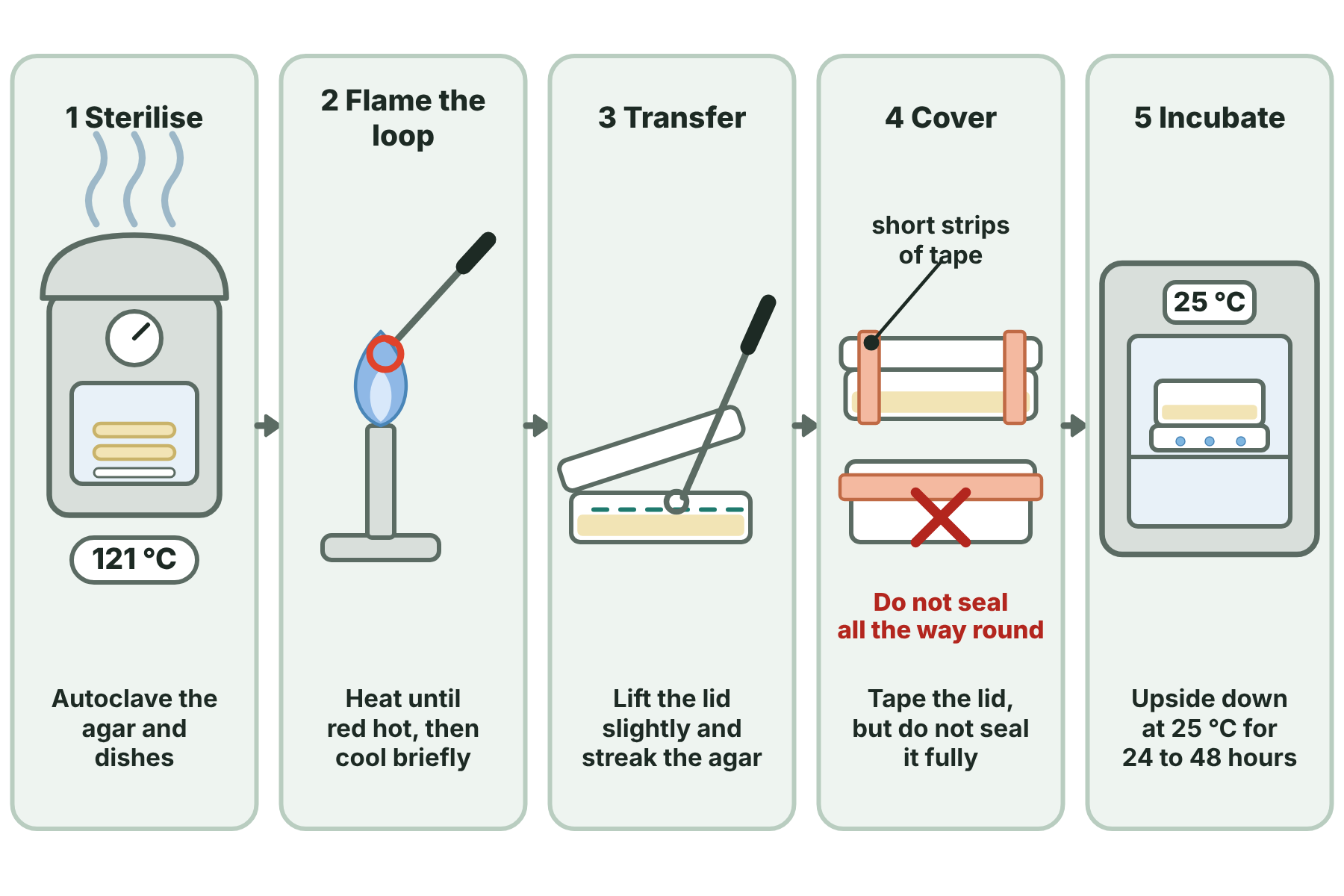
Why each precaution is taken
- Keeping unwanted microorganisms out Sterilising medium and dishes in an autoclave; Flaming the loop and the neck of the bottle; Keeping lids on, and opening them as little as possible
- Keeping the culture safe Taping the lid, but not sealing it completely; Incubating at 25 °C or below in schools; Never opening a dish with a culture inside
Investigating Antiseptics, Antibiotics and Plant Extracts (Separate only)
How can you tell whether a chemical stops bacteria growing?
- Antiseptic A chemical that kills or stops the growth of microorganisms, used on skin or surfaces.
- Zone of inhibition A clear area around a disc, where bacteria have been killed or have not grown.
- Lawn A continuous layer of bacteria spread over the whole surface of agar.
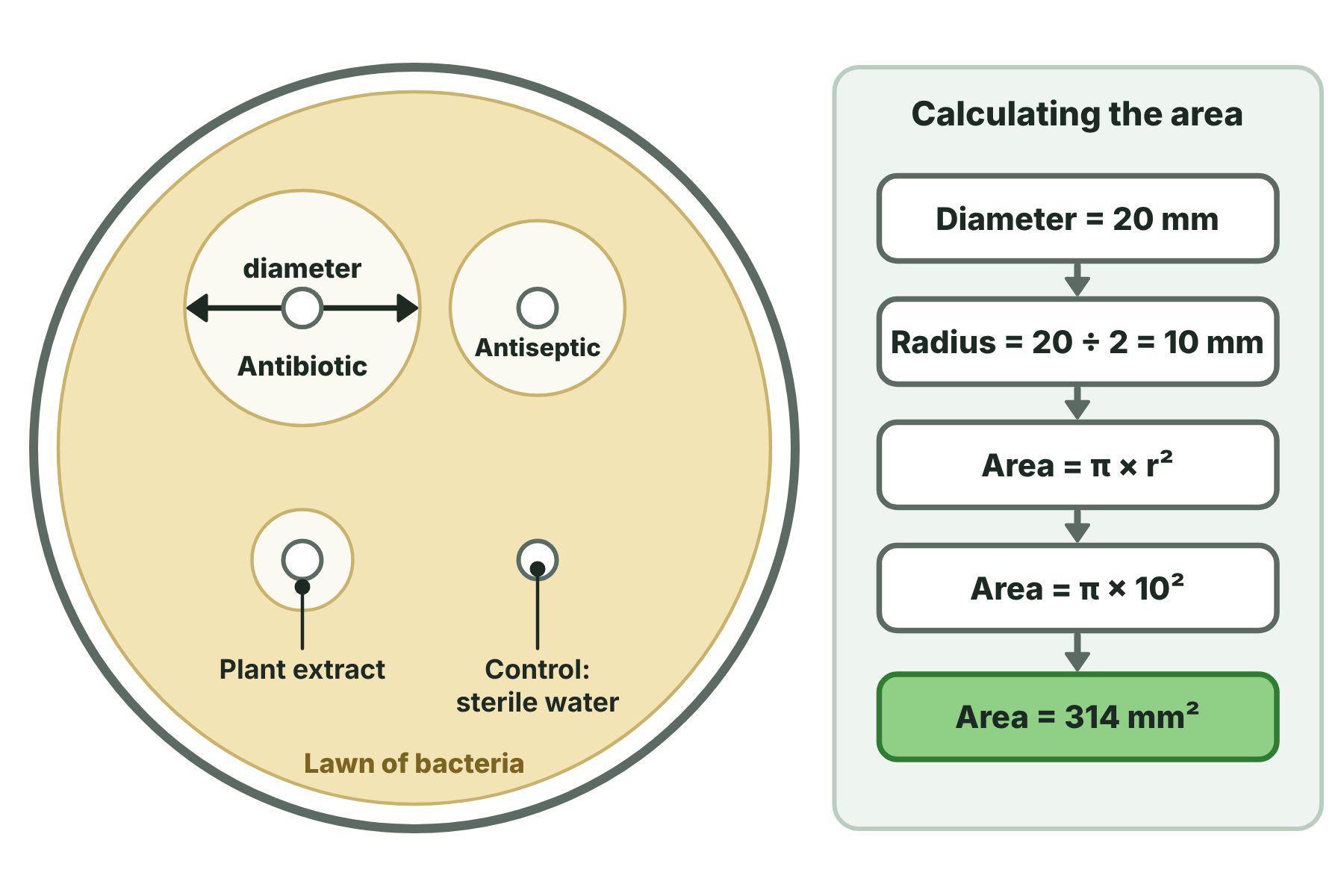
Antiseptics and antibiotics
- Antiseptics Used on the skin and surfaces; Kill many types of microorganism; Can damage human cells, so are not taken as medicines
- Antibiotics Taken or injected into the body; Kill or stop the growth of bacteria only; Do not harm the human cells
Developing New Medicines
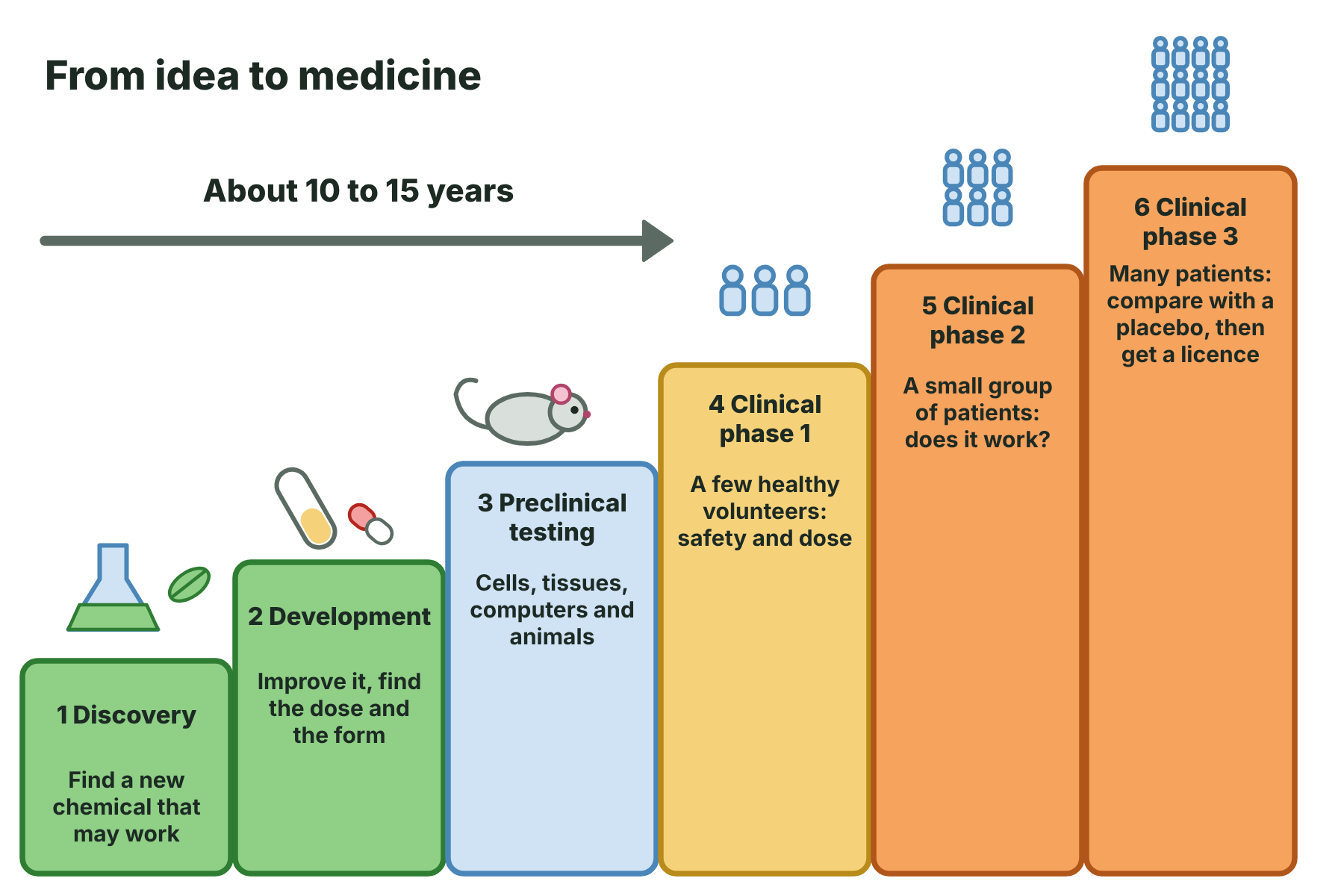
A medicine can take over ten years and hundreds of millions of pounds to develop.
- Discovery The stage in which a chemical with possible medical use is found.
- Preclinical testing Testing on cells, tissues and animals, before testing on people.
- Clinical trial A test of a medicine on human volunteers or patients.
Biology · Edexcel Paper 1
Culturing Microorganisms and Developing Medicines continued
Preclinical and clinical testing
- Preclinical testing Done before any human receives the drug; Uses cells, tissues, computer models and animals; Finds out whether it is toxic and how it works
- Clinical testing Done on human volunteers and patients; Carried out in three phases; Finds the safety, dose and effectiveness in people
Making Monoclonal Antibodies (Separate only)
Antibodies are made by lymphocytes, but a single lymphocyte cannot be grown into a factory.
- Monoclonal antibody An antibody made by a clone of identical cells, all of which fit the same antigen.
- Hybridoma cell A cell made by joining an antibody-producing lymphocyte to a tumour cell.
- Clone A group of genetically identical cells or organisms, formed from one original cell.
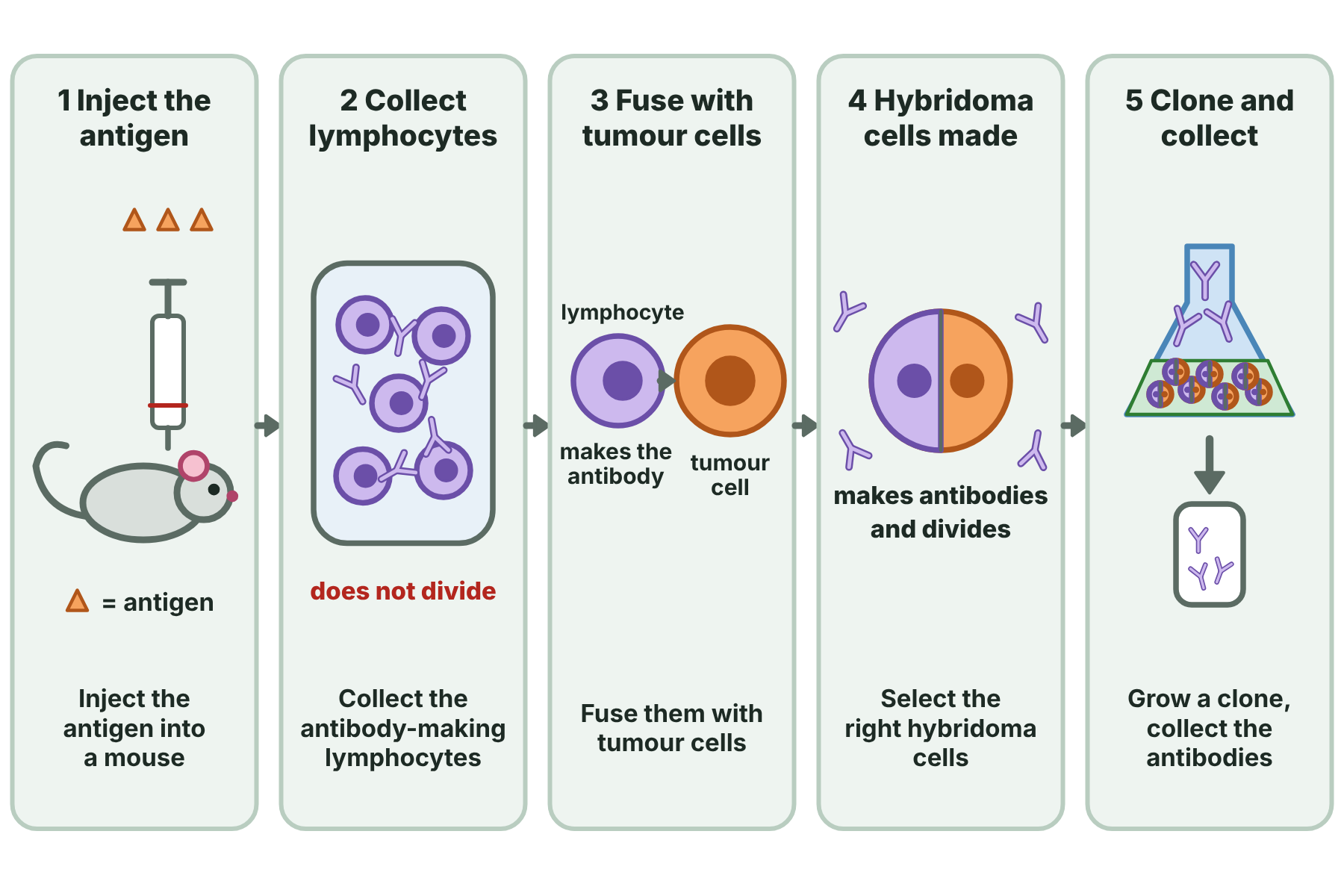
The two parent cells
- Lymphocyte from a mouse Makes the desired antibody, which fits the antigen; Does not divide outside the body; Dies after a short time in culture
- Tumour cell Does not make the desired antibody; Divides rapidly, and does not stop; Can be grown in culture for a long time
Uses of Monoclonal Antibodies (Separate only)
Because a monoclonal antibody finds one molecule, it can be used like a guided missile or a detector.
- hCG A hormone, human chorionic gonadotrophin, made by the placenta, which is found in the urine of a pregnant woman.
- Tumour marker An antigen found on cancer cells, but not on healthy cells.
- Diagnosis Finding out what disease a patient has.
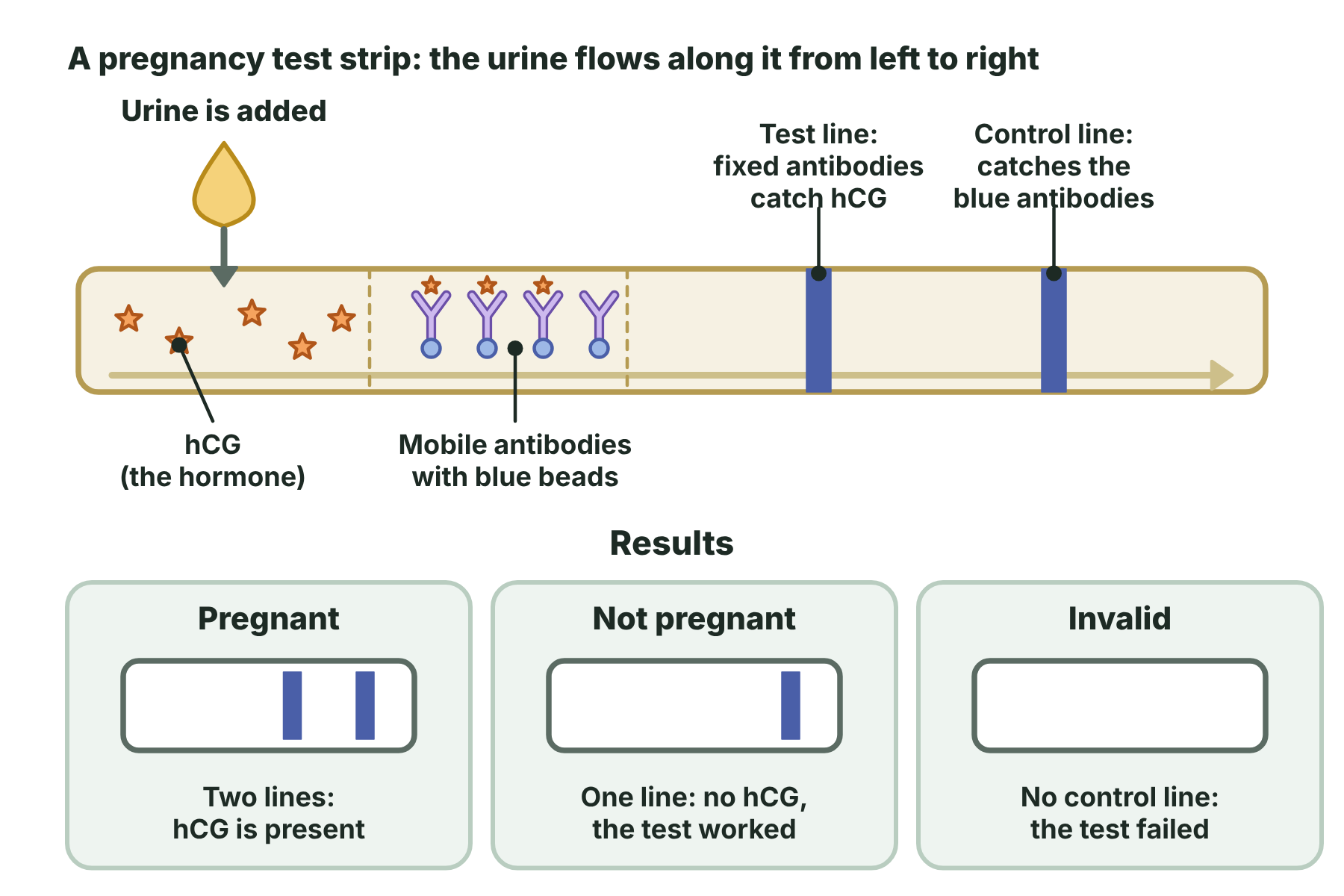
Monoclonal antibodies compared with drugs and radiotherapy
- Monoclonal antibodies Bind only to cells with the antigen; Healthy cells are mostly not harmed; The drug is delivered straight to the cancer
- Chemotherapy and radiotherapy Drugs travel round the whole body, and radiation hits healthy tissue; Damage rapidly dividing healthy cells, such as hair and gut; Cause hair loss, sickness and tiredness