Biology · DNA and Protein Synthesis
Knowledge organiser
The whole chapter on two pages. Print it on A4 — they are already landscape — or cover a box and see how much of it you can say from memory.
Biology · Edexcel Paper 1
DNA and Protein Synthesis
The Structure of DNA
DNA carries the instructions for building every living thing.
- DNA Deoxyribonucleic acid: the molecule that carries the genetic code, made of two strands in a double helix.
- Polymer A long molecule made of many small repeating units joined together.
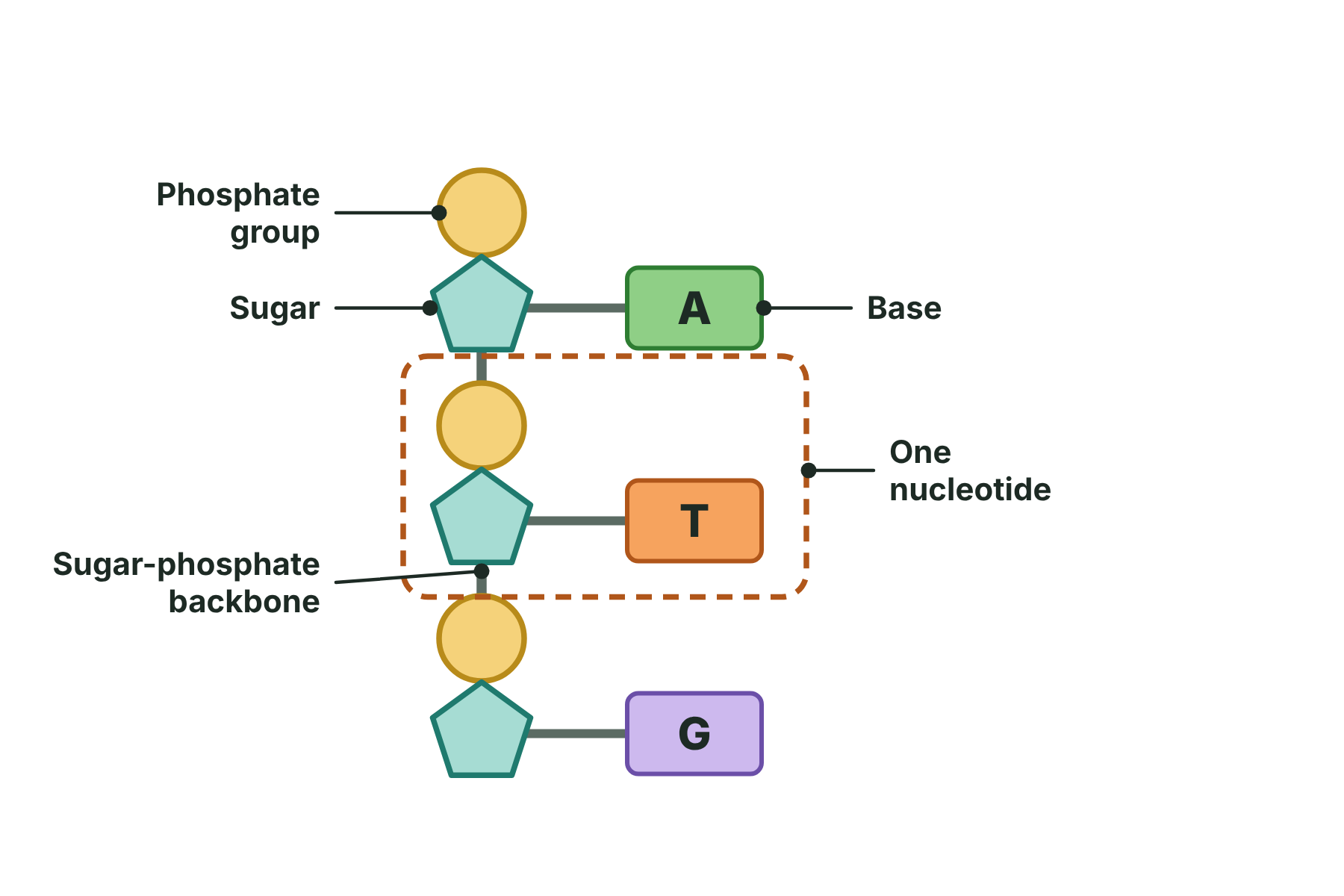
- Nucleotide The repeating unit of DNA, made of a sugar, a phosphate group and a base.
The Genome and the Human Genome Project
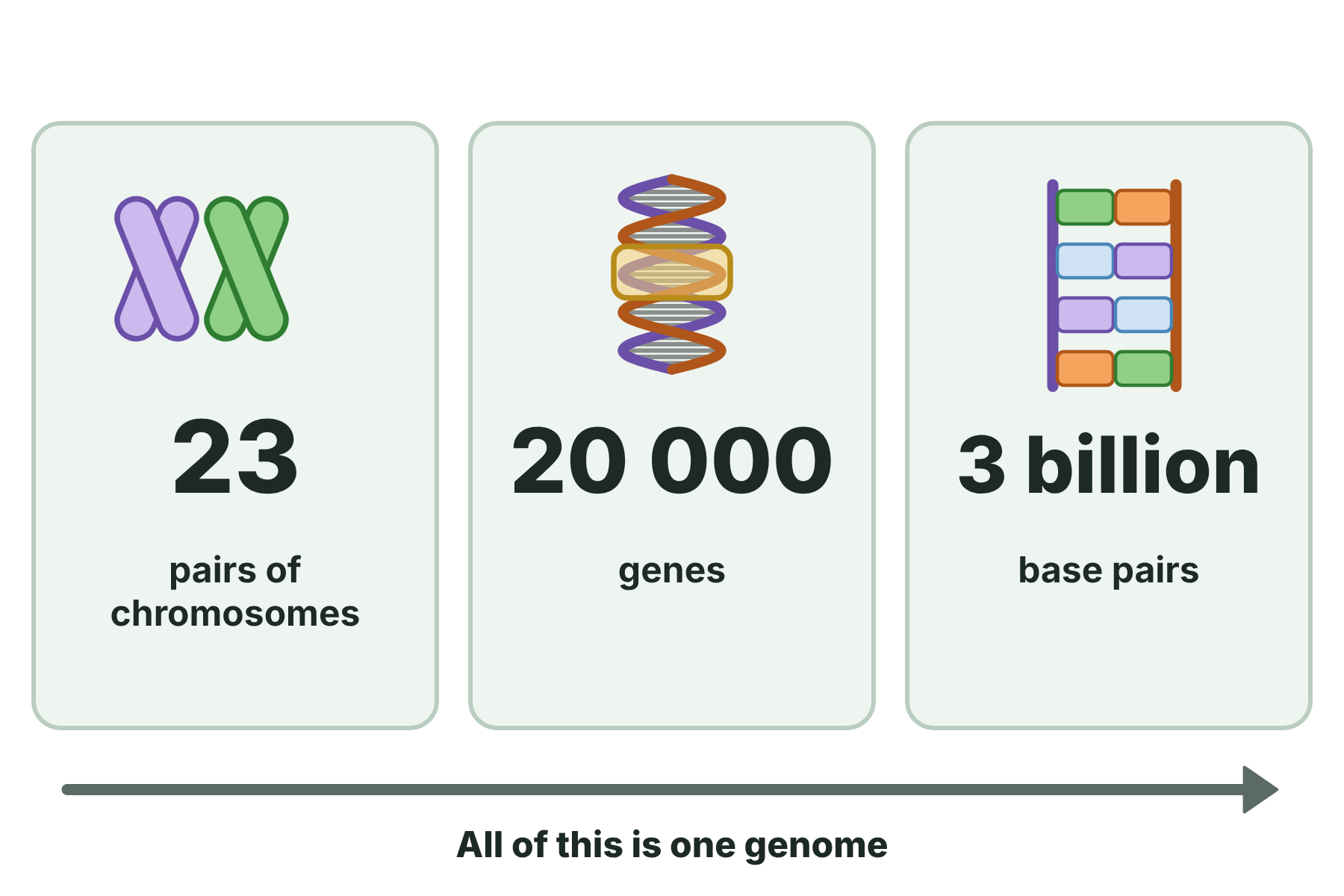
A genome is an organism's complete set of DNA. This lesson explains what the human genome contains, how the Human Genome Project mapped it.
- Genome The entire DNA of an organism.
- Gene A section of a DNA molecule that codes for a specific protein.
- Human Genome Project An international project, completed in 2003, that found the order of all of the bases in human DNA.
Benefits and concerns about knowing your genome
- Benefits Early diagnosis, and prevention of some diseases; Treatment matched to the person; Faster development of new drugs
- Concerns Privacy: who should have access to the information?; Insurance and employers could discriminate against people; Cost, and an unequal chance of benefiting
The Human Genome Project
- 1990 Scientists from many countries start work, with the aim of…
- Cut up the DNA Samples of DNA from volunteers are broken into small pieces that…
- Read the pieces The order of bases in each piece is found by a sequencing machine.
- Put it together Computers match overlapping pieces and assemble them into the…
Extracting DNA from Fruit
You can see DNA with your own eyes. This lesson explains a simple method to extract DNA from fruit using household chemicals, why each step is needed.
- Extraction Separating a substance from the material it is in.
- Detergent A chemical that breaks down cell membranes by dissolving the lipids in them.
- Filtering Separating solid pieces from a liquid, using filter paper.
Qualitative and quantitative results
- Qualitative results Describe what you see, such as stringy, white and cloudy; Quick and easy to do; Different observers may disagree
- Quantitative results Measure the length of the strands, or their mass; Give numbers that can be compared and graphed; Less affected by opinion
The method
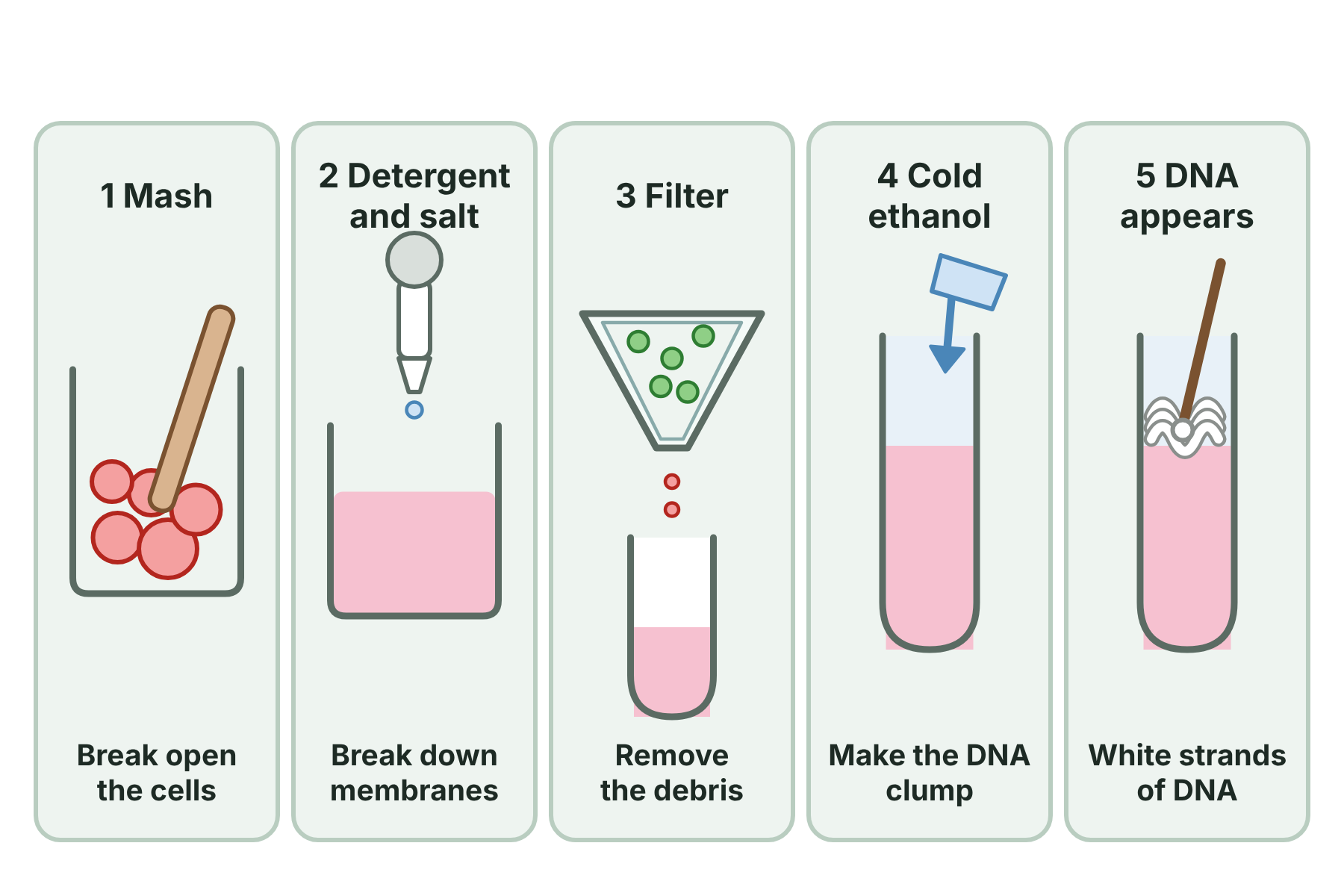
- Mash the fruit Crush a small amount of fruit in a beaker or bag, to break open the cells.
- Add the extraction solution Add a solution of detergent and salt, and mix gently for several minutes.
- Filter the mixture Pour it through a filter paper or a coffee filter into a clean tube.
- Add cold ethanol Tilt the tube and slowly pour ice-cold ethanol down the side.
Biology · Edexcel Paper 1
DNA and Protein Synthesis continued
From Genes to Proteins (Higher tier) (Separate only)
A gene is a code for a protein. This lesson is for separate Biology only.
- Protein A molecule made of one or more chains of amino acids, folded into a specific shape.
- Amino acid The small unit that proteins are made from. There are 20 different ones.
- Polypeptide A long chain of amino acids.
DNA and proteins
- DNA Made of nucleotides; Four different bases in the code; A double helix, with the same structure in all genes
- Proteins Made of amino acids; 20 different amino acids; Many different folded shapes
From gene to working protein
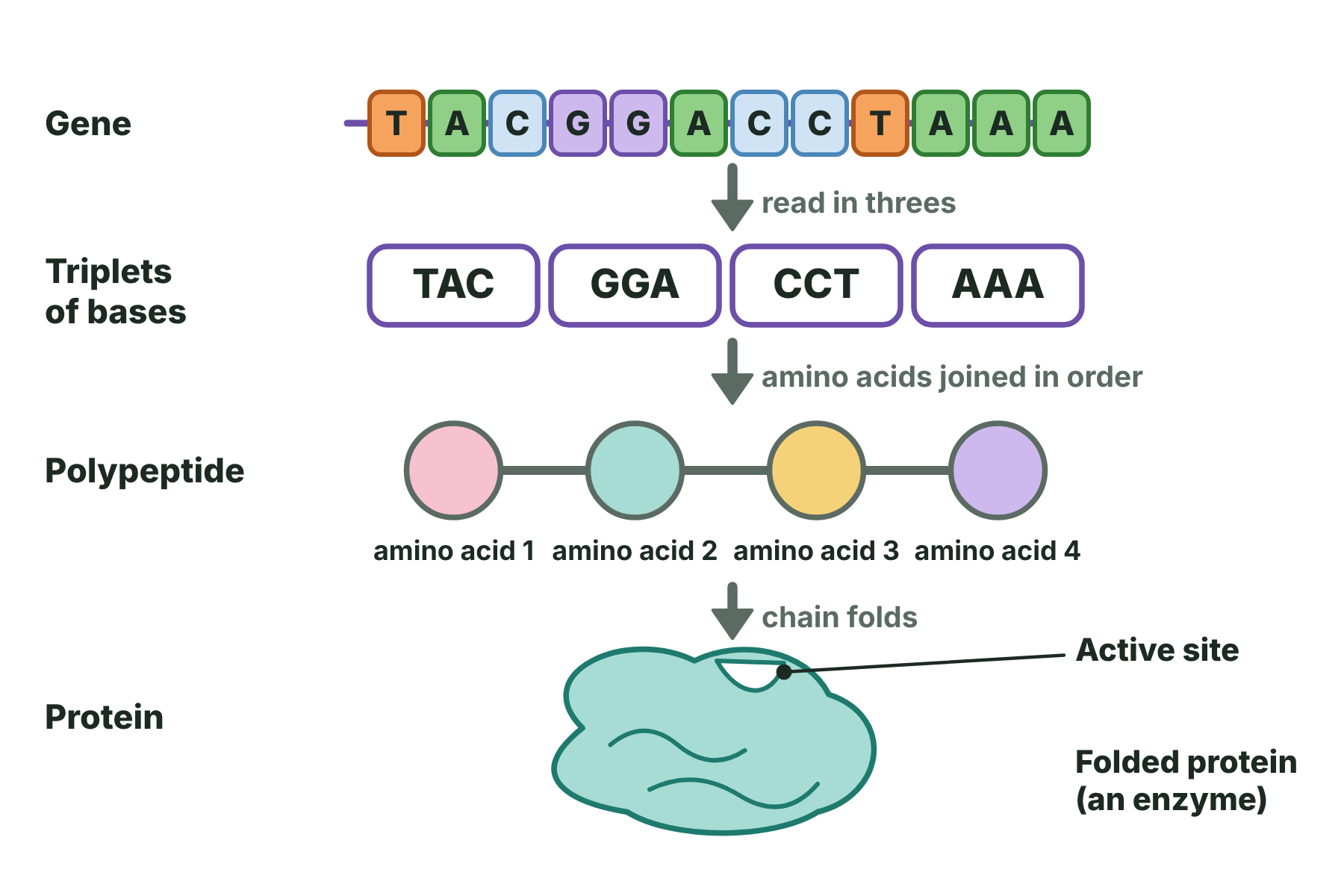
- The gene A section of DNA contains a sequence of bases.
- The triplets The bases are read in groups of three.
- The polypeptide Amino acids are joined in the order specified by the triplets.
- The protein The polypeptide folds into a specific shape, which lets it do its job.
Protein Synthesis (Higher tier) (Separate only)
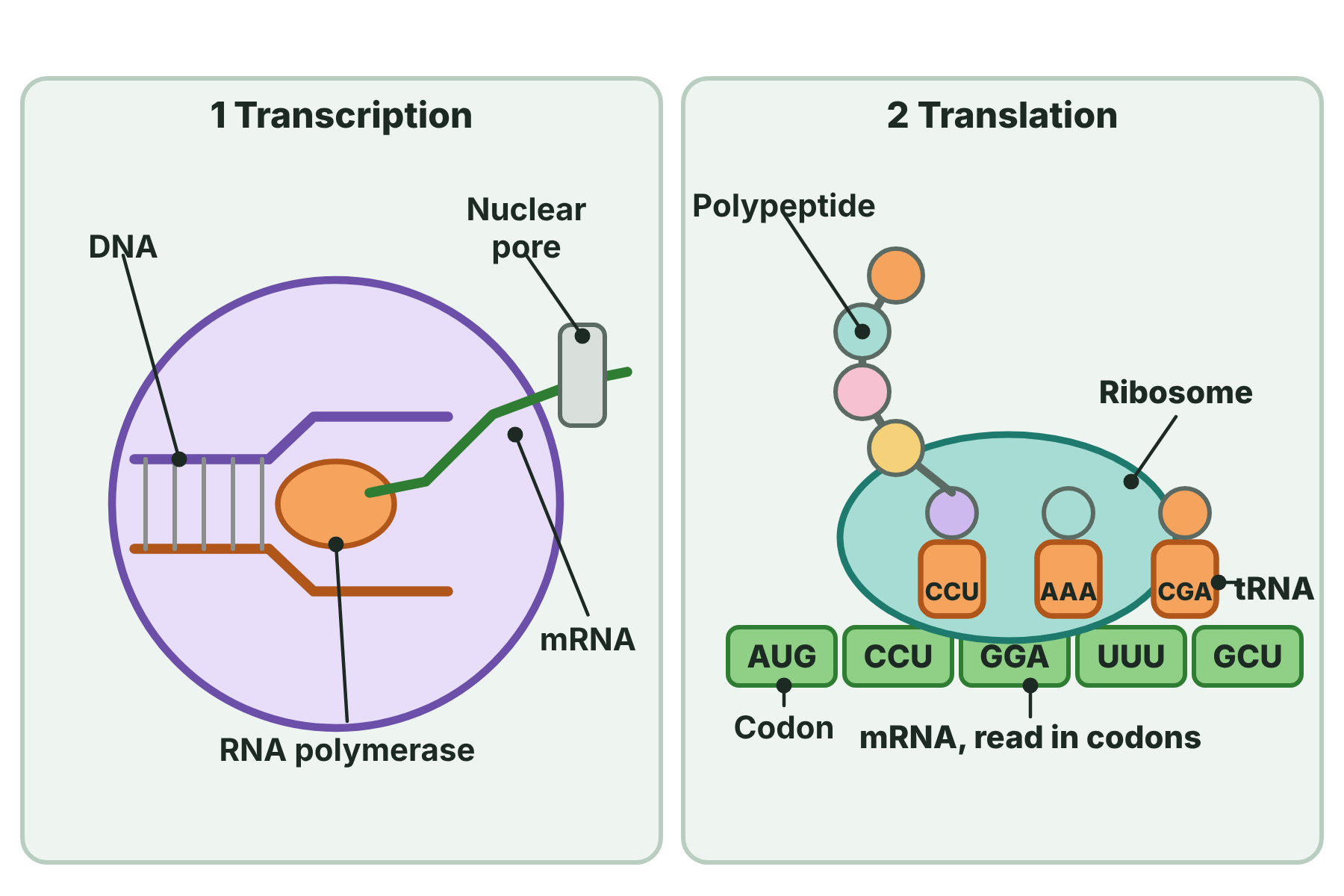
A protein is made in two stages: transcription in the nucleus and translation at a ribosome.
- Transcription Making a complementary mRNA copy of a gene from DNA.
- Translation Reading the code in mRNA at a ribosome to build a polypeptide.
- RNA polymerase The enzyme that makes mRNA by joining RNA nucleotides complementary to the DNA.
DNA and RNA
- DNA Two strands in a double helix; Contains the sugar deoxyribose; Bases A, T, C and G
- RNA A single strand; Contains the sugar ribose; Bases A, U, C and G, with uracil (U) instead of thymine
Transcription in the nucleus
- RNA polymerase binds The enzyme RNA polymerase attaches to the non-coding DNA that…
- The DNA unwinds The hydrogen bonds between the bases break and the two strands…
- mRNA is built RNA polymerase moves along the coding DNA of the gene and joins RNA nucleotides.
- mRNA leaves The complementary mRNA strand is released, the DNA closes up.
Genetic Variants and Their Effects (Higher tier) (Separate only)
A change in the DNA can change a protein. This lesson is for separate Biology only.
- Genetic variant A difference in the base sequence of DNA between individuals.
- Mutation A change in the base sequence of DNA.
- Substitution A mutation in which one base is replaced by another.
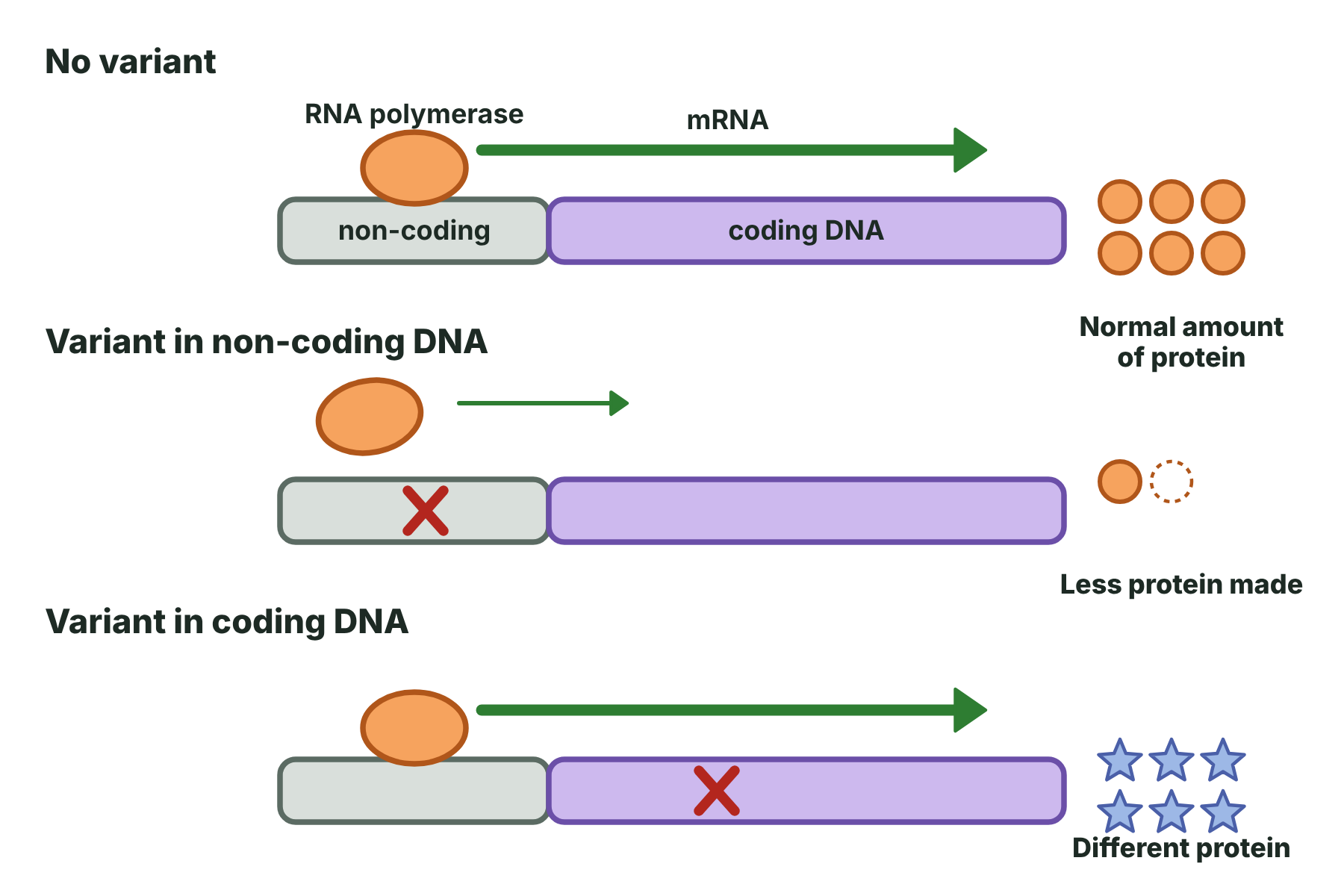
Non-coding and coding variants
- Variant in non-coding DNA In the region in front of the gene; Changes how well RNA polymerase binds; Changes the quantity of protein produced
- Variant in coding DNA Inside the gene itself; Can change the amino acid sequence; Can change the shape and activity of the protein