Biology · Health and Infectious Disease
Knowledge organiser
The whole chapter on two pages. Print it on A4 — they are already landscape — or cover a box and see how much of it you can say from memory.
Biology · Edexcel Paper 1
Health and Infectious Disease
Health and Types of Disease
Health is more than not being ill. This lesson looks at the World Health Organization's definition, at communicable and non-communicable diseases.
- Health A state of complete physical, mental and social well-being, and not merely the absence of disease or infirmity.
- Communicable disease A disease that can be passed from one person to another, caused by a pathogen.
- Non-communicable disease A disease that cannot be passed from one person to another, and is not caused by a pathogen.
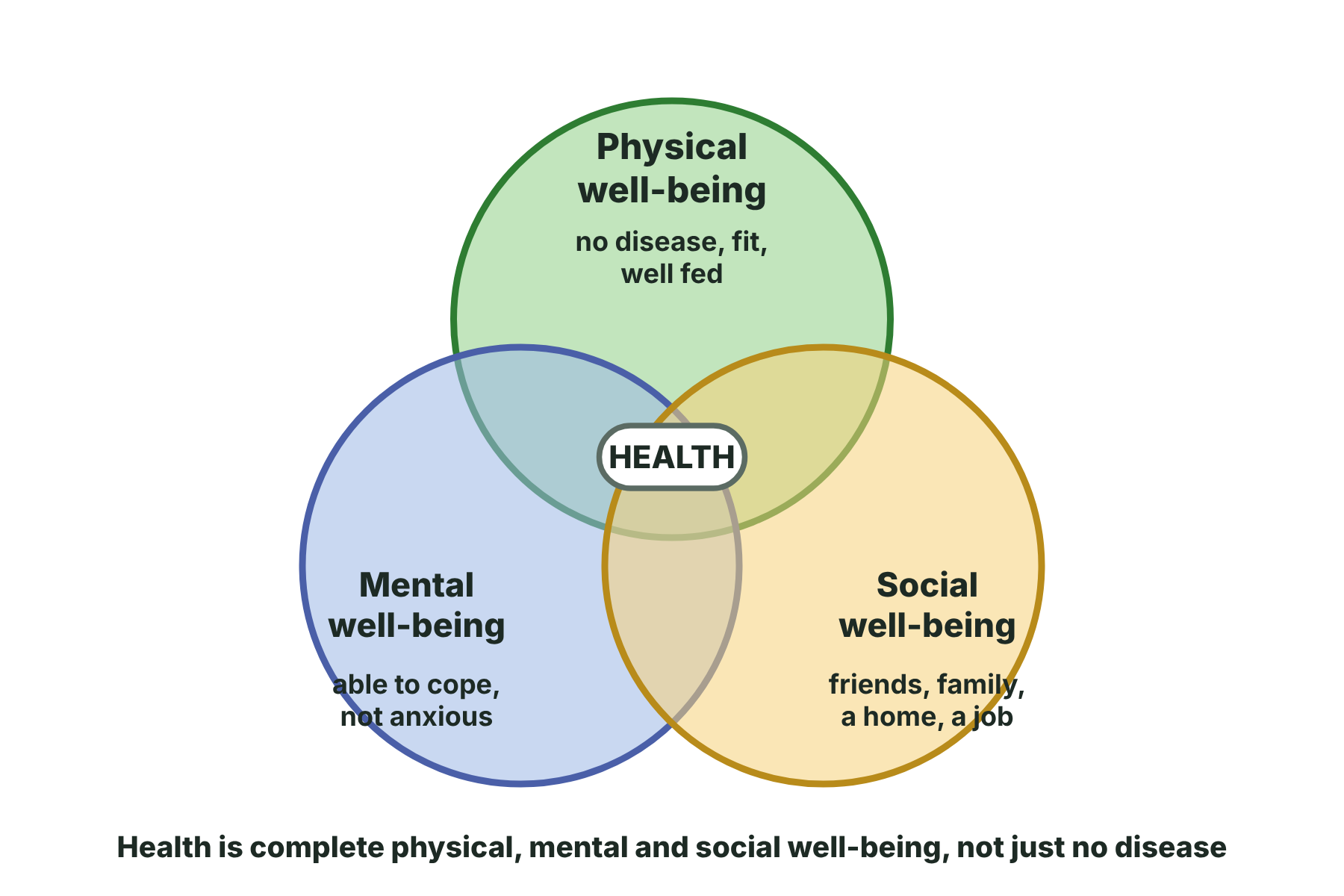
Communicable and non-communicable disease
- Communicable disease Caused by a pathogen; Can spread between people, or from animals to people; Examples: cholera, tuberculosis, malaria, HIV
- Non-communicable disease Not caused by a pathogen; Cannot be passed from one person to another; Examples: cancer, heart disease, diabetes, cystic fibrosis
Pathogens and Common Infections
Four kinds of organism cause infectious disease. This lesson describes viruses, bacteria, fungi and protists.
- Pathogen A microorganism that causes disease.
- Virus A tiny particle made of genetic material in a protein coat, that can only reproduce inside host cells.
- Bacterium A single-celled prokaryote with no nucleus.
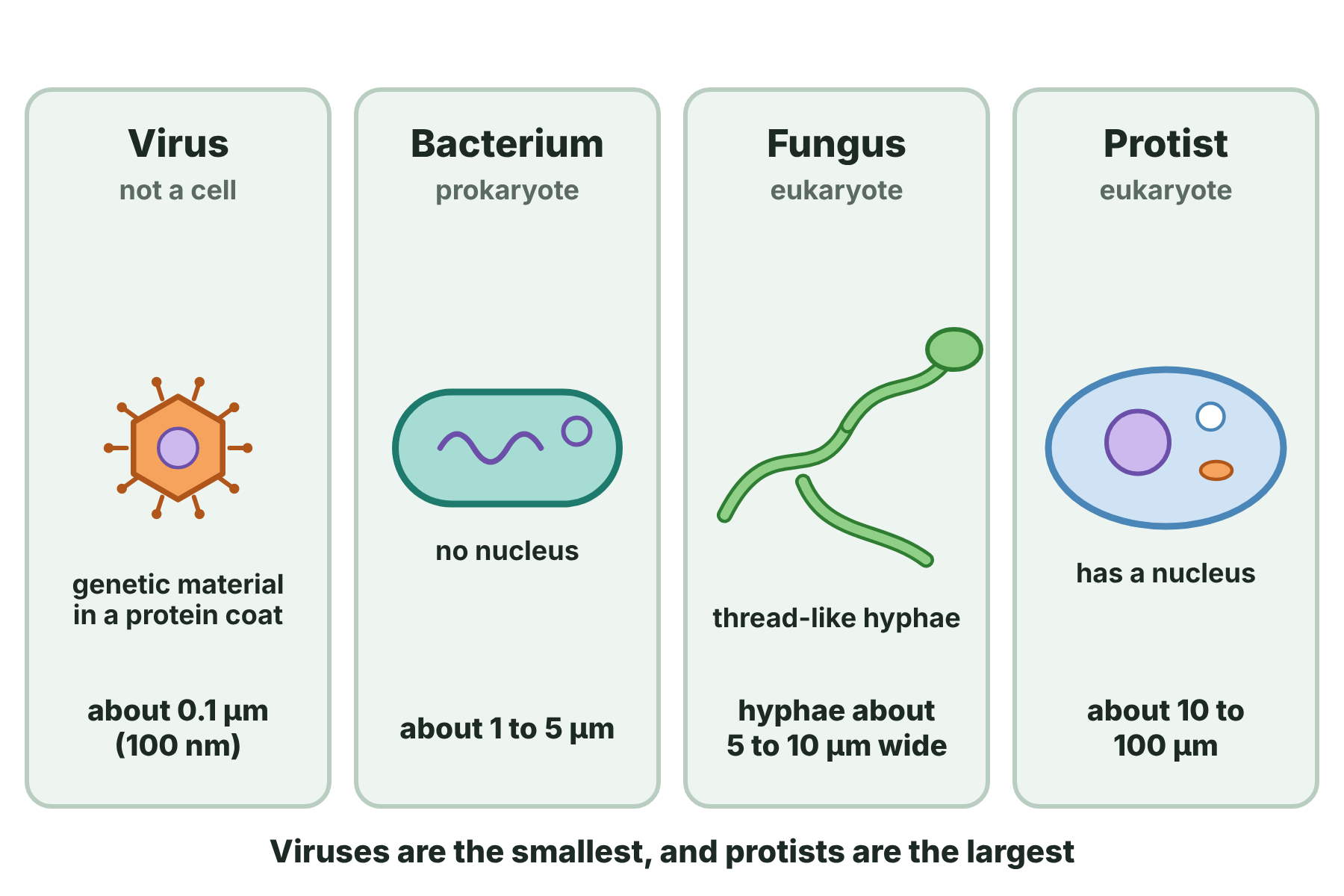
Bacterial and viral pathogens
- Bacteria Living cells, about 1 to 5 \mum; Reproduce on their own, by dividing; Often make toxins
- Viruses Not cells, about 0.1 \mum; Can only reproduce inside host cells; Damage or destroy the cells they infect
How Diseases Spread and Are Prevented
Stopping a disease from spreading is better than treating it afterwards.
- Transmission The spread of a pathogen from one host to another.
- Vector An organism that carries a pathogen from one host to another.
- Airborne Carried in the air, such as in droplets or as spores.
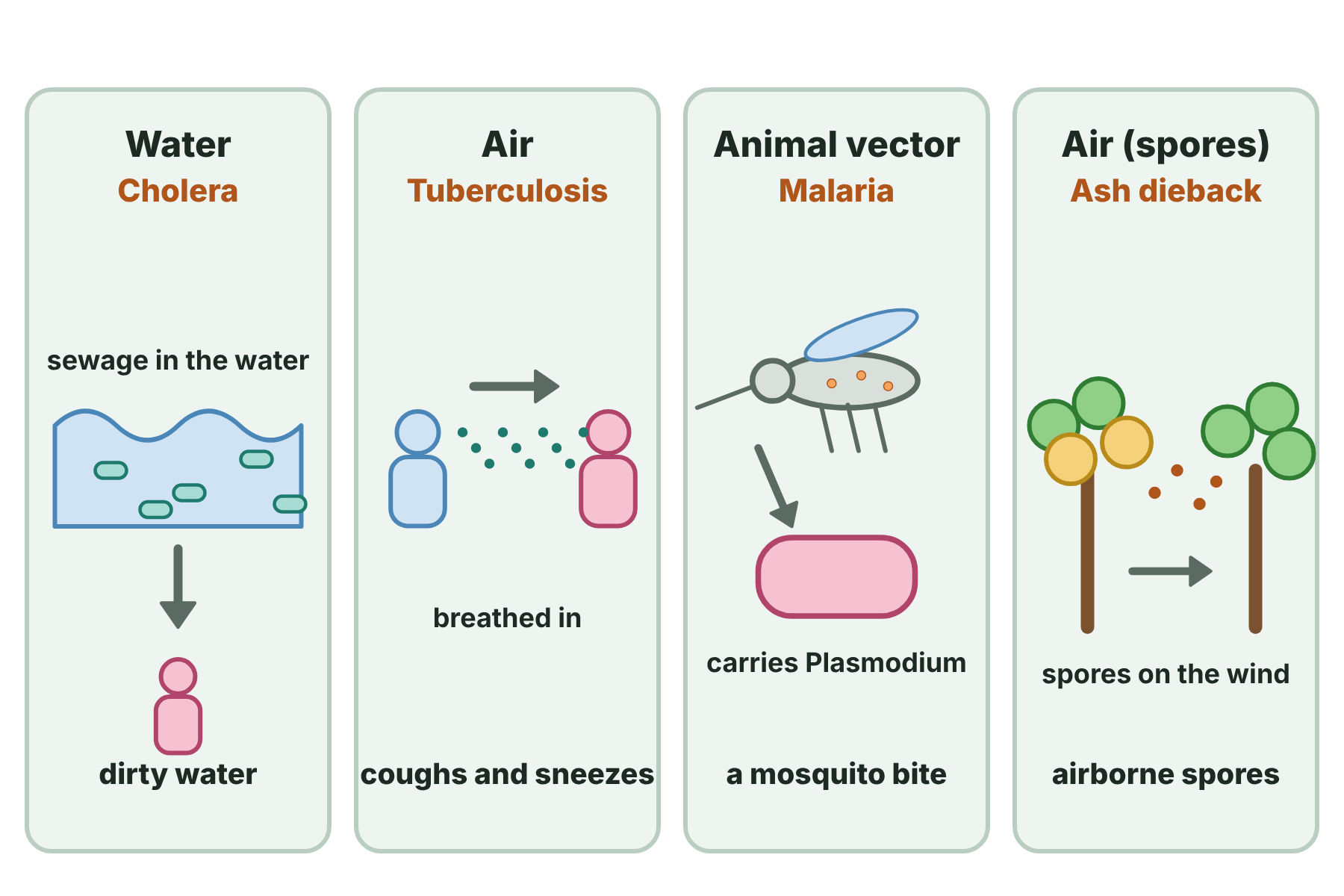
Preventing the spread of disease
- Controlling the pathogen Clean water and sewage treatment (cholera); Isolating and treating infected people (TB); Destroying infected trees (ash dieback)
- Controlling the route Ventilation and covering coughs (TB); Killing mosquitoes and draining standing water (malaria); Mosquito nets and repellents (malaria)
Biology · Edexcel Paper 1
Health and Infectious Disease continued
Sexually Transmitted Infections
Some infections are passed on through sexual contact. This lesson explains how chlamydia and HIV are spread, what they do to the body.
- Sexually transmitted infection (STI) An infection that is passed on through sexual contact.
- Chlamydia A common bacterial STI that is often symptomless and is treated with antibiotics.
- HIV The virus that attacks the immune system and can lead to AIDS.
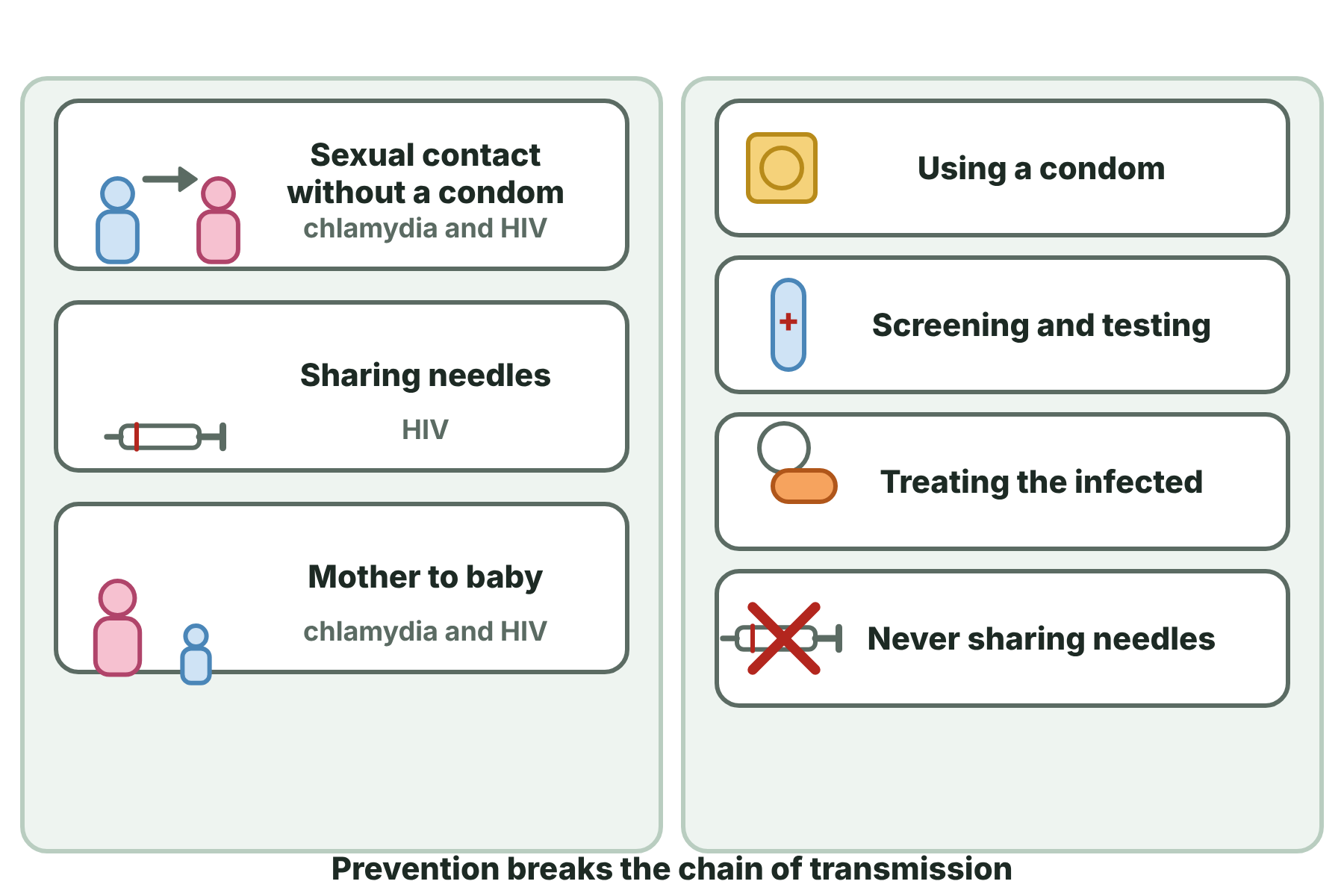
Chlamydia and HIV
- Chlamydia Caused by a bacterium; Often no symptoms, so it may go unnoticed; Can cause infertility if untreated
- HIV Caused by a virus; May have few symptoms for years; Destroys white blood cells and can lead to AIDS
Stomach Ulcers and Ebola (Separate only)
One of these diseases was found to be caused by a bacterium only in the 1980s, and the other can kill about half of the people it infects.
- Helicobacter pylori A spiral-shaped bacterium that lives in the stomach and causes ulcers.
- Stomach ulcer An open sore in the lining of the stomach.
- Oral transmission Spread by swallowing a pathogen, for example in food, water or saliva.
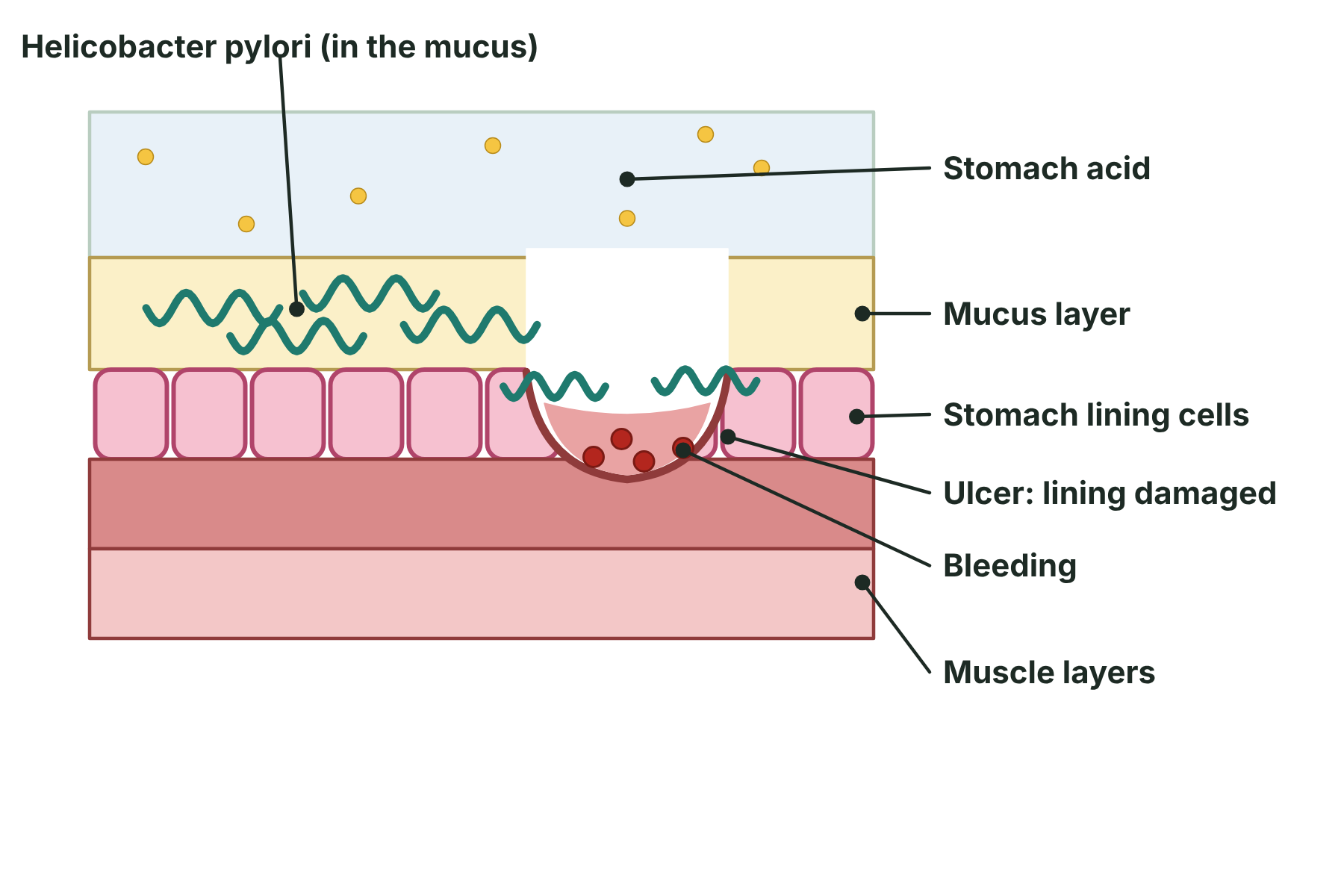
Helicobacter pylori and Ebola virus
- Stomach ulcers (Helicobacter pylori) Caused by a bacterium; Spread by oral transmission, in food and water; Damages the lining of the stomach
- Ebola Caused by a virus; Spread by contact with body fluids; Causes fever and bleeding
The Life Cycle of a Virus (Separate only)
Viruses are not cells, and cannot reproduce on their own.
- Capsid The protein coat that surrounds the genetic material of a virus.
- Lytic pathway A virus life cycle in which new viruses are made at once and the host cell bursts.
- Lysogenic pathway A virus life cycle in which the viral DNA joins the host's chromosome and is copied with it.
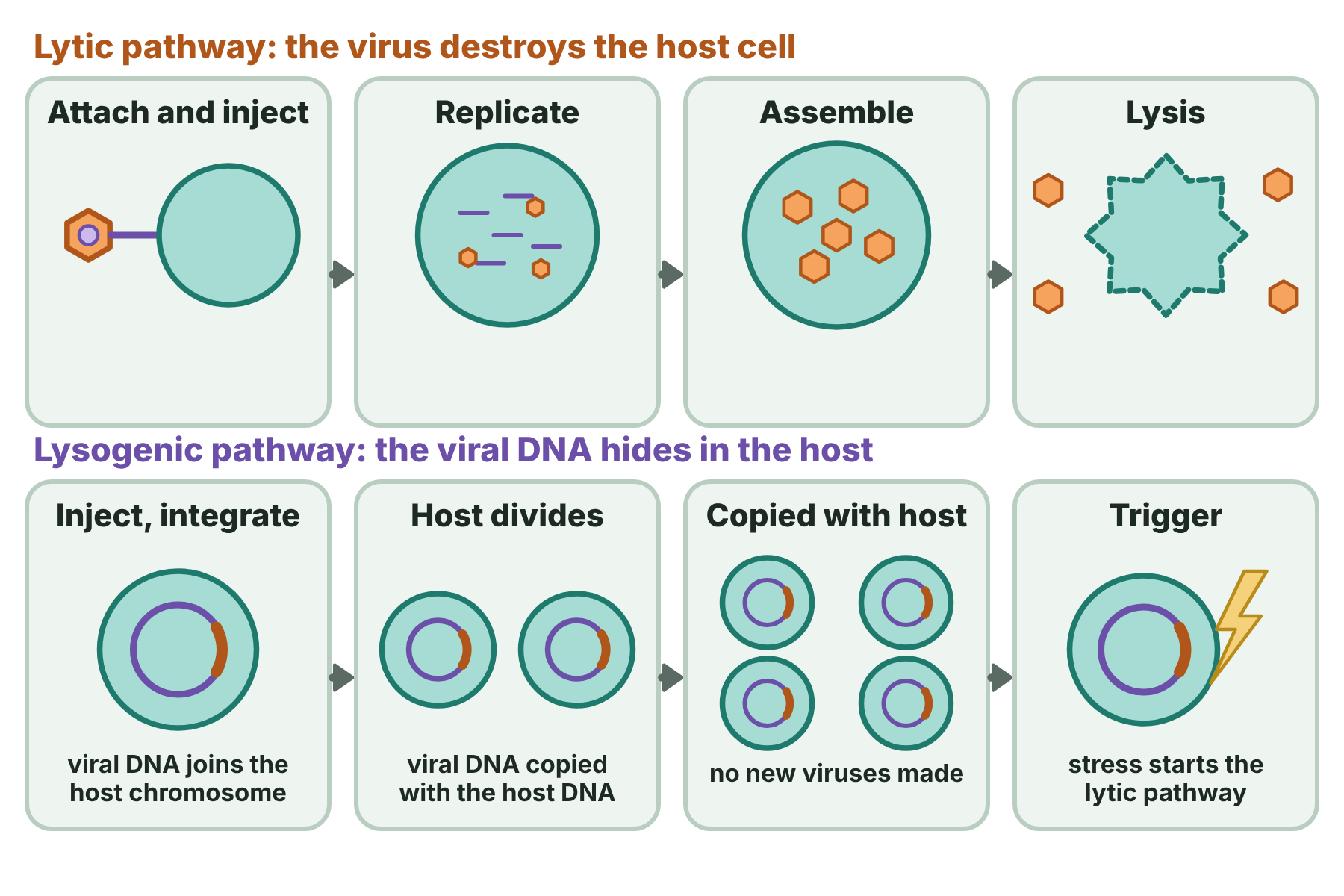
Lytic and lysogenic pathways
- Lytic pathway New viruses are made straight away; The viral genetic material is not joined to the host's; The host cell bursts and is destroyed
- Lysogenic pathway No new viruses are made at first; The viral DNA is joined to the host's chromosome; The host cell survives and divides
The lytic pathway
- Attachment The virus attaches to a host cell.
- Entry The virus injects, or the cell takes in, the virus's genetic material.
- Replication The host cell makes copies of the viral genetic material, and the viral proteins.
- Assembly The new genetic material and coats are put together to form new…