Biology · Human Defences and Immunity
Knowledge organiser
The whole chapter on two pages. Print it on A4 — they are already landscape — or cover a box and see how much of it you can say from memory.
Biology · Edexcel Paper 1
Human Defences and Immunity
Physical and Chemical Barriers
Most of the time, pathogens never get inside you. This lesson looks at the body's first line of defence: physical barriers such as the skin, mucus and cilia.
- Non-specific defence A defence that works against all pathogens in the same way.
- Barrier A structure that stops pathogens from entering the body.
- Mucus A sticky liquid made by goblet cells, which traps pathogens and dust.
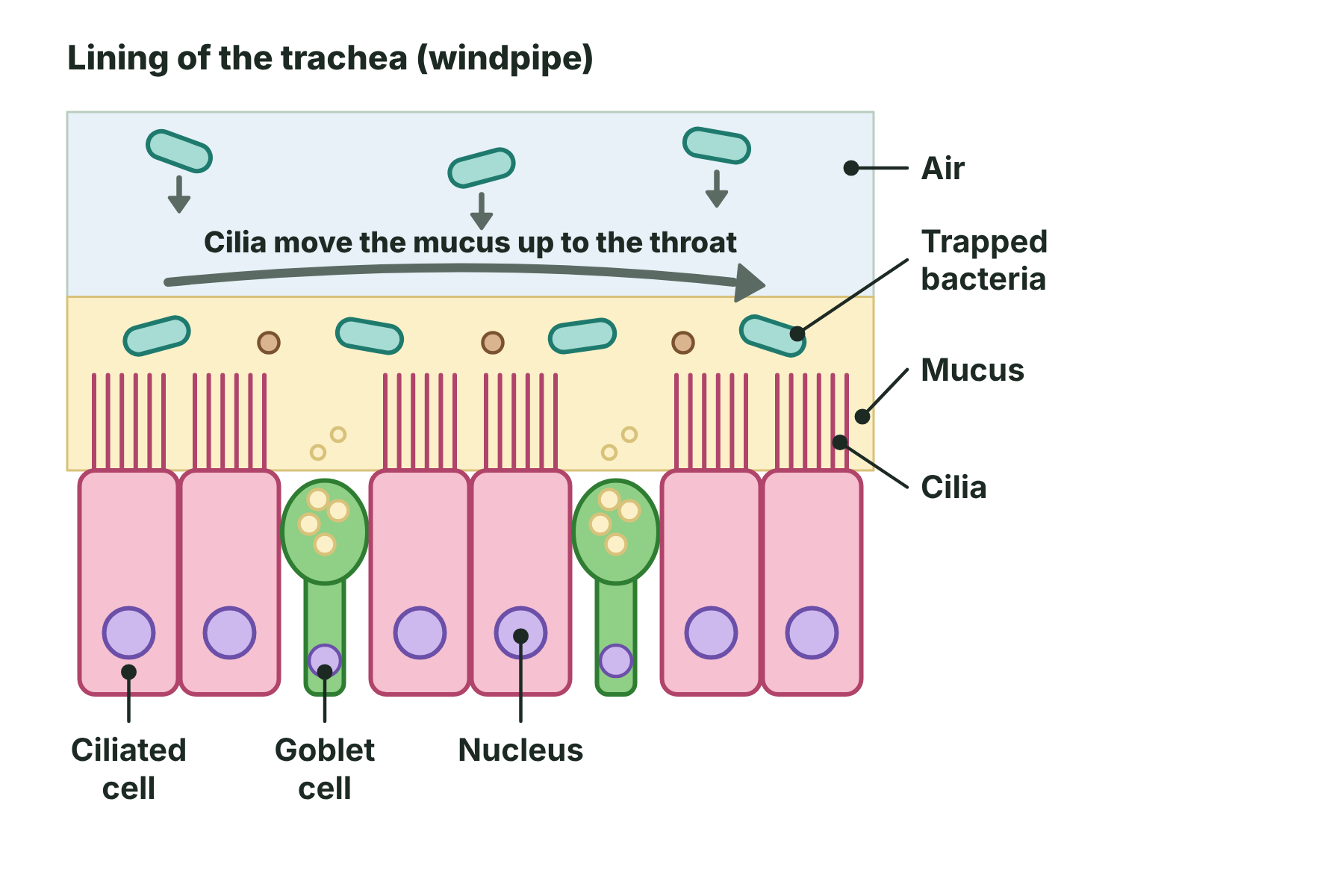
Physical and chemical defences
- Physical barriers Skin, with keratin; Mucus, which traps pathogens; Cilia, which move mucus out of the airways
- Chemical defences Lysozyme, which breaks down bacterial cell walls; Hydrochloric acid in the stomach; Sebum on the skin
The Immune System
When a pathogen gets past the barriers, the immune system takes over.
- Antigen A molecule on the surface of a cell or pathogen that the immune system recognises.
- Antibody A protein made by lymphocytes that binds to a specific antigen.
- Lymphocyte A type of white blood cell that makes antibodies.
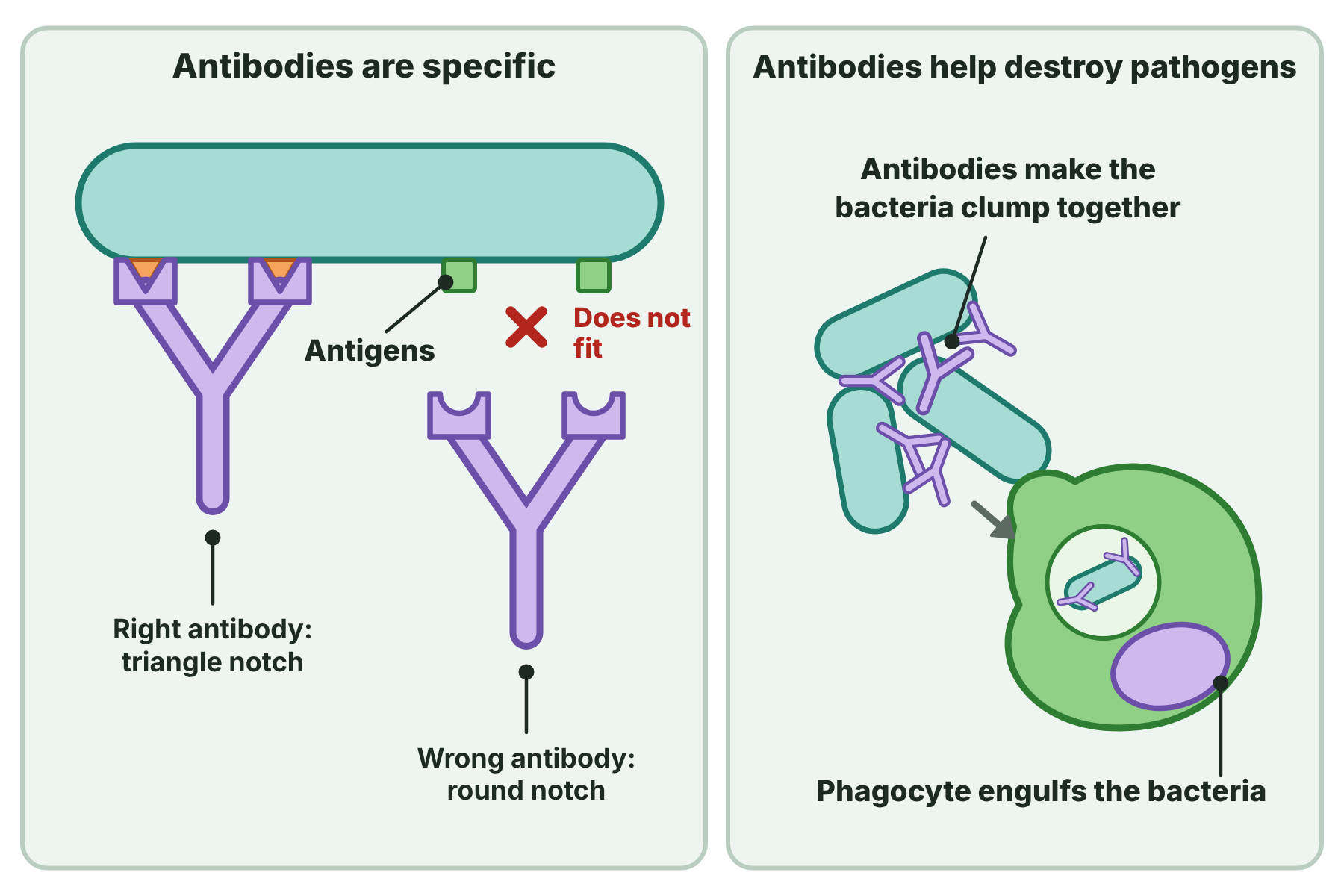
Primary and secondary responses
- Primary response First time the body meets the pathogen; Slow, taking about a week or two; A small amount of antibody is made
- Secondary response The same pathogen meets the body again; Fast, taking a few days; A larger amount of antibody is made
The immune response
- Exposure A pathogen enters the body, and phagocytes may engulf some of it.
- Antigen recognised A lymphocyte with a receptor that fits the pathogen's antigen is activated.
- Lymphocytes multiply The activated lymphocyte divides many times.
- Antibodies made Many of these cells make antibodies that fit the antigen.
Immunisation
Vaccination has saved more lives than almost any other medical advance.
- Vaccine A preparation containing inactive or weakened pathogens, or their antigens, that makes the body immune to a disease.
- Immunisation Making a person immune to a disease, by giving a vaccine.
- Inactive pathogen A pathogen that has been killed or changed so that it cannot cause disease, but still has its antigens.
Biology · Edexcel Paper 1
Human Defences and Immunity continued
Vaccination and catching the disease
- Vaccination Uses an inactive or weakened pathogen; The person does not become ill; Memory lymphocytes are made
- Catching the disease The live pathogen infects the person; The person may become very ill, or die; Memory lymphocytes are made
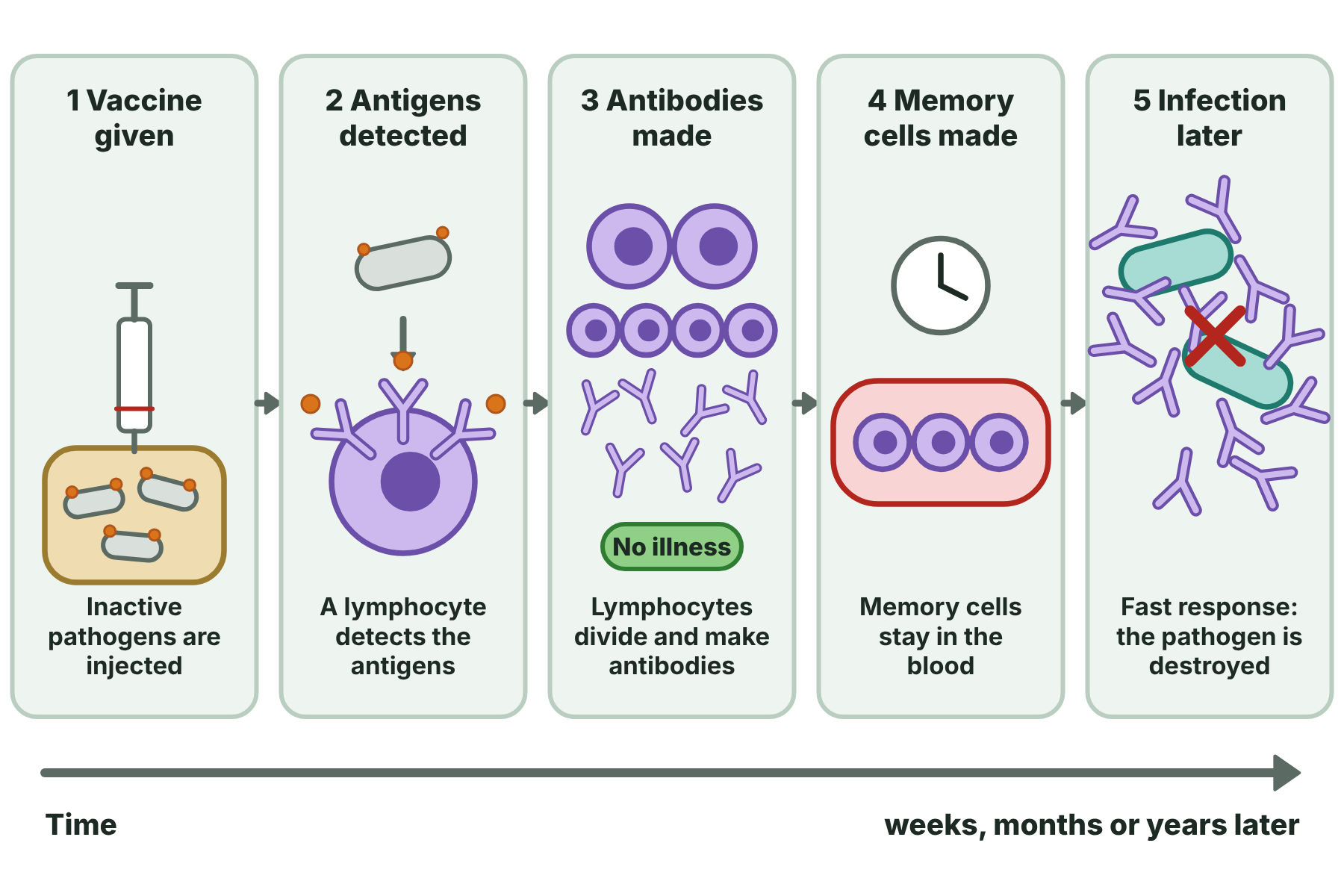
How a vaccine works
- Vaccine given A dose containing the inactive pathogen is injected into the person.
- Antigens detected Lymphocytes recognise the antigens on the inactive pathogen as foreign.
- Primary response The lymphocytes divide and make antibodies.
- Memory cells made Memory lymphocytes remain in the blood, ready for the real pathogen.
Herd Immunity and Evaluating Vaccination (Separate only)
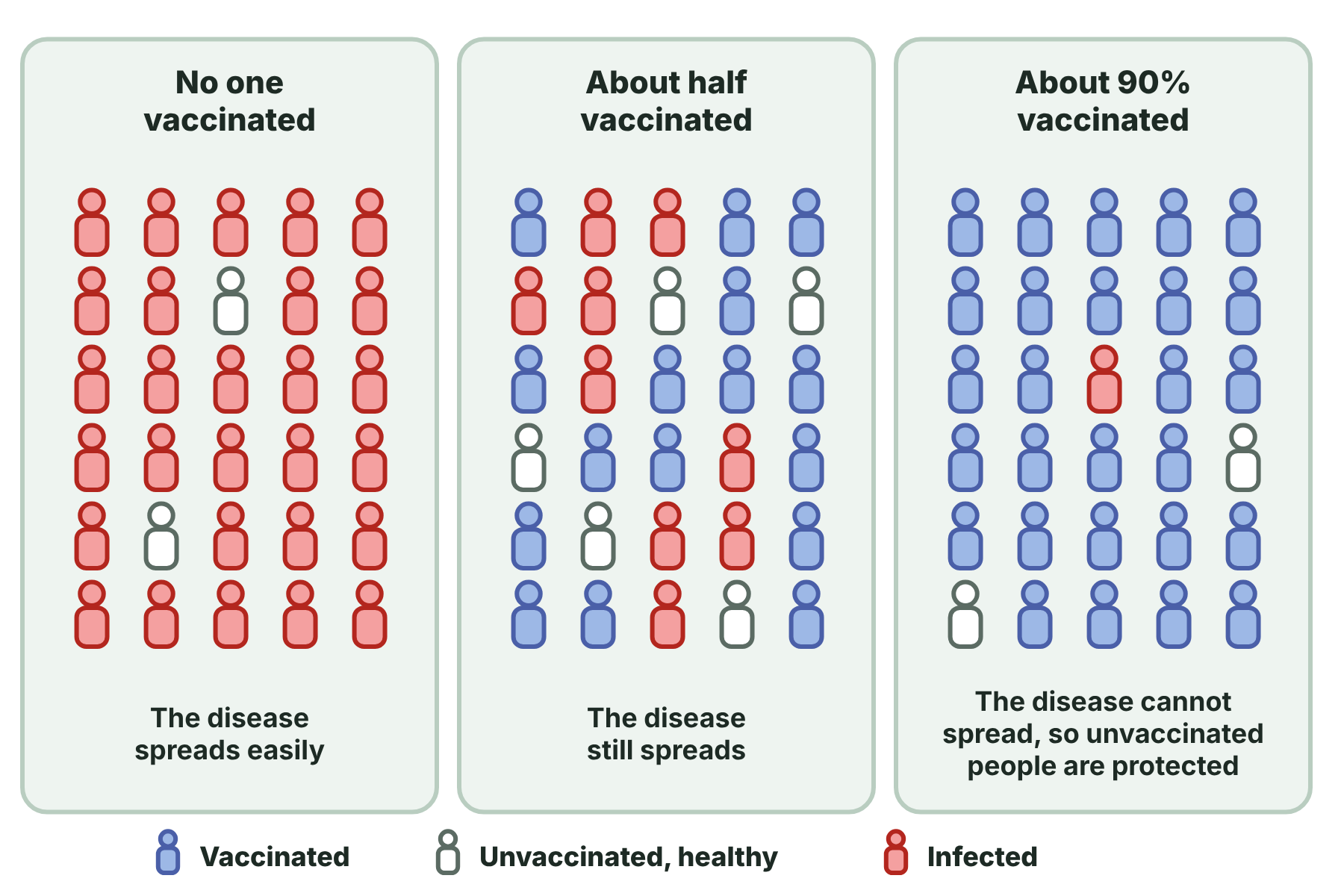
When enough people are vaccinated, even those who are not protected are safer.
- Herd immunity The protection of unvaccinated people from a disease, because so many others are immune that the disease cannot spread.
- Vaccination programme A plan to vaccinate a whole population against a disease.
- Uptake The proportion of people who accept a vaccine.
Benefits and concerns of vaccination
- Advantages Prevents serious disease and saves lives; Herd immunity protects the vulnerable; Can eradicate diseases
- Disadvantages Mild side effects are common, and rarely severe ones; Not 100% effective for every person; Some pathogens change, so new vaccines are needed
Antibiotics
Antibiotics changed medicine, but they only work on bacteria.
- Antibiotic A drug that kills bacteria or stops them growing.
- Penicillin The first widely used antibiotic, made from the mould Penicillium.
- Cell wall A rigid layer outside the cell membrane of a bacterium, which human cells do not have.
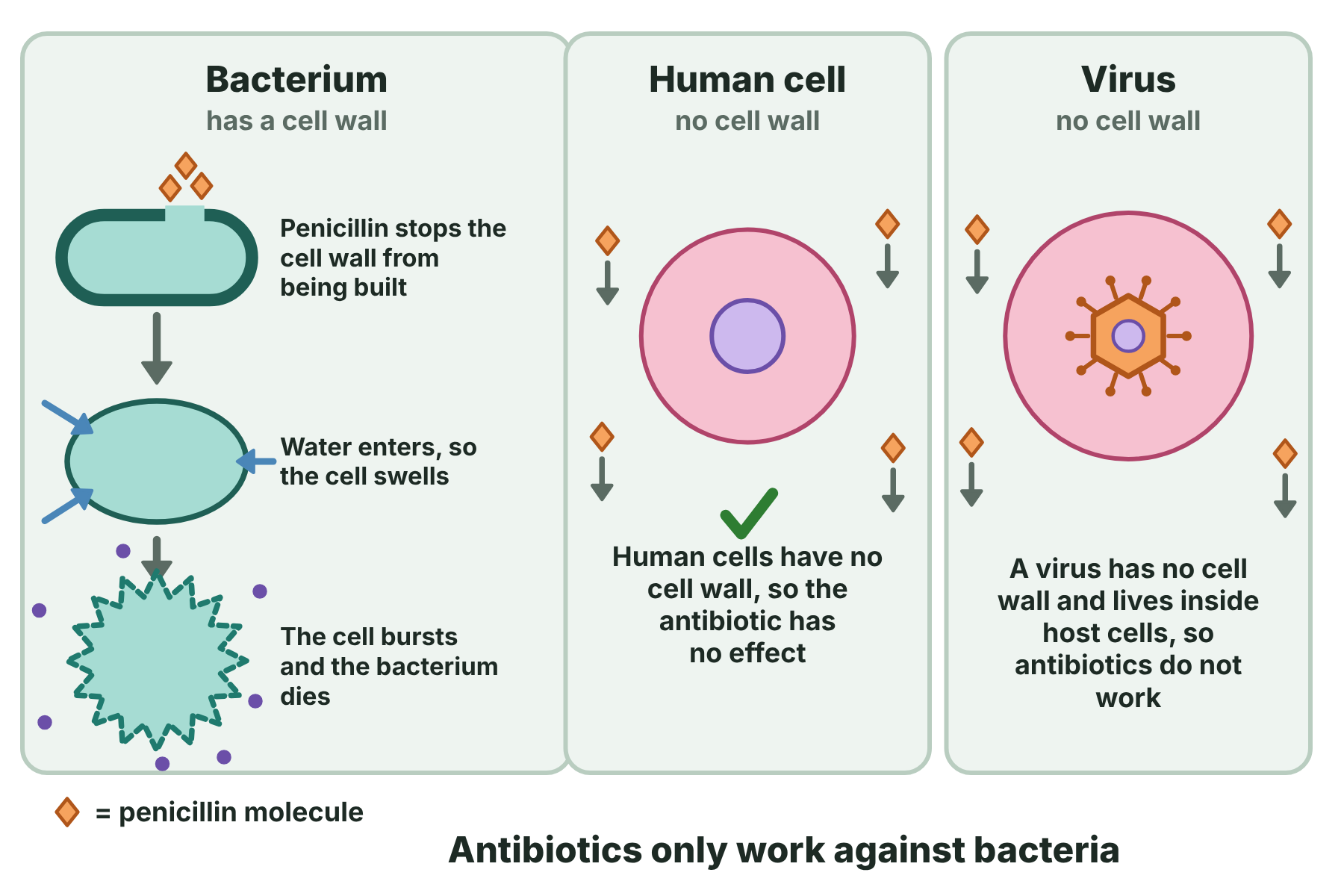
Bacterial and viral infections
- Bacterial infection Caused by bacteria, which are living cells; Bacteria have cell walls and their own ribosomes; Treated with antibiotics
- Viral infection Caused by viruses, which are not cells; Viruses reproduce inside host cells; Antibiotics do not work, so vaccines or antiviral drugs are used