Biology · Mitosis, Growth and Stem Cells
Knowledge organiser
The whole chapter on one page. Print it on A4 — it is already landscape — or cover a box and see how much of it you can say from memory.
Biology · Edexcel Paper 1
Mitosis, Growth and Stem Cells
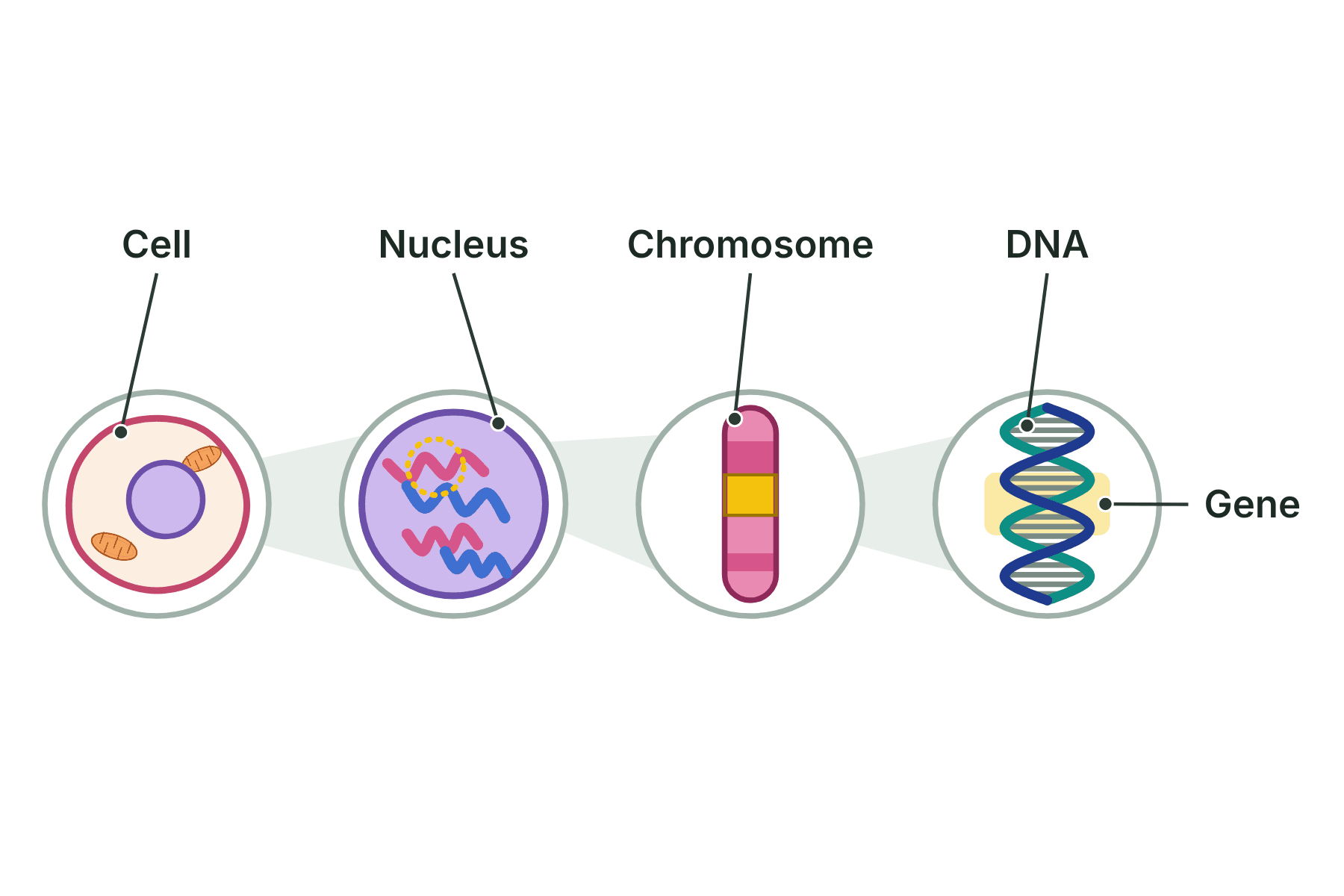
Chromosomes, Genes and DNA
Chromosomes are made of DNA, and genes are short sections of that DNA.
- Nucleus The part of a eukaryotic cell that contains the genetic material and controls the cell's activities.
- Chromosome A long, coiled molecule of DNA in the nucleus that carries a large number of genes.
- DNA The molecule that stores genetic information, made of two strands twisted into a double helix.
The Cell Cycle and Mitosis
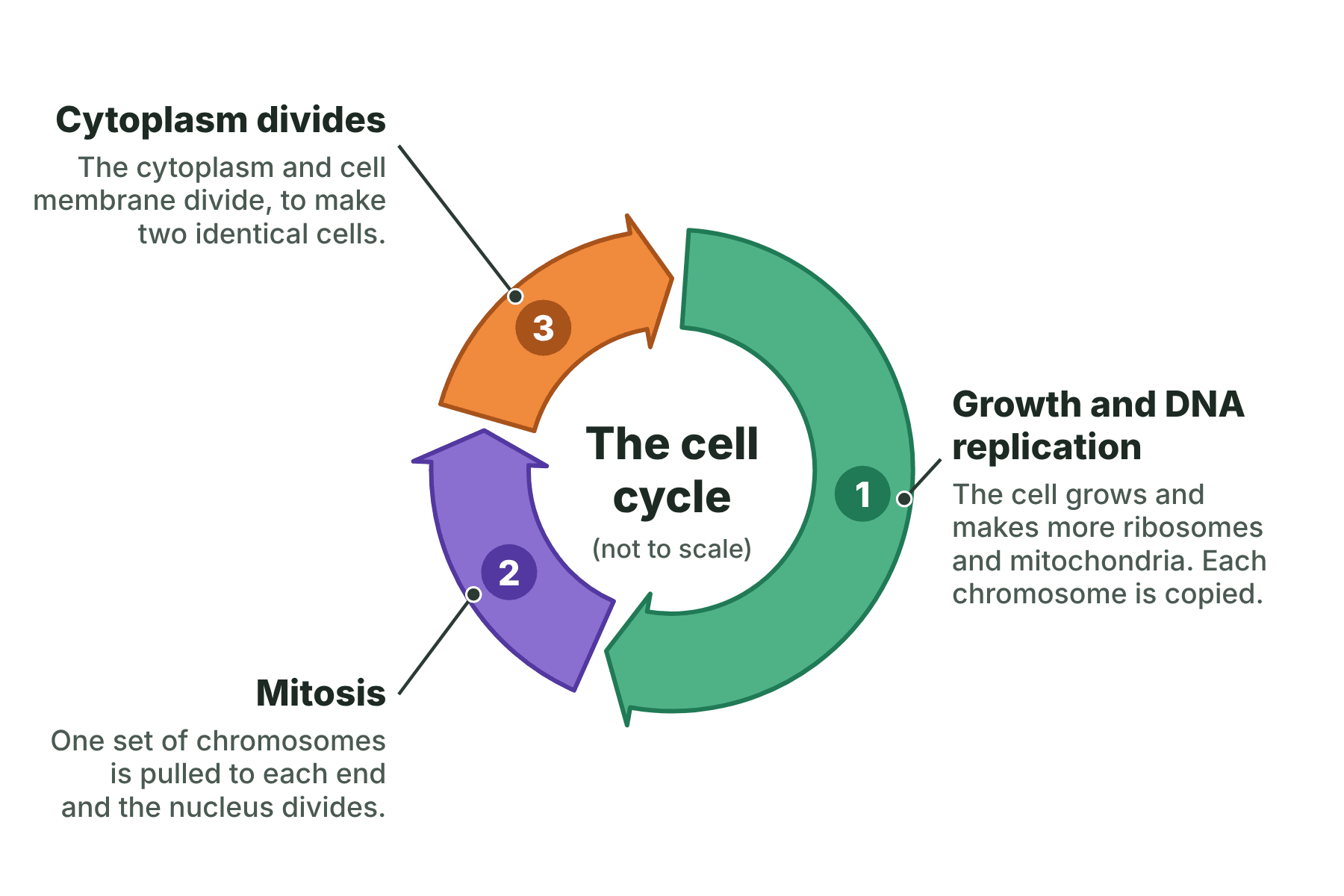
Mitosis makes two cells that are genetically identical to the parent cell.
- Cell cycle The series of stages a cell goes through to grow, copy its DNA and divide into two cells.
- Mitosis The stage of the cell cycle in which one set of chromosomes is pulled to each end of the cell and the nucleus divides.
- DNA replication The copying of DNA, so that there are two identical copies of each chromosome.
Mitosis, step by step
- The cell grows Before dividing, the cell grows and makes more organelles, such…
- The DNA is copied Each chromosome is replicated.
- The chromosomes line up The chromosomes line up across the middle of the cell.
- The copies are pulled apart One set of chromosomes is pulled to each end of the cell.
Stem Cells
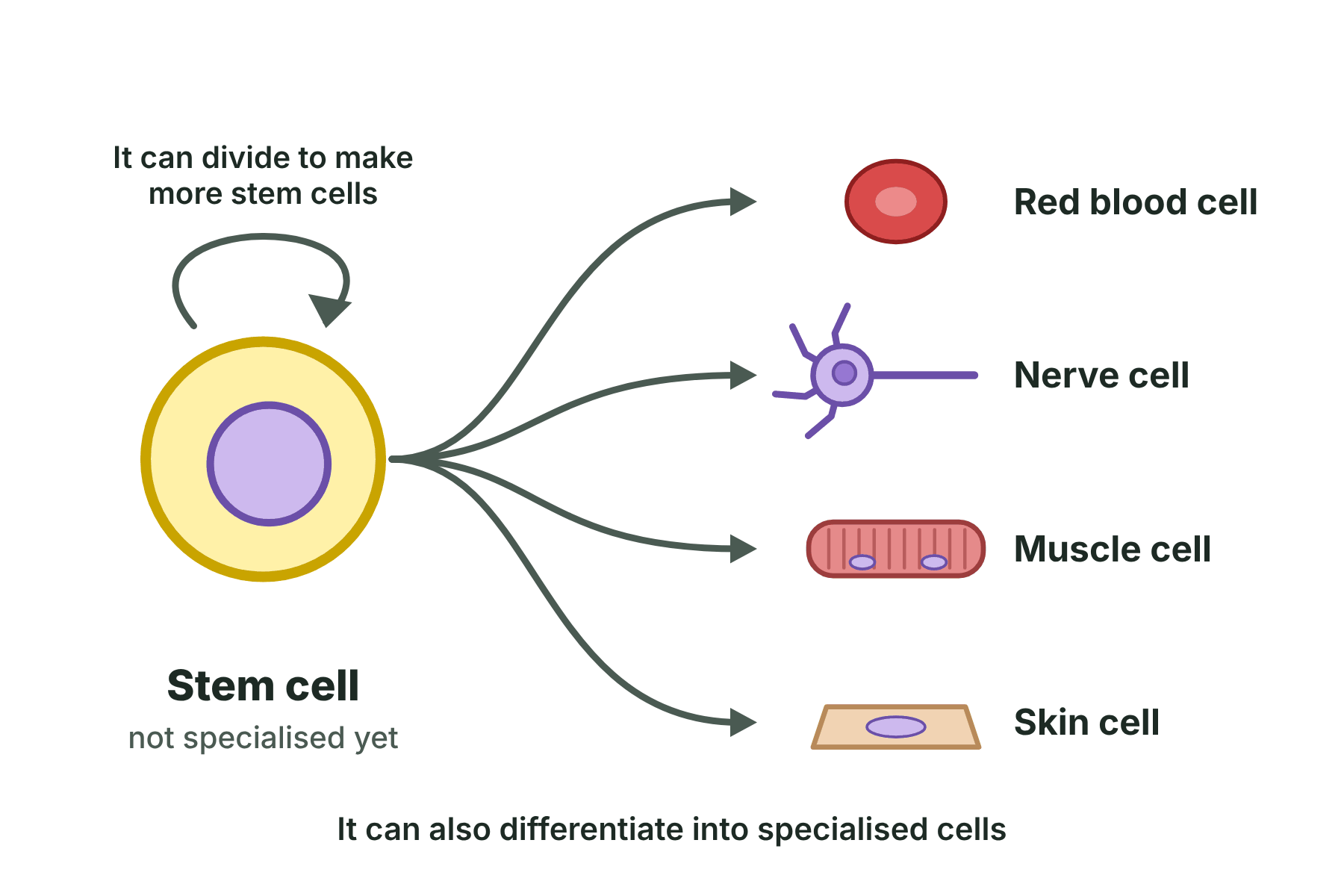
A stem cell can divide to make more cells, and it can differentiate into specialised cells.
- Stem cell An undifferentiated cell that can divide to make more cells of the same type and can differentiate into specialised cells.
- Undifferentiated Not yet specialised for any particular job.
- Differentiation The process by which a cell changes to become specialised for its job.
Embryonic and adult stem cells
- Embryonic stem cells Found in human embryos; Can be cloned and made to differentiate into most types of human cell; Can make almost any specialised cell
- Adult stem cells (bone marrow) Found in the bone marrow of adults; Can form many types of cell, including blood cells; Can make fewer types of cell than embryonic stem cells
Using Stem Cells
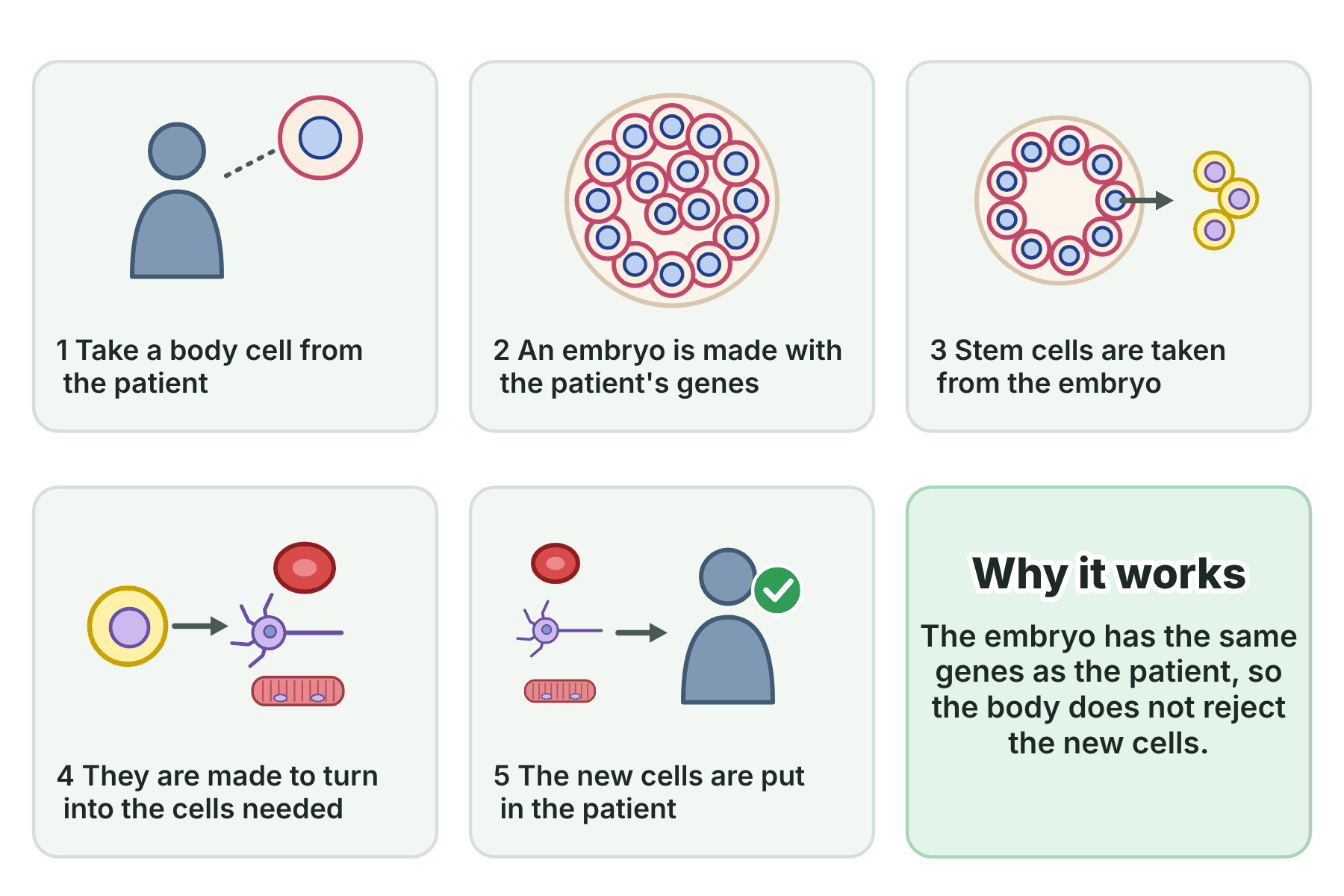
Therapeutic cloning produces stem cells that the patient's body will not reject, because the embryo has the same genes as the patient.
- Therapeutic cloning Making an embryo with the same genes as a patient, so that its stem cells can be used in treatment without being rejected.
- Rejection When the body's immune system attacks cells or tissue that it recognises as foreign.
- Clone An organism, or cell, that is genetically identical to another.
Using stem cells: benefits and risks
- Benefits Could replace cells lost in diabetes, paralysis and other conditions; Embryos used in research may otherwise be thrown away; May reduce the need to wait for a donor
- Risks and objections Risk of transferring a viral infection to the patient; Some people have ethical or religious objections; Many of the treatments are still being researched