Biology · Plant Defences and Disease
Knowledge organiser
The whole chapter on one page. Print it on A4 — it is already landscape — or cover a box and see how much of it you can say from memory.
Biology · Edexcel Paper 1
Plant Defences and Disease
Physical Defences of Plants (Separate only)
Plants cannot run away from the animals that eat them, or from the microorganisms that infect them.
- Cuticle The waxy layer on the surface of a leaf that reduces water loss and is a barrier to pathogens.
- Cell wall The rigid outer layer of a plant cell, made of cellulose.
- Physical barrier A structure that stops a pathogen or a pest from entering a plant.
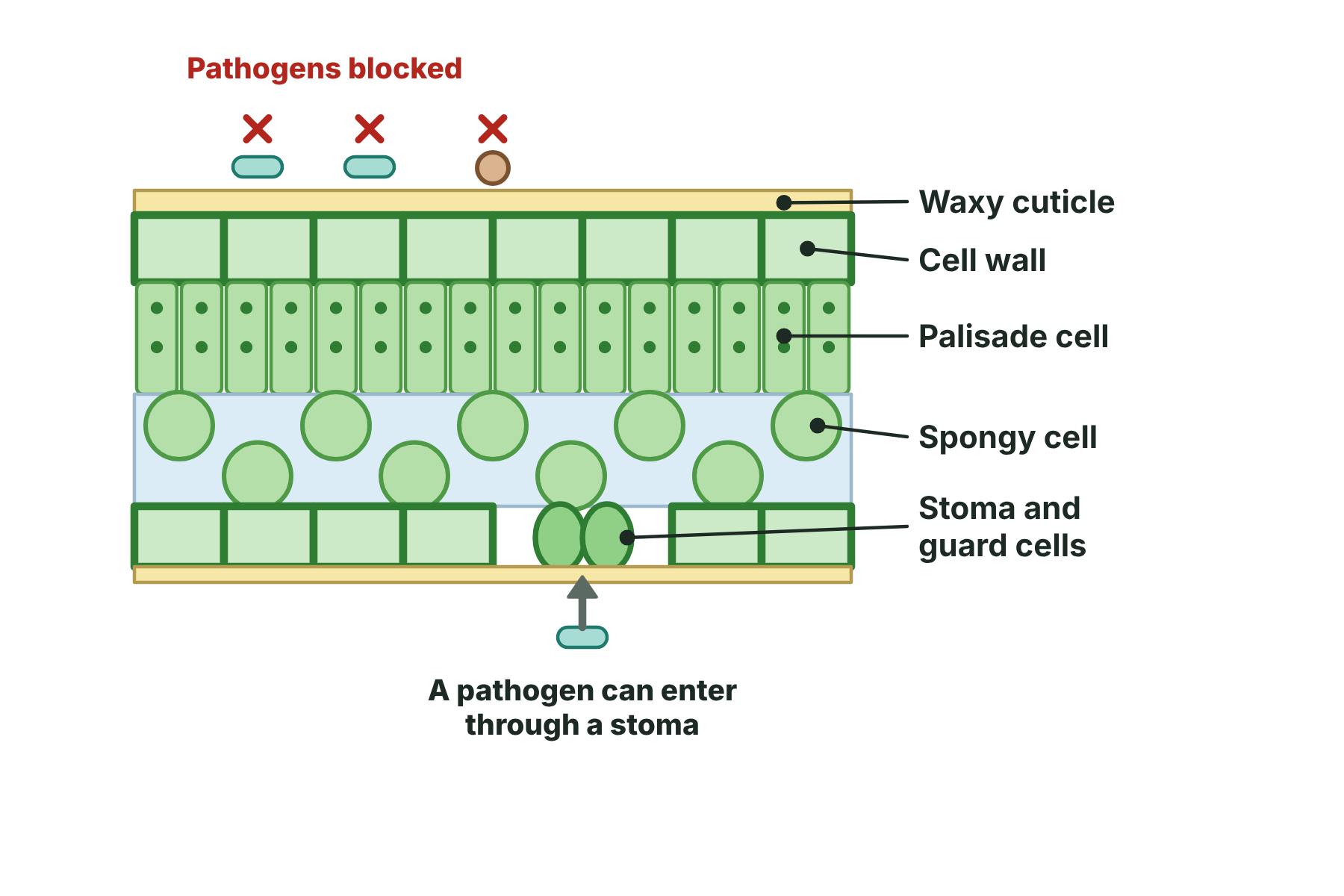
Physical and chemical defences
- Physical defences Structures that stop an attack from getting in; Always present, as part of the plant; Examples: cuticle, cell wall, bark, thorns
- Chemical defences Substances that kill or deter attackers; Many are made when the plant is under attack; Examples: poisons, antibacterial chemicals, bitter compounds
Chemical Defences of Plants (Separate only)
Many plants make poisons, bitter chemicals and antibiotics.
- Chemical defence A chemical made by a plant that protects it from pests and pathogens.
- Antibacterial Able to kill bacteria or stop them growing.
- Toxin A poison.
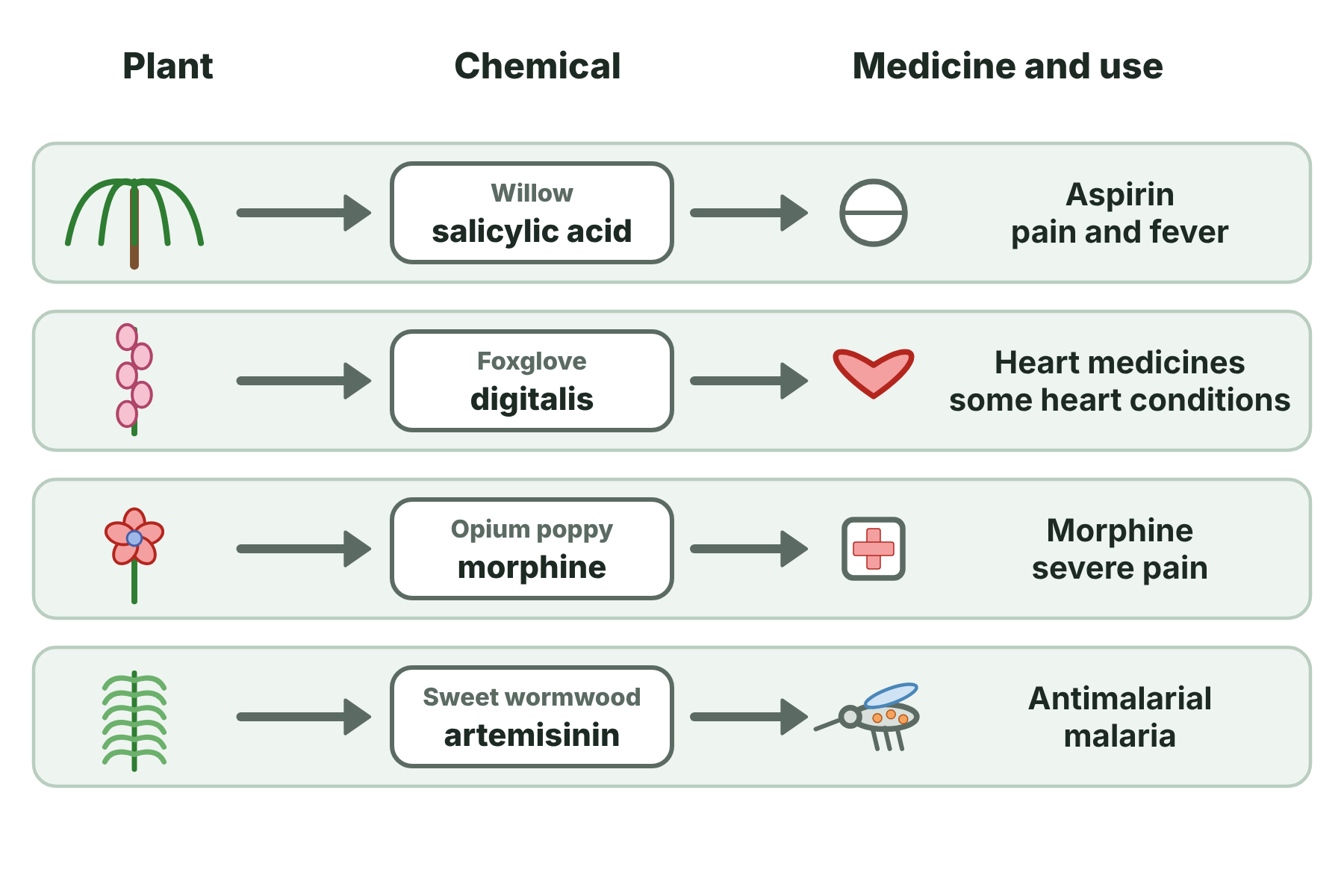
Plants and their chemicals
- How the plant uses the chemical Poison to stop herbivores eating the plant; Antibacterial or antifungal chemicals to kill pathogens; Bitter taste or irritant to deter pests
- How people use it Medicines for pain, such as aspirin and morphine; Drugs for the heart, such as digitalis; Antimalarial drugs, such as quinine and artemisinin
Detecting Plant Diseases (Separate only)
How do you tell what is wrong with a sick plant? This lesson is for separate Biology only: Combined Science students do not need it.
- Symptom A visible sign of disease in a plant, such as spots or wilting.
- Chlorosis Yellowing of leaves because of a lack of chlorophyll.
- Mineral deficiency A lack of a mineral that a plant needs, such as nitrate or magnesium.
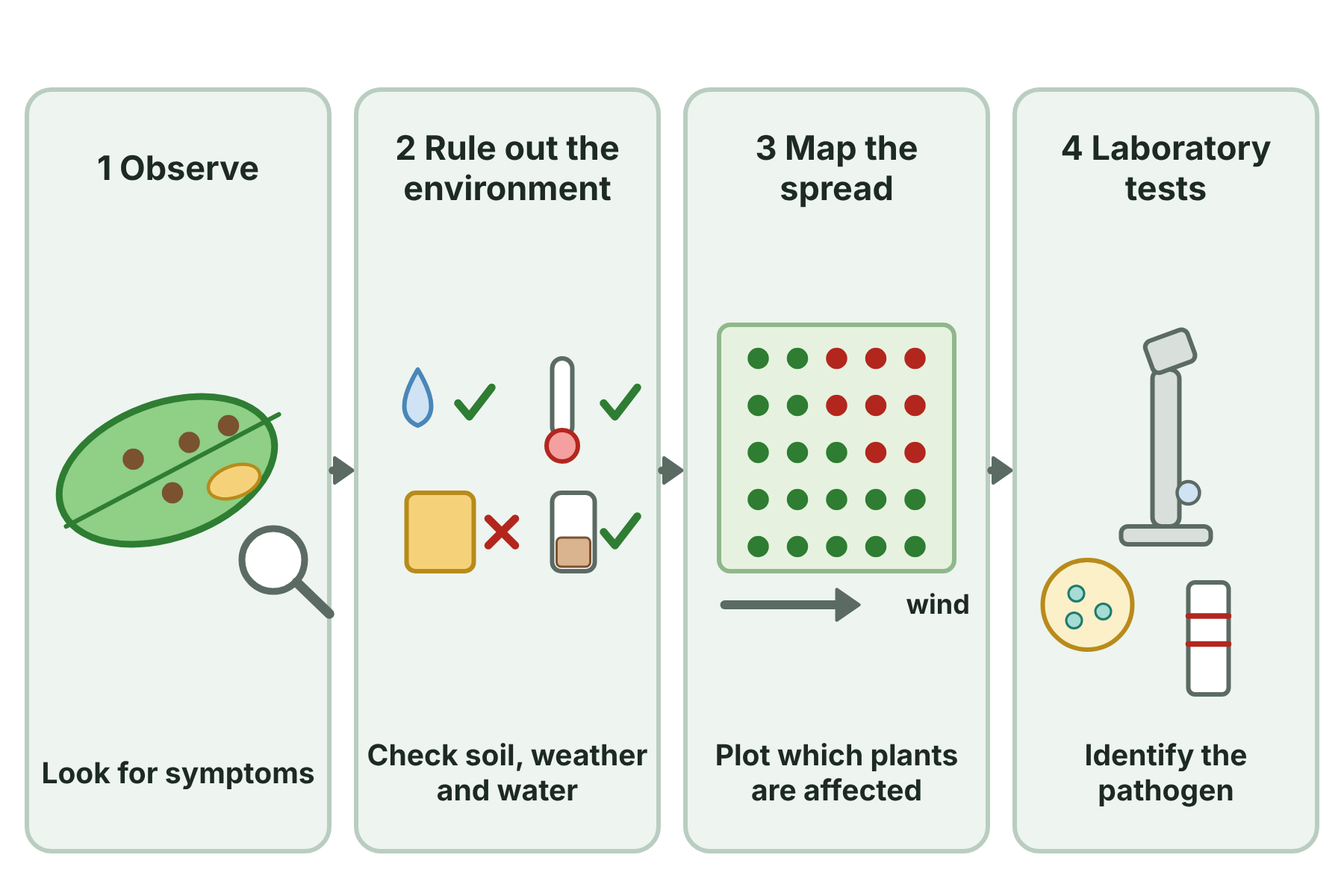
Pathogen or environment?
- Signs of a pathogen Affected plants clustered, and spreading; Symptoms start in one place and move outwards; A pathogen is found in a test
- Signs of an environmental cause Plants affected evenly across the area; A deficiency or damage is found in the soil or weather; No pathogen is found