Biology · Reproduction, Meiosis and Variation
Knowledge organiser
The whole chapter on two pages. Print it on A4 — they are already landscape — or cover a box and see how much of it you can say from memory.
Biology · Edexcel Paper 1
Reproduction, Meiosis and Variation
Meiosis and Gametes
Your body cells have 46 chromosomes, but a sperm or an egg has only 23.
- Meiosis A type of cell division that produces four genetically different haploid gametes.
- Gamete A sex cell, such as a sperm or an egg, with half the number of chromosomes of a body cell.
- Haploid Having one set of chromosomes, as in a gamete.
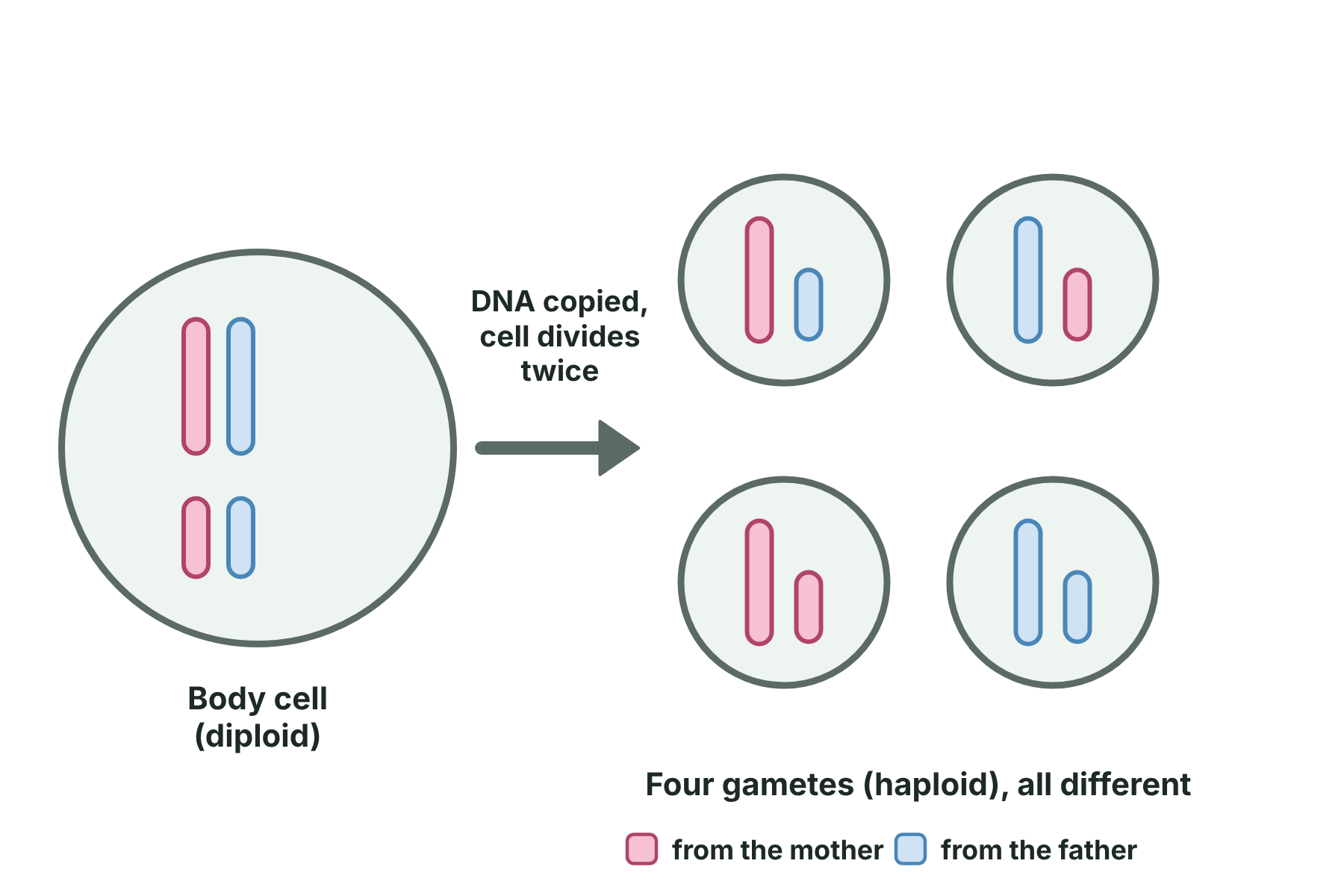
Mitosis and meiosis
- Mitosis Makes two daughter cells; Daughter cells are genetically identical; Used for growth, repair and asexual reproduction
- Meiosis Makes four daughter cells; Daughter cells have half the number of chromosomes (haploid); Daughter cells are genetically different
What happens in meiosis
- Start A diploid cell in the ovary or testis has pairs of chromosomes.
- Copying The DNA is copied, so each chromosome has two identical copies.
- First division The chromosome pairs separate, and the cell divides into two.
- Second division The copies of each chromosome separate and the cells divide again.
Asexual and Sexual Reproduction (Separate only)
Some organisms reproduce with one parent and some need two.
- Asexual reproduction Reproduction with one parent, in which the offspring are genetically identical to the parent.
- Sexual reproduction Reproduction involving the fusion of male and female gametes, which produces genetically different offspring.
- Clone An organism that is genetically identical to another.
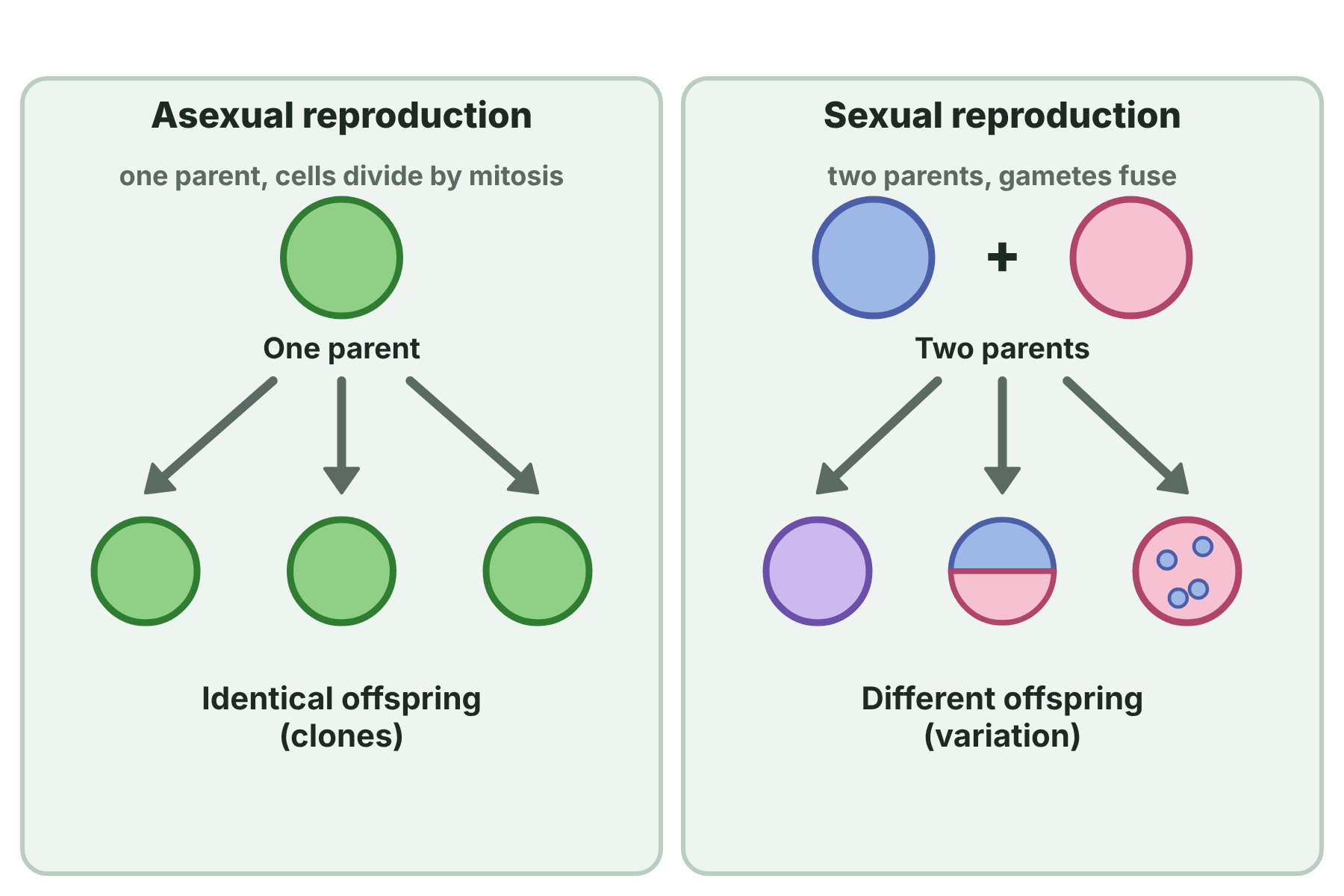
Asexual and sexual reproduction
- Asexual reproduction One parent only; No gametes, and no fertilisation; Cells divide by mitosis
- Sexual reproduction Two parents; Gametes are made by meiosis and fuse at fertilisation; Offspring are genetically different from both parents
Biology · Edexcel Paper 1
Reproduction, Meiosis and Variation continued
Causes of Variation
No two people are exactly alike. This lesson explains how genes and the environment each cause differences between individuals.
- Variation The differences between individuals of the same species.
- Genetic variation Differences in characteristics caused by differences in genes.
- Environmental variation Differences in characteristics caused by the environment, also called acquired characteristics.
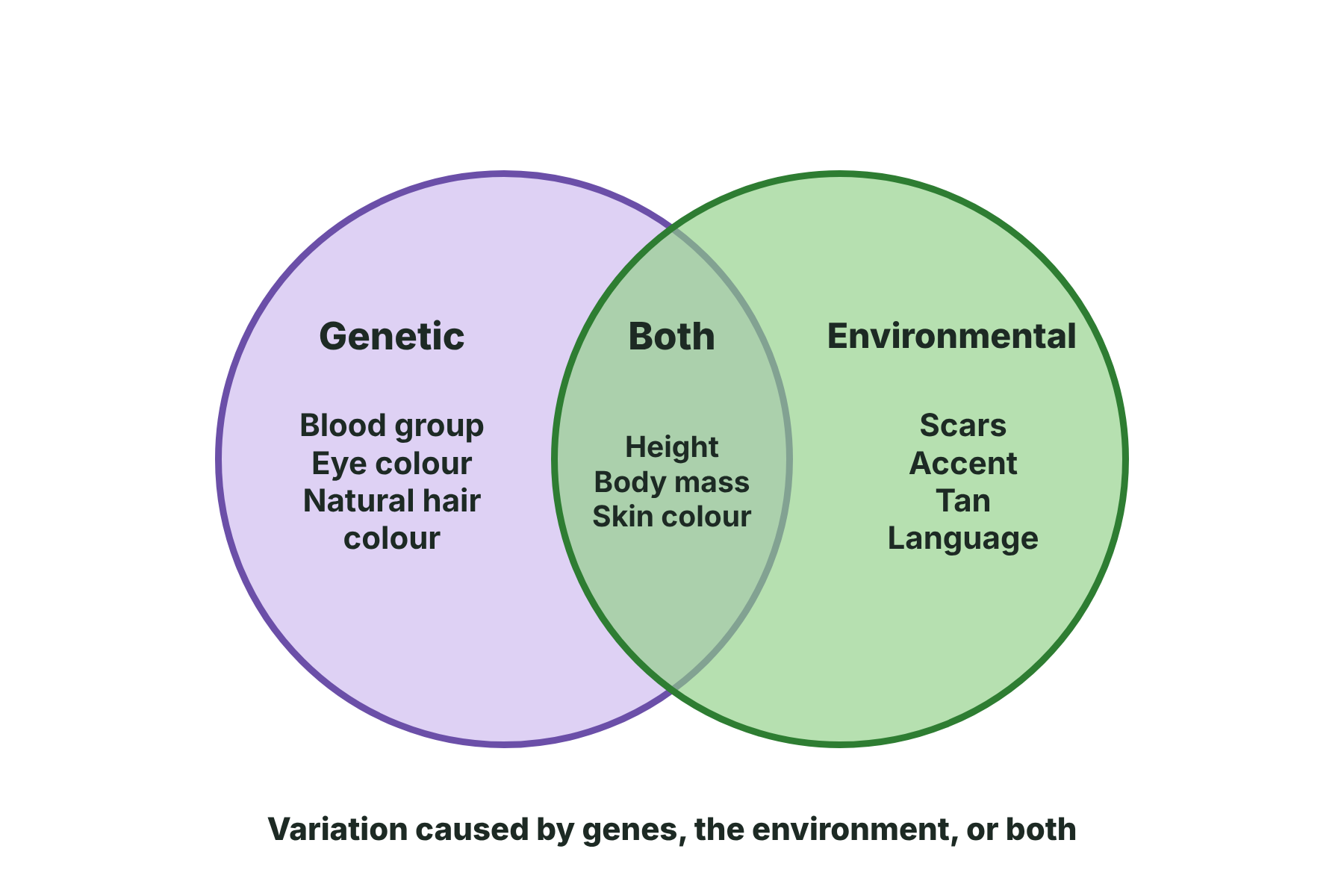
Continuous and discontinuous variation
- Continuous variation Any value in a range, with no clear groups; Examples: height, mass, leaf length; Usually controlled by many genes, and often by the environment as well
- Discontinuous variation Falls into distinct categories, with no in-between values; Examples: blood group, sex, ability to roll your tongue; Usually controlled by one gene (or a few)
Mutations and Genetic Variation
Every new allele began as a mutation. This lesson explains what mutations are, what causes them, why most of them do nothing.
- Mutation A random change in the base sequence of DNA.
- Allele A different version of the same gene.
- Mutagen Something that increases the rate of mutation, such as ionising radiation or certain chemicals.
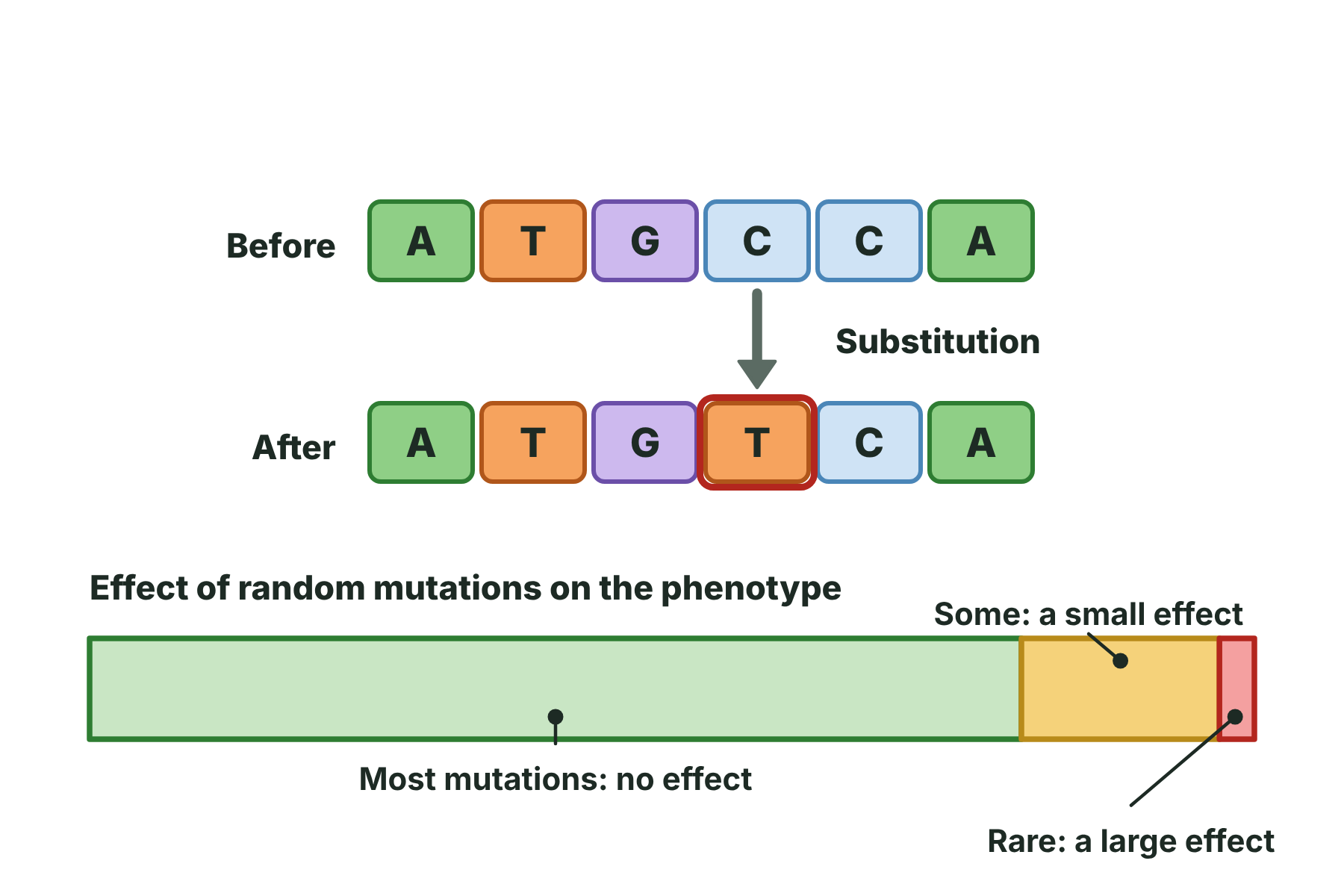
Mutations in different cells
- Mutation in a body cell Happens in a cell such as the skin; Can be copied into the new cells made by mitosis; May cause cancer if it affects the control of cell division
- Mutation in a gamete Happens in a cell that makes gametes, or a gamete; Is present in every cell of the offspring; May cause an inherited disorder or a new variation