Biology · Selective Breeding and Genetic Engineering
Knowledge organiser
The whole chapter on three pages. Print it on A4 — they are already landscape — or cover a box and see how much of it you can say from memory.
Biology · Edexcel Paper 1
Selective Breeding and Genetic Engineering
Selective Breeding
For thousands of years farmers have chosen the best animals and plants to breed from.
- Selective breeding Breeding organisms with desired characteristics over many generations, so that the characteristics become more common.
- Artificial selection Another name for selective breeding, since humans do the selecting.
- Domesticated Tamed and kept by humans, as farm animals and pets are.
Natural selection and selective breeding
- Natural selection The environment decides which individuals survive; Features that help survival become more common; No one has a goal in mind
- Selective breeding People decide which individuals breed; Features that people want become more common; It has a purpose, such as a higher yield
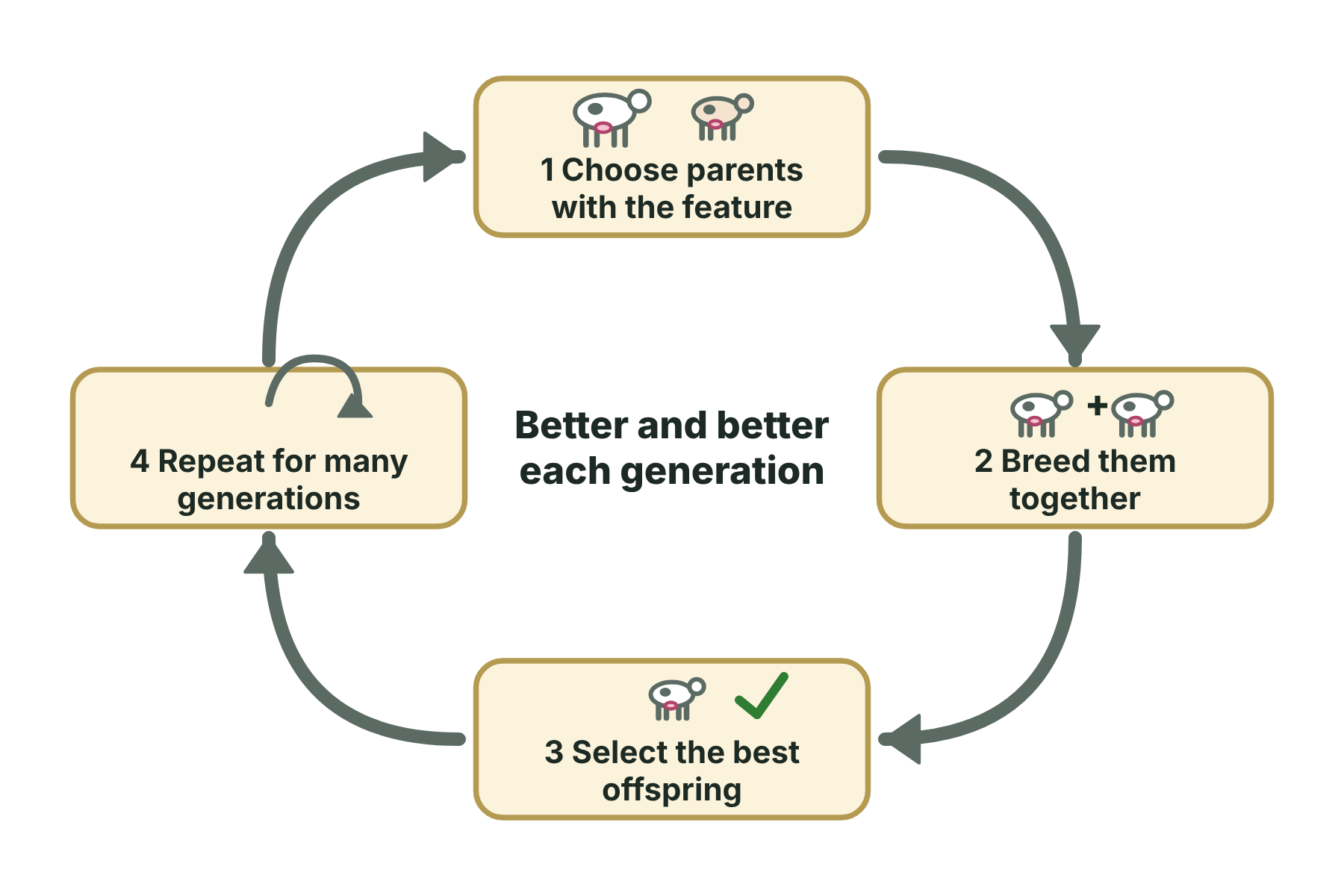
The steps of selective breeding
- Choose parents Select the individuals that show the characteristic you want…
- Breed them Breed the selected parents together.
- Select the best offspring From the offspring, choose the ones with the characteristic most strongly.
- Repeat Repeat the process over many generations, until the desired…
Tissue Culture (Separate only)
A single plant cell can grow into a whole new plant. This lesson is for separate Biology only: Combined Science students do not need it.
- Tissue culture Growing tissues or cells in a sterile laboratory dish with nutrients.
- Explant A small piece of tissue taken from a plant, to grow in culture.
- Callus A mass of undifferentiated plant cells that grows in tissue culture.
Advantages and disadvantages of tissue culture
- Advantages Produces many identical plants quickly; Works all year round, in a small space; Plants can be free of disease
- Disadvantages Expensive, and needs skilled workers and special equipment; A sterile technique is needed, and contamination ruins the culture; Not possible for all species
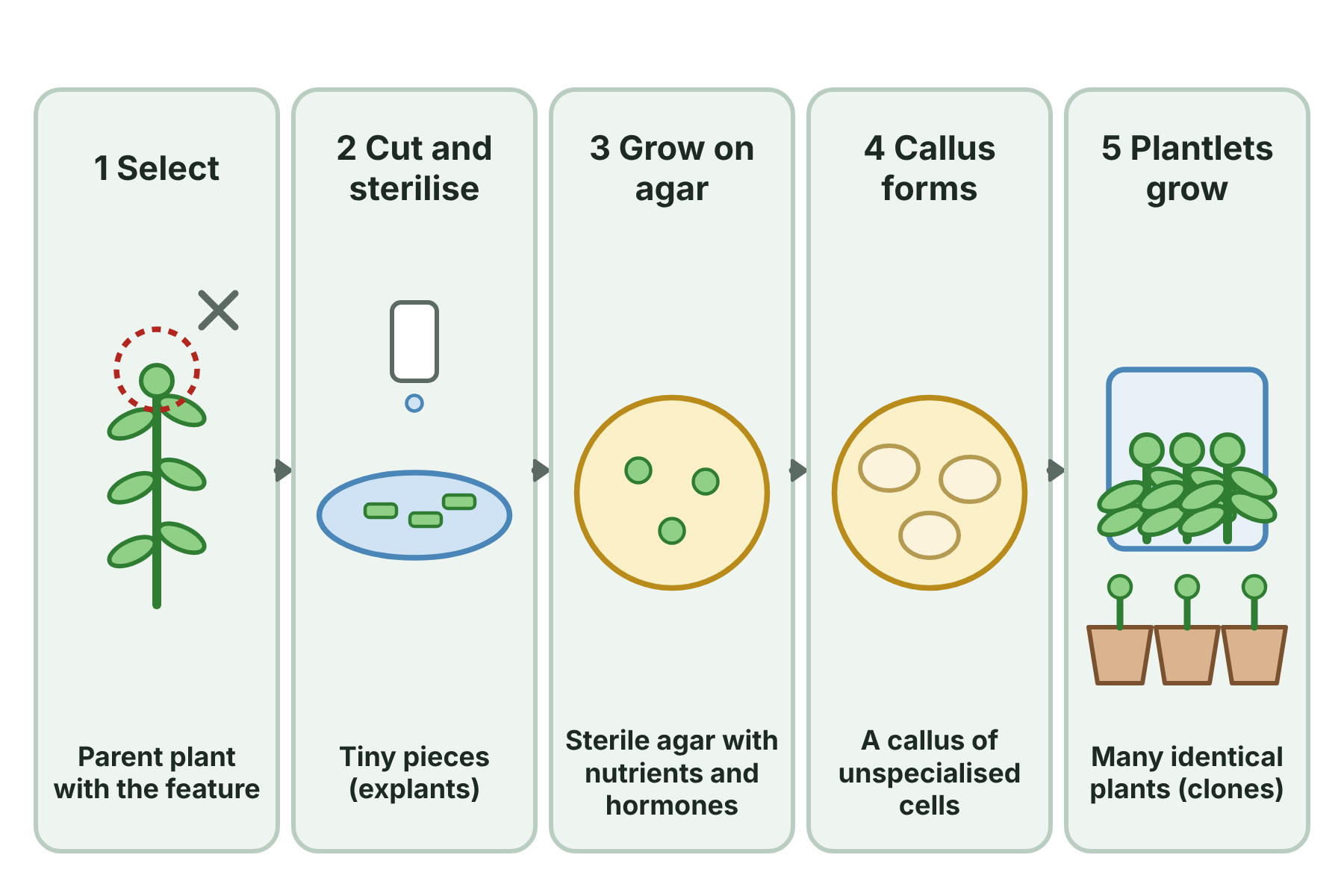
Plant tissue culture
- Choose the parent Select a plant with the desired features, such as high yield or…
- Take small pieces Cut tiny pieces, called explants, from the tip of a shoot or from a leaf.
- Sterilise Wash them in disinfectant to kill any microorganisms on the surface.
- Grow on nutrient agar Place them on sterile agar jelly containing nutrients and plant hormones.
Biology · Edexcel Paper 1
Selective Breeding and Genetic Engineering continued
Genetic Engineering
Genetic engineering lets scientists move a gene from one species to another in a single step.
- Genetic engineering Modifying the genome of an organism by introducing a gene from another organism, to give a desirable characteristic.
- Genetically modified (GM) An organism that has had its genes changed by genetic engineering.
- Genome The entire DNA of an organism.
Selective breeding and genetic engineering
- Selective breeding Uses genes already in the species; Takes many generations; Chooses whole organisms, with all their genes
- Genetic engineering Can use a gene from any species; Takes effect in one generation; Moves one gene, or a few, at a time
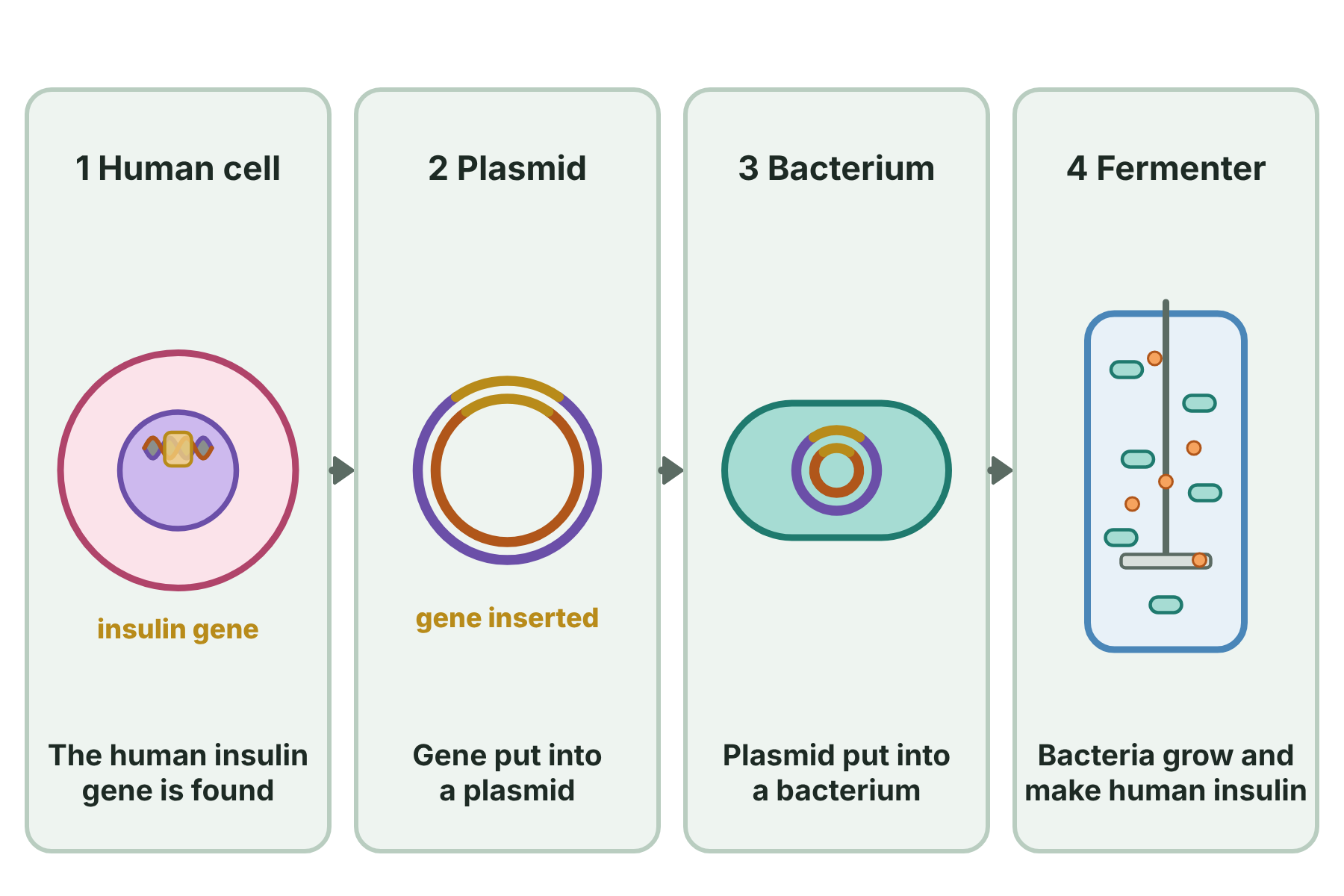
The basic idea of genetic engineering
- Find the gene Identify the gene for the characteristic that you want.
- Cut it out Remove the gene from the DNA of that organism.
- Insert it Put the gene into the genome of the target organism, often using…
- Grow the host The host cells are grown, and copy the new gene each time they divide.
The Stages of Genetic Engineering (Higher tier) (Higher tier)
How exactly is a gene cut out and put into a bacterium? This lesson is for the Higher tier only: Foundation students do not need it.
- Restriction enzyme An enzyme that cuts DNA at a specific base sequence.
- DNA ligase An enzyme that joins pieces of DNA together.
- Sticky ends Short stretches of unpaired bases left at the ends of DNA cut by a restriction enzyme.
Restriction enzymes and ligase
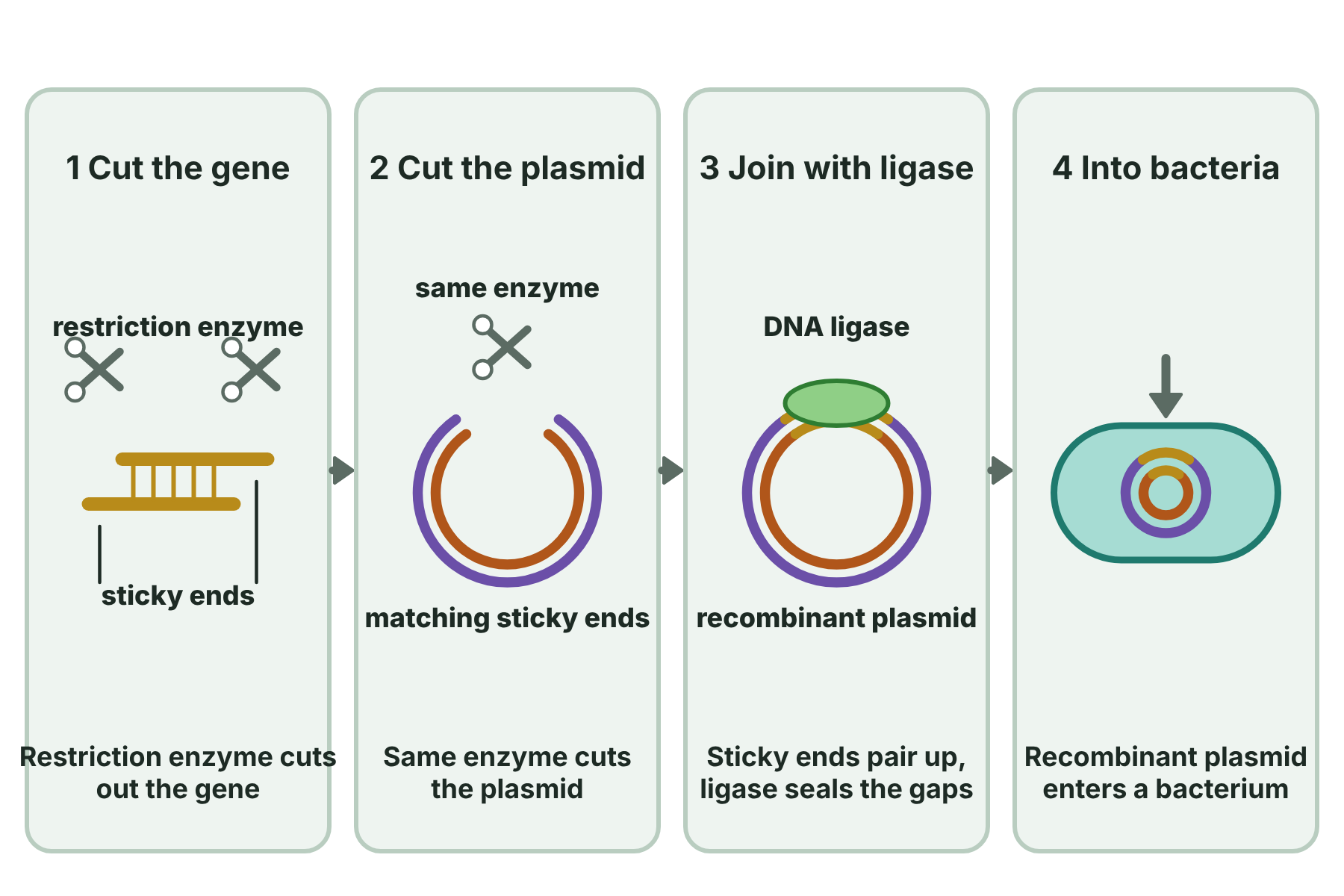
- Restriction enzyme Cuts DNA at a specific base sequence; Leaves sticky ends; Used to remove the gene and to open the plasmid
- DNA ligase Joins pieces of DNA together; Seals the backbone between the sticky ends; Used to make recombinant DNA
The main stages
- Isolate the gene Use a restriction enzyme to cut the gene from the DNA of the…
- Prepare the vector Cut a plasmid with the same restriction enzyme.
- Join the gene and the vector Mix the gene and the cut plasmid.
- Insert into the host The recombinant plasmid is put into a bacterium.
Biology · Edexcel Paper 1
Selective Breeding and Genetic Engineering continued
GM Crops (Separate only)
Some crops now carry a gene from a bacterium that protects them from insects.
- GM crop A crop plant that has had its genes changed by genetic engineering.
- Bacillus thuringiensis A soil bacterium that makes a toxin that kills certain insects.
- Bt toxin A protein made by Bacillus thuringiensis that is poisonous to some insect larvae.
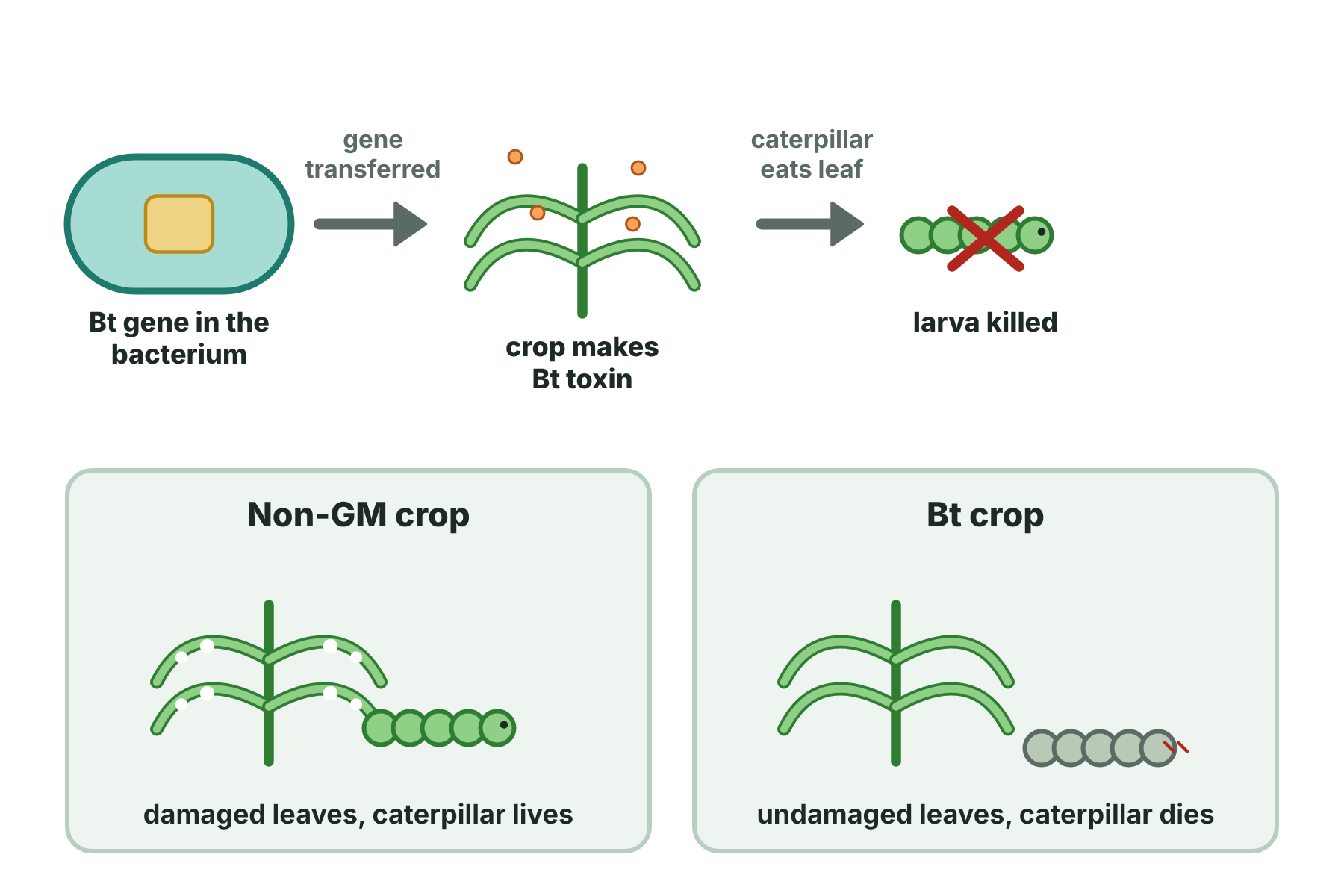
Bt crops and conventional crops
- Conventional crop Needs insecticides to be sprayed; Insecticides may harm other insects; More of the crop may be lost to pests
- Bt crop Makes its own insecticide in its cells; Only insects that eat the crop are affected; Less of the crop is lost
Making an insect-resistant crop
- Find the gene Bacillus thuringiensis (Bt) makes a protein toxin that kills the…
- Cut it out A restriction enzyme removes the Bt gene from the bacterial DNA.
- Insert into a vector The gene is joined into a plasmid from a bacterium that infects plants.
- Transfer to plant cells The bacterium infects plant cells and puts the gene into the…
Feeding a Growing Population (Separate only)
The world population is rising, and everyone needs food. This lesson is for separate Biology only: Combined Science students do not need it.
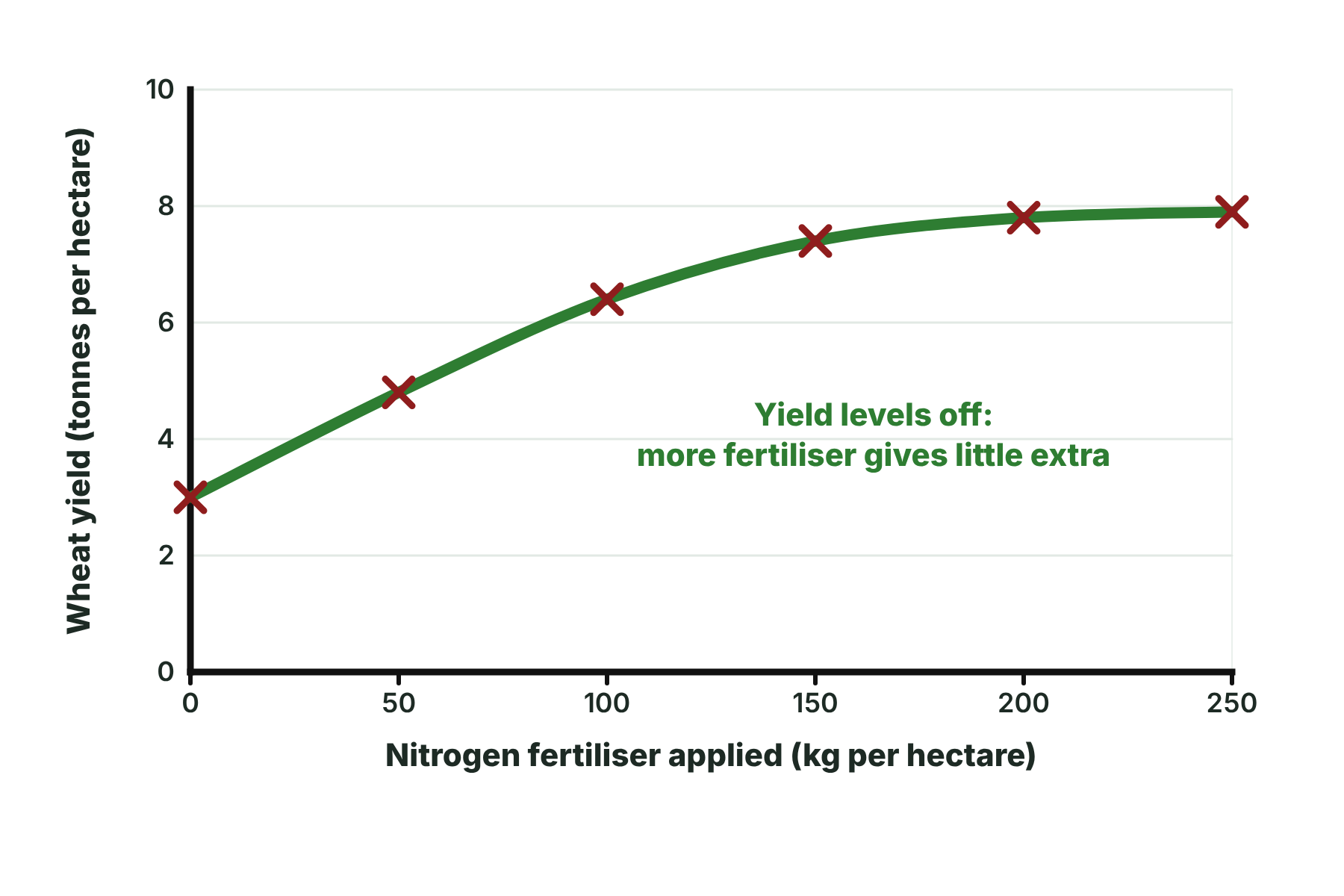
- Fertiliser A substance containing minerals that is added to soil to help plants to grow.
- NPK fertiliser An inorganic fertiliser that contains nitrogen, phosphorus and potassium.
- Eutrophication Rapid growth of algae in water caused by too many nutrients, which leads to a lack of oxygen.
Biological control and chemical pesticides
- Biological control Uses a living organism, such as a predator or parasite; Usually affects only the pest; No chemicals left in food or water
- Chemical pesticides Uses chemicals sprayed on the crop; May kill other, useful, insects such as bees; Can pollute soil and water
Evaluating Genetic Engineering and Selective Breeding
Is it right to change the genes of living things? This lesson weighs up the benefits and the risks of genetic engineering and selective breeding in agriculture and medicine, including…
- Evaluate To weigh up the benefits and the drawbacks, and reach a judgement.
- Ethical issue A question of what is right or wrong, rather than what is possible.
- Practical issue A question about how well something works, or what problems it may cause.
- Patent A legal right that stops other people from copying or selling an invention.
Benefits and risks
- Benefits More food from the same land, helping to feed more people; Healthier or more nutritious food; Medicines that are cheap, safe and plentiful
- Risks and concerns Harm to the environment or to health that is not yet known; Loss of genetic variation; Animal welfare, and ethical objections to changing genes