Biology · Homeostasis
Knowledge organiser
The whole chapter on two pages. Print it on A4 — they are already landscape — or cover a box and see how much of it you can say from memory.
Biology · Edexcel Paper 2
Homeostasis
Maintaining a Constant Internal Environment
Whatever the weather, and whether you are asleep or sprinting, your body temperature stays close to 37 °C.
- Homeostasis The regulation of the conditions inside the body, so that they stay constant.
- Internal environment The conditions inside the body, such as temperature and blood glucose.
- Stimulus A change that is detected by a receptor.
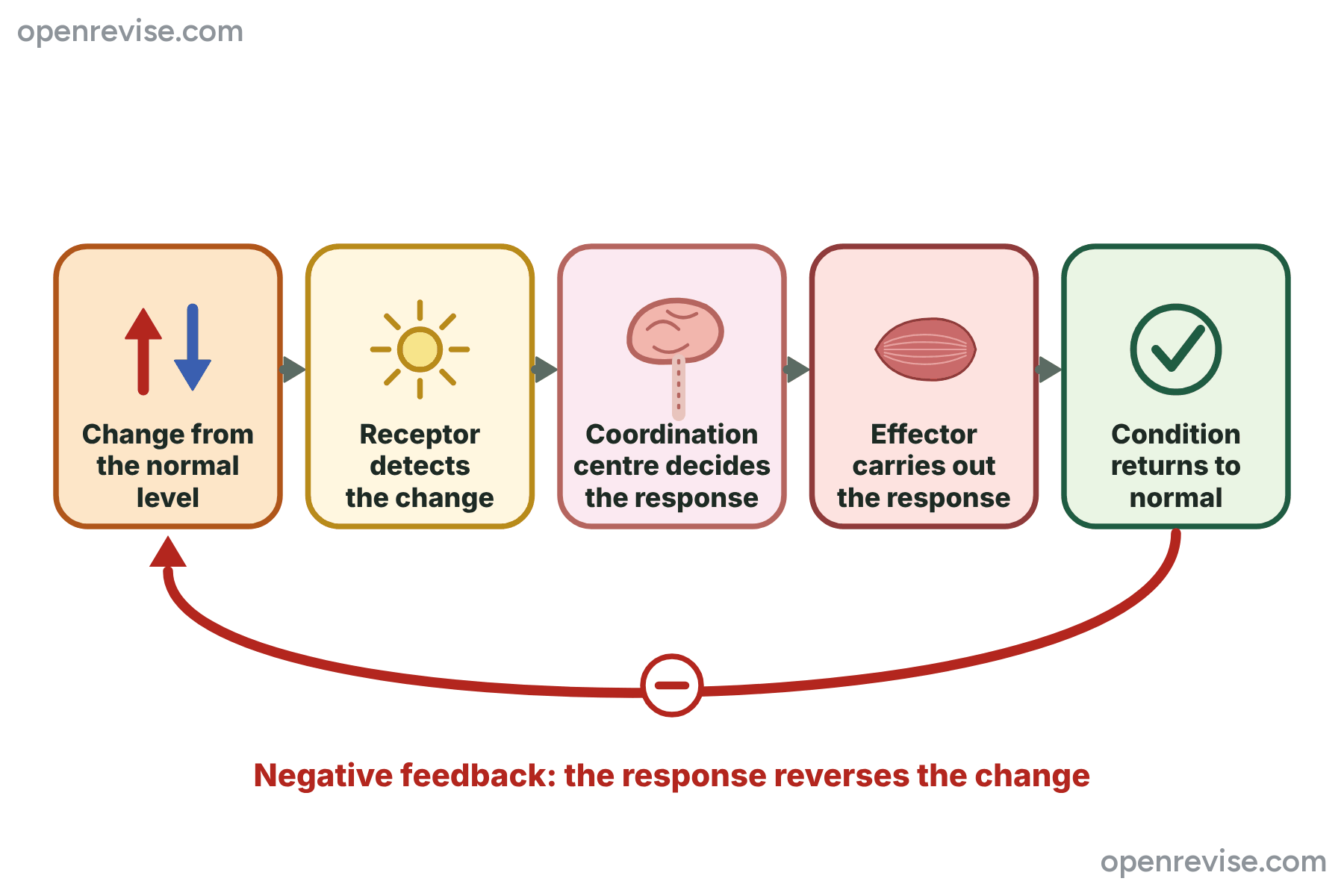
Nervous and hormonal control
- Nervous control Uses electrical impulses along neurones; Very fast response; The effect usually lasts a short time
- Hormonal control Uses hormones carried in the blood; Slower response; The effect usually lasts longer
Why Homeostasis Matters: Enzymes and Osmosis (Separate only)
Two things go wrong very quickly if the internal environment is not controlled: the enzymes stop working, and the cells gain or lose water.
- Thermoregulation The control of body temperature.
- Osmoregulation The control of the water content of the body.
- Optimum temperature The temperature at which an enzyme works fastest.
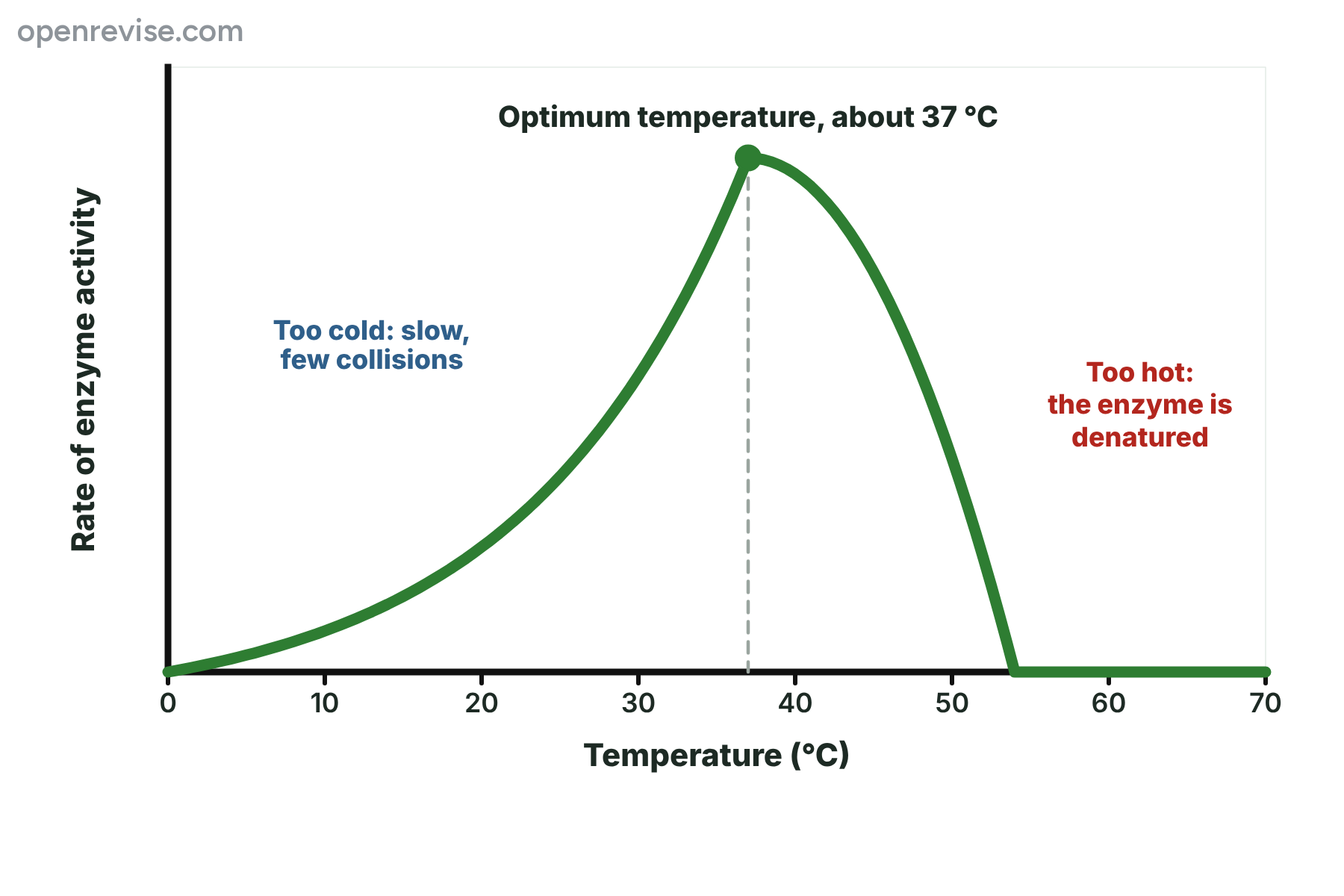
Too hot and too cold, and too dilute and too concentrated
- Temperature problems (enzymes) Too cold: enzymes work slowly, because of fewer collisions; Too hot: enzymes are denatured; Denaturing is not reversed
- Water problems (animal cells) Too dilute: cells swell and may burst; Too concentrated: cells shrink and shrivel; Caused by osmosis
Thermoregulation and the Skin (Separate only)
When you are hot your skin sweats, and when you are cold you shiver.
- Epidermis The thin outer layer of the skin.
- Dermis The layer of the skin below the epidermis, which contains sweat glands, blood vessels and receptors.
- Hypothalamus The part of the brain that monitors body temperature and coordinates the response.
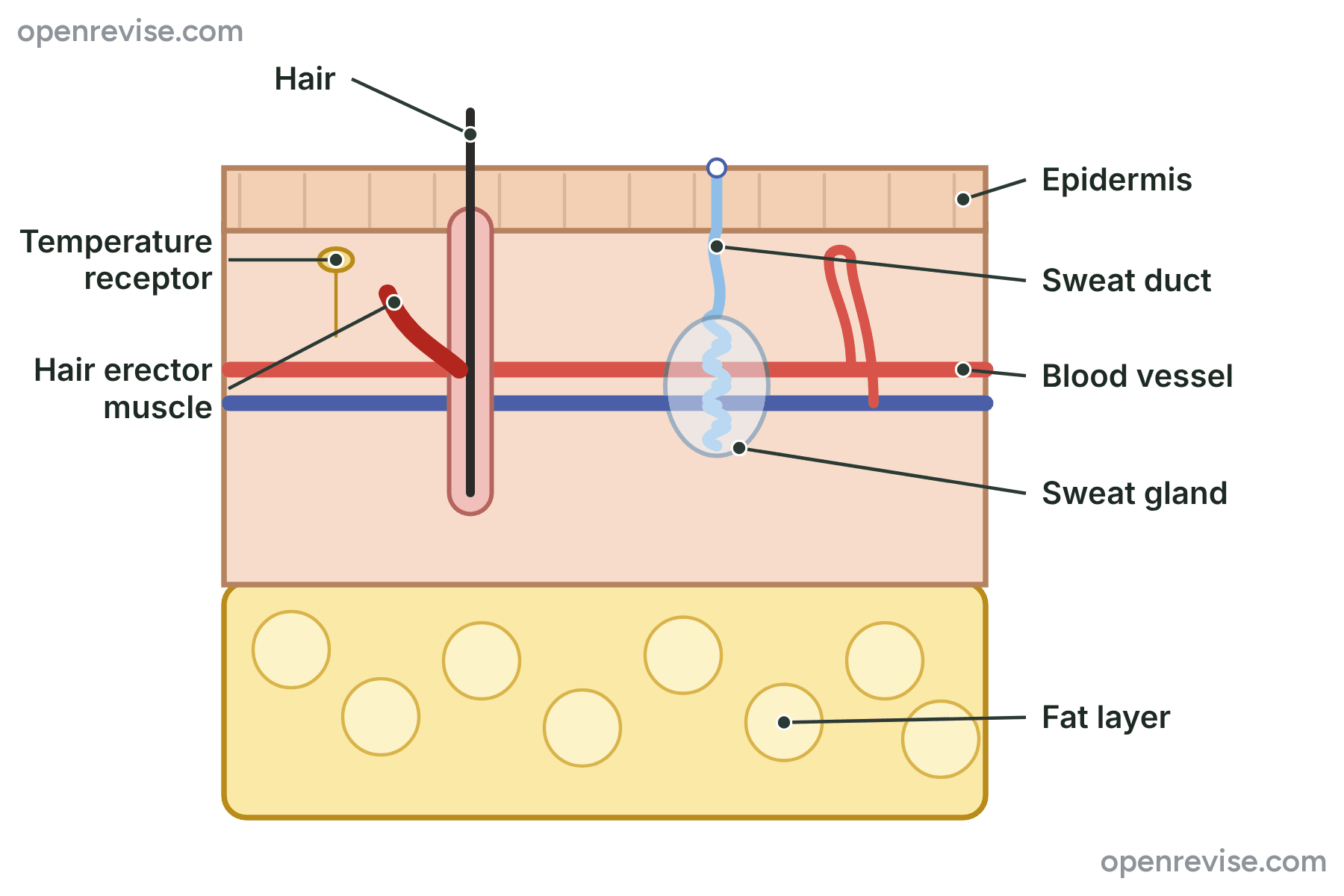
Too hot and too cold
- Too hot Sweat glands release more sweat; Sweat evaporates, cooling the skin; Hairs lie flat
- Too cold Sweat glands release little sweat; Muscles shiver, releasing heat from respiration; Hairs stand up, trapping air
Vasoconstriction and Vasodilation (Higher tier) (Separate only)
The skin of a hot, tired runner is red and flushed, while the fingers of a person in the snow turn white.
- Vasodilation The widening of the blood vessels in the skin, so that more heat is lost.
- Vasoconstriction The narrowing of the blood vessels in the skin, so that less heat is lost.
- Radiation The transfer of heat from a warm object to its cooler surroundings.
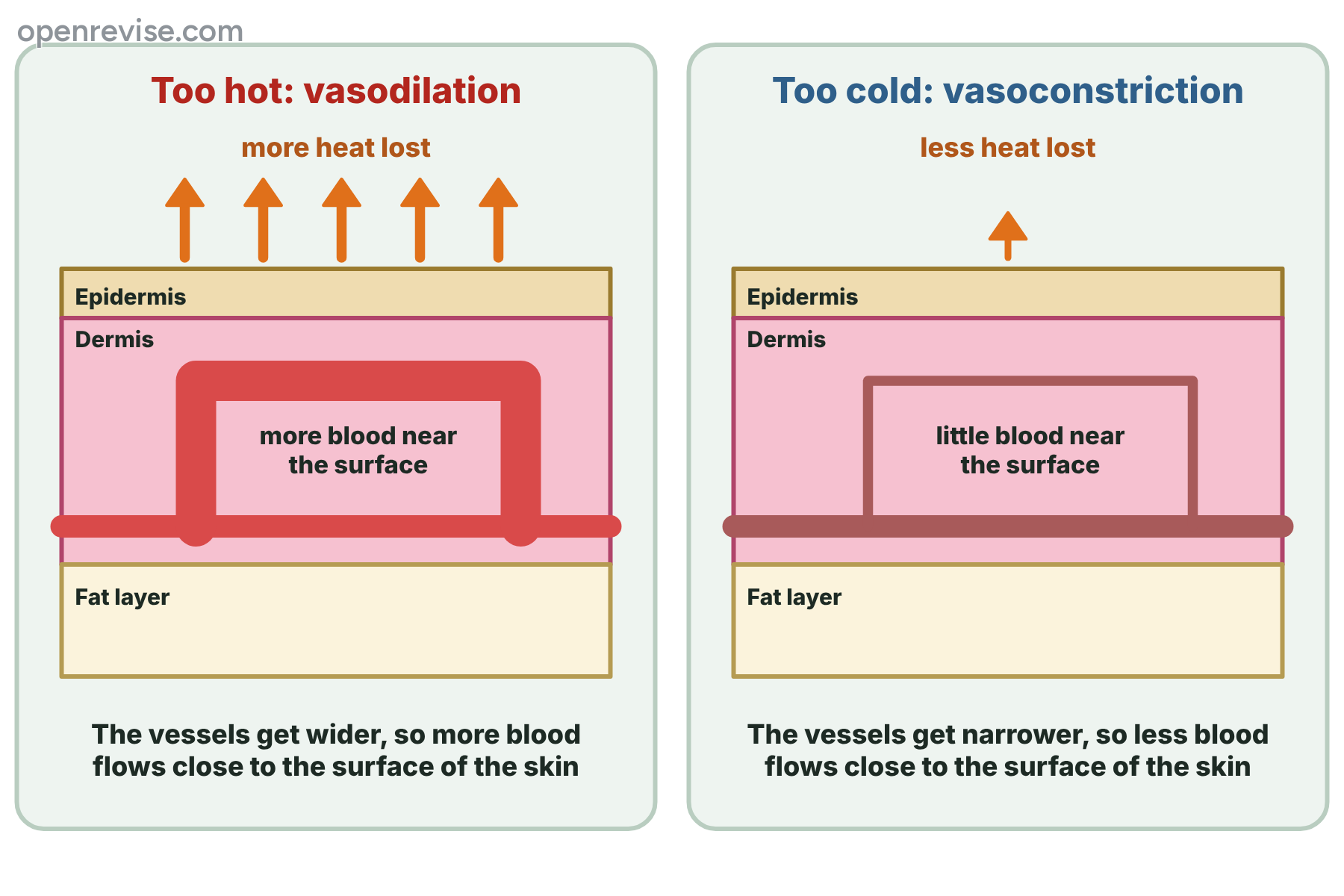
Vasodilation and vasoconstriction
- Vasodilation (too hot) Muscles in the vessel walls relax; Vessels get wider; More blood near the skin surface
- Vasoconstriction (too cold) Muscles in the vessel walls contract; Vessels get narrower; Less blood near the skin surface
Biology · Edexcel Paper 2
Homeostasis continued
Insulin and Blood Glucose
After a meal, a lot of glucose enters the blood, but the level soon returns to normal.
- Insulin A hormone that is made in the pancreas, which lowers the blood glucose concentration.
- Pancreas A gland that makes insulin, glucagon and digestive enzymes.
- Blood glucose concentration The amount of glucose in the blood, in mmol per dm³.
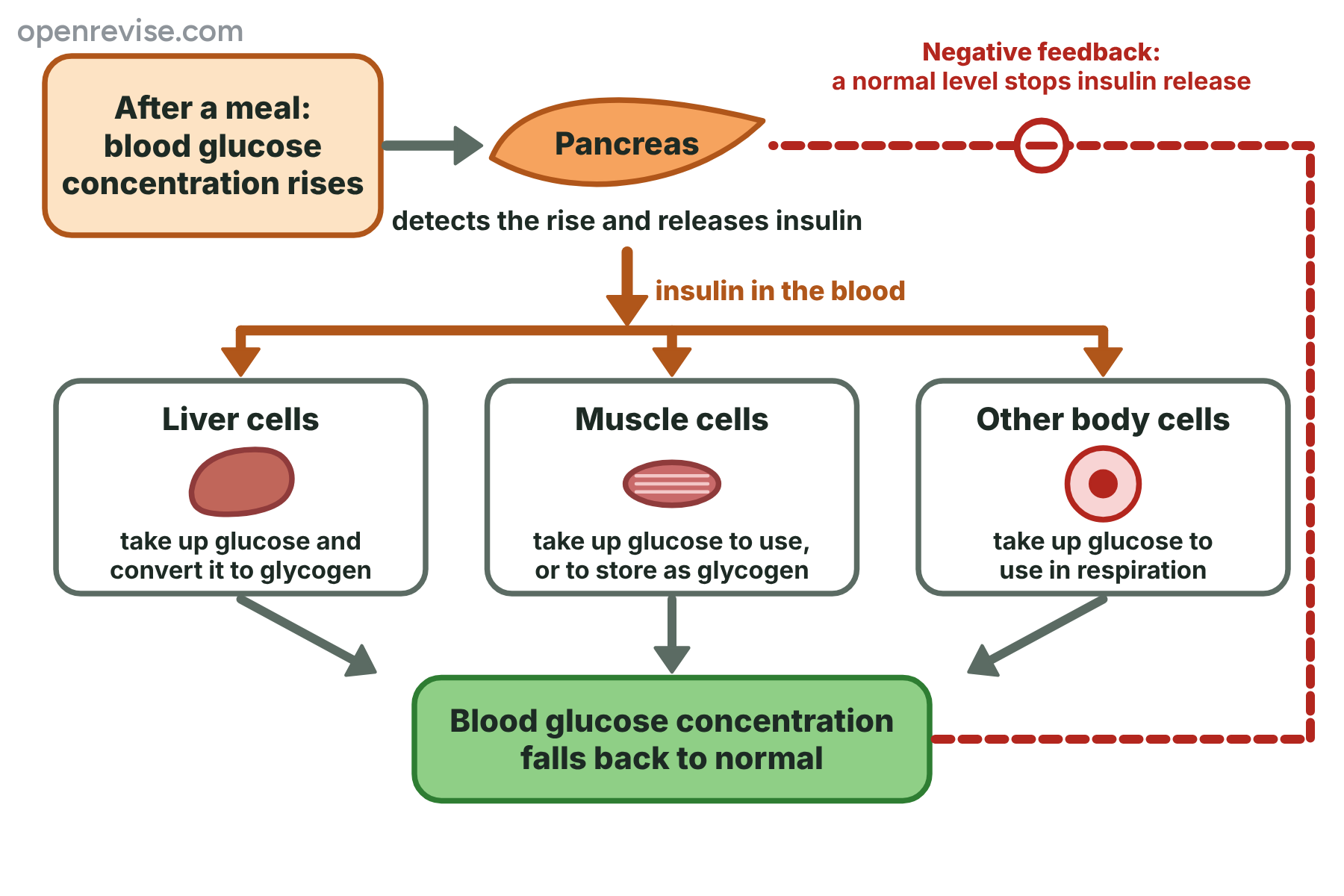
Before and after insulin
- Blood glucose too high Glucose rises after a meal; Pancreas releases insulin; Cells take up glucose
- Blood glucose back to normal Blood glucose falls; Less insulin is released; Glycogen is stored in the liver
Glucagon and Blood Glucose (Higher tier) (Higher tier)
Between meals, and during exercise, the blood glucose concentration can fall, and then a second hormone comes into play.
- Glucagon A hormone made in the pancreas that raises the blood glucose concentration.
- Glycogen A storage carbohydrate, made from glucose, in the liver and muscles.
- Insulin A hormone made in the pancreas that lowers the blood glucose concentration.
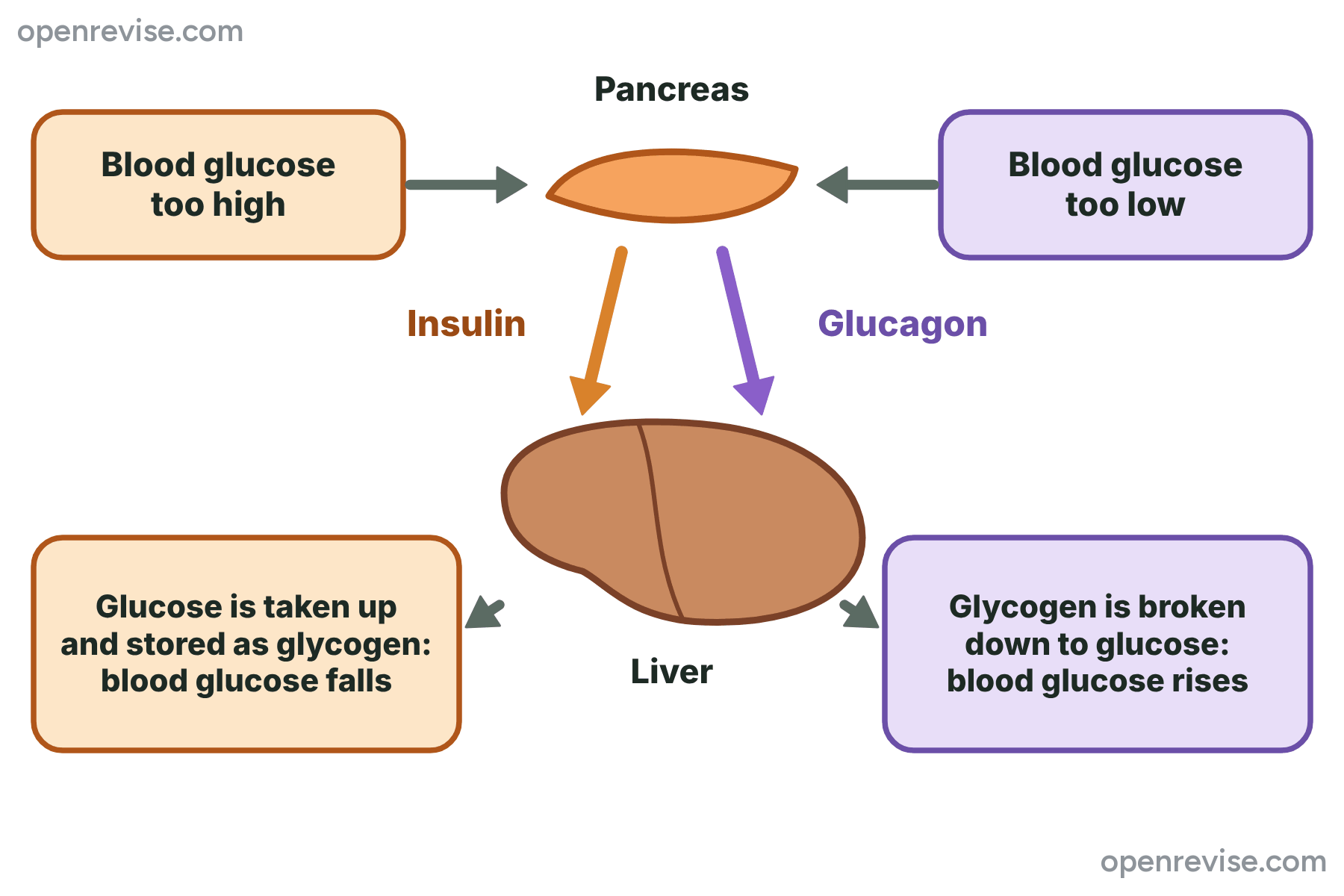
Insulin and glucagon
- Insulin Released when the blood glucose is too high; Made in the pancreas; Makes cells take up glucose
- Glucagon Released when the blood glucose is too low; Made in the pancreas; Acts on the liver
Type 1 and Type 2 Diabetes
Diabetes is one of the most common long-term diseases in the world, and its two main forms have different causes and different treatments.
- Diabetes A condition in which the blood glucose concentration is not controlled properly.
- Type 1 diabetes Diabetes in which the pancreas does not produce enough insulin.
- Type 2 diabetes Diabetes in which the body cells no longer respond to insulin.
- Insulin A hormone that lowers the blood glucose concentration.
Type 1 and type 2 diabetes
- Type 1 The pancreas makes little or no insulin; The immune system destroys insulin-making cells; Usually begins in childhood
- Type 2 The cells do not respond to insulin; Linked to obesity and an inactive lifestyle; Usually begins in adults
Body Mass, BMI and Type 2 Diabetes
People who are very overweight are much more likely to develop type 2 diabetes.
- Body mass index A measure of mass for height, calculated as mass in kilograms divided by height in metres squared.
- Waist to hip ratio The waist circumference divided by the hip circumference.
- Obesity A condition in which a person has a large amount of excess body fat, with a BMI of 30 or more.
- Correlation A link between two variables.
Strengths and limits of the evidence
- Evidence for a link Large studies show a positive correlation; A mechanism is known: insulin resistance; Weight loss often improves control
- Limits of the evidence A correlation does not prove a cause; BMI does not show where the fat is; Muscular people can have a high BMI but little fat