Biology · Hormones and Reproduction
Knowledge organiser
The whole chapter on two pages. Print it on A4 — they are already landscape — or cover a box and see how much of it you can say from memory.
Biology · Edexcel Paper 2
Hormones and Reproduction
The Endocrine System
The nervous system sends fast messages along nerves, but the body has a second way of sending messages, which is slower and lasts longer.
- Hormone A chemical messenger that is made in an endocrine gland and carried in the blood.
- Endocrine gland A gland that releases hormones directly into the blood.
- Target organ An organ that responds to a particular hormone.
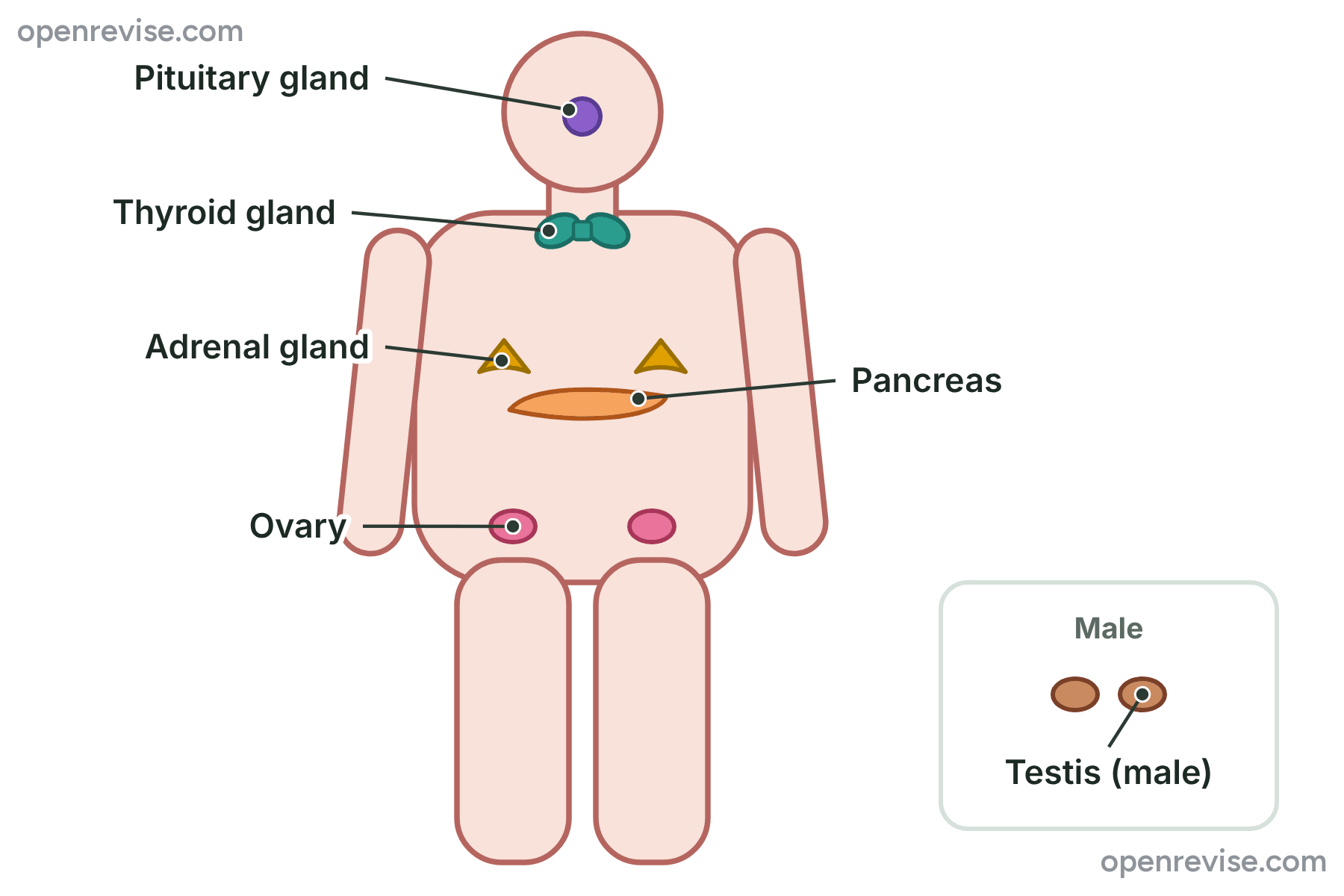
The nervous system and the endocrine system
- Nervous system Electrical impulses along neurones; Very fast response; Effects last a short time
- Endocrine system Chemical messengers, called hormones, carried in the blood; Slower response; Effects last longer
Adrenaline: Fight or Flight (Higher tier) (Higher tier)
When something frightens you, your heart pounds and your mouth goes dry within seconds.
- Adrenaline A hormone, made by the adrenal glands, which prepares the body for fight or flight. It is also spelled adrenalin.
- Adrenal gland An endocrine gland on top of each kidney, which releases adrenaline.
- Fight or flight The response of the body to a threat, which prepares it to fight or to run away.
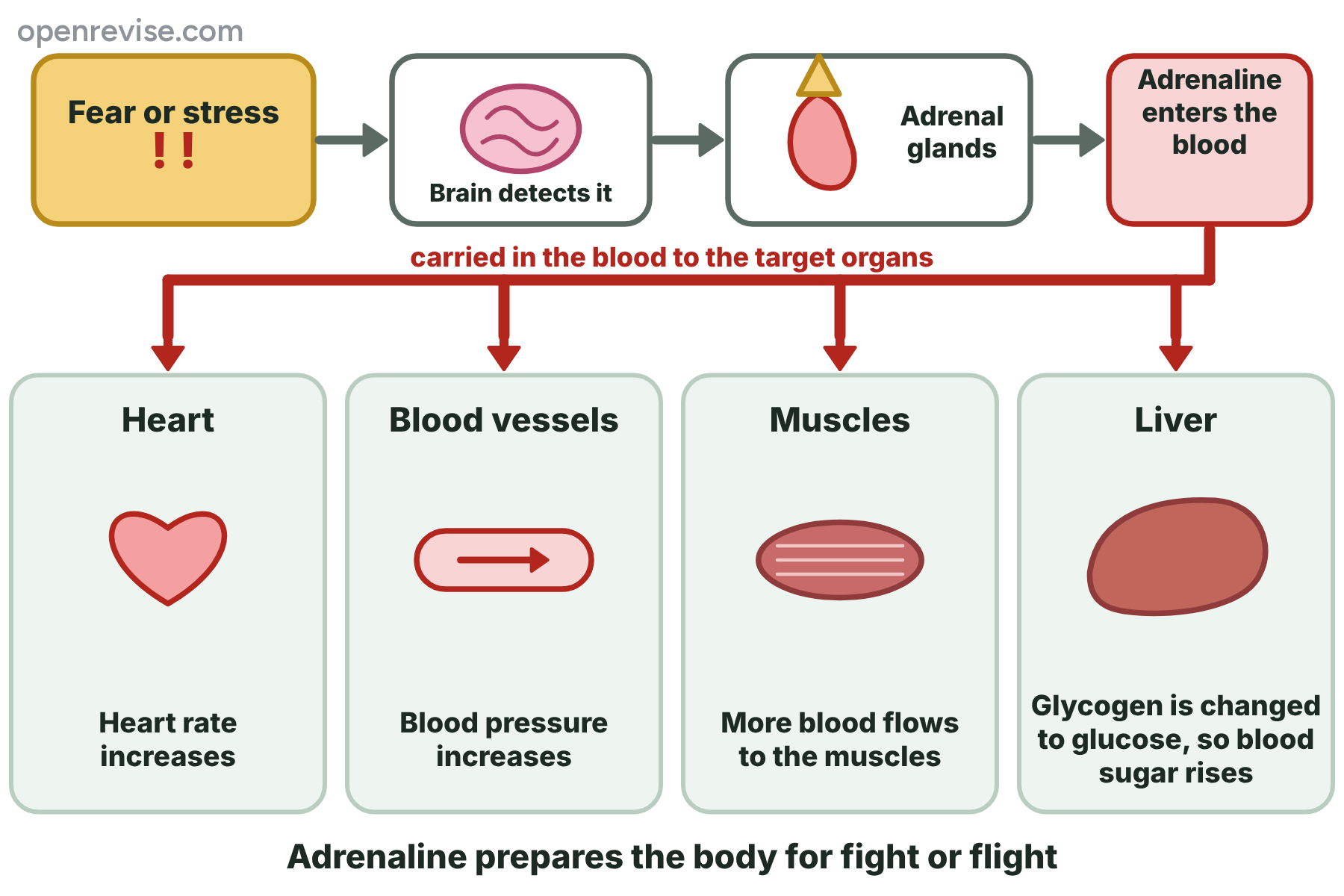
Nervous and hormonal parts of the response
- The nervous system Detects the danger and decides how to respond; Sends impulses to the adrenal glands; Very fast, over in a fraction of a second
- Adrenaline Released by the adrenal glands into the blood; Carried to the heart, blood vessels and liver; Slower, but lasts a few minutes
From danger to response
- Stimulus The brain detects a threat, such as a loud noise or a dog running at you.
- Message to the adrenal glands Nerve impulses are sent to the adrenal glands.
- Hormone released The adrenal glands release adrenaline into the blood.
- Transport The adrenaline travels around the body in the blood.
Thyroxine and Negative Feedback (Higher tier) (Higher tier)
The thyroid gland acts like a thermostat for the speed of the chemical reactions in your body.
- Thyroxine A hormone made by the thyroid gland, which controls the metabolic rate.
- Metabolic rate The speed at which the chemical reactions in the cells of the body take place.
- TRH Thyrotropin releasing hormone, released by the hypothalamus.
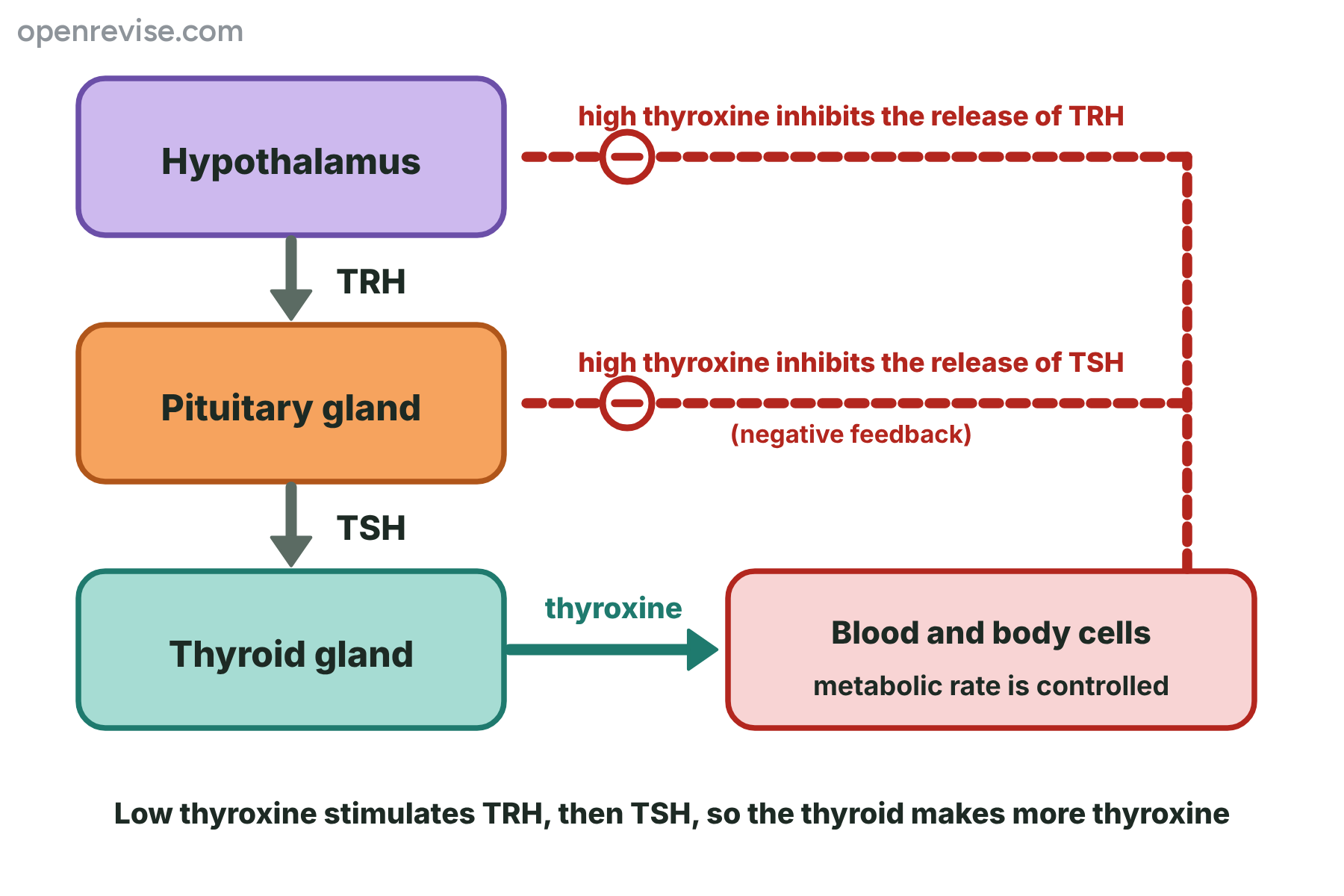
Too much and too little thyroxine
- Too little thyroxine Metabolic rate falls; Feels tired and cold; Gains body mass
- Too much thyroxine Metabolic rate rises; Feels hot, restless and anxious; Loses body mass
The thyroxine feedback loop
- Low thyroxine When the level of thyroxine in the blood is low, the hypothalamus detects the change.
- TRH The TRH is carried to the pituitary gland.
- TSH The TSH is carried in the blood to the thyroid gland, where it acts.
- Thyroxine rises As the level of thyroxine in the blood rises, the metabolic rate increases.
Biology · Edexcel Paper 2
Hormones and Reproduction continued
The Menstrual Cycle
About once a month, from puberty until the menopause, the body of a woman gets ready for a possible pregnancy.
- Menstrual cycle The monthly cycle in the female reproductive system.
- Menstruation The loss of the lining of the uterus, from the vagina, at the start of each cycle.
- Ovulation The release of a mature egg from an ovary.
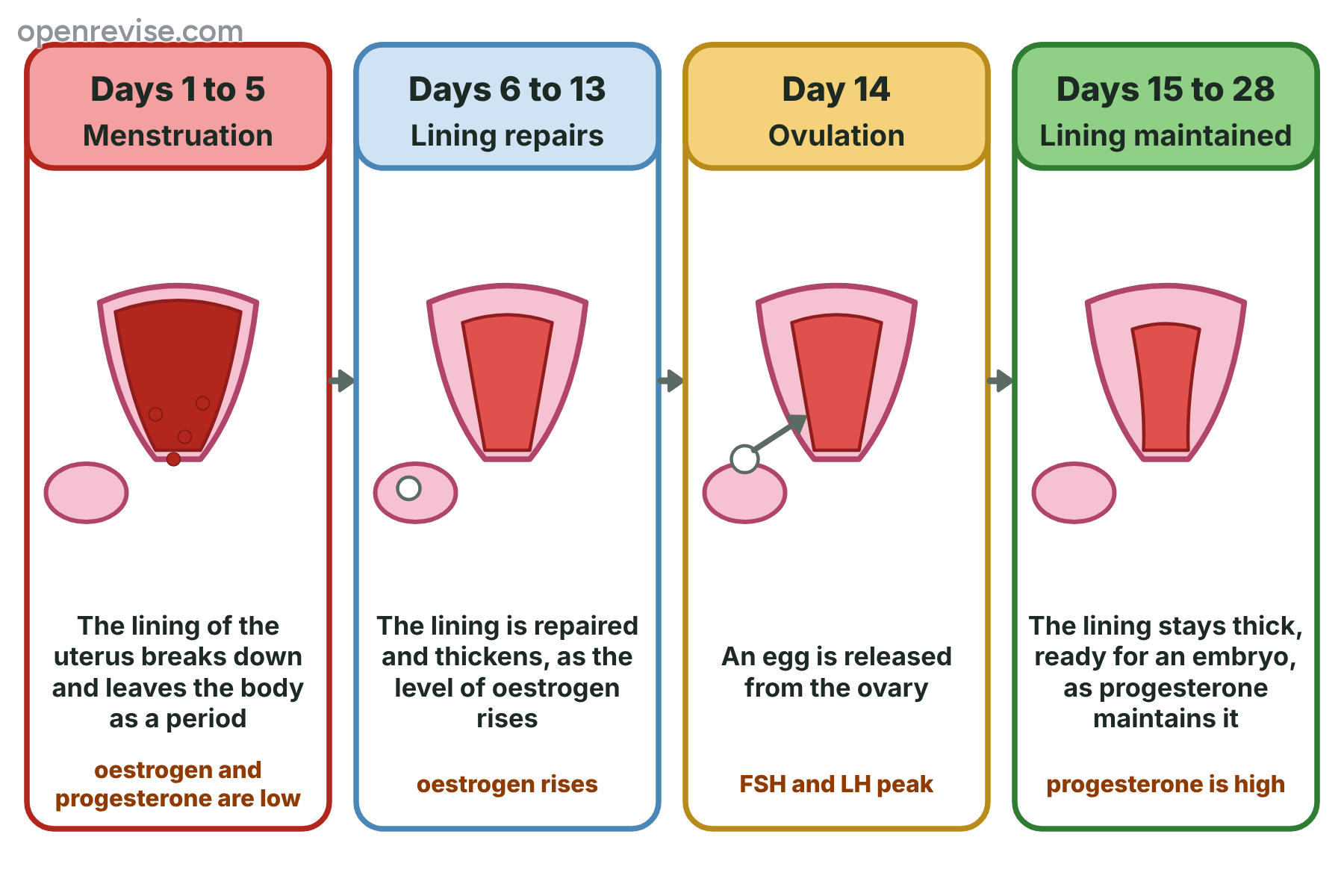
Oestrogen and progesterone
- Oestrogen Made by the ovary; Rises in the first half of the cycle; Repairs and thickens the lining of the uterus
- Progesterone Made by the ovary after ovulation; Rises in the second half of the cycle; Maintains the lining of the uterus
Hormones and the Menstrual Cycle (Higher tier) (Higher tier)
Four hormones take turns in the control of the menstrual cycle, and each one affects the next.
- FSH Follicle stimulating hormone, from the pituitary gland, which makes a follicle in the ovary mature.
- LH Luteinising hormone, from the pituitary gland, which causes ovulation.
- Surge A short, sharp rise in the level of a hormone.
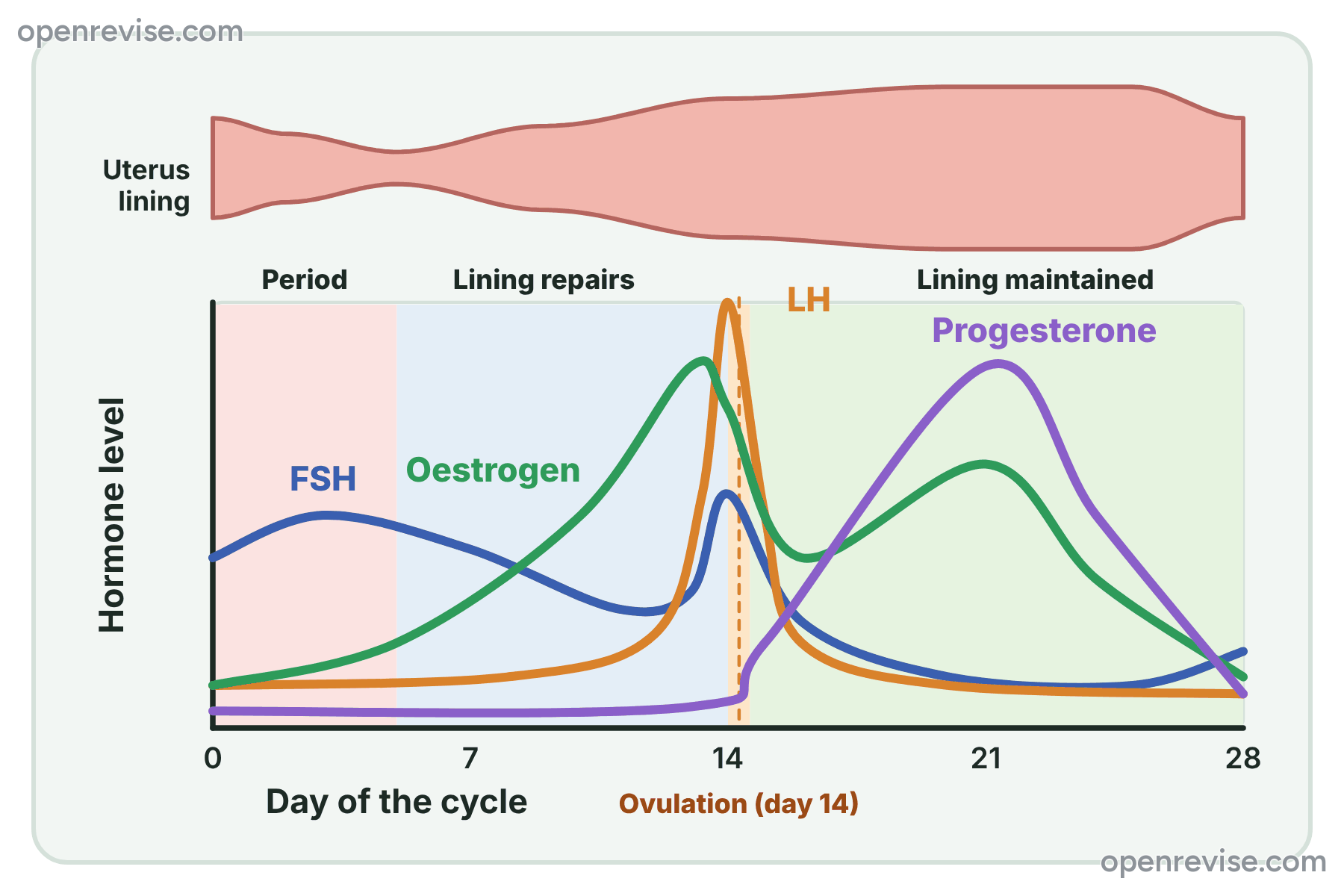
Hormones from the pituitary gland and the ovaries
- From the pituitary gland FSH makes the follicle mature, and the ovary make oestrogen; LH causes ovulation; Their levels are controlled by feedback from oestrogen and progesterone
- From the ovaries Oestrogen repairs the lining, and triggers the LH surge; Progesterone maintains the lining; Both act on the uterus
The sequence of events
- Days 1 to 5 The levels of oestrogen and progesterone are low, so the lining breaks down.
- FSH rises FSH causes a follicle in the ovary to mature.
- Oestrogen rises Oestrogen repairs and thickens the lining of the uterus, and it inhibits FSH.
- LH surge When oestrogen is high enough, it stimulates the pituitary gland…
Contraception
Contraception lets people choose when to have a baby. This lesson explains how hormonal contraception influences the menstrual cycle and prevents pregnancy.
- Contraception A method of preventing pregnancy.
- Hormonal contraception Contraception that uses hormones to stop ovulation or to change the uterus and the mucus.
- Barrier method A method that stops the sperm from reaching the egg, such as a condom.
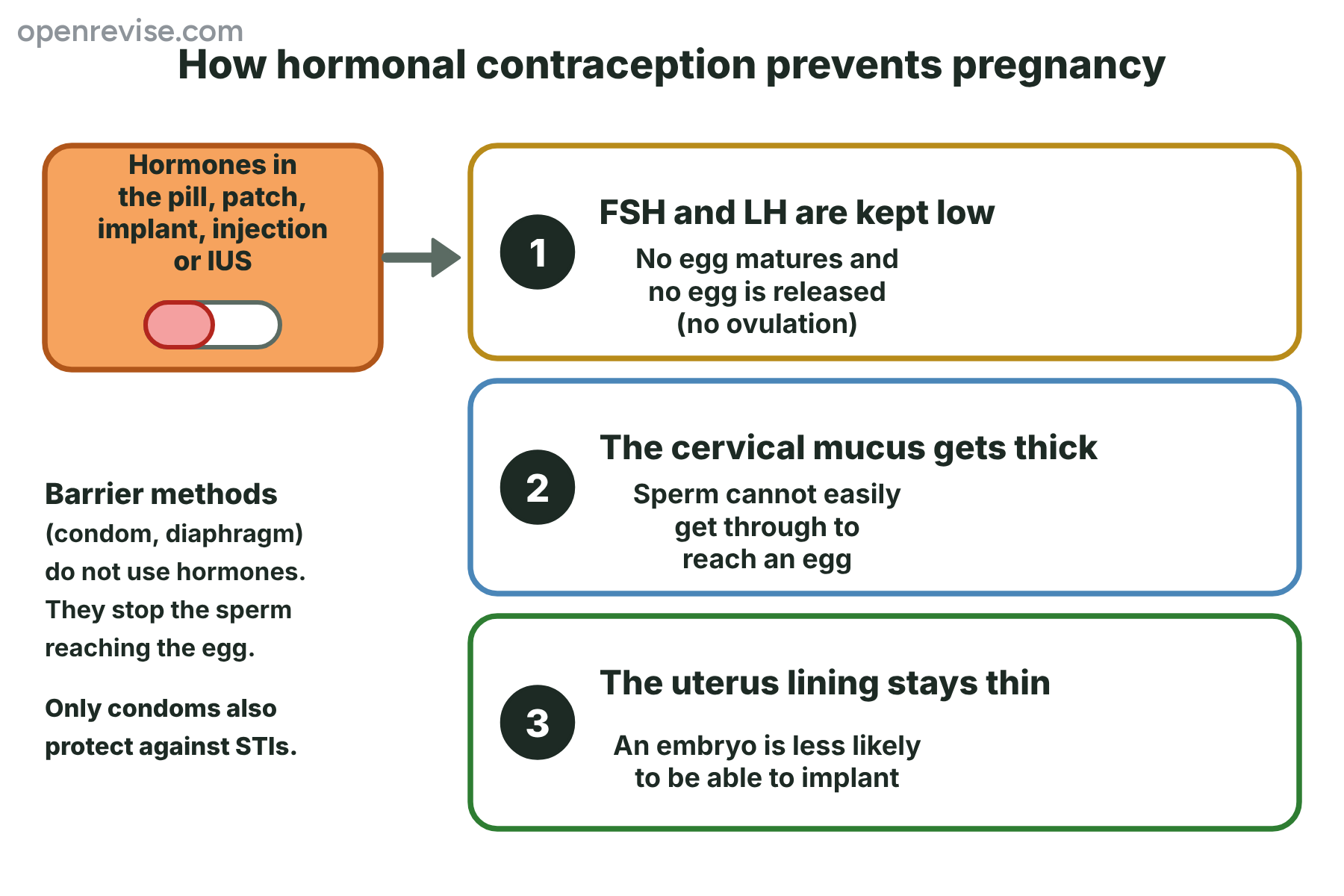
Hormonal and barrier methods
- Hormonal methods Use oestrogen or progesterone to stop ovulation; Very effective if used correctly, and some last for years; Can have side effects, such as headaches or mood changes
- Barrier methods Stop the sperm from reaching the egg; Effective, but more easily used wrongly; No hormonal side effects
Assisted Reproductive Technology (Higher tier) (Higher tier)
Not everyone who wants a baby can conceive naturally. This lesson is for the Higher tier only: Foundation students do not need it.
- Assisted reproductive technology (ART) Medical treatments that help people to become pregnant.
- IVF In vitro fertilisation, in which an egg is fertilised by sperm in a laboratory.
- Clomifene A drug that makes the pituitary gland release more FSH and LH, to cause ovulation.
- Embryo A ball of cells formed from a fertilised egg.
Clomifene and IVF
- Clomifene therapy A tablet; Used when a woman does not ovulate; Blocks oestrogen receptors, so more FSH and LH are released
- IVF A series of injections and procedures; Used when there are blocked oviducts, or other problems; FSH and LH are given to mature several eggs