Biology · Human Impact on Ecosystems
Knowledge organiser
The whole chapter on one page. Print it on A4 — it is already landscape — or cover a box and see how much of it you can say from memory.
Biology · Edexcel Paper 2
Human Impact on Ecosystems
Fish Farming, Introduced Species and Eutrophication
Every way in which people use ecosystems has benefits and costs, and biodiversity is what is lost when the costs are ignored.
- Biodiversity The variety of different species of organisms in an ecosystem or on the whole Earth.
- Fish farming Rearing fish in cages, tanks or ponds, feeding them and harvesting them for food.
- Non-indigenous species A species that has been introduced to an area where it does not naturally live.
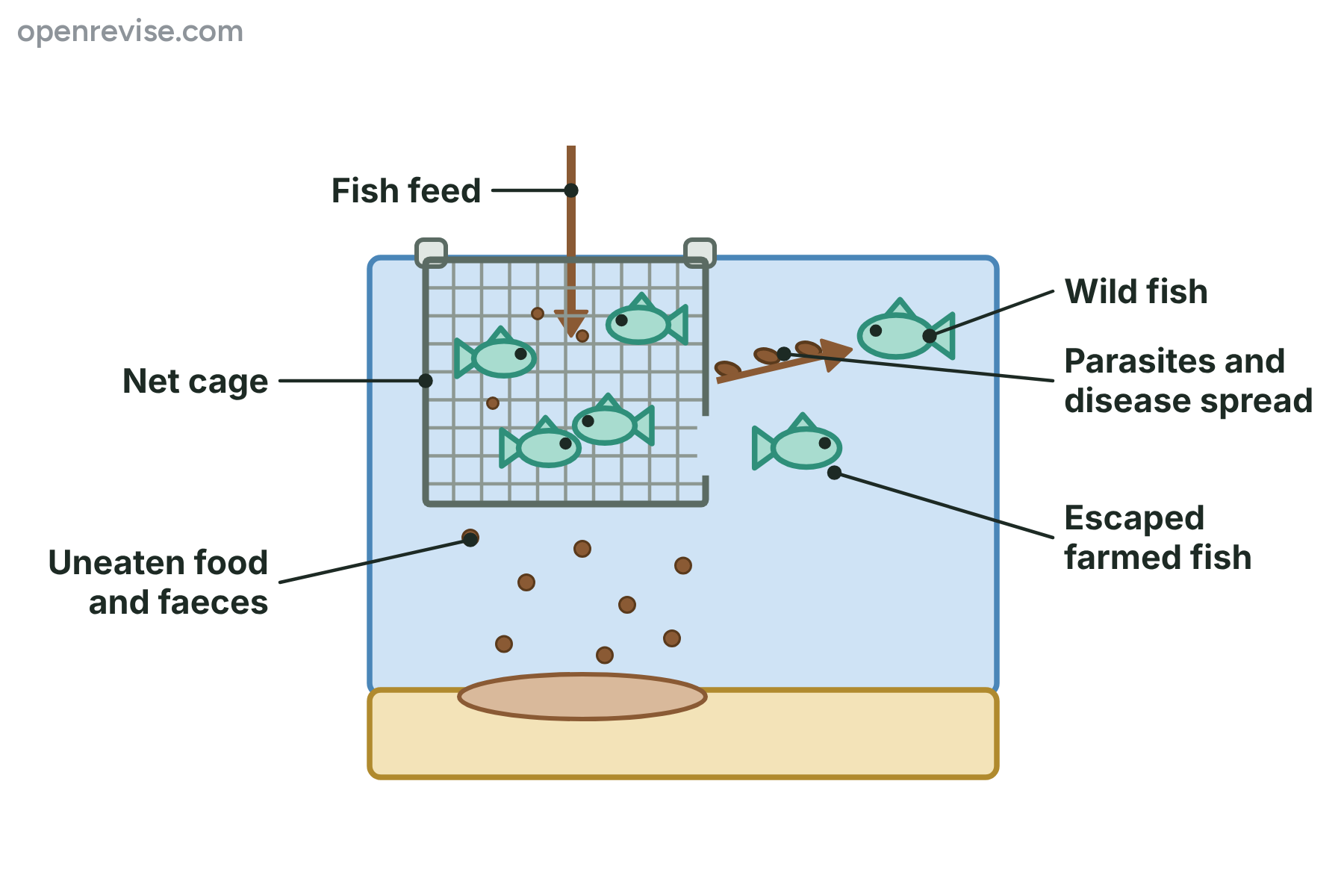
Fish farming: benefits and problems
- Benefits A reliable supply of protein for people; Less overfishing of wild fish, so wild stocks can recover; Jobs and income for coastal communities
- Problems Waste and uneaten food pollute the water and can cause eutrophication; Parasites and disease spread to wild fish; Escaped fish compete and breed with wild fish
The sequence of events in eutrophication
- Fertiliser enters the water Rain washes nitrates and phosphates from fertilised fields.
- Algal bloom With plenty of mineral ions, the algae grow and reproduce very quickly.
- Light is blocked The algal bloom stops light from reaching the plants below.
- Bacteria use up the oxygen Bacteria decompose the dead algae and plants.
The Benefits of Maintaining Biodiversity
Keeping biodiversity high keeps ecosystems stable and gives people food, medicines, materials and a healthy climate.
- Conservation Protecting and managing species and their habitats so that they do not become extinct.
- Extinction The permanent loss of a species, when the last individual has died.
- Gene pool All the different alleles of all the genes in a population or species.
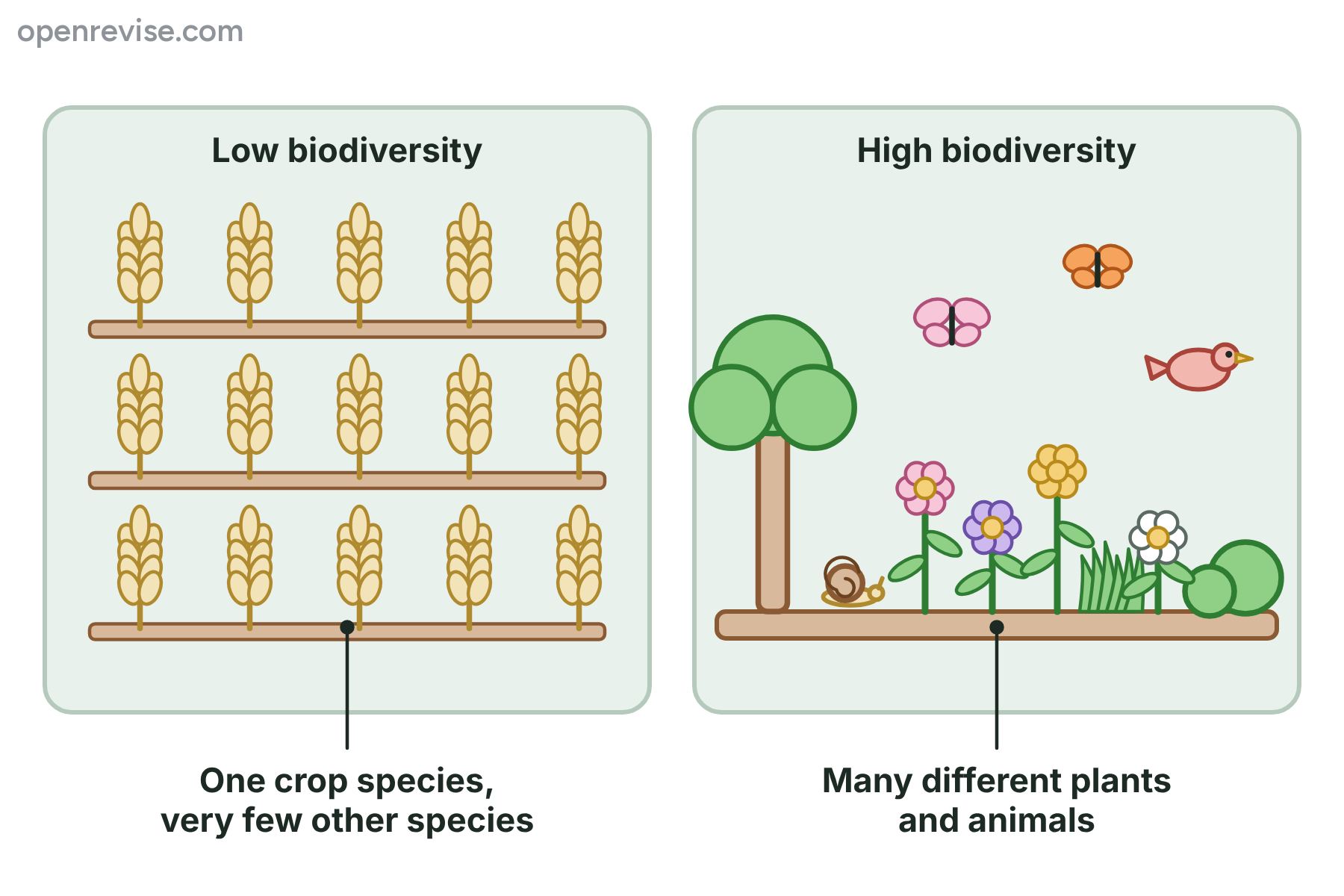
A crop monoculture or a mixed habitat?
- Low biodiversity (one crop) Few species of plants and animals; A single disease or pest can destroy it; Little food and shelter for wildlife
- High biodiversity (mixed habitat) Many species of plants and animals; A disease or pest only affects some of the species; Plenty of food and shelter for wildlife