Biology · Material Cycles
Knowledge organiser
The whole chapter on two pages. Print it on A4 — they are already landscape — or cover a box and see how much of it you can say from memory.
Biology · Edexcel Paper 2
Material Cycles
The Carbon Cycle
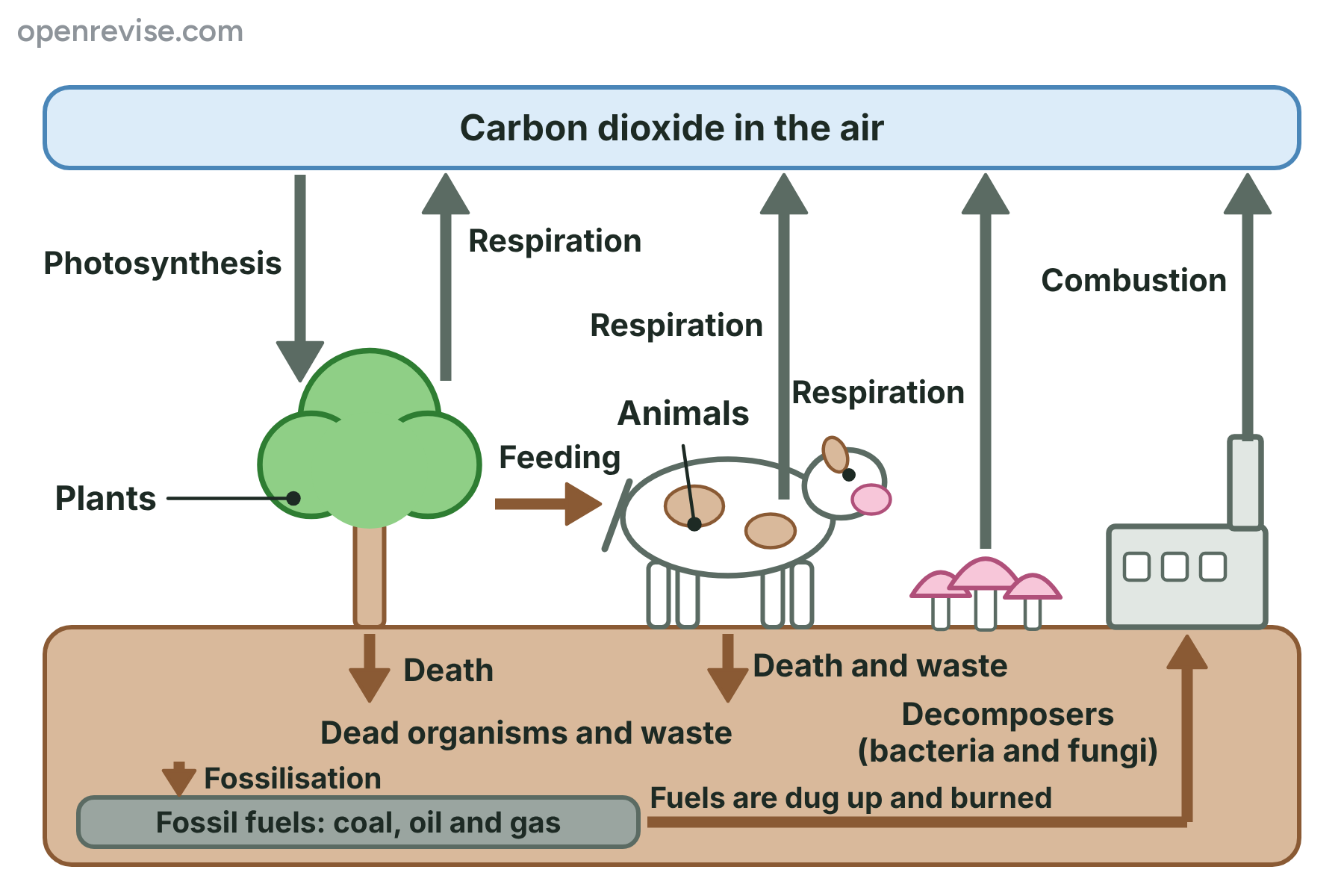
Carbon is cycled between the air and living things by photosynthesis, feeding, respiration, decay and combustion, and decomposers keep the cycle turning.
- Abiotic The non-living parts of an ecosystem, such as air, water, soil and rock.
- Biotic The living parts of an ecosystem, such as plants, animals and microorganisms.
- Carbon cycle The movement of carbon between the air, living things, the soil and fossil fuels.
Quick and slow routes for carbon
- Quick cycling Photosynthesis takes the carbon out of the air; Feeding passes it along food chains; Respiration and decay return it to the air
- Slow storage in fossil fuels Dead remains are buried without oxygen; They form coal, oil and gas over millions of years; The carbon is locked away for a very long time
Following carbon around the cycle
- Photosynthesis Plants and algae take carbon dioxide from the air and use light…
- Feeding Animals eat the plants, so carbon compounds pass to the animals…
- Respiration Plants, animals and microorganisms all respire.
- Death and decay Dead organisms, faeces and other waste contain carbon compounds.
The Water Cycle and Potable Water
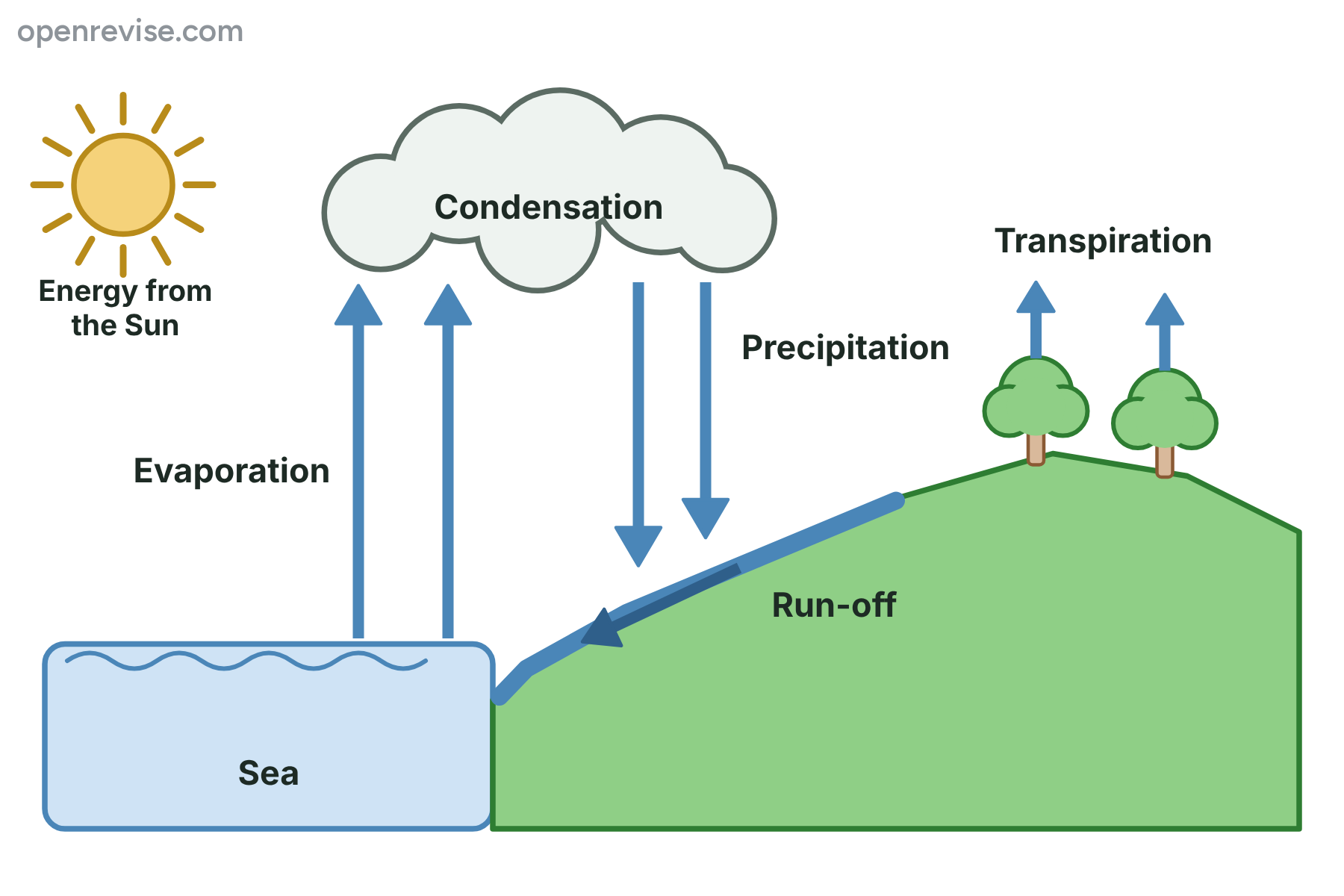
Water cycles between the sea, the air, the land and living things, and in areas of drought potable water can be made by removing the salt from sea water.
- Evaporation The change of liquid water into water vapour, driven by energy from the Sun.
- Transpiration The loss of water vapour from a plant, mainly through the stomata of its leaves.
- Condensation The change of water vapour into liquid water droplets as it cools, which forms clouds.
Distillation and reverse osmosis compared
- Distillation The sea water is boiled and the steam is condensed; Salt and other solids are left behind; Uses a lot of energy for heating
- Reverse osmosis The sea water is pushed through a partially permeable membrane; Salt ions cannot pass through the membrane; Uses energy to create a high pressure, usually less than heating
Making potable water from fresh water
- Choose a source Water is taken from a reservoir, river or borehole where the…
- Filter it A screen removes large objects, then beds of sand and gravel…
- Sterilise it Chlorine, ozone or ultraviolet light kills the microorganisms that remain.
- Supply it The treated water is stored and sent to homes through pipes.
Biology · Edexcel Paper 2
Material Cycles continued
The Nitrogen Cycle
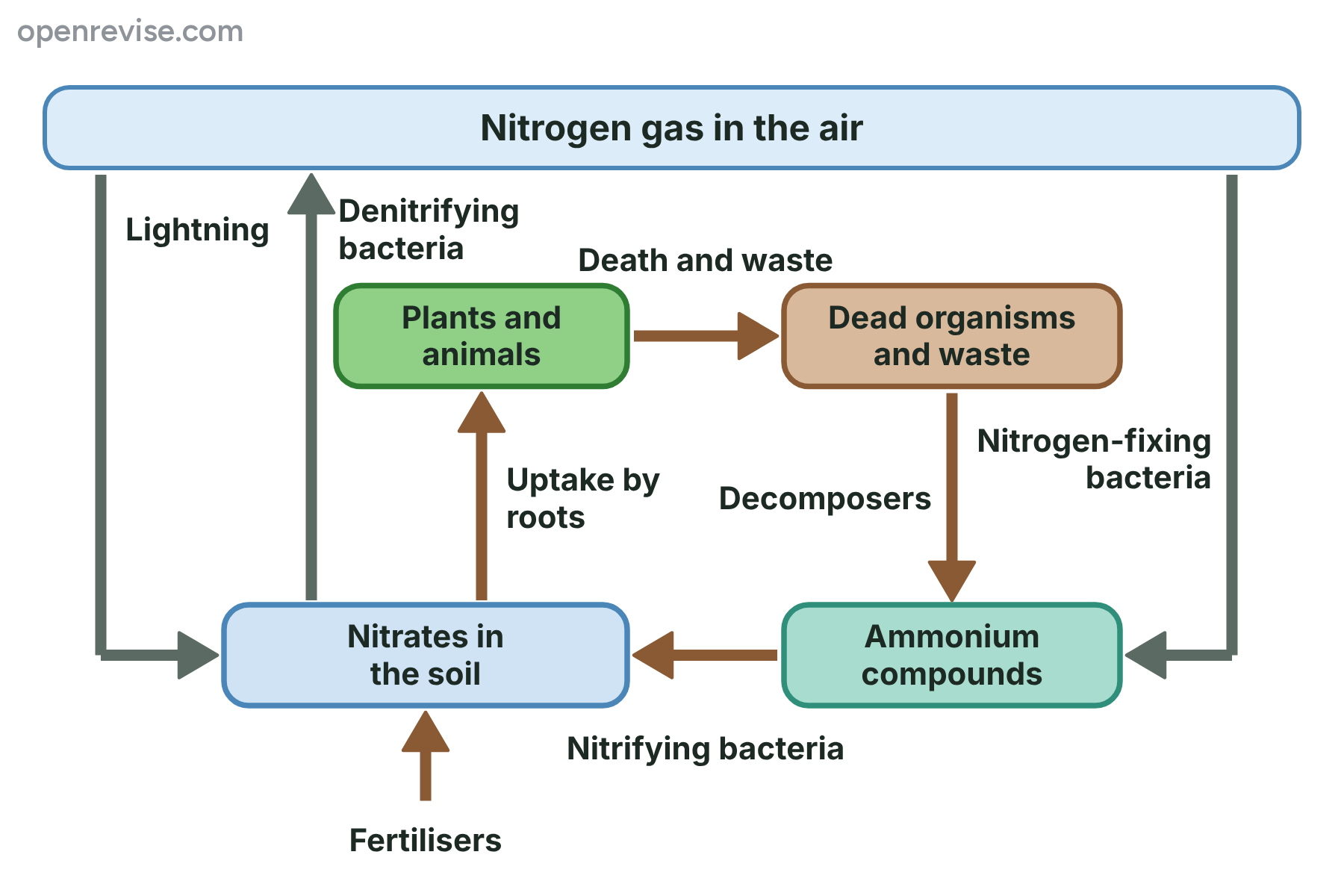
Plants cannot use nitrogen gas, so bacteria, lightning and fertilisers must turn it into the nitrates that the roots take up.
- Nitrate An ion containing nitrogen that plants take up from the soil to make amino acids and proteins.
- Nitrogen-fixing bacteria Bacteria that change nitrogen gas from the air into nitrogen compounds such as ammonia.
- Nitrifying bacteria Bacteria that change ammonium compounds into nitrates in the soil.
Fertilisers and crop rotation compared
- Nitrate fertilisers Made in factories and spread on the soil; Give a quick supply of nitrates for the crop; Cost money and use energy to make
- Crop rotation with legumes Legumes are grown in turn with other crops; Nitrogen-fixing bacteria in the root nodules make nitrogen compounds; Cheap and natural, but a field is not always growing a cash crop
Following nitrogen around the cycle
- Fixing Nitrogen-fixing bacteria in the soil and in root nodules change…
- Nitrification Nitrifying bacteria in the soil change the ammonium compounds…
- Uptake Plant roots take up nitrates by active transport and use them to…
- Feeding Animals eat the plants, and the nitrogen in the proteins passes…
Decomposition, Food Preservation and Composting (Separate only)
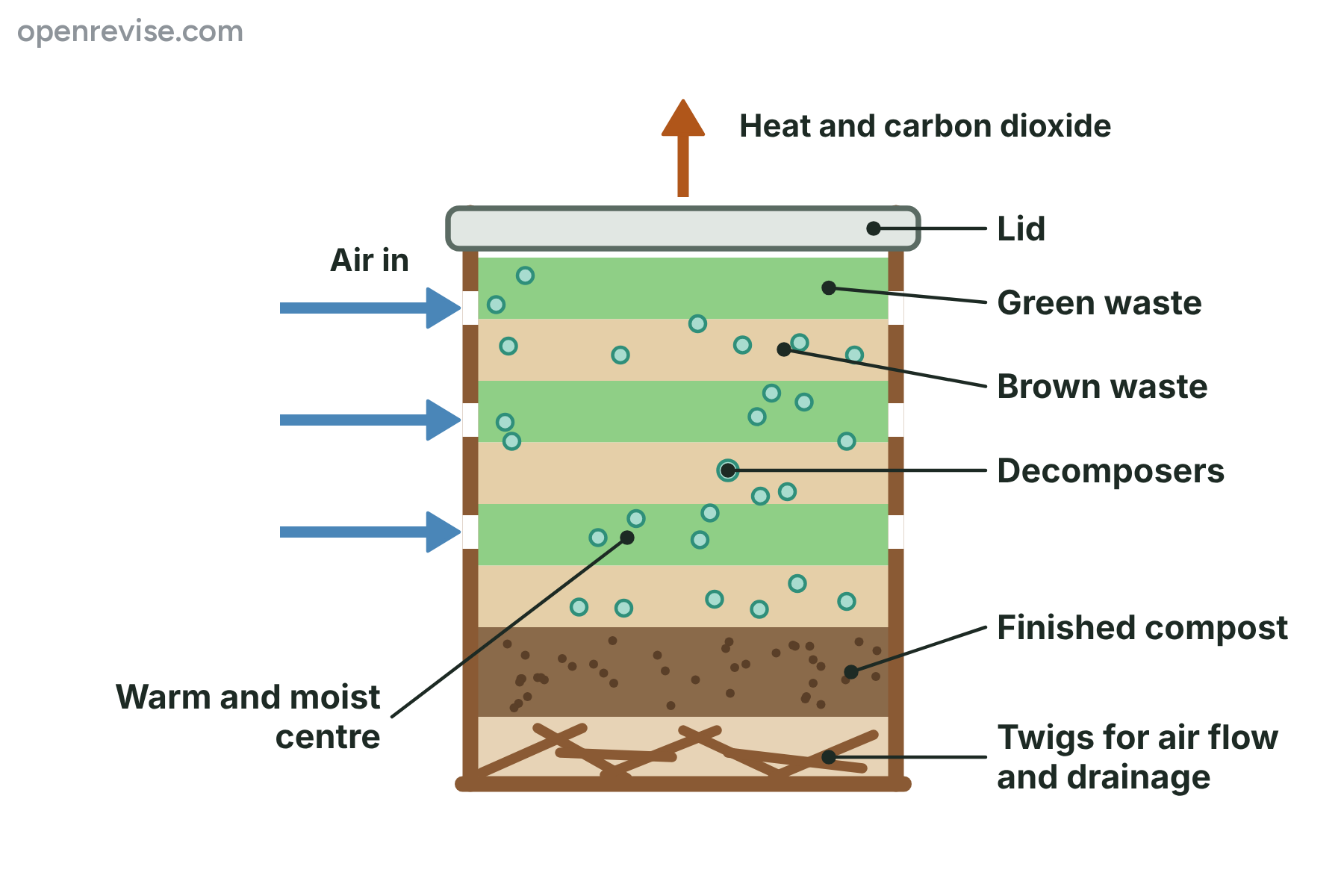
Decomposers need warmth, water and oxygen, so food is preserved by taking these away and compost is made by providing them.
- Decomposition The breakdown of dead plants, animals and waste by decomposers such as bacteria and fungi.
- Rate of decay How quickly dead material breaks down, found from the change in mass divided by the time taken.
- Food preservation Treating food so that microorganisms cannot grow and spoil it, by removing warmth, water or oxygen.
Preserving food and making compost
- Food preservation: slow the decay Cool or freeze it, so the enzymes work slowly or the water is ice; Dry, salt or sweeten it, so the microorganisms lose water; Exclude oxygen with vacuum packs, cans or oil
- Composting: speed up the decay Keep the heap warm, so the enzymes work faster; Keep it damp, so the microorganisms can grow; Let air in, so the decomposers respire aerobically
Making good compost
- Chop it up Cut or shred the waste into small pieces.
- Mix the layers Alternate green and brown waste, with some coarse twigs at the…
- Keep it damp Water the heap in dry weather and cover it in heavy rain.
- Let air in Turn the heap every few weeks, so that the decomposers always have oxygen.