Biology · Plant Adaptations and Hormones
Knowledge organiser
The whole chapter on one page. Print it on A4 — it is already landscape — or cover a box and see how much of it you can say from memory.
Biology · Edexcel Paper 2
Plant Adaptations and Hormones
Plants in Extreme Environments (Separate only)
A cactus in the desert, marram grass on a windy dune and a water lily on a pond all face very different problems.
- Adaptation A feature of structure or behaviour that helps an organism to survive in its environment.
- Xerophyte A plant that is adapted to live in a very dry habitat.
- Cuticle A waxy waterproof layer on the surface of a leaf or stem.
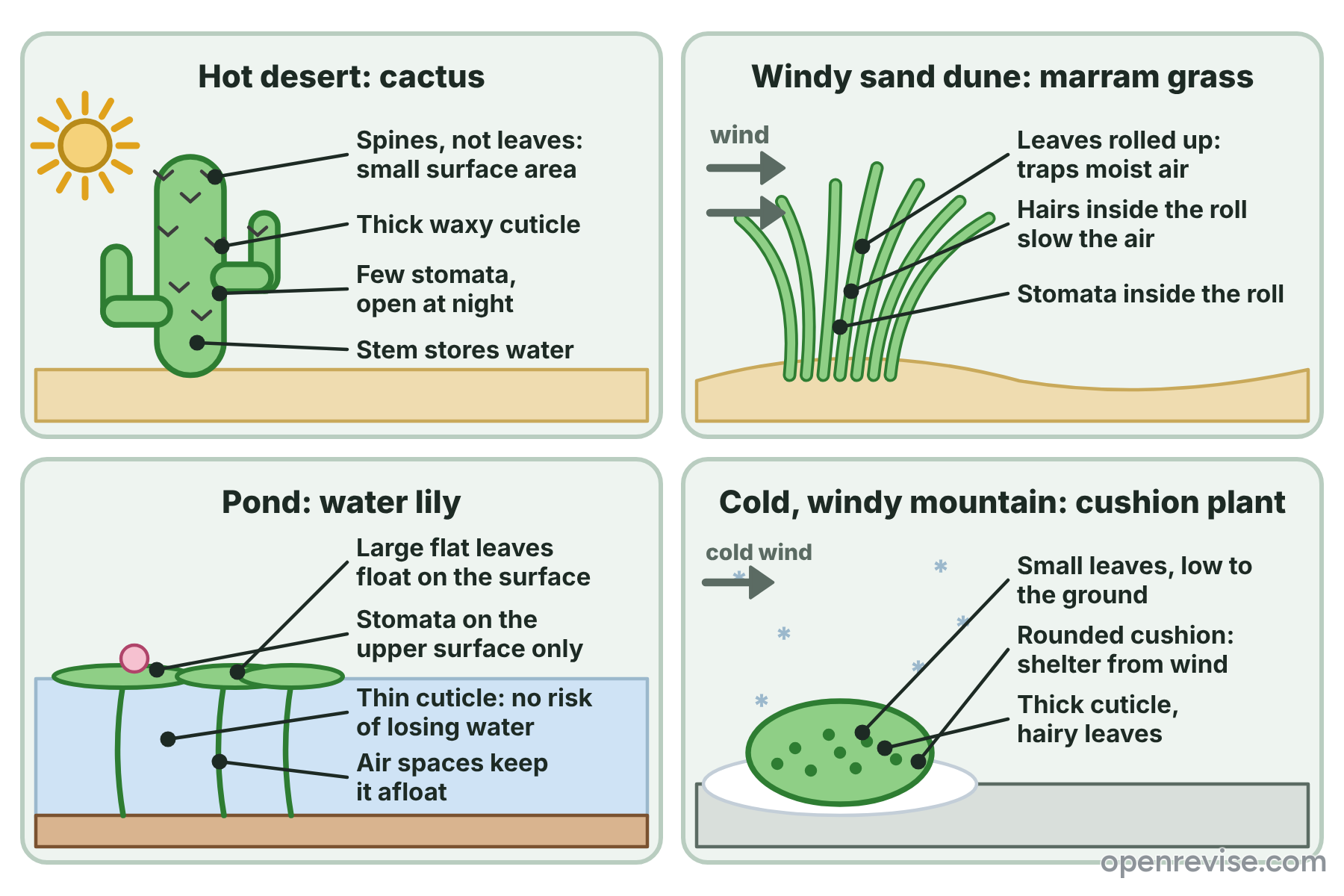
Dry-environment plants and water plants
- A plant from a dry place Small leaves, spines or rolled leaves; Very thick waxy cuticle; Few stomata, often sunken, or open at night
- A floating water plant Large, flat leaves; Thin cuticle; Stomata only on the upper surface
Plant Hormones and Tropisms (Separate only)
A plant has no nerves or muscles, but it still grows towards the light and sends its roots down.
- Plant hormone A chemical made in a plant which controls and coordinates growth and development.
- Auxin A plant hormone, made in the tip of the shoot and the root, which controls cell elongation.
- Tropism A growth response of a plant to a stimulus from one direction.
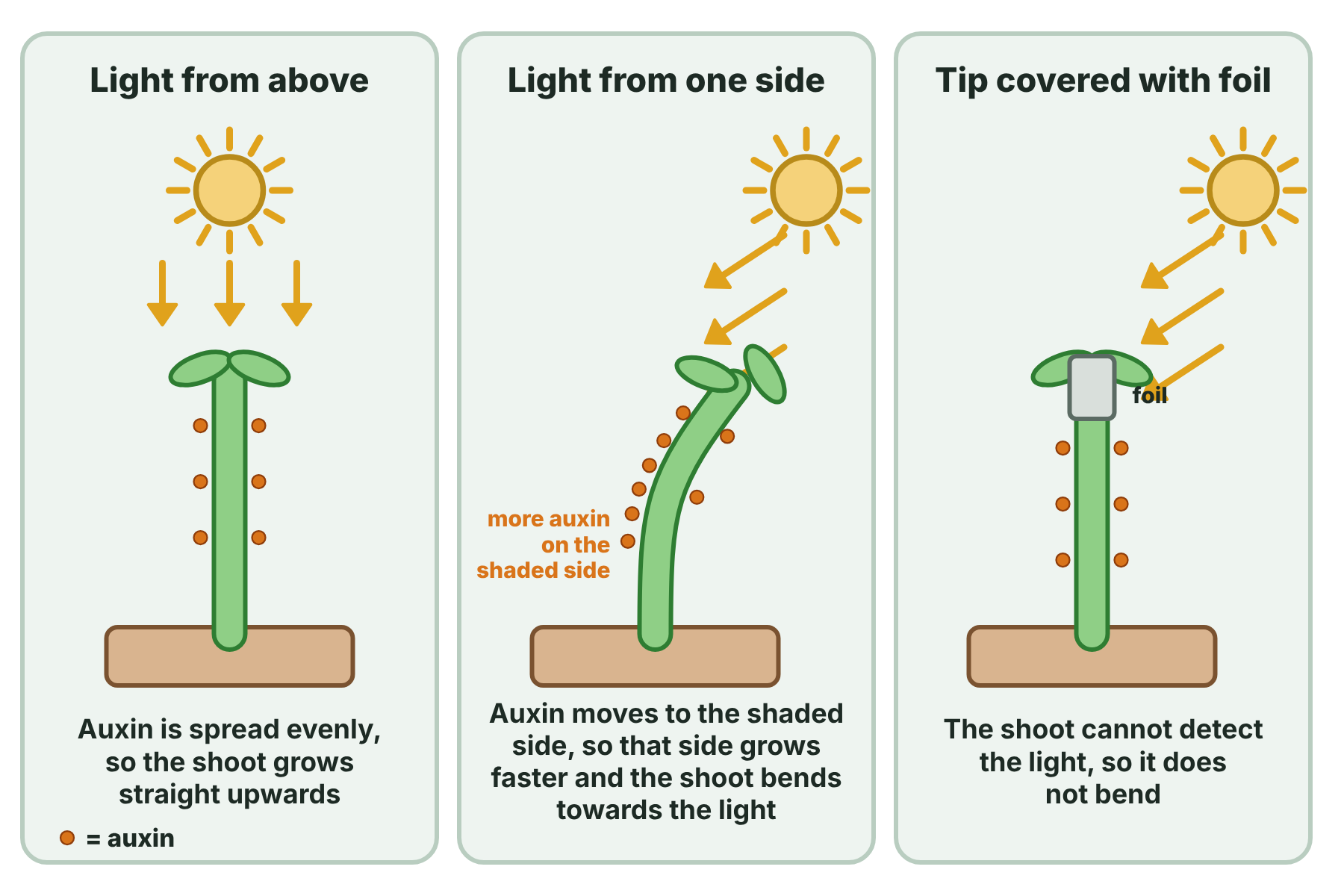
Shoots and roots
- A shoot Grows towards light (positive phototropism); Grows away from gravity (negative gravitropism); Auxin makes the cells on that side grow longer
- A root Grows away from light, or is not affected by it; Grows towards gravity (positive gravitropism); Auxin slows the growth on that side
Investigating Tropic Responses (Separate only)
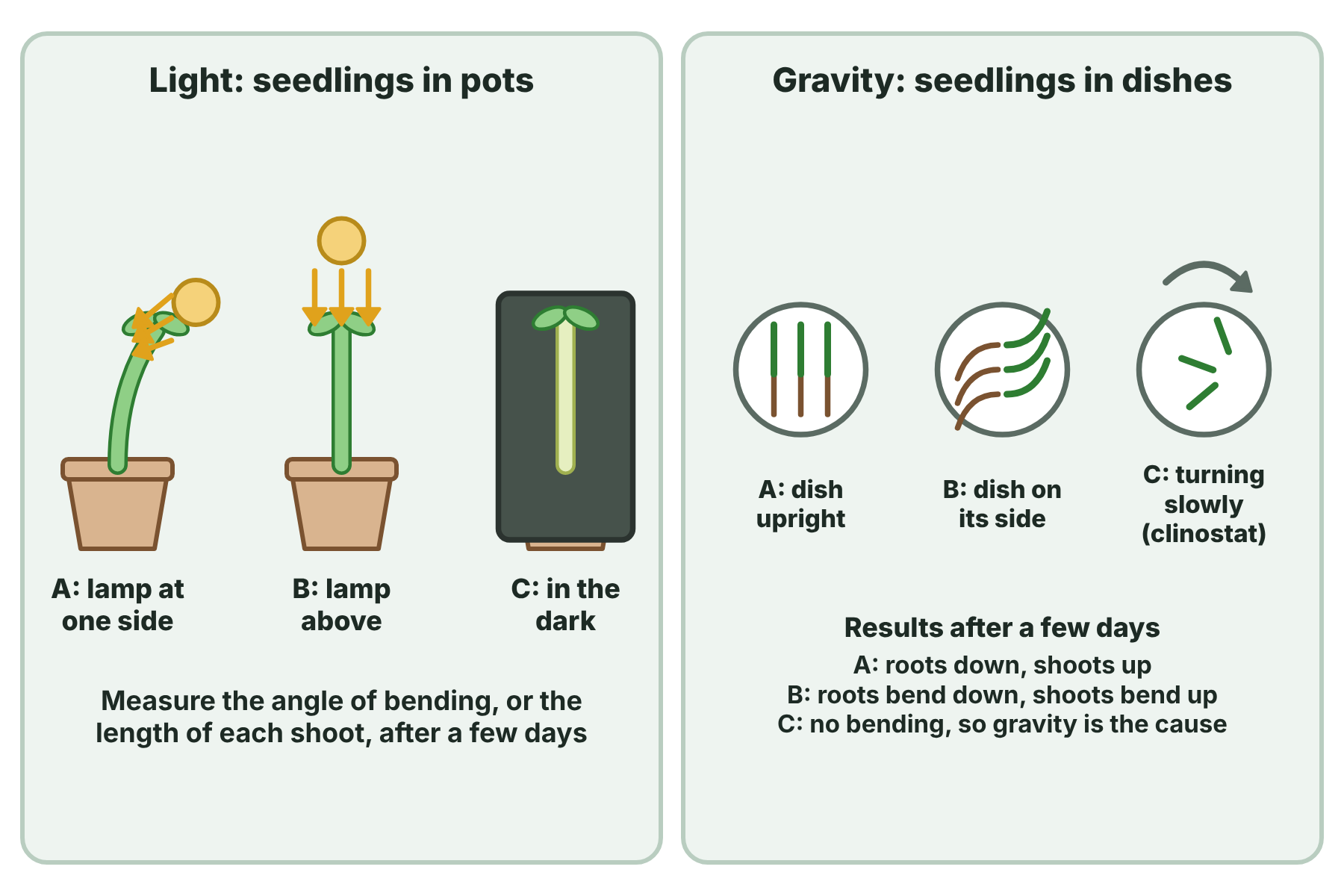
You can see a tropism happening in a few days with a pot of cress seedlings.
- Clinostat A device that turns plants slowly so that gravity acts on all sides equally.
- Seedling A very young plant that has just grown from a seed.
- Control A test in which the factor being investigated is not changed, for comparison.
Commercial Uses of Plant Hormones (Higher tier) (Separate only)
Farmers and growers use plant hormones to control how their crops grow and ripen.
- Weedkiller A chemical that kills weeds, which are unwanted plants.
- Selective weedkiller A weedkiller that kills some kinds of plant but not others.
- Rooting powder A powder that contains auxin, used to make cuttings grow roots.
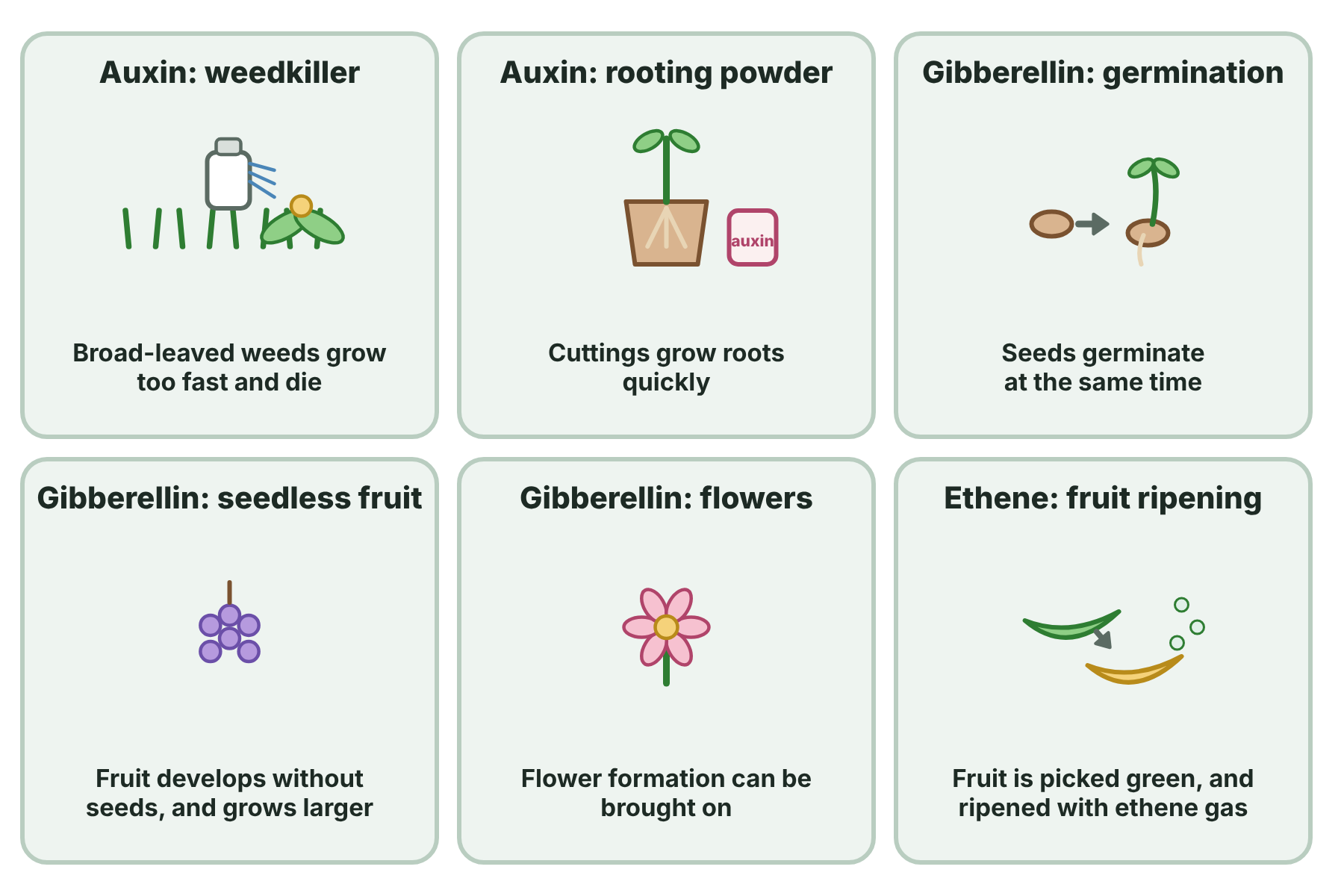
The three groups of plant hormone and their uses
- Auxins and gibberellins Auxins: selective weedkillers; Auxins: rooting powders for cuttings; Gibberellins: germination of seeds
- Ethene A gas made by plants; Makes fruit ripen; Fruit is picked green and ripened later