Biology · Respiration
Knowledge organiser
The whole chapter on one page. Print it on A4 — it is already landscape — or cover a box and see how much of it you can say from memory.
Biology · Edexcel Paper 2
Respiration
Cellular Respiration and Aerobic Respiration
Respiration is the exothermic reaction in every living cell that releases the energy in glucose for metabolic processes.
- Respiration A series of chemical reactions in living cells that releases energy from nutrient molecules such as glucose.
- Aerobic respiration Respiration that uses oxygen to break glucose down completely into carbon dioxide and water, releasing energy.
- Exothermic reaction A reaction that transfers energy to the surroundings, usually as heat.
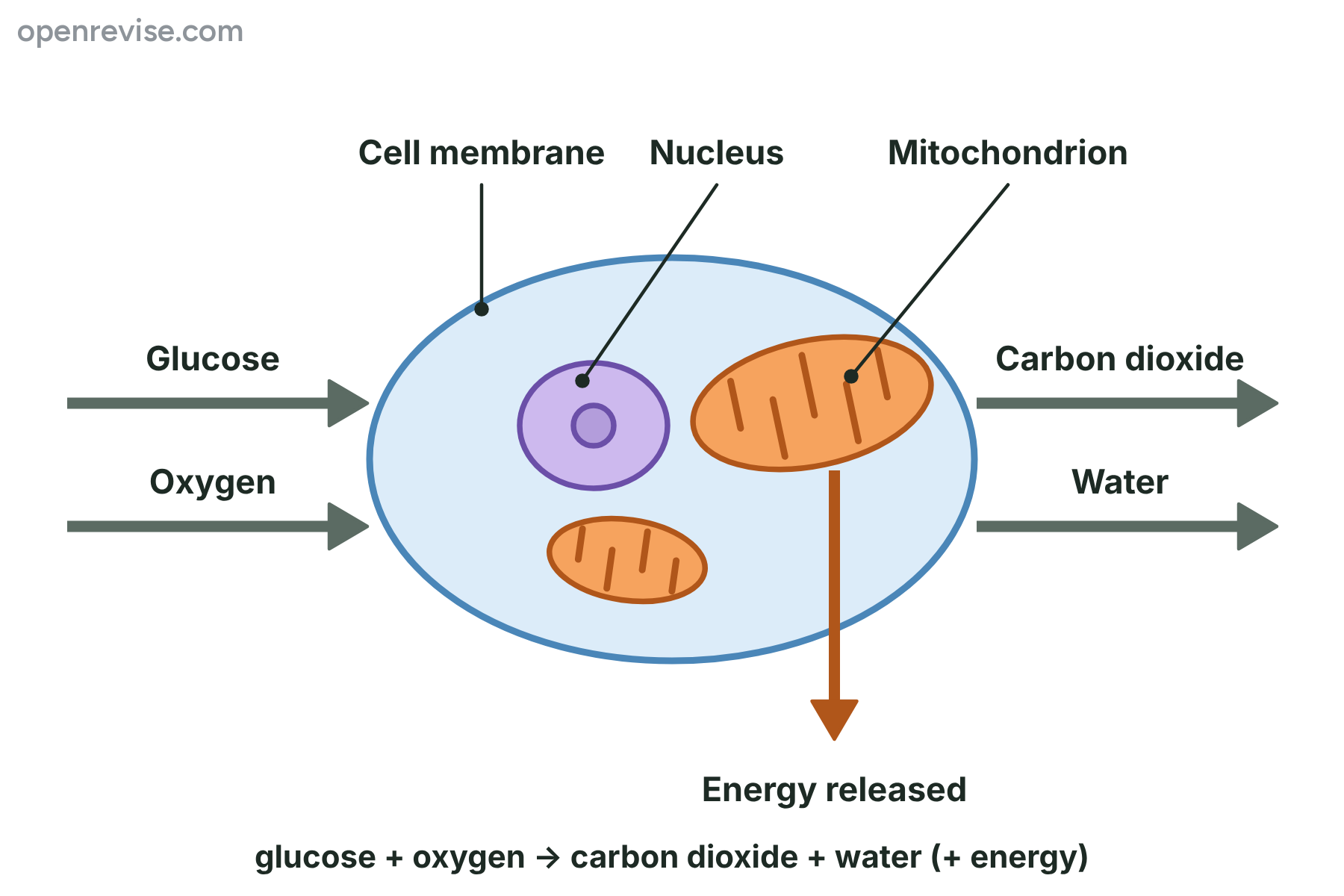
Respiration and photosynthesis compared
- Respiration An exothermic reaction that releases energy; Uses glucose and oxygen; Makes carbon dioxide and water
- Photosynthesis An endothermic reaction that takes in light energy; Uses carbon dioxide and water; Makes glucose and oxygen
From the air to the energy in a cell
- Breathing in Air containing oxygen is drawn into the lungs as you inhale.
- Gas exchange Oxygen diffuses from the alveoli into the blood in the capillaries.
- Transport Red blood cells carry the oxygen.
- Respiration In the mitochondria, glucose and oxygen react to release energy…
Anaerobic Respiration
Aerobic respiration releases far more energy from glucose, but anaerobic respiration works without oxygen and gives a quick burst of energy.
- Anaerobic respiration The release of energy from glucose without using oxygen, which releases much less energy than aerobic respiration.
- Lactic acid The product of anaerobic respiration in muscle cells, which causes muscle fatigue.
- Oxygen debt The extra oxygen needed after vigorous exercise to break down the lactic acid that has built up.
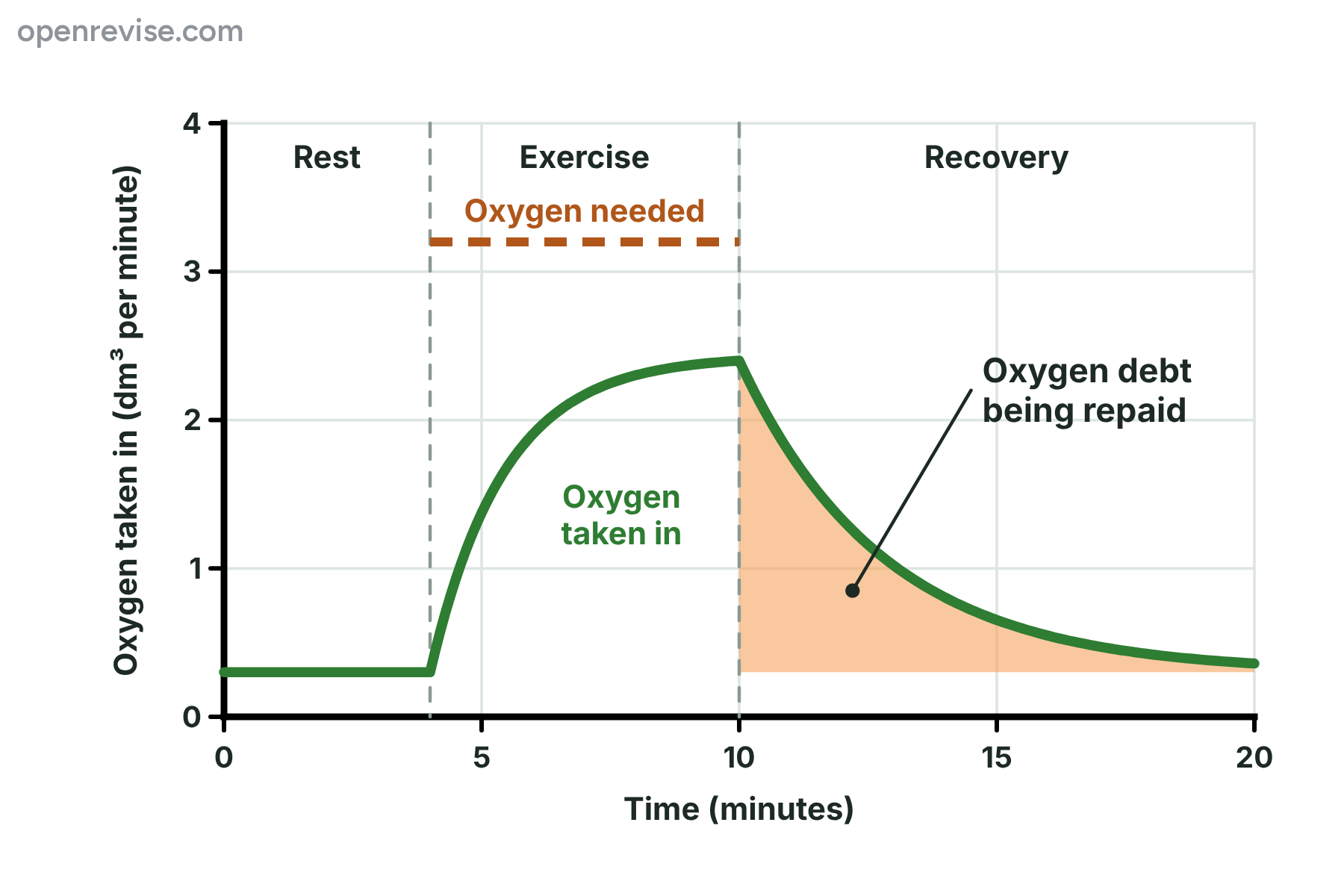
Aerobic and anaerobic respiration compared
- Aerobic respiration Needs oxygen; Glucose is broken down completely to carbon dioxide and water; Releases a large amount of energy from each glucose molecule
- Anaerobic respiration Does not need oxygen; Releases much less energy from each glucose molecule; Takes place in the cytoplasm
Core Practical: Investigating the Rate of Respiration
A respirometer measures the oxygen used by living organisms: soda lime removes the carbon dioxide, so the drop moves as the oxygen is used up.
- Respirometer Apparatus that measures the rate of respiration of organisms by the oxygen they take in.
- Soda lime A chemical that absorbs carbon dioxide, so that only the oxygen used changes the volume of gas.
- Capillary tube A very thin glass tube in which a drop of coloured liquid moves as the volume of gas changes.
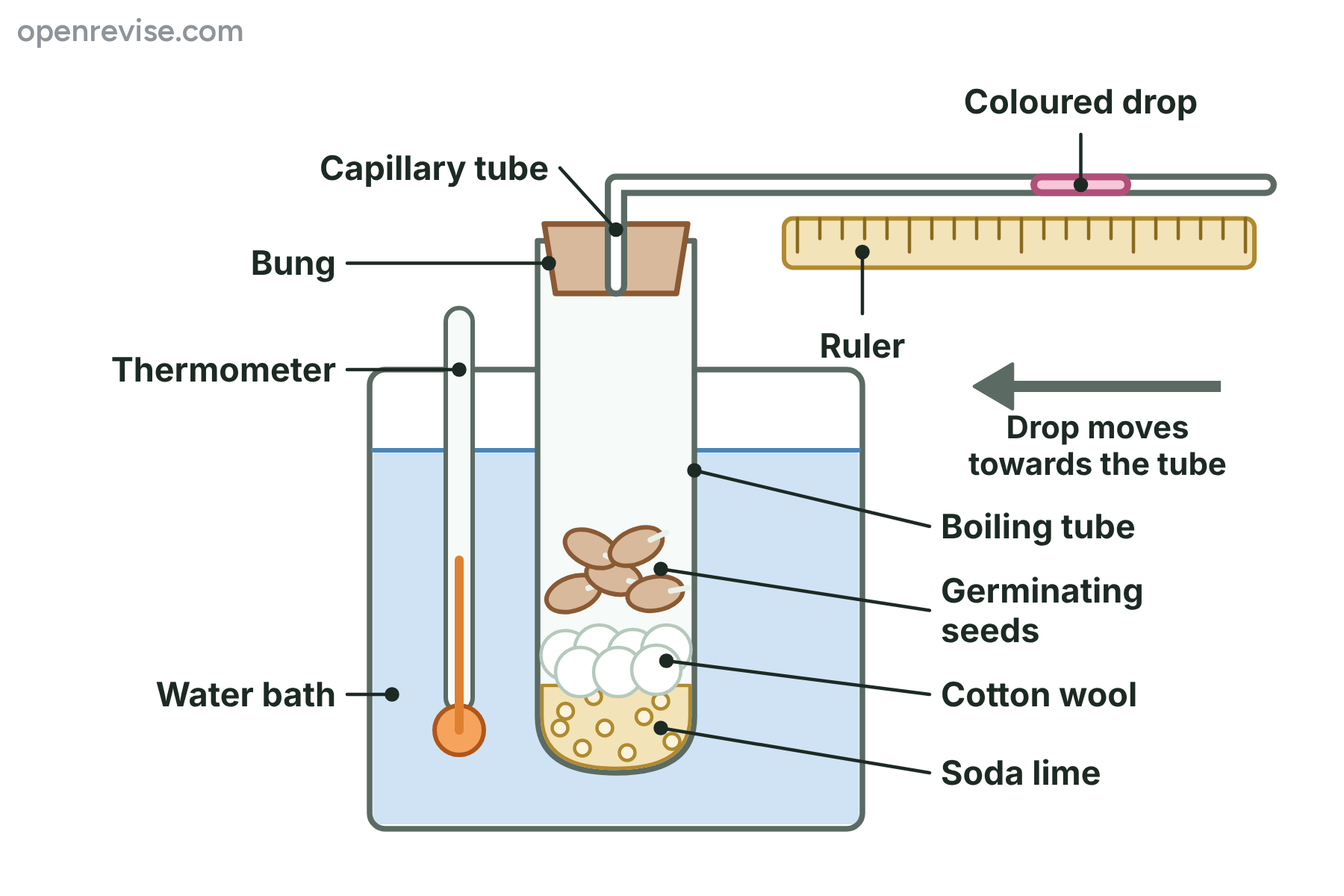
Germinating seeds or small invertebrates
- Germinating seeds Easy to weigh and to keep still; Must be germinating, because dry seeds respire very slowly; No animals are harmed, so there are few ethical issues
- Small invertebrates such as woodlice or maggots Respire quickly, so the drop moves a long way in a few minutes; Must be handled gently and kept in the tube only briefly; Must not be overheated and must be returned unharmed
Method: the effect of temperature on respiration
- Set up the tubes Put a layer of soda lime in the bottom of a boiling tube, add a plug of cotton wool.
- Set up a control Make an identical tube but replace the seeds with glass beads of…
- Set the temperature Stand both tubes in a water bath at the first temperature.
- Add the drop Put a drop of coloured liquid into the open end of the capillary tube.