Biology · The Kidneys
Knowledge organiser
The whole chapter on one page. Print it on A4 — it is already landscape — or cover a box and see how much of it you can say from memory.
Biology · Edexcel Paper 2
The Kidneys
The Urinary System and Urea (Separate only)
Every day the kidneys filter about 180 litres of fluid from the blood, but only about 1.5 litres leave the body as urine.
- Kidney An organ that filters the blood, and makes urine.
- Ureter A tube that carries urine from the kidney to the bladder.
- Bladder A muscular bag that stores urine.
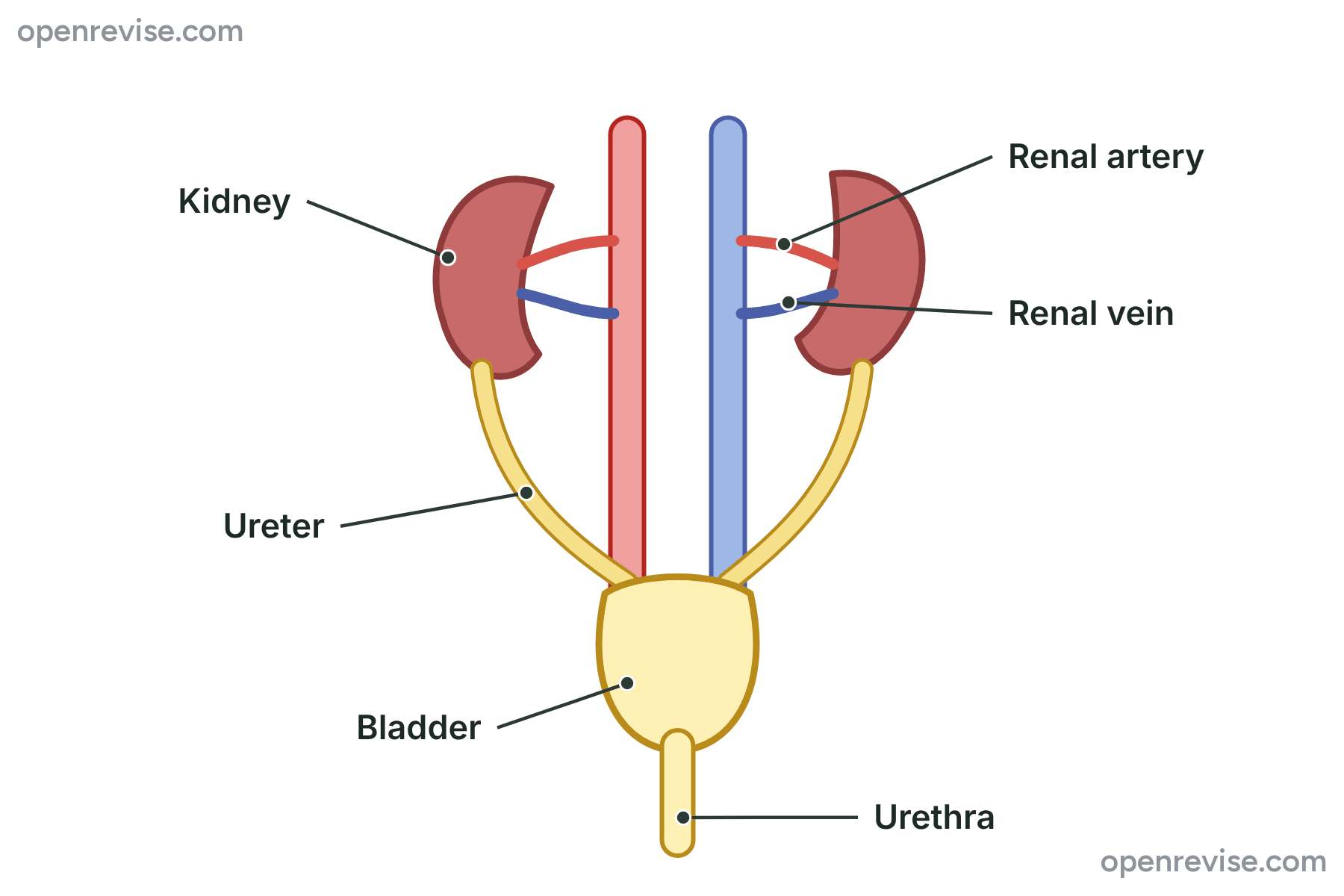
Blood entering and leaving a kidney
- Blood in the renal artery Contains urea; Contains water, glucose and ions; Comes from the heart and the body
- Blood in the renal vein Has very little urea; Has the right amount of water and ions; Goes back to the heart
The Nephron and the Formation of Urine (Separate only)
Each kidney contains about a million tiny filtering units.
- Nephron A tiny filtering unit of the kidney.
- Glomerulus A ball of capillaries in Bowman's capsule, where the blood is filtered.
- Bowman's capsule A cup around the glomerulus that collects the filtrate.
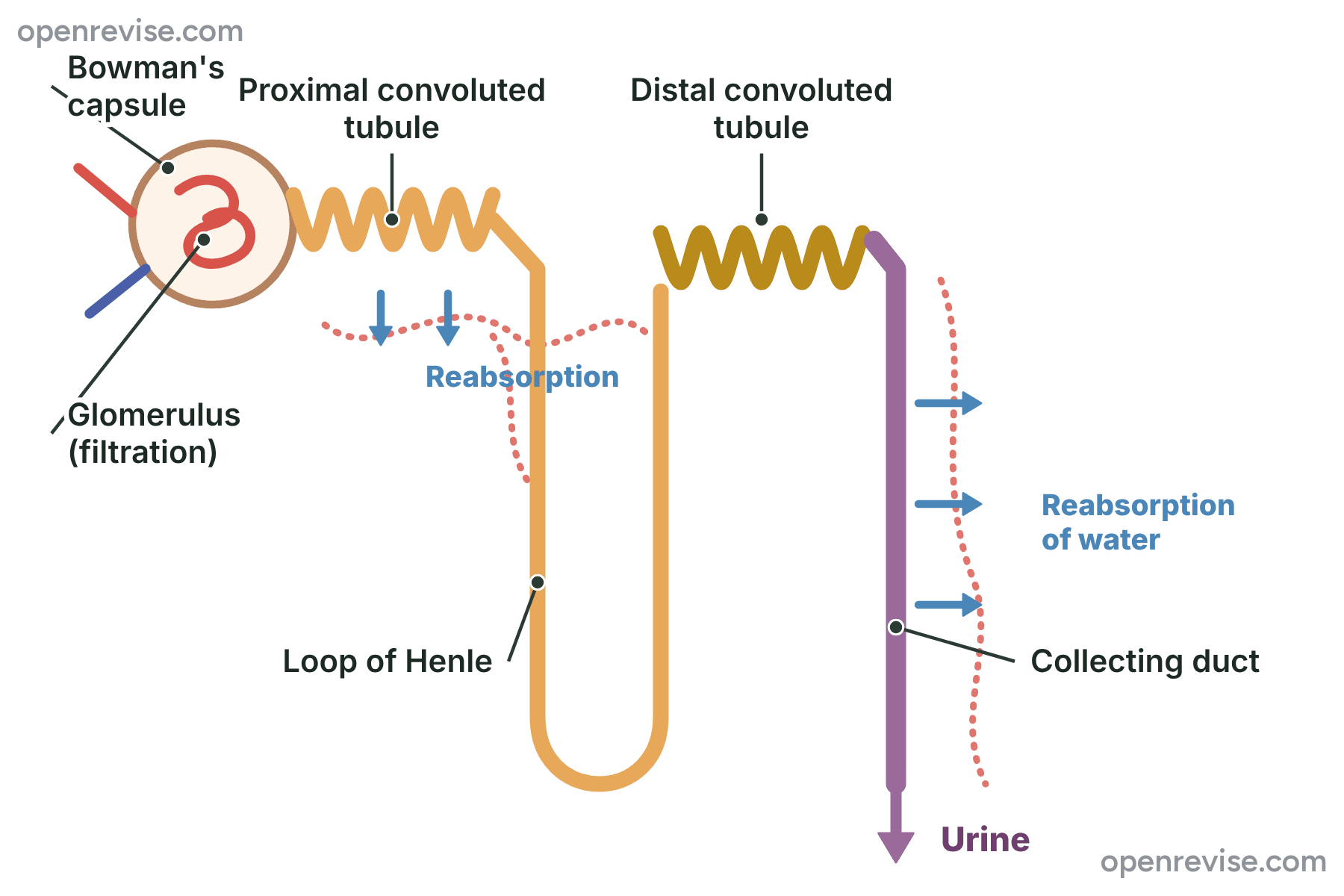
Filtration and reabsorption
- Filtration In the glomerulus and Bowman's capsule; Uses high pressure; Not selective: it depends on size
- Selective reabsorption Along the tubule and collecting duct; Glucose by active transport, which needs energy; Water by osmosis
ADH and Water Balance (Higher tier) (Separate only)
You pass a small amount of dark urine on a hot day, and a large amount of pale urine after a big drink.
- ADH Antidiuretic hormone, which makes the collecting duct more permeable to water.
- Pituitary gland The gland at the base of the brain that releases ADH.
- Hypothalamus The part of the brain that detects the water content of the blood.
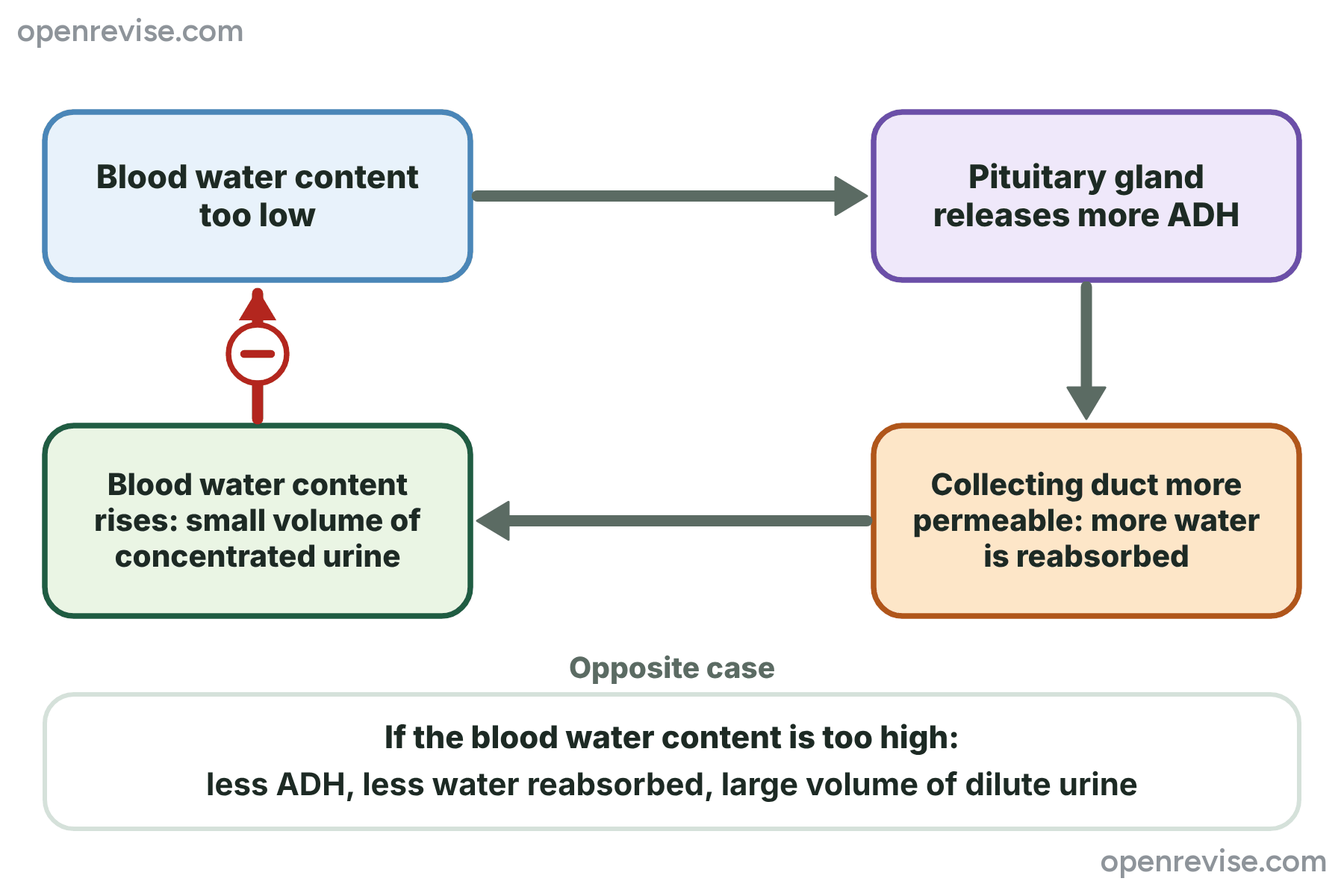
Hot day and cool day
- Hot day, or after exercise More water lost in sweat; Blood water content falls; More ADH released
- Cool day, or after a large drink Less water lost, or more taken in; Blood water content rises; Less ADH released
Kidney Failure, Dialysis and Transplants (Separate only)
When the kidneys fail, urea and excess water and ions build up in the blood, and a patient will die without treatment.
- Kidney failure The condition in which the kidneys no longer filter the blood properly.
- Dialysis The treatment in which a machine cleans the blood.
- Dialysis fluid The fluid that contains the same glucose and ions as healthy blood, but no urea.
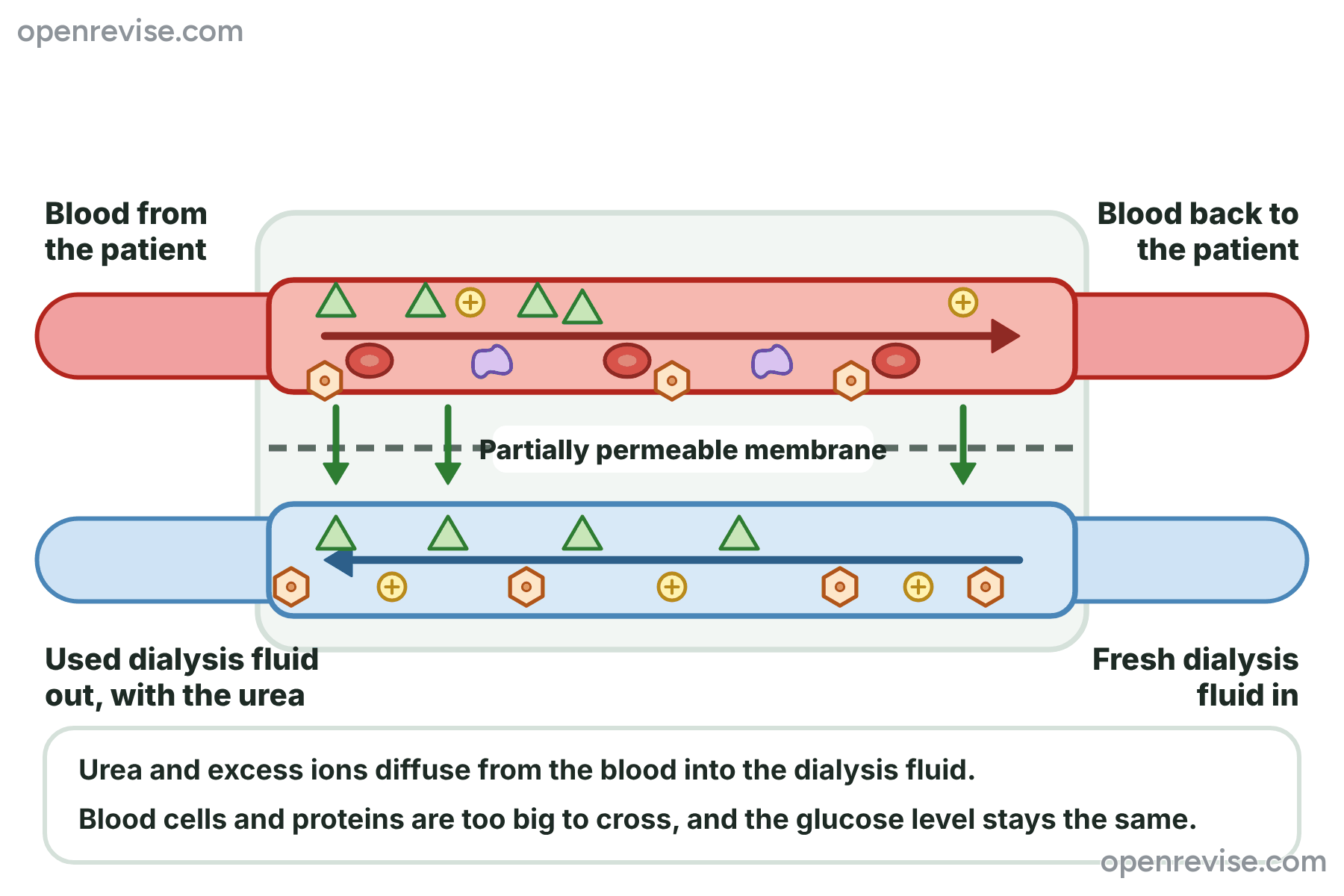
Dialysis and transplant
- Dialysis A machine cleans the blood; Needed about 3 times a week; Available at once
- Transplant A donor kidney does the job; Normal life if it works; Needs a matching donor, so there may be a long wait