Biology · Homeostasis
Knowledge organiser
The whole chapter on one page. Print it on A4 — it is already landscape — or cover a box and see how much of it you can say from memory.
Biology · OCR Paper 1
Homeostasis
Homeostasis and Control Systems
Homeostasis keeps the internal environment constant using receptors, coordination centres and effectors in negative feedback loops.
- Homeostasis The regulation of the internal conditions of the body to keep them constant.
- Internal environment The conditions inside the body, such as the blood and tissue fluid.
- Receptor A cell or organ that detects a change.
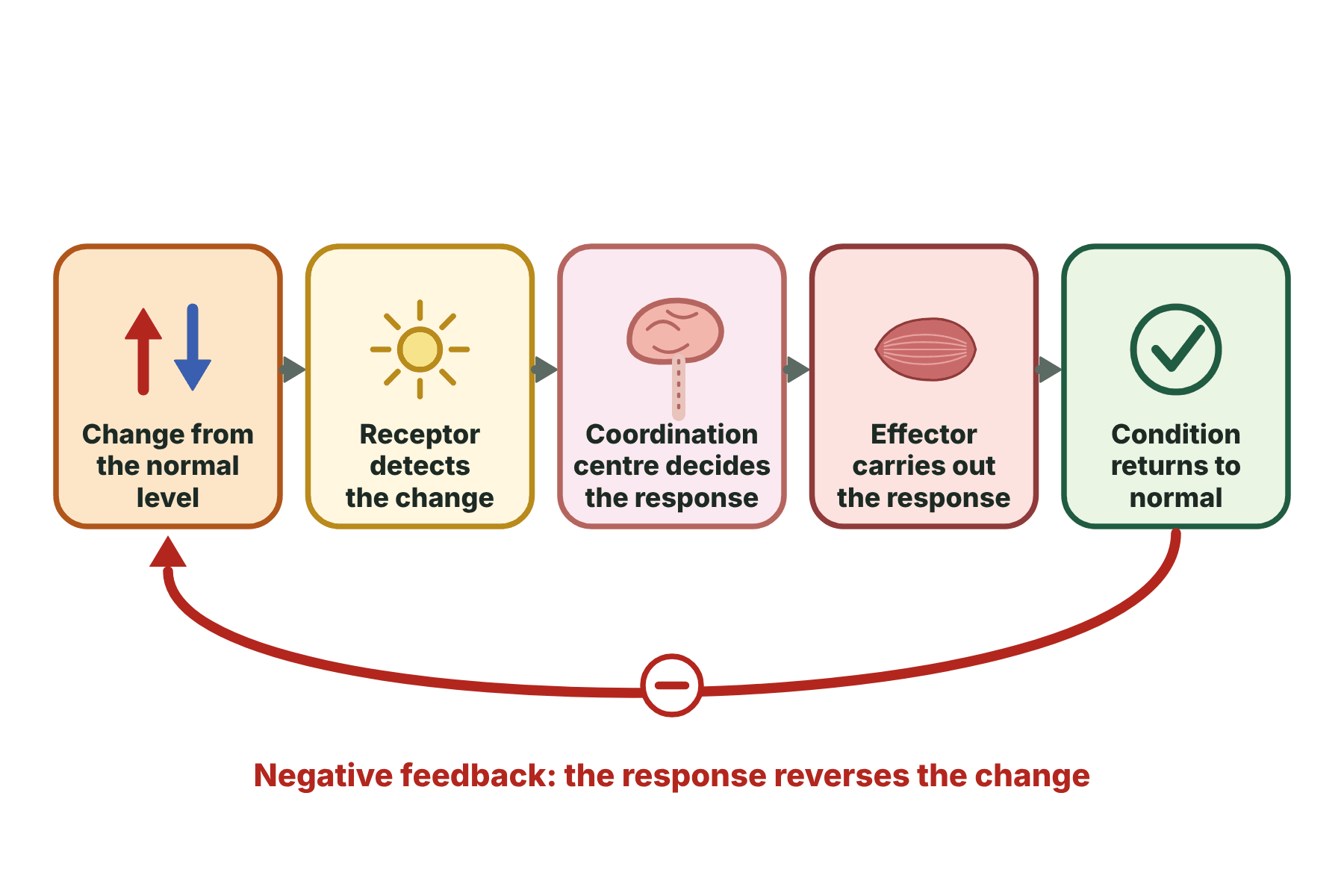
Nervous and hormonal control
- Nervous control Nerve impulses; Very fast response; Used for reflex actions and quick changes
- Hormonal control Hormones in the blood; Slower response, but longer-lasting; Used for slower changes
Temperature Control and the Skin (Separate only)
The hypothalamus coordinates temperature control by negative feedback: sweating and vasodilation cool the body, and shivering and vasoconstriction warm it.
- Thermoregulation The control of body temperature.
- Hypothalamus The part of the brain that monitors and controls body temperature.
- Sweat gland A gland in the skin that releases sweat.
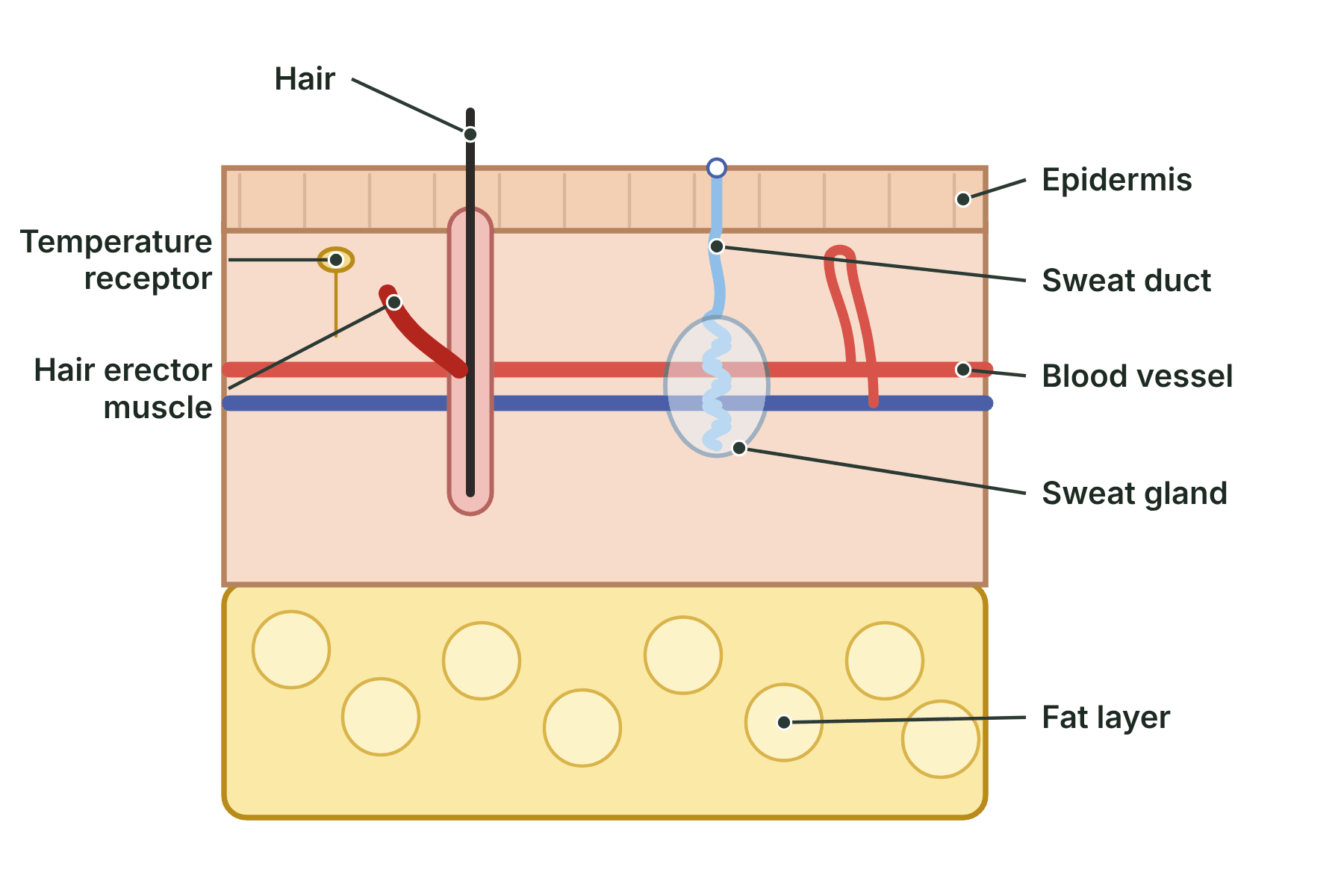
Too hot and too cold
- Too hot Sweating increases; Blood vessels widen; Hairs lie flat
- Too cold Shivering; Blood vessels narrow; Hairs stand up
Blood Glucose and Diabetes
Insulin lowers the blood glucose concentration by making the liver store glucose as glycogen, and for Higher tier glucagon raises it by making the liver release glucose.
- Blood glucose concentration The amount of glucose in the blood.
- Insulin The hormone that lowers the blood glucose concentration.
- Glucagon The hormone that raises the blood glucose concentration (Higher tier).
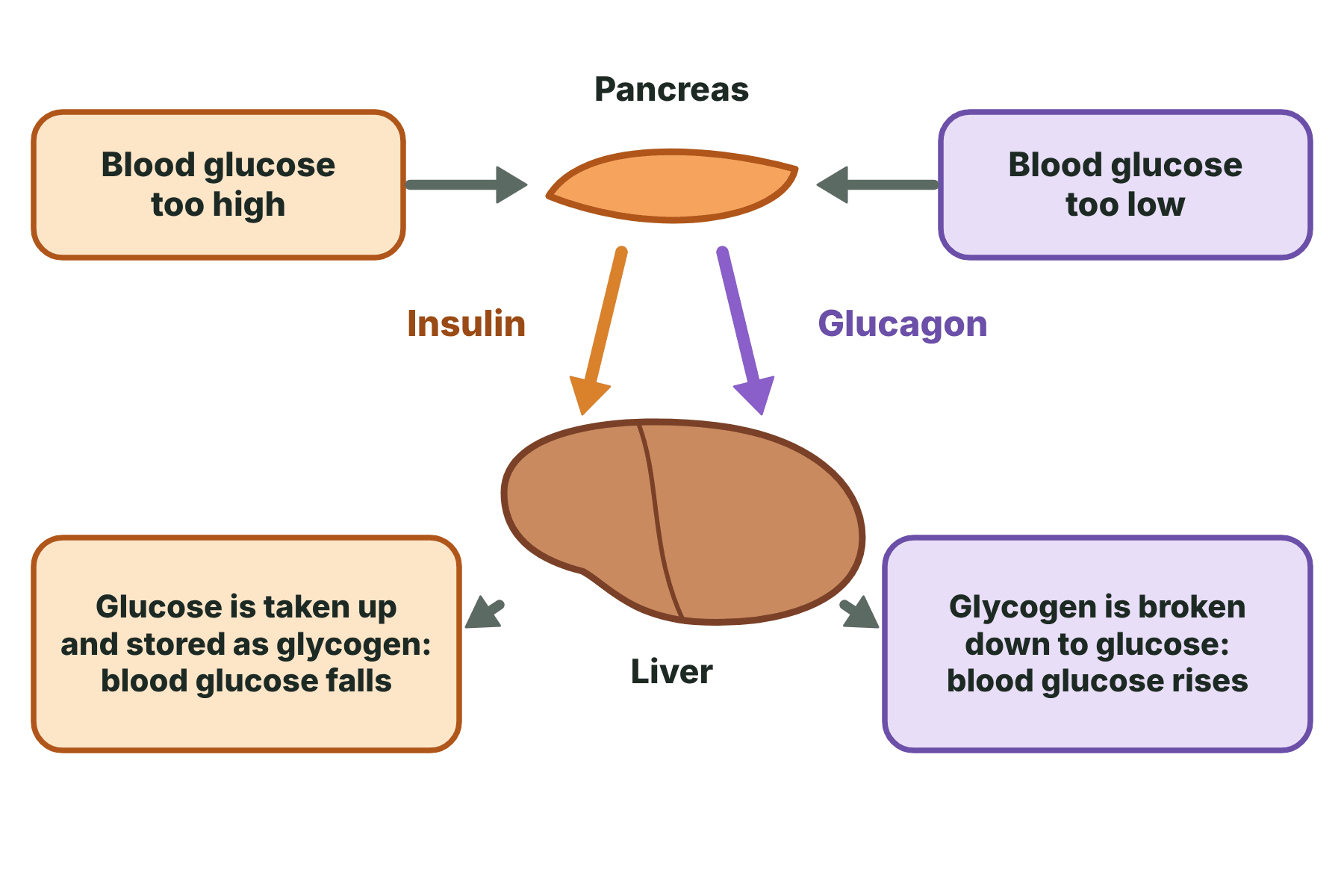
Insulin and glucagon
- Insulin Released when blood glucose is too high; Released by the pancreas; Liver converts glucose to glycogen
- Glucagon (Higher tier) Released when blood glucose is too low; Released by the pancreas; Liver converts glycogen to glucose
The Kidneys and Water Balance (Separate only)
The kidneys filter the blood, reabsorb what is needed and remove urea and excess water and ions.
- Kidney An organ that filters the blood and makes urine.
- Nephron The filtering unit of the kidney.
- Urea A poisonous waste substance made from excess amino acids and removed by the kidneys.
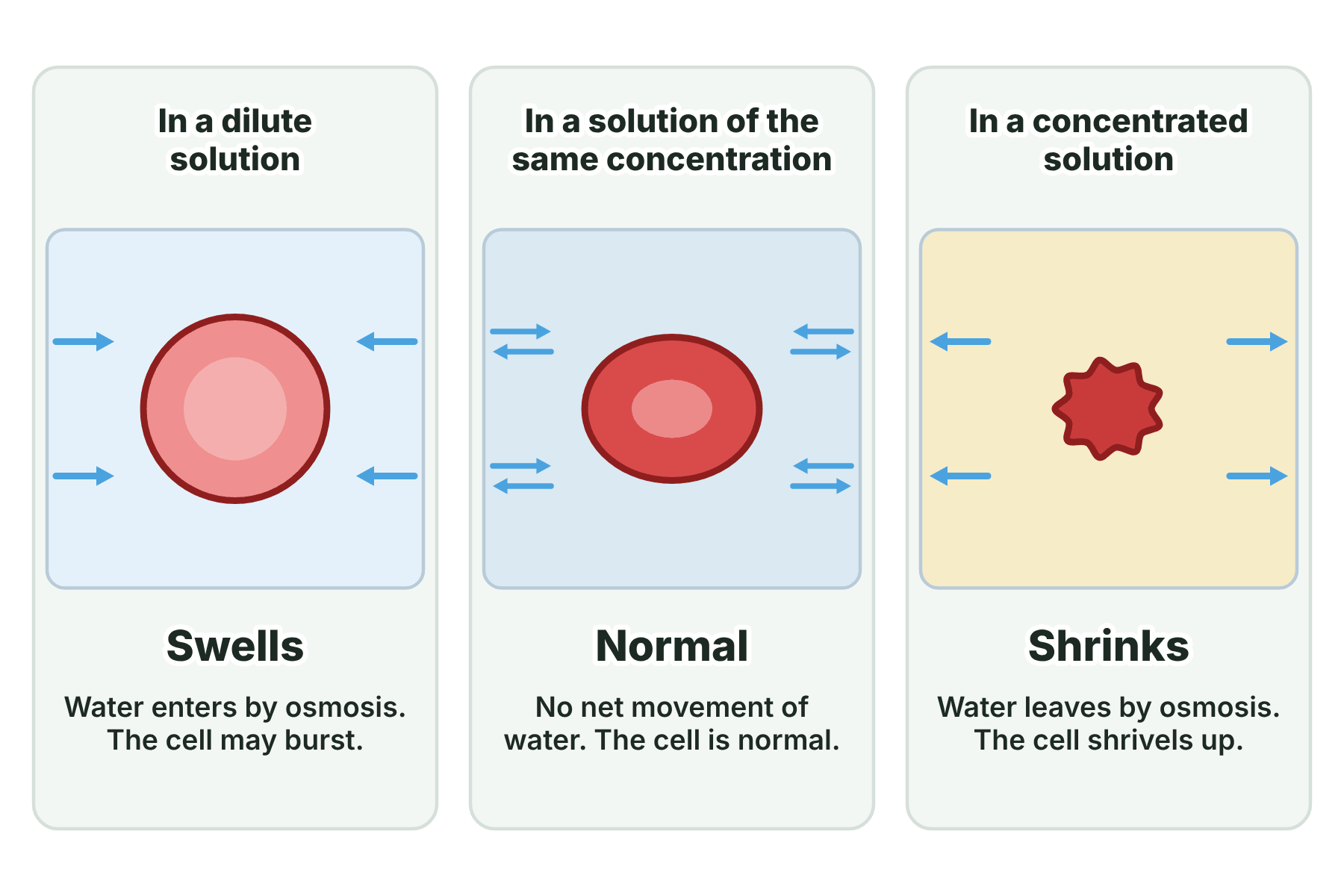
Dilute urine and concentrated urine
- Too much water in the body Less ADH is released; Collecting duct less permeable; Less water is reabsorbed
- Too little water in the body More ADH is released; Collecting duct more permeable; More water is reabsorbed