Biology · Supplying the Cell
Knowledge organiser
The whole chapter on two pages. Print it on A4 — they are already landscape — or cover a box and see how much of it you can say from memory.
Biology · OCR Paper 1
Supplying the Cell
Diffusion
Diffusion is the net movement of particles from an area of higher concentration to an area of lower concentration.
- Diffusion The spreading out of particles of a gas, or of a substance in solution, resulting in a net movement from an area of…
- Concentration The amount of a substance in a given volume.
- Concentration gradient The difference in concentration between two places.
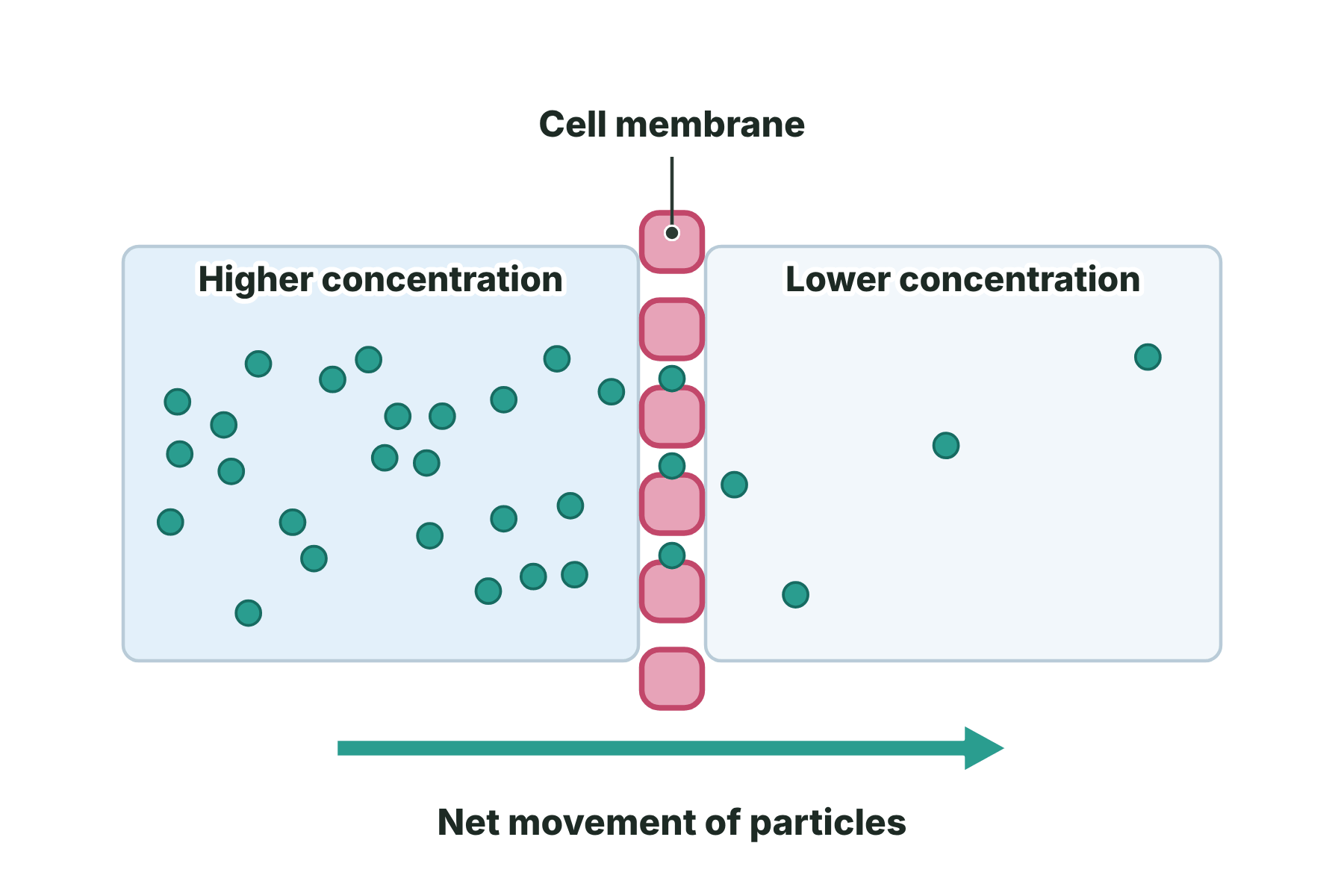
Following oxygen from the air to a muscle cell
- Breathing in Air in the lungs has a high concentration of oxygen.
- Into the blood Oxygen diffuses from the air in the alveoli into the blood.
- Round the body The blood carries the oxygen to the muscles.
- Into the cells The muscle cells use oxygen up, so its concentration in them is low.
Osmosis
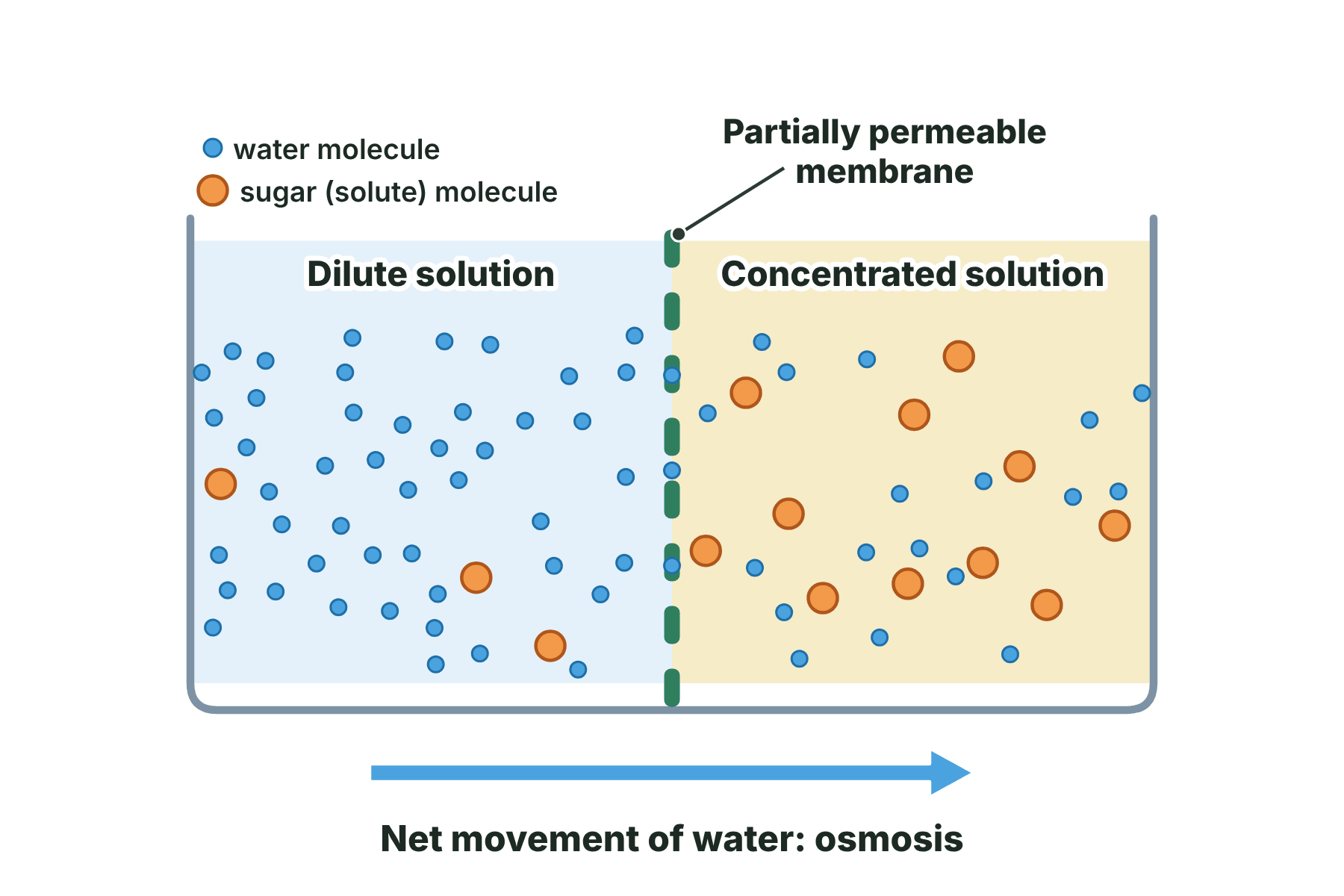
Osmosis is the diffusion of water from a dilute solution to a concentrated solution through a partially permeable membrane.
- Water potential The tendency of water to move. It is higher in a dilute solution than in a concentrated one.
- Osmosis The diffusion of water from a dilute solution to a concentrated solution through a partially permeable membrane.
- Partially permeable membrane A membrane that lets some substances, such as water, pass through but not others, such as large dissolved molecules.
Investigating Osmosis in Plant Tissue
Where the line on the graph crosses zero, the solution has the same concentration as the potato cells.
- Independent variable The variable that is deliberately changed in an investigation.
- Dependent variable The variable that is measured in an investigation.
- Control variable A variable that is kept the same so that the test is fair.
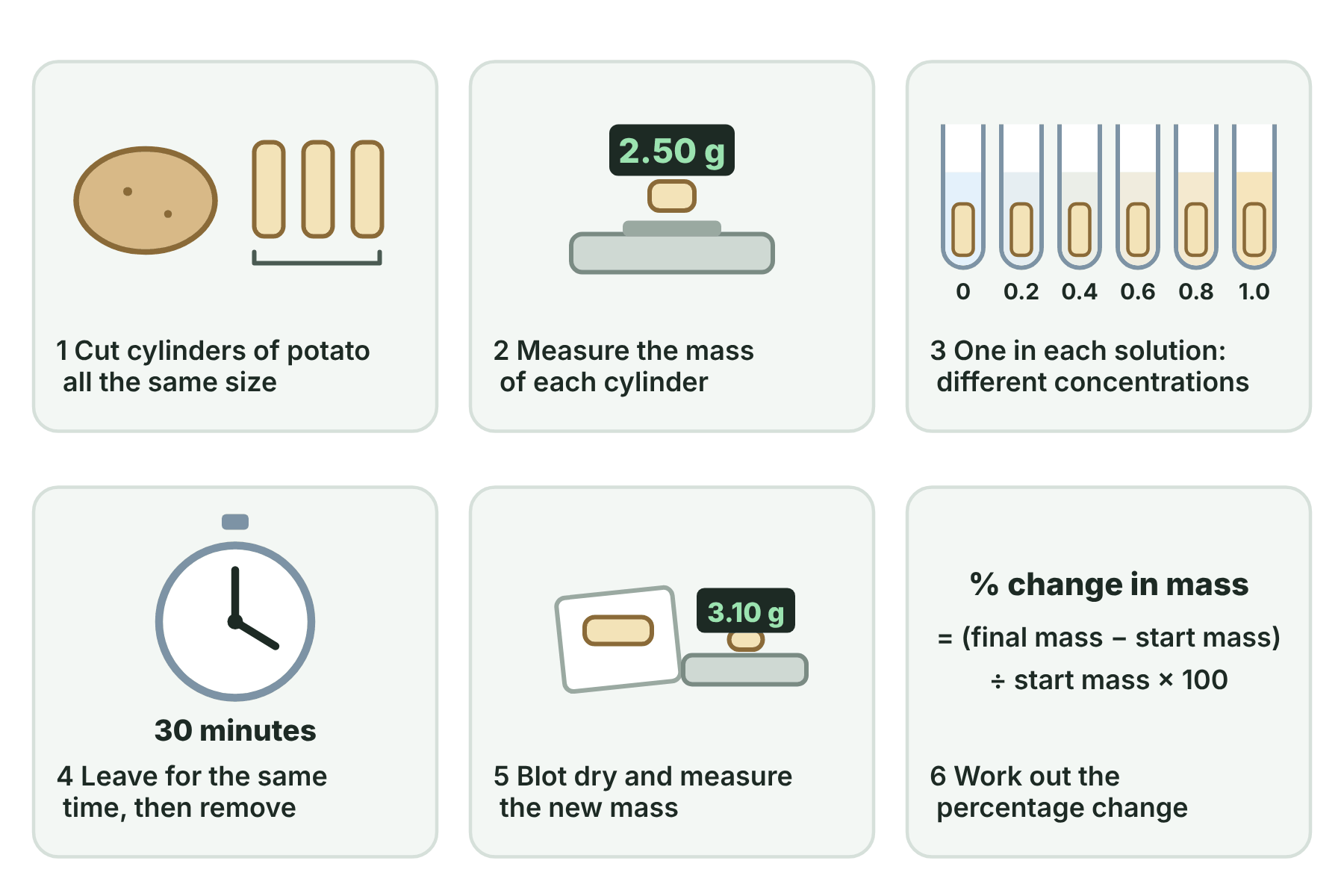
The method
- Cut the potato Use a cork borer to cut cylinders of potato.
- Measure the starting mass Dry each cylinder and measure its mass on a balance. Record it.
- Set up the solutions Put the same volume of each sugar solution into labelled test…
- Add one cylinder to each tube Make sure each is covered with solution.
Active Transport
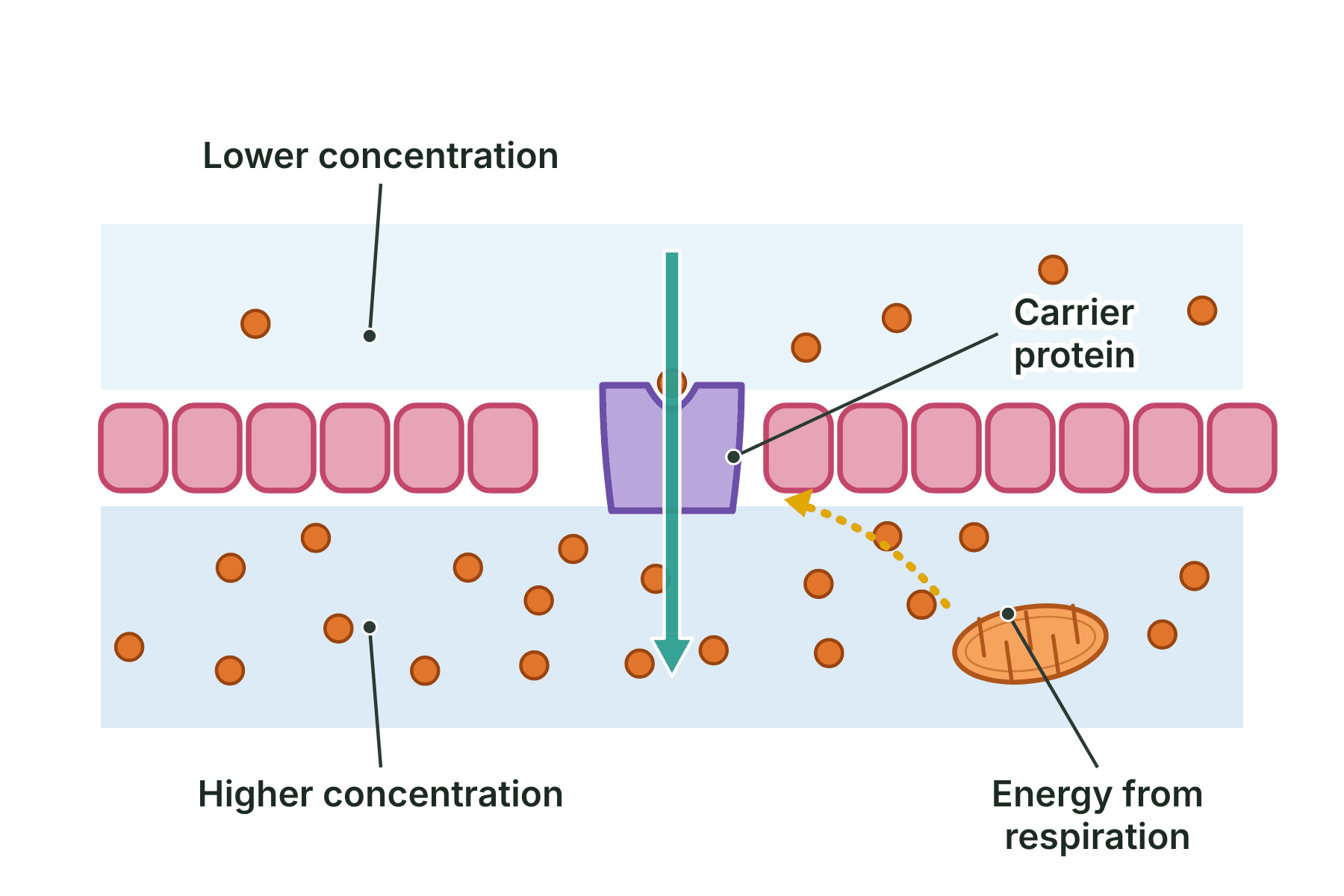
Active transport moves substances from a more dilute solution to a more concentrated solution, and it needs energy from respiration.
- Active transport The movement of substances from a more dilute solution to a more concentrated solution, against a concentration gradient.
- Against the concentration gradient From a lower concentration to a higher concentration.
- Respiration The process in cells that releases energy from glucose.
Biology · OCR Paper 1
Supplying the Cell continued
Diffusion and active transport
- Diffusion From a higher to a lower concentration; Down the concentration gradient; No energy needed from the cell
- Active transport From a lower to a higher concentration; Against the concentration gradient; Needs energy from respiration
The Cell Cycle and Mitosis
Mitosis makes two cells that are genetically identical to the parent cell.
- Cell cycle The series of stages a cell goes through to grow, copy its DNA and divide into two cells.
- Mitosis The stage of the cell cycle in which one set of chromosomes is pulled to each end of the cell and the nucleus divides.
- DNA replication The copying of DNA, so that there are two identical copies of each chromosome.
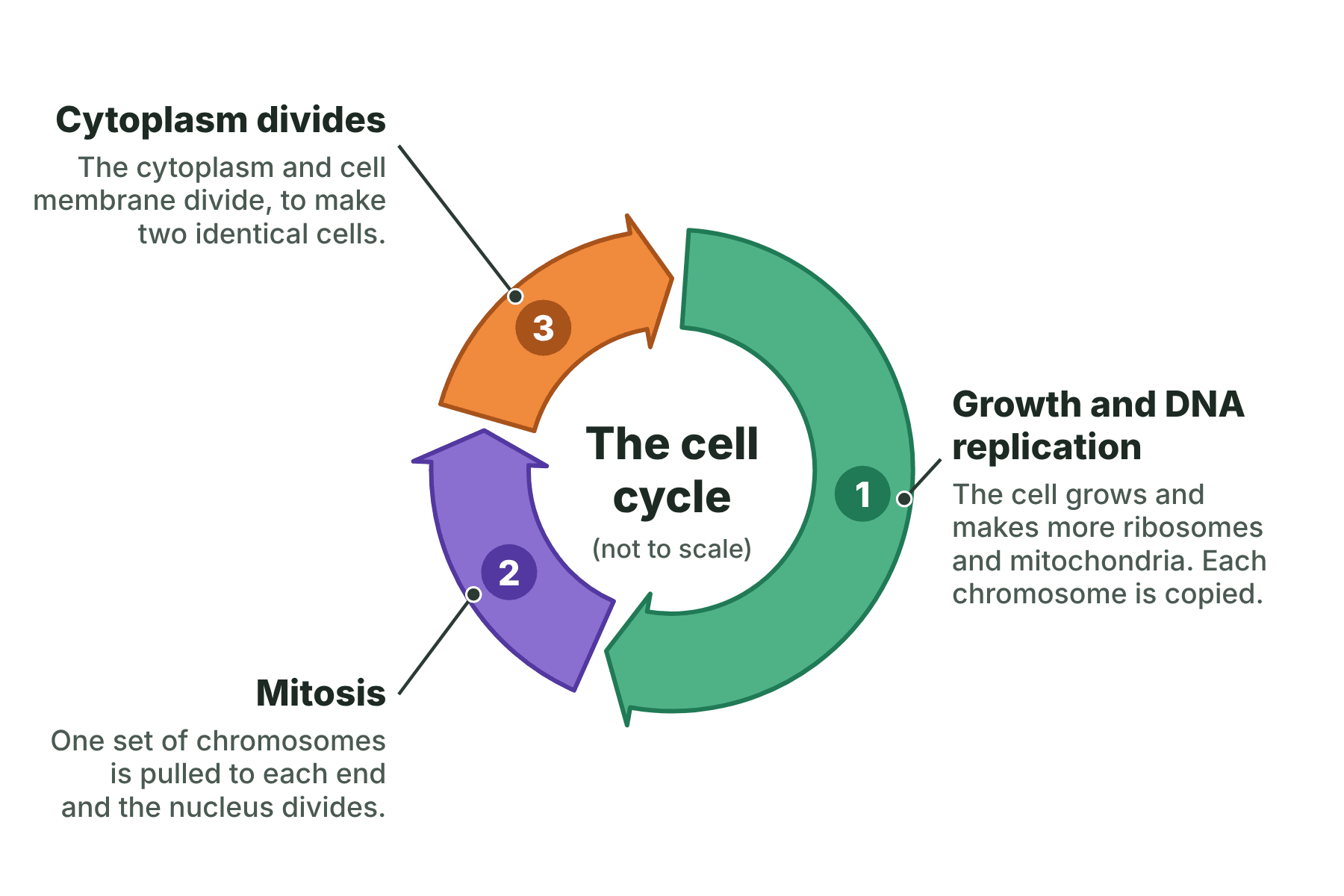
Mitosis, step by step
- The cell grows Before dividing, the cell grows and makes more organelles, such…
- The DNA is copied Each chromosome is replicated.
- The chromosomes line up The chromosomes line up across the middle of the cell.
- The copies are pulled apart One set of chromosomes is pulled to each end of the cell.
Cell Specialisation and Differentiation
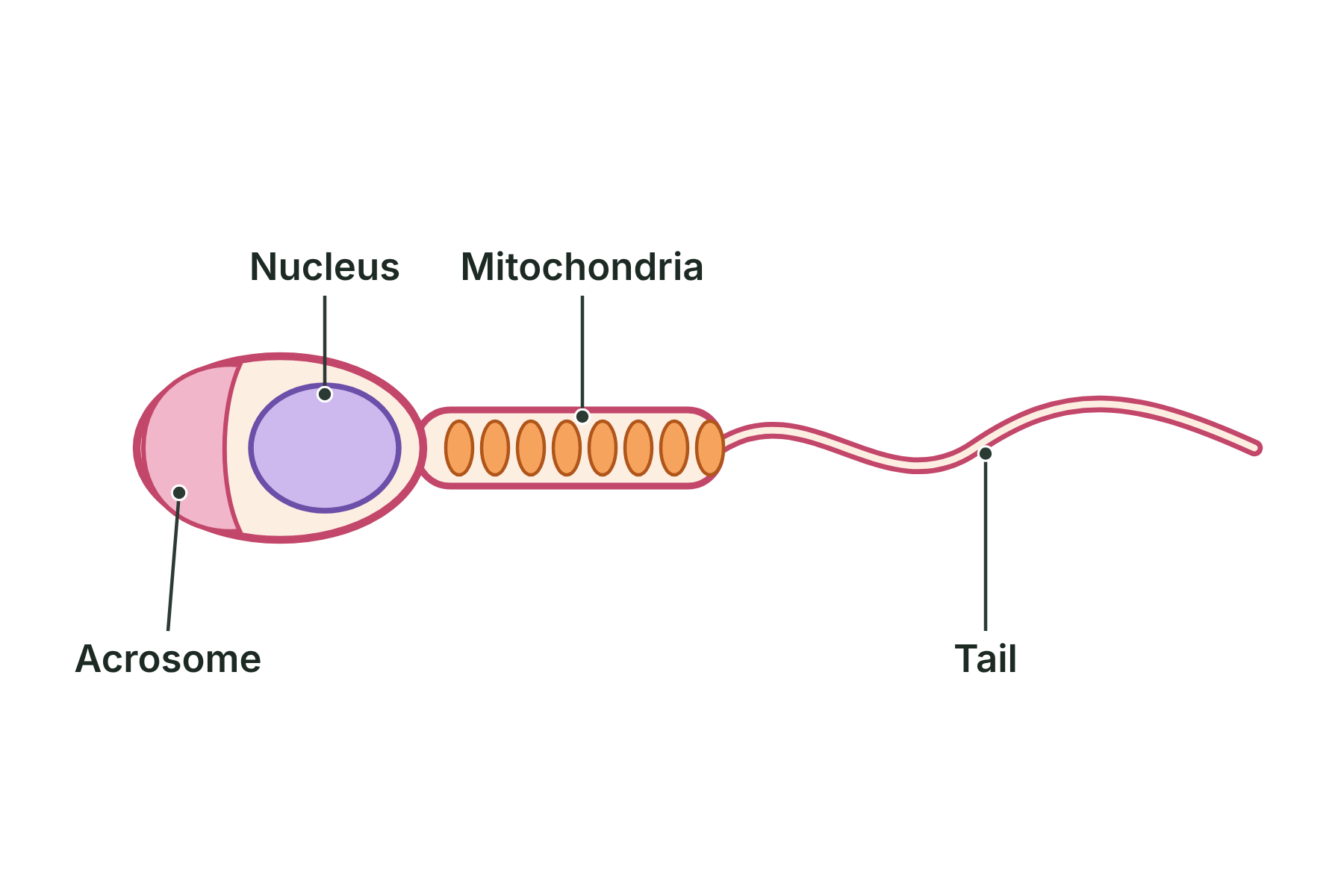
Every adaptation of a specialised cell helps it do its job.
- Specialised cell A cell that has a structure suited to its particular job.
- Differentiation The process by which a cell changes to become specialised.
- Adaptation A feature of a cell that helps it carry out its function.
Xylem and phloem compared
- Xylem Carries water and mineral ions from the roots upwards; Made of dead cells with no end walls, so it is a hollow tube; Walls strengthened with rings of lignin
- Phloem Carries dissolved sugars to where they are needed, in both directions; Made of living cells with sieve plates between them; Companion cells with mitochondria supply the energy
Levels of organisation
- Cell The basic unit, for example a muscle cell.
- Tissue A group of similar cells working together, for example muscular tissue.
- Organ A group of different tissues doing a job, for example the heart.
- Organ system A group of organs working together, for example the circulatory system.
Stem Cells
A stem cell can divide to make more cells, and it can differentiate into specialised cells.
- Stem cell An undifferentiated cell that can divide to make more cells of the same type and can differentiate into specialised cells.
- Undifferentiated Not yet specialised for any particular job.
- Differentiation The process by which a cell changes to become specialised for its job.
- Specialised cell A cell with structures that suit it to doing one job, such as a nerve cell or a red blood cell.
Embryonic and adult stem cells
- Embryonic stem cells Found in human embryos; Can be cloned and made to differentiate into most types of human cell; Can make almost any specialised cell
- Adult stem cells (bone marrow) Found in the bone marrow of adults; Can form many types of cell, including blood cells; Can make fewer types of cell than embryonic stem cells