Biology · The Endocrine System
Knowledge organiser
The whole chapter on one page. Print it on A4 — it is already landscape — or cover a box and see how much of it you can say from memory.
Biology · OCR Paper 1
The Endocrine System
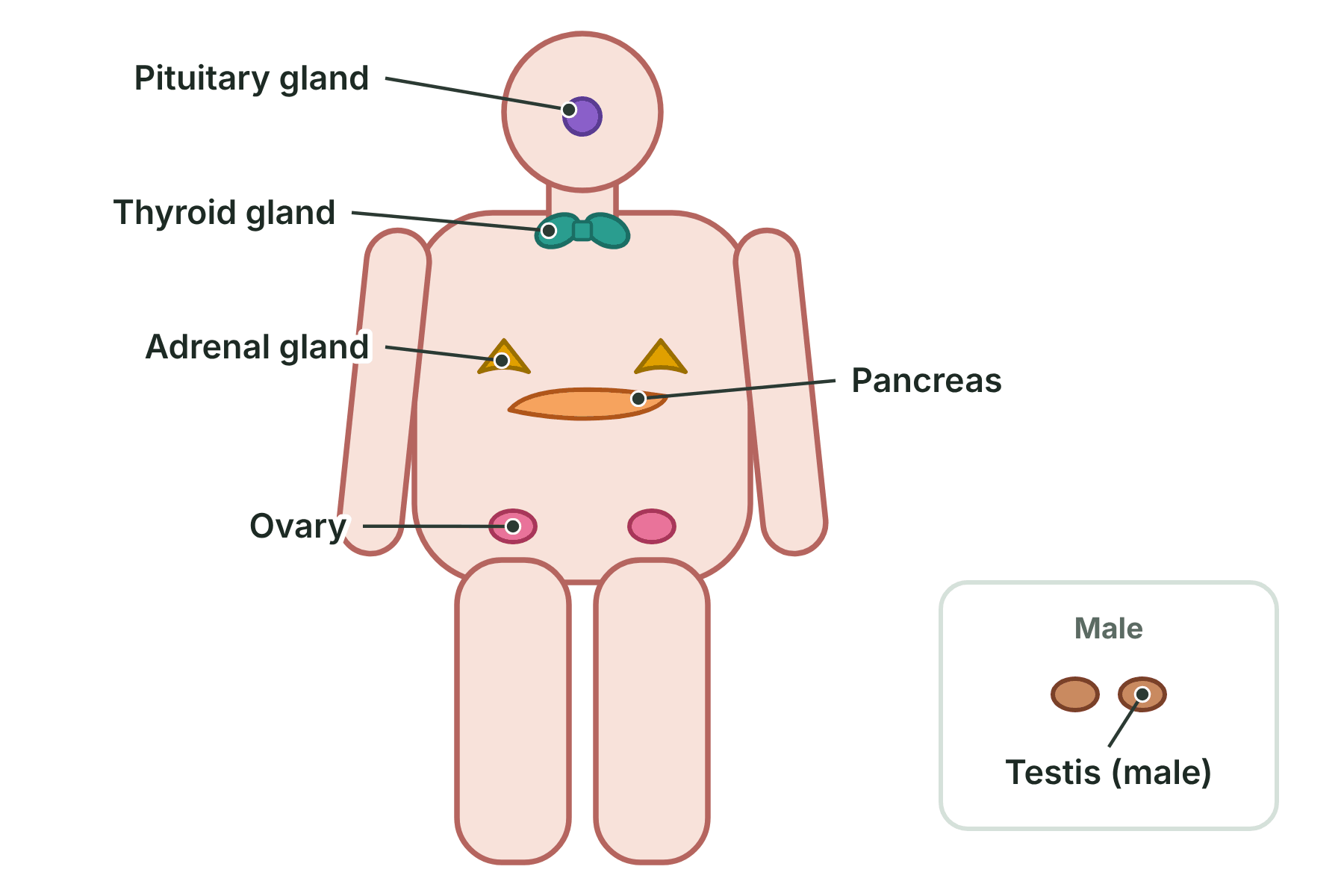
Hormones and the Endocrine System
The endocrine system uses hormones released by glands into the blood, which act on target organs more slowly than nerves but for longer.
- Hormone A chemical messenger carried in the blood.
- Endocrine gland A gland that releases hormones into the blood.
- Target organ An organ with receptors that respond to a particular hormone.
Nervous control and hormonal control
- Nervous system Electrical impulses along neurones; Very fast response; Short-lived effect
- Endocrine system Chemical hormones in the blood; Slower response; Longer-lasting effect
The Menstrual Cycle
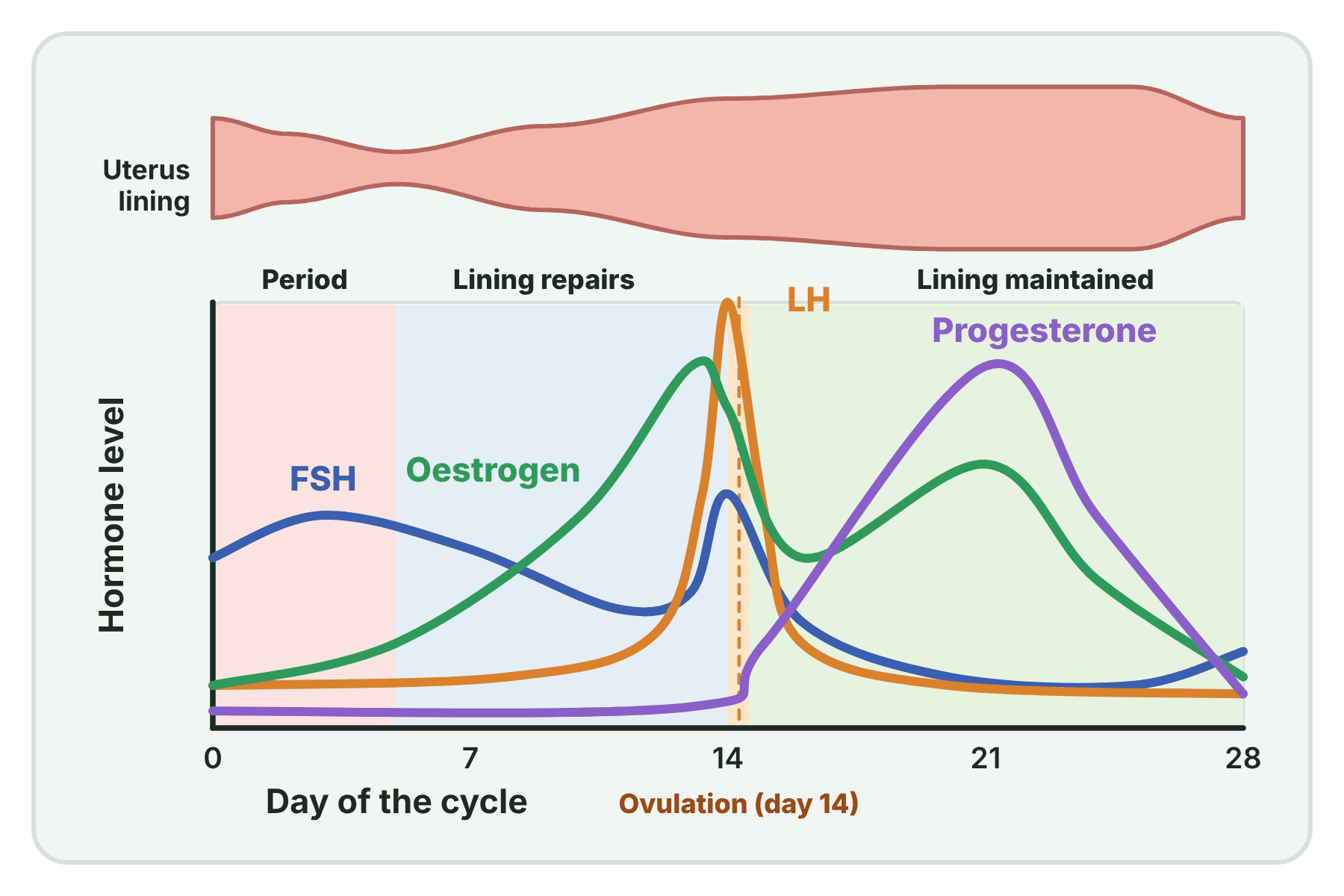
FSH matures an egg, LH triggers its release, oestrogen repairs the lining and progesterone maintains it.
- FSH Follicle stimulating hormone, which makes an egg mature in an ovary.
- LH Luteinising hormone, which stimulates ovulation.
- Oestrogen A hormone from the ovaries that repairs the uterus lining.
FSH and LH
- FSH Released by the pituitary gland; Makes an egg mature in a follicle; Stimulates the ovary to release oestrogen
- LH Released by the pituitary gland; A surge causes ovulation; Peaks around day 14
Contraception and Fertility Treatment
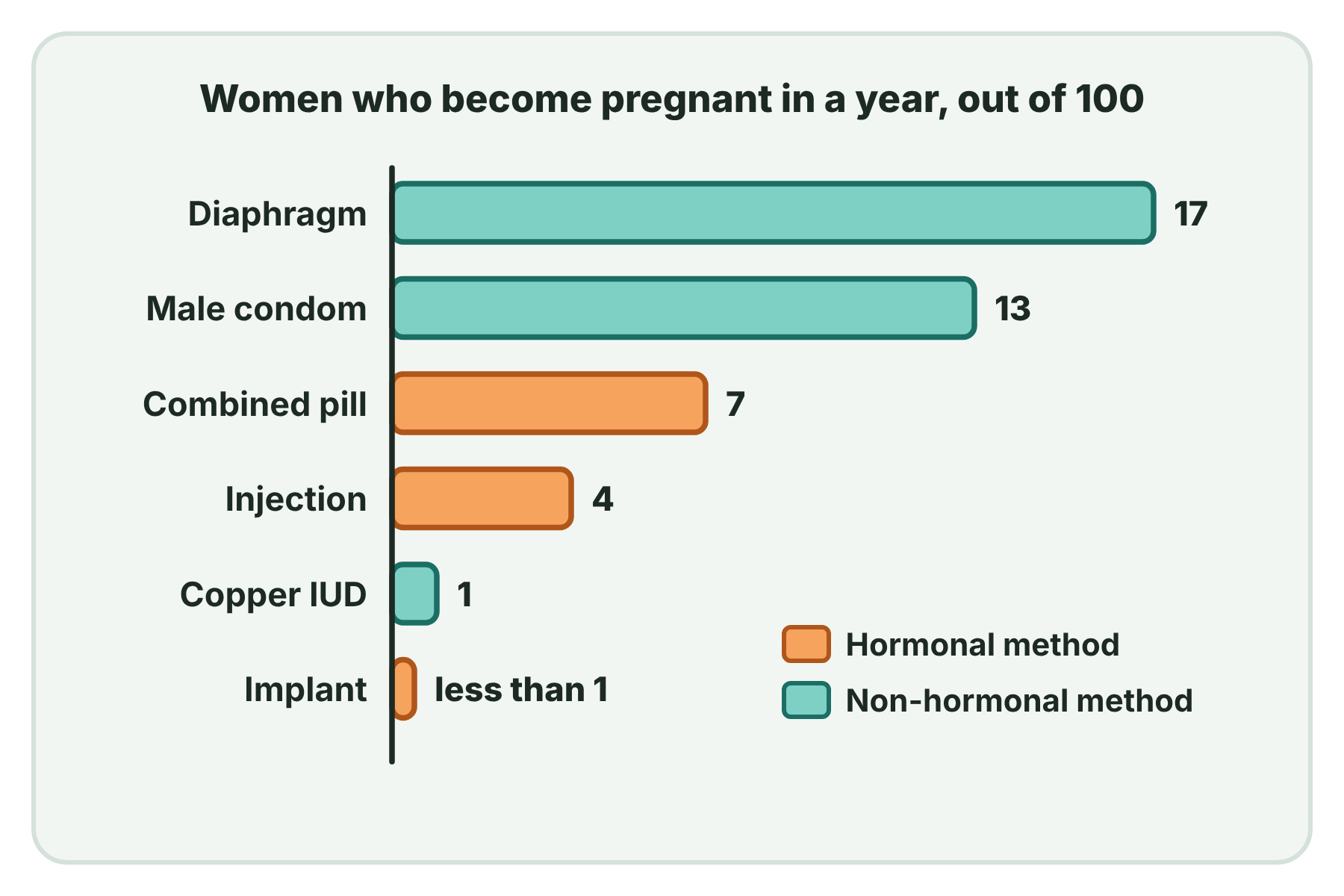
Hormonal contraception stops egg release, other methods block sperm or implantation, and for Higher tier hormones such as FSH and LH are also used to treat infertility.
- Contraception A method of preventing pregnancy.
- Combined pill A contraceptive pill containing oestrogen and progesterone.
- Implant A small rod put under the skin that releases progesterone slowly.
Hormonal and non-hormonal contraception
- Hormonal methods Very effective when used correctly; Pill: taken daily, so easy to forget; Implant and injection last for weeks or years
- Non-hormonal methods Condoms protect against infections; No effect on the hormones; Barrier methods are less effective if used wrongly
Plant Hormones (Separate only)
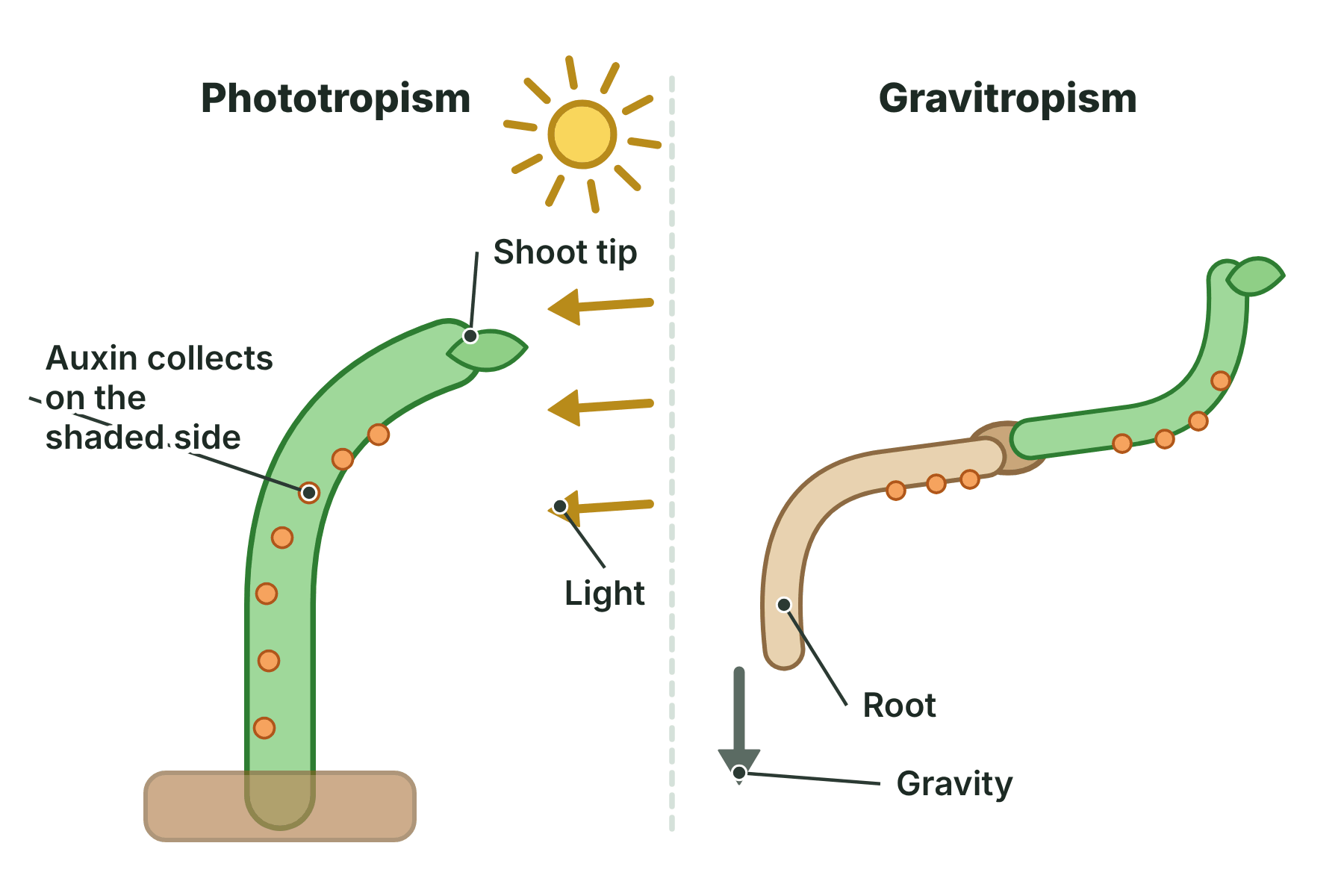
Plant hormones, such as auxin, coordinate growth, and the unequal distribution of auxin makes shoots grow towards light and roots grow down.
- Plant hormone A chemical that regulates plant growth and development.
- Auxin A plant hormone made in shoot and root tips that controls growth.
- Phototropism Growth of a plant in response to light.
Three plant hormones
- Auxin Made in shoot and root tips; Makes cells in shoots elongate; Causes phototropism and gravitropism
- Gibberellins and ethene Gibberellins: germination, stem growth, flowering; Ethene: fruit ripening, leaf and fruit fall; Ethene is a gas