Biology · What Happens in Cells
Knowledge organiser
The whole chapter on two pages. Print it on A4 — they are already landscape — or cover a box and see how much of it you can say from memory.
Biology · OCR Paper 1
What Happens in Cells
The Structure of DNA
DNA is a polymer made of two strands wound into a double helix, and a gene is a section of DNA that codes for a protein.
- DNA The molecule that stores the genetic information of a cell.
- Polymer A large molecule made of many smaller units joined together.
- Double helix The twisted ladder shape of DNA: two strands wound round each other.
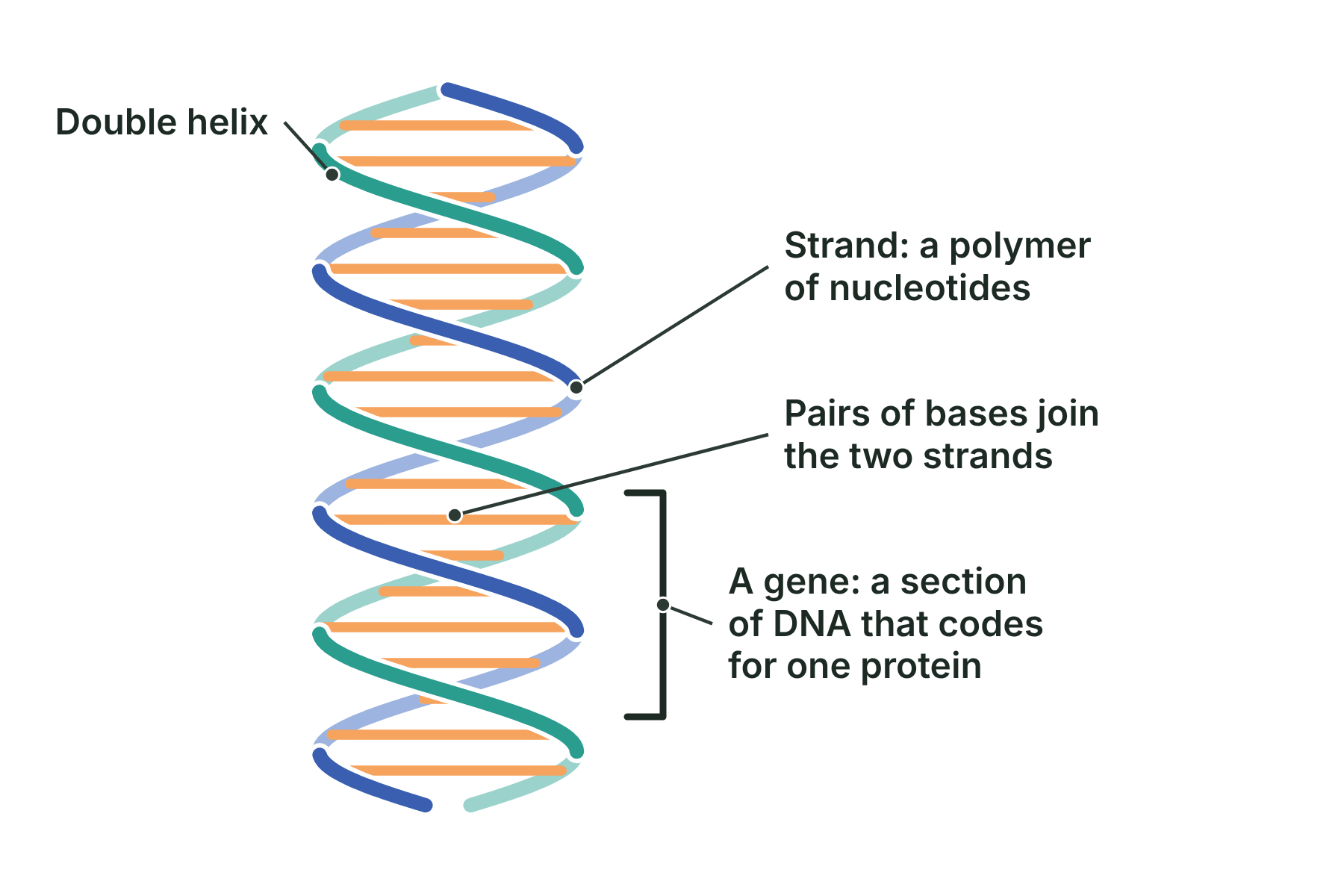
DNA in two kinds of cell
- Eukaryotic cell (plant or animal) DNA is in chromosomes; Chromosomes are inside the nucleus; Usually many chromosomes in pairs
- Prokaryotic cell (bacterium) DNA is a single loop; It floats in the cytoplasm, with no nucleus; Often has extra rings of DNA called plasmids
Extracting DNA from a living organism
- Break up the tissue Mash the fruit in a bag to separate the cells.
- Break open the cells Add a mixture of detergent and salt.
- Filter Filter the mixture to remove the pieces of cell, leaving a…
- Add cold ethanol Carefully pour ice-cold ethanol down the side of the tube so…
Nucleotides and Protein Synthesis (Separate only)
DNA is a polymer of four nucleotides, whose bases pair A with T and G with C.
- Nucleotide A unit of DNA made of a phosphate group, a sugar and one base.
- Base One of the four chemicals A, T, G and C in DNA.
- Complementary base pairing The rule that A pairs with T and G pairs with C.
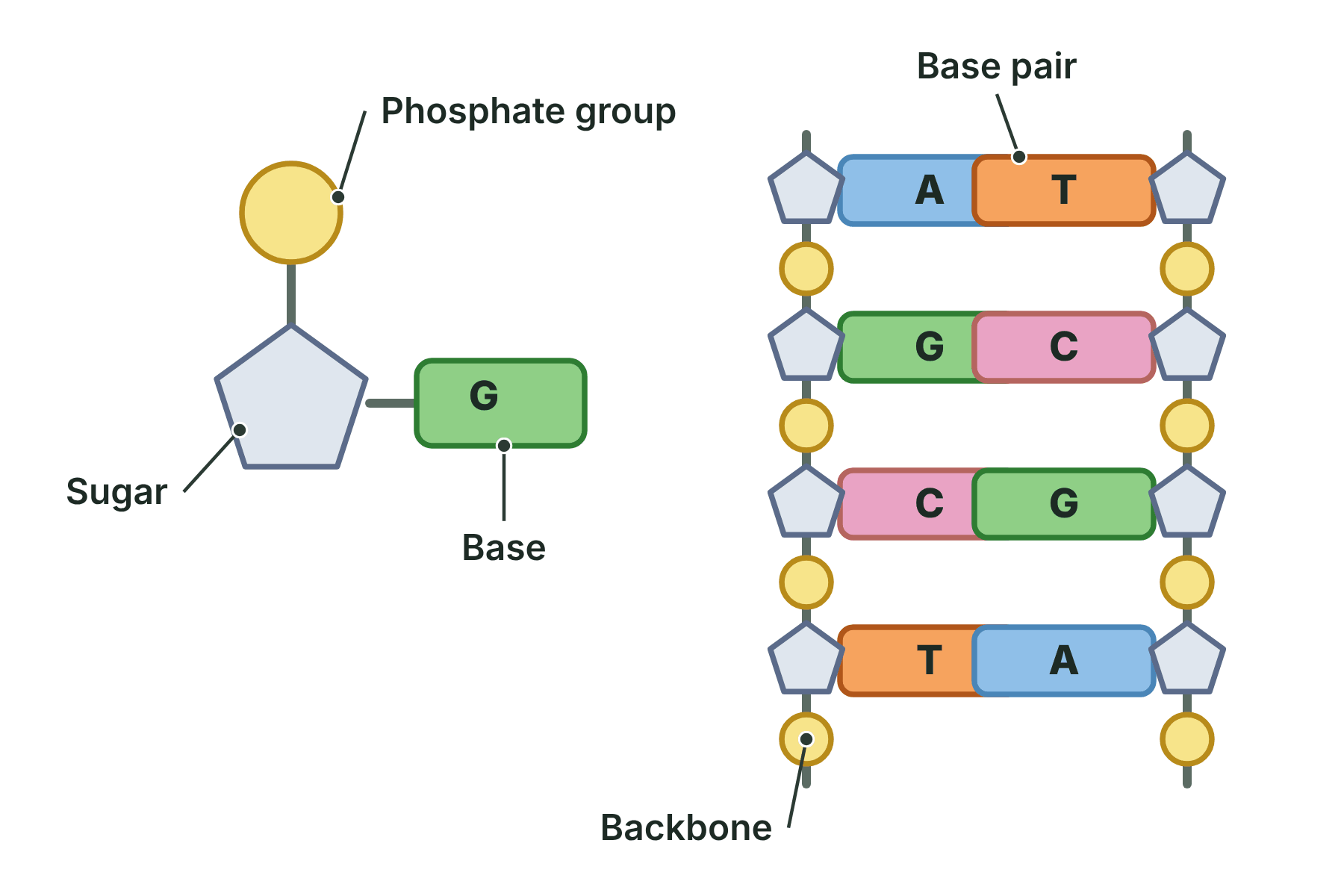
DNA and mRNA (Higher tier)
- DNA Two strands in a double helix; Stays in the nucleus; Contains the whole gene and many genes
- mRNA A single strand; Leaves the nucleus; A copy of one gene
Biology · OCR Paper 1
What Happens in Cells continued
Enzymes
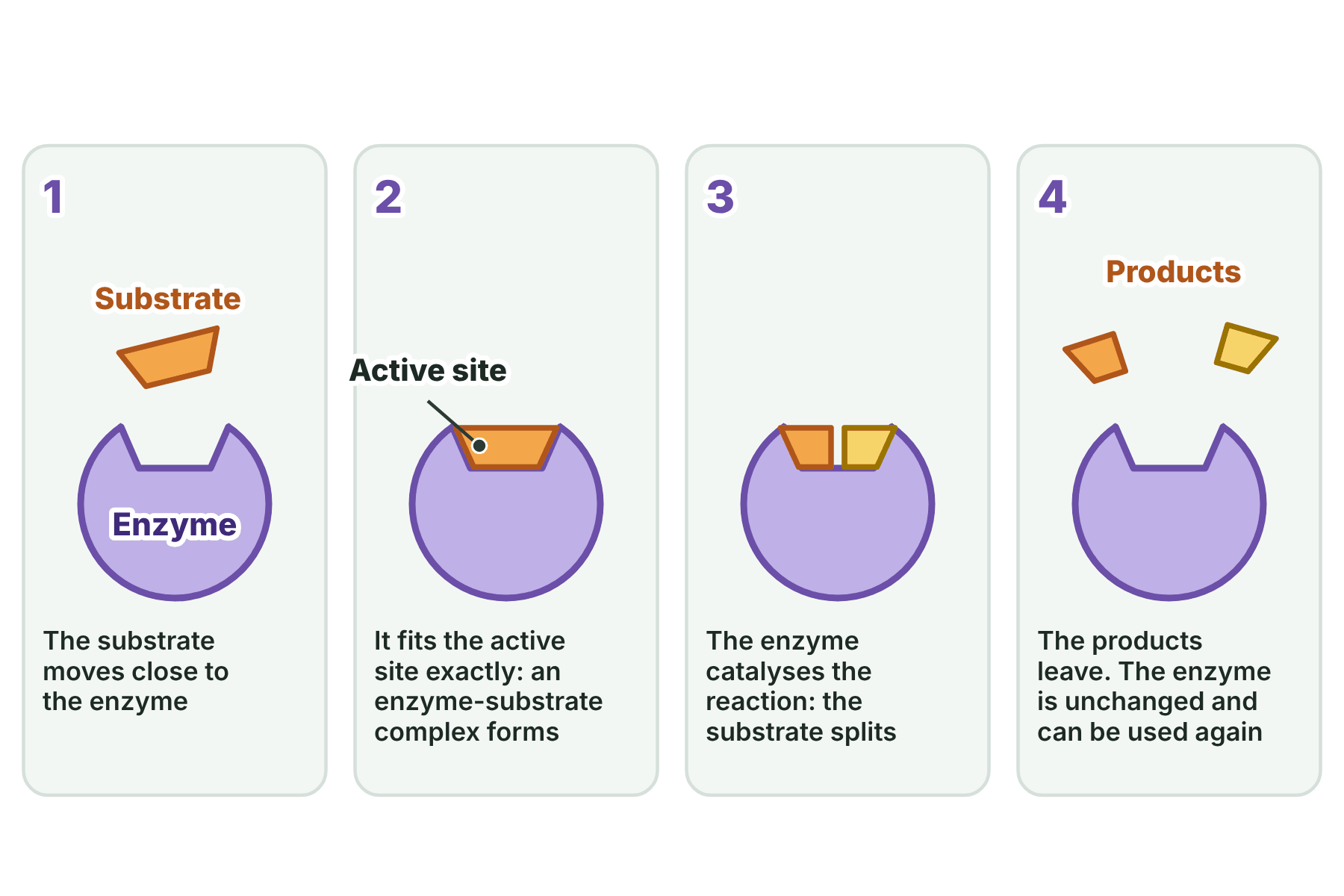
An enzyme is a biological catalyst. Its active site fits only its own substrate, and a denatured enzyme cannot catalyse the reaction.
- Enzyme A biological catalyst, made of protein, that speeds up a reaction in a living thing.
- Catalyst A substance that speeds up a chemical reaction and is not used up.
- Substrate The substance that an enzyme acts on.
Below and above the optimum temperature
- Below the optimum The rate rises as the temperature rises; The particles move faster and collide more often; The enzyme keeps its shape
- Above the optimum The rate falls as the temperature rises; Bonds in the enzyme break; The active site changes shape: the enzyme is denatured
Investigating the Effect of pH on Amylase
The rate of an enzyme-controlled reaction is fastest at the optimum pH.
- Continuous sampling Taking a small sample at regular intervals during a reaction and testing each one.
- Buffer solution A solution that keeps the pH constant at a particular value.
- Spotting tile A tile with small wells, used to test many small drops one after the other.
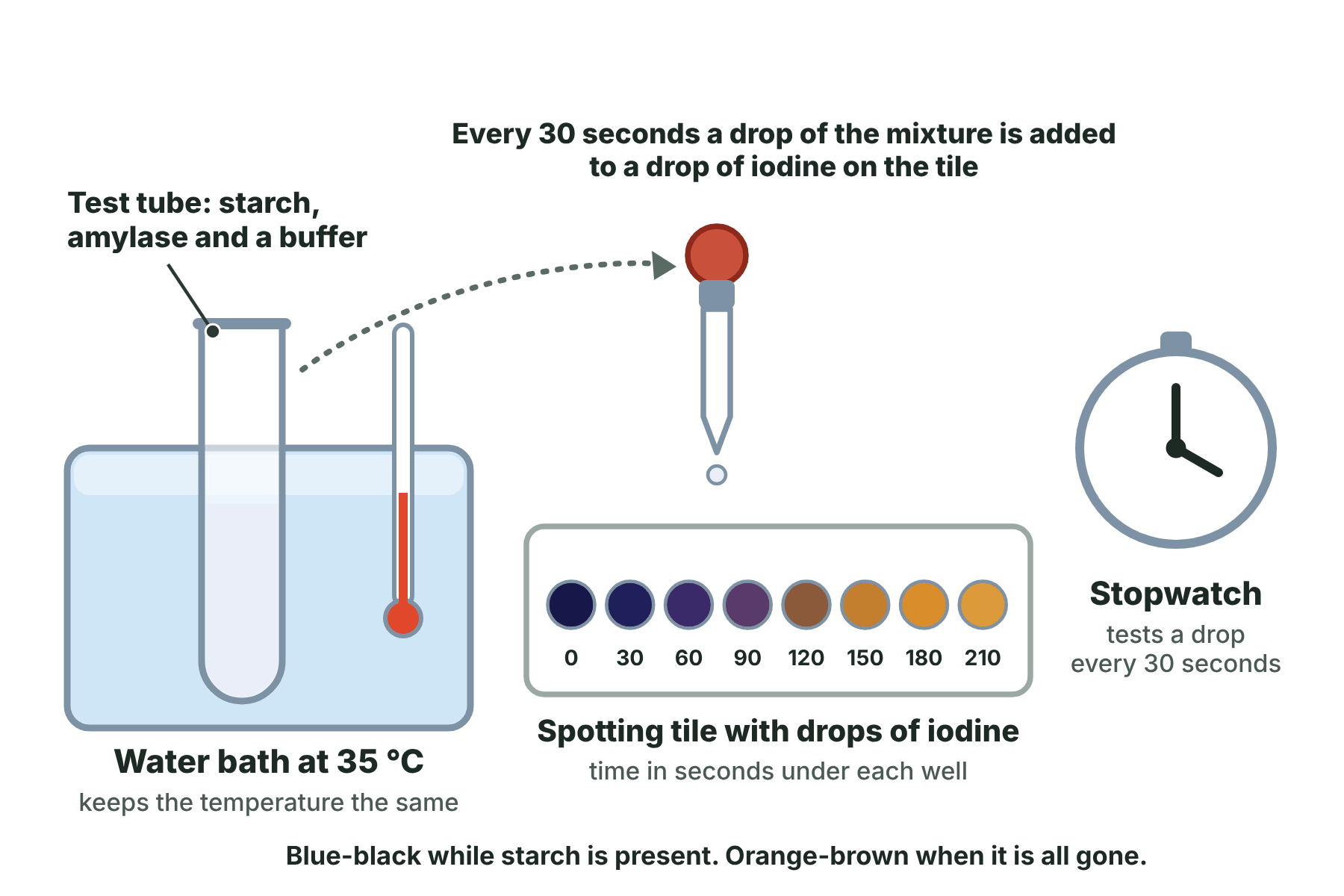
The variables in this investigation
- Independent variable What you change; The pH of the buffer solution; Five values: pH 5, 6, 7, 8 and 9
- Dependent variable What you measure; The time for the starch to be digested; Used to work out the rate of reaction
The method
- Prepare the tile Put a drop of iodine solution into each well of a spotting tile.
- Set up the tubes Put 2 cm³ of amylase solution and 2 cm³ of the pH 5 buffer into…
- Start the reaction Pour the starch into the amylase and buffer, mix.
- Sample every 30 seconds Use a dropping pipette to take a drop of the mixture and add it…