Biology · Communities in Ecosystems
Knowledge organiser
The whole chapter on one page. Print it on A4 — it is already landscape — or cover a box and see how much of it you can say from memory.
Biology · OCR Paper 2
Communities in Ecosystems
Levels of Organisation in an Ecosystem
Living things are organised into organisms, populations of one species, communities of many species, and ecosystems that include the abiotic environment.
- Organism A single living thing.
- Species A group of similar organisms that can breed together to produce fertile offspring.
- Population All the organisms of one species in an area.
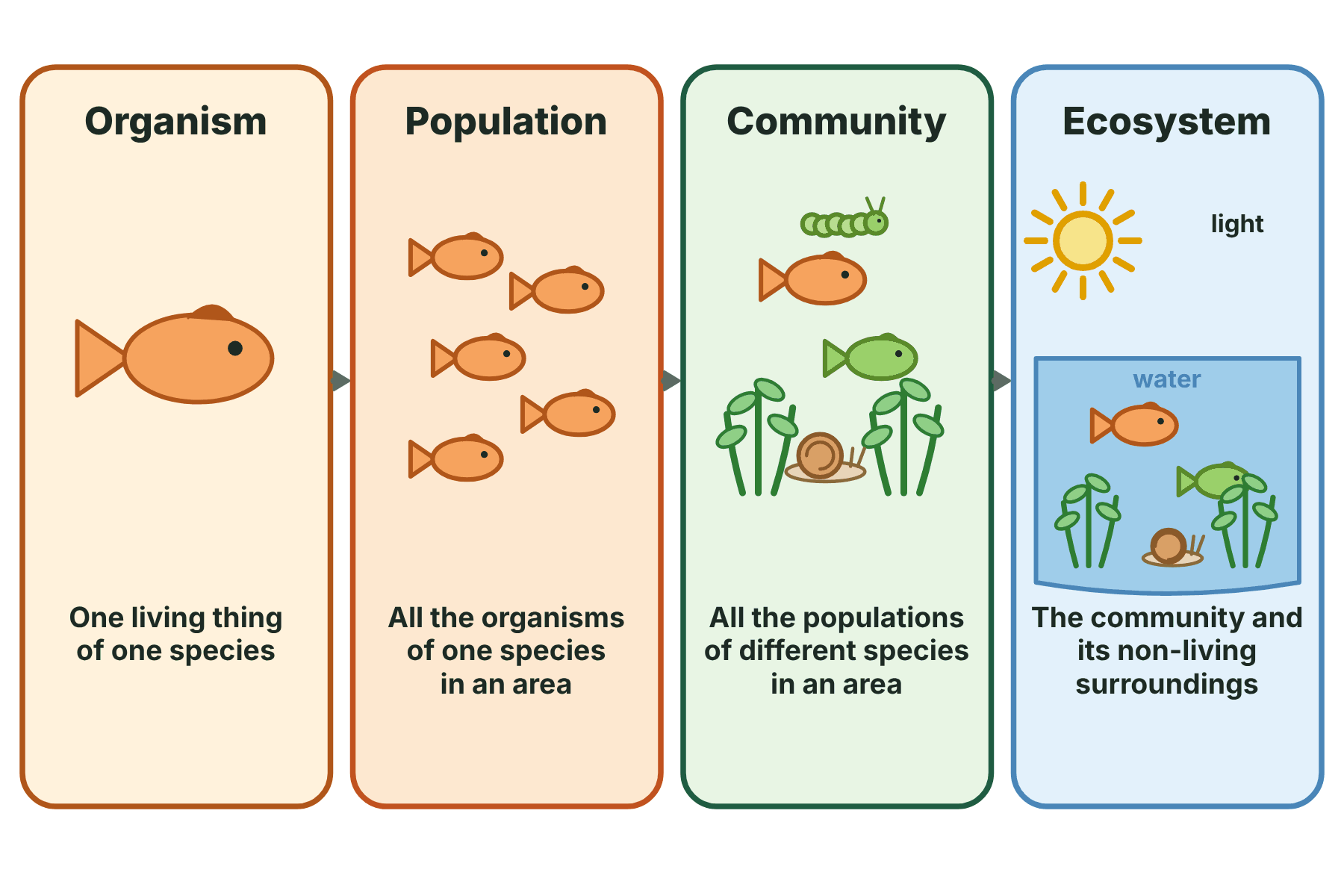
Community and ecosystem
- Community All the living things in an area; Many populations of different species; Only the biotic parts
- Ecosystem The community and the abiotic factors; Living and non-living parts together; Materials and energy flow through it
Abiotic and Biotic Factors
Abiotic factors such as temperature, light intensity, moisture level and soil pH.
- Abiotic factor A non-living factor that affects organisms, such as temperature.
- Biotic factor A living factor that affects organisms, such as a predator.
- Light intensity How bright the light is.
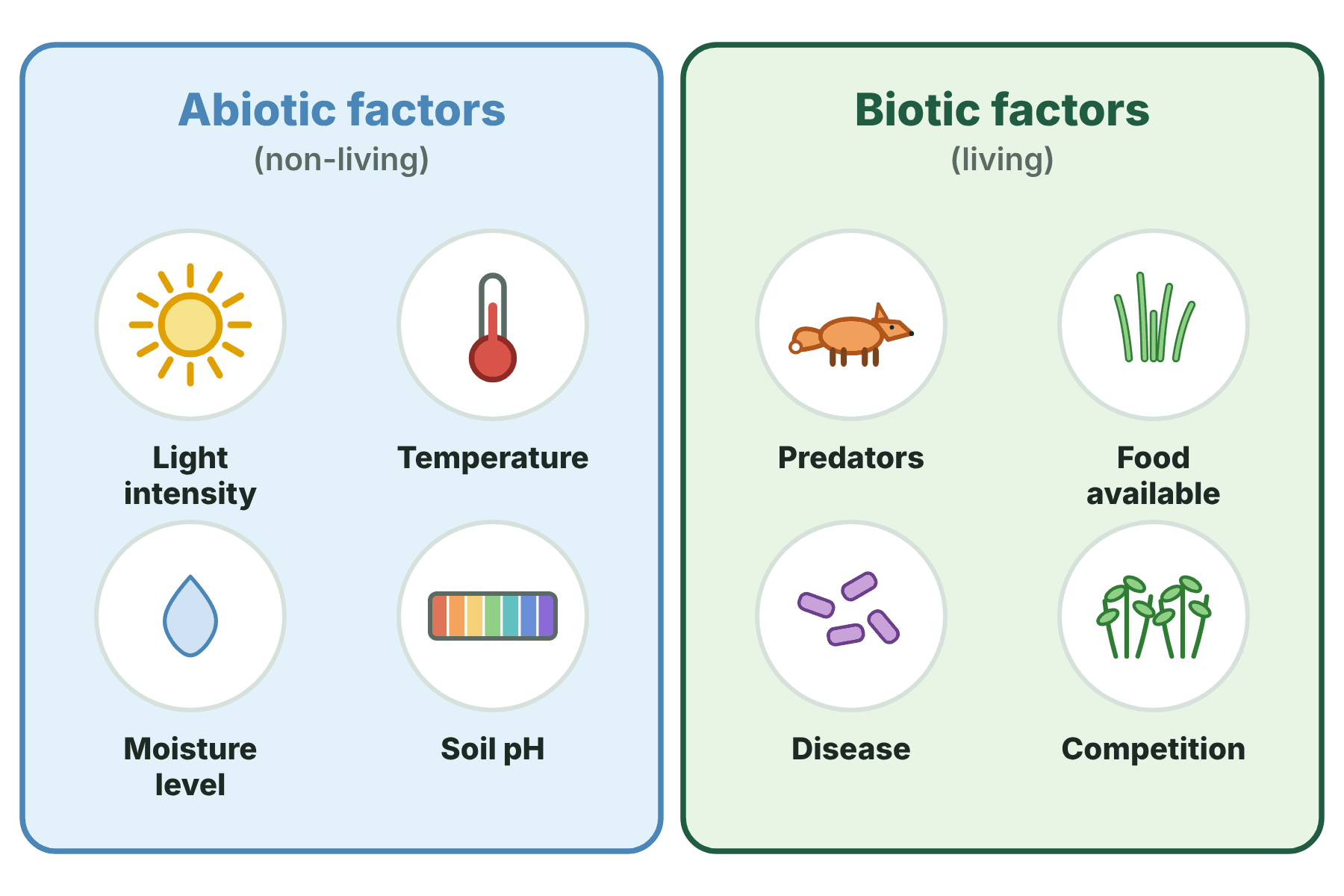
Abiotic and biotic factors
- Abiotic factors Non-living; Temperature, light intensity, moisture level, soil pH; Affect plants directly, and animals directly and through plants
- Biotic factors Living; Predators, food, disease, competition; Change when the populations of other species change
Interdependence and Competition
Species in a community are interdependent through predation, mutualism and parasitism, and they compete for limited resources.
- Interdependence The way in which species in a community depend on each other.
- Predation The hunting and eating of one animal by another.
- Mutualism An interaction in which both organisms benefit.
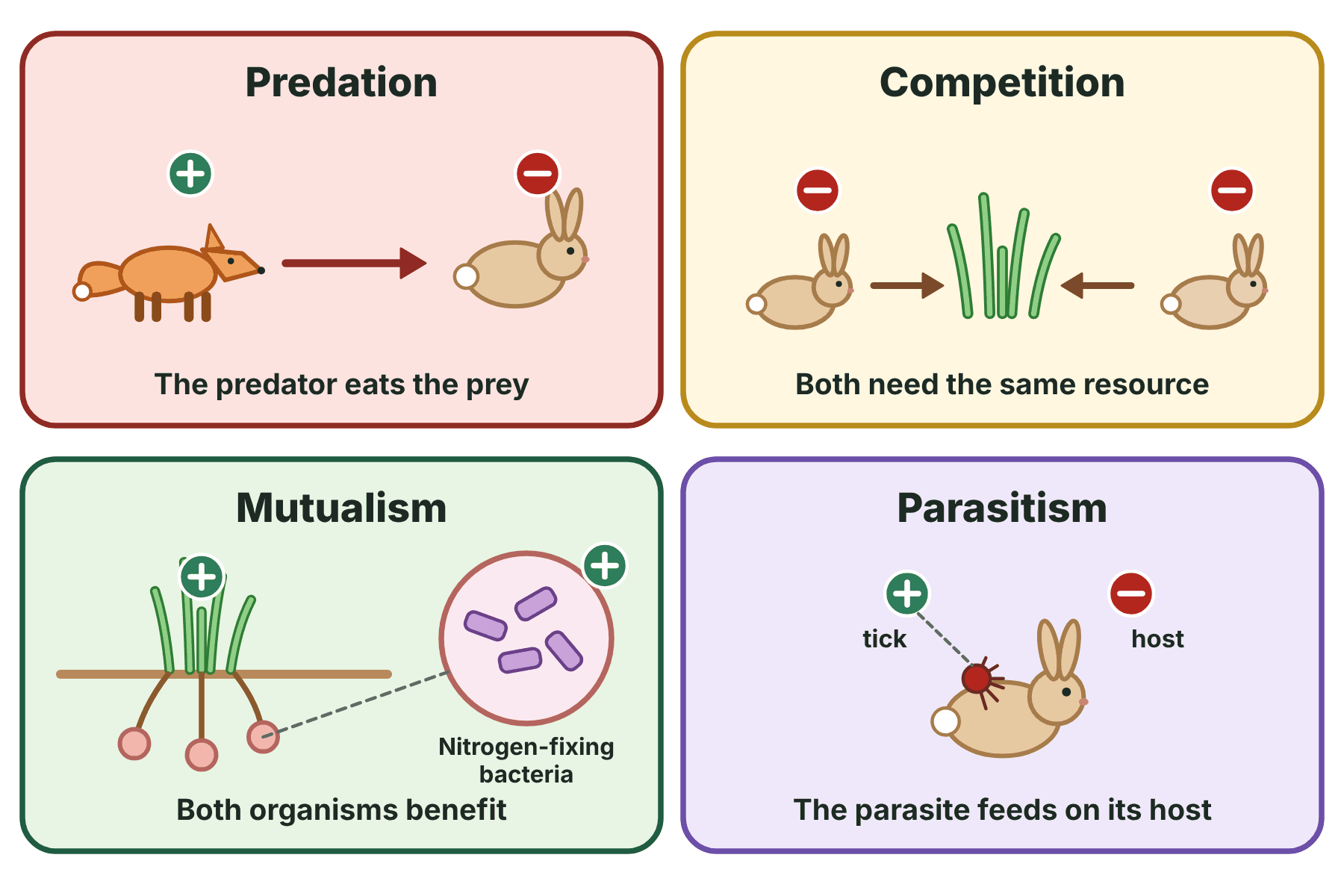
Interactions between two species
- Predation and parasitism One species benefits; The other is harmed; A predator kills its prey
- Mutualism and competition Mutualism: both benefit; Competition: both are harmed; Mutualism helps both species to survive
Trophic Levels, Pyramids of Biomass and Efficiency (Separate only)
Biomass falls at each trophic level because much of it is lost by respiration, egestion, excretion and parts that are not eaten, so the efficiency of each transfer is low.
- Trophic level The position of an organism in a food chain.
- Producer An organism that makes its own food, such as a plant.
- Primary consumer An animal that eats producers.
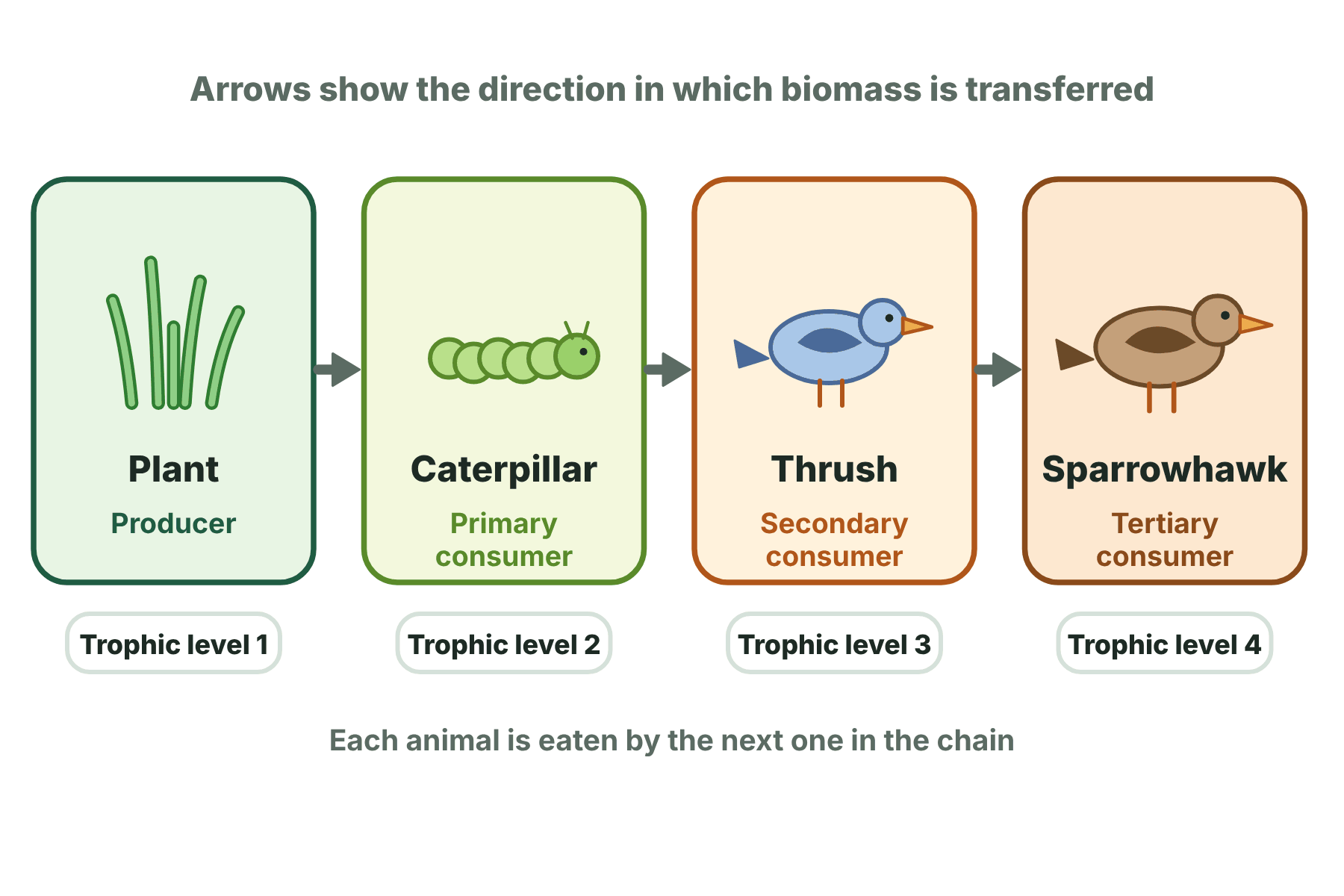
Eating plants and eating meat
- Eating plants Short food chain; Fewer trophic levels; Less biomass lost
- Eating meat Longer food chain; An extra trophic level; More biomass lost by the animal