Biology · Cycles in Ecosystems
Knowledge organiser
The whole chapter on two pages. Print it on A4 — they are already landscape — or cover a box and see how much of it you can say from memory.
Biology · OCR Paper 2
Cycles in Ecosystems
Cycling of Materials and Decomposers
Materials such as carbon, nitrogen and water cycle between the abiotic and biotic parts of an ecosystem.
- Ecosystem All the living things in an area and their non-living surroundings.
- Abiotic Non-living, such as air, water and soil.
- Biotic Living, such as plants, animals and microorganisms.
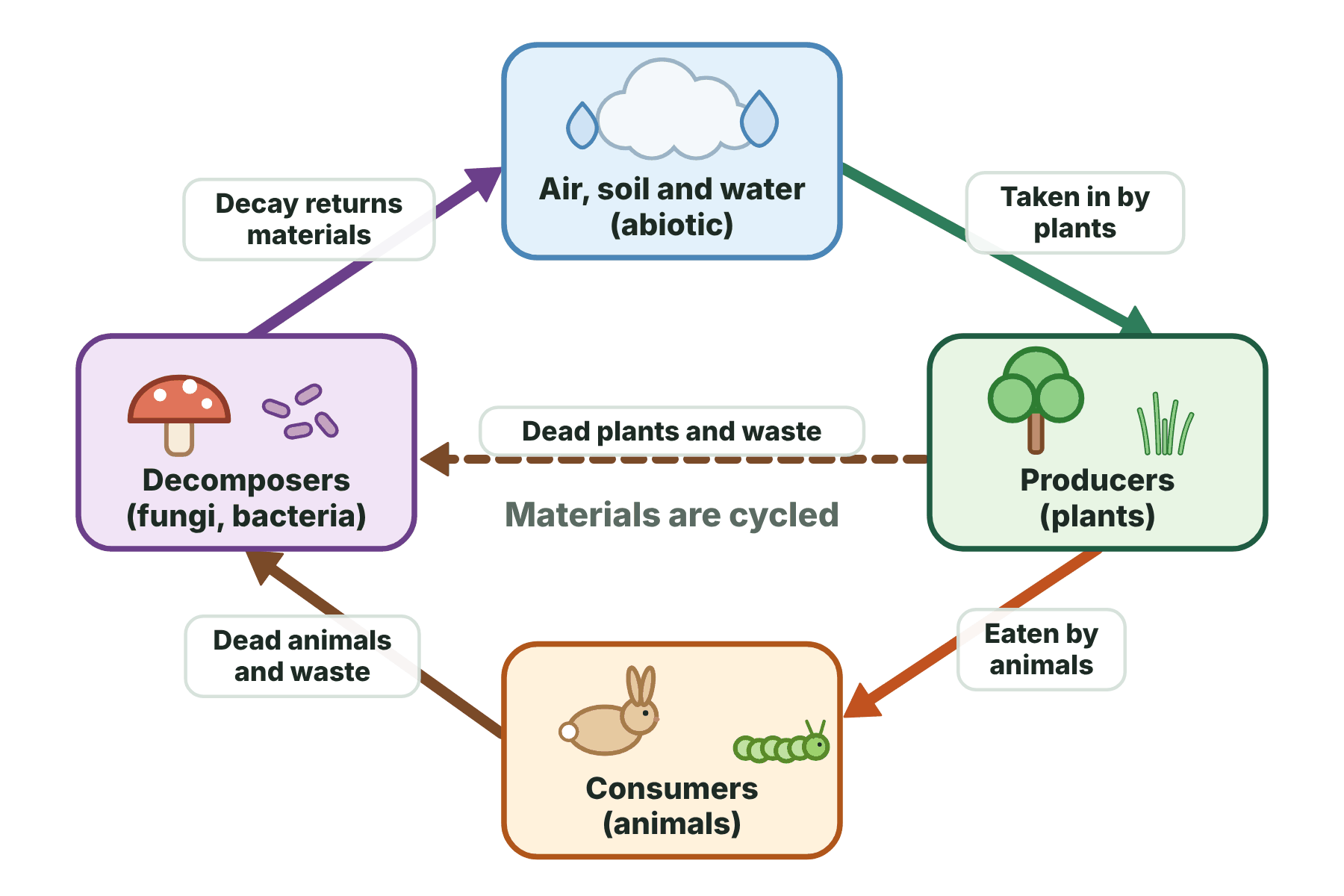
Producers, consumers and decomposers
- Producers and consumers Take materials from the environment or from food; Build materials into their own bodies; Plants take in carbon dioxide, water and mineral ions
- Decomposers Break down dead plants and animals and waste; Release enzymes to digest the material outside the cell; Return carbon dioxide and mineral ions to the environment
The Carbon Cycle
Carbon is cycled between the air, producers, consumers, decomposers and fossil fuels: photosynthesis removes carbon dioxide from the air, feeding passes carbon along food chains.
- Carbon cycle The movement of carbon between the air, living things and fossil fuels.
- Photosynthesis The process in which plants take carbon dioxide from the air and make glucose.
- Respiration The release of energy from glucose, which releases carbon dioxide.
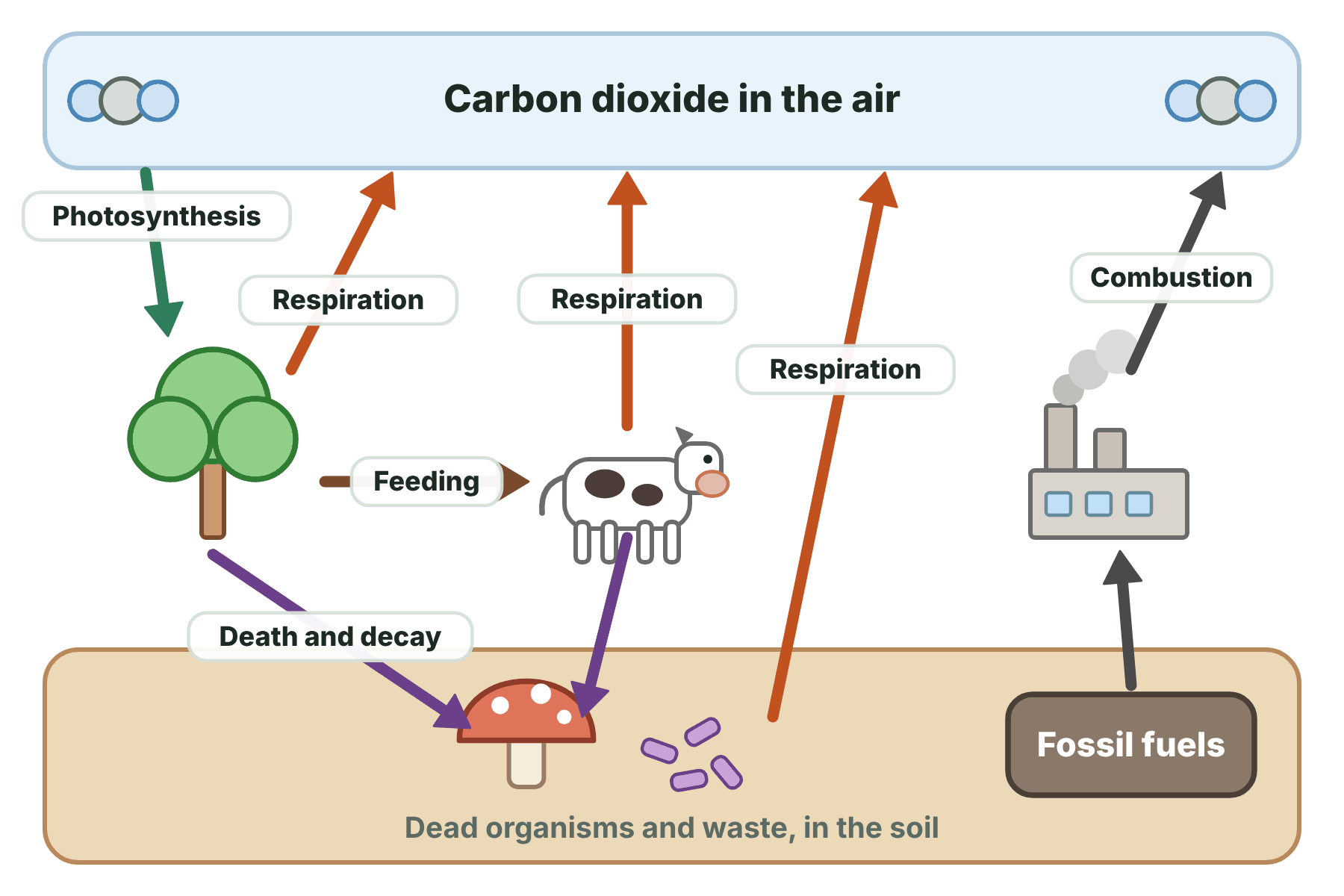
Taking carbon in and putting it back
- Carbon dioxide removed from the air Photosynthesis in plants and algae; Carbon is built into glucose and biomass; Carbon is stored in plants, in wood and in fossil fuels
- Carbon dioxide returned to the air Respiration by plants, animals and decomposers; Decay of dead material by decomposers; Combustion of wood and fossil fuels
Biology · OCR Paper 2
Cycles in Ecosystems continued
The Water Cycle
In the water cycle, the Sun's heat makes water evaporate and plants transpire, the water vapour condenses into clouds and falls as precipitation.
- Water cycle The movement of water between the sea, the air, the land and living things.
- Evaporation The change from liquid water to water vapour.
- Transpiration The loss of water vapour from the leaves of plants.
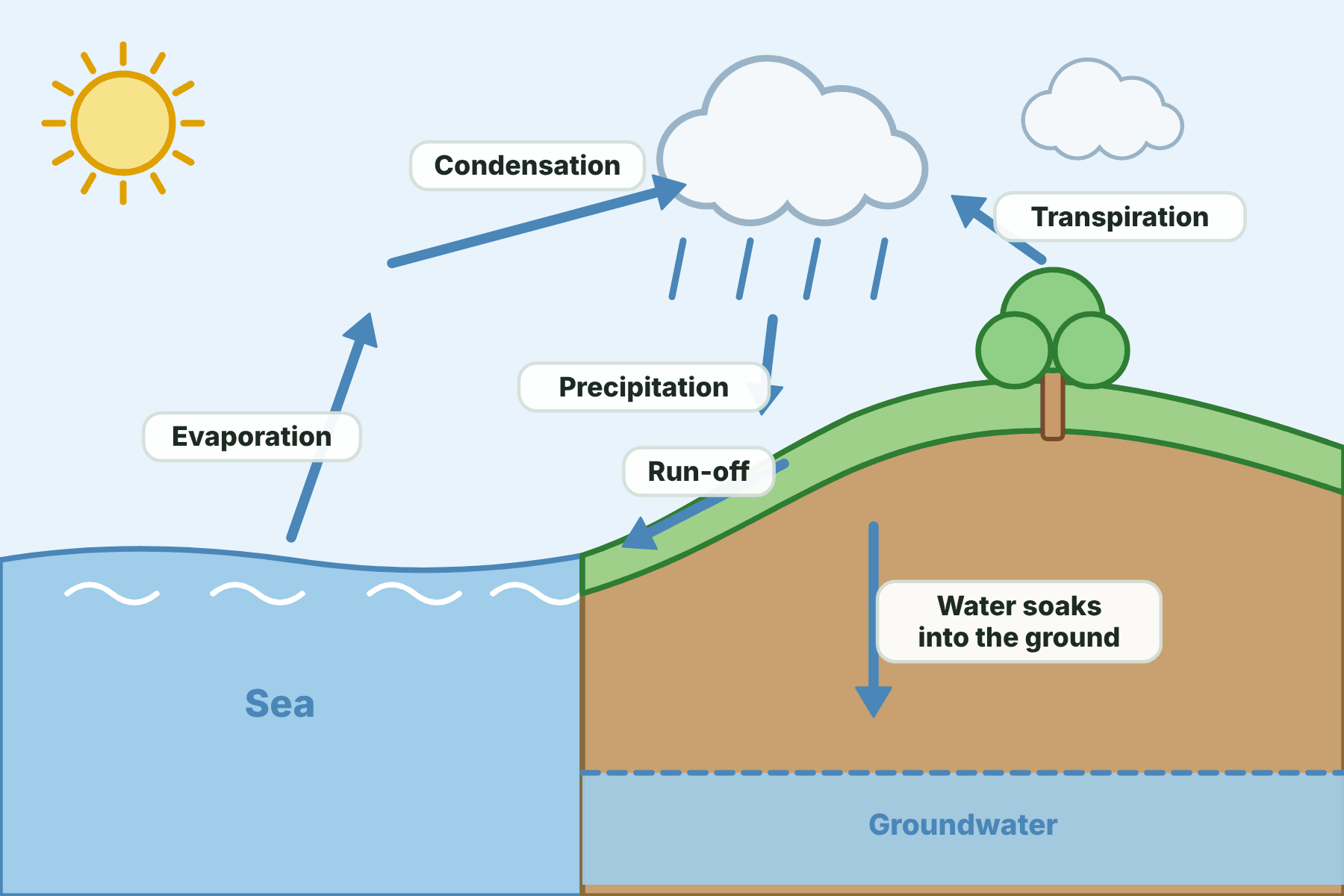
Evaporation and transpiration
- Evaporation From the sea, lakes, rivers and the soil; Caused by heat from the Sun; Liquid water becomes water vapour
- Transpiration From the leaves of plants; Water is taken up by roots first; Water vapour leaves through the stomata
The Rate of Decomposition (Separate only)
Decomposers work fastest when it is warm, moist and there is plenty of oxygen.
- Rate of decay How quickly dead material is broken down.
- Aerobic With oxygen.
- Anaerobic Without oxygen.
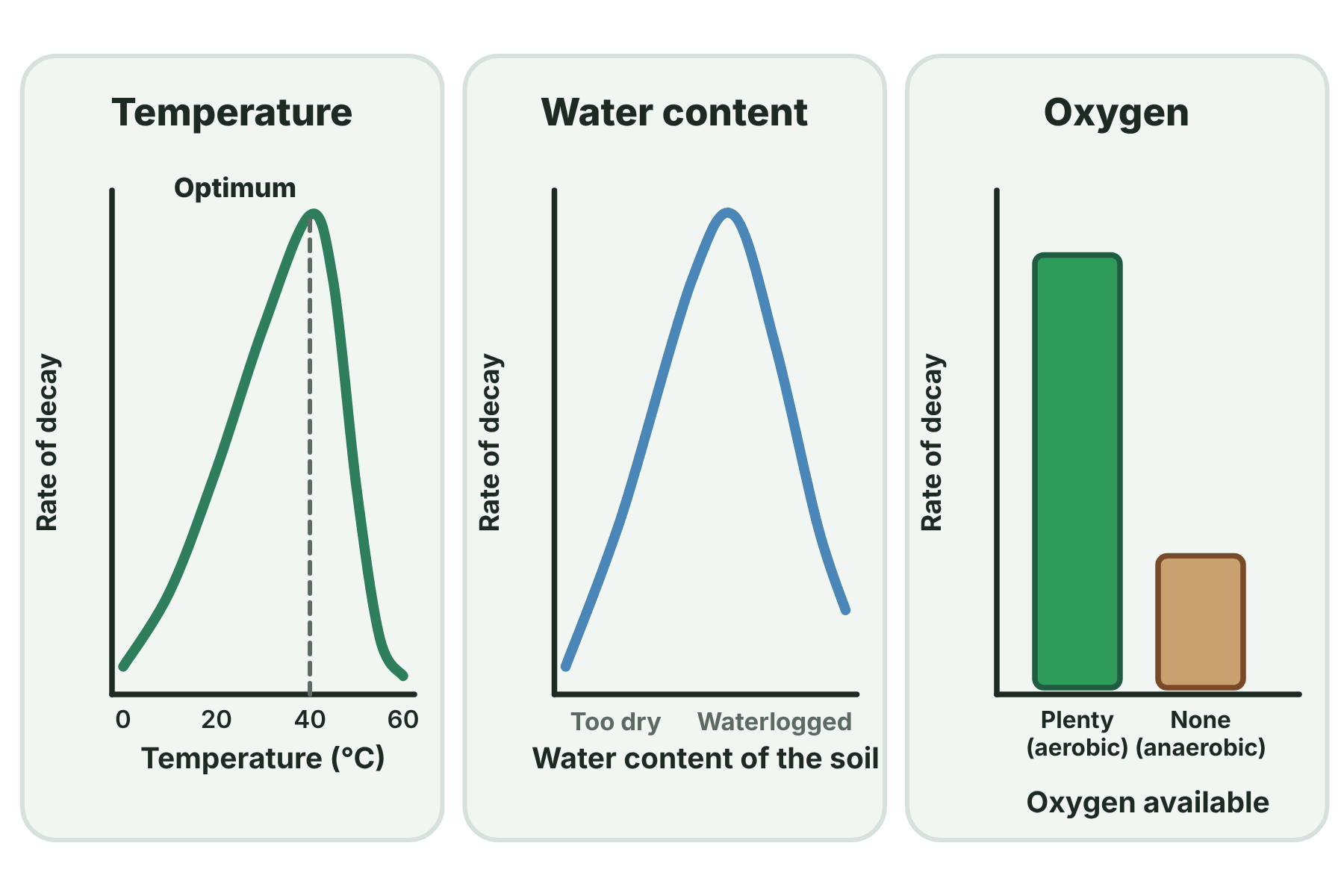
Aerobic and anaerobic decay
- Aerobic decay Oxygen is available; Aerobic respiration releases more energy; Faster and more complete
- Anaerobic decay No oxygen, for example in waterlogged soil; Anaerobic respiration releases less energy; Slower and less complete
Investigating the best conditions for composting
- Set up Put the same mass of chopped plant material, such as grass…
- Change one factor Change only one condition, for example the temperature, the…
- Measure Measure how quickly the material decays.
- Repeat Repeat each condition several times and calculate a mean.