Biology · Feeding the Human Race
Knowledge organiser
The whole chapter on two pages. Print it on A4 — they are already landscape — or cover a box and see how much of it you can say from memory.
Biology · OCR Paper 2
Feeding the Human Race
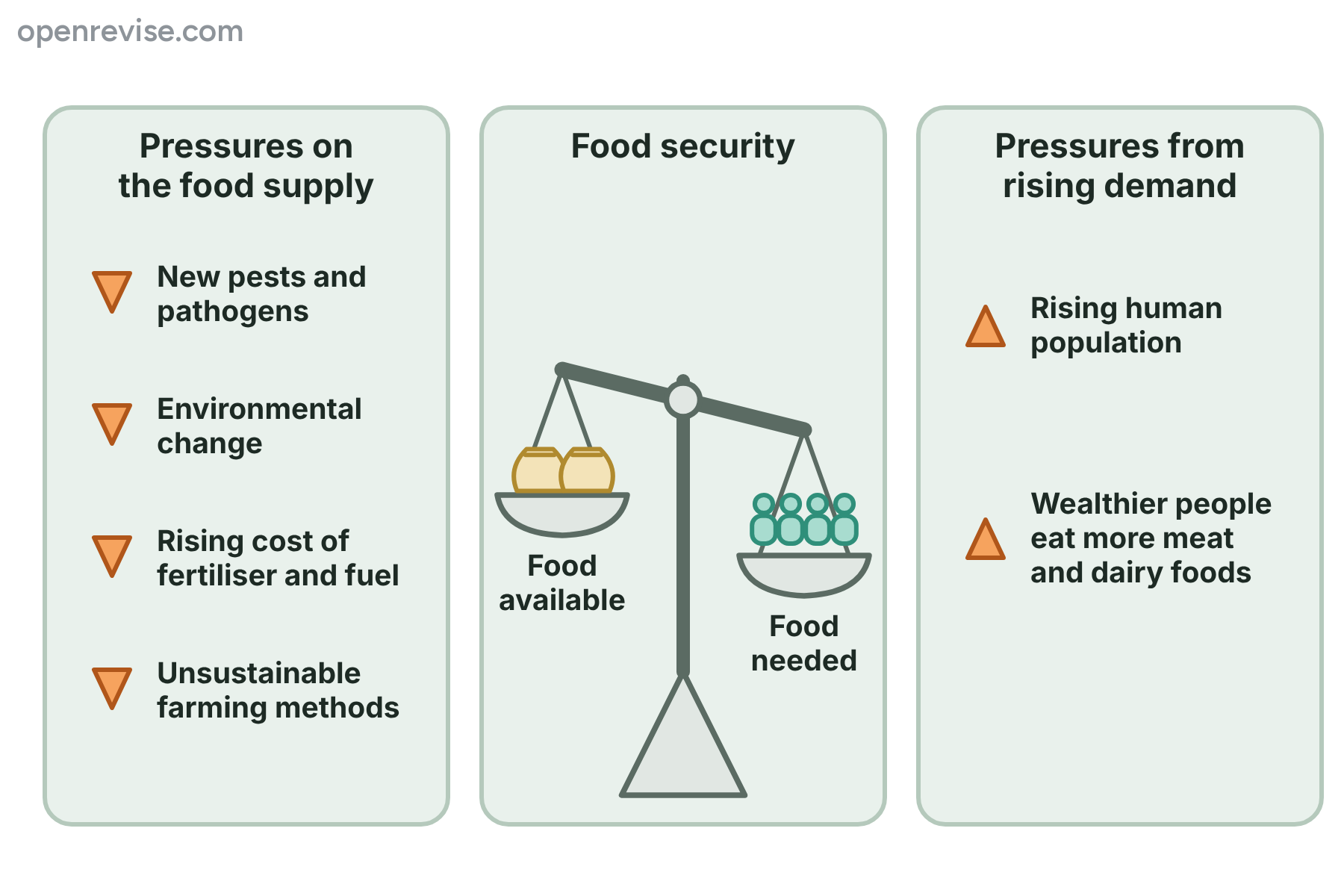
Food Security (Separate only)
Food security is not one problem with one cause: it is a balance between a rising demand for food and a supply that is threatened by…
- Food security Having access to enough safe, nutritious food, at all times, to live a healthy life.
- Food insecurity A lack of reliable access to enough food, so that people go hungry or are undernourished.
- Pest An organism, usually an insect, that damages crops or livestock.
Agricultural Solutions to the Demands of the Growing Population (Separate only)
There is no perfect solution: each way of growing more food raises the yield, and each one has a cost to money, to the environment or to other organisms.
- Fertiliser A substance containing mineral ions, such as nitrate, phosphate and potassium, that is added to soil to help crops grow.
- Pesticide A chemical that kills pests, such as insects (insecticide), weeds (herbicide) or fungi (fungicide).
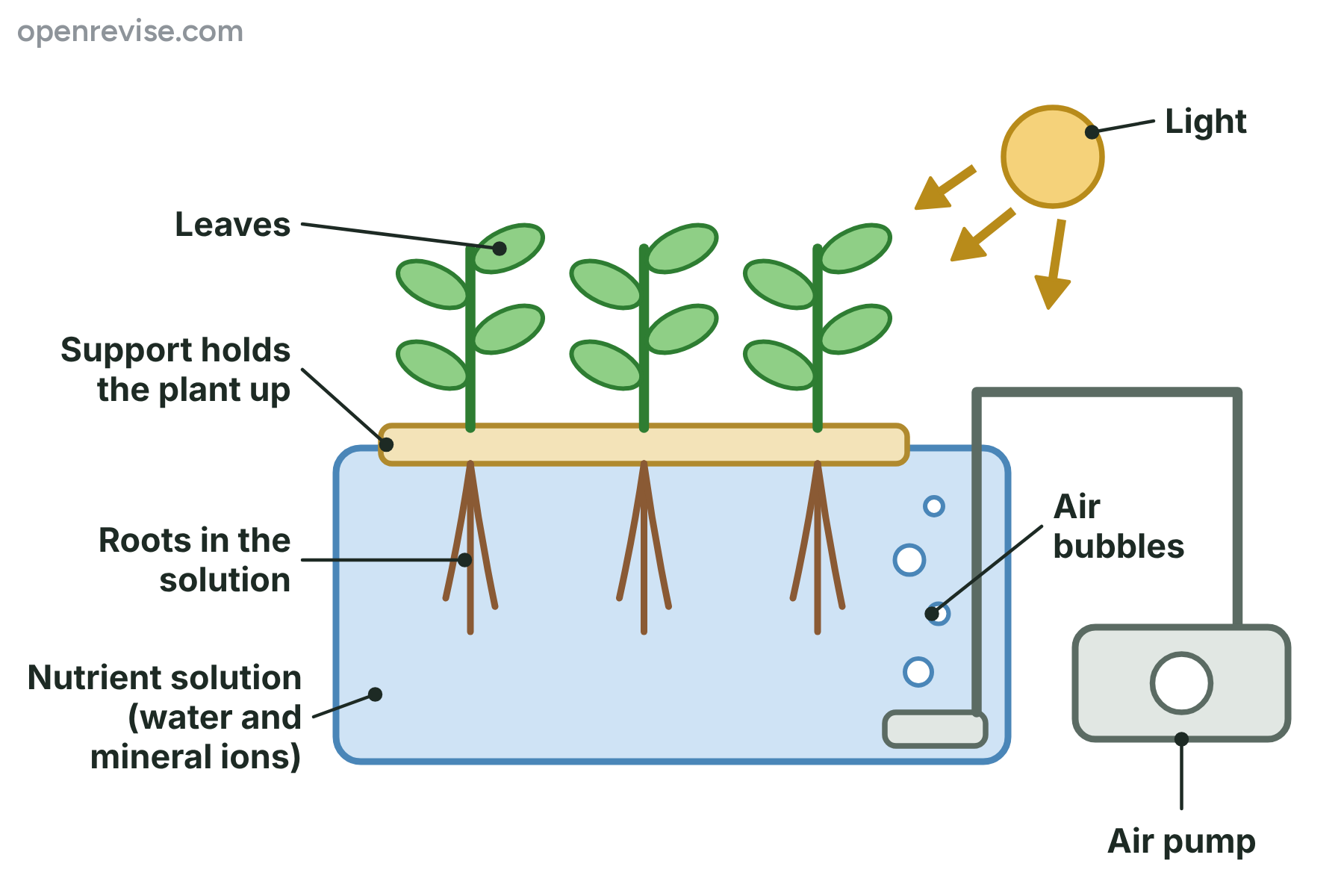
- Hydroponics Growing plants with their roots in a solution of mineral ions instead of in soil.
Fertilisers and pesticides compared
- Fertilisers Add nitrate, phosphate and potassium to the soil; Make the crop grow larger and faster; Run-off causes eutrophication
- Pesticides Kill insects, weeds and fungi that damage the crop; Protect the yield and quality of the harvest; Can kill pollinators and build up in food chains
How fertiliser run-off kills fish
- Run-off Rain washes nitrate and phosphate from the fertilised field into the water.
- Algal bloom The extra minerals make the algae on the surface grow very fast.
- Light is blocked The layer shuts out light, so the water plants below cannot…
- Decomposers Bacteria feed on the dead plants and algae and use up the oxygen…
Selective Breeding of Plants and Animals
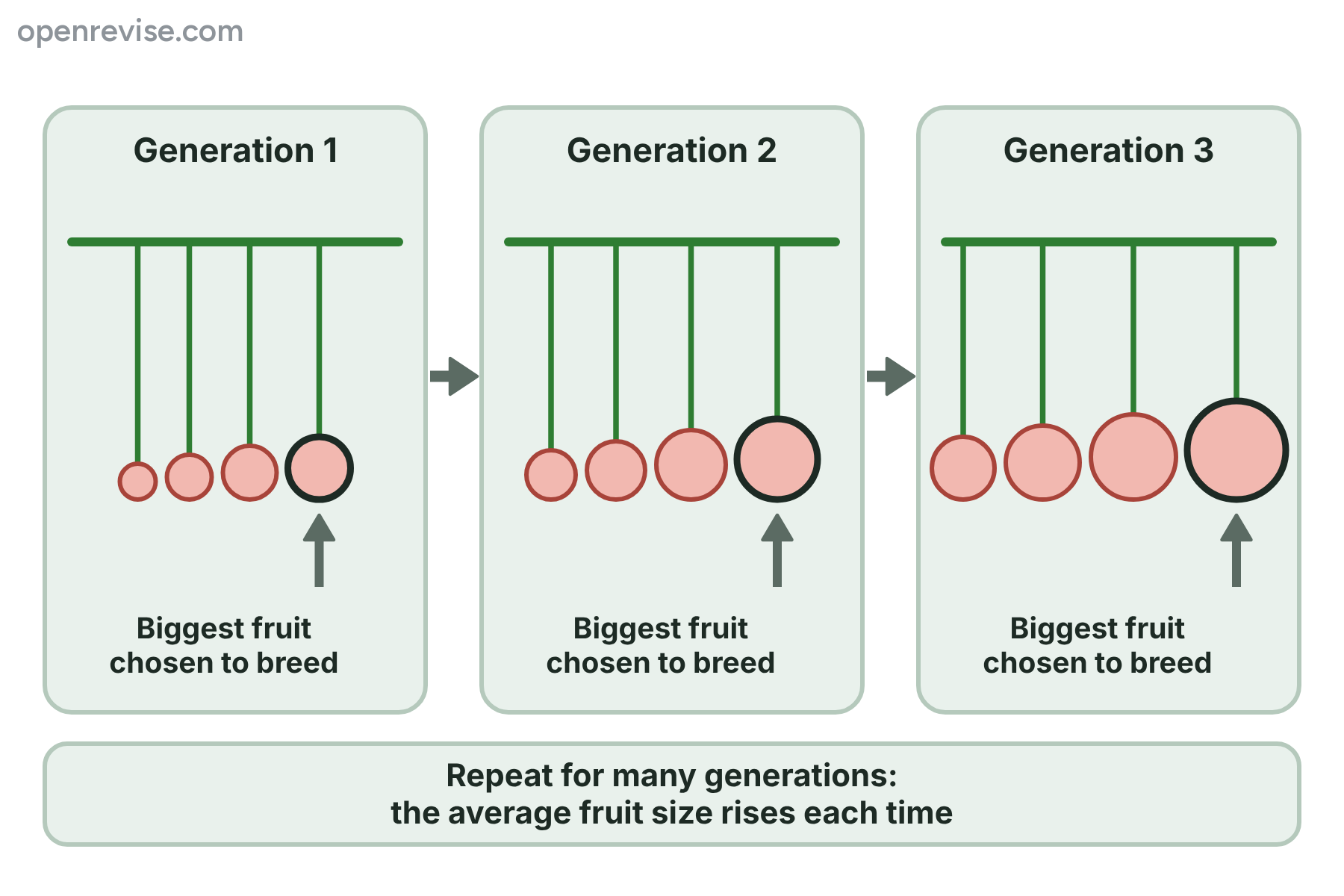
Selective breeding changes a population in the direction that people choose.
- Selective breeding Choosing parents with wanted characteristics and breeding them over many generations; also called artificial selection.
- Artificial selection Selection by people, not by the environment, of which organisms will breed.
- Domesticated Kept and bred by people for food, work or company.
Selective breeding and natural selection
- Selective breeding People choose the parents; Chosen for the characteristics that people want; Individuals that do not have them are not allowed to breed
- Natural selection The environment decides who survives and breeds; Chosen because the characteristic helps survival; Individuals that are less well adapted breed less
The steps of selective breeding
- Decide on the characteristic The breeder chooses a feature that is wanted.
- Select the parents From the population, the breeder chooses the individuals that…
- Breed them The selected parents are bred together.
- Select the best offspring From the offspring, the breeder again chooses the individuals with the characteristic.
Genetic Engineering
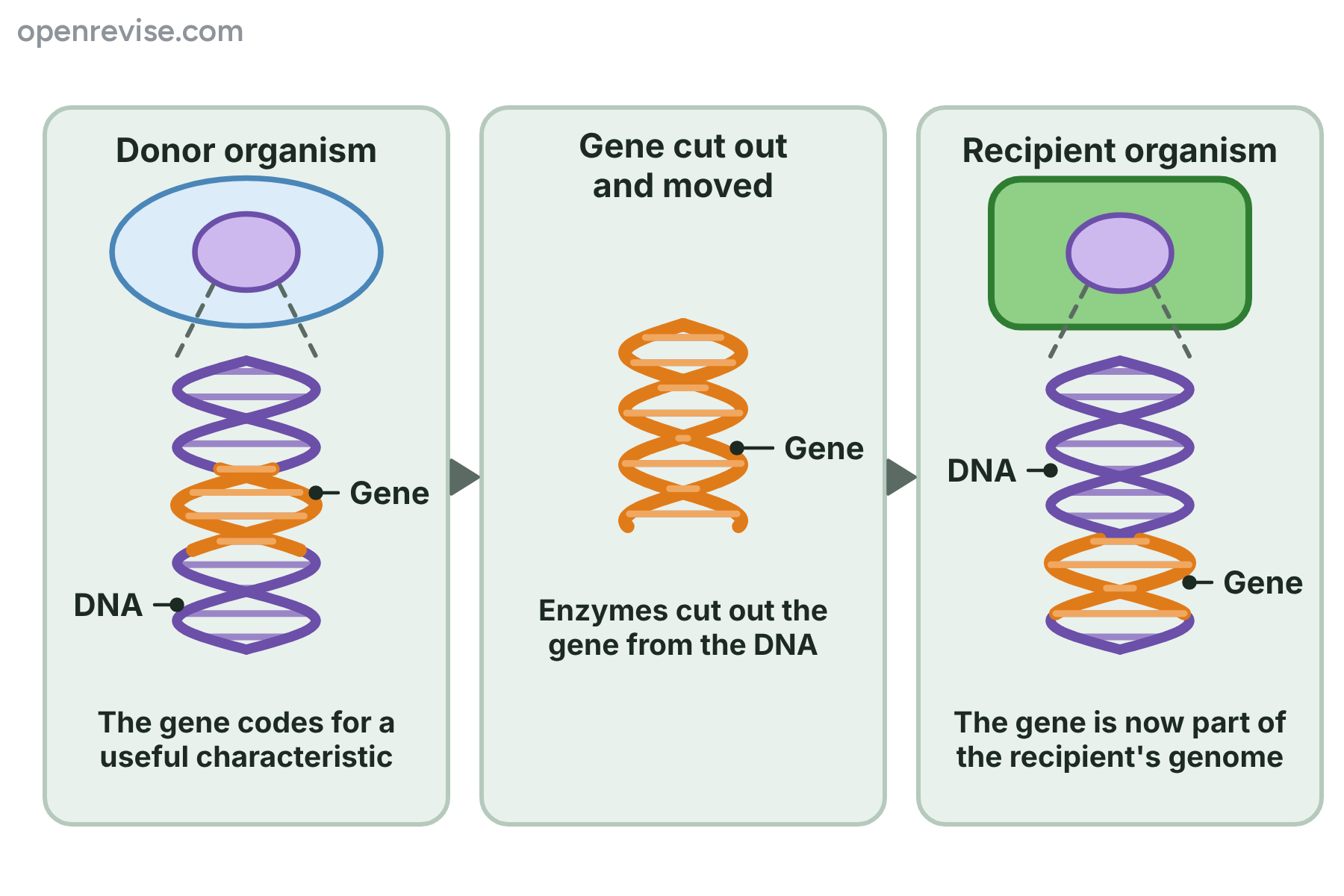
Genetic engineering changes the genome by adding one chosen gene, so the organism makes a new protein and shows a new characteristic.
- Genetic engineering Modifying the genome of an organism by inserting a gene, to give it a desirable characteristic.
- Genetically modified (GM) Describes an organism whose genome has been changed by genetic engineering.
- Genome The entire genetic material of an organism.
Biology · OCR Paper 2
Feeding the Human Race continued
Genetic engineering and selective breeding
- Genetic engineering A chosen gene is moved into the genome; The gene can come from any species; The change can be made in one step
- Selective breeding Parents with the wanted characteristic are chosen; Only alleles that are already in the species are used; Takes many generations
The Steps of Genetic Engineering (Higher tier) (Higher tier)
Restriction enzymes cut, ligase joins, a plasmid carries, and an antibiotic resistance marker shows which bacteria have the gene.
- Restriction enzyme An enzyme that cuts DNA at a specific sequence of bases.
- Sticky ends Short unpaired stretches of bases left at the cut ends of DNA, which can pair with complementary sticky ends.
- DNA ligase An enzyme that joins pieces of DNA together by sealing the sugar-phosphate backbone.
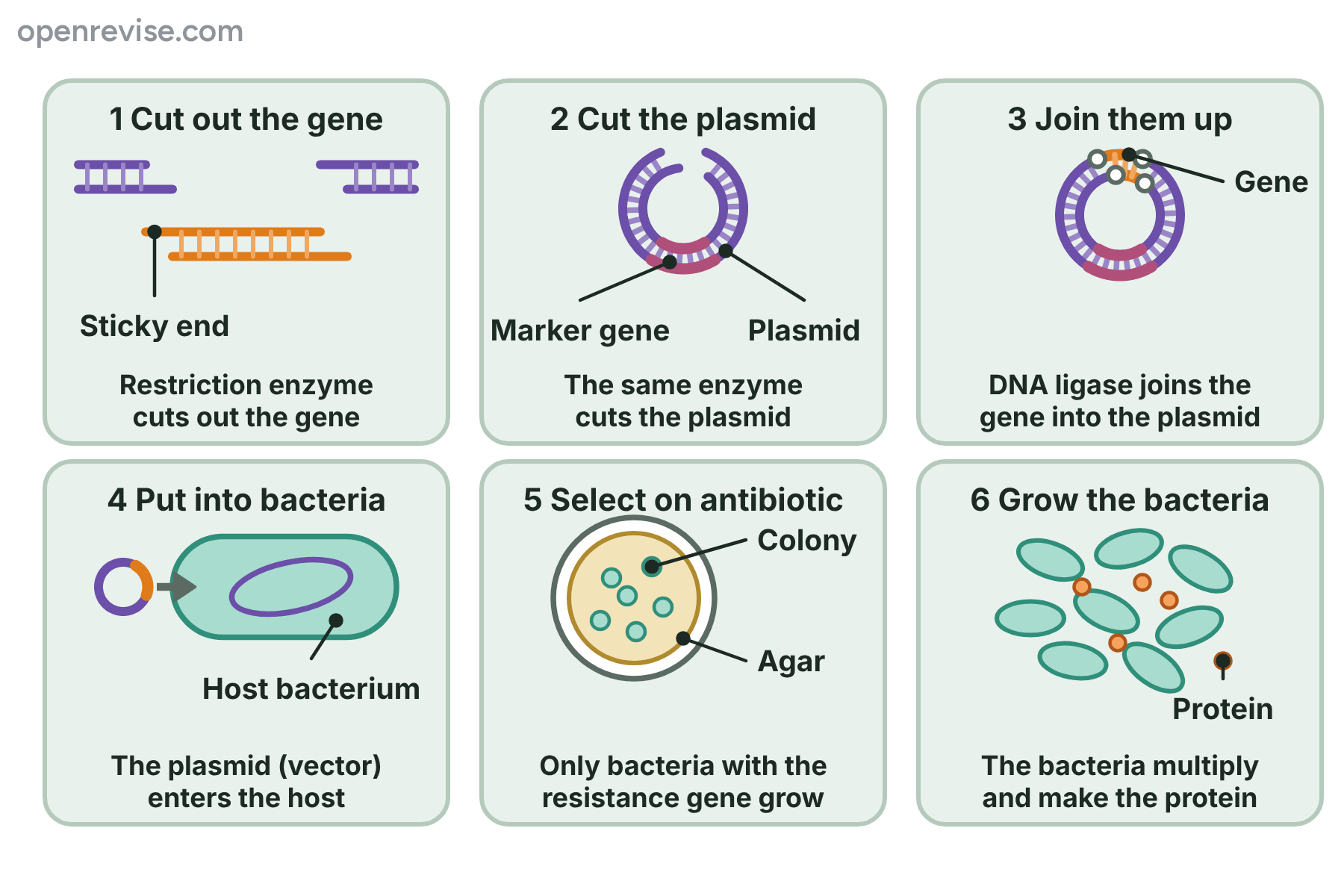
The main steps of genetic engineering
- Find the gene The gene for the wanted characteristic, such as the human…
- Cut it out A restriction enzyme cuts the DNA on either side of the gene…
- Cut the vector The same restriction enzyme is used to cut open the vector, a plasmid.
- Join them The gene and the plasmid are mixed.
Benefits and Risks of Gene Technology in Agriculture
Gene technology brings real benefits to yield and to pesticide use, and real risks to ecosystems and to people, so each use has to be judged on the evidence.
- GM crop A crop plant whose genome has been changed by genetic engineering.
- Gene flow The spread of genes from one population to another, for example by pollen from a GM crop to a wild relative.
- Non-target organism An organism that is harmed by a pesticide or a GM trait although it is not the pest that was aimed at.
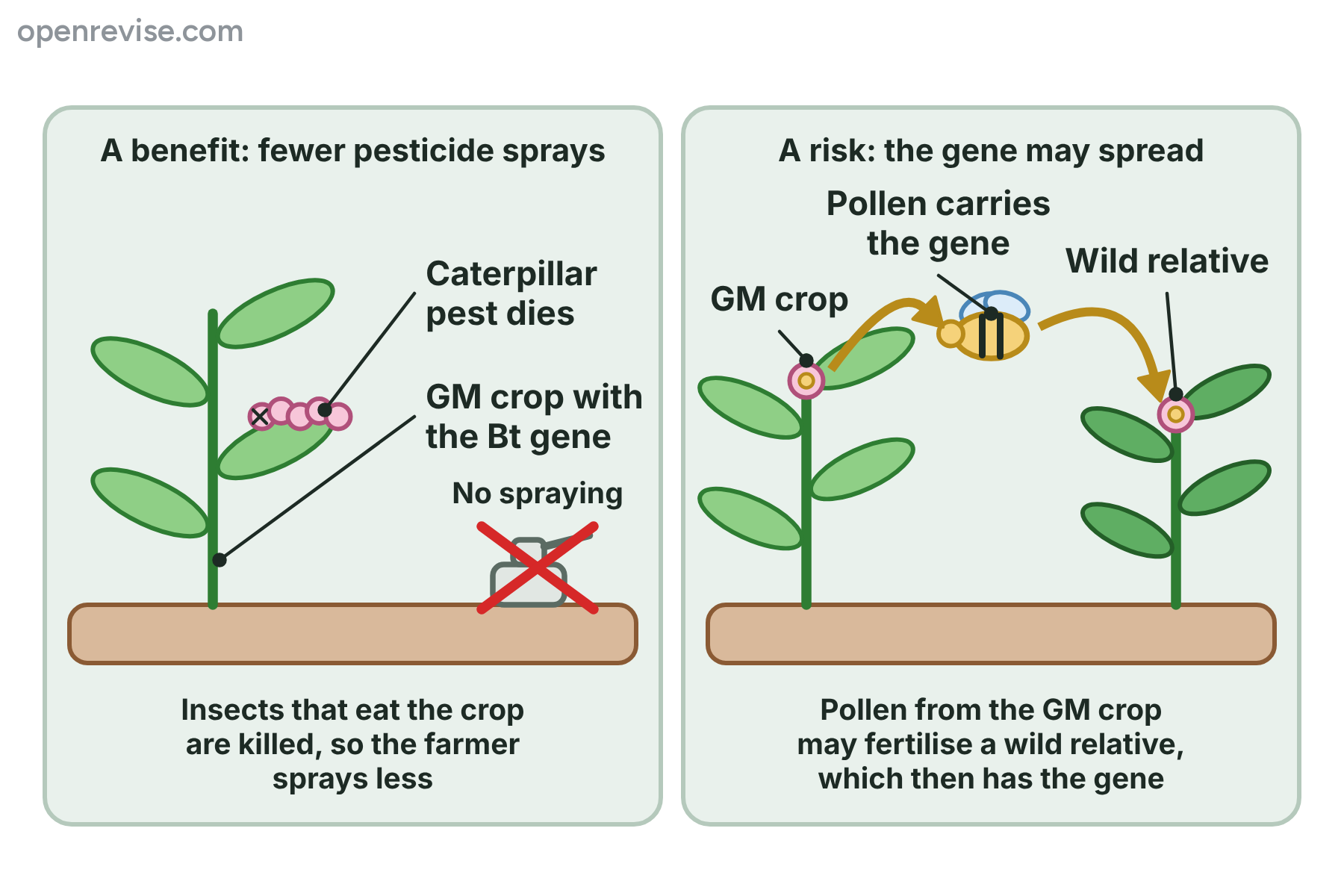
Benefits and risks of GM crops
- Possible benefits Higher yield, so more food from the same land; Less pesticide used, saving money and wildlife; More nutritious or longer-lasting food
- Possible risks Gene flow to wild relatives and non-GM crops; Harm to non-target insects and to biodiversity; Pests and weeds may become resistant
How to evaluate gene technology in an exam answer
- State a benefit Say what the benefit is and explain how it helps.
- State a risk Say what the risk is and explain why it matters.
- Say who is affected Link the point to farmers, consumers, the environment or poor communities.
- Use the evidence Refer to data or to an example.
Biotechnology and Food Production (Separate only)
Biotechnology can produce more food, richer food and medicines from living organisms, but every solution has to be judged on its costs, its safety and the concerns of the people it affects.
- Biotechnology Using living organisms, or parts of them such as enzymes, to make useful products.
- Mycoprotein A protein-rich food made from the fungus Fusarium that is grown in a fermenter.
- Fusarium The fungus that is grown to produce mycoprotein.
- Hyphae The thin threads that make up the body of a fungus.
Mycoprotein and meat
- Mycoprotein High in protein, with all of the essential amino acids; Low in fat and contains fibre; Needs far less land than rearing animals
- Meat from farm animals High in protein, but often higher in fat; No fibre; Not suitable for vegetarians
From fungus to food
- Sterilise The fermenter and the nutrients are sterilised so that no other…
- Feed Glucose syrup, a nitrogen source, minerals and vitamins are…
- Inoculate and grow The fungus is added. It grows fast, and doubles its mass in a few hours.
- Aerate and cool Sterile air supplies oxygen for respiration.