Flashcards · Biology · Photosynthesis
The Photosynthetic Reaction
-
What is photosynthesis?
A reaction in which plants use light energy to make glucose from carbon dioxide and water.
-
Write the word equation for photosynthesis.
Carbon dioxide + water, in light, makes glucose + oxygen.
-
Write the symbol equation for photosynthesis.
6CO₂ + 6H₂O makes C₆H₁₂O₆ + 6O₂ (in light).
-
What are the reactants in photosynthesis?
Carbon dioxide and water.
-
What are the products of photosynthesis?
Glucose and oxygen.
-
Why is photosynthesis an endothermic reaction?
It takes in energy from the environment, transferred by light.
-
Where in the cell does photosynthesis take place?
In the chloroplasts.
-
What does chlorophyll do?
It absorbs the light energy for photosynthesis.
-
How does carbon dioxide get into a leaf?
By diffusion through the stomata.
-
How does water get to the leaf?
It is taken up by the roots and carried up in the xylem.
-
Where is the energy stored after photosynthesis?
In the glucose that is made.
-
What is a producer?
An organism that makes its own food, such as a plant.
-
How can you test a leaf for starch?
Kill and decolourise it, then add iodine solution, which turns blue-black.
-
Why is the leaf boiled in ethanol?
To remove the chlorophyll, so the colour change can be seen.
-
Name a gas that is a product of photosynthesis.
Oxygen.
-
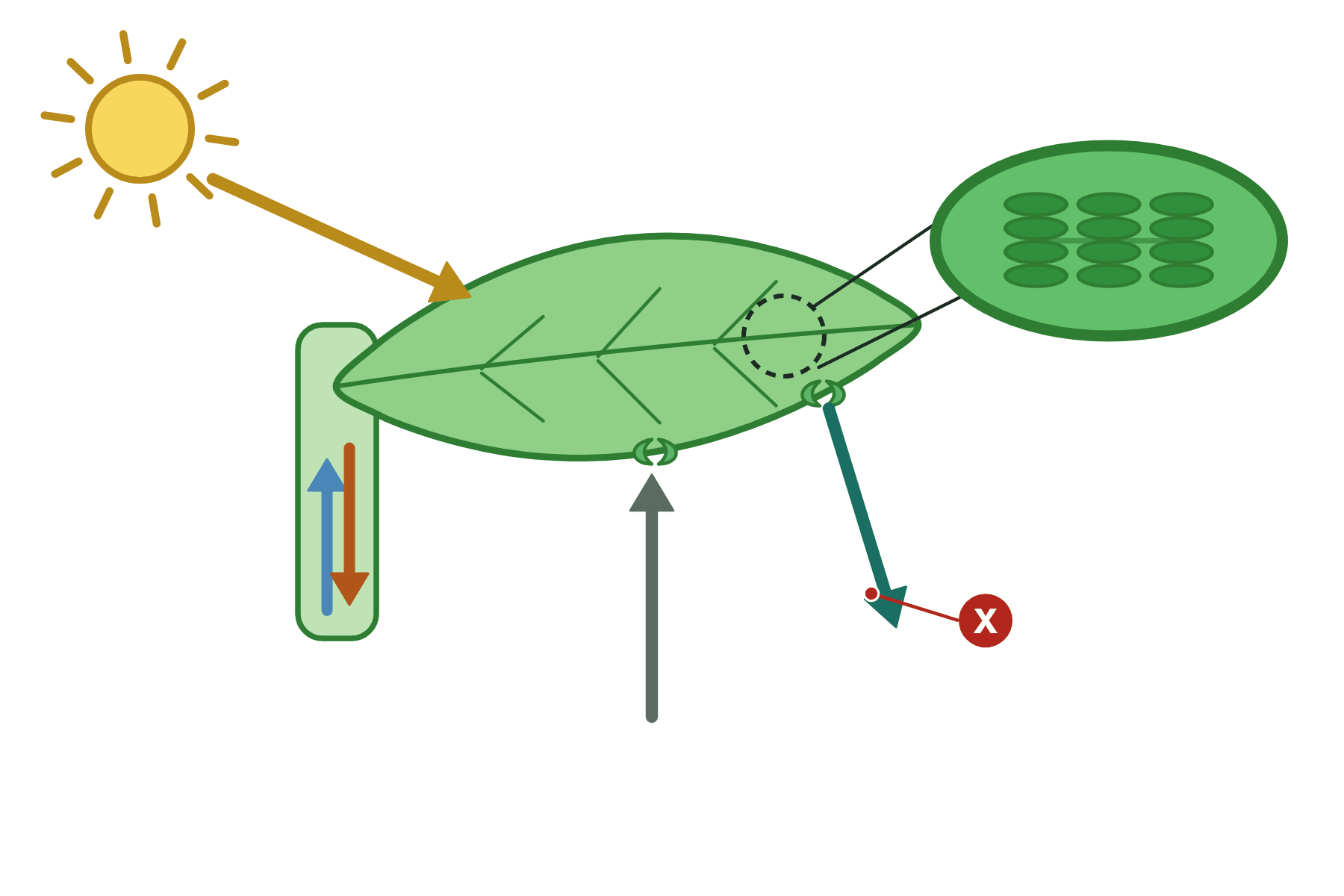 Name the substance marked X and say where it goes.
 Oxygen. It is a product of photosynthesis and leaves the leaf through the stomata.
-
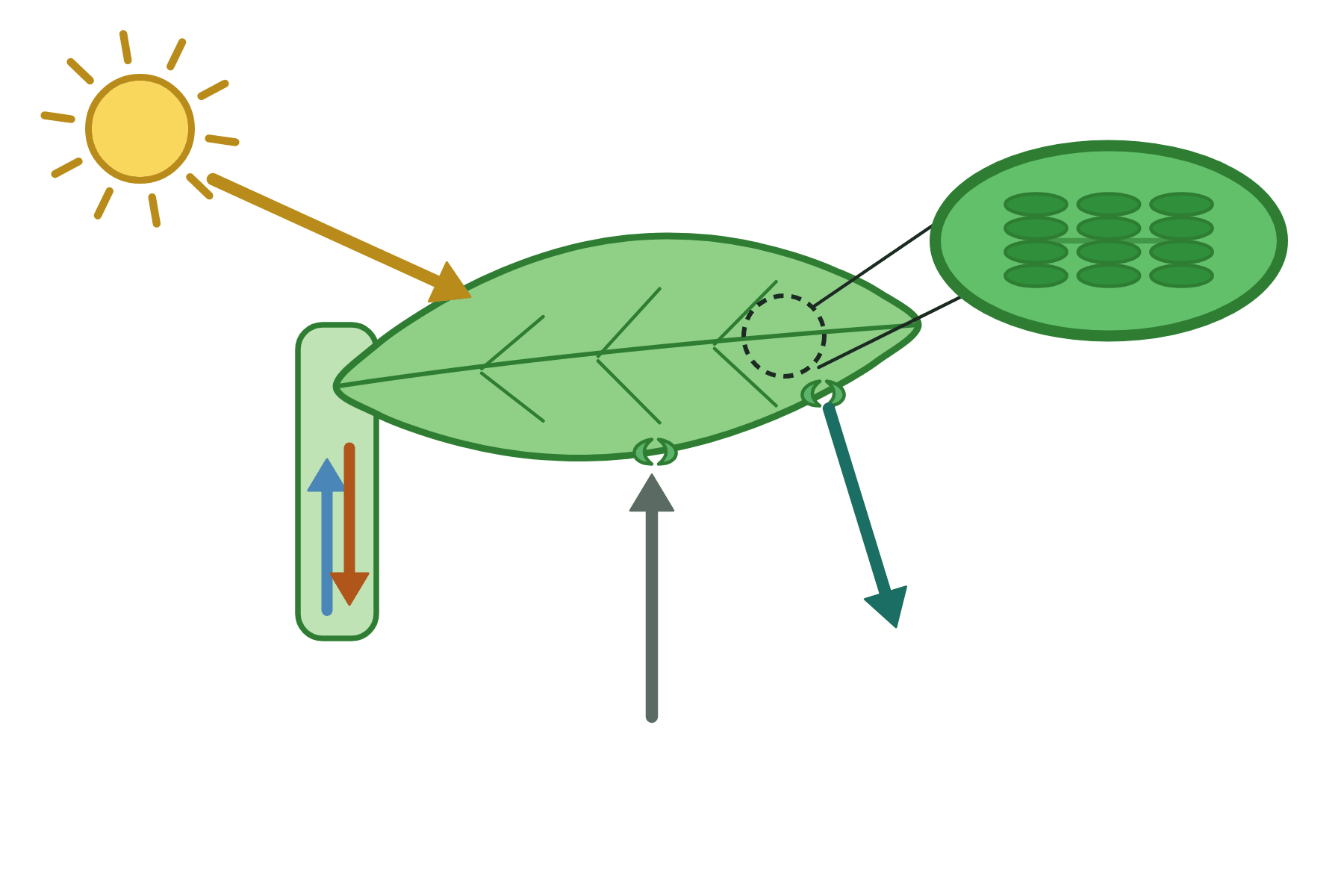 Label everything that goes into and comes out of the leaf.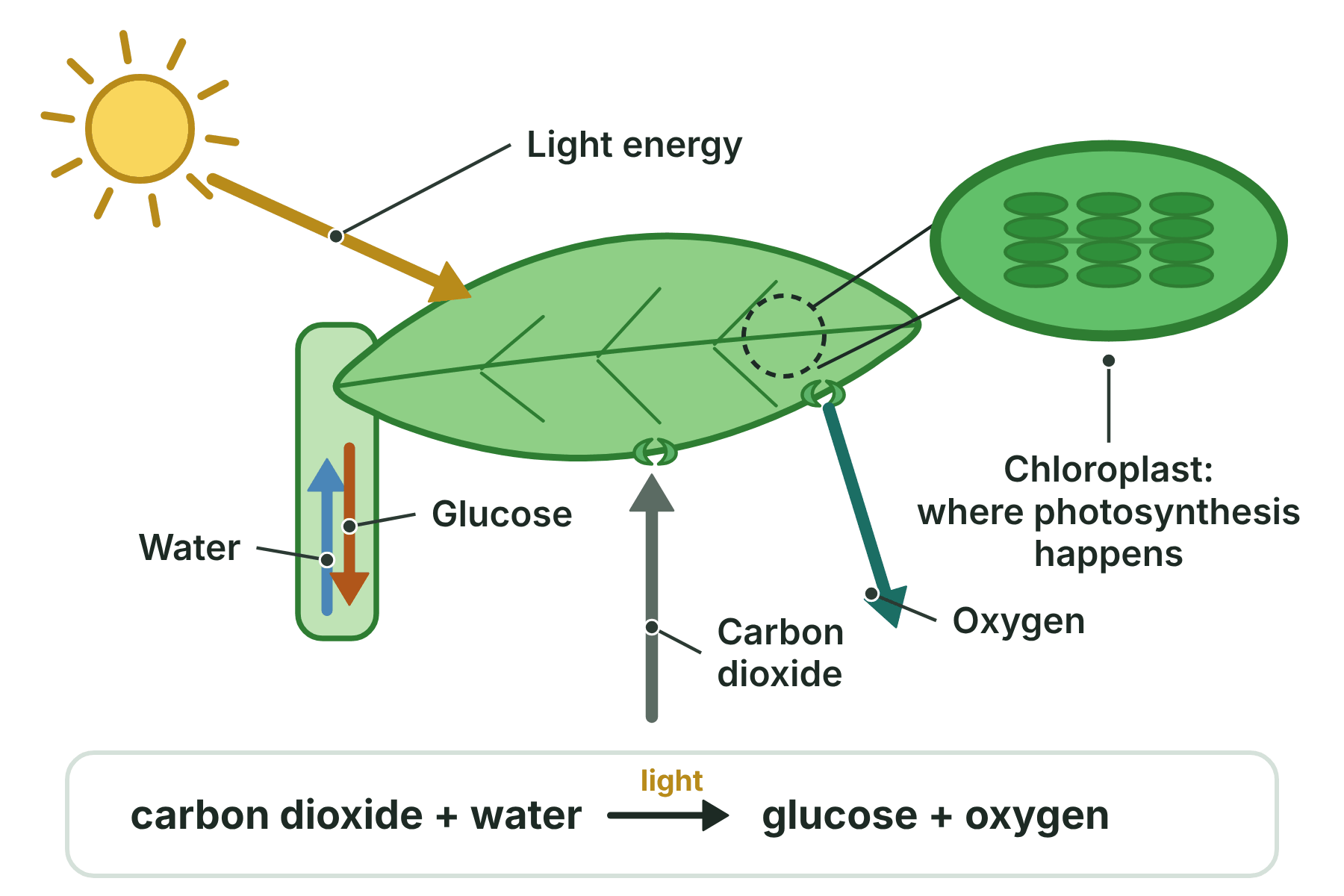
Light energy, carbon dioxide and water go in. Oxygen and glucose come out. Photosynthesis happens in the chloroplast.