Flashcards · Biology · Transport In and Out of Cells
Osmosis
-
What is osmosis?
The diffusion of water from a dilute solution to a concentrated solution through a partially permeable membrane.
-
What is a partially permeable membrane?
A membrane that lets small molecules such as water through, but not larger dissolved molecules.
-
In which direction does water move by osmosis?
From the more dilute solution to the more concentrated solution.
-
What is a dilute solution?
One with a low concentration of dissolved substance.
-
What is a concentrated solution?
One with a high concentration of dissolved substance.
-
What happens if two solutions have the same concentration?
There is no net movement of water.
-
Is osmosis a type of diffusion?
Yes. It is the diffusion of water through a partially permeable membrane.
-
What happens to a plant cell in a dilute solution?
Water enters by osmosis and the cell becomes turgid.
-
What does turgid mean?
Firm and swollen with water.
-
What stops a plant cell bursting in a dilute solution?
Its strong cell wall.
-
What happens to a plant cell in a concentrated solution?
Water leaves by osmosis and the cell becomes flaccid.
-
What does flaccid mean?
Soft and limp, because the cell has lost water.
-
What is plasmolysis?
When so much water leaves that the membrane pulls away from the cell wall.
-
Why does a plant wilt when it loses water?
Its cells go flaccid, so they cannot hold the stems and leaves up.
-
What happens to a red blood cell in pure water?
Water enters by osmosis, the cell swells and may burst.
-
Why can a red blood cell burst but a plant cell cannot?
An animal cell has no cell wall to resist the swelling.
-
What happens to an animal cell in a concentrated solution?
Water leaves by osmosis and the cell shrinks and shrivels.
-
Which way does water move if a cell is in a more dilute solution than its cell sap?
Into the cell.
-
What is the usual mistake about the direction of osmosis?
Saying water moves towards more water. It moves from more water (dilute) to less water (concentrated).
-
What is an isotonic drink?
One with the same concentration of dissolved substances as the body's fluids.
-
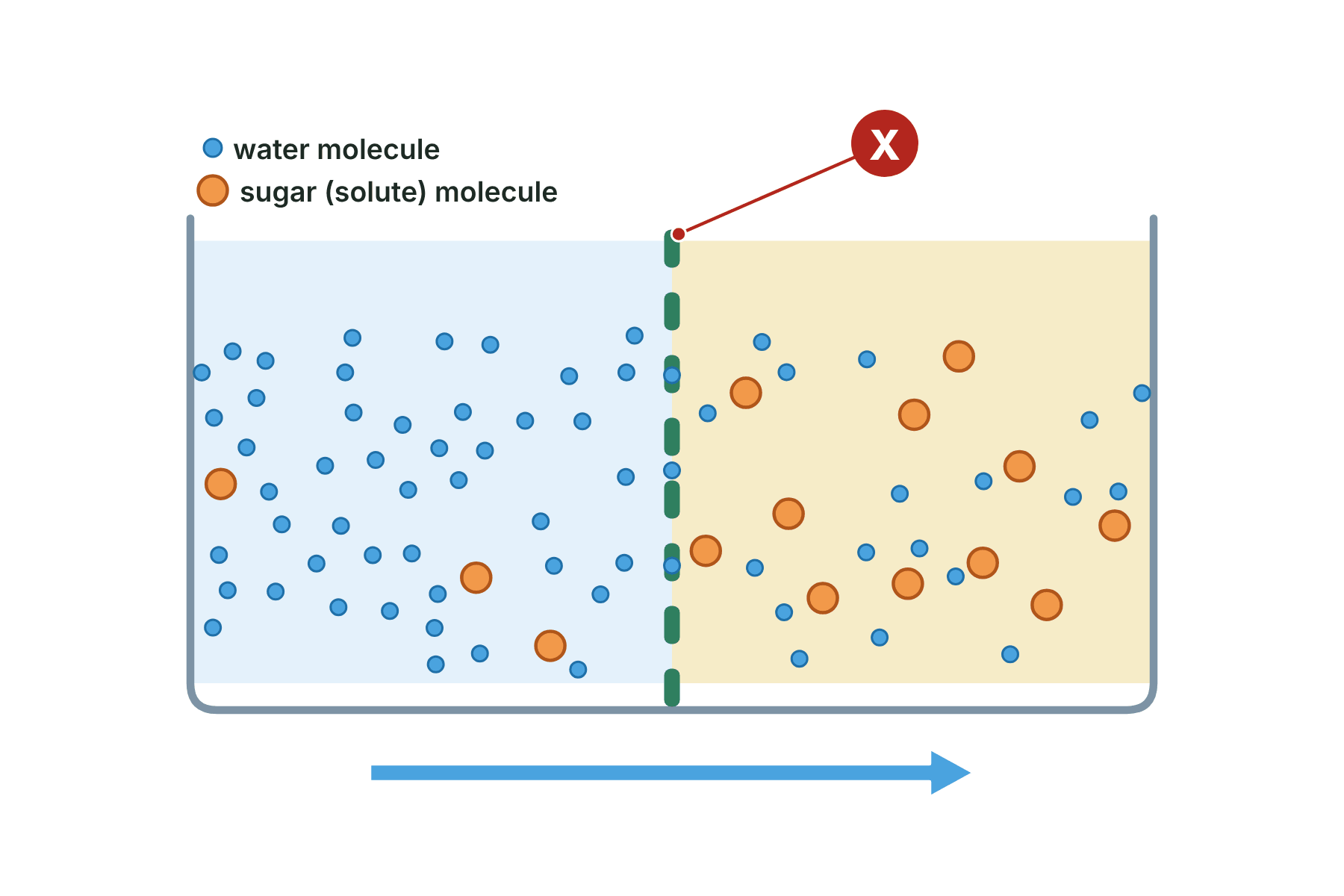 What is the structure marked X, and what does it let through?
 A partially permeable membrane. It lets small molecules such as water through, but not larger molecules such as sugar.
-
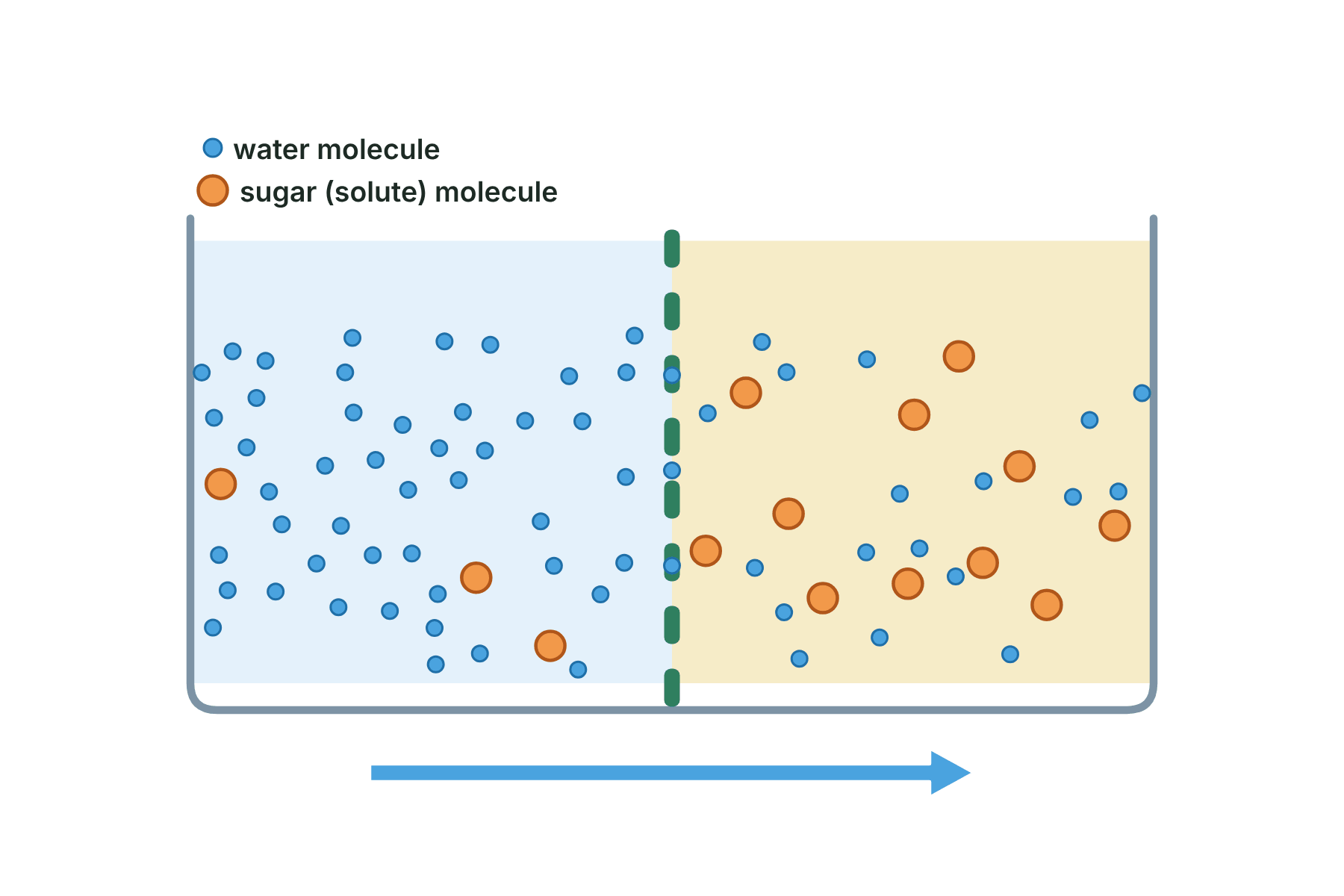 Label this diagram of osmosis and say which way the water moves.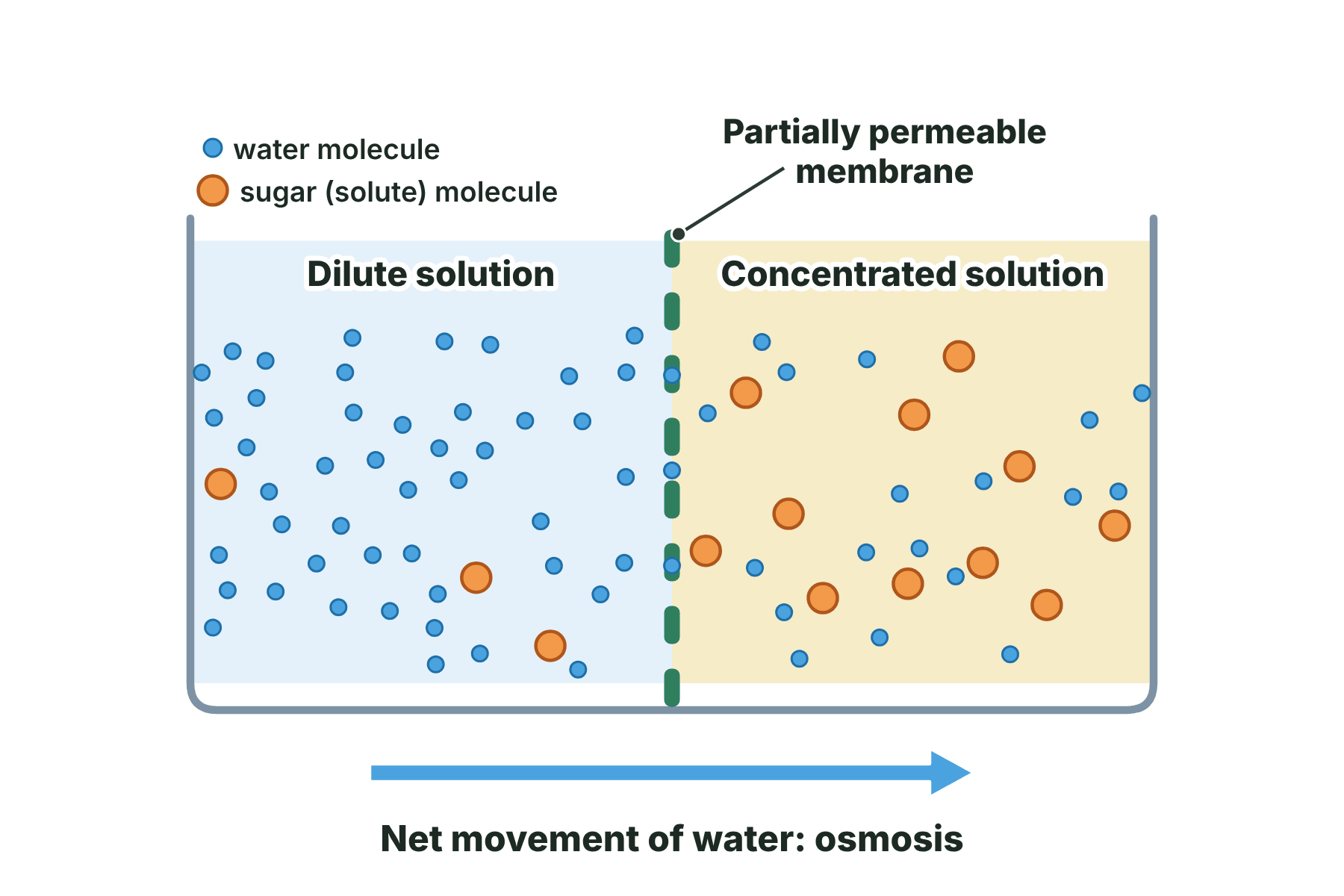
-
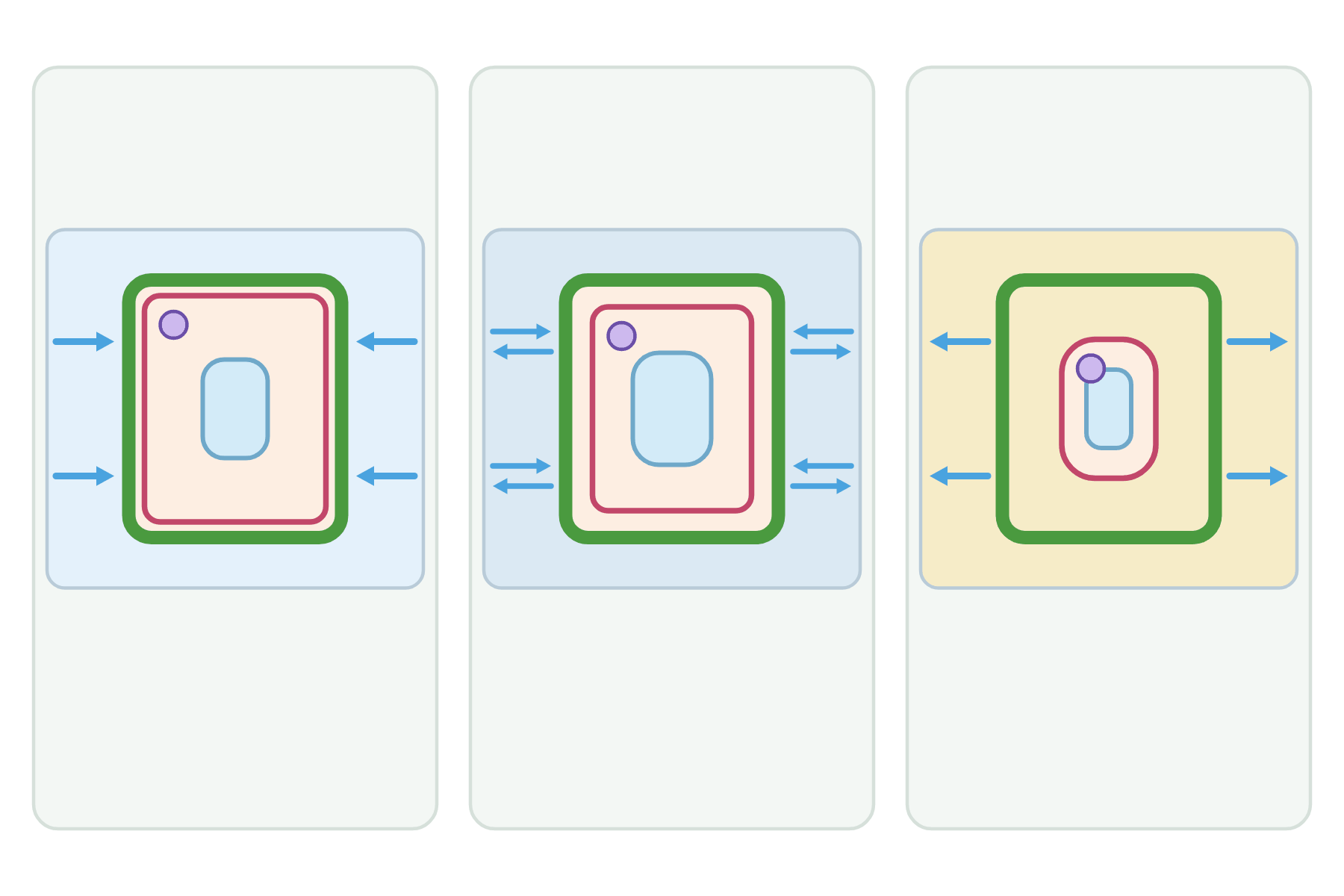 What will happen to a plant cell in each of these three solutions?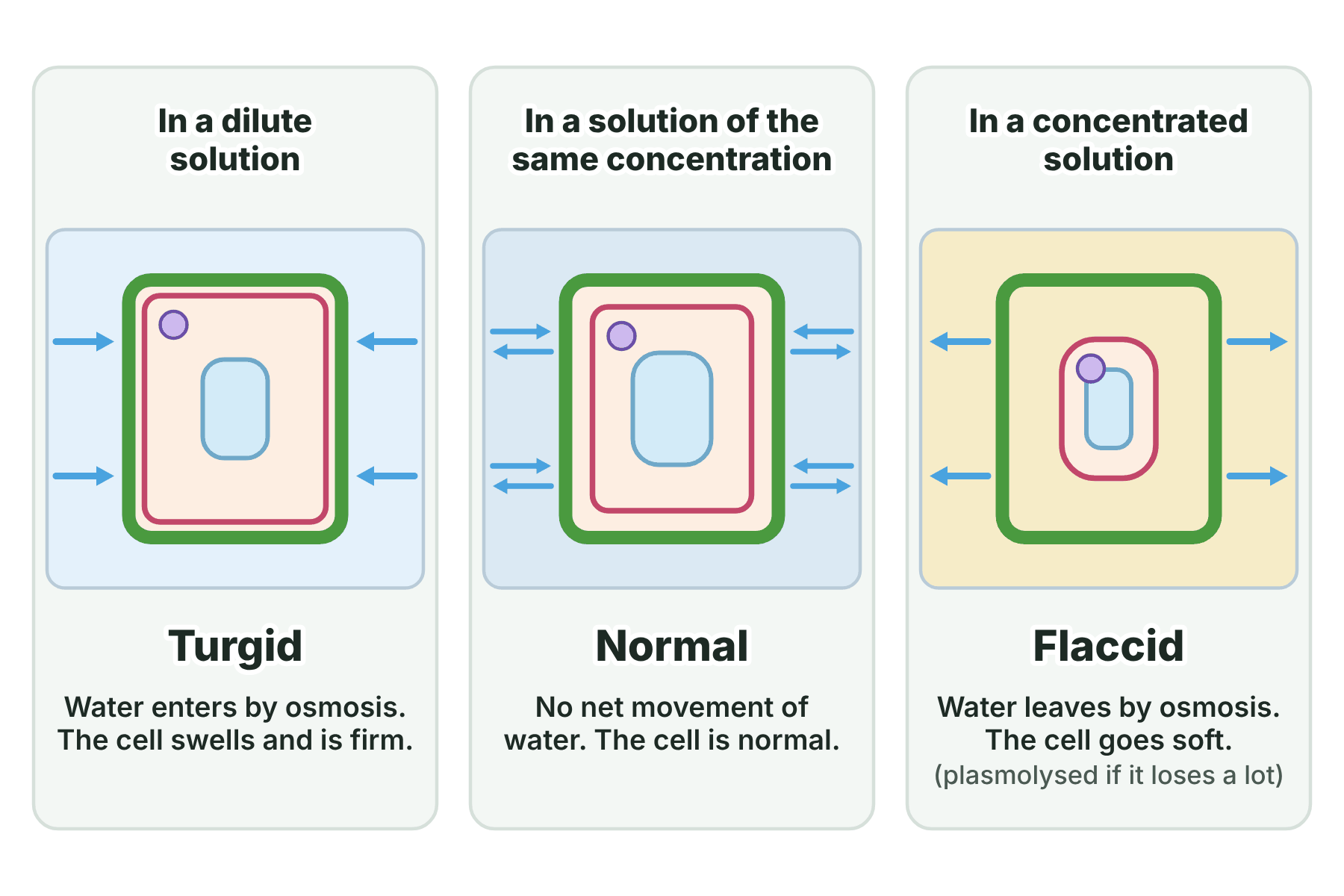
-
Describe what happens to a red blood cell in a dilute solution, in a solution of the same concentration and in a concentrated solution.
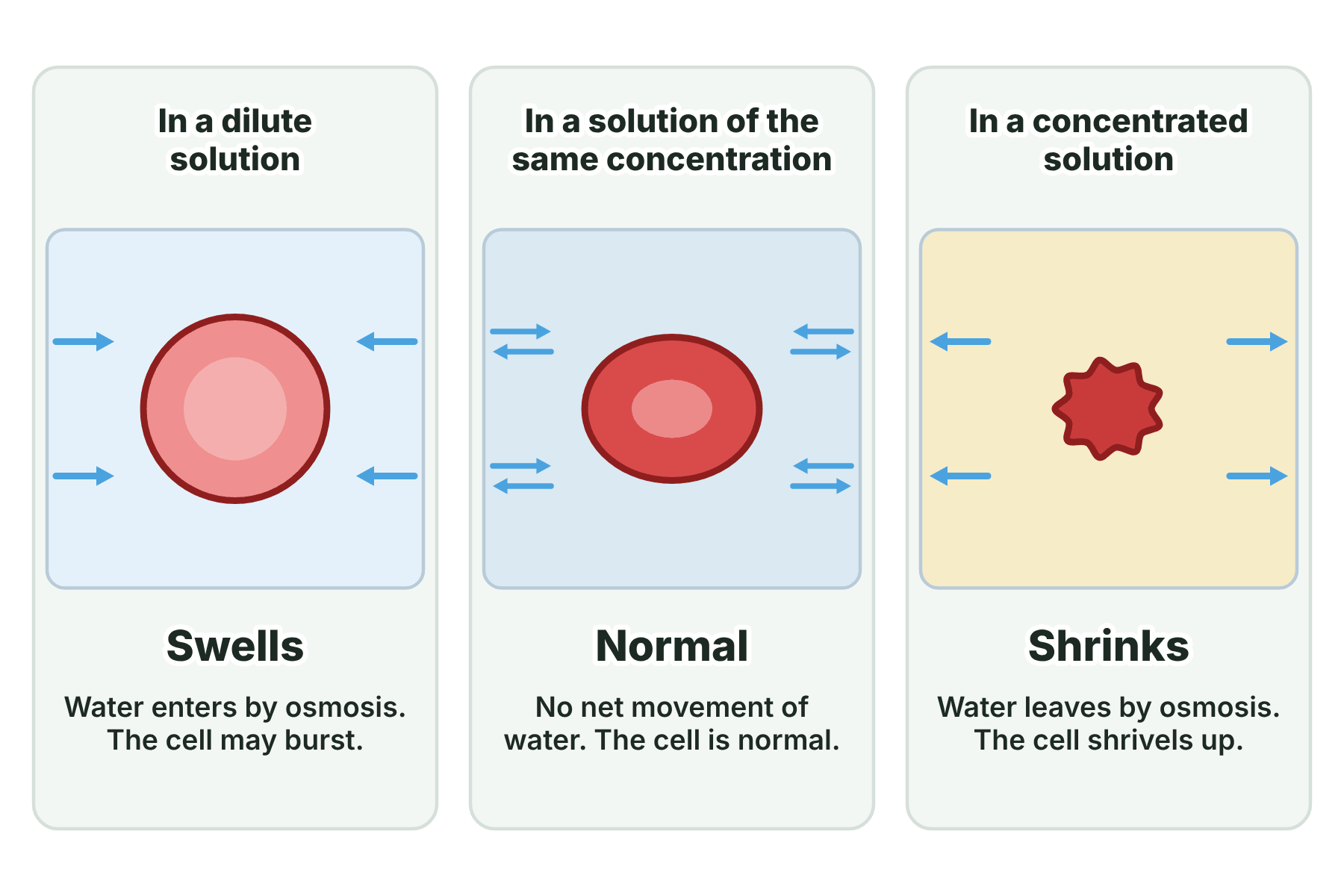
Dilute solution: water enters by osmosis, so the cell swells and may burst. Same concentration: no net movement of water, so it stays normal. Concentrated solution: water leaves by osmosis, so the cell shrinks.