Flashcards · Biology
Photosynthesis
-
Why are plants and algae the main producers of food?
They make glucose from carbon dioxide and water using light energy.
-
What is biomass?
The mass of living material.
-
What is photosynthesis?
A reaction in which plants use light energy to make glucose from carbon dioxide and water.
-
Write the word equation for photosynthesis.
Carbon dioxide + water, in light, makes glucose + oxygen.
-
Write the symbol equation for photosynthesis.
6CO₂ + 6H₂O makes C₆H₁₂O₆ + 6O₂ (in light).
-
What are the reactants in photosynthesis?
Carbon dioxide and water.
-
What are the products of photosynthesis?
Glucose and oxygen.
-
Why is photosynthesis an endothermic reaction?
It takes in energy from the environment, transferred by light.
-
Where in the cell does photosynthesis take place?
In the chloroplasts.
-
What does chlorophyll do?
It absorbs the light energy for photosynthesis.
-
How does water get to the leaf?
It is taken up by the roots and carried up in the xylem.
-
Where is the energy stored after photosynthesis?
In the glucose that is made.
-
What is a producer?
An organism that makes its own food, such as a plant.
-
How can you test a leaf for starch?
Kill and decolourise it, then add iodine solution, which turns blue-black.
-
Why is the leaf boiled in ethanol?
To remove the chlorophyll, so the colour change can be seen.
-
Name a gas that is a product of photosynthesis.
Oxygen.
-
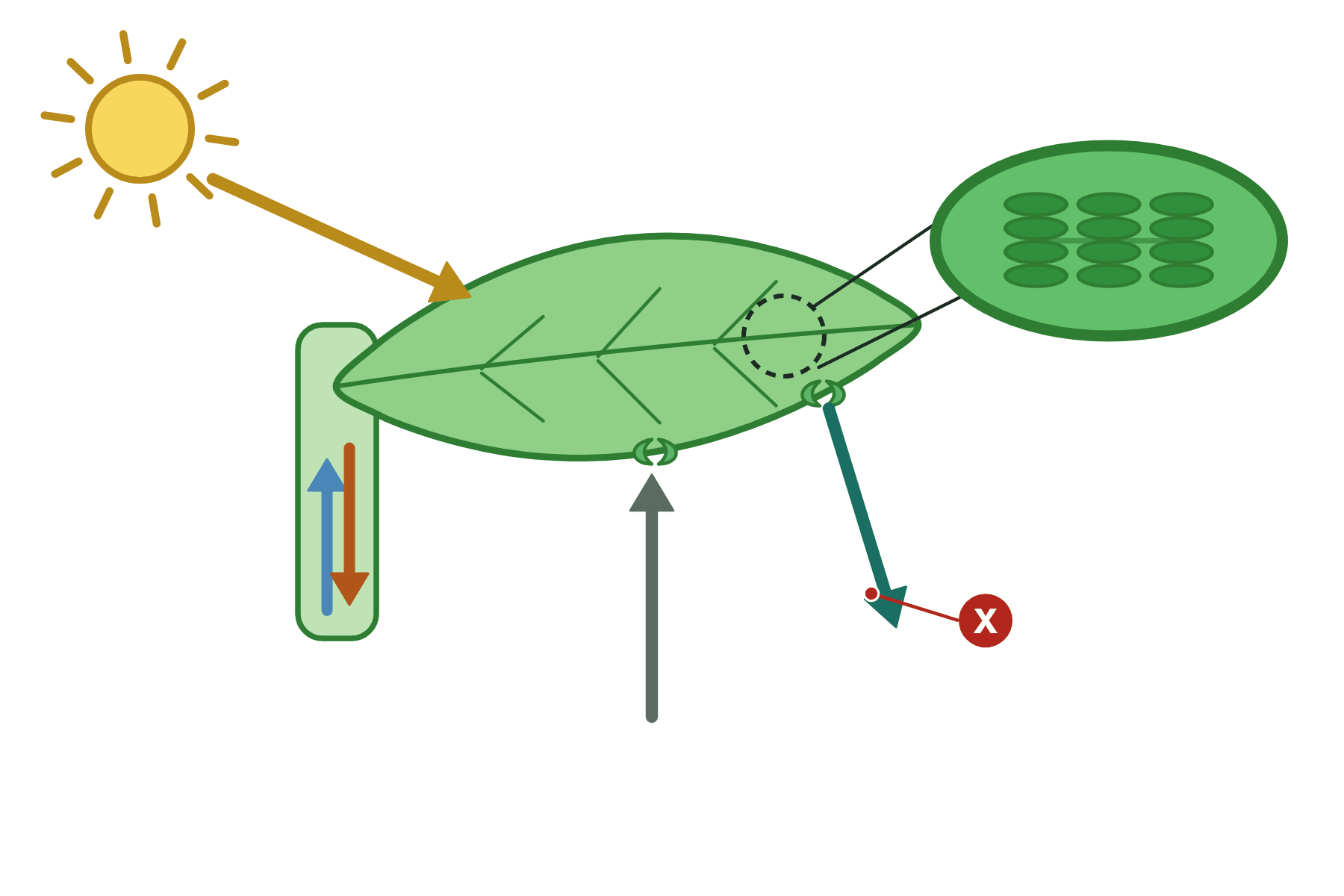 Name the substance marked X and say where it goes.
 Oxygen. It is a product of photosynthesis and leaves the leaf through the stomata.
-
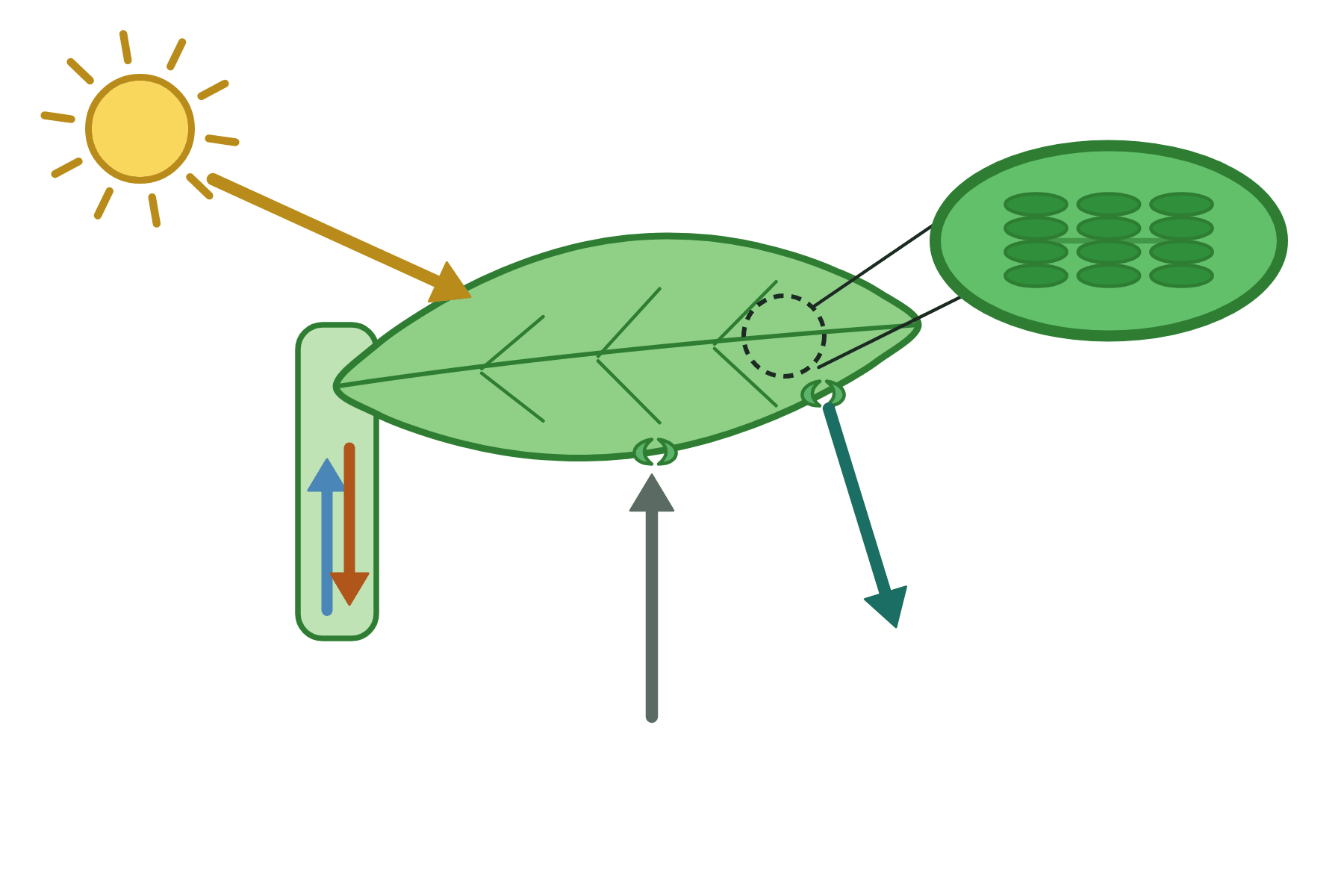 Label everything that goes into and comes out of the leaf.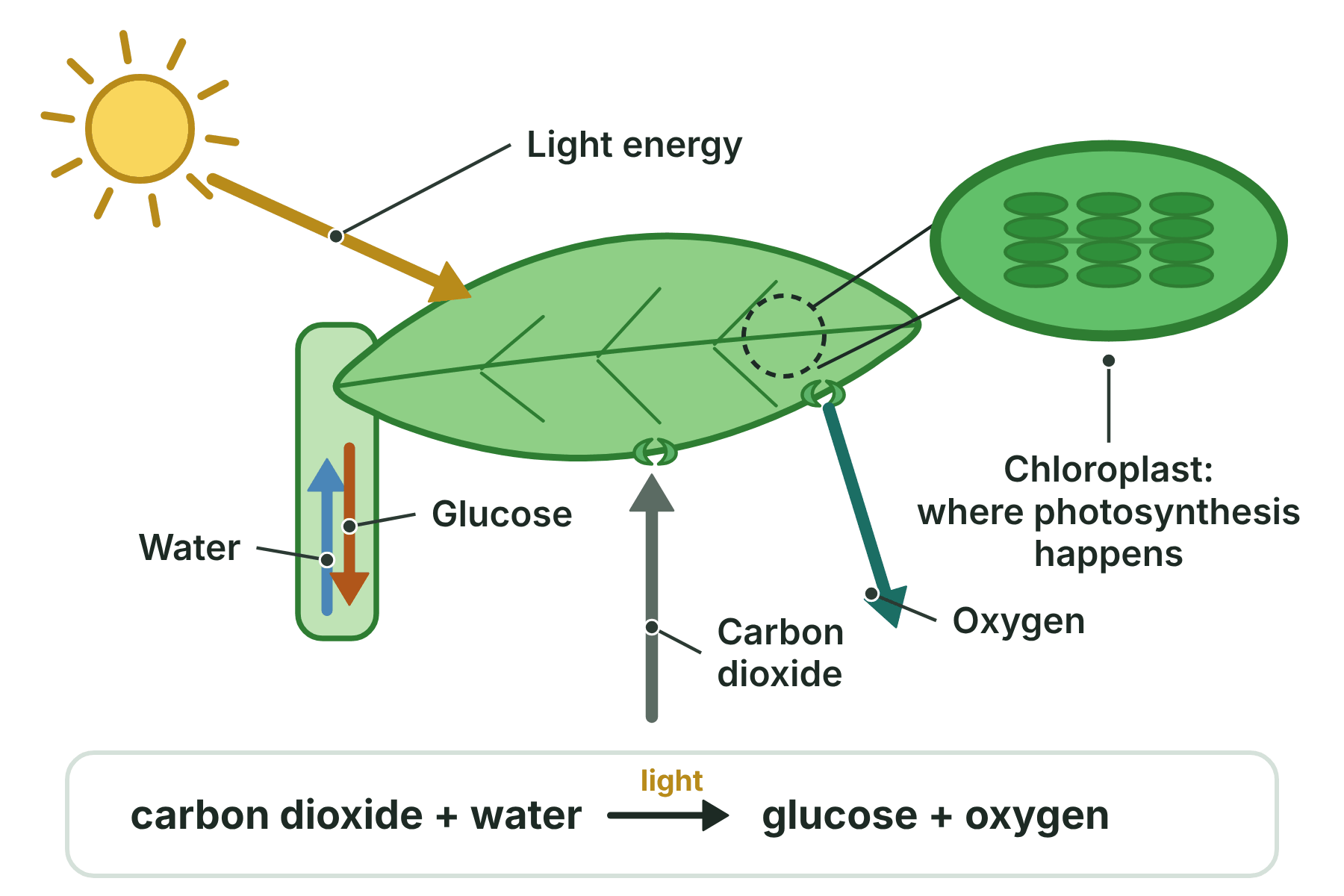
Light energy, carbon dioxide and water go in. Oxygen and glucose come out. Photosynthesis happens in the chloroplast.
-
What is a limiting factor?
A factor in short supply that sets the rate of a reaction.
-
Why does more light increase photosynthesis?
Light provides the energy for the reaction.
-
Why does more carbon dioxide increase photosynthesis?
It is a reactant, so more is available.
-
Why does the rate fall at high temperatures?
The enzymes are denatured.
-
What does a flat part on a rate graph show?
Another factor is now limiting.
-
What does a rising part of the graph show?
The factor on the x axis is limiting.
-
How do you calculate a rate?
Amount of product or reactant ÷ time.
-
What is a plateau?
A flat part of a graph where the rate stops changing.
-
(HT) What does it mean if factors interact?
Any one of them might be the limiting factor.
-
(HT) Why might adding extra heat be a waste of money?
If temperature is not the limiting factor, the rate does not increase.
-
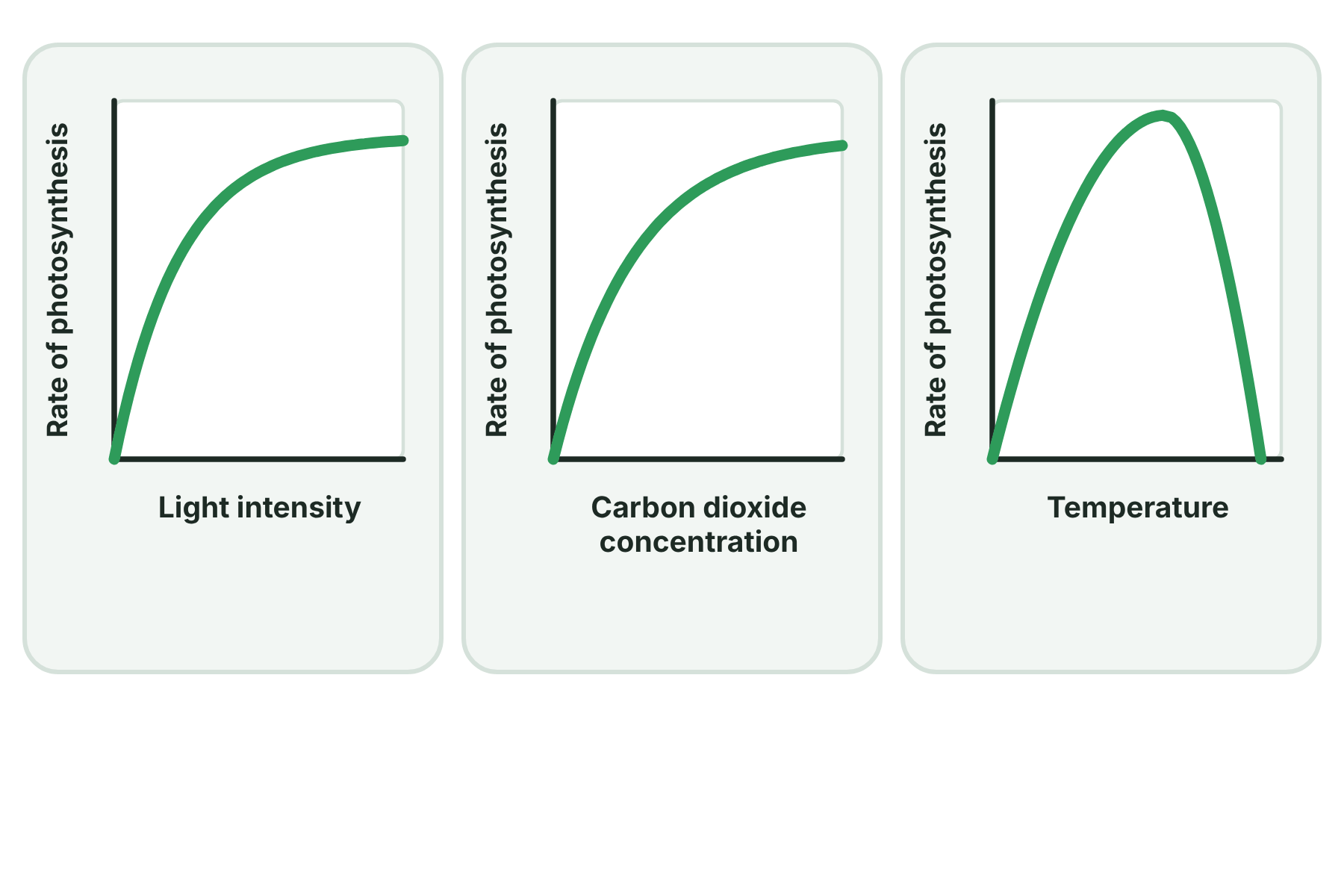 Describe the shape of each graph and say what is limiting.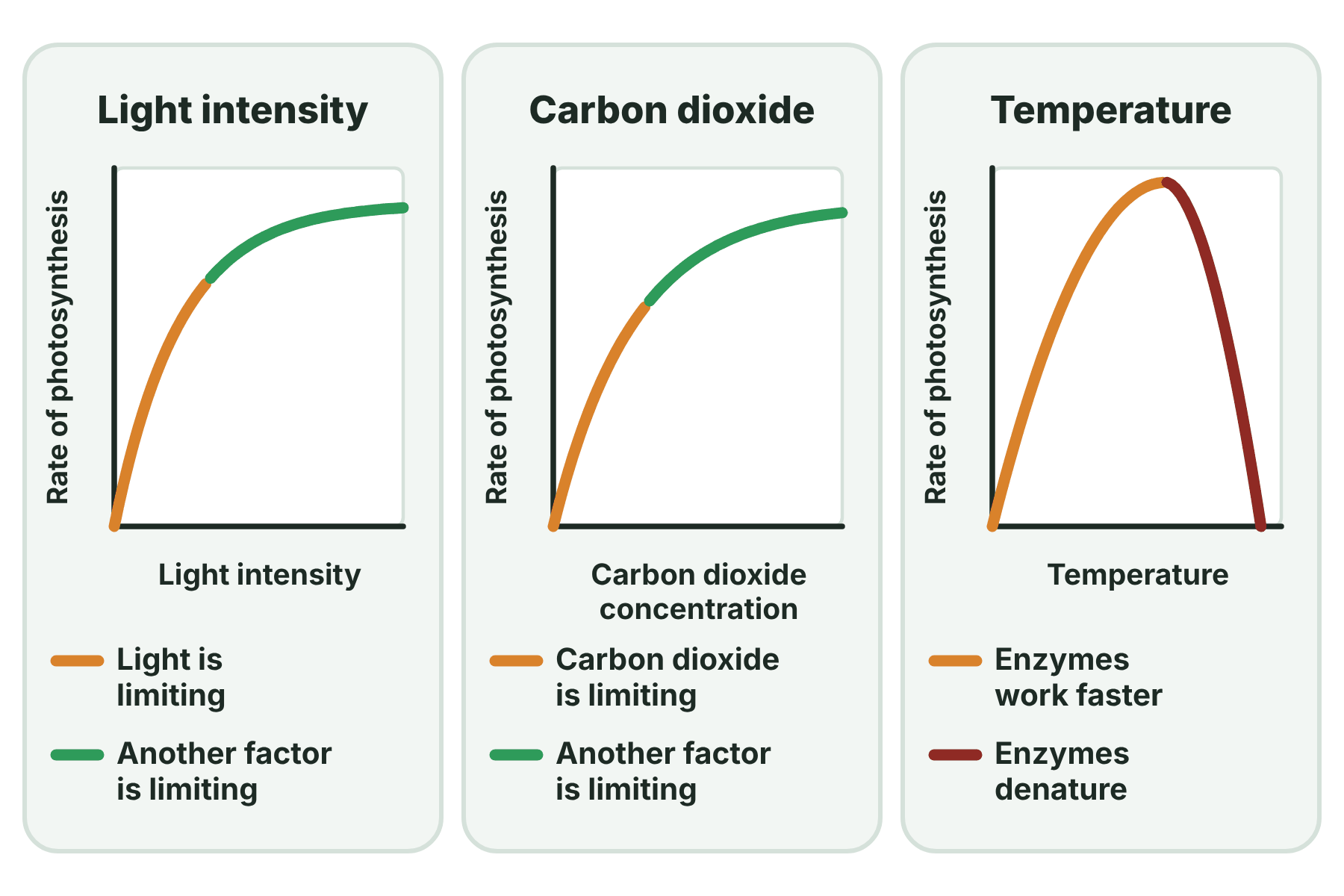
Light and carbon dioxide: the rate rises then levels off, and another factor is limiting on the flat part. Temperature: it rises to an optimum, then falls because enzymes are denatured.
-
What gas do the bubbles from pondweed contain?
Oxygen.
-
What is the independent variable in the pondweed practical?
The distance of the lamp from the pondweed.
-
What is the dependent variable?
The number of bubbles per minute, or the volume of gas collected.
-
Why is sodium hydrogencarbonate added to the water?
To provide carbon dioxide, so it is not the limiting factor.
-
Why use a heat shield or water bath?
To stop the temperature rising and affecting the rate.
-
Name three control variables.
Any three of the same pondweed, temperature, carbon dioxide level, time and size of beaker.
-
Why repeat each distance?
To check reliability and calculate a mean.
-
Why is counting bubbles a rough measure?
The bubbles can differ in size.
-
What is a better way to measure the gas?
Collect it in a gas syringe or measuring tube and measure the volume.
-
What happens to the rate as the lamp is moved further away?
It decreases.
-
Why does moving the lamp change the light intensity?
The further away the lamp is, the dimmer the light that reaches the plant.
-
(HT) State the inverse square law.
Light intensity is proportional to 1 ÷ distance².
-
(HT) What happens to light intensity if the distance doubles?
It falls to one quarter.
-
(HT) What happens to light intensity if the distance triples?
It falls to one ninth.
-
(HT) What should a graph of rate against 1/d² look like?
A straight line, while light is the limiting factor.
-
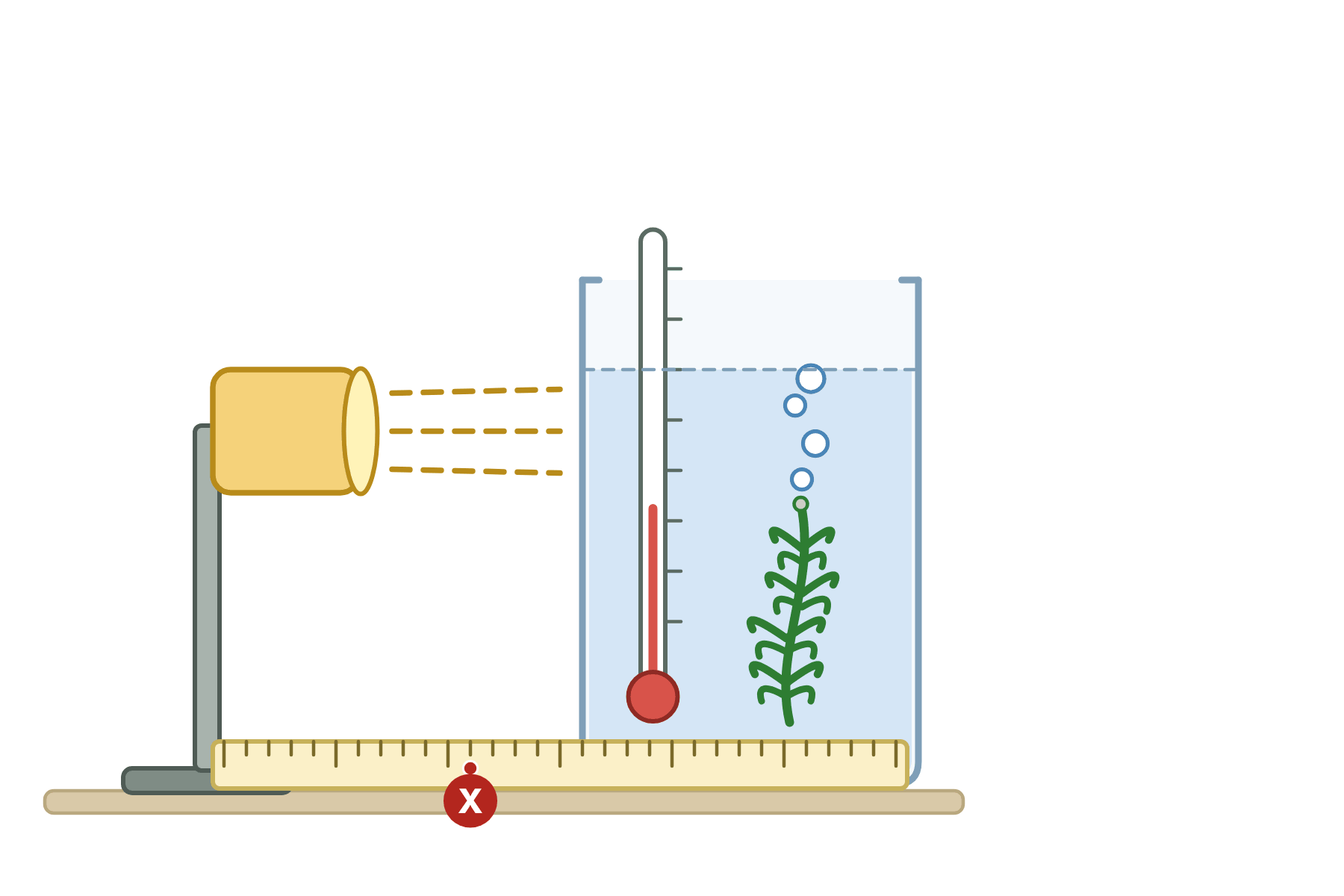 Name the part marked X and say why it is there.
 The ruler. It measures the distance between the lamp and the pondweed, which is the independent variable.
-
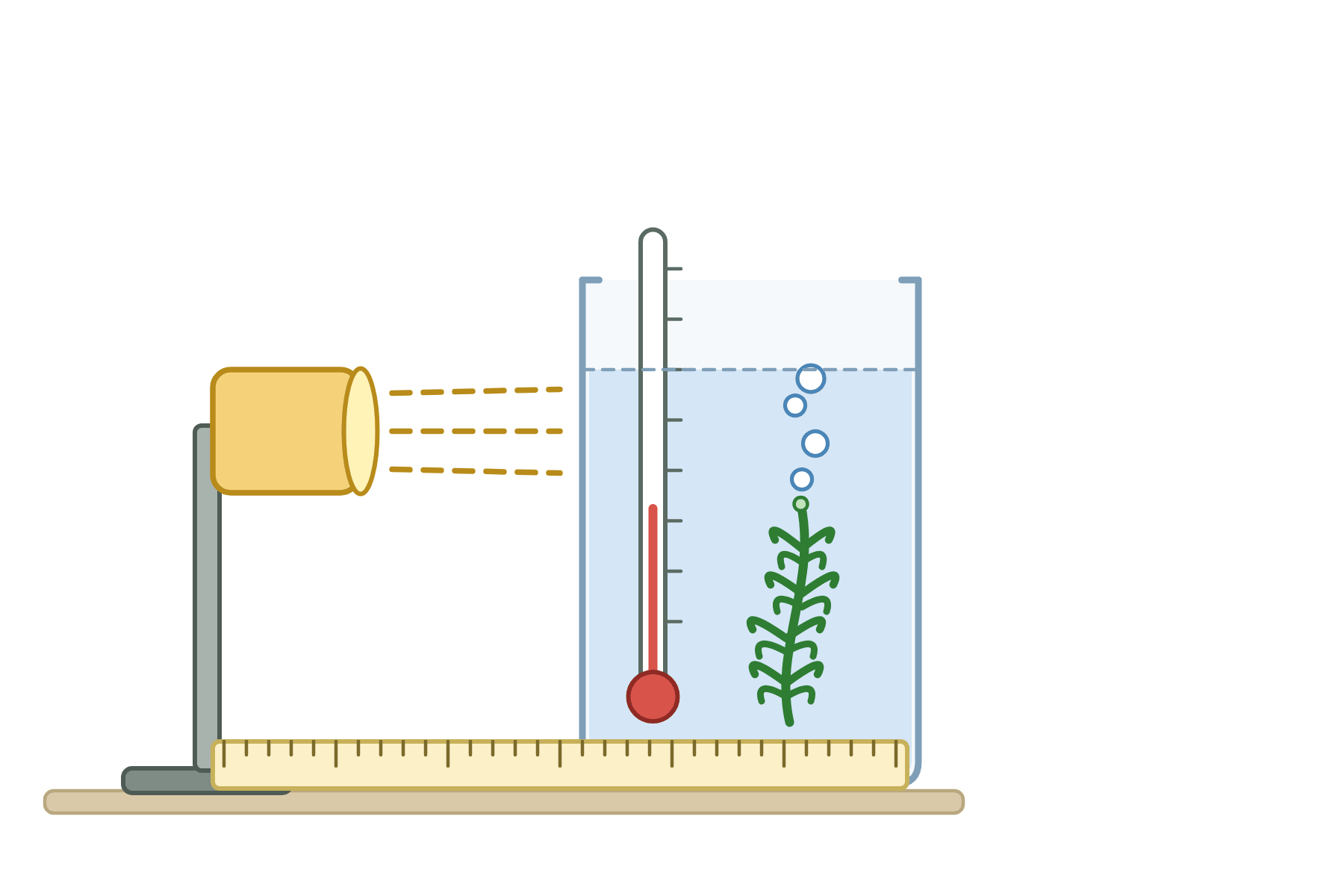 Label the apparatus.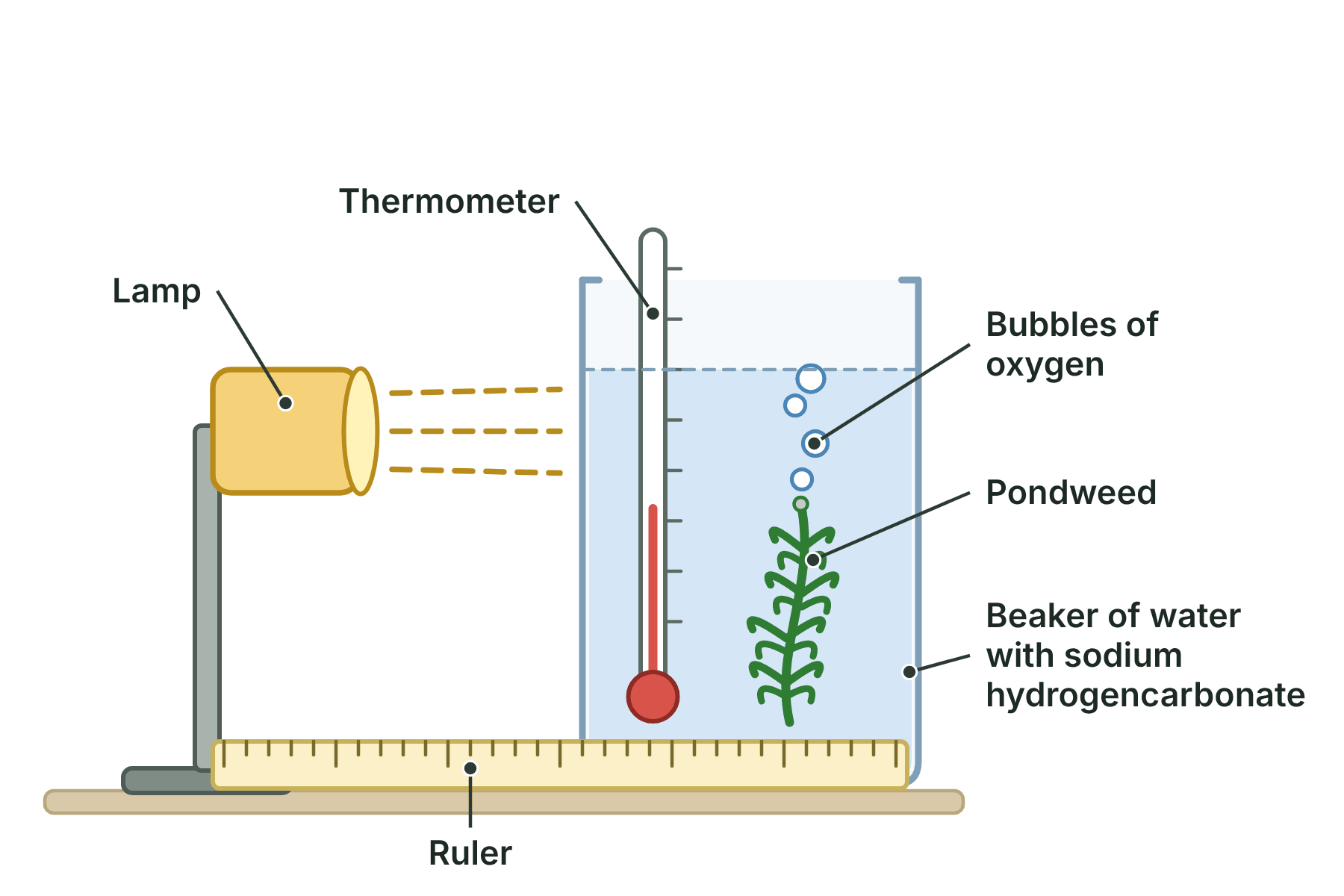
Lamp, ruler, pondweed, bubbles of oxygen, beaker of water with sodium hydrogencarbonate and thermometer.