Flashcards · Biology
Cell Structures
-
What is the main difference between eukaryotic and prokaryotic cells?
Eukaryotic cells have a nucleus enclosing their DNA. Prokaryotic cells have no nucleus.
-
Which kinds of living things have eukaryotic cells?
Animals, plants, fungi and single-celled organisms such as Amoeba.
-
What type of cell is a bacterium?
A prokaryotic cell.
-
Where is the DNA in a bacterial cell?
In a single loop lying free in the cytoplasm.
-
What is a plasmid?
A small extra ring of DNA in a bacterial cell, often carrying genes such as antibiotic resistance.
-
What is the bacterial cell wall for?
It supports the cell and protects it. It is not made of cellulose.
-
Name three structures found in both bacterial and animal cells.
Cell membrane, cytoplasm and ribosomes.
-
Roughly how much bigger is an animal cell than a bacterium?
About 10 times: around 20 µm compared with around 2 µm.
-
What does the prefix micro mean?
One millionth, so \(1\ \mu\text{m} = 1 \times 10^{-6}\text{ m}\).
-
What does the prefix nano mean?
One billionth, so \(1\text{ nm} = 1 \times 10^{-9}\text{ m}\).
-
Write 0.000 03 m in standard form.
\(3 \times 10^{-5}\text{ m}\).
-
One cell is 100 times bigger than another. How many orders of magnitude is that?
Two, because \(100 = 10^{2}\).
-
How many micrometres are there in 1 mm?
1000.
-
What is the usual mistake about bacteria and DNA?
Thinking bacteria have no DNA. They do, but it is not enclosed in a nucleus.
-
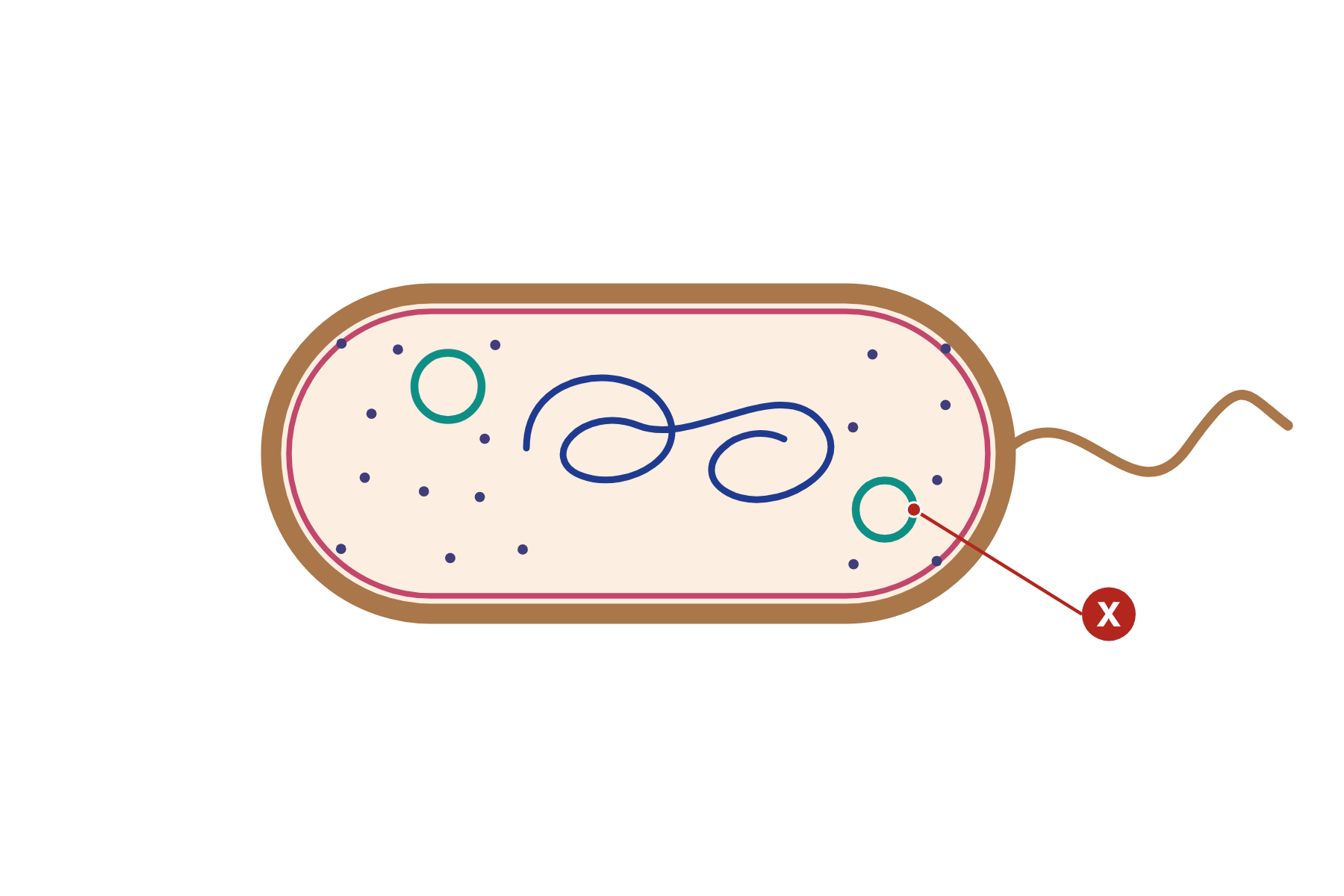 What is the structure marked X in this bacterial cell?
 A plasmid: a small extra ring of DNA that can carry genes such as antibiotic resistance.
-
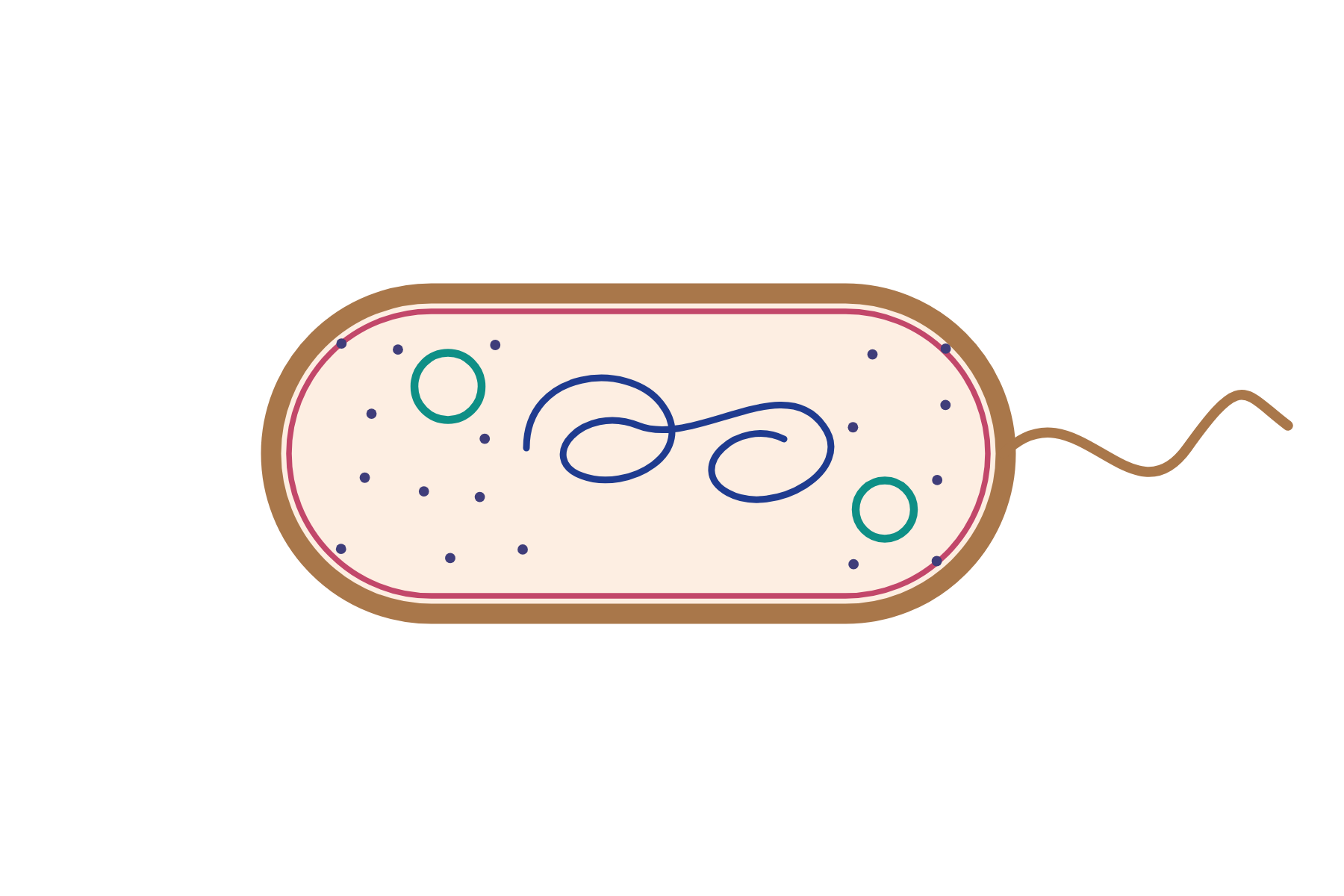 Label every structure of this bacterial cell.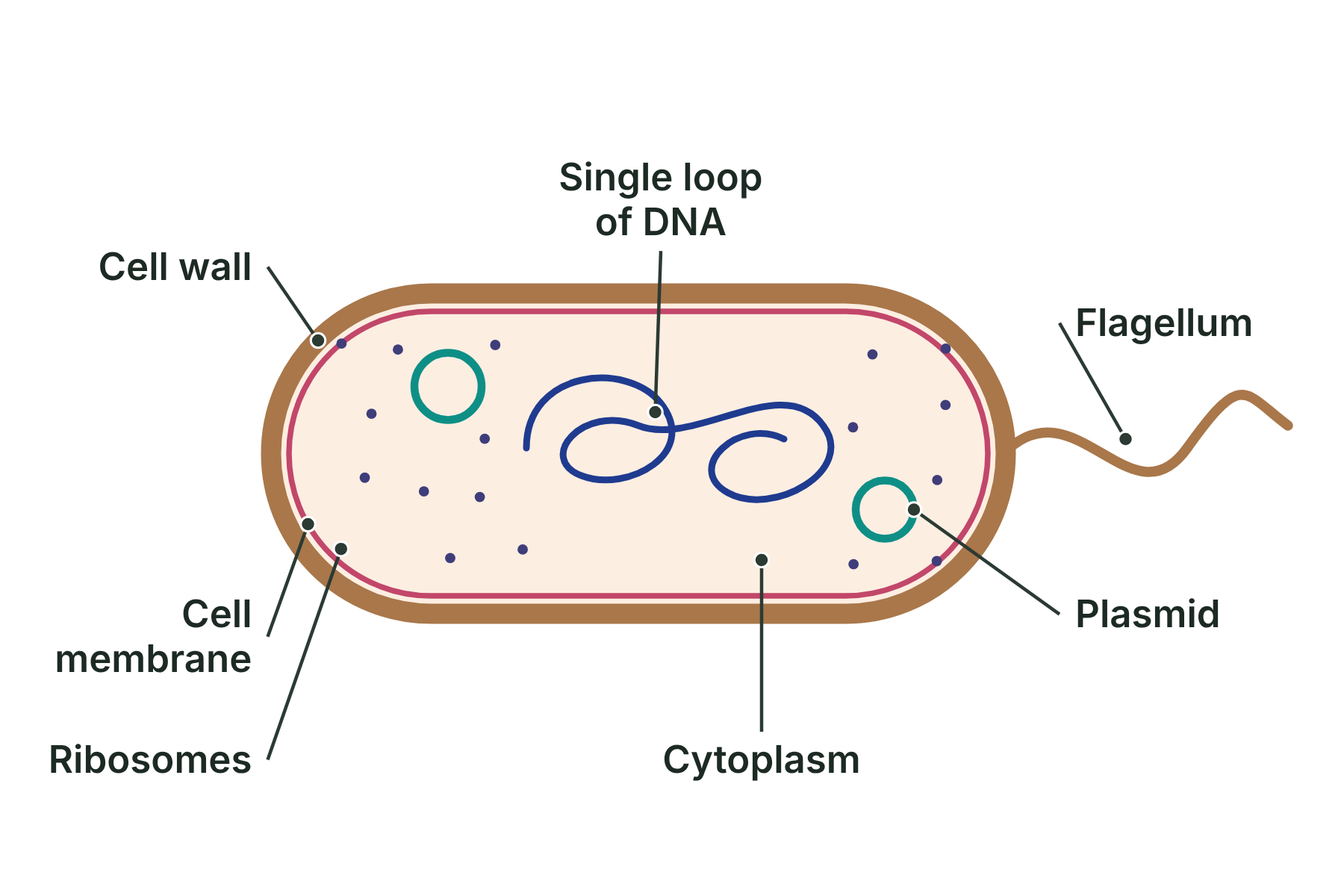
-
What does the nucleus do?
It contains the genetic material (DNA) and controls the activities of the cell.
-
What happens in the cytoplasm?
Most of the cell's chemical reactions.
-
What does the cell membrane do?
It controls which substances pass into and out of the cell.
-
What is the function of mitochondria?
They are where aerobic respiration takes place, releasing energy for the cell.
-
What do ribosomes do?
They make proteins.
-
What is the cell wall of a plant cell made from?
Cellulose.
-
What does the cell wall do?
It strengthens the cell and supports the plant.
-
What do chloroplasts contain, and why?
The green pigment chlorophyll, which absorbs light for photosynthesis.
-
What is the permanent vacuole filled with?
Cell sap, a solution of sugars and salts.
-
Name three structures found in plant cells but not in animal cells.
Cell wall, chloroplasts and a permanent vacuole.
-
Why do muscle cells contain many mitochondria?
Contraction needs a lot of energy, which mitochondria release in respiration.
-
Why do root cells have no chloroplasts?
Roots are underground where there is no light, so photosynthesis cannot happen.
-
Do mitochondria make energy?
No. They release energy from glucose in respiration. Energy cannot be made.
-
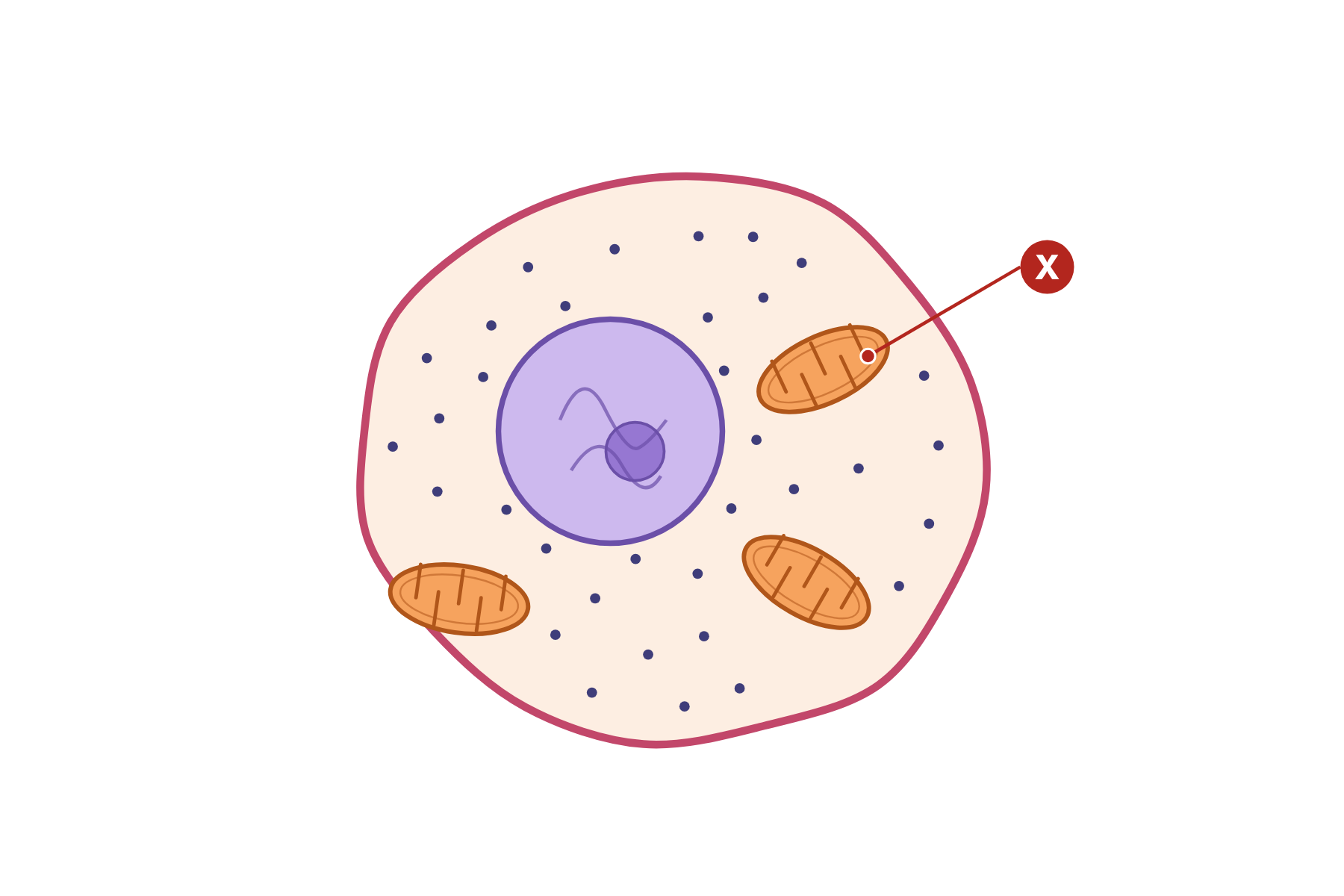 What is the structure marked X, and what does it do?
 A mitochondrion. It is where aerobic respiration takes place, releasing energy for the cell.
-
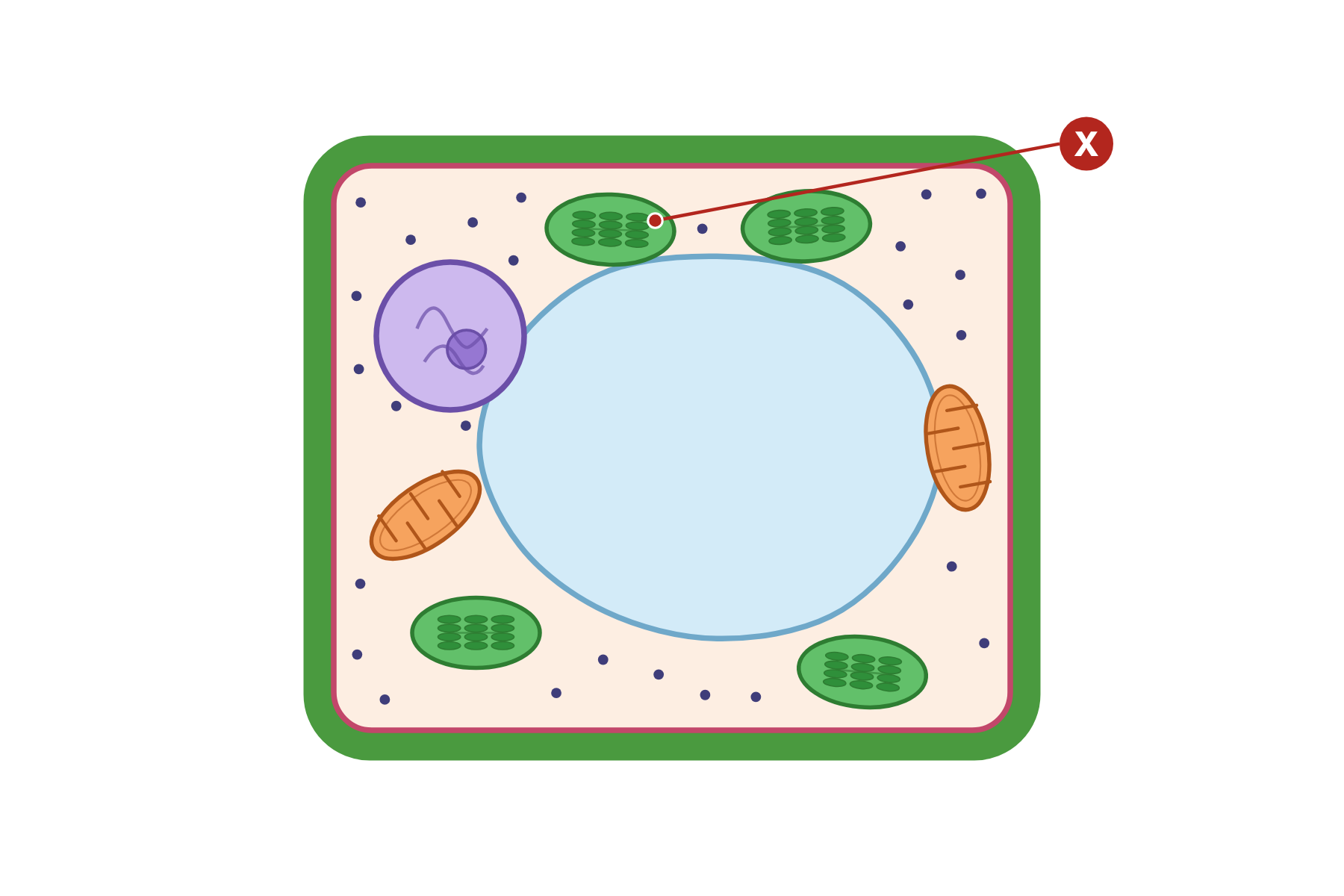 Name the structure marked X, and say what it does.
 A chloroplast. It contains chlorophyll, which absorbs light for photosynthesis.
-
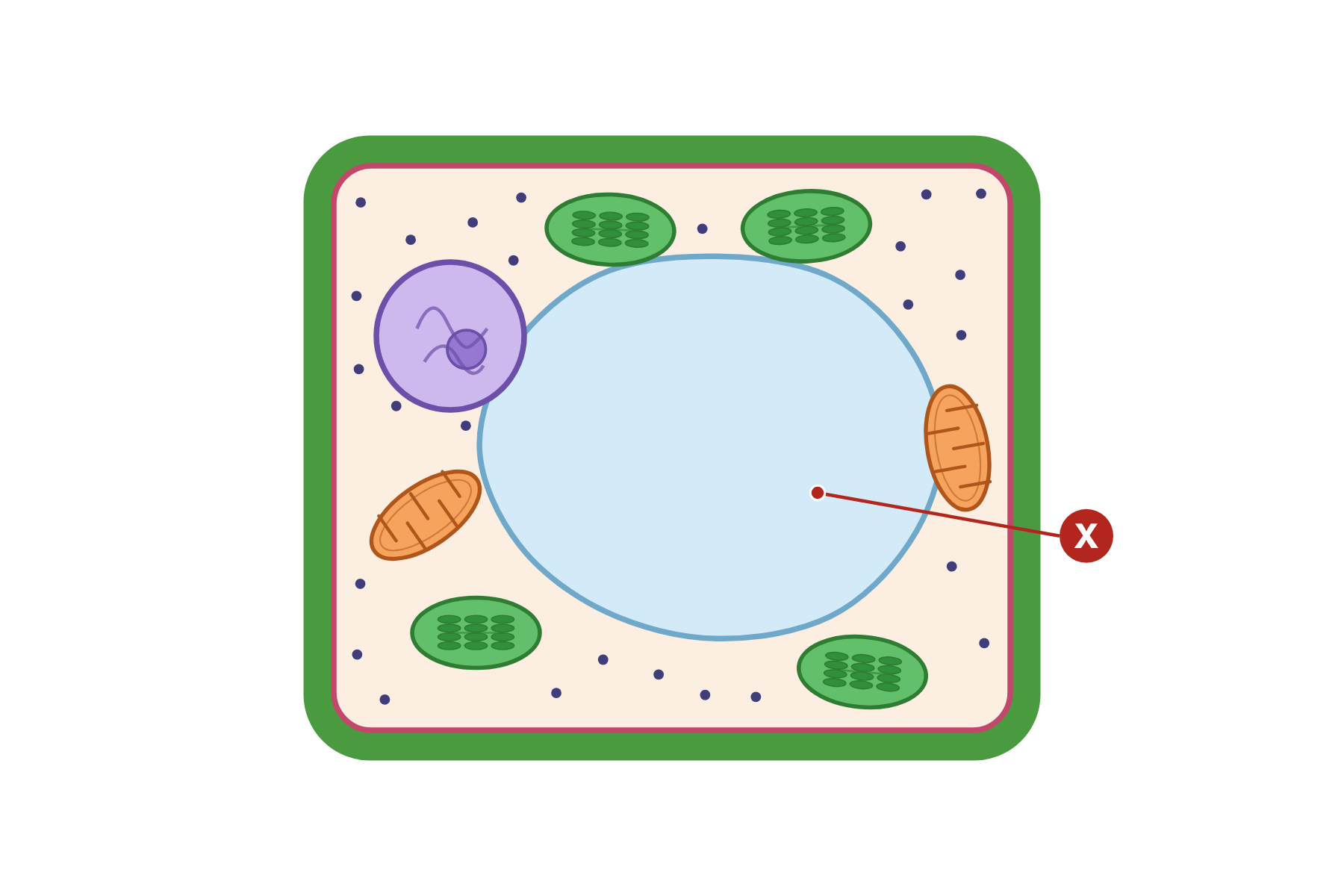 Name the large structure marked X in this plant cell. What does it contain?
 The permanent vacuole. It is filled with cell sap, a solution of sugars and salts.
-
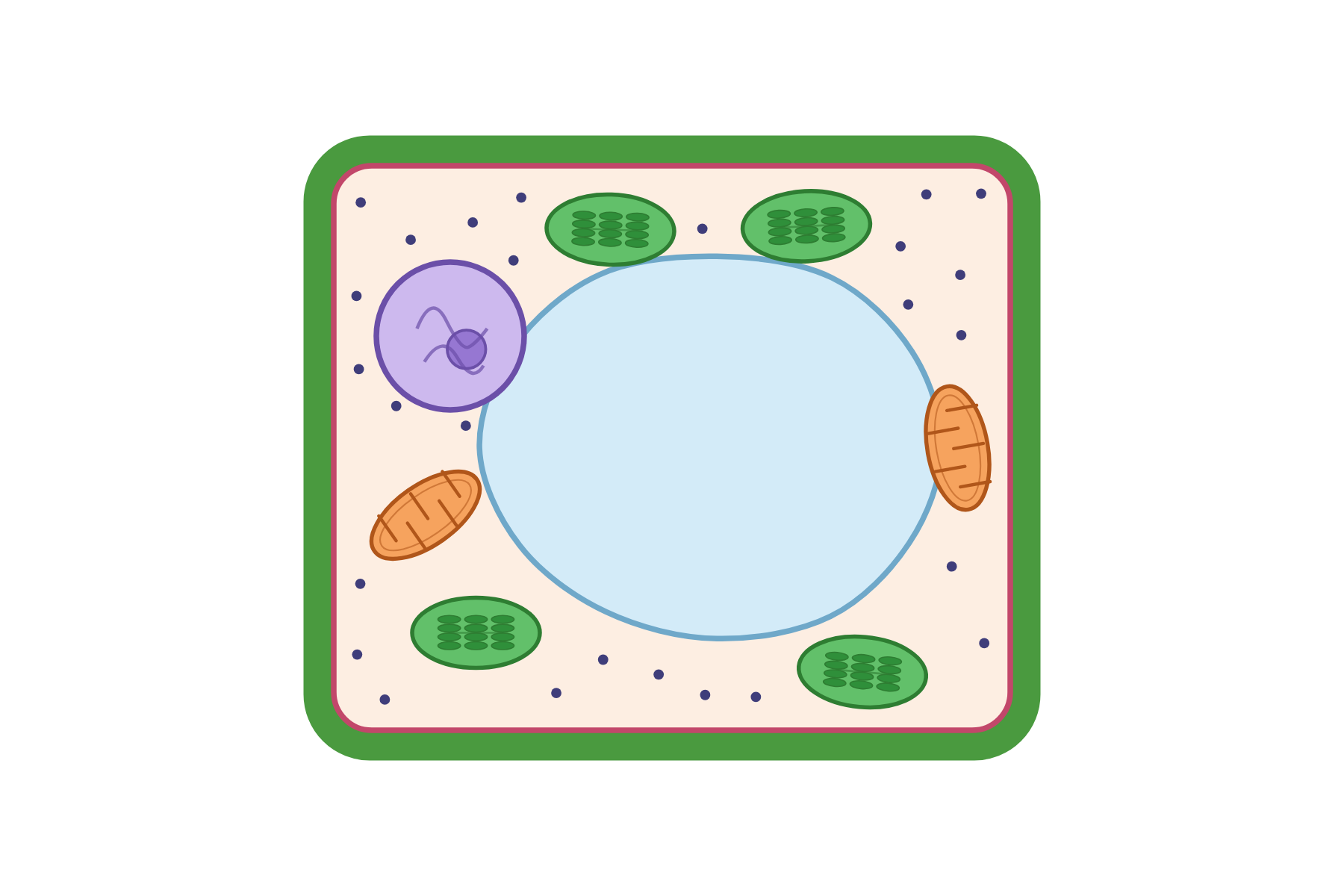 Label every structure of this plant cell.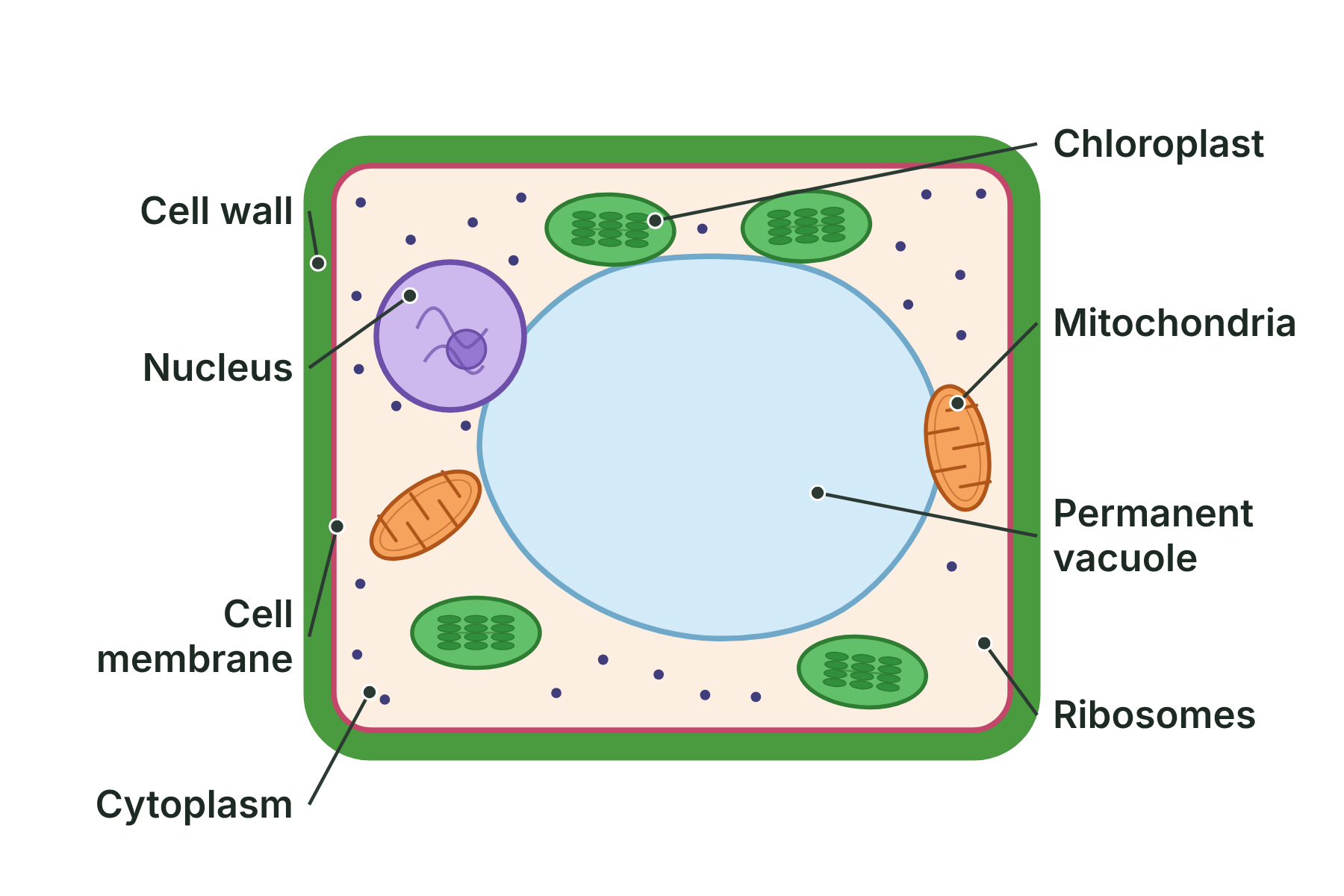
-
Write the magnification formula.
Magnification = size of image ÷ size of real object.
-
How do you find the real size from the image size and the magnification?
Real size = image size ÷ magnification.
-
What is resolution?
How clearly two points that are close together can be told apart.
-
Which has higher magnification and resolution: light or electron microscope?
The electron microscope.
-
Name two disadvantages of an electron microscope.
It is large and expensive, and the specimen must be dead.
-
Name an advantage of the light microscope.
It is cheap and easy to use, and living cells can be viewed.
-
A ×10 eyepiece and a ×40 objective lens are used. What is the total magnification?
×400.
-
How many micrometres are in 1 mm?
1000.
-
How many nanometres are in 1 µm?
1000.
-
Why is a stain used on a slide?
It makes the cell structures easier to see.
-
Which objective lens should you start with?
The lowest power one, which gives the widest view.
-
Which wheel do you use to find the image, and which to make it sharp?
The coarse focus wheel finds it, then the fine focus wheel sharpens it.
-
Why is a coverslip lowered at an angle?
To avoid trapping air bubbles.
-
How should a biological drawing be done?
Sharp pencil, clear single lines, no shading, labelled, with the magnification written.
-
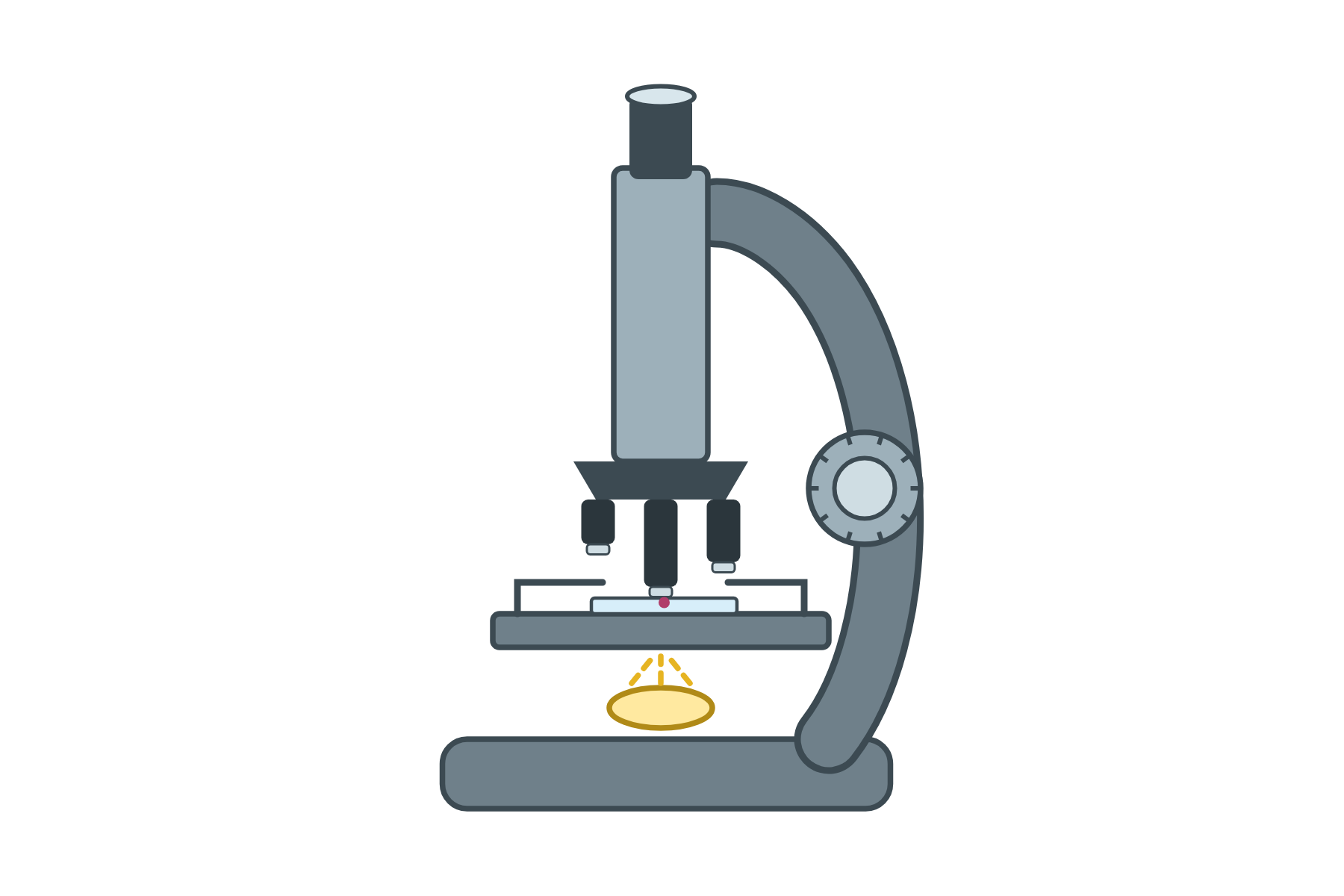 Label every part of this light microscope.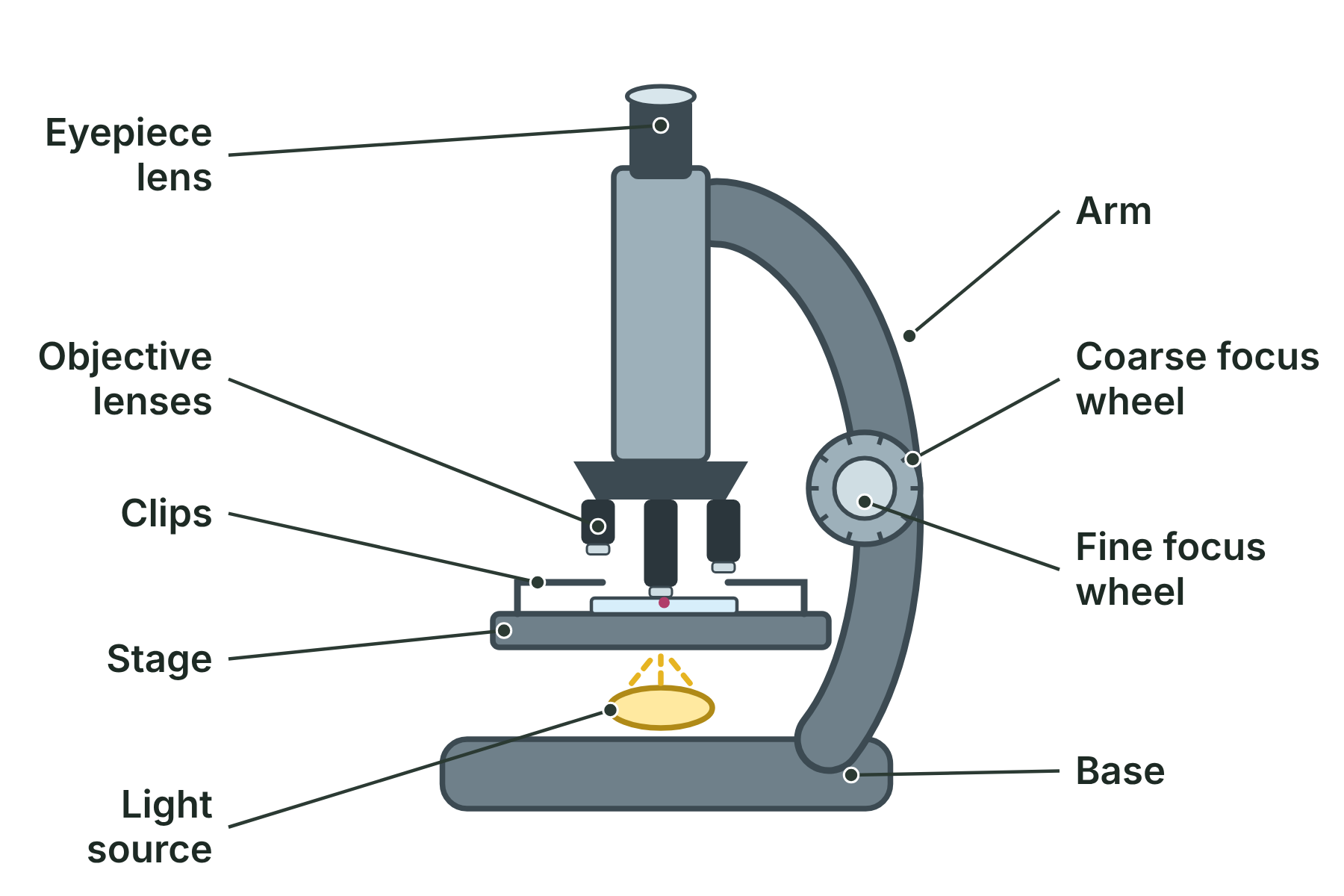
-
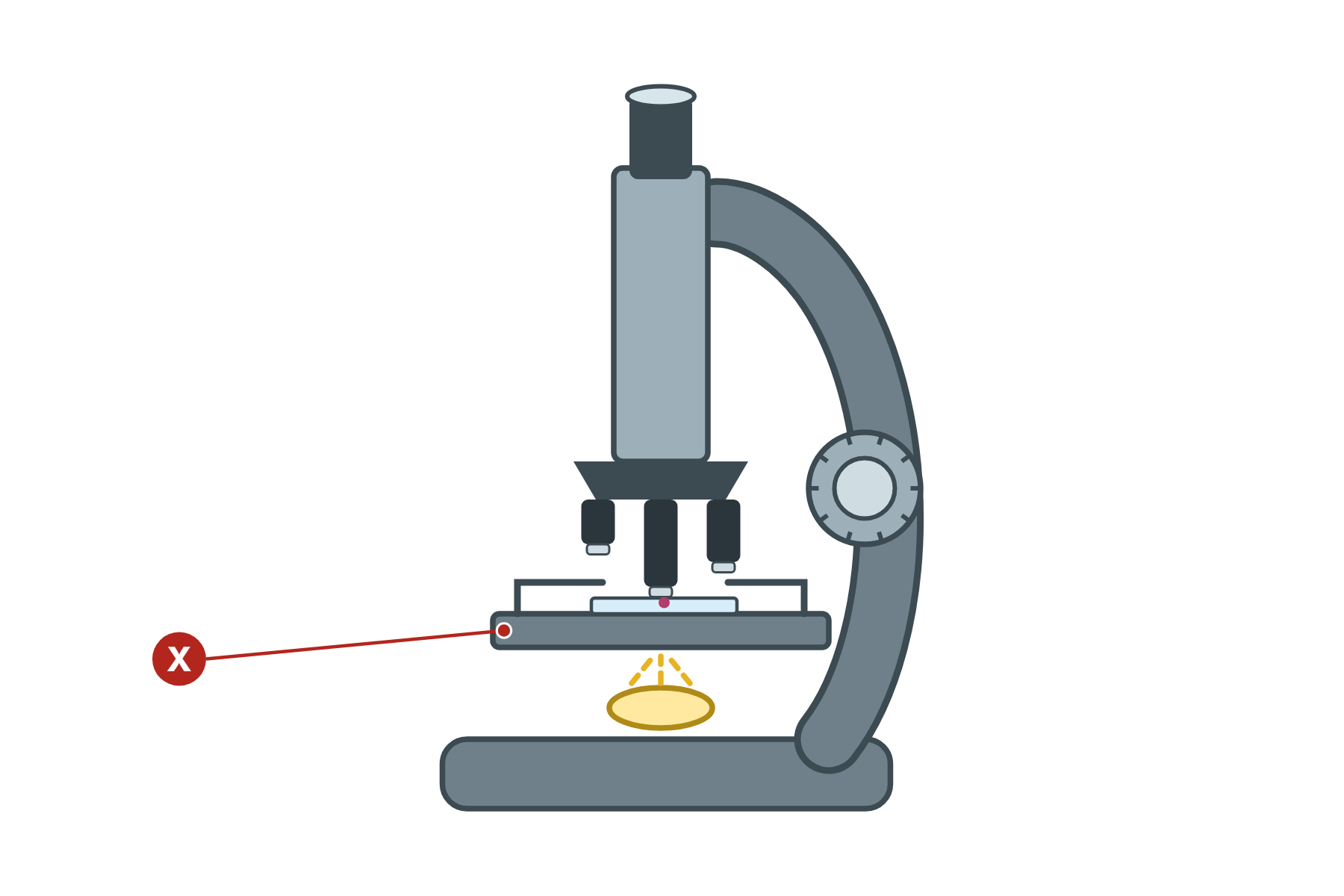 Name part X of the microscope and say what it does.
 The stage. It is the platform that holds the slide, kept in place by the clips.
-
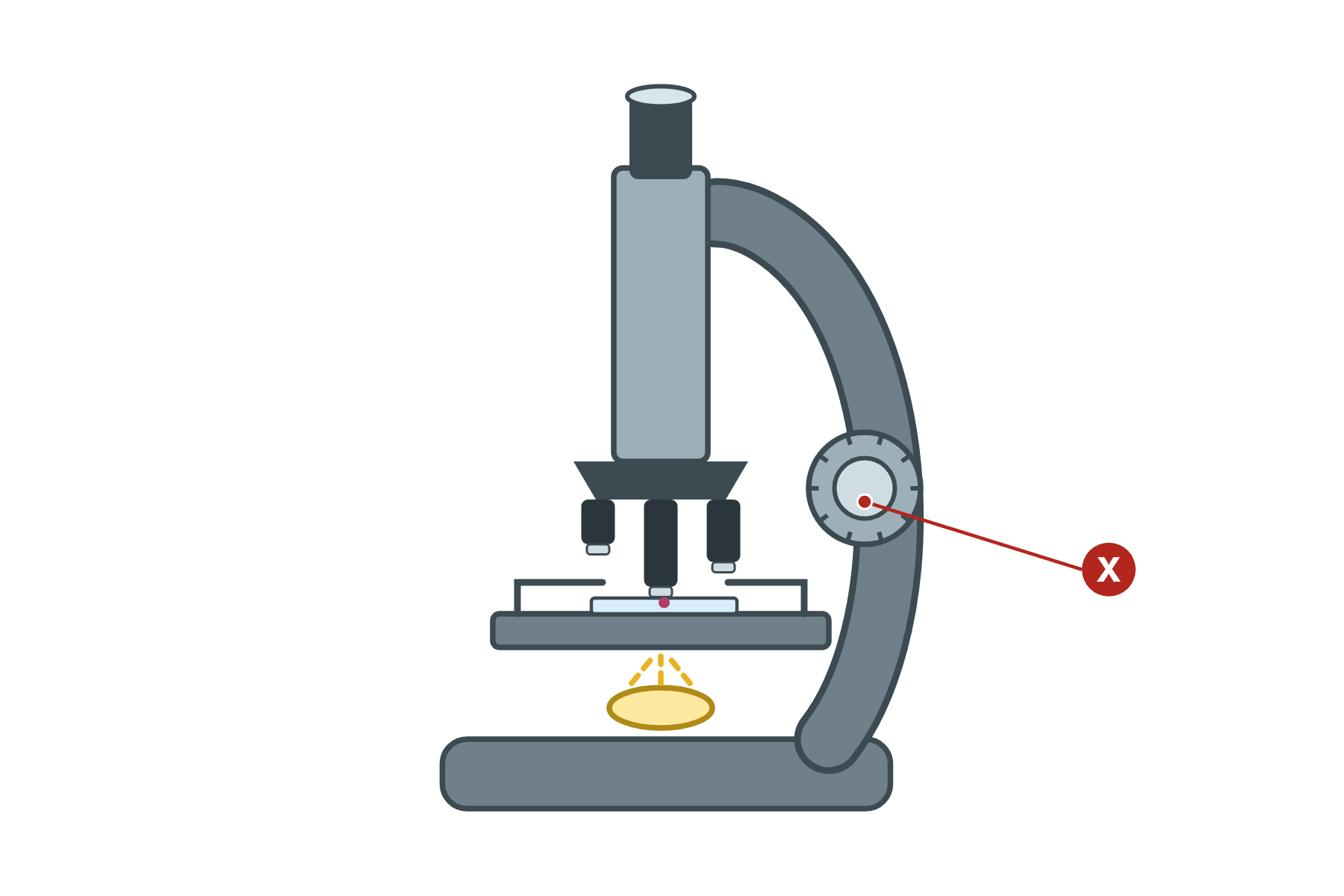 Name part X of the microscope and say what it does.
 The fine focus wheel. It makes small adjustments to give a sharp, clear image, after the coarse wheel has found it.