Flashcards · Biology · The Nervous System
The Brain
-
What does the cerebrum control?
Conscious thought, memory, language and voluntary movement.
-
What does the cerebellum control?
Coordination of movement and balance.
-
What does the medulla control?
Automatic actions such as heart rate and breathing.
-
What does the hypothalamus control?
Body temperature and water balance.
-
What is the pituitary gland?
A gland attached to the hypothalamus that releases hormones.
-
Why is the pituitary gland called the master gland?
It releases hormones that control other glands.
-
Which part of the brain is joined to the spinal cord?
The medulla.
-
Which part of the brain is at the back below the cerebrum?
The cerebellum.
-
Name one way of investigating the brain. (Higher tier)
A case study, a scan or electrical stimulation.
-
Give a difficulty of investigating the brain. (Higher tier)
It is complex and hard to reach, and there are ethical issues.
-
Why are case studies of brain damage limited? (Higher tier)
Each injury is different, and it is hard to be sure which region is responsible.
-
Why is brain damage hard to treat? (Higher tier)
Neurones repair poorly and the damage is often irreversible.
-
Why is operating on the brain risky? (Higher tier)
Parts are hard to reach and surrounding tissue can be damaged.
-
What can happen if the spinal cord is cut? (Higher tier)
Impulses cannot cross, so movement and feeling are lost below the injury.
-
Which hormone gland does the hypothalamus control?
The pituitary gland.
-
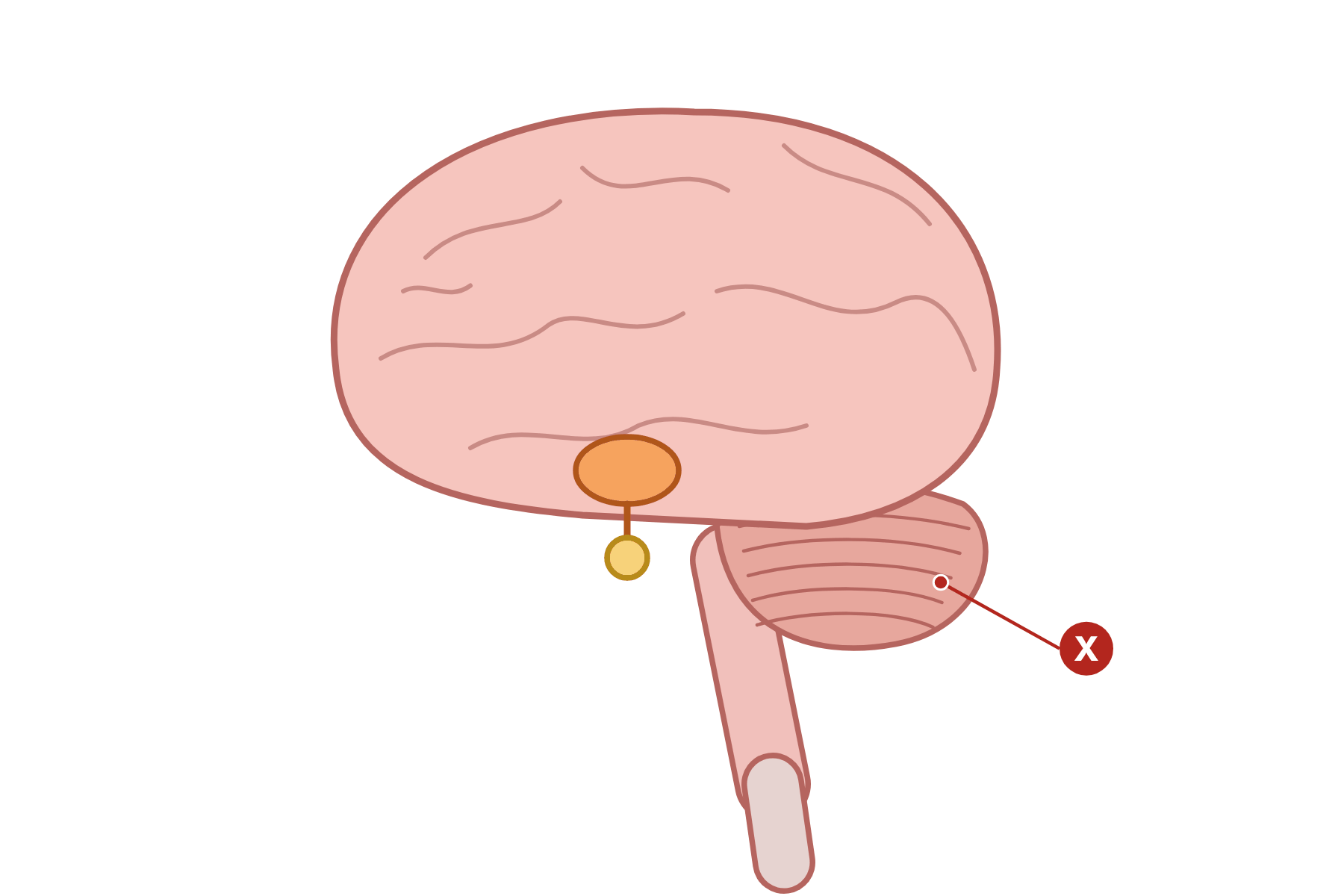 Name the part of the brain marked X and say what it controls.
 The cerebellum. It coordinates movement and keeps balance.
-
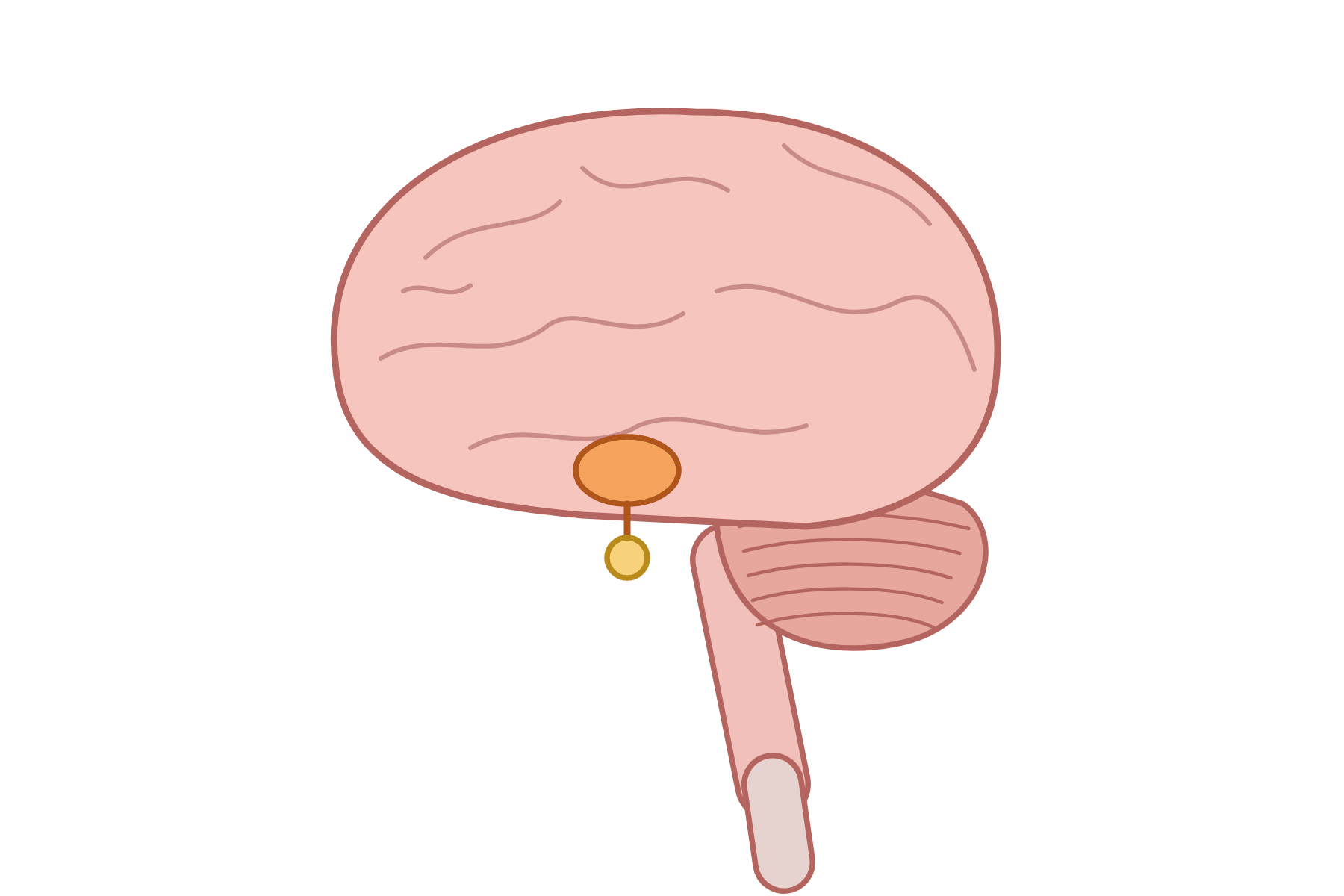 Name each part of the brain and what it controls.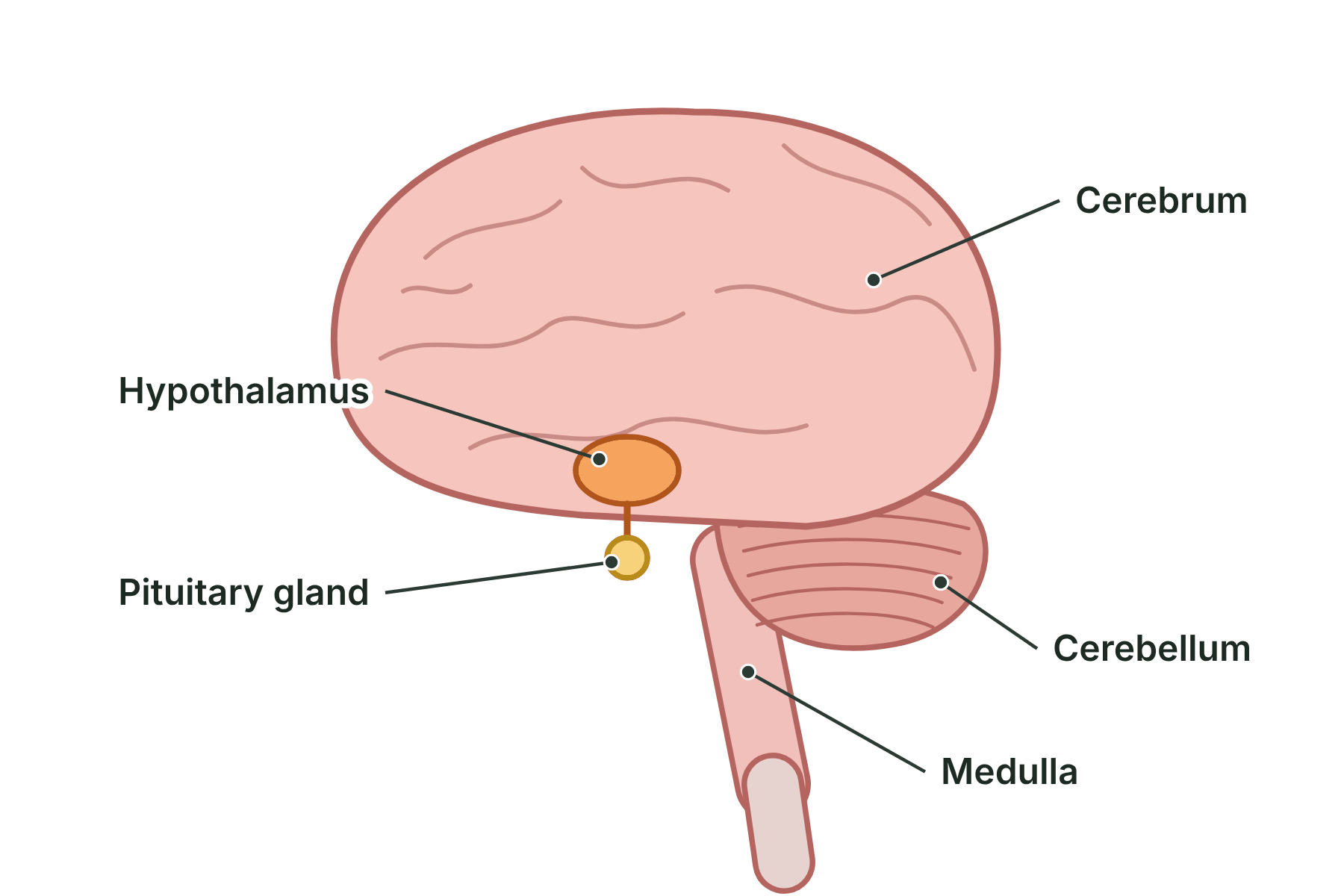
Cerebrum: thought, memory, language, movement. Cerebellum: coordination and balance. Medulla: heart rate and breathing. Hypothalamus: temperature and water balance. Pituitary gland: hormones.