Flashcards · Biology · Cell Division
Using Stem Cells
-
Name two conditions stem cells may be able to help treat.
Diabetes and paralysis.
-
What is therapeutic cloning?
Producing an embryo with the same genes as the patient, to get stem cells for treatment.
-
Why are stem cells from therapeutic cloning not rejected?
The embryo has the same genes as the patient, so the patient's body does not see the cells as foreign.
-
What is meant by rejection?
The body's immune system attacking cells that it sees as foreign.
-
Give one risk of using stem cells in treatment.
They could transfer a viral infection to the patient.
-
Why do some people object to using embryonic stem cells?
Because the embryo is destroyed, and some people have ethical or religious objections.
-
Why does using adult stem cells avoid this objection?
No embryo has to be destroyed to get them.
-
What is the drawback of adult stem cells compared with embryonic ones?
They can become fewer types of cell.
-
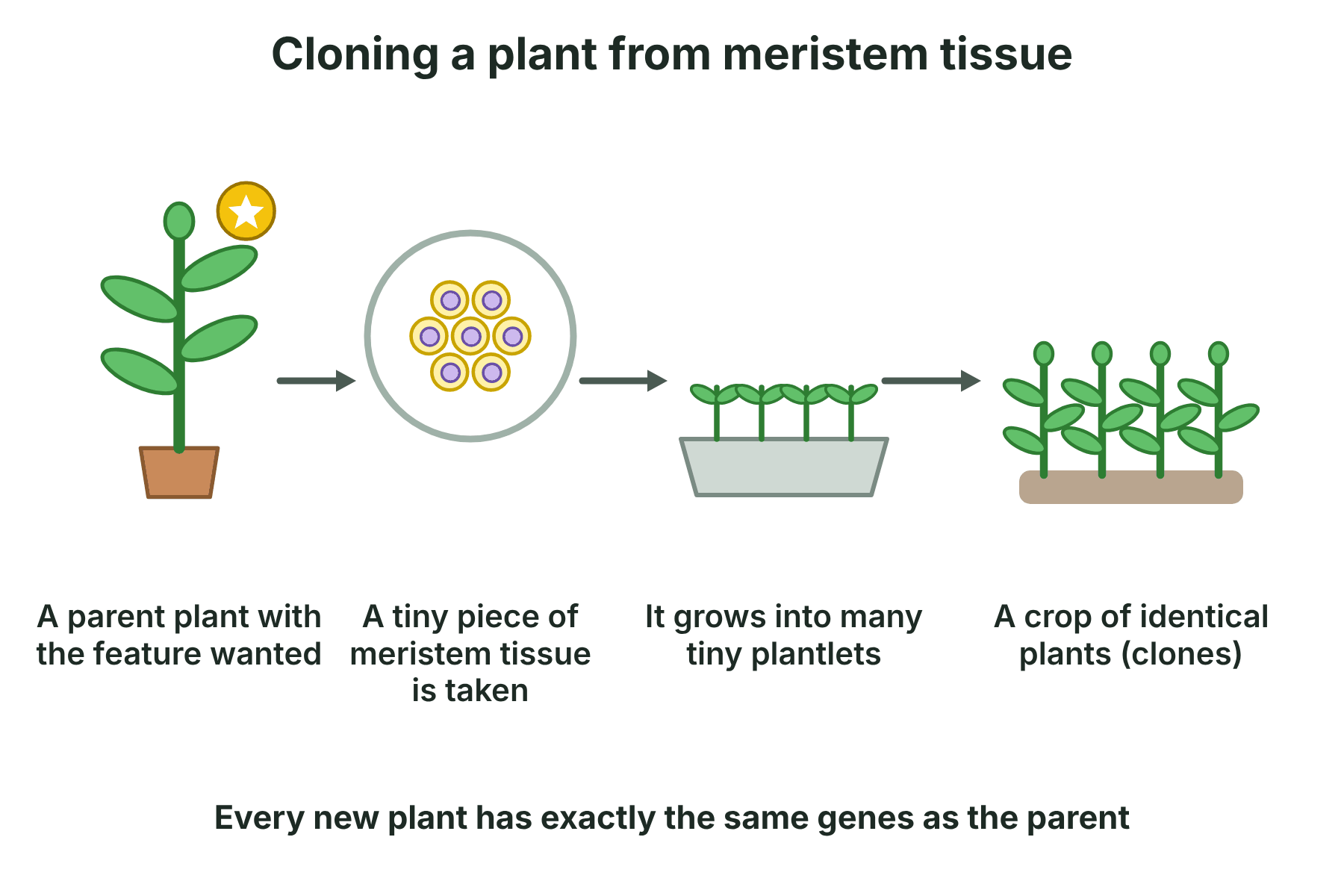
How can meristem stem cells be used?
To make clones of plants quickly and economically.
-
Give two uses of cloning plants from meristems.
Protecting rare species from extinction, and producing large numbers of disease-resistant crop plants.
-
Why are cloned plants all the same?
They are made from the parent's cells, so they have the same genes.
-
What is the main drawback of growing a crop of clones?
One disease could harm every plant, because they all have the same genes.
-
In an exam question that says "evaluate", what must you include?
Benefits, risks or objections, and a conclusion.
-
Do you need to know how stem cell techniques are carried out?
No. The specification says this is not required.
-
What does "ethical" mean in "ethical objection"?
Based on moral principles about what is right and wrong.
-
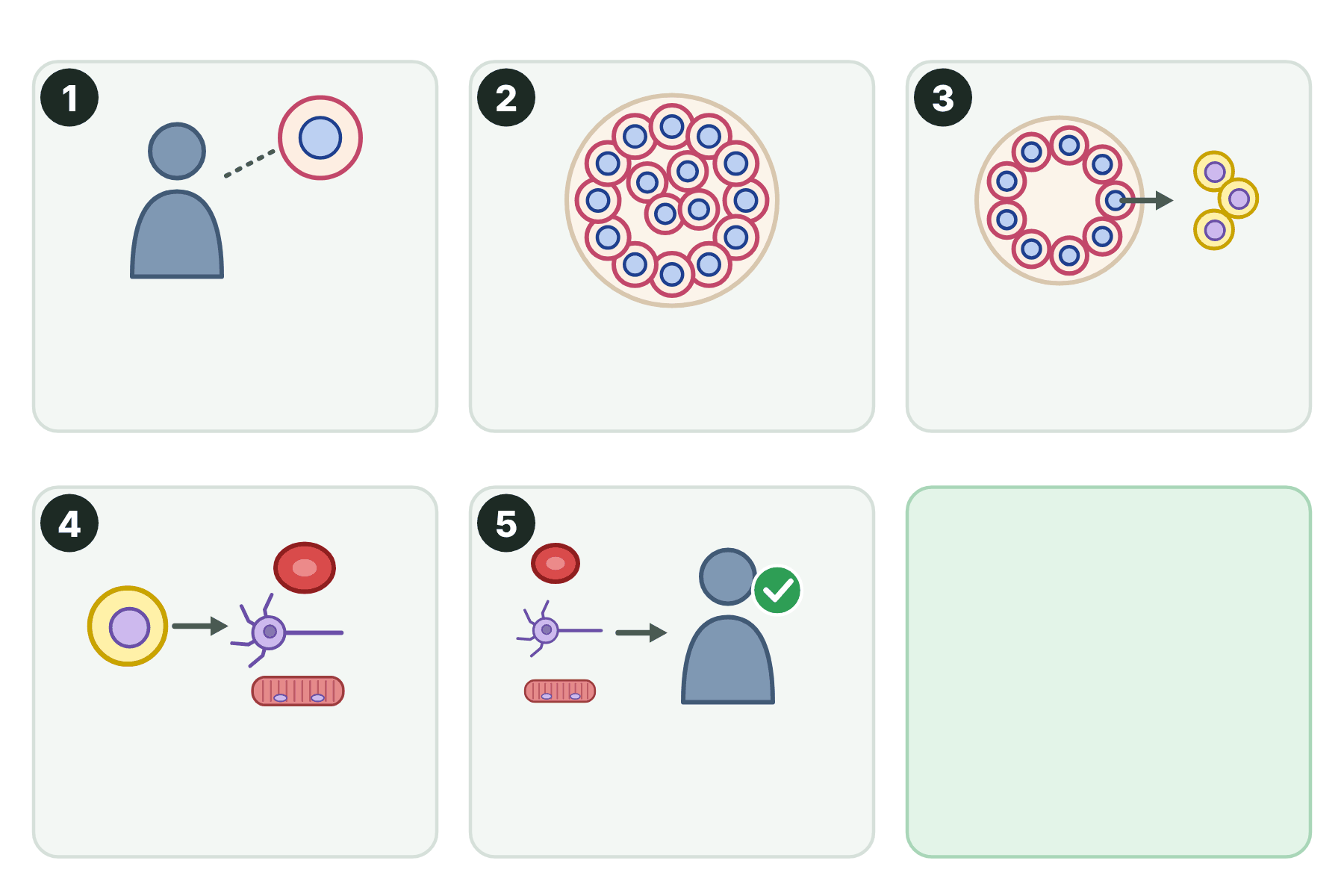 Describe what happens in each stage of therapeutic cloning.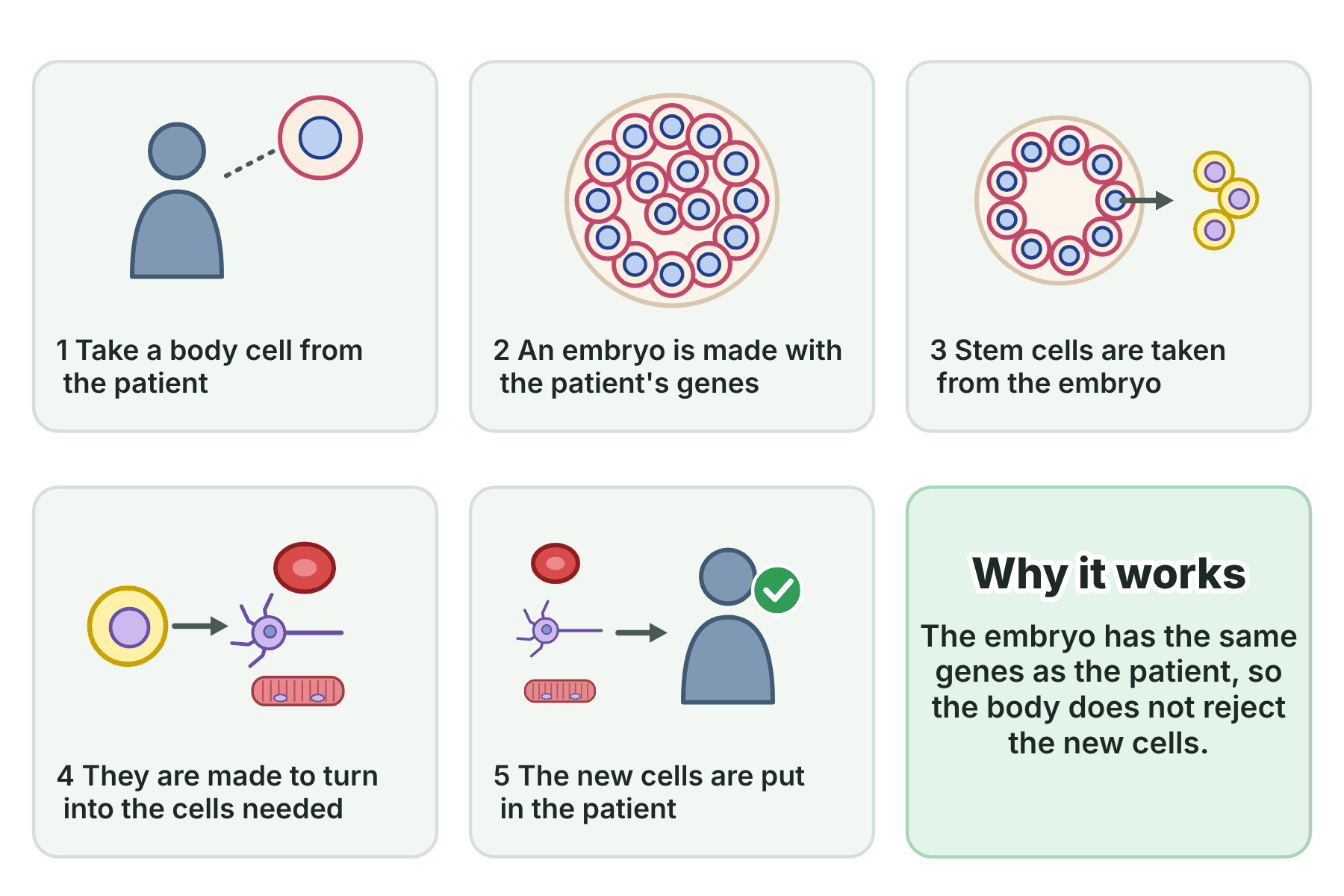
-
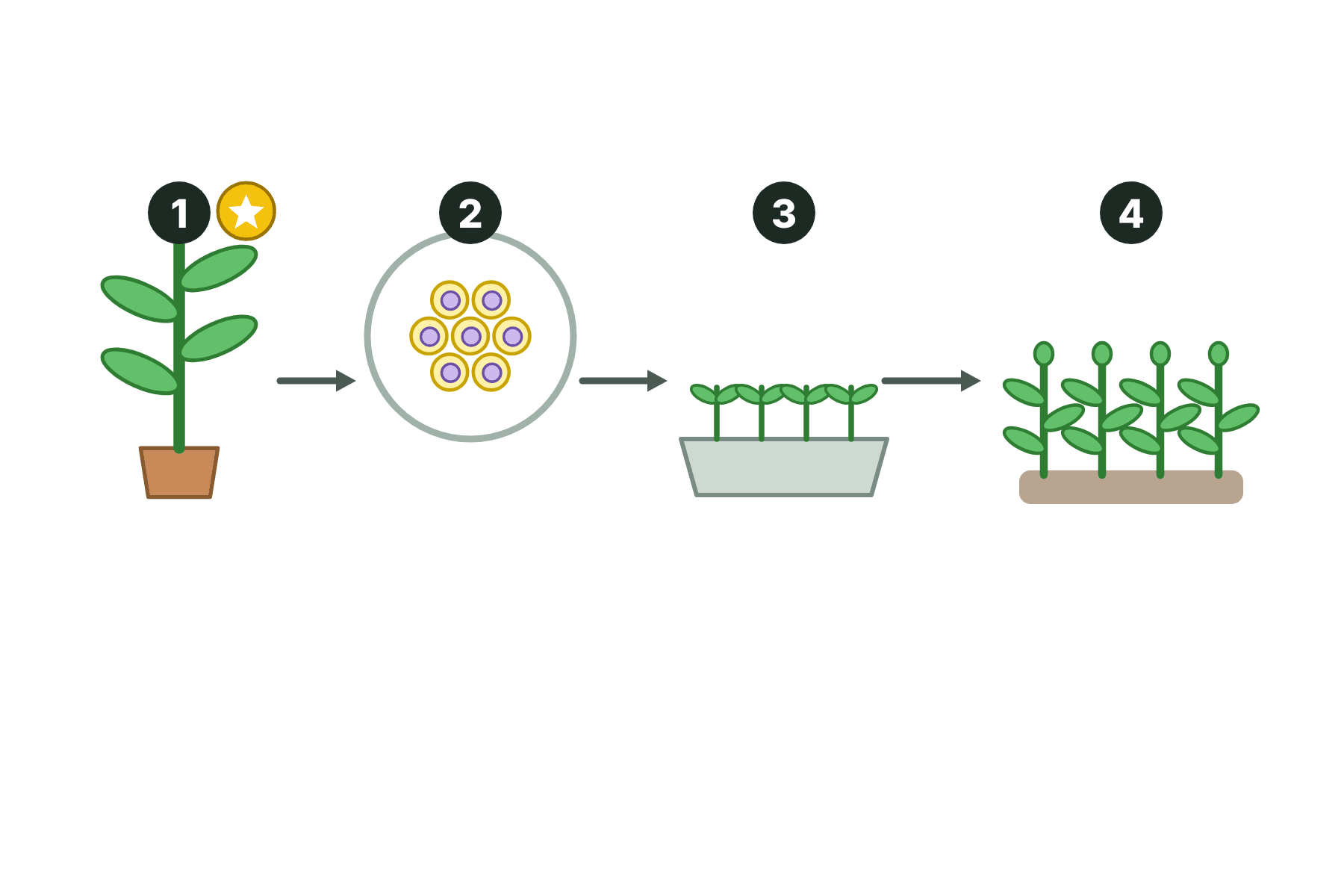 Describe how a plant can be cloned from its meristem tissue.