Maths · Functions, Sequences and Rates of Change
Knowledge organiser
The whole chapter on one page. Print it on A4 — it is already landscape — or cover a box and see how much of it you can say from memory.
Maths · Edexcel Paper 2
Functions, Sequences and Rates of Change
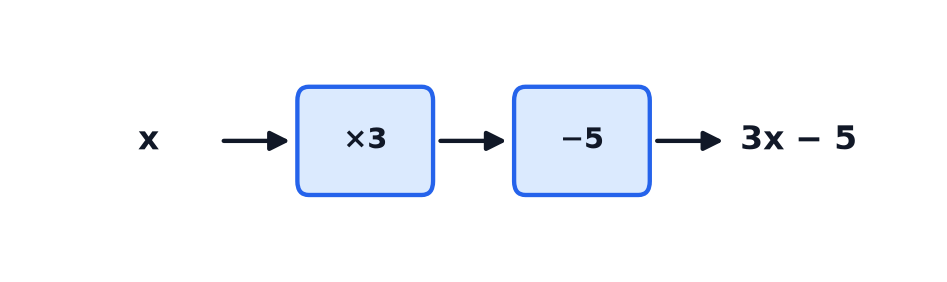
Functions and Function Notation (Higher tier)
Using f(x) notation, composite functions such as fg(x), and inverse functions.
- Function A rule that gives one output for each input.
- Function notation Writing a function as f(x).
- Input The value put into a function.
Geometric and Special Sequences
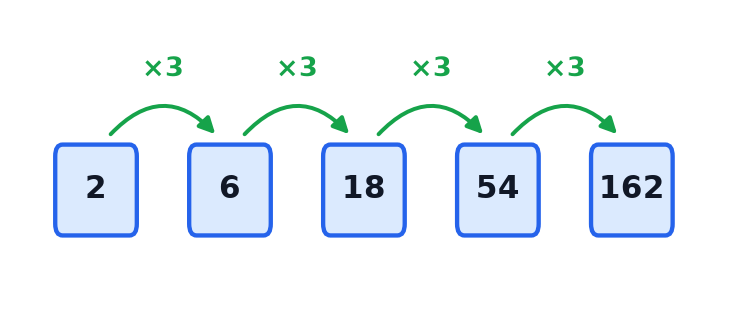
Recognising geometric and Fibonacci-type sequences, and finding the common ratio from two terms.
- Geometric sequence A sequence with a common ratio between terms.
- Common ratio The number each term is multiplied by.
- Term-to-term rule A rule that gives each term from the one before it.
Iteration (Higher tier)
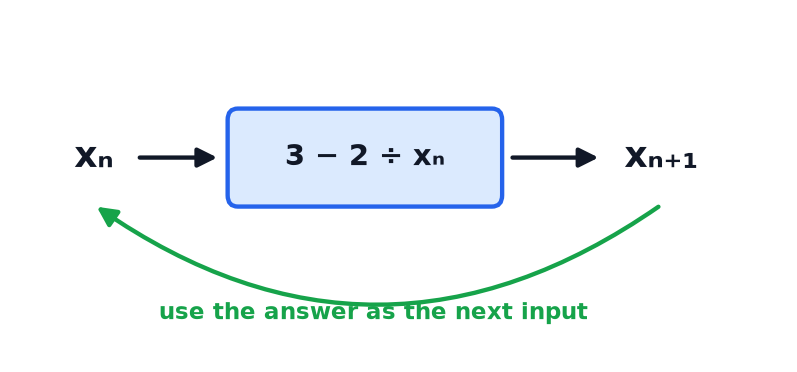
Using iterative formulae, rearranging equations, and finding roots by a change of sign and trial and improvement.
- Iteration A process that is repeated, using each output as the next input.
- Iterative formula A formula that gives the next value from the current one.
- Limit The value that the terms of an iteration approach.
Rates of Change and Areas Under Graphs (Higher tier)
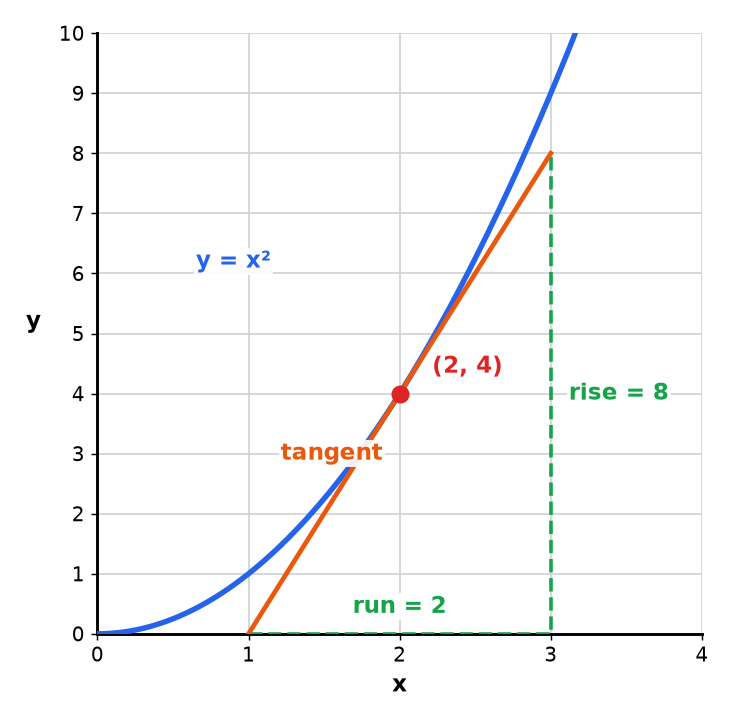
Finding gradients of curves with tangents, average rates of change, and estimating areas under graphs with trapezia.
- Tangent A straight line that touches a curve at one point.
- Chord A straight line joining two points on a curve.
- Gradient A measure of the steepness of a line.
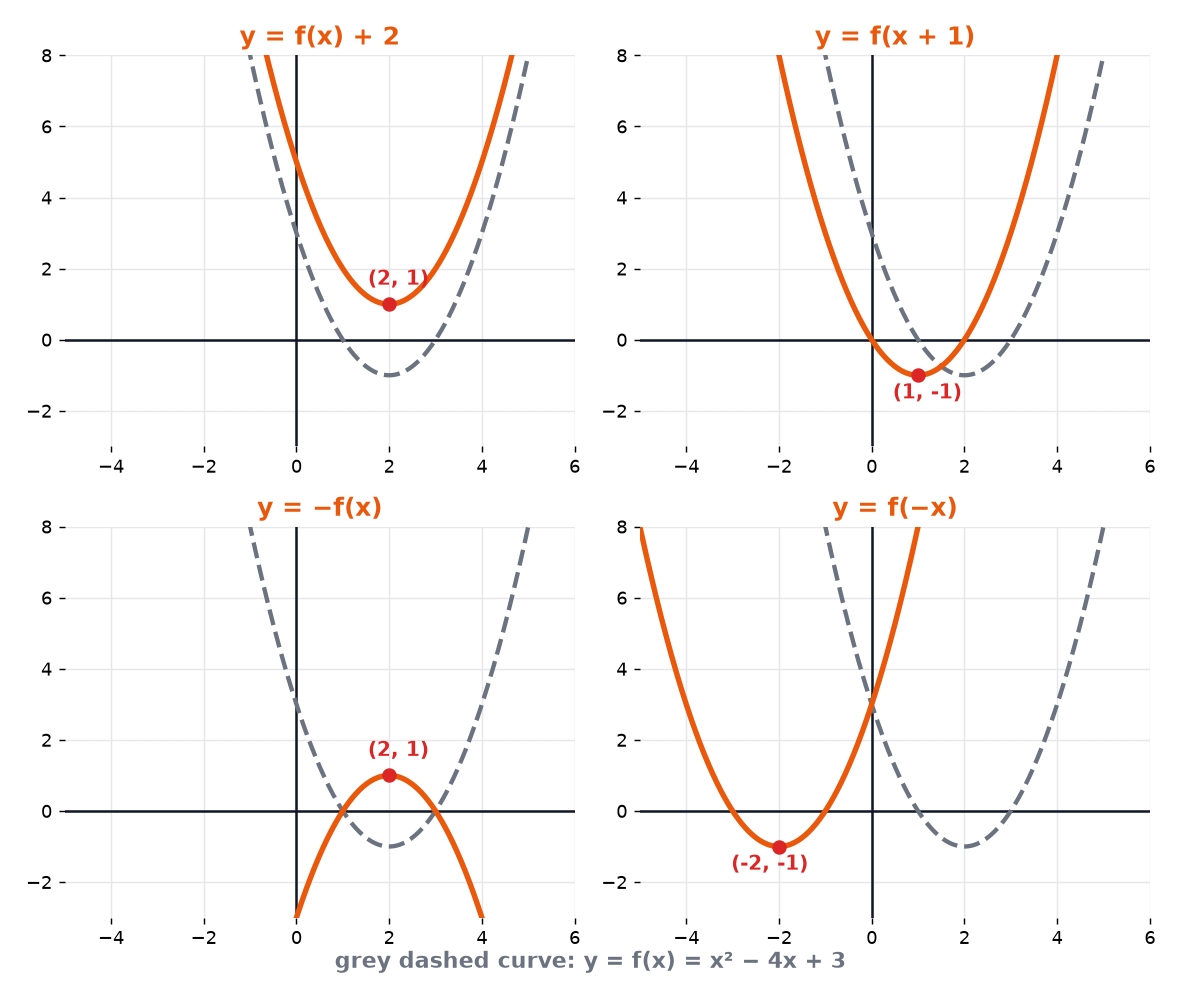
Transformations of Graphs (Higher tier)
Sketching and describing translations and reflections of graphs, including trigonometric graphs.
- Transformation A change to the position or shape of a graph.
- Translation A movement of a graph without turning or flipping it.
- Reflection A flip of a graph in a line, such as an axis.