Maths · Number Without a Calculator
Knowledge organiser
The whole chapter on two pages. Print it on A4 — they are already landscape — or cover a box and see how much of it you can say from memory.
Maths · OCR Paper 2
Number Without a Calculator
Place Value, Negatives and the Four Operations
How to read, order and calculate with whole numbers, decimals and negative numbers by hand, and how BIDMAS decides what to do first.
- Estimate An approximate answer found by rounding the numbers in a calculation first.
- Place value The value a digit has because of the column it is in.
- Integer A whole number, which may be positive, negative or zero.
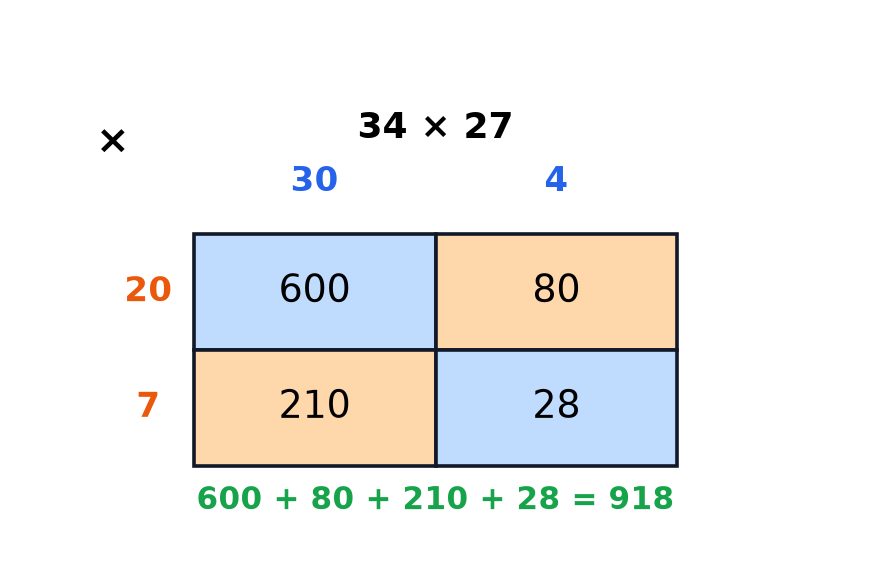
Common slips with negatives
- What students write 5 - (-3) = 2; (-4)^2 = -16; 3 × -5 = -15
- What is correct 5 - (-3) = 5 + 3 = 8; (-4)^2 = (-4)×(-4) = 16; (-3)×(-5) = 15 because the signs are the same
Factors, Multiples and Primes
Prime factors, HCF and LCM: how to find them without a calculator and how to use them to solve problems.
- Common factor A number that is a factor of two or more different numbers.
- Factor A whole number that divides exactly into another number.
- Multiple A number in the times table of a given number.
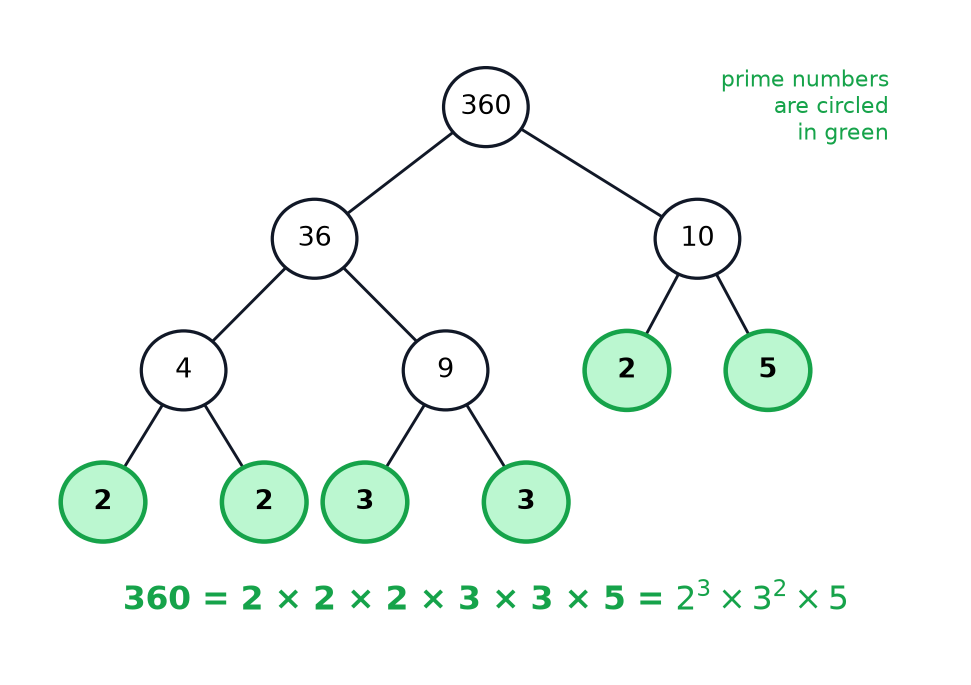
HCF or LCM?
- Highest Common Factor The biggest number that divides into both numbers; Never bigger than the smaller number; Use it to share things into equal groups or simplify a fraction
- Lowest Common Multiple The smallest number that both numbers divide into; Never smaller than the bigger number; Use it for events that repeat at different intervals
Fractions
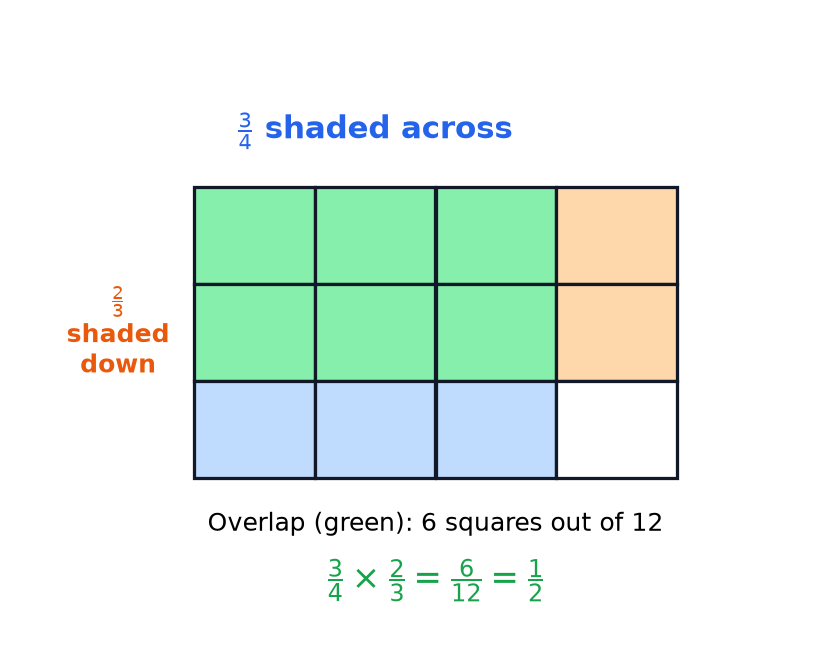
Add and subtract over a common denominator; multiply and divide with no common denominator at all.
- Proportion A part compared with the whole, written as a fraction.
- Numerator The top number of a fraction, which counts the parts taken.
- Denominator The bottom number of a fraction, which shows how many equal parts make the whole.
Maths · OCR Paper 2
Number Without a Calculator continued
Common fraction mistakes
- What students write \dfrac{1}{2} + \dfrac{1}{3} = \dfrac{2}{5}; \dfrac{2}{3} ÷ \dfrac{4}{5} = \dfrac{8}{15}; 3\dfrac{1}{2} × 2 = 6\dfrac{1}{2}
- What is correct \dfrac{1}{2} + \dfrac{1}{3} = \dfrac{3}{6} + \dfrac{2}{6} = \dfrac{5}{6}; \dfrac{2}{3} ÷ \dfrac{4}{5} = \dfrac{2}{3} × \dfrac{5}{4} = \dfrac{5}{6}; 3\dfrac{1}{2} × 2 = \dfrac{7}{2} × 2 = 7
Fractions, Decimals and Percentages
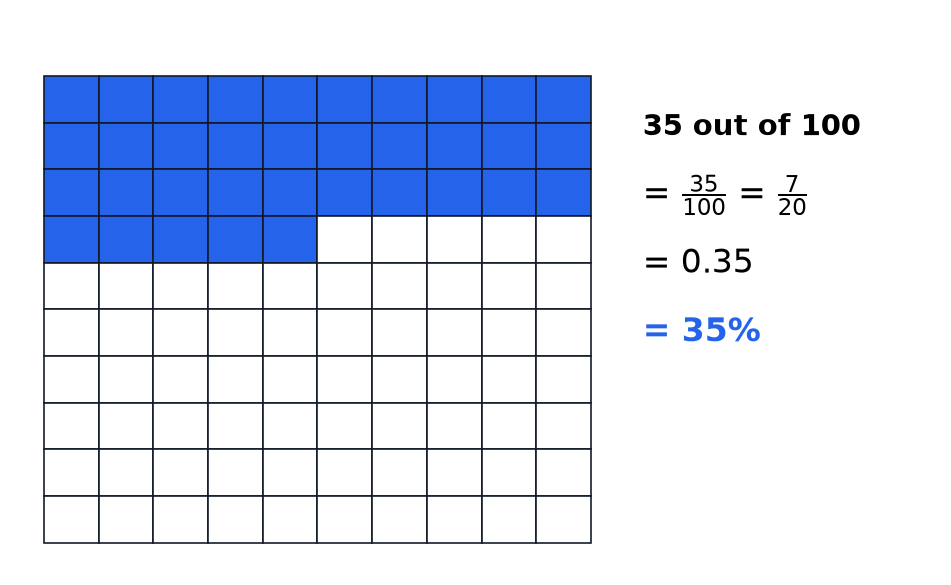
Converting between the three forms, finding percentages by hand, and solving percentage change and reverse percentage problems.
- Recurring decimal A decimal with one or more digits that repeat for ever, shown with a dot above them.
- Percentage A number written as a fraction of 100, using the symbol %.
- Per cent Out of every hundred.
Increase by 20% or undo a 20% increase?
- Increase by 20% Multiplier is 1.2; Multiply the original by 1.2; Used when you know the starting amount
- Reverse a 20% increase The same multiplier 1.2 is used, but the other way; Divide the new amount by 1.2; Used when you are given the final amount
Powers, Roots and Indices
Squares, cubes and roots to recall, the laws of indices, and zero, negative and fractional powers.
- Power of 10 A number such as 10^2, 10^3 or 10^{-2}, where 10 is raised to a whole-number index.
- Index (power) The small raised number that shows how many times the base is multiplied by itself.
- Indices The plural of index.
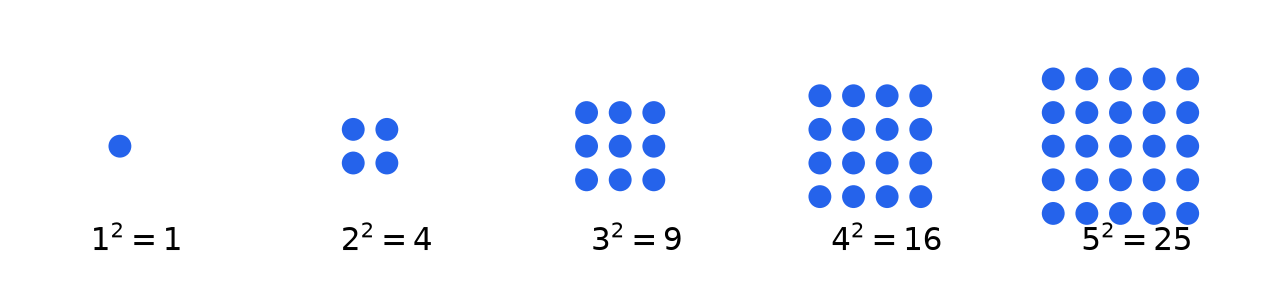
Adding indices or multiplying them?
- Multiplying powers with the same base a^m × a^n = a^{m+n}; Example: x^4 × x^5 = x^9; Add the indices
- A power of a power (a^m)^n = a^{mn}; Example: (x^4)^5 = x^{20}; Multiply the indices