Biology · Defence Against Disease
Knowledge organiser
The whole chapter on two pages. Print it on A4 — they are already landscape — or cover a box and see how much of it you can say from memory.
Biology · AQA Paper 1
Defence Against Disease
Human Defence Systems
The skin, nose, airways and stomach stop most pathogens getting in. White blood cells destroy the rest.
- Non-specific defence A defence that works in the same way against all pathogens, such as the skin.
- Immune system The white blood cells that destroy pathogens inside the body.
- Phagocytosis The engulfing and digestion of a pathogen by a white blood cell.
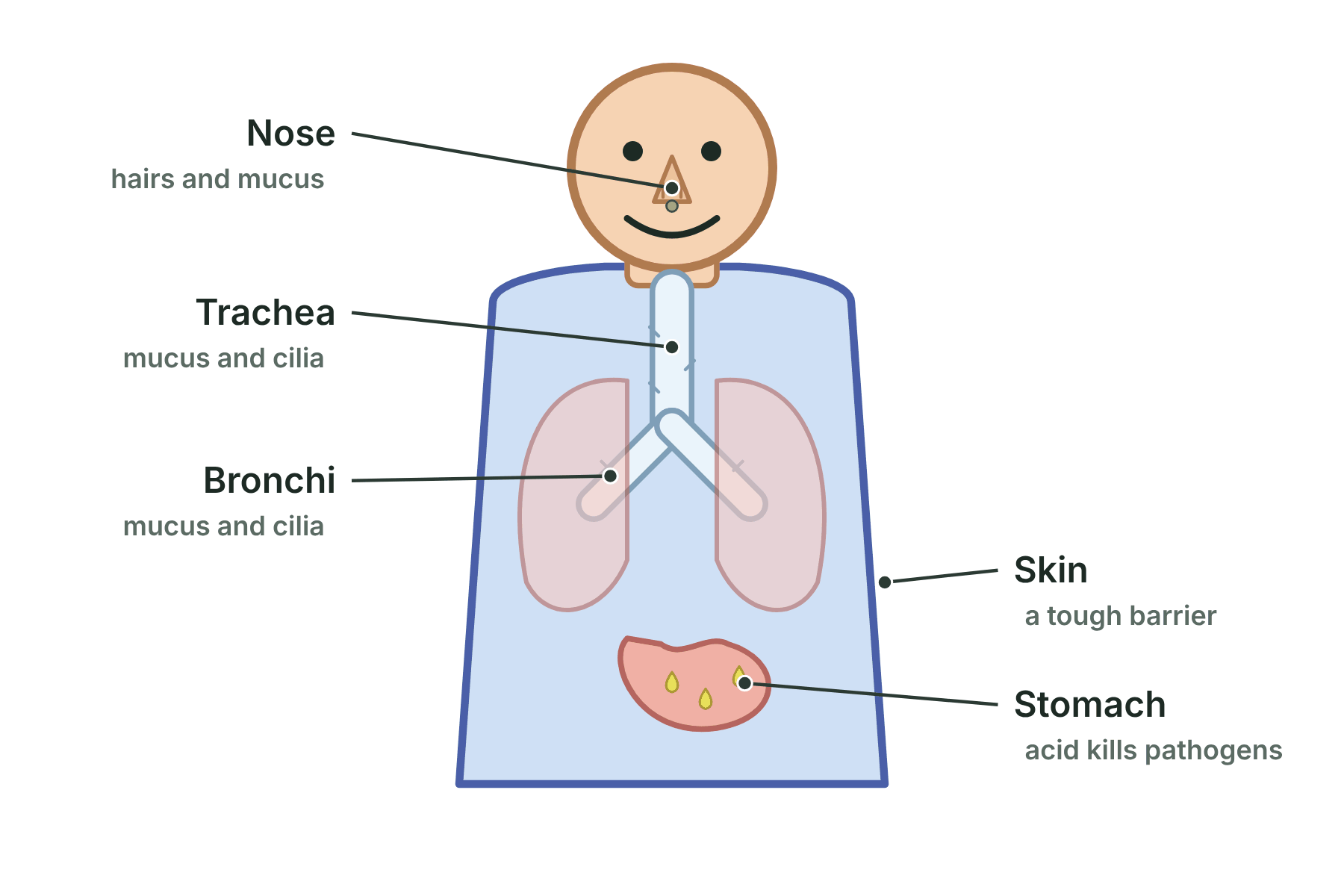
Non-specific defences and the immune system compared
- Non-specific defences The same against every pathogen; The first line of defence; Skin, mucus, cilia and stomach acid
- The immune system Antibodies fit one antigen only; Attacks pathogens that get in; Phagocytes, antibodies and antitoxins
Making the right antibodies
- A pathogen enters Its surface carries antigens that are different from the body's own.
- Lymphocytes respond A lymphocyte with a matching antibody starts to divide.
- Antibodies are released The cells make large numbers of the antibody that fits that…
- The pathogen is destroyed The antibodies stick to the pathogens, and phagocytes engulf them.
Vaccination
A vaccine contains dead or inactive pathogens, which trigger the production of antibodies without making you ill.
- Vaccination Introducing a dead or inactive form of a pathogen into the body to stimulate the production of antibodies.
- Vaccine The preparation containing dead or inactive pathogens that is used in vaccination.
- Immune Protected against a disease because the body can make the right antibodies quickly.
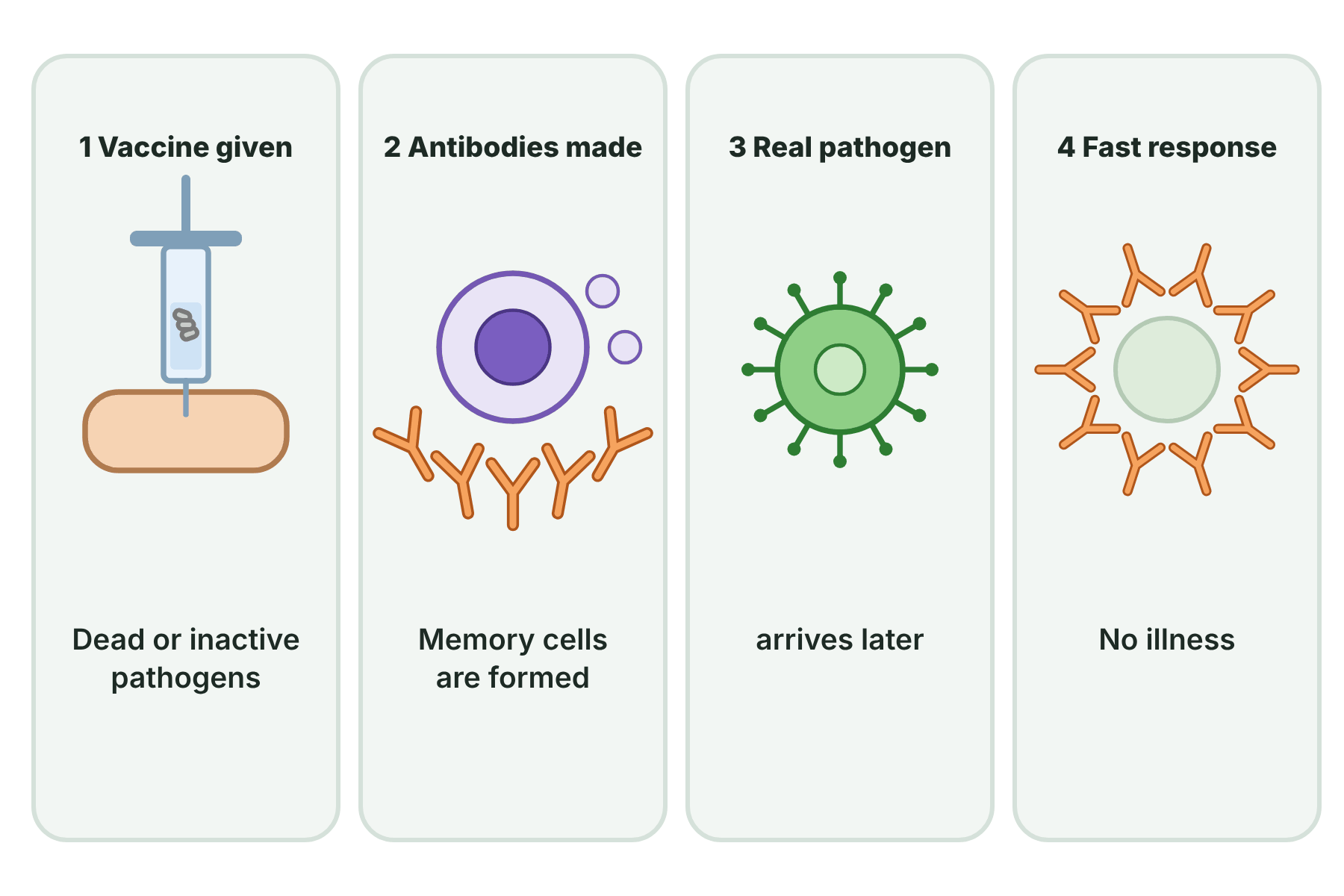
The immune response after vaccination
- Vaccination A small amount of dead or inactive pathogen is injected.
- Antibodies are made The white blood cells recognise the antigens and make antibodies.
- Memory cells Some white blood cells stay in the body.
- Later infection The same pathogen enters the body.
Biology · AQA Paper 1
Defence Against Disease continued
Antibiotics and Painkillers
Antibiotics kill bacteria. They do not kill viruses. Painkillers treat symptoms but do not kill pathogens.
- Antibiotic A medicine, such as penicillin, that kills bacteria inside the body.
- Penicillin The first antibiotic, discovered by Alexander Fleming.
- Painkiller A medicine that reduces pain and other symptoms, but does not kill pathogens.
Antibiotics and painkillers compared
- Antibiotics Kill bacteria inside the body; Cure bacterial disease; Specific to certain bacteria
- Painkillers Reduce pain and other symptoms; Do not kill pathogens; Work for many illnesses
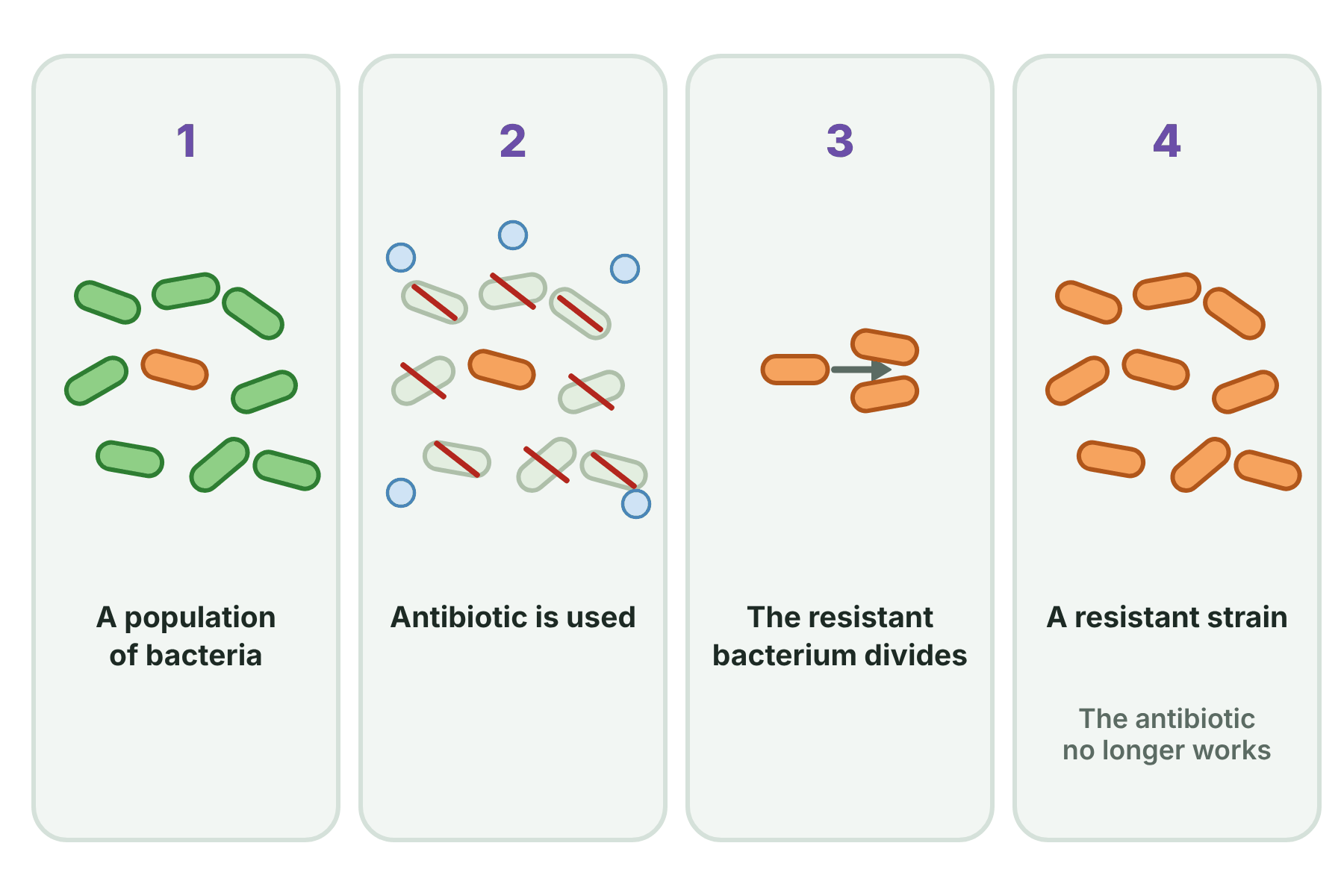
How a resistant strain arises
- Variation Bacteria mutate, and by chance one has a gene that makes it…
- The antibiotic is used It kills the non-resistant bacteria but not the resistant one.
- Survival The resistant bacterium survives and reproduces rapidly, passing…
- A resistant strain Soon most of the bacteria in the patient.
Discovery and Development of Drugs
A drug must be shown to be safe and to work before it is used on patients.
- Toxicity How harmful a drug is to the body.
- Efficacy How well a drug works to treat a disease.
- Dose The amount of a drug given.
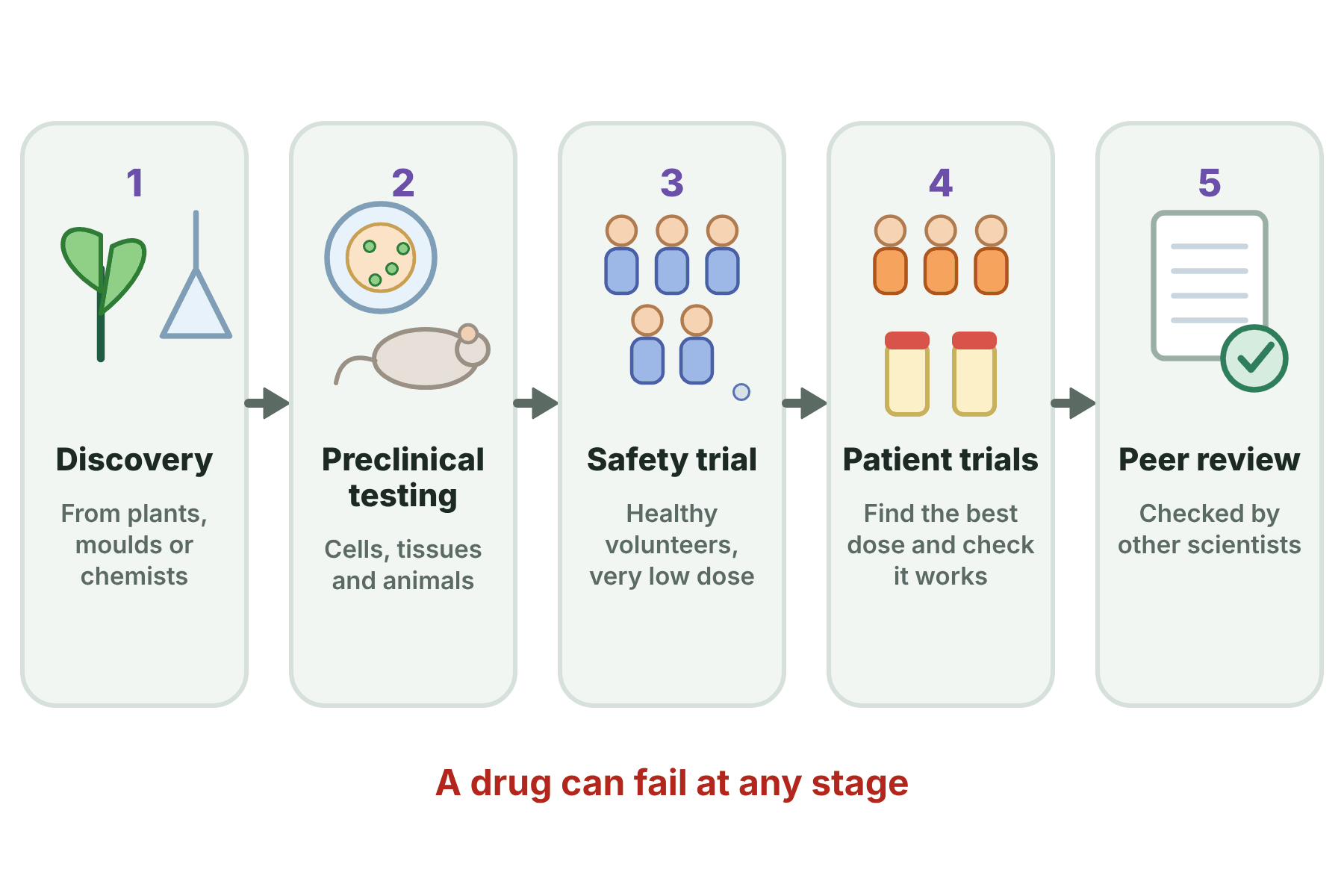
Testing a new drug
- Preclinical testing Done in a laboratory using cells and tissues.
- Clinical trial: safety The drug is first given to healthy volunteers, at a very low dose.
- Clinical trial: dose If it is safe, further trials with patients are carried out to…
- Clinical trial: efficacy A larger group of patients is given the drug, to check that it works.