Biology · Photosynthesis
Knowledge organiser
The whole chapter on two pages. Print it on A4 — they are already landscape — or cover a box and see how much of it you can say from memory.
Biology · AQA Paper 1
Photosynthesis
The Photosynthetic Reaction
Photosynthesis takes in carbon dioxide and water, and uses light energy to make glucose and oxygen.
- Photosynthesis The reaction in which plants use light energy to make glucose and oxygen from carbon dioxide and water.
- Producer An organism that makes its own food, such as a plant.
- Chlorophyll The green pigment in chloroplasts that absorbs light for photosynthesis.
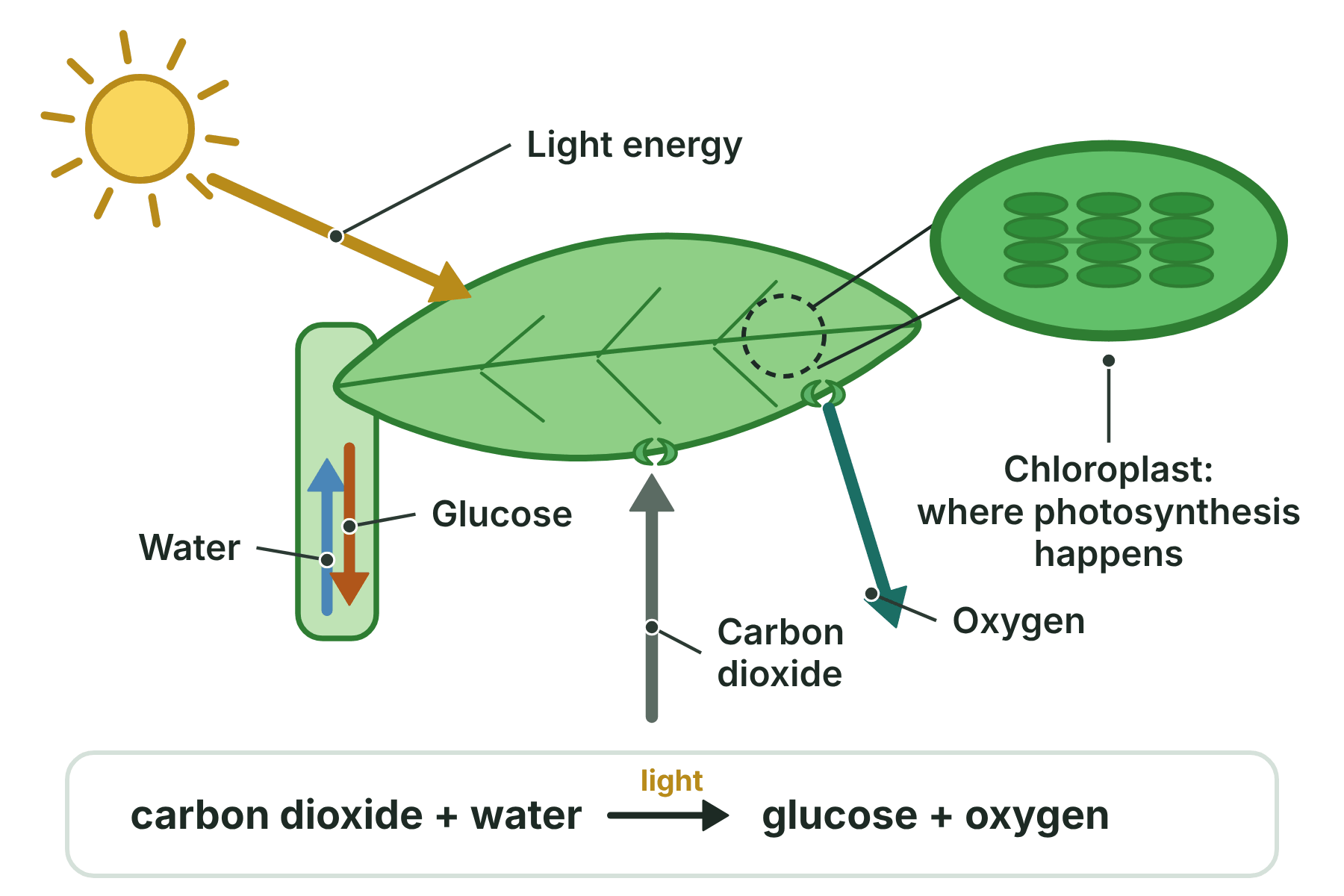
Reactants and products compared
- What goes in (reactants) Carbon dioxide, from the air through the stomata; Water, from the soil through the roots and xylem; Light energy, absorbed by chlorophyll
- What comes out (products) Glucose, which is used or stored; Oxygen, which leaves through the stomata; Energy stored in the glucose
Testing a leaf for starch
- Kill the leaf Dip it in boiling water for about a minute.
- Remove the chlorophyll Heat the leaf in hot ethanol in a water bath, away from flames.
- Soften the leaf Rinse it in warm water to make it soft again.
- Add iodine Spread the leaf on a tile and add iodine solution.
Rate of Photosynthesis and Limiting Factors
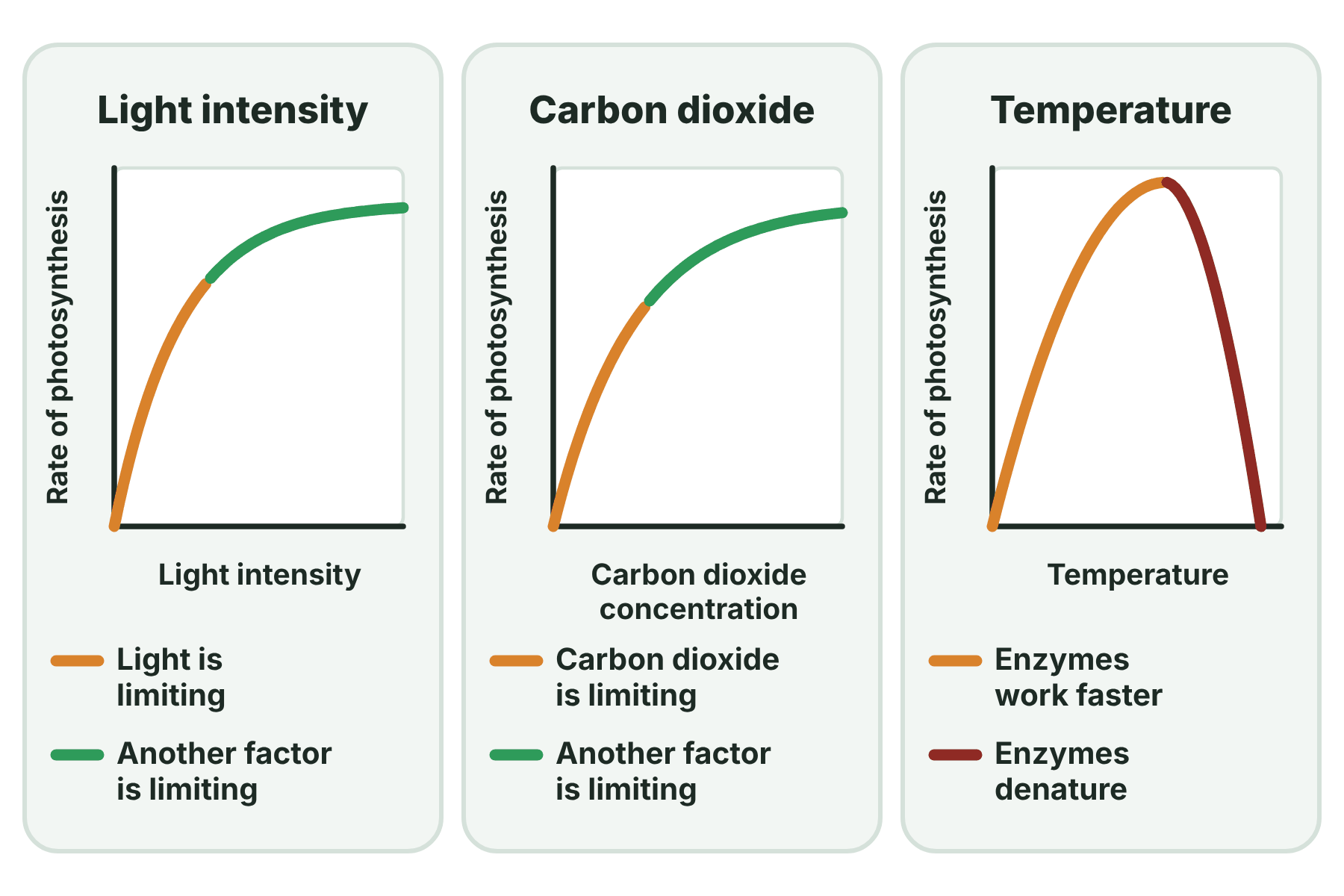
The rate of photosynthesis is set by whichever factor is in shortest supply: the limiting factor.
- Limiting factor A factor that is in short supply and so limits the rate of a reaction.
- Light intensity How bright the light is.
- Carbon dioxide concentration The amount of carbon dioxide in the air around a plant.
Biology · AQA Paper 1
Photosynthesis continued
Investigating Light Intensity and Photosynthesis
The bubbles of oxygen released by pondweed show the rate of photosynthesis, and the lamp's distance changes the light intensity.
- Pondweed A water plant, such as Elodea or Cabomba, used in photosynthesis experiments.
- Independent variable The variable that the investigator changes.
- Dependent variable The variable that is measured.
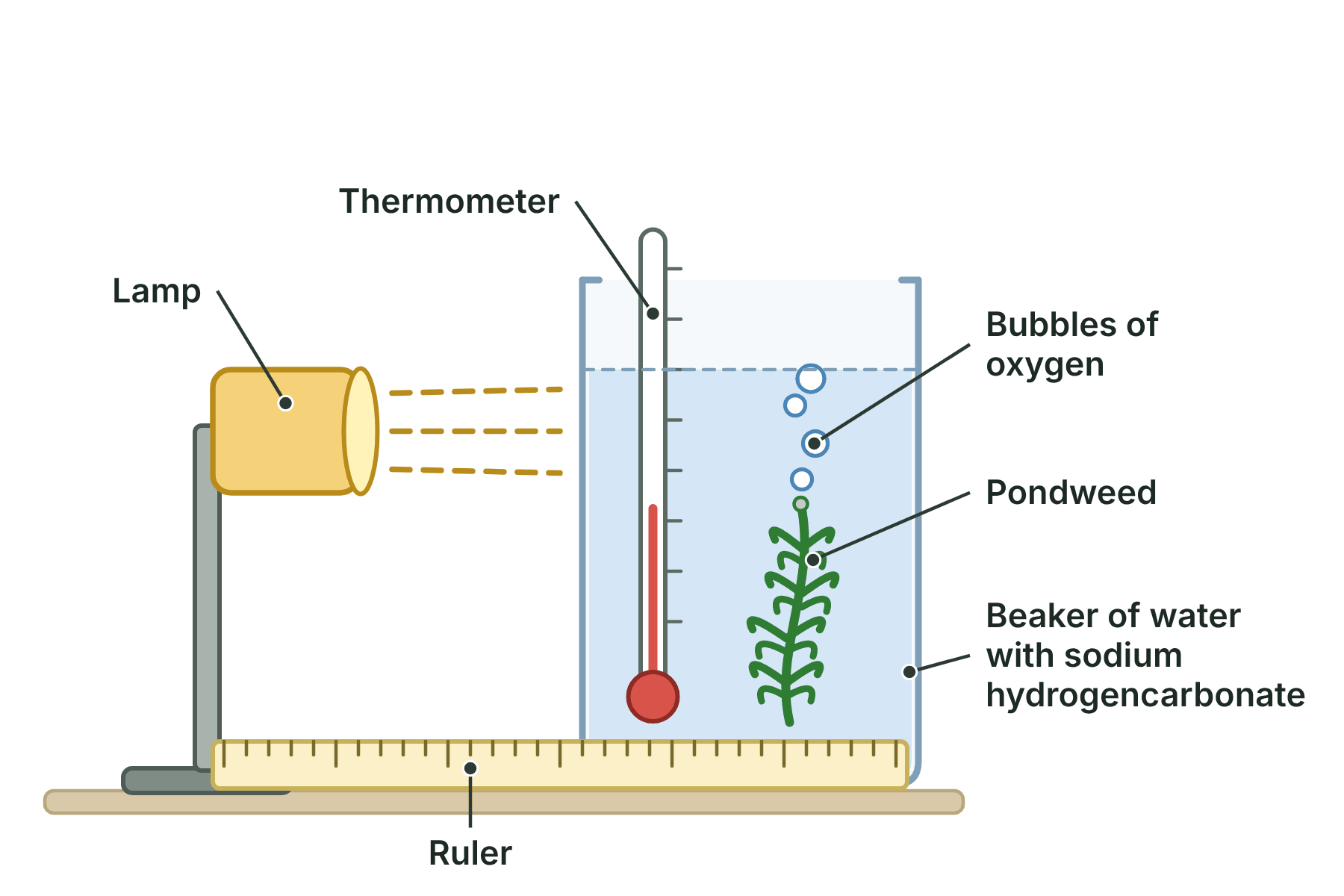
Carrying out the investigation
- Set up Place the pondweed in the beaker, add sodium hydrogencarbonate…
- Wait Leave the pondweed for a few minutes to adjust to the light.
- Count Count the number of bubbles released in one minute, or measure…
- Repeat Take three readings and calculate the mean.
Uses of Glucose from Photosynthesis
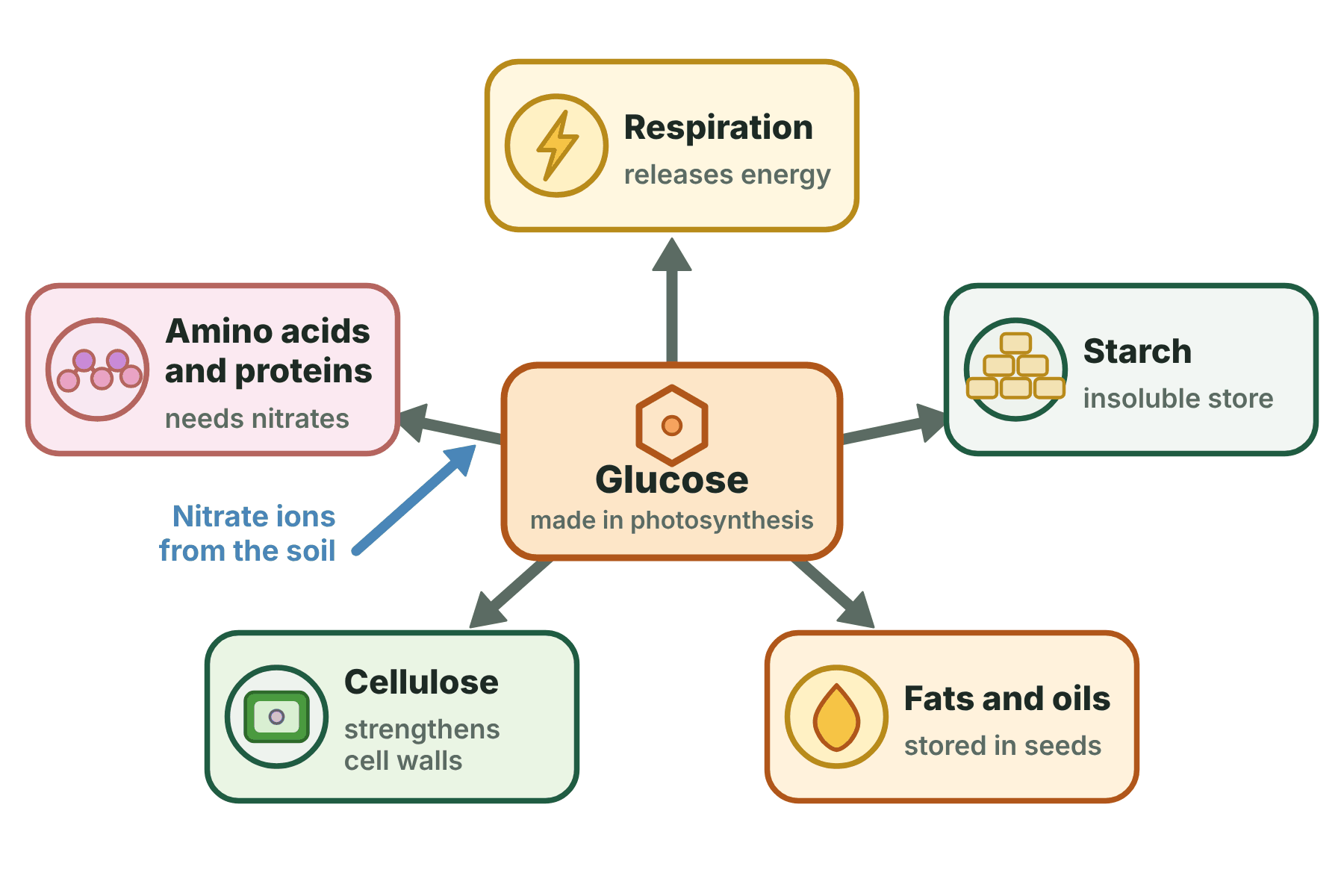
Glucose can be used for energy, or built up into starch, fats and oils, cellulose and proteins.
- Starch An insoluble carbohydrate that plants use to store glucose.
- Insoluble Does not dissolve in water.
- Cellulose A carbohydrate that makes up plant cell walls.
Glucose and starch compared
- Glucose A small sugar molecule; Soluble in water; Used for respiration and to make other substances
- Starch A large molecule made of many glucose units; Insoluble in water; Used for storage
Testing for starch, glucose and protein
- Starch Add iodine solution. It turns from orange-brown to blue-black if…
- Glucose Add Benedict's reagent and heat in a water bath.
- Protein Add Biuret reagent. It turns from blue to purple if protein is present.