Biology · Plant Disease
Knowledge organiser
The whole chapter on one page. Print it on A4 — it is already landscape — or cover a box and see how much of it you can say from memory.
Biology · AQA Paper 1
Plant Disease
Detecting and Identifying Plant Diseases (Separate only)
To treat a plant problem you must first detect it, and then work out whether it is a disease, a pest or a missing mineral.
- Aphid A small insect that feeds on plant sap and can damage plants.
- Pest An animal that damages plants or crops.
- Stunted growth Poor growth, so a plant is smaller than normal.
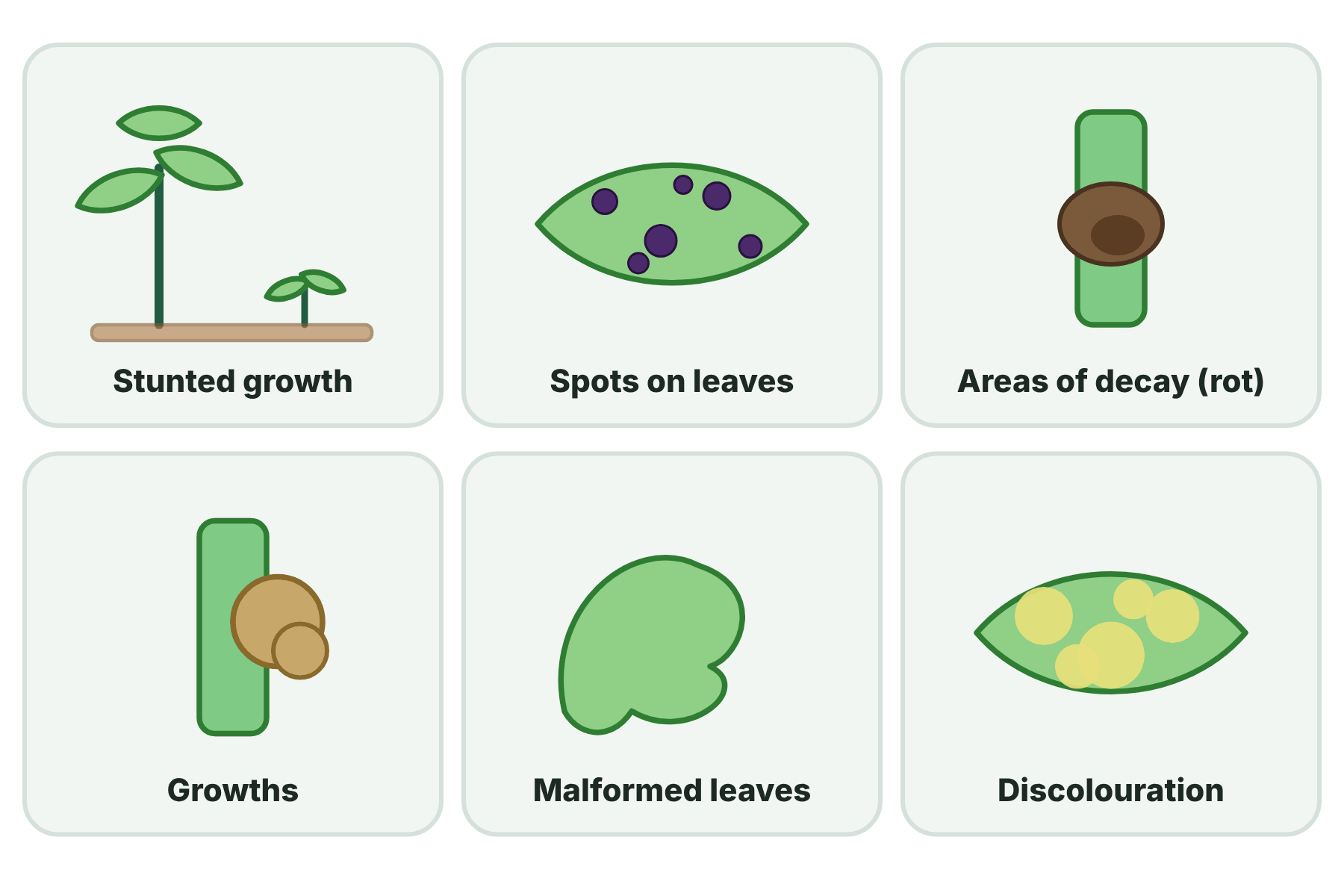
Nitrate and magnesium deficiency compared
- Nitrate deficiency Nitrate is needed to make amino acids and proteins; The plant cannot make enough protein to grow; Symptom: stunted growth
- Magnesium deficiency Magnesium is needed to make chlorophyll; The leaves cannot make enough chlorophyll; Symptom: yellow leaves (chlorosis)
Plant Defence Responses (Separate only)
Plants have physical, chemical and mechanical defences, built in to their structure.
- Physical defence A barrier, such as a cell wall or waxy cuticle, that stops pathogens getting into a plant.
- Chemical defence A chemical, such as an antibacterial substance or poison, made by a plant to protect itself.
- Mechanical adaptation A feature of a plant's structure, such as a thorn, that deters animals.
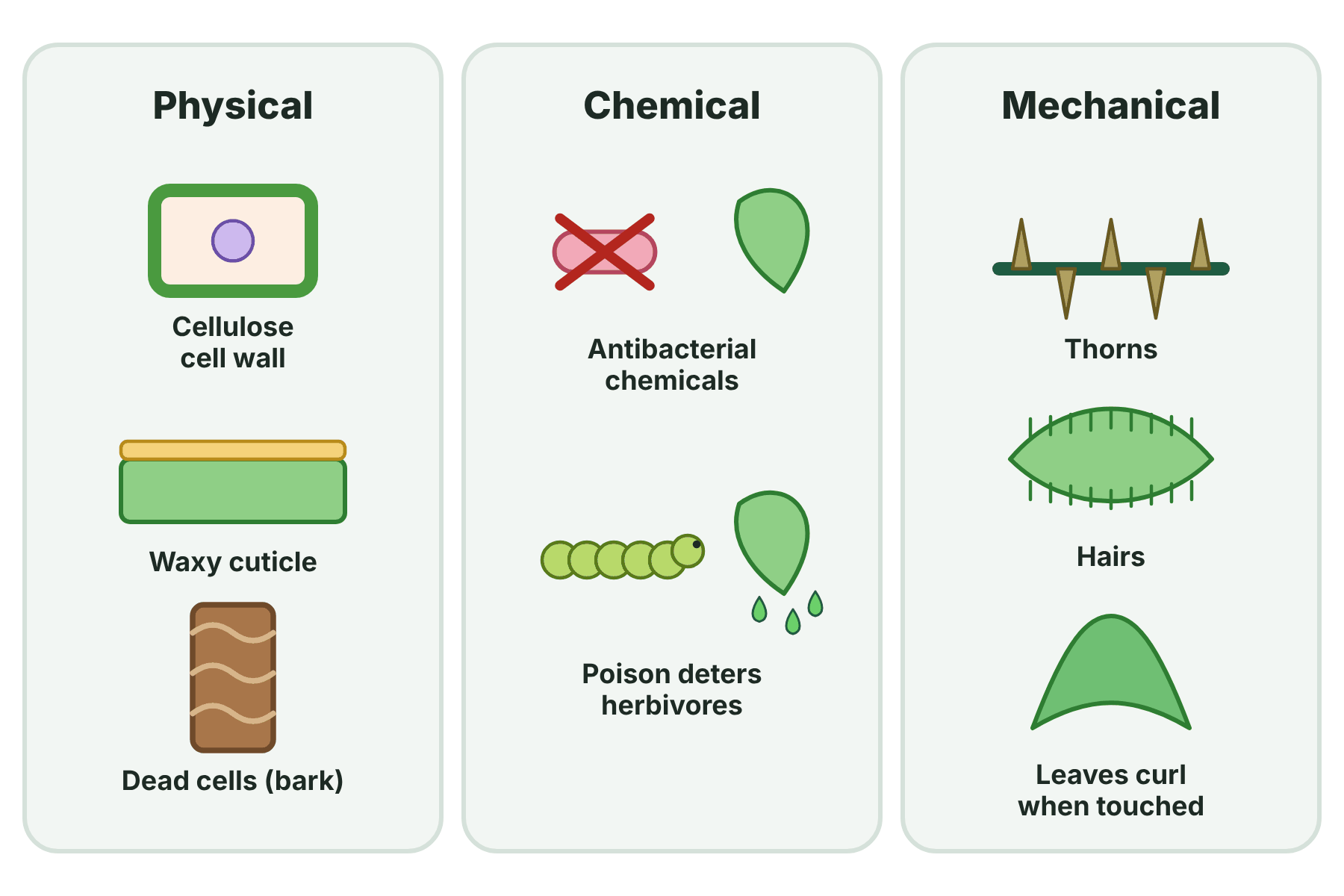
Physical, chemical and mechanical defences compared
- Physical and chemical Cell walls, waxy cuticle and dead cells resist microorganisms; Antibacterial chemicals kill bacteria; Poisons make animals ill
- Mechanical Thorns and hairs deter animals physically; Drooping or curling leaves; Mimicry tricks animals