Biology · Respiration and Metabolism
Knowledge organiser
The whole chapter on one page. Print it on A4 — it is already landscape — or cover a box and see how much of it you can say from memory.
Biology · AQA Paper 1
Respiration and Metabolism
Aerobic and Anaerobic Respiration
Respiration is the exothermic reaction that transfers energy from glucose in every living cell.
- Respiration The exothermic reaction in living cells that transfers energy from glucose.
- Exothermic reaction A reaction that transfers energy to the surroundings.
- Aerobic respiration Respiration that uses oxygen, and transfers a large amount of energy.
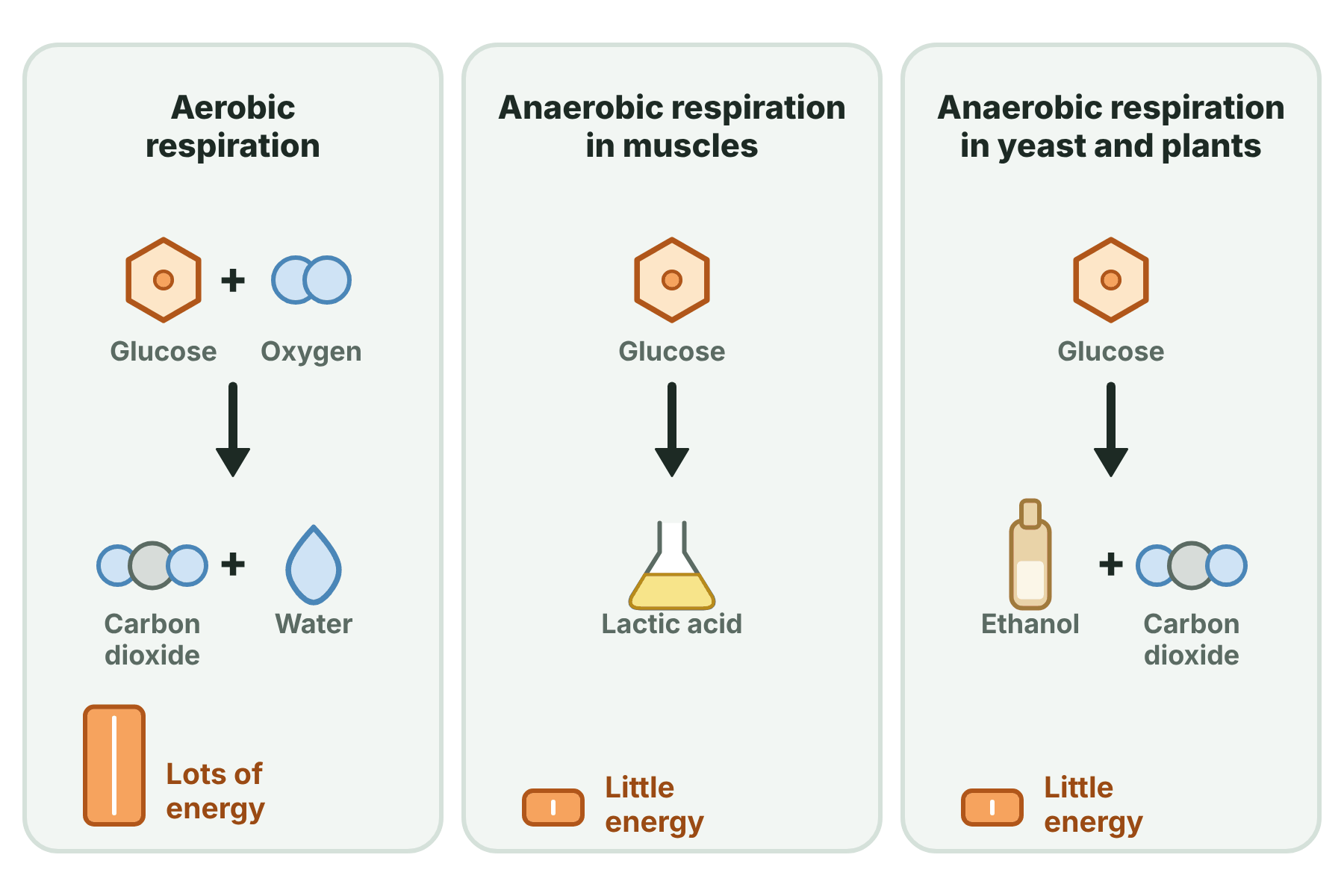
Aerobic and anaerobic respiration in muscles
- Aerobic respiration Needs oxygen; Glucose is completely oxidised; Products: carbon dioxide and water
- Anaerobic respiration Does not need oxygen; Glucose is only partly oxidised; Product in muscles: lactic acid
Making bread with yeast
- Mix Mix flour, water, sugar and yeast into a dough.
- Warm Leave the dough in a warm place so the enzymes in the yeast work quickly.
- Ferment The yeast respires anaerobically.
- Rise The carbon dioxide forms bubbles in the dough, so it rises.
Response to Exercise
During exercise the heart rate, breathing rate and breath volume increase to supply the muscles with more oxygenated blood.
- Heart rate The number of times the heart beats each minute.
- Breathing rate The number of breaths taken each minute.
- Breath volume The volume of air taken in with each breath.
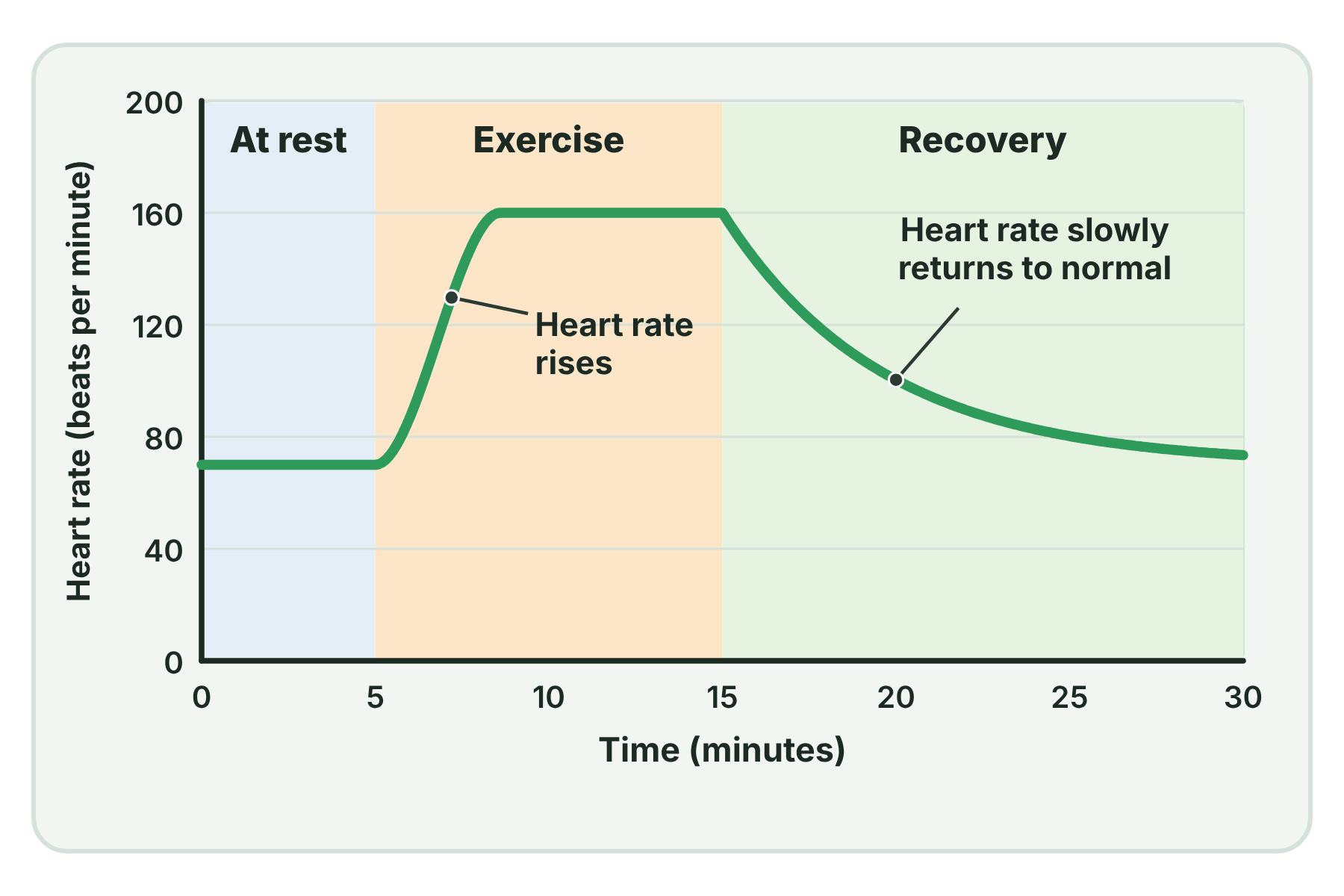
Gentle and vigorous exercise
- Gentle exercise Enough oxygen reaches the muscles; Only aerobic respiration; Little or no lactic acid
- Vigorous exercise Oxygen cannot be supplied fast enough; Some anaerobic respiration as well; Lactic acid builds up
Investigating the effect of exercise on the body
- Rest The person sits still, and you count their pulse for one minute…
- Exercise They exercise for a fixed time.
- Measure straight away Count the pulse for 30 seconds immediately after exercise, and double it.
- Measure the recovery Take the pulse every minute until it returns to the resting rate.
Metabolism
Metabolism is the sum of all the reactions in a cell or the body, and the energy from respiration drives the reactions that build new molecules.
- Metabolism The sum of all the reactions in a cell or the body.
- Synthesis Building a larger molecule from smaller ones.
- Glycogen A carbohydrate in which animals store glucose, in the liver and muscles.
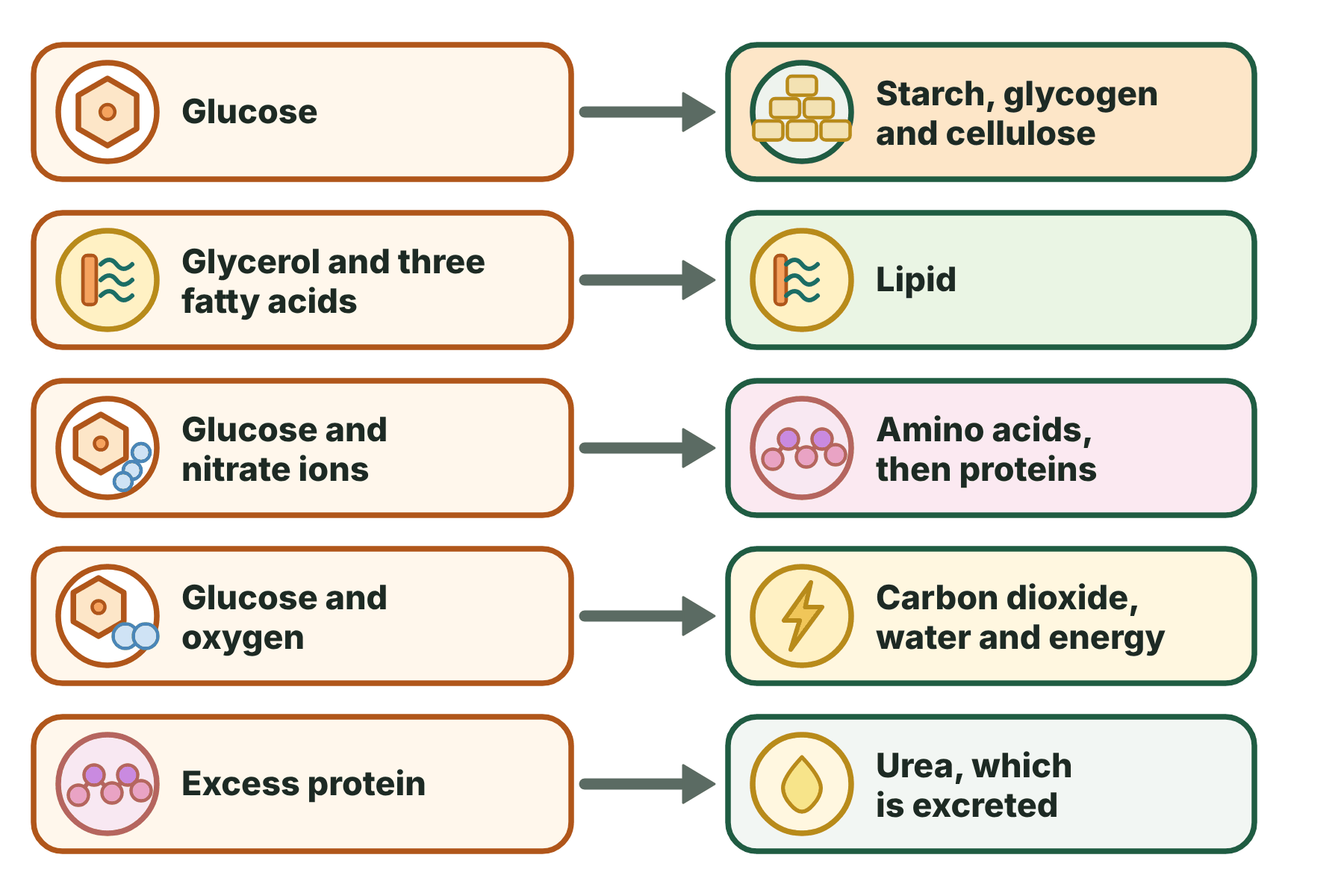
Building up and breaking down
- Building up (synthesis) Small molecules are joined to make larger ones; Needs energy from respiration; Controlled by enzymes
- Breaking down Larger molecules are split into smaller ones; Controlled by enzymes; For example protein to amino acids in digestion