Biology · Transport In and Out of Cells
Knowledge organiser
The whole chapter on two pages. Print it on A4 — they are already landscape — or cover a box and see how much of it you can say from memory.
Biology · AQA Paper 1
Transport In and Out of Cells
Diffusion
Diffusion is the net movement of particles from an area of higher concentration to an area of lower concentration.
- Diffusion The spreading out of particles of a gas, or of a substance in solution, resulting in a net movement from an area of…
- Concentration The amount of a substance in a given volume.
- Concentration gradient The difference in concentration between two places.
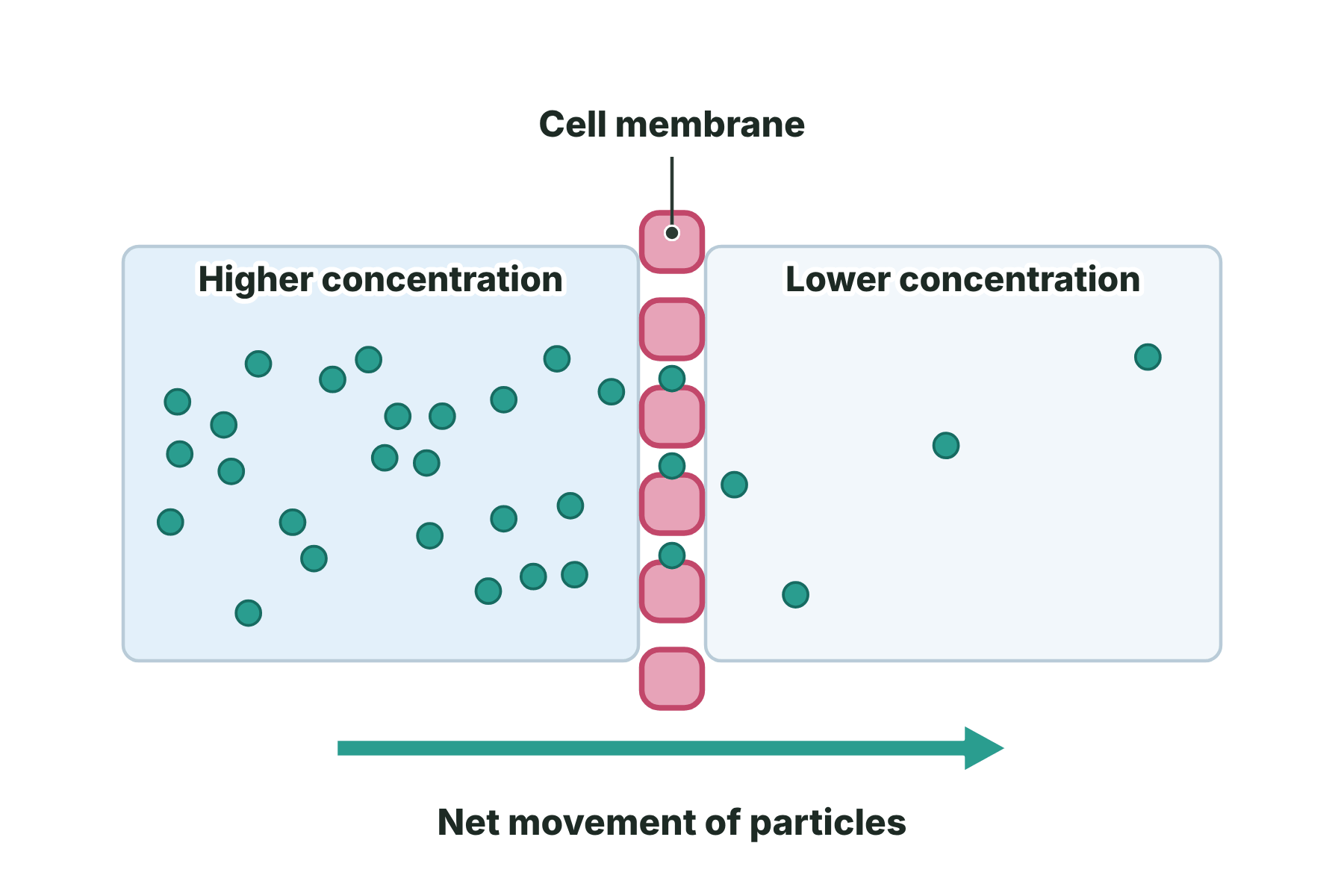
Following oxygen from the air to a muscle cell
- Breathing in Air in the lungs has a high concentration of oxygen.
- Into the blood Oxygen diffuses from the air in the alveoli into the blood.
- Round the body The blood carries the oxygen to the muscles.
- Into the cells The muscle cells use oxygen up, so its concentration in them is low.
Surface Area to Volume Ratio and Exchange Surfaces
A big organism has a small surface area compared with its volume, so it needs exchange surfaces and a transport system.
- Surface area to volume ratio The surface area of an object divided by its volume. It gets smaller as the object gets bigger.
- Surface area The total area of the outside of an object.
- Volume The amount of space inside an object.
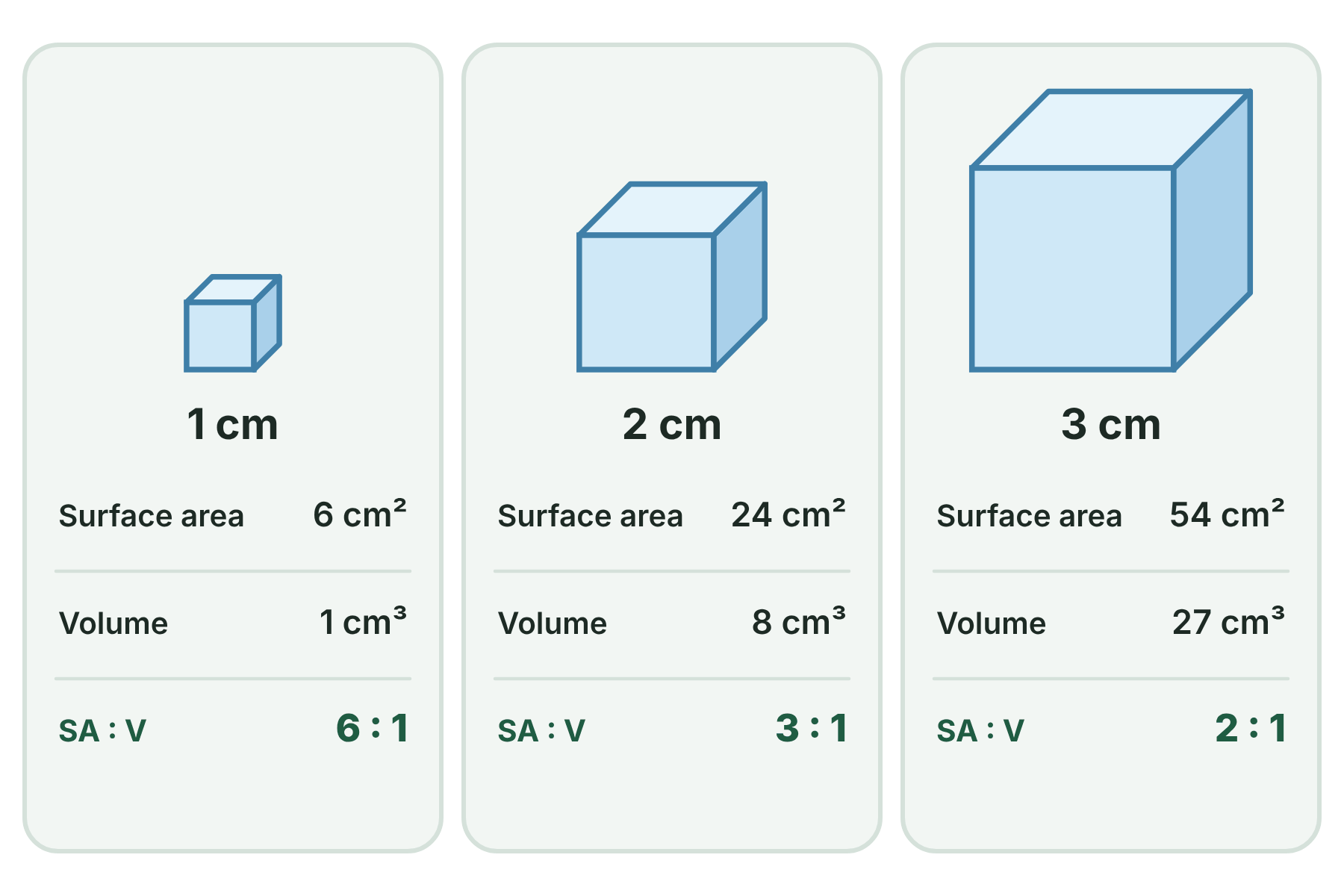
Single-celled and multicellular organisms
- Single-celled organism Large surface area to volume ratio; Every part of the cell is close to the outside; No transport system or special exchange surface needed
- Multicellular organism Small surface area to volume ratio; The body surface alone could not supply the cells deep inside; Diffusion over such long distances is far too slow
Osmosis
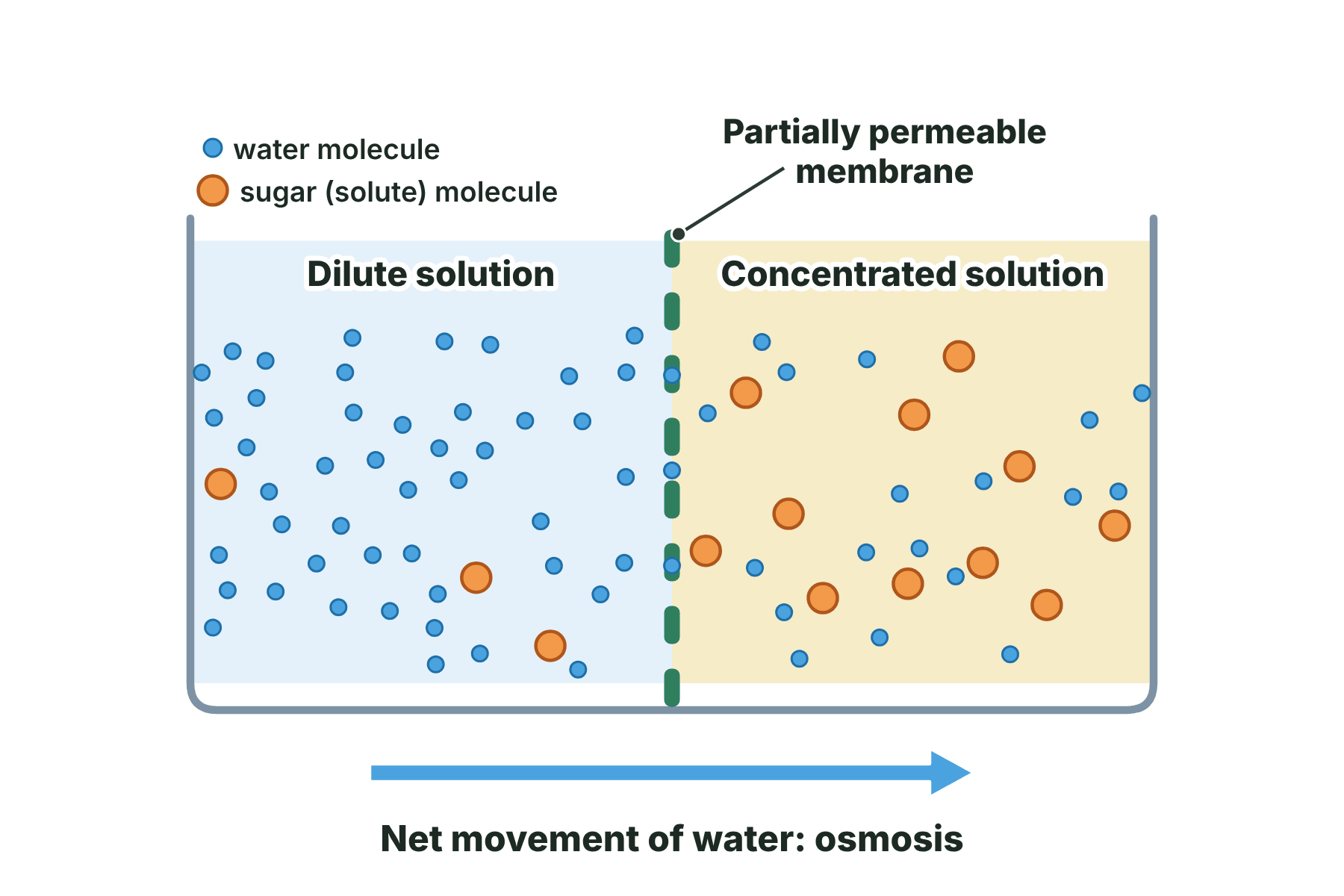
Osmosis is the diffusion of water from a dilute solution to a concentrated solution through a partially permeable membrane.
- Osmosis The diffusion of water from a dilute solution to a concentrated solution through a partially permeable membrane.
- Partially permeable membrane A membrane that lets some substances, such as water, pass through but not others, such as large dissolved molecules.
- Dilute solution A solution with a low concentration of dissolved substance.
Biology · AQA Paper 1
Transport In and Out of Cells continued
Investigating Osmosis in Plant Tissue
Where the line on the graph crosses zero, the solution has the same concentration as the potato cells.
- Independent variable The variable that is deliberately changed in an investigation.
- Dependent variable The variable that is measured in an investigation.
- Control variable A variable that is kept the same so that the test is fair.
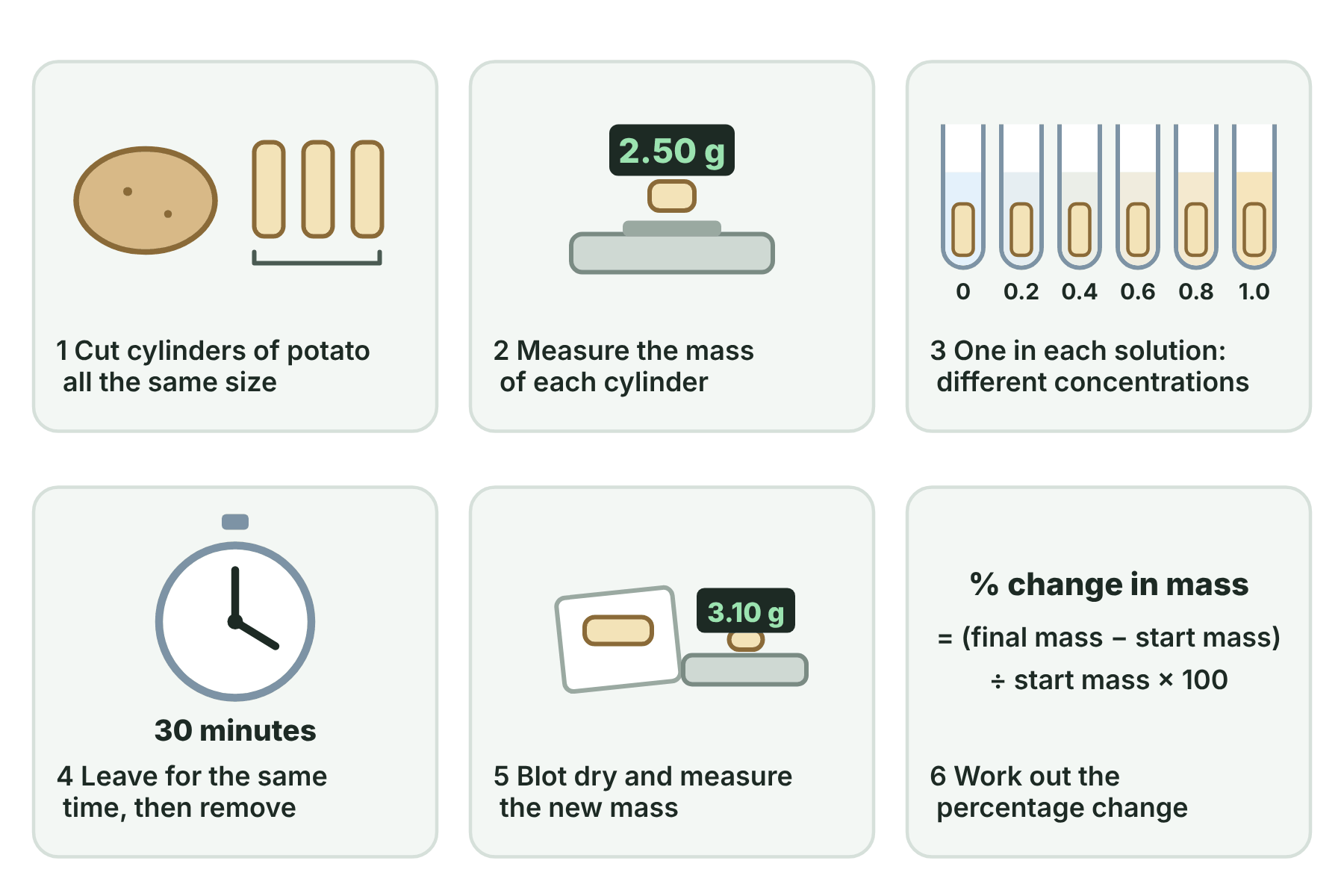
The method
- Cut the potato Use a cork borer to cut cylinders of potato.
- Measure the starting mass Dry each cylinder and measure its mass on a balance. Record it.
- Set up the solutions Put the same volume of each sugar solution into labelled test…
- Add one cylinder to each tube Make sure each is covered with solution.
Active Transport
Active transport moves substances from a more dilute solution to a more concentrated solution, and it needs energy from respiration.
- Active transport The movement of substances from a more dilute solution to a more concentrated solution, against a concentration gradient.
- Against the concentration gradient From a lower concentration to a higher concentration.
- Respiration The process in cells that releases energy from glucose.
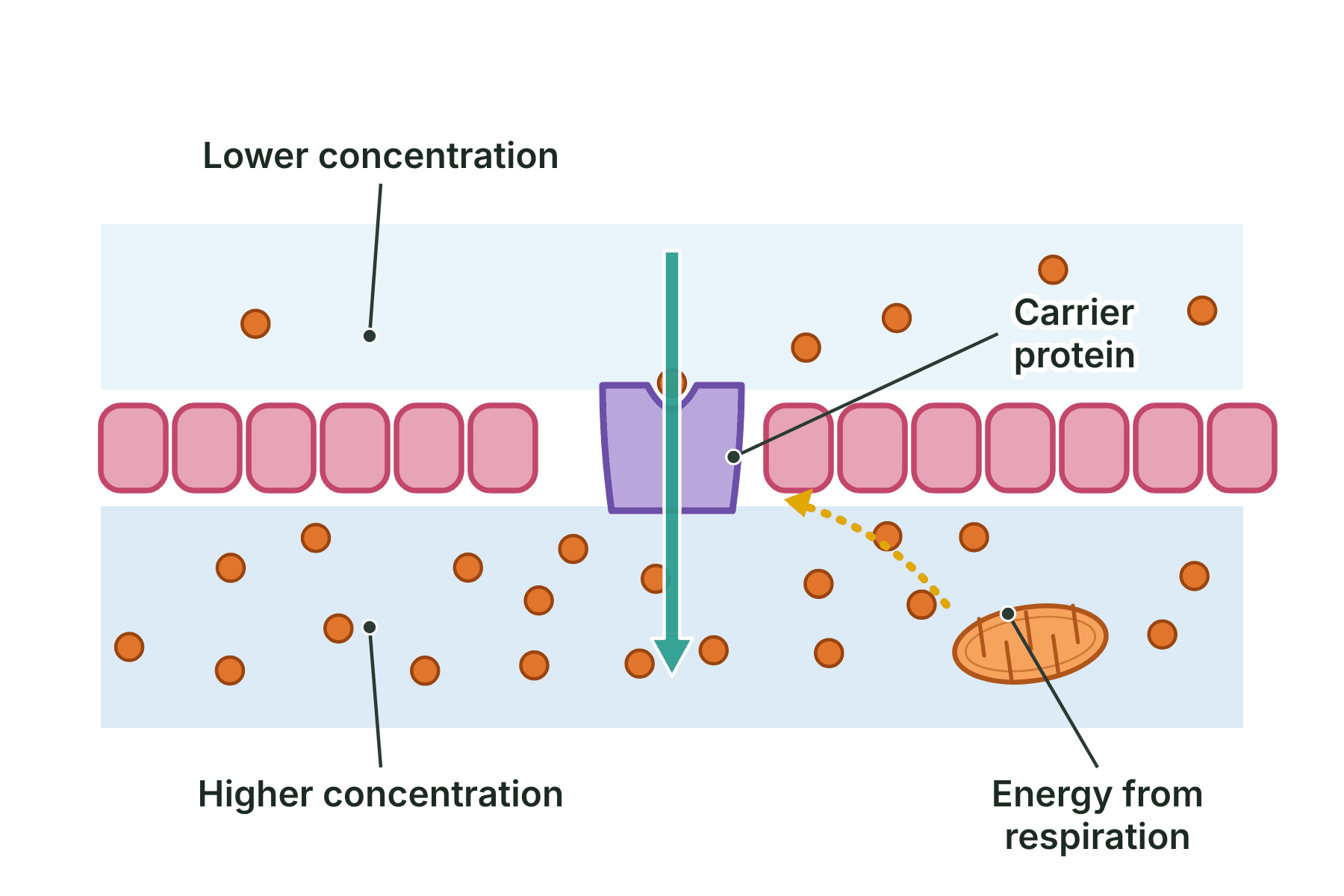
Diffusion and active transport
- Diffusion From a higher to a lower concentration; Down the concentration gradient; No energy needed from the cell
- Active transport From a lower to a higher concentration; Against the concentration gradient; Needs energy from respiration