Biology · DNA and the Genome
Knowledge organiser
The whole chapter on two pages. Print it on A4 — they are already landscape — or cover a box and see how much of it you can say from memory.
Biology · AQA Paper 2
DNA and the Genome
DNA, Genes and the Genome
DNA is the code, a gene is one instruction in it, and the genome is the whole instruction book.
- DNA The chemical in the nucleus that carries the genetic code, a polymer made of two strands forming a double helix.
- Double helix The shape of DNA: two strands coiled around each other.
- Polymer A large molecule made of many repeating units joined together.
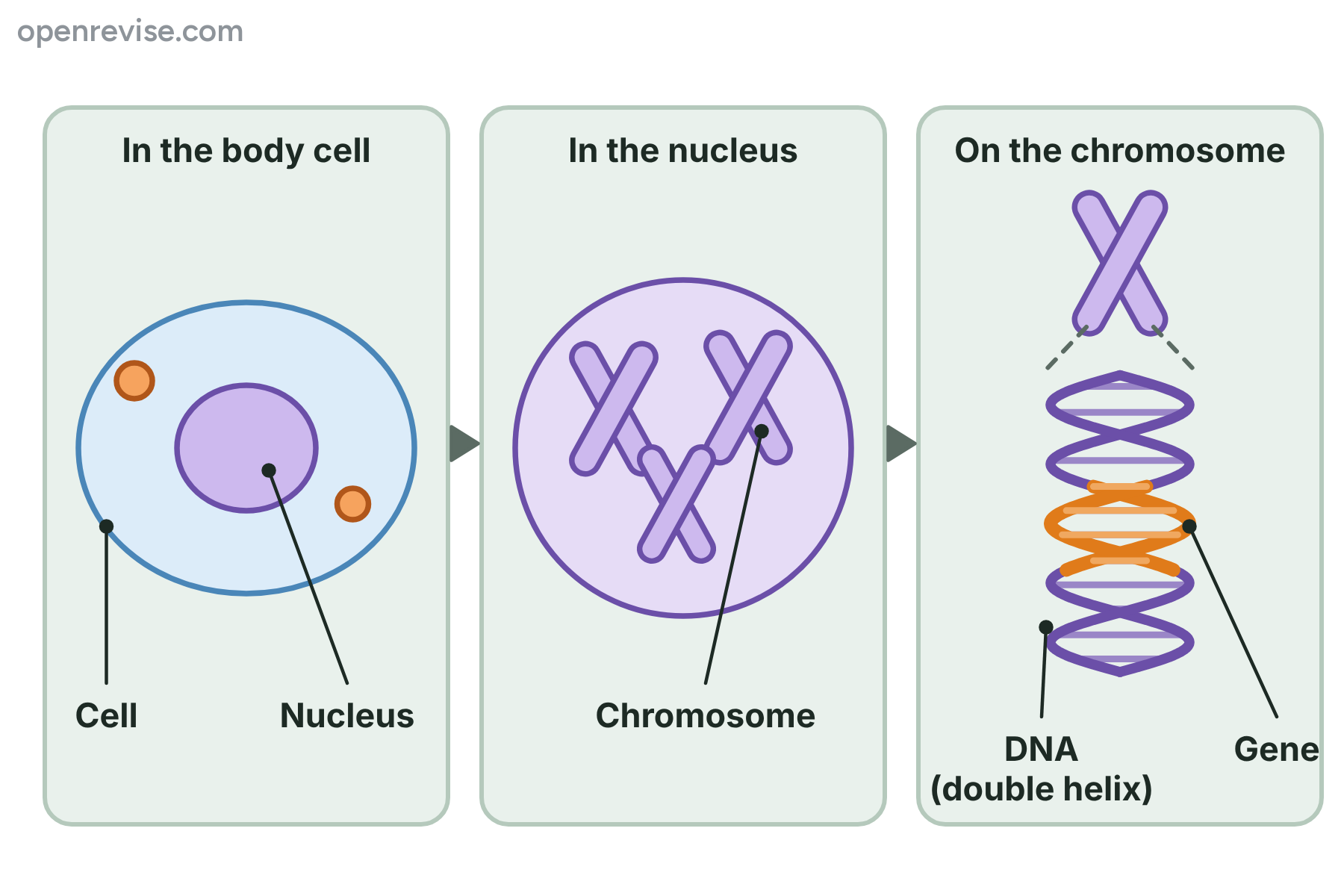
Gene or genome?
- A gene A small section of DNA on a chromosome; Codes for a particular sequence of amino acids; Makes one specific protein
- The genome The entire genetic material of an organism; Includes every gene and all the other DNA; Different in every species
From gene to protein
- A gene A small section of DNA on a chromosome carries the instruction.
- A sequence of amino acids The gene codes for a particular order of amino acids.
- A protein The amino acids join in that order to make one specific protein.
- A characteristic Proteins such as enzymes, hormones and structural proteins decide how a cell works.
The Structure of DNA (Separate only)
DNA is a chain of nucleotides, and the order of the four bases along the chain is the genetic code.
- Nucleotide One unit of DNA: a sugar, a phosphate group and one base.
- Base The part of a nucleotide that carries the code: A, C, G or T.
- Phosphate group The part of a nucleotide that joins to the sugar of the next nucleotide to form the backbone.
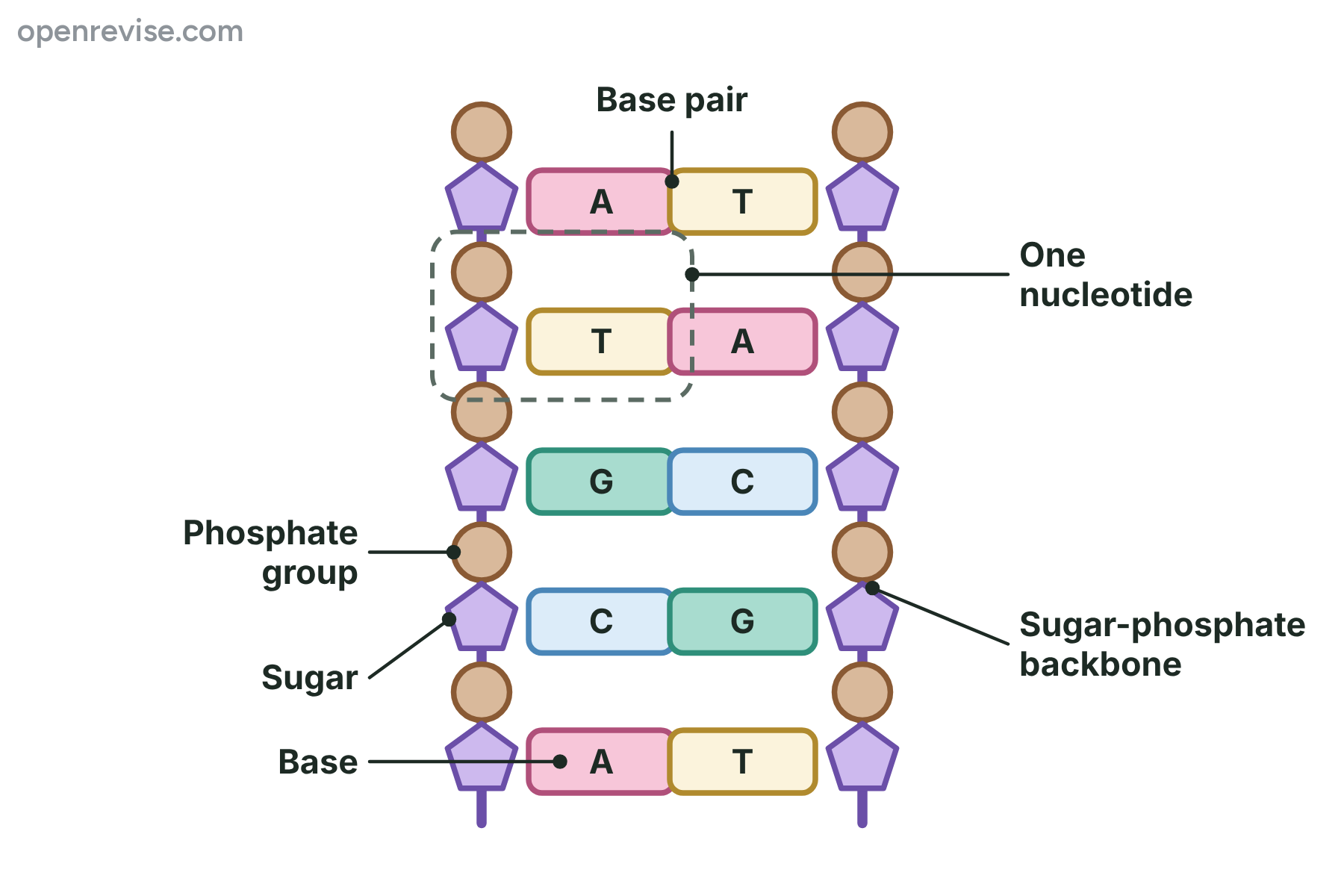
What is the same, and what is different
- The same in every nucleotide A common sugar; A phosphate group; Joined into the backbone, alternating sugar then phosphate
- Different between nucleotides The base attached to the sugar; One of four: A, C, G or T; This is what makes the code
Biology · AQA Paper 2
DNA and the Genome continued
Protein Synthesis (Higher tier) (Separate only)
The order of the bases decides the order of the amino acids, the order of the amino acids decides the shape, and the shape decides what the protein can do.
- Protein synthesis The making of a protein, on a ribosome, by joining amino acids in the order given by a gene.
- Ribosome A tiny structure in the cytoplasm where proteins are made.
- Template A copy of the gene that the ribosome reads to put amino acids in the right order.
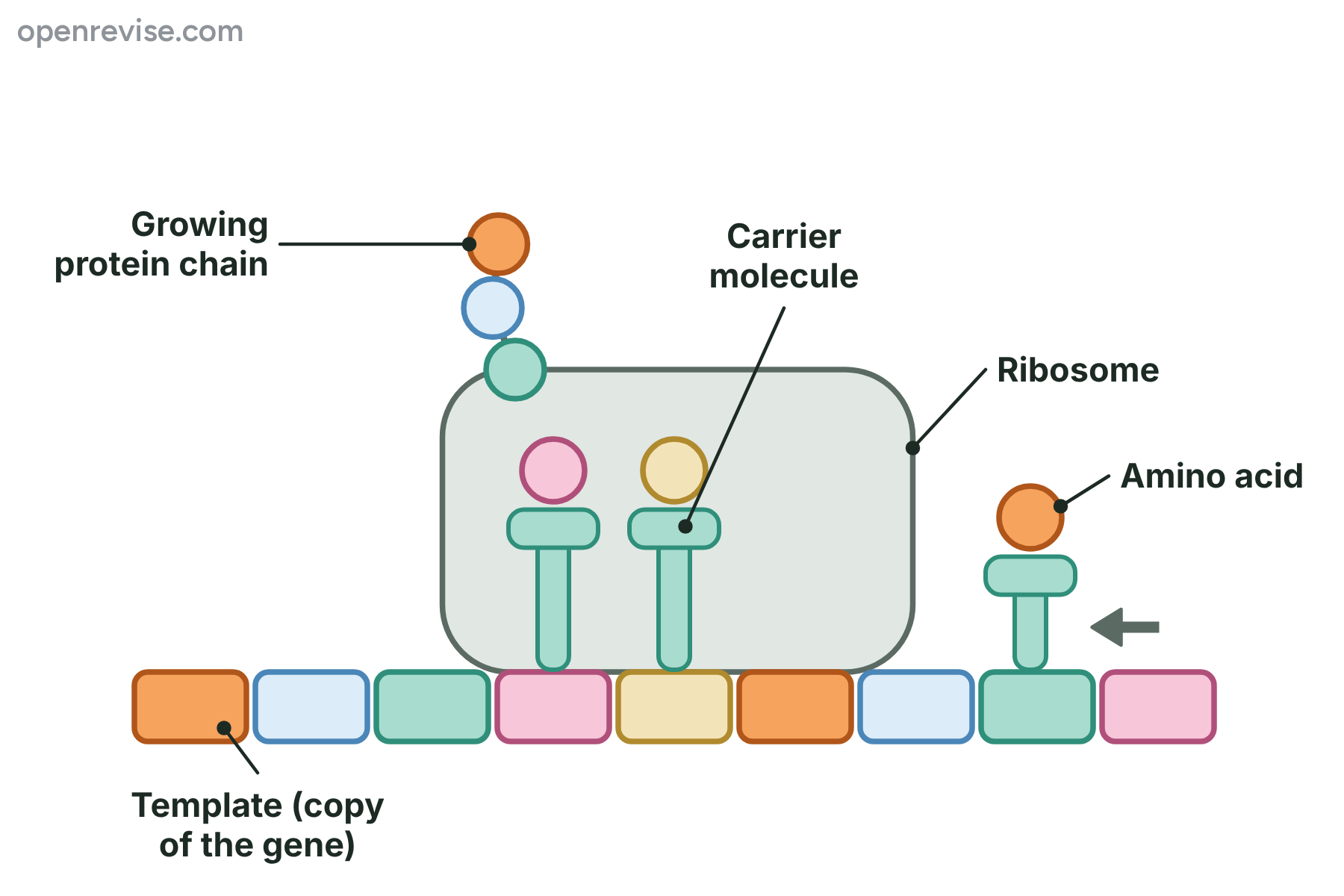
Gene, template and protein
- In the nucleus DNA is stored in the chromosomes; The gene holds the code; A copy of the gene is made
- In the cytoplasm The template arrives at a ribosome; Carrier molecules bring the amino acids; The protein chain is assembled
The steps of protein synthesis
- The code is copied A copy of the gene, which acts as a template, carries the…
- The ribosome reads the template Proteins are synthesised on ribosomes, according to the template.
- Carrier molecules deliver amino acids Each carrier molecule brings a specific amino acid to add to the…
- The chain is assembled The amino acids are joined together one at a time until the…
Mutations and Non-coding DNA (Higher tier) (Separate only)
Most mutations are harmless, a few change a protein for better or worse, and those in non-coding DNA can change how much of a protein is made.
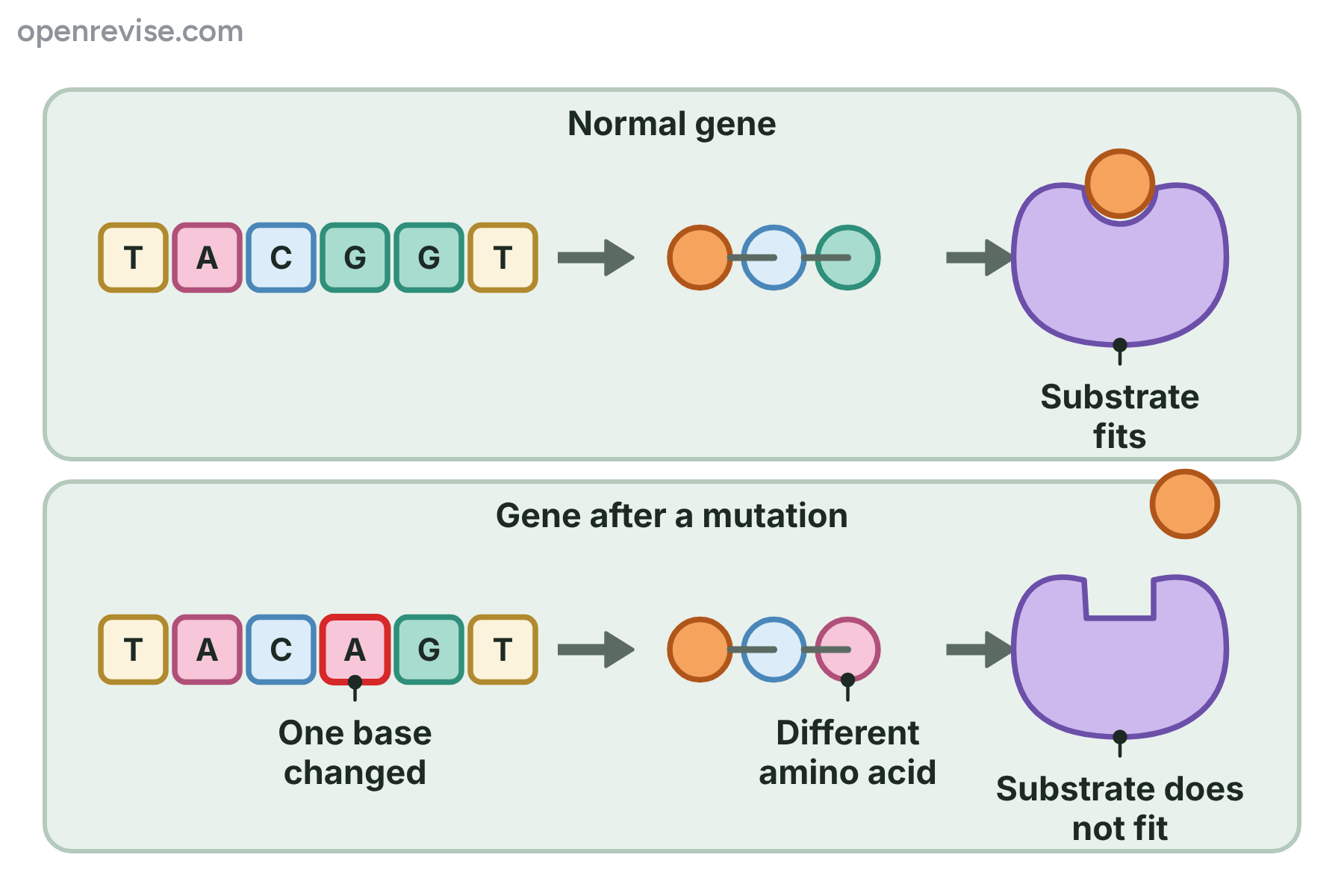
- Mutation A change in the base sequence of DNA.
- Substitution A mutation in which one base is replaced by a different base.
- Insertion A mutation in which an extra base is added to the DNA.
Where a genetic variant is
- In coding DNA Changes the sequence of amino acids; May alter the activity of the protein; The protein itself is different
- In non-coding DNA No change to the amino acids; Alters how genes are expressed; The same protein, made more or less often
From a mutation to a different phenotype
- The DNA changes A mutation changes the sequence of bases in a gene.
- The amino acids may change One or more triplets are different.
- The protein folds differently A different amino acid order can give a different shape.
- The protein works differently An enzyme may not fit its substrate, or a structural protein may be weaker.