Biology · Homeostasis and the Nervous System
Knowledge organiser
The whole chapter on two pages. Print it on A4 — they are already landscape — or cover a box and see how much of it you can say from memory.
Biology · AQA Paper 2
Homeostasis and the Nervous System
Homeostasis and Control Systems
Homeostasis keeps the internal environment constant using receptors, coordination centres and effectors, so that enzymes and cells work at their best.
- Homeostasis The regulation of the internal conditions of a cell or organism to maintain optimum conditions for function.
- Internal environment The conditions inside the body, such as the blood and tissue fluid.
- Receptor A cell or organ that detects a change.
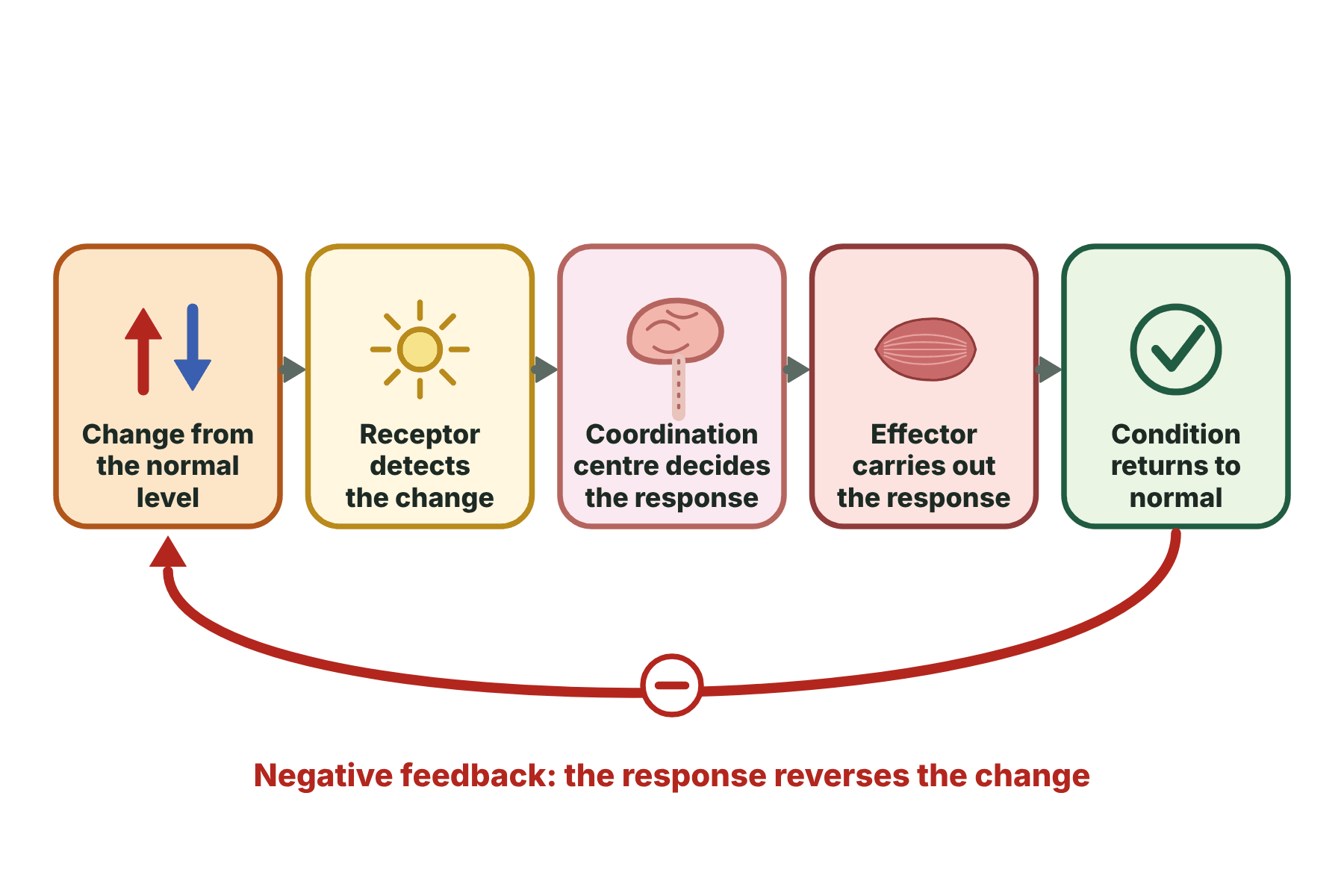
Nervous and hormonal control
- Nervous control Nerve impulses; Very fast response; Used for reflex actions and quick changes
- Hormonal control Hormones in the blood; Slower response, but longer-lasting; Used for slower changes
Neurones and the Nervous System
The nervous system uses neurones to carry electrical impulses from receptors, through the central nervous system, to effectors.
- Neurone A nerve cell that carries electrical impulses.
- Stimulus A change in the surroundings that can be detected.
- Receptor A cell that detects a stimulus and starts an impulse.
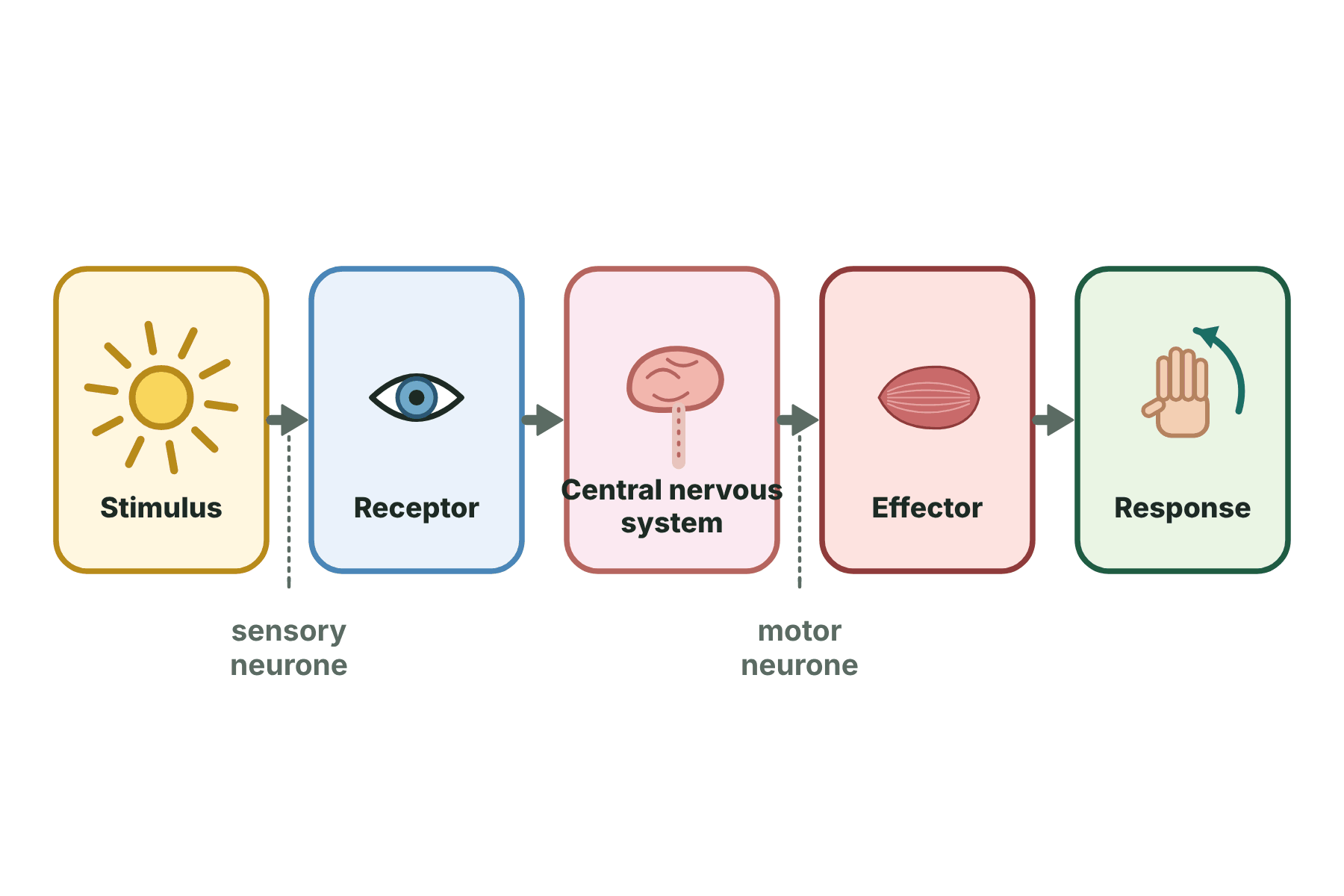
Receptors and effectors
- Receptors Detect a stimulus; Change it into an electrical impulse; Found in sense organs such as the eye and skin
- Effectors Carry out the response; Muscles contract and glands release chemicals; Receive impulses from motor neurones
Reflex Arcs
A reflex arc is a short pathway from a receptor, along a sensory neurone, a relay neurone and a motor neurone, to an effector.
- Reflex action A rapid, automatic response that protects the body.
- Reflex arc The pathway of neurones involved in a reflex action.
- Relay neurone A neurone in the central nervous system that links a sensory and a motor neurone.
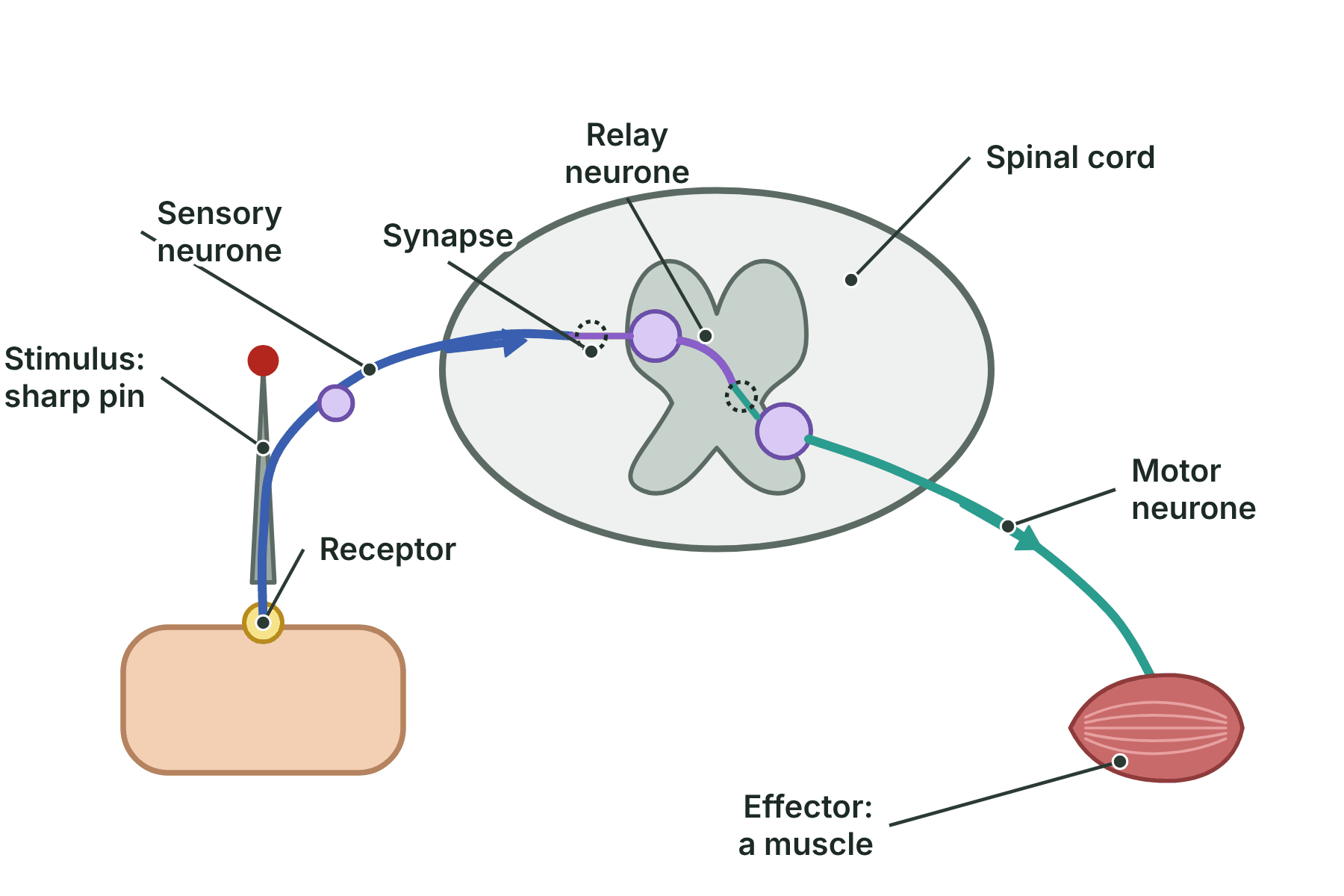
Reflex and voluntary actions
- Reflex action Very fast; Automatic, without thinking; The pathway goes through the spinal cord
- Voluntary action Slower; You choose to do it; The pathway goes through the brain
Required practical 7: reaction time
- Set up A partner holds a ruler vertically so that the zero mark is…
- Drop Your partner lets go without warning.
- Measure Read the distance on the ruler at the top of your thumb.
- Repeat Repeat at least three times and calculate a mean.
Biology · AQA Paper 2
Homeostasis and the Nervous System continued
The Brain (Separate only)
The brain is divided into regions with different functions.
- Cerebral cortex The largest part of the brain, which controls thought, memory, language and voluntary movement.
- Cerebellum The part of the brain that coordinates movement and balance.
- Medulla The part of the brain that controls the heart rate and breathing.
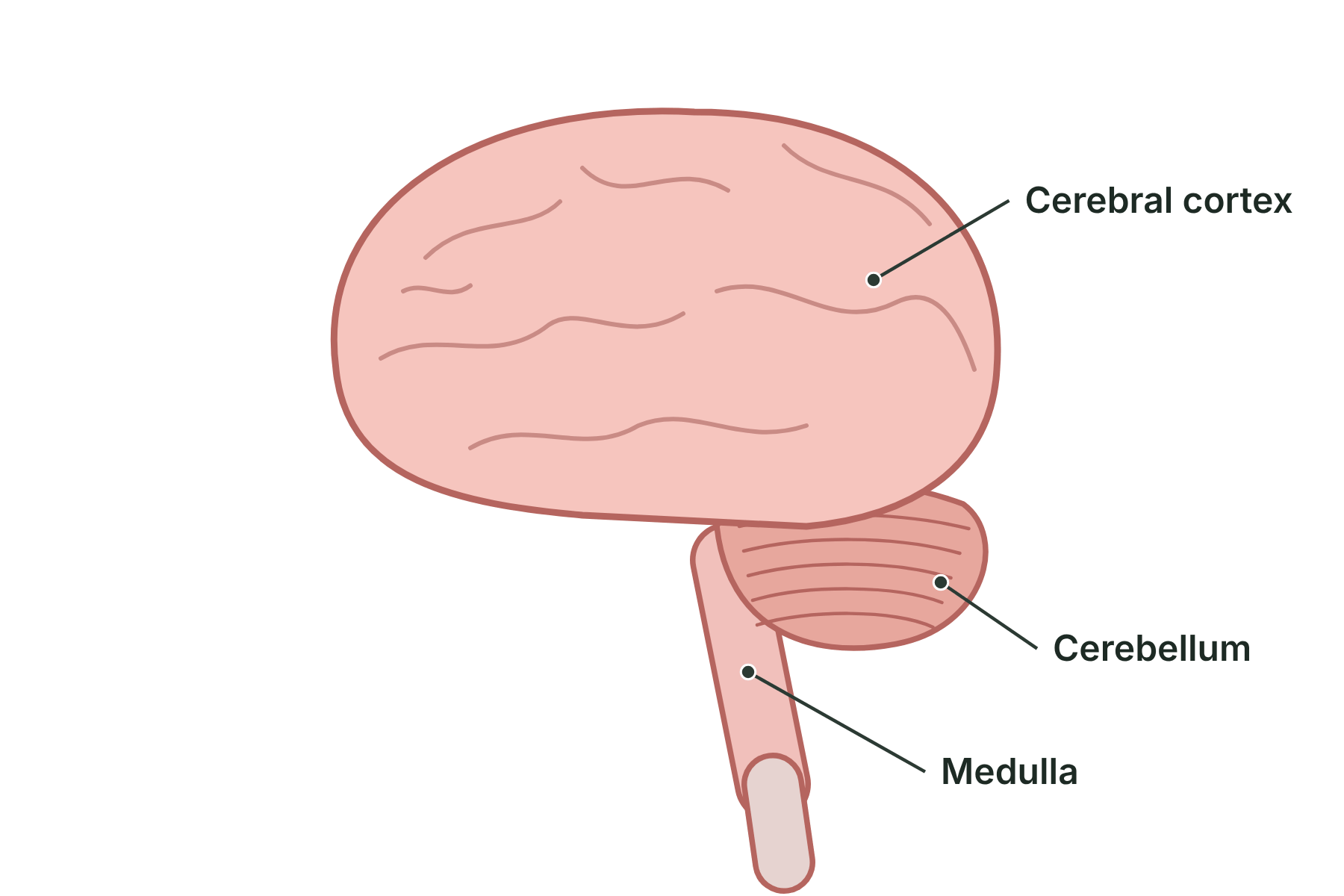
What each region controls
- Thinking and movement Cerebral cortex: conscious thought, memory, language, voluntary movement; Cerebellum: coordination of movement and balance
- Keeping the body going Medulla: heart rate and breathing
The Eye (Separate only)
The cornea and the lens focus light on the retina, the iris controls how much light enters.
- Cornea The transparent front of the eye that refracts light.
- Sclera The tough, white outer layer of the eye.
- Iris The ring of muscle that controls the size of the pupil.
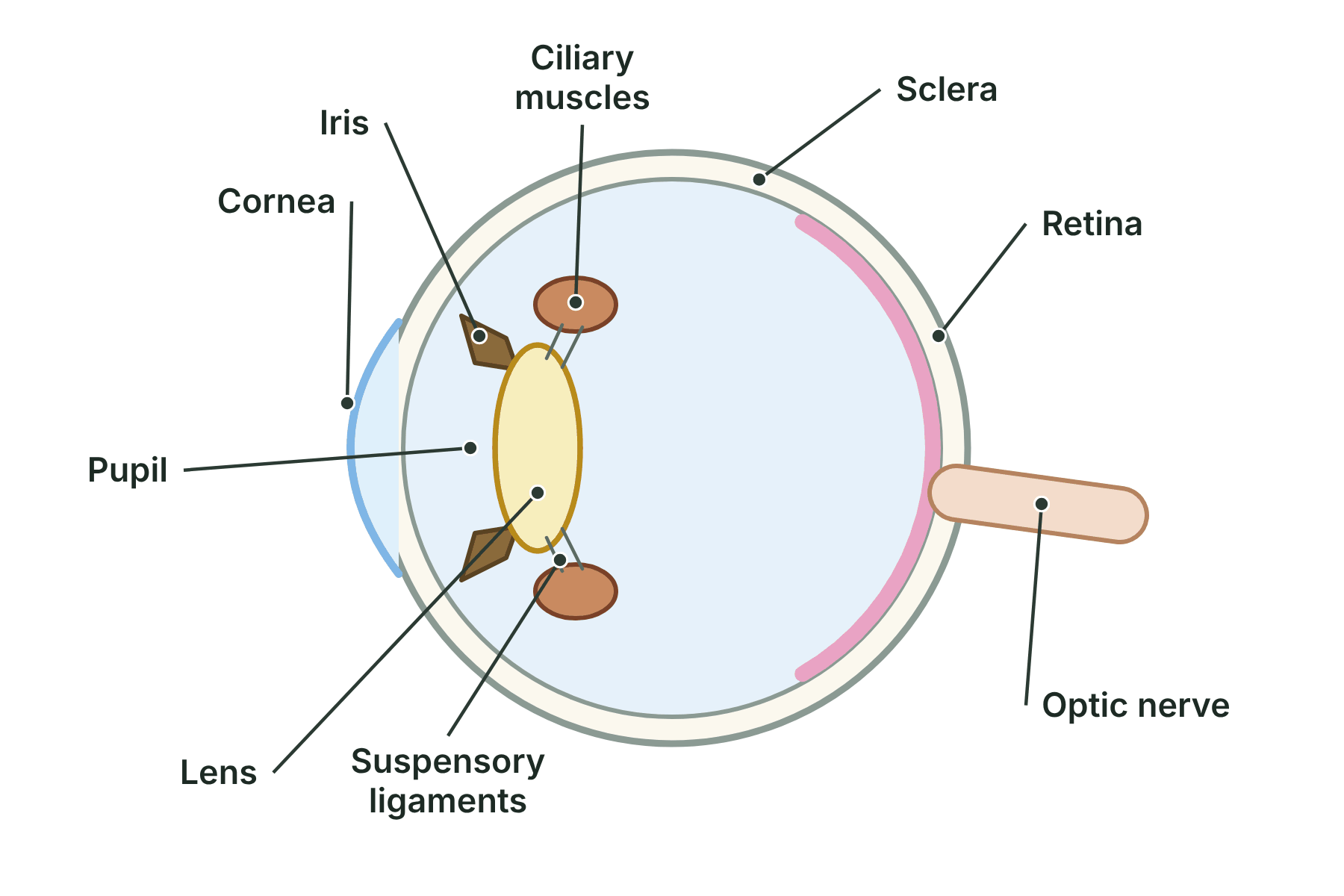
Near and distant objects
- Looking at a near object Ciliary muscles contract; Suspensory ligaments slacken; Lens becomes thicker and more curved
- Looking at a distant object Ciliary muscles relax; Suspensory ligaments are pulled tight; Lens becomes thinner and less curved
Control of Body Temperature (Separate only)
The thermoregulatory centre monitors the temperature of the blood and receives impulses from the skin.
- Thermoregulatory centre The part of the brain that monitors and controls body temperature.
- Sweat gland A gland in the skin that produces sweat.
- Vasodilation The widening of the blood vessels in the skin, so that more energy is transferred to the environment.
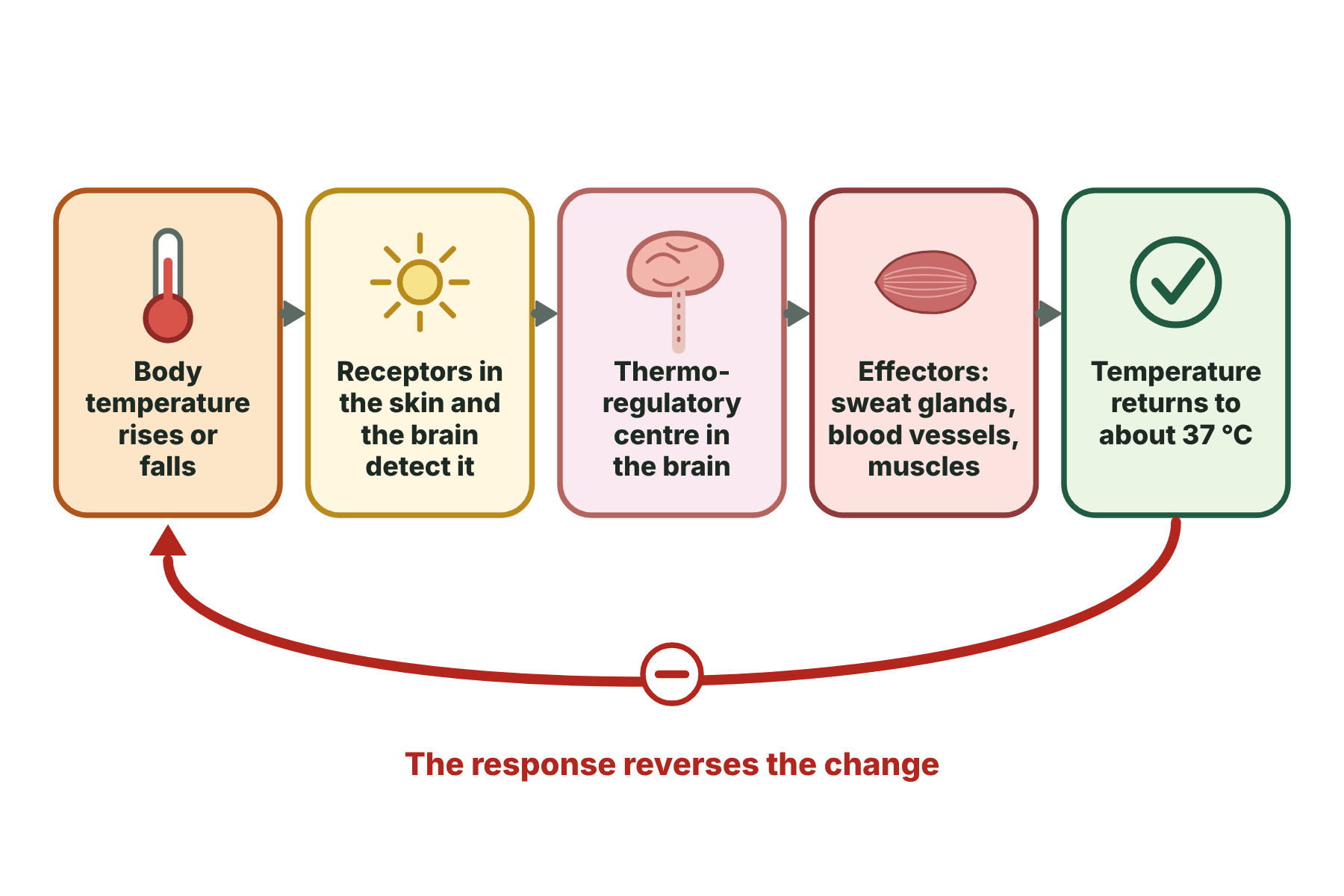
Too hot and too cold
- Too hot Sweat is produced; Blood vessels dilate; No shivering
- Too cold Sweating stops; Blood vessels constrict; Skeletal muscles shiver