Biology · Plant Hormones
Knowledge organiser
The whole chapter on one page. Print it on A4 — it is already landscape — or cover a box and see how much of it you can say from memory.
Biology · AQA Paper 2
Plant Hormones
Auxins, Phototropism and Gravitropism (Separate only)
A plant has no nerves, but it still grows towards the light and sends its roots down into the soil.
- Plant hormone A chemical that is made in a plant, and coordinates and controls its growth and responses.
- Auxin A plant hormone that controls the elongation of cells in shoots and roots.
- Phototropism A growth response to the direction of light.
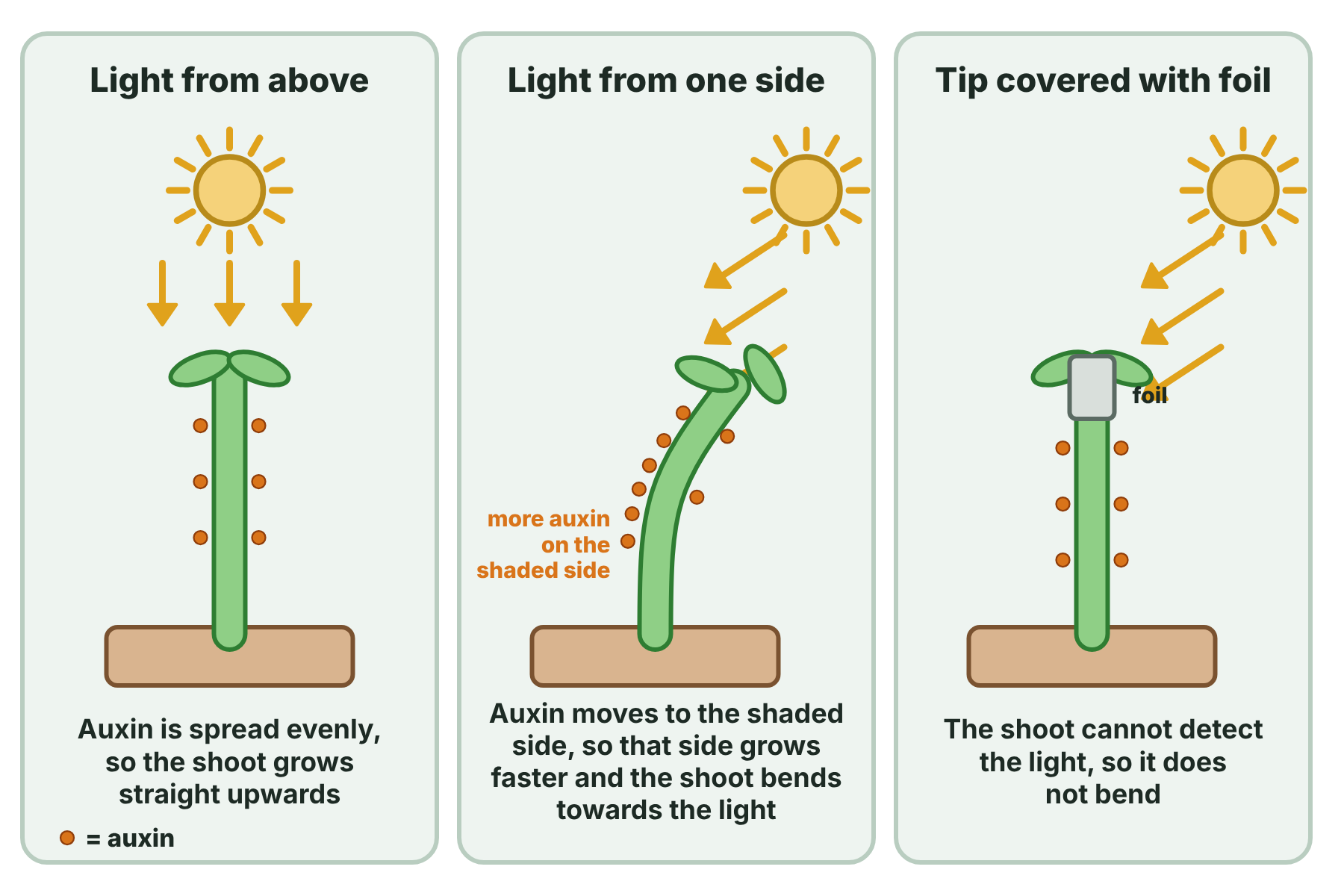
Shoots and roots
- A shoot Positive phototropism: grows towards light; Negative gravitropism: grows away from gravity; Auxin on one side speeds up growth on that side
- A root Not usually affected by the direction of light; Positive gravitropism: grows in the direction of gravity; Auxin on one side slows growth on that side
Investigating Plant Responses (Separate only)
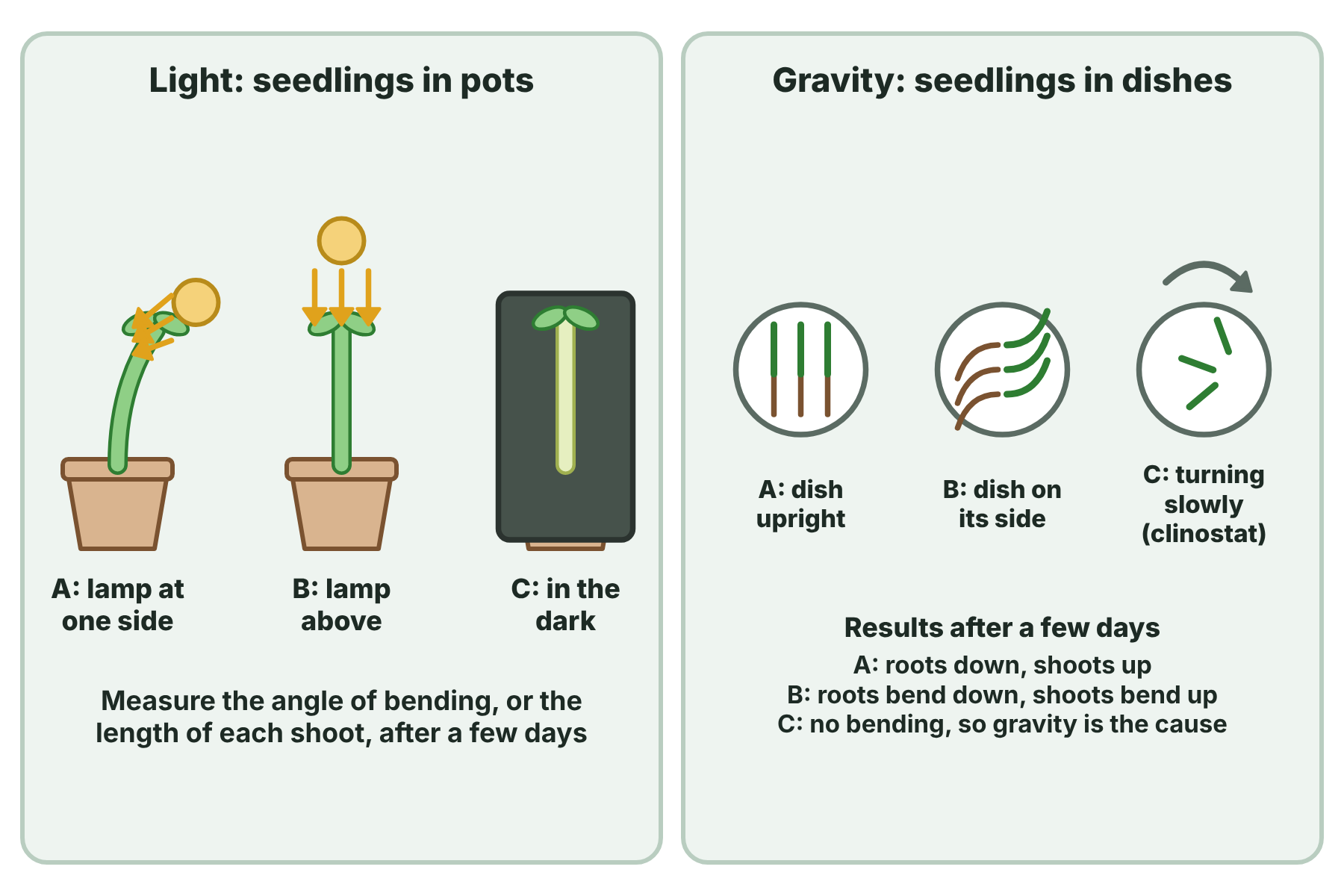
You can see a plant respond to light or to gravity within days, with a tray of seedlings.
- Hypothesis A testable explanation or prediction that can be tested by an investigation.
- Clinostat A device that turns seedlings slowly, so that gravity acts on all sides equally.
- Resolution The smallest change in a quantity that an instrument can detect.
Gibberellins and Ethene (Higher tier) (Separate only)
Auxin is not the only plant hormone. This lesson is for separate Biology only, and for the Higher tier only: Trilogy and Foundation students do not need it. It covers gibberellins.
- Gibberellin A plant hormone that is important in starting the germination of seeds.
- Ethene A plant hormone, which is a gas, that controls cell division and the ripening of fruits.
- Germination The start of growth of a seed into a seedling.
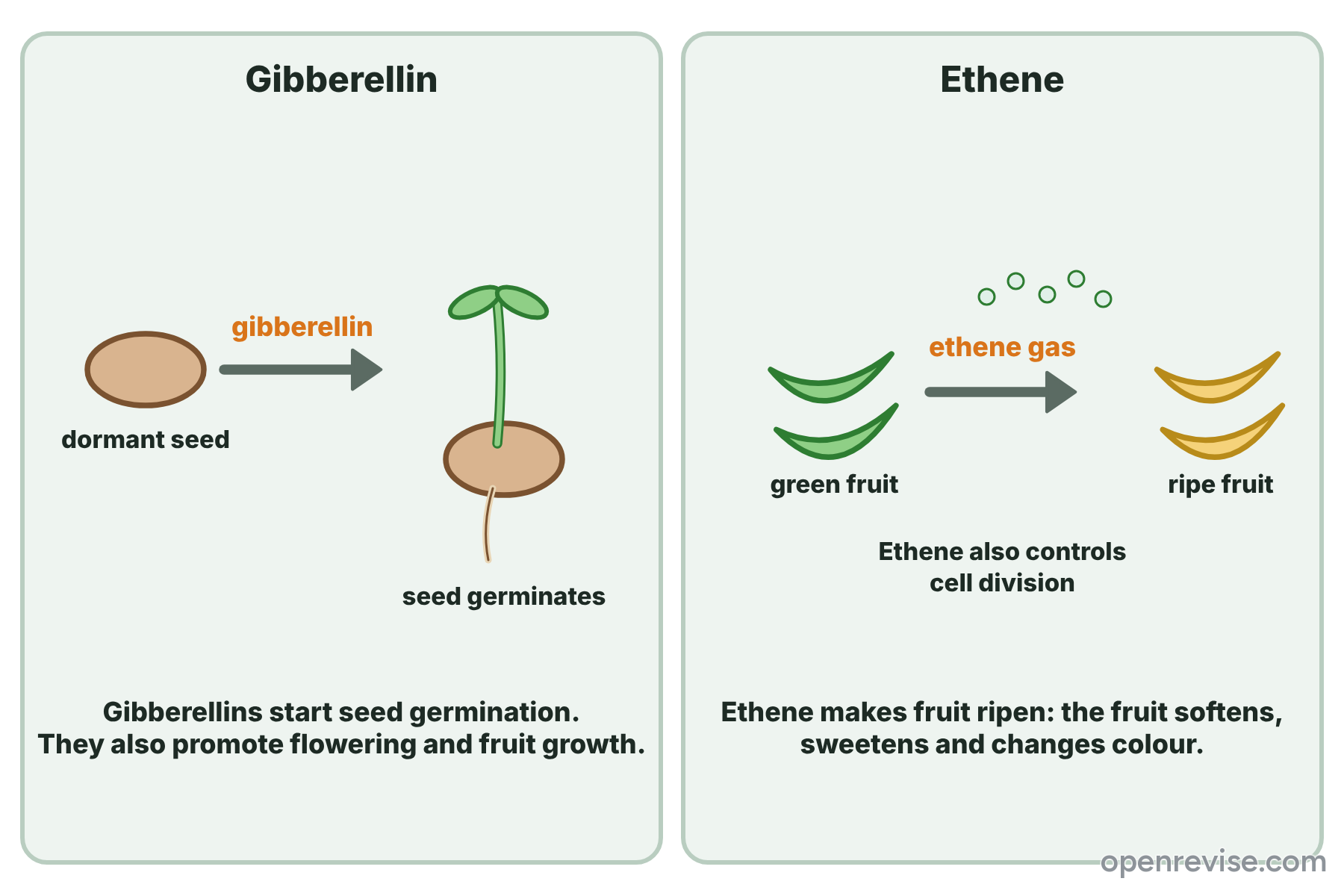
Comparing three plant hormones
- Auxins and gibberellins Auxins: made in the tips, make shoot cells elongate; Auxins: cause phototropism and gravitropism; Gibberellins: important in starting seed germination
- Ethene A gas, so it can move through the air; Controls the ripening of fruits; Controls cell division
Use of Plant Hormones (Higher tier) (Separate only)
Farmers, gardeners and food companies use plant hormones to control how plants grow.
- Agriculture The growing of crops and the rearing of animals on a large scale.
- Horticulture The growing of fruit, vegetables, flowers and ornamental plants.
- Weed killer A chemical that kills weeds.
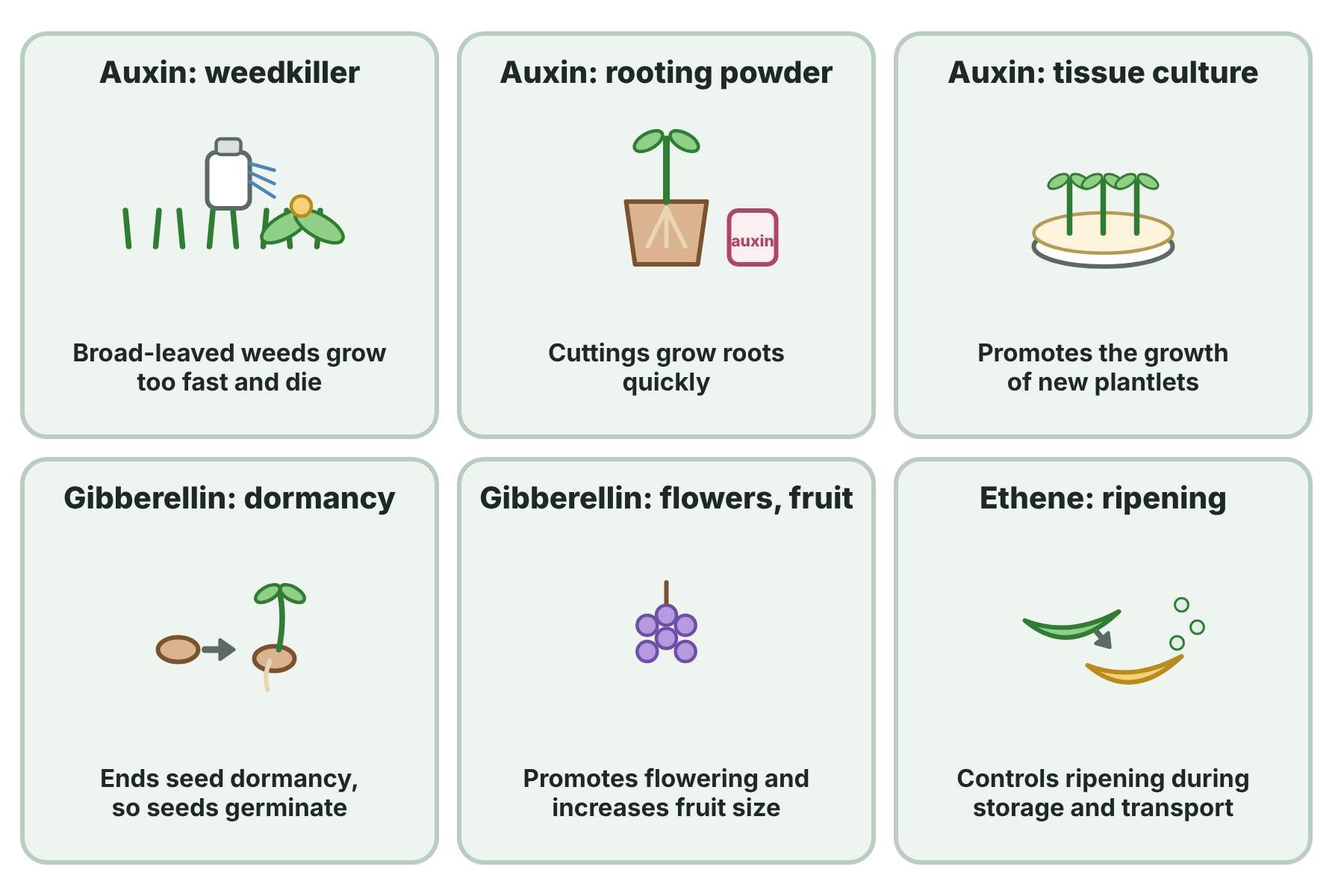
Advantages and disadvantages
- Advantages of plant hormones Higher and more even yields of crops; Fruit can be transported without damage, and ripened when needed; Many identical plants can be grown quickly
- Disadvantages Weed killers can reduce biodiversity; Chemicals may wash into streams; Cost of chemicals and equipment