Biology · Reproduction and Meiosis
Knowledge organiser
The whole chapter on one page. Print it on A4 — it is already landscape — or cover a box and see how much of it you can say from memory.
Biology · AQA Paper 2
Reproduction and Meiosis
Sexual and Asexual Reproduction
Some organisms need a partner to reproduce, and others can reproduce alone.
- Sexual reproduction Reproduction that involves the fusion of male and female gametes.
- Asexual reproduction Reproduction that involves one parent, and no fusion of gametes.
- Gamete A sex cell, such as a sperm cell or an egg cell.
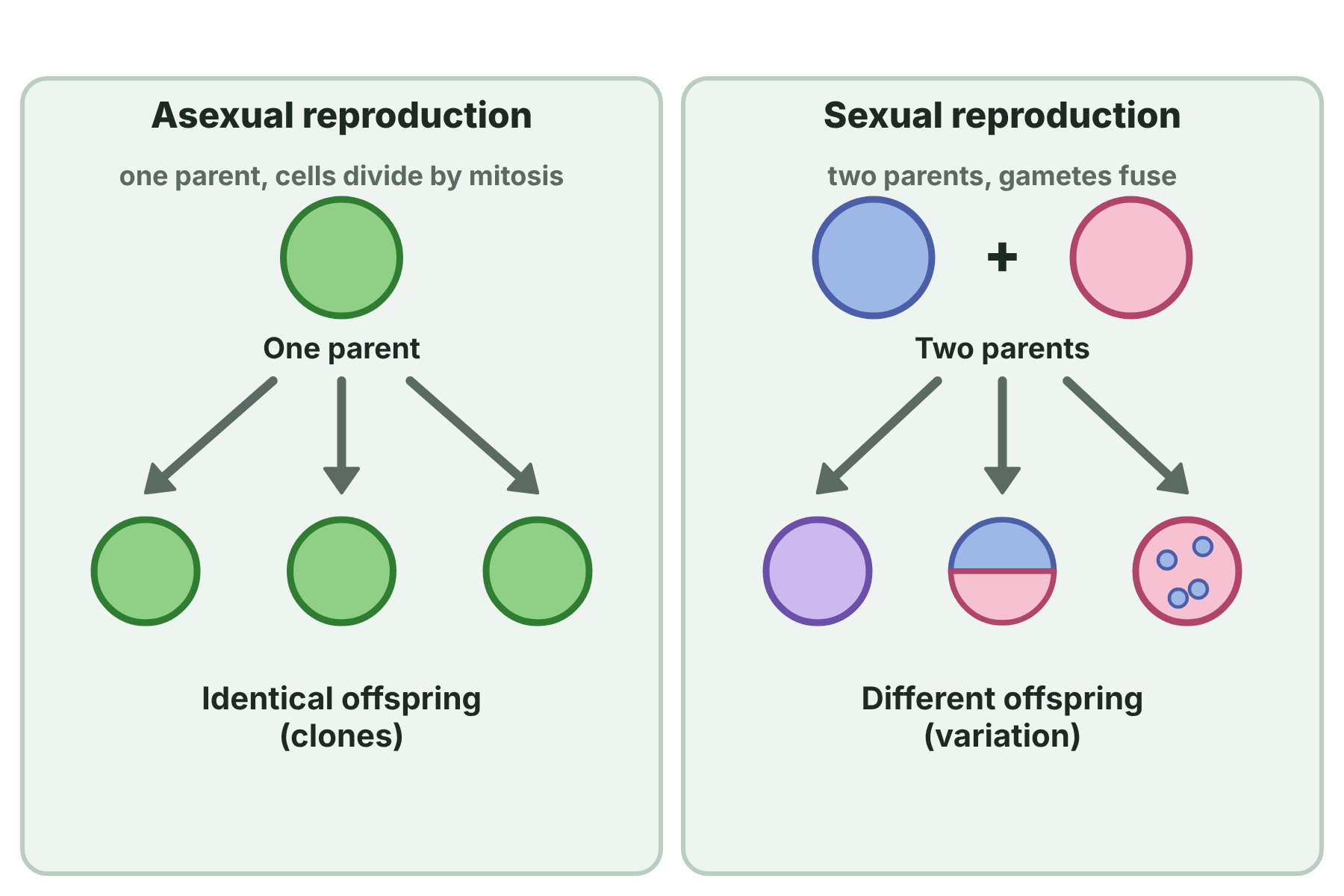
Sexual and asexual reproduction
- Sexual reproduction Two parents; Gametes, made by meiosis, fuse; Genetic information is mixed
- Asexual reproduction One parent; No gametes, and only mitosis; No mixing of genetic information
Meiosis and Fertilisation
A human sperm cell and a human egg cell each have only half of the chromosomes of an ordinary body cell.
- Meiosis Cell division in the reproductive organs that forms four genetically different gametes.
- Gamete A sex cell with half the number of chromosomes of a body cell.
- Fertilisation The fusion of the nuclei of a gamete from each parent.
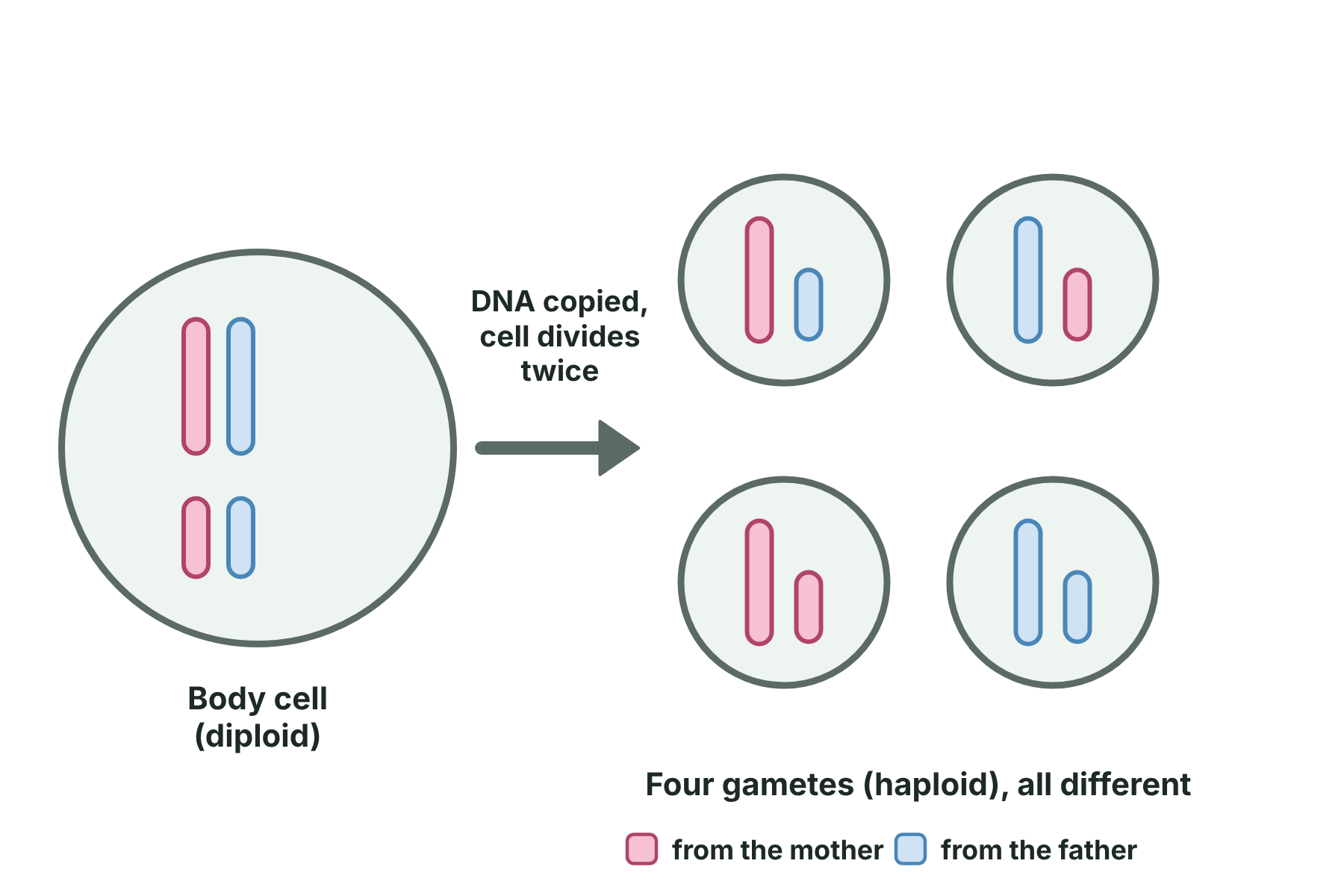
Gametes and body cells
- Gamete (sperm or egg) Made by meiosis; Half the number of chromosomes; 23 chromosomes in humans
- Body cell Made by mitosis; Full number of chromosomes; 46 chromosomes in humans
Advantages and Disadvantages of Sexual and Asexual Reproduction (Separate only)
Some organisms reproduce only one way, but many use both, depending on the circumstances.
- Variation Differences between the individuals of a population.
- Natural selection The process by which the best adapted organisms survive and reproduce.
- Selective breeding The process by which humans breed plants and animals for particular characteristics.
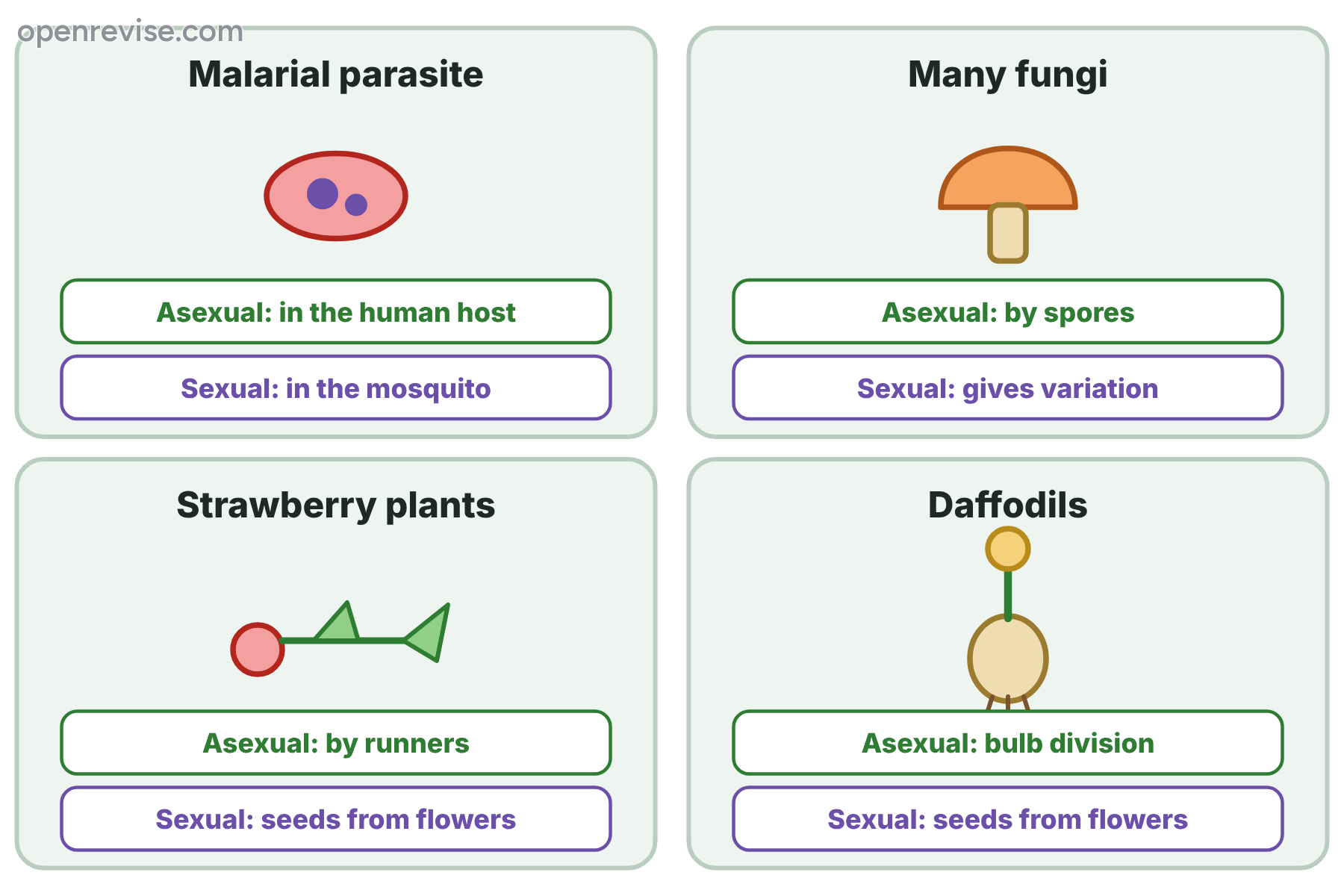
Sexual and asexual reproduction
- Sexual reproduction Produces variation in the offspring; Gives a survival advantage if the environment changes; Can be speeded up by selective breeding
- Asexual reproduction Only one parent is needed; More time and energy efficient; Faster