Biology · Respiration and Biological Molecules
Knowledge organiser
The whole chapter on one page. Print it on A4 — it is already landscape — or cover a box and see how much of it you can say from memory.
Biology · OCR Paper 1
Respiration and Biological Molecules
Aerobic and Anaerobic Respiration
Respiration is the exothermic reaction that transfers energy from glucose in every living cell.
- ATP Adenosine triphosphate, the molecule made in respiration that carries energy to where the cell needs it.
- Substrate The substance that is used in a reaction. The substrate for respiration is glucose.
- Respiration The exothermic reaction in living cells that transfers energy from glucose.
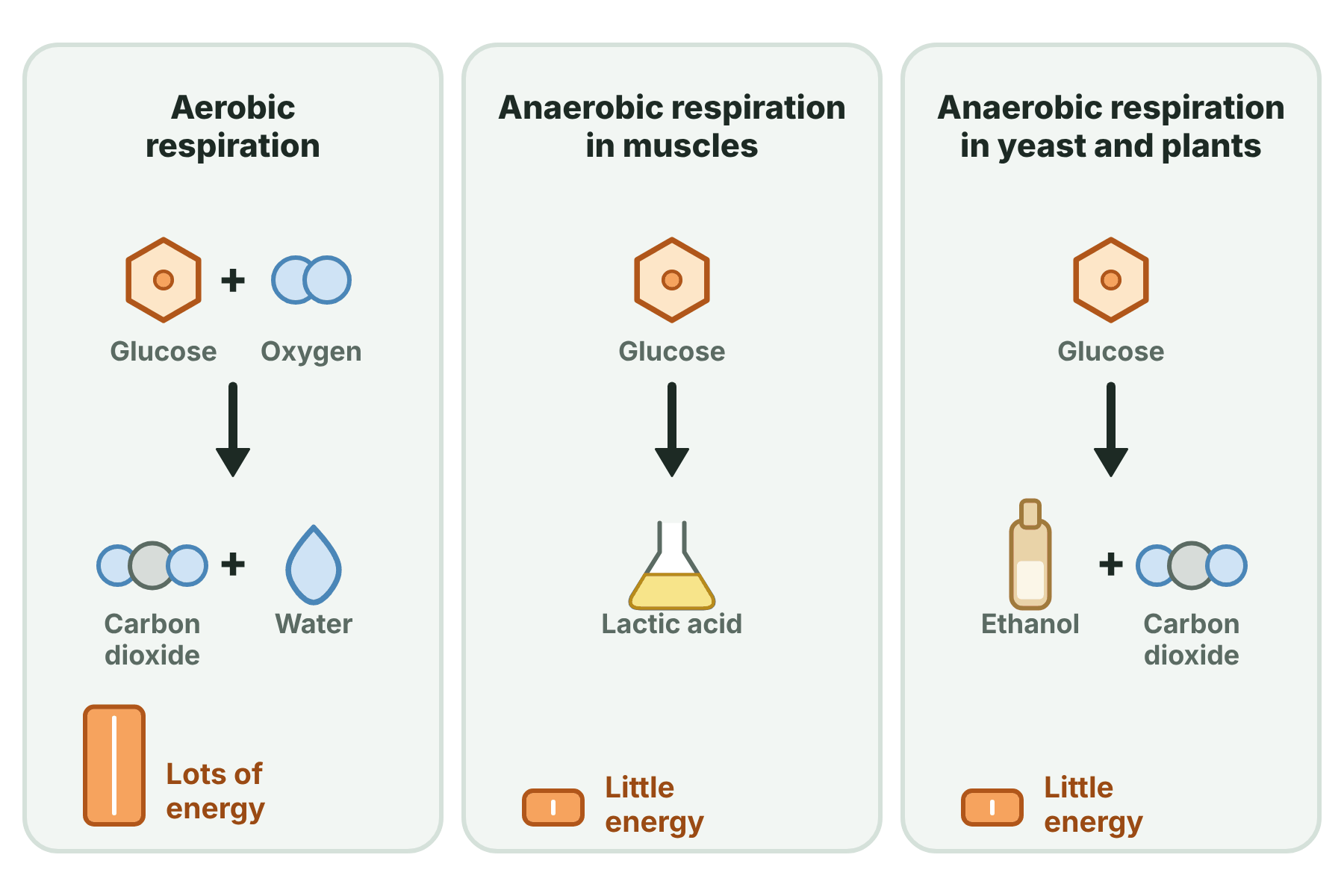
Aerobic and anaerobic respiration in animals
- Aerobic respiration Needs oxygen; Glucose is completely oxidised; Products: carbon dioxide and water
- Anaerobic respiration Does not need oxygen; Glucose is only partly oxidised; Product in muscles: lactic acid
Making bread with yeast
- Mix Mix flour, water, sugar and yeast into a dough.
- Warm Leave the dough in a warm place so the enzymes in the yeast work quickly.
- Ferment The yeast respires anaerobically.
- Rise The carbon dioxide forms bubbles in the dough, so it rises.
Monomers and Polymers
Sugars, amino acids, fatty acids and glycerol are the small molecules that cells join together to make carbohydrates, proteins and lipids.
- Monomer A small molecule that can join with many others to make a polymer.
- Polymer A large molecule made of many monomers joined in a chain.
- Synthesis Building a larger molecule from smaller ones.
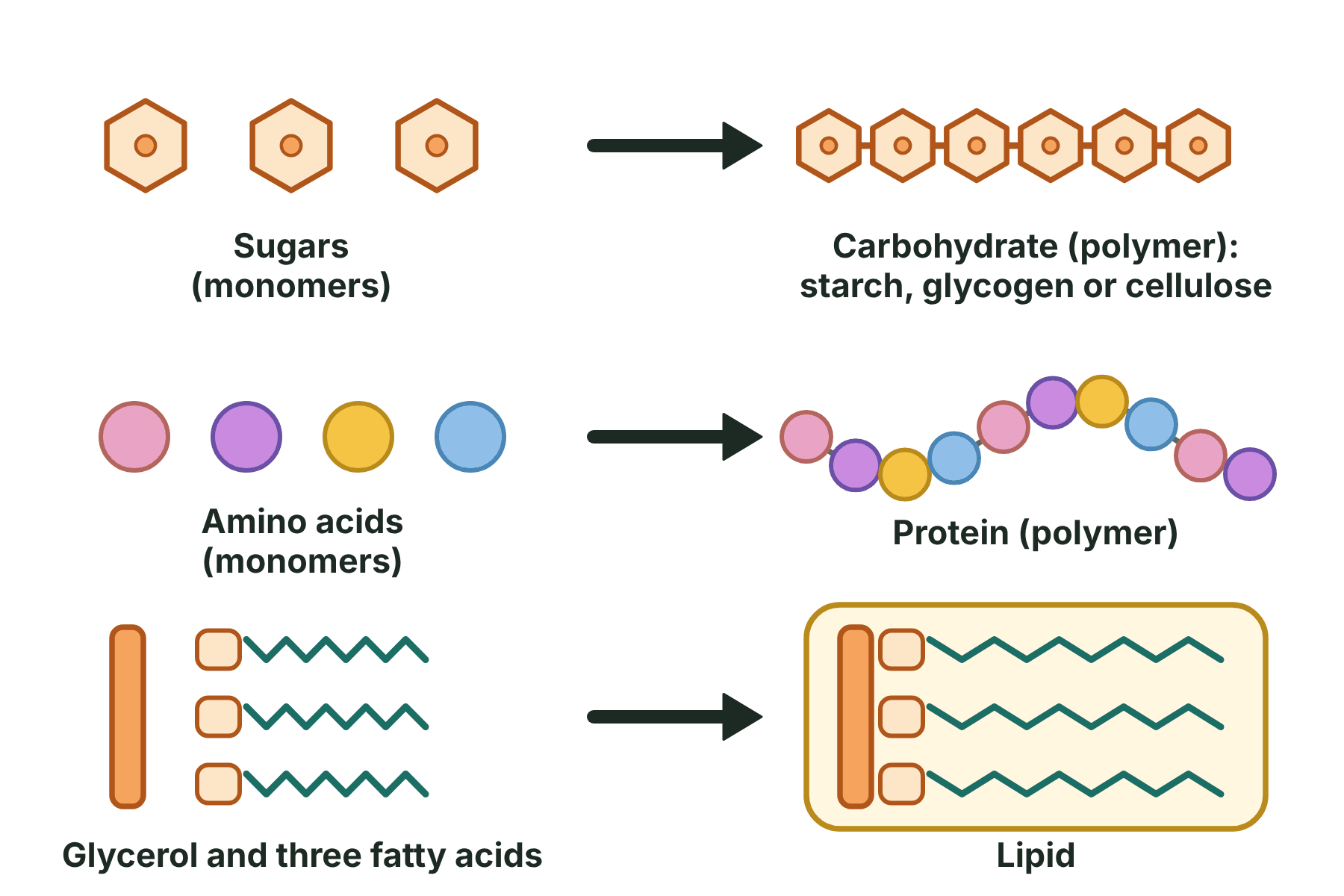
Building up and breaking down
- Synthesis Small molecules are joined together; Controlled by enzymes; Uses energy from respiration
- Breakdown Large molecules are split into small ones; Controlled by enzymes, such as carbohydrase, protease and lipase; Happens in digestion and inside cells
Food Tests
Iodine turns blue-black with starch. Benedict's reagent, heated, turns from blue to brick red with sugar.
- Reagent A chemical used to detect another substance because it changes colour or appearance.
- Qualitative test A test that shows whether a substance is present, but does not measure how much.
- Iodine solution The reagent that turns blue-black when starch is present.
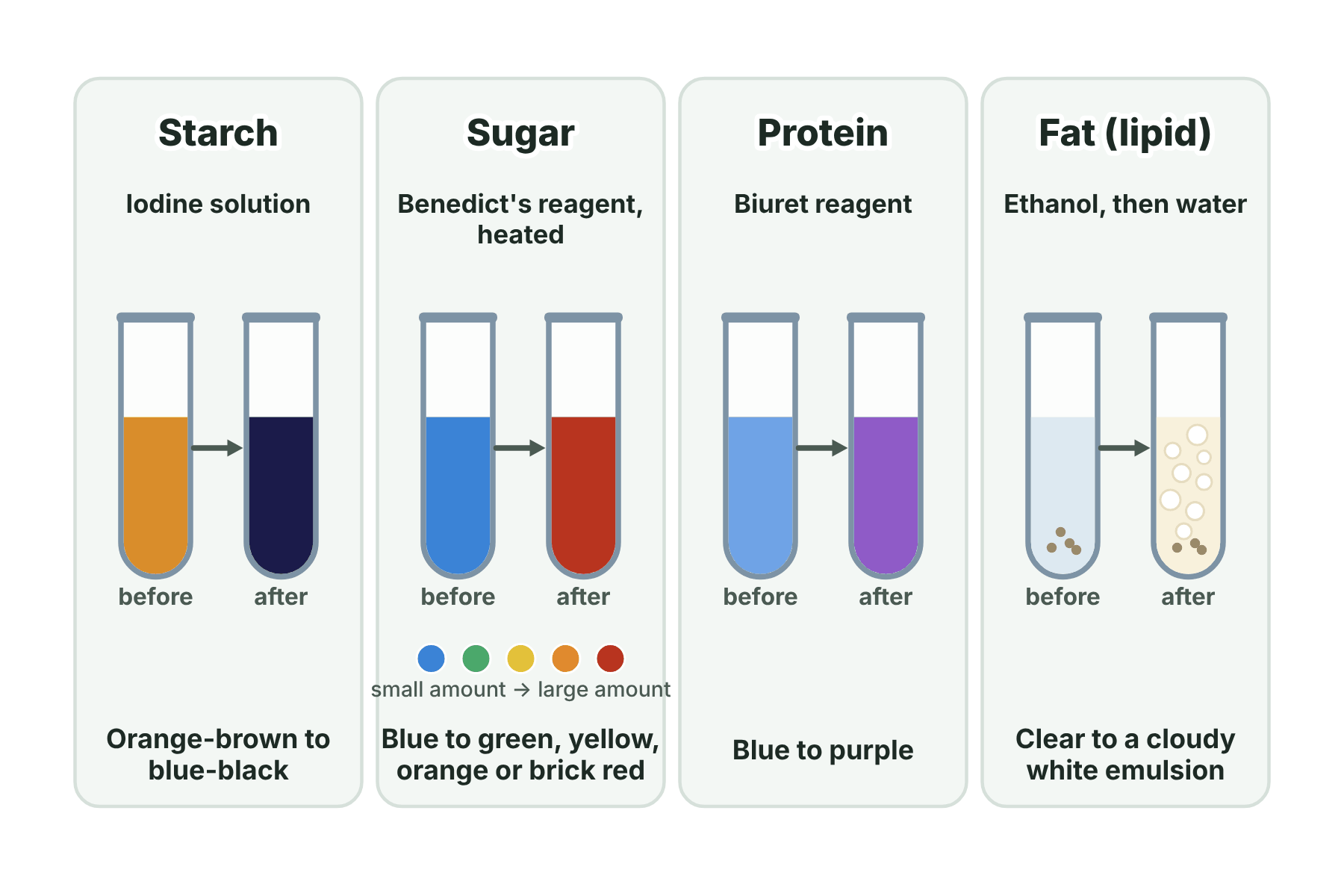
Carrying out Benedict's test for sugar
- Add the sample Put about 2 cm³ of the food sample into a test tube.
- Add the reagent Add about 10 drops of Benedict's reagent. The mixture is blue.
- Heat it safely Put the test tube in a hot water bath, at about 75 °C.
- Watch for a colour change If there is sugar the mixture goes green, yellow, orange or…