Biology · Inheritance
Knowledge organiser
The whole chapter on two pages. Print it on A4 — they are already landscape — or cover a box and see how much of it you can say from memory.
Biology · OCR Paper 2
Inheritance
Genes, the Genome and Phenotype
Every cell in your body contains the instructions for making you, but what you look like depends on more than those instructions.
- Gene A section of DNA that codes for a protein.
- Allele A different version of a gene, also called a variant.
- Genome The entire genetic material of an organism.
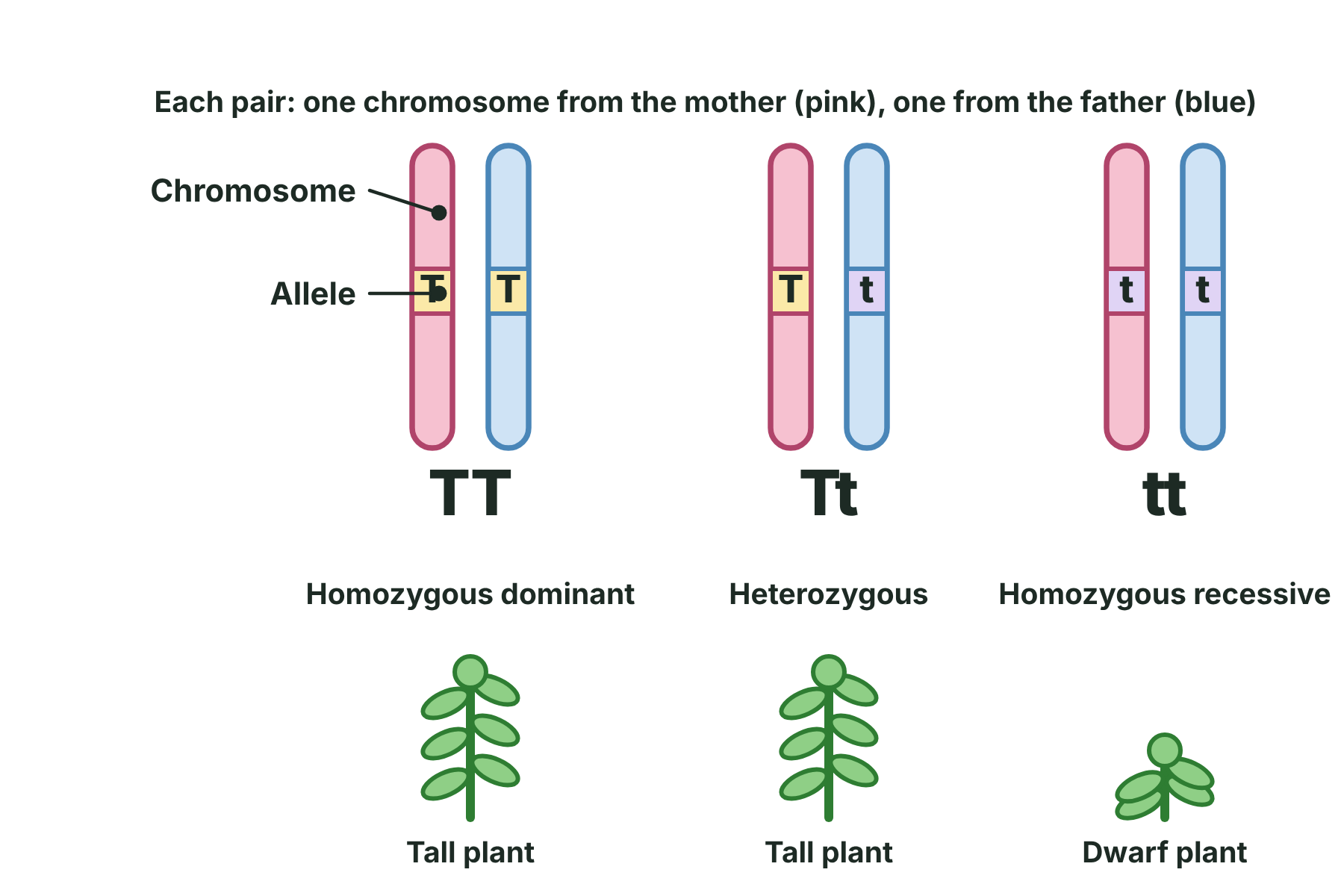
Homozygous and heterozygous
- Homozygous Two identical alleles of a gene; Written TT (dominant) or tt (recessive); Makes only one kind of gamete
- Heterozygous Two different alleles of a gene; Written Tt; Makes two kinds of gamete, with T or t
Variation and Mutations
No two people are exactly alike, and neither are two peas in a pod.
- Variation The differences between individuals of the same species.
- Discontinuous variation Variation in which individuals fall into distinct categories.
- Continuous variation Variation in which a feature can have any value within a range.
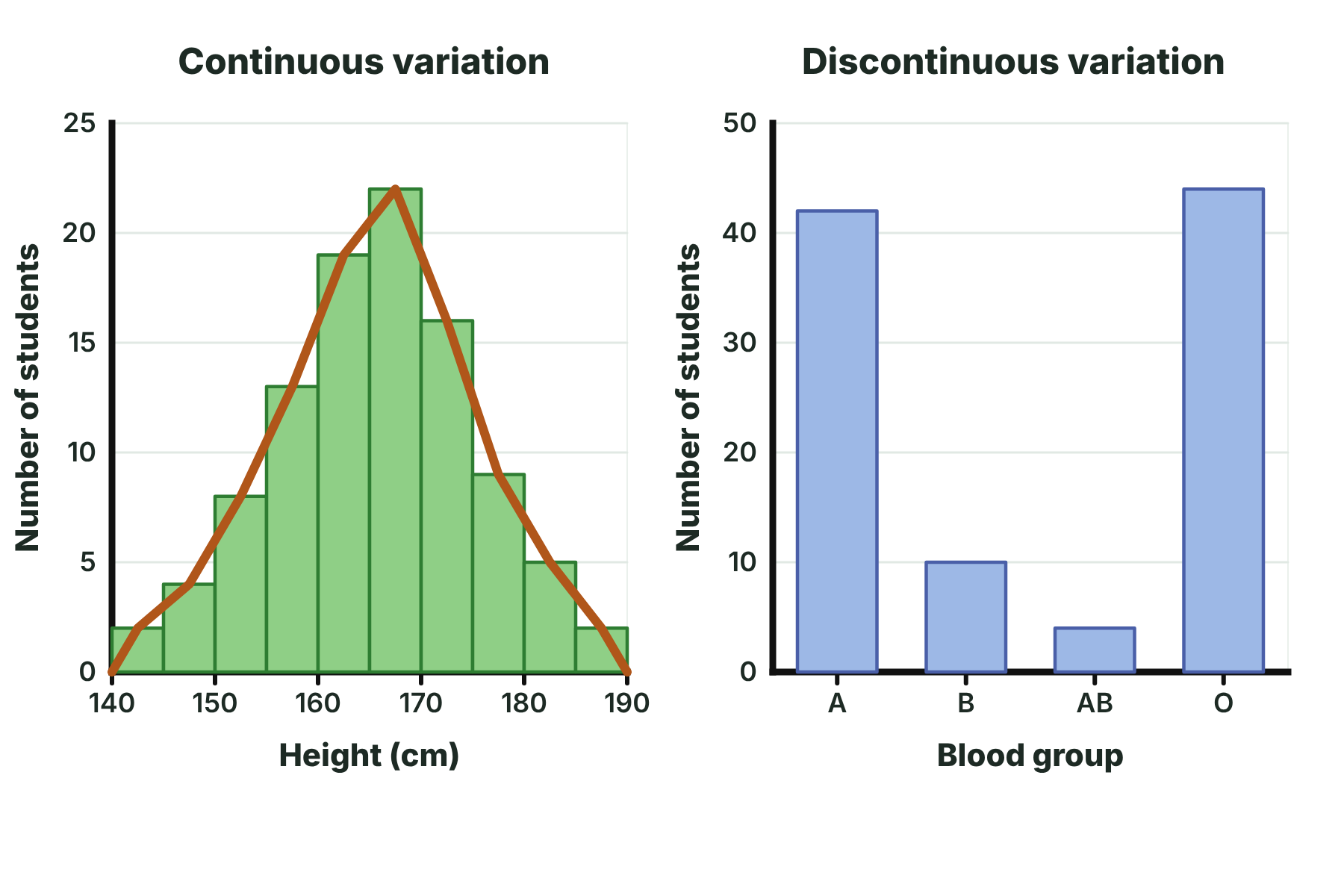
Continuous and discontinuous variation
- Continuous variation Any value in a range, with no clear groups; Examples: height and weight; Many genes, and often the environment as well
- Discontinuous variation Distinct categories, with no in-between values; Examples: eye colour and blood group; One or a few genes, with little effect of the environment
Genetic Variants and Phenotype (Higher tier) (Separate only)
A change in one base can have no effect, or it can switch a gene off or change an enzyme.
- Coding DNA The parts of the DNA that code for proteins, which are the genes.
- Non-coding DNA Parts of the DNA that do not code for proteins, but may control how genes are used.
- Gene expression The way in which a gene is used to make its protein.
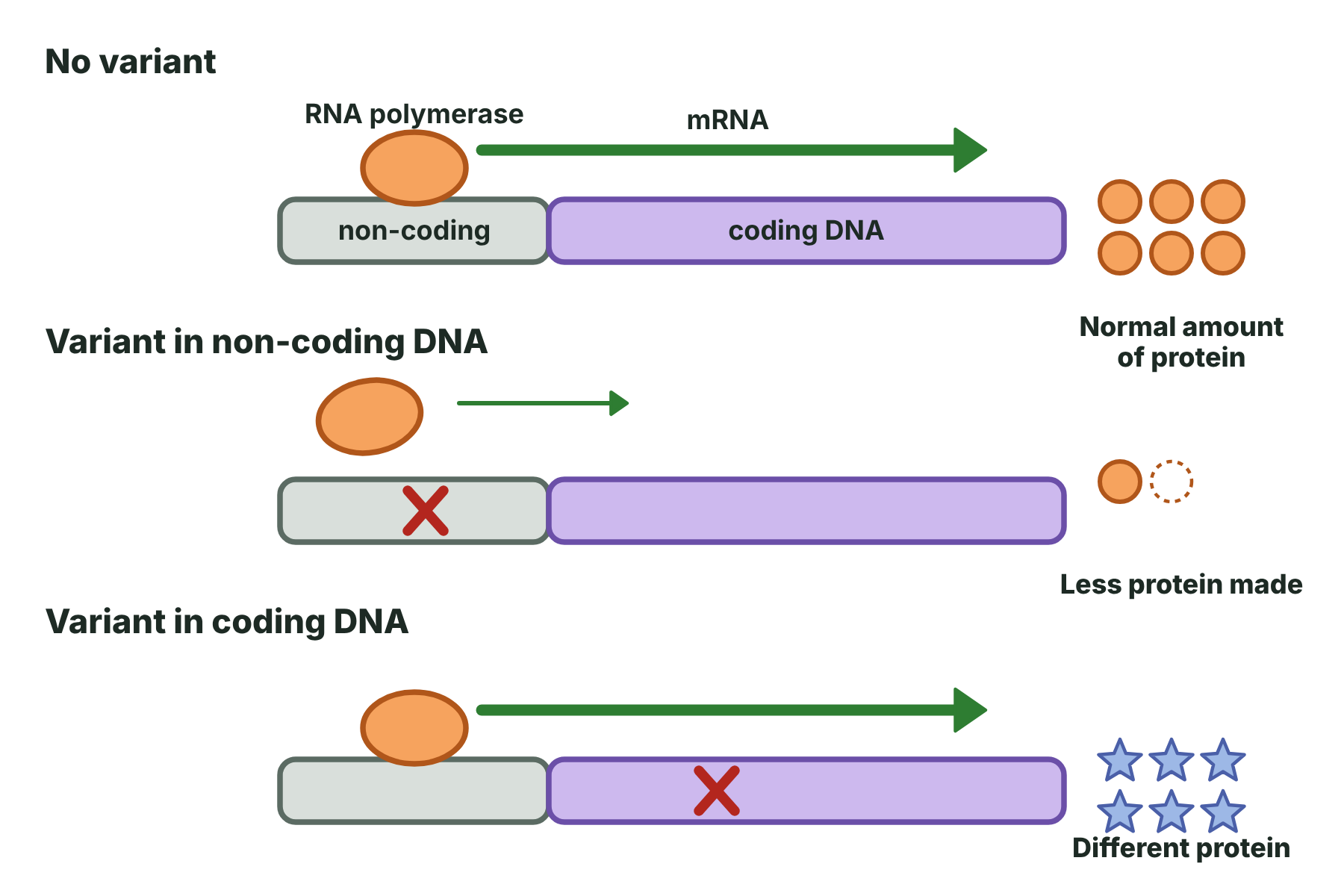
Non-coding and coding variants
- Variant in non-coding DNA Outside the gene; Changes how the gene is expressed; May stop transcription of the mRNA
- Variant in coding DNA Inside the gene; Can change the amino acid sequence; Can change the shape and the activity of the protein
Asexual and Sexual Reproduction (Separate only)
Some organisms reproduce on their own, and others need a partner.
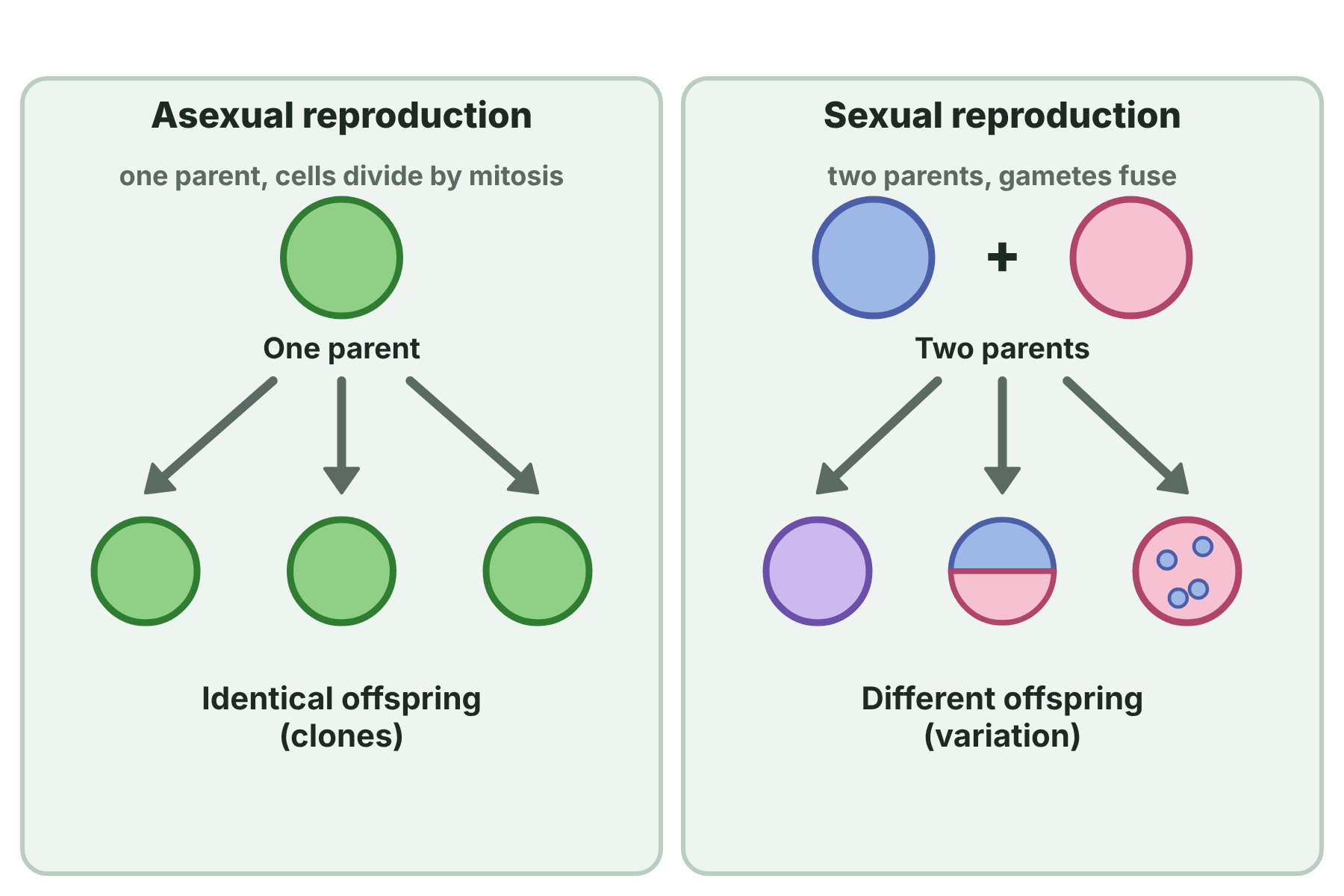
- Asexual reproduction Reproduction involving one parent, with no gametes, producing genetically identical offspring.
- Sexual reproduction Reproduction involving the fusion of gametes from two parents, producing genetically different offspring.
- Clone A genetically identical copy of an organism.
Biology · OCR Paper 2
Inheritance continued
Asexual and sexual reproduction
- Asexual reproduction One parent; No gametes and no fertilisation; Cells divide by mitosis
- Sexual reproduction Two parents; Gametes made by meiosis fuse at fertilisation; Offspring differ from each other and from the parents
Meiosis, Haploid and Diploid
Your body cells have 46 chromosomes, but your gametes have only 23.
- Meiosis A type of cell division that produces four genetically different haploid gametes.
- Haploid Having one set of chromosomes, as in a gamete.
- Diploid Having two sets of chromosomes, as in a body cell.
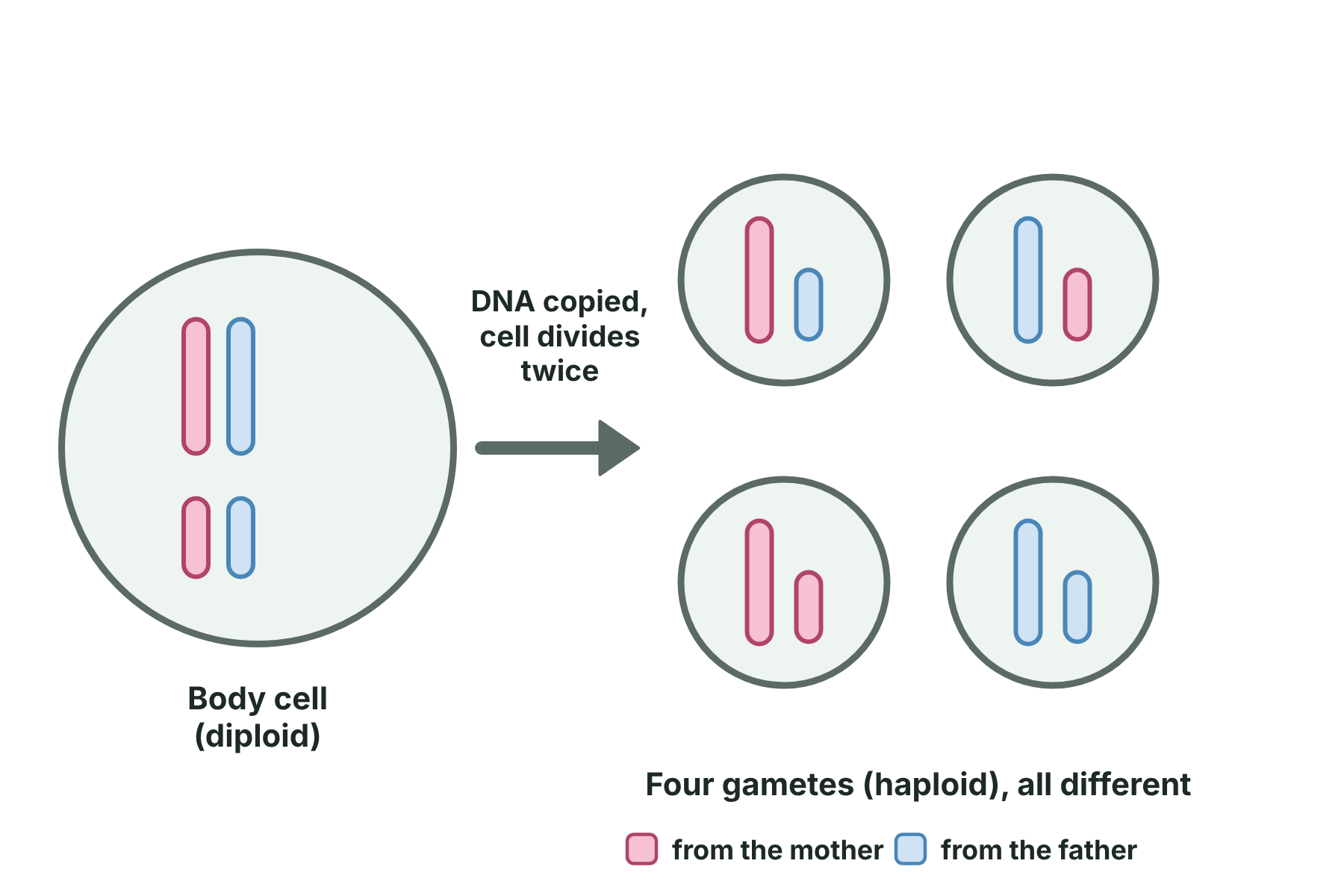
Mitosis and meiosis
- Mitosis Makes two cells; Each daughter cell is diploid; Daughter cells are genetically identical
- Meiosis Makes four cells; Each daughter cell is haploid; Daughter cells are genetically different
What happens in meiosis
- Start A diploid cell in the ovary or the testis has pairs of chromosomes.
- Copying The DNA is copied, so each chromosome has two identical copies.
- First division The pairs of chromosomes separate, and the cell divides into two.
- Second division The copies of each chromosome separate, and the cells divide again.
Single Gene Inheritance and Punnett Squares
If you know the genotypes of two parents, you can predict what their offspring will be like.
- Single gene cross A cross that looks at the inheritance of one gene.
- Punnett square A grid that shows the possible combinations of gametes in a cross.
- Genotype The alleles that an organism has for a gene.
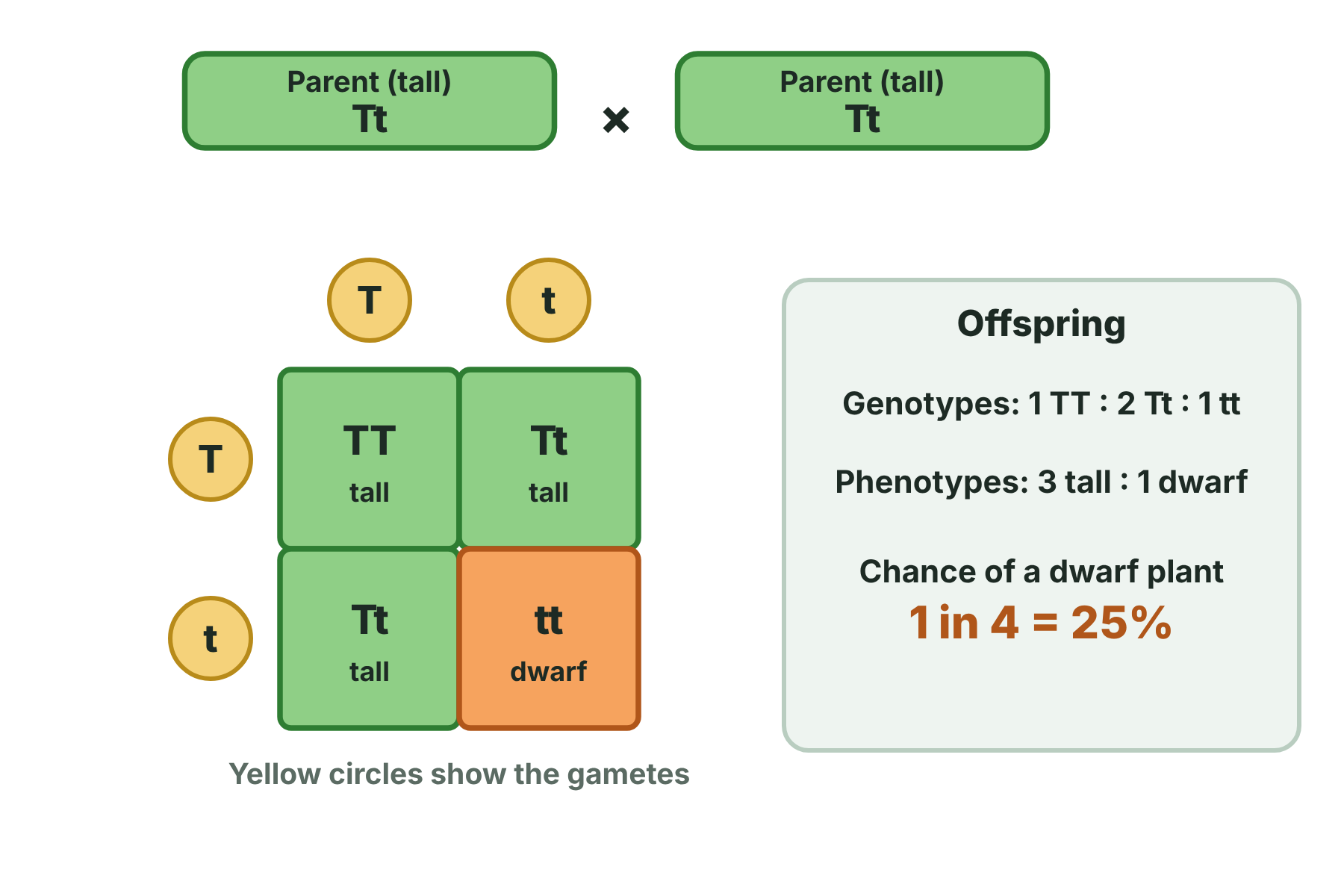
How to draw a genetic cross
- Define the alleles State the letters, for example T for tall.
- Write the parents' genotypes For example Tt and Tt.
- Write the gametes A Tt parent makes gametes with T, and gametes with t.
- Draw the Punnett square Put the gametes of one parent along the top, and of the other down the side.
Mendel and the Development of Genetics (Separate only)
Genetics began in a monastery garden, with a monk who counted peas. This lesson is for separate Biology only: Combined Science students do not need it.
- Blending inheritance The idea that the features of parents mix in their offspring.
- Pure-breeding Producing offspring that are always the same as the parent.
- Cross-pollination The transfer of pollen from one plant to the flower of another plant.
- P generation The parental generation in a cross.
The tall and dwarf experiment
- P generation Pure-breeding tall plants were crossed with pure-breeding dwarf plants.
- F1 generation All of the offspring were tall.
- Self-pollination The F1 plants were allowed to pollinate themselves.
- F2 generation Of 1064 plants, 787 were tall and 277 were dwarf.