Flashcards · Biology
Defence Against Disease
-
What are the body's non-specific defences?
Barriers such as the skin, nose, trachea and bronchi, and stomach that work against all pathogens.
-
How does the skin protect the body?
It is a barrier that most pathogens cannot pass, and platelets seal any cuts with a scab.
-
How does the nose protect the body?
Hairs and mucus trap pathogens in the air.
-
How do the trachea and bronchi protect the body?
Mucus traps pathogens and cilia move it up to be swallowed.
-
How does the stomach protect the body?
It makes hydrochloric acid, which kills pathogens.
-
What is the immune system?
White blood cells that try to destroy pathogens that get into the body.
-
What is phagocytosis?
A white blood cell engulfing and digesting a pathogen.
-
What is an antigen?
A molecule on the surface of a pathogen.
-
What is an antibody?
A protein made by white blood cells that sticks to a specific antigen.
-
Why is each antibody specific?
Its shape fits the antigen of only one type of pathogen.
-
What do antitoxins do?
They neutralise the toxins made by bacteria.
-
Which cells make antibodies?
Lymphocytes (white blood cells).
-
What happens to a pathogen covered in antibodies?
It is destroyed, often by phagocytes.
-
What do cilia do in the airways?
Move mucus, with trapped pathogens, up towards the throat.
-
Which defence is non-specific, phagocytosis or antibodies?
Phagocytosis.
-
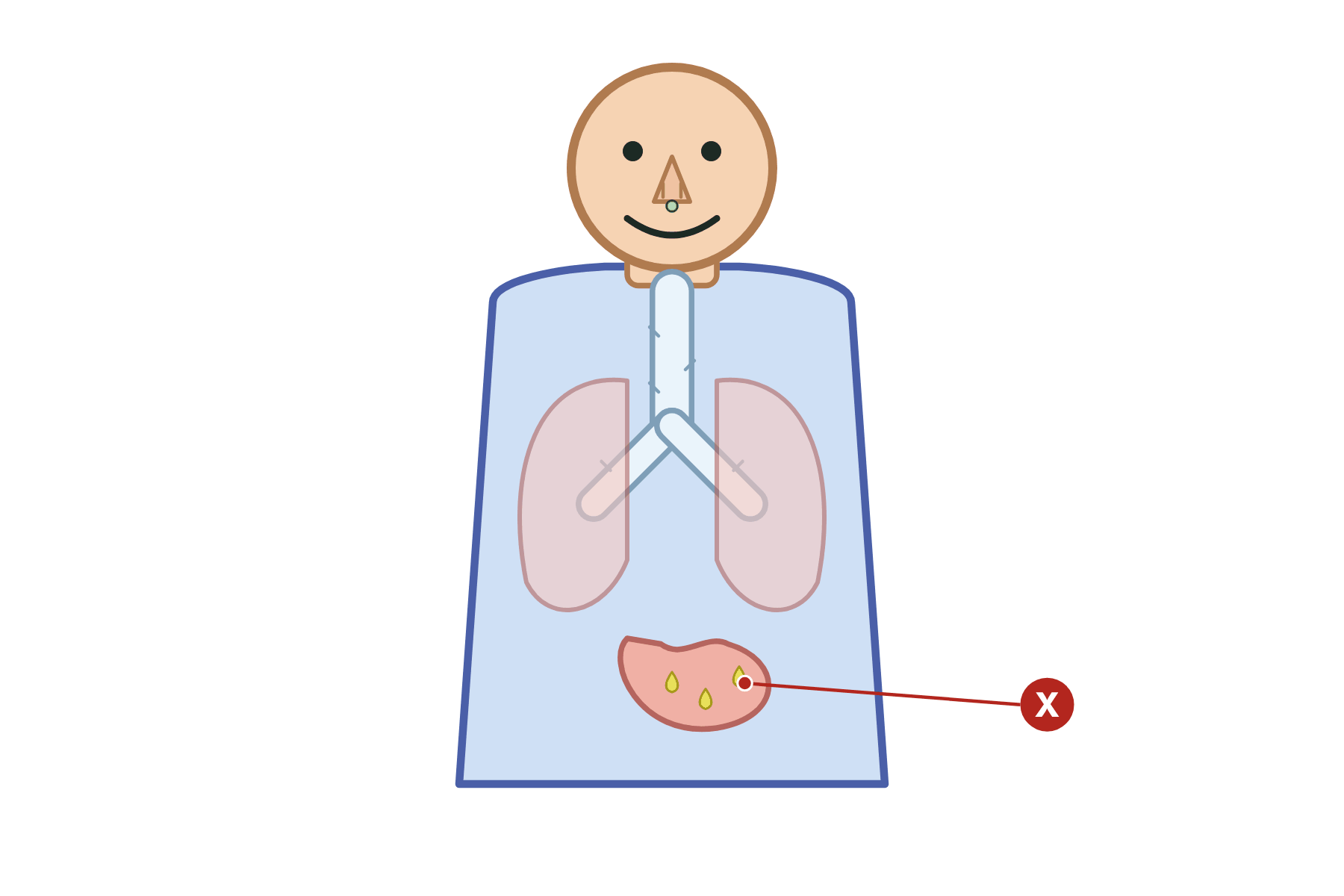 Name the defence marked X and say how it protects the body.
 The stomach. It produces hydrochloric acid, which kills most of the pathogens that are swallowed.
-
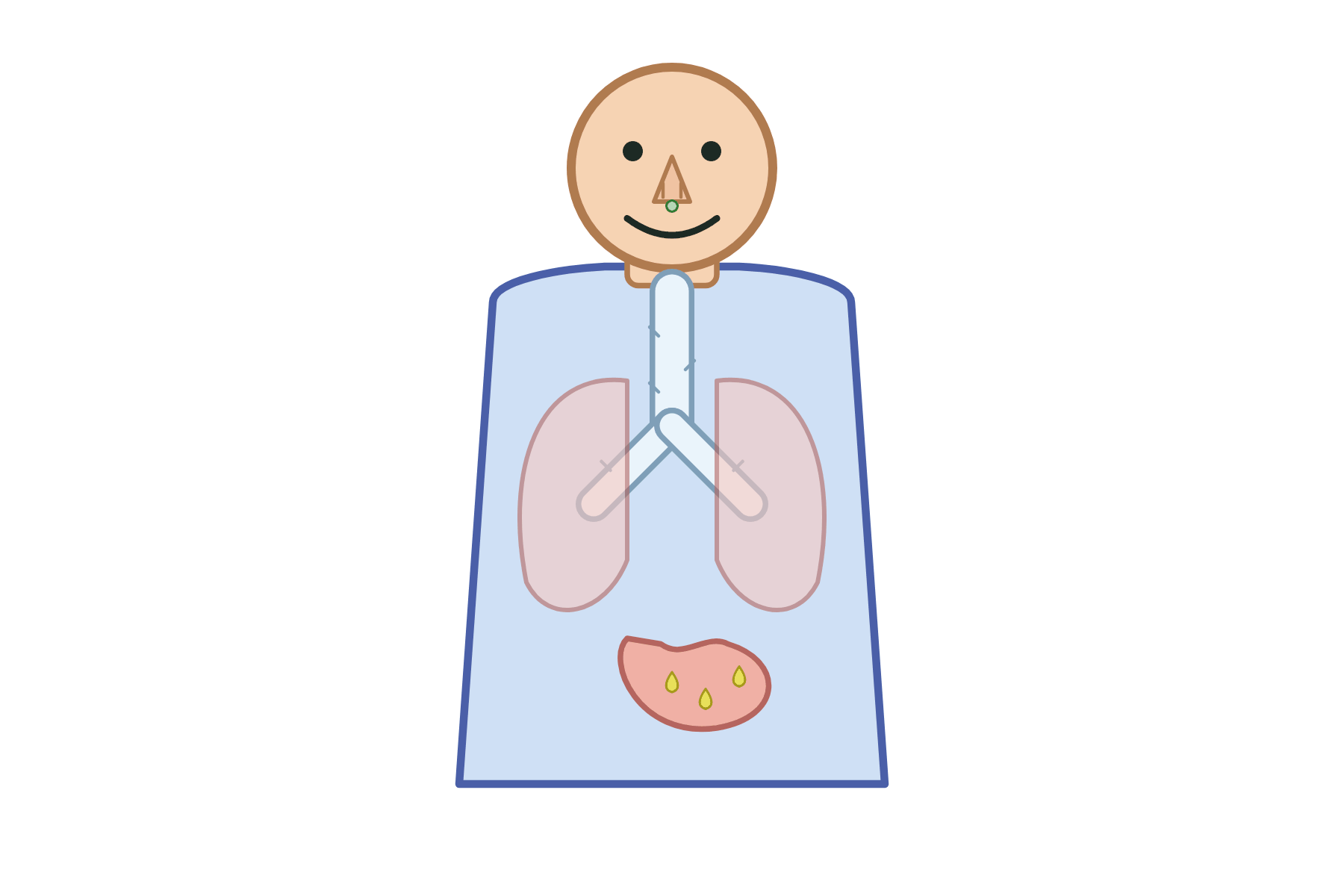 Label the body's non-specific defences.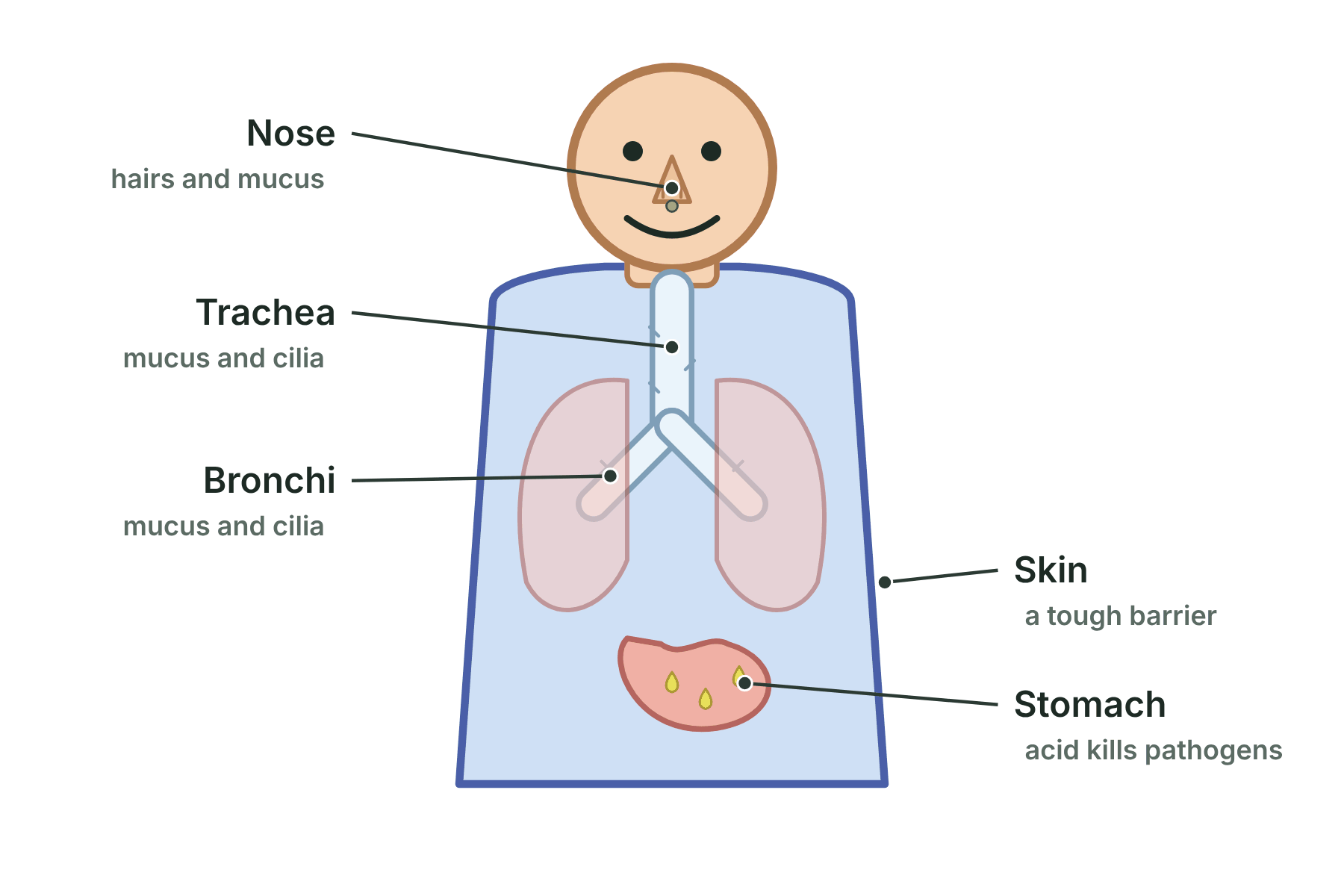
Skin (tough barrier), nose (hairs and mucus), trachea and bronchi (mucus and cilia) and stomach (hydrochloric acid).
-
What is vaccination?
Introducing small quantities of dead or inactive forms of a pathogen into the body.
-
What does a vaccine stimulate?
The white blood cells to produce antibodies.
-
Why does a vaccine not make you ill?
The pathogens in it are dead or inactive.
-
What happens if the real pathogen later enters a vaccinated person?
The white blood cells respond quickly and make the correct antibodies.
-
Why is the second response faster?
Memory cells remember the antigen.
-
What is herd immunity?
When most people are immune, so the disease cannot spread easily and protects the unvaccinated.
-
Who benefits from herd immunity?
People who cannot be vaccinated, such as babies or the very ill.
-
Name a disease that has been eradicated by vaccination.
Smallpox.
-
What happens if fewer people are vaccinated?
The disease can spread again.
-
Why do some pathogens need new vaccines regularly?
Their antigens change, as in flu viruses.
-
What is a vaccination schedule?
A plan of when each vaccine is given. You do not need to know it.
-
Give one benefit of vaccination to a country.
It saves lives and money spent on treatment.
-
Give one concern about vaccination.
A small number of people react badly, which can put others off.
-
Does vaccination work on bacteria and viruses?
Yes, there are vaccines against both.
-
What are memory cells?
White blood cells that remain after an infection or vaccination.
-
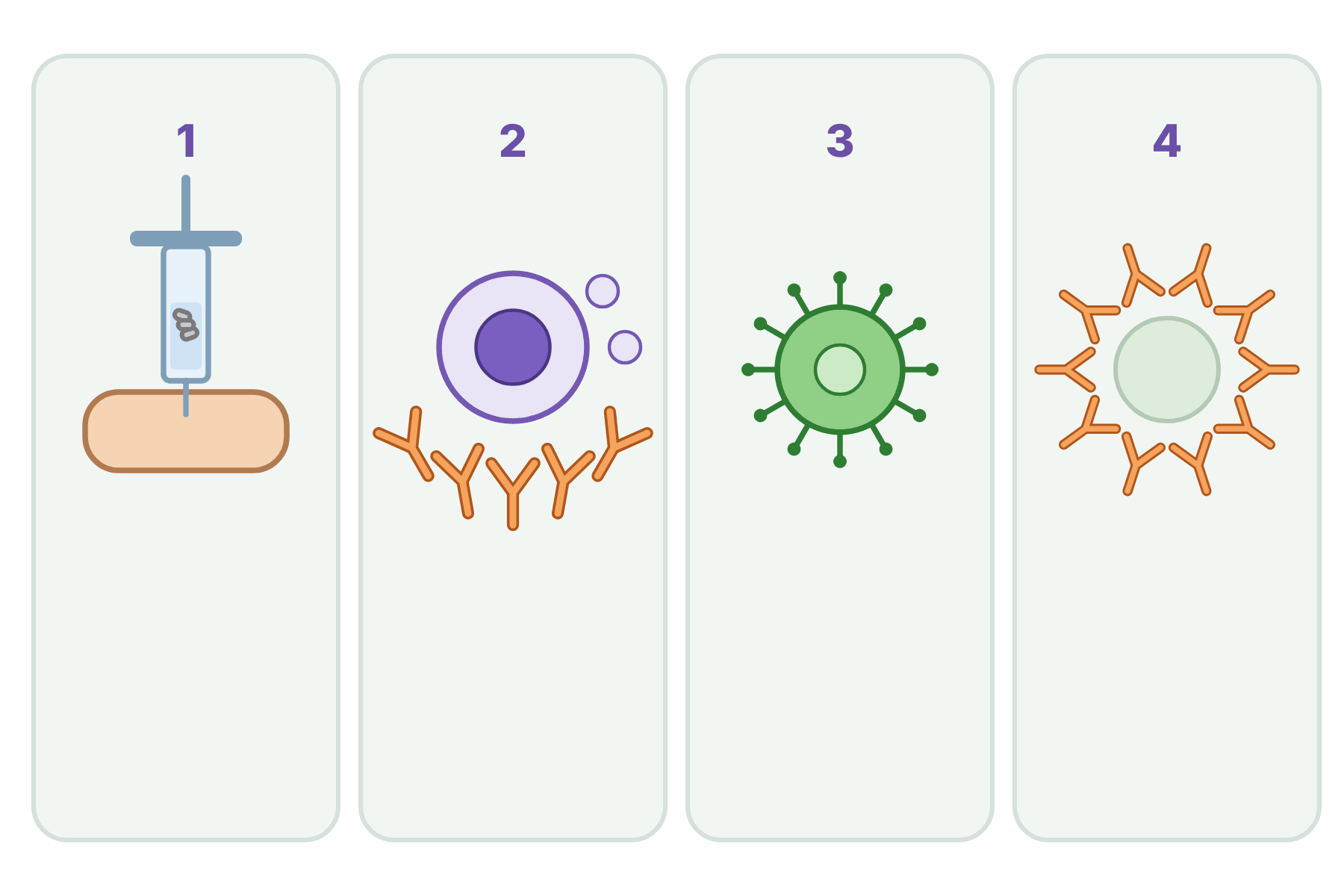 Describe what is happening at each step.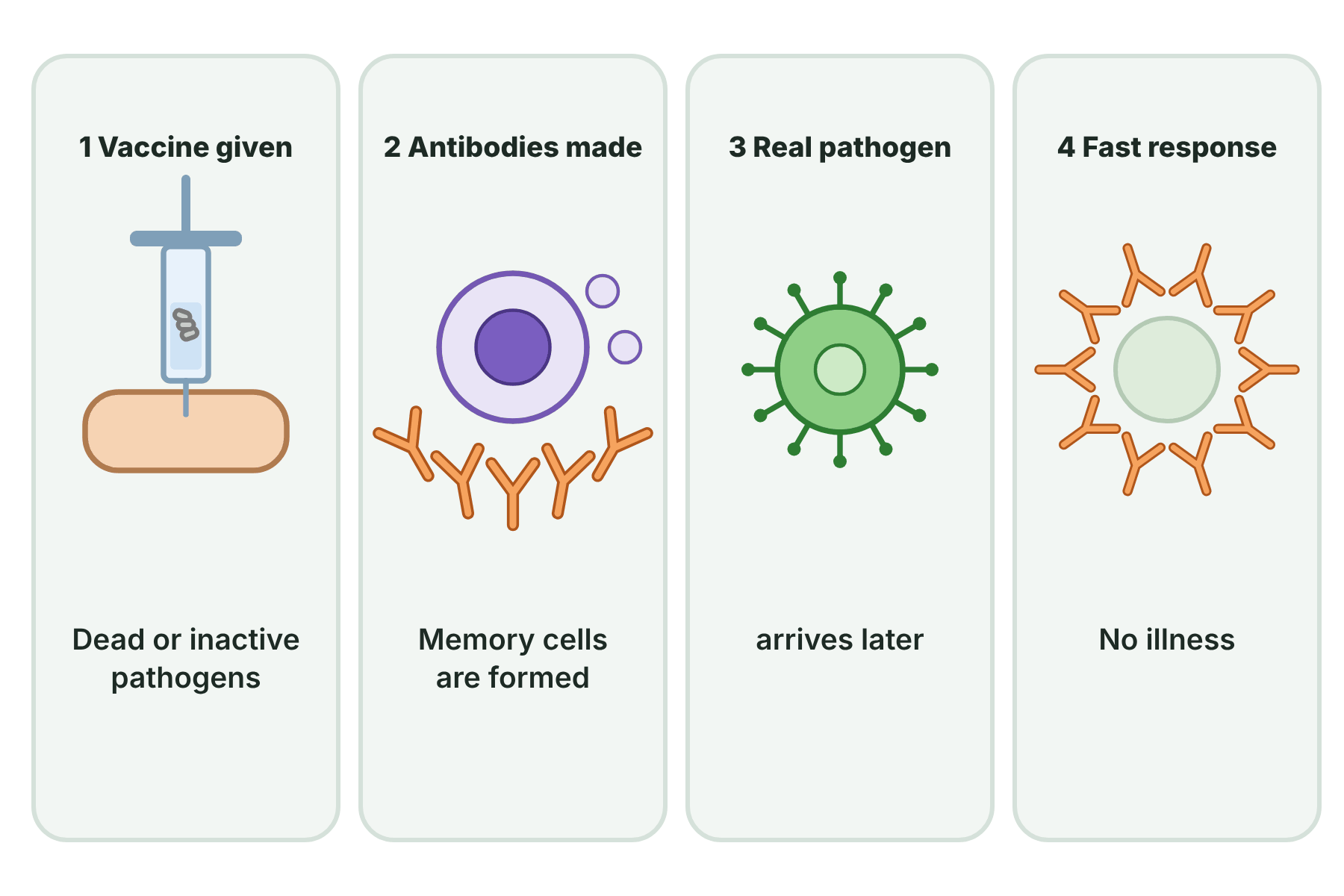
1 Vaccine given: dead or inactive pathogens. 2 Antibodies and memory cells are made. 3 The real pathogen arrives later. 4 A fast response destroys it, so there is no illness.
-
What do antibiotics do?
They kill bacteria inside the body, curing bacterial disease.
-
Give an example of an antibiotic.
Penicillin.
-
Why must the right antibiotic be used for a bacterial disease?
Antibiotics are specific. Each works on certain bacteria only.
-
Do antibiotics kill viruses?
No.
-
Why do antibiotics not kill viruses?
Viruses live and reproduce inside cells, and do not have the structures that antibiotics attack.
-
Why is it difficult to make drugs that kill viruses?
They would also damage the body's own cells.
-
What do painkillers do?
They reduce the pain and other symptoms of a disease.
-
Do painkillers kill pathogens?
No.
-
What is antibiotic resistance?
When bacteria are no longer killed by an antibiotic.
-
How does a resistant strain arise?
A mutation makes a bacterium resistant, it survives the antibiotic, and it reproduces.
-
Why is antibiotic resistance a concern?
Infections become harder to treat, and people may die from infections that were once easily cured.
-
How can resistance be reduced?
Do not overuse antibiotics, and finish the course.
-
What is MRSA?
A strain of bacteria that is resistant to many antibiotics.
-
Why shouldn't you take antibiotics for a cold?
A cold is caused by a virus, so antibiotics do not work.
-
What has happened to deaths from bacterial diseases since antibiotics?
They have greatly decreased.
-
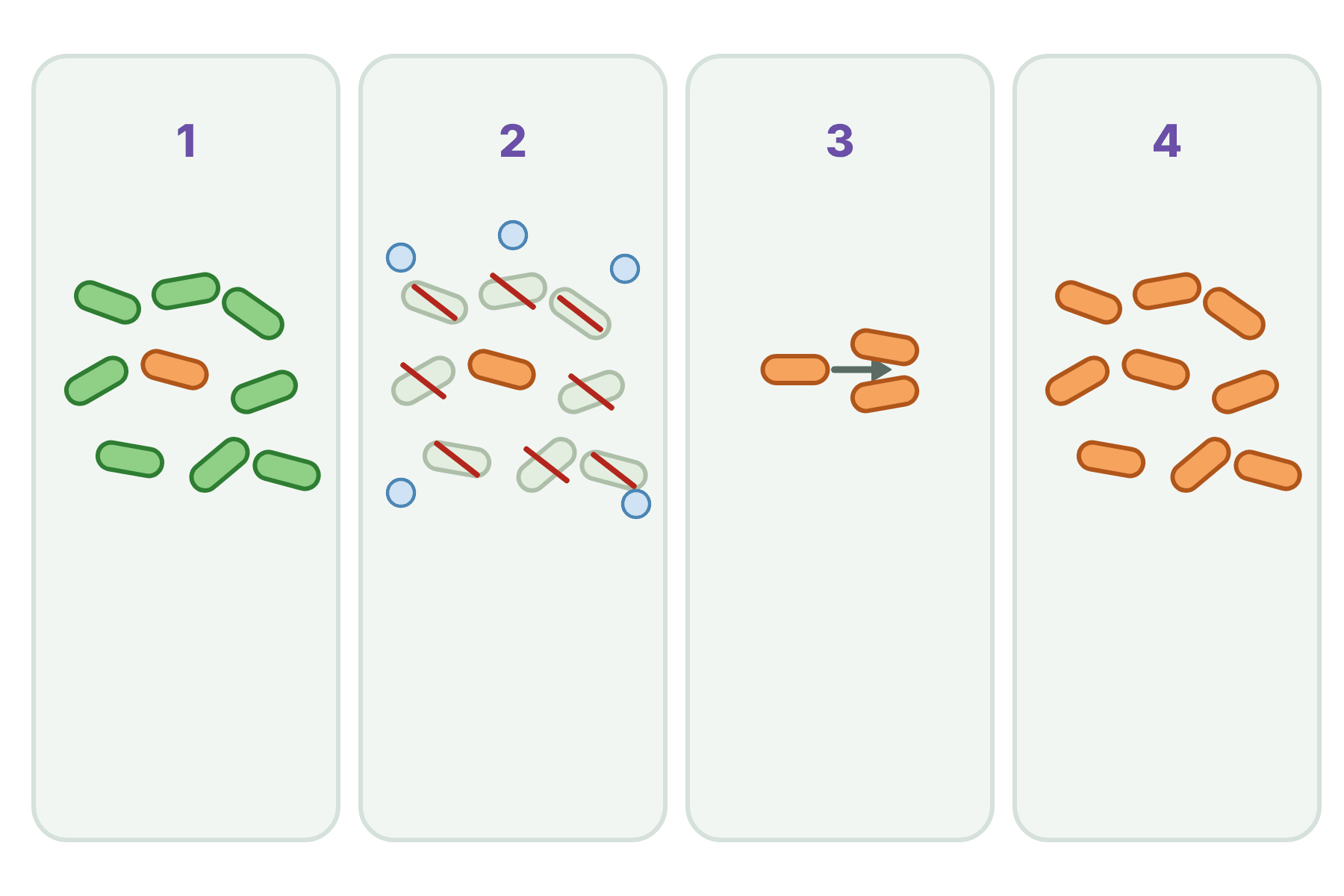 Describe what is happening at each step.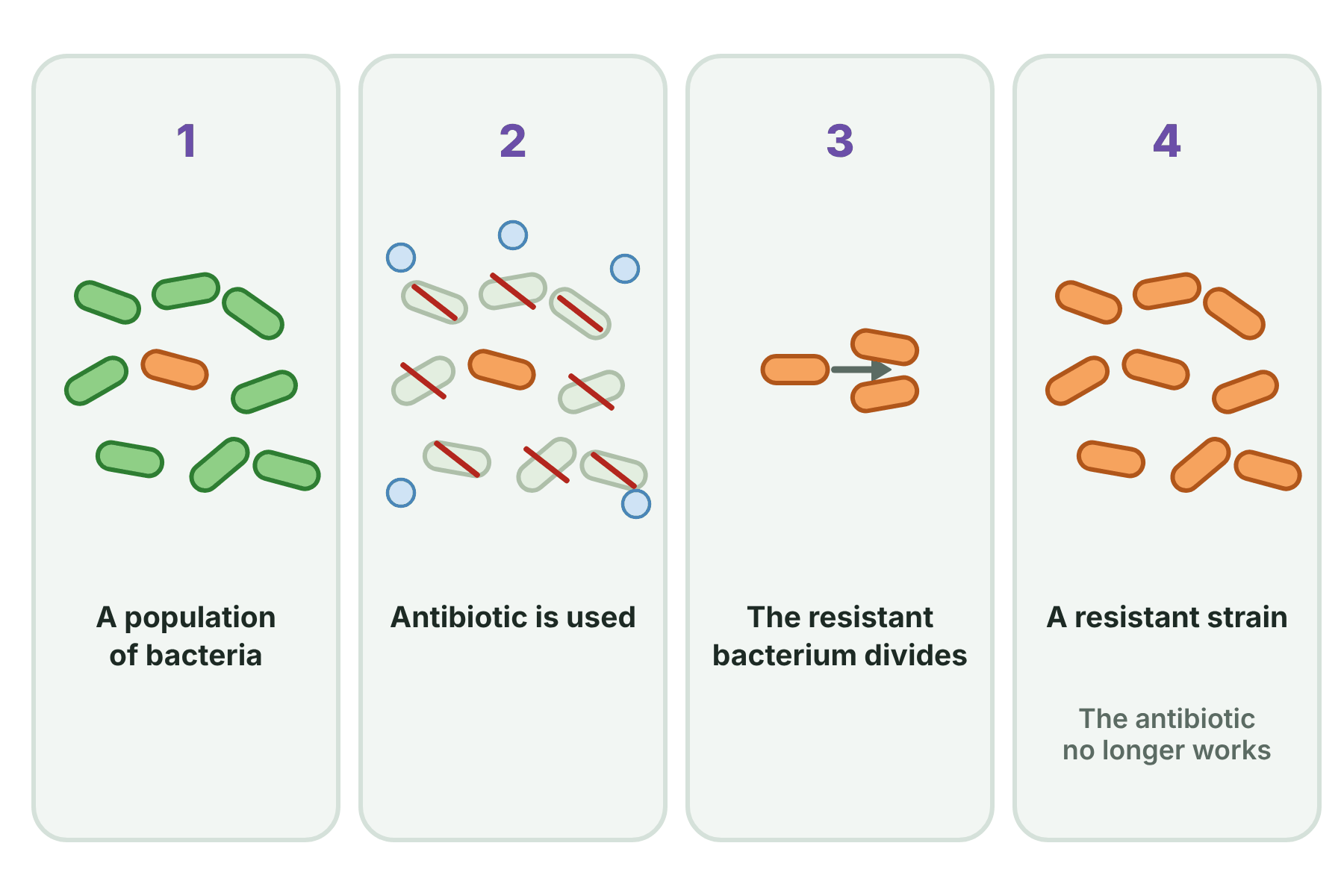
1 A population with one resistant bacterium. 2 The antibiotic kills the non-resistant bacteria. 3 The resistant bacterium survives and divides. 4 A resistant strain: the antibiotic no longer works.
-
Name a drug that comes from foxgloves.
Digitalis, a heart drug.
-
Which painkiller originates from willow?
Aspirin.
-
Who discovered penicillin?
Alexander Fleming.
-
Which mould makes penicillin?
Penicillium.
-
How are most new drugs made today?
They are synthesised by chemists in the pharmaceutical industry.
-
What three things are new drugs tested for?
Toxicity, efficacy and dose.
-
What is toxicity?
How harmful the drug is.
-
What is efficacy?
Whether the drug works.
-
What is preclinical testing?
Testing in the laboratory using cells, tissues and live animals.
-
Who is in the first stage of a clinical trial?
Healthy volunteers, at a very low dose.
-
Why do later trials use patients?
To find the best dose and to check that the drug works.
-
What is a placebo?
A dummy treatment with no drug in it.
-
What is a double-blind trial?
A trial where neither the patients nor the doctors know who has the real drug.
-
Why use a double-blind trial?
To stop patients' or doctors' expectations affecting the results.
-
What is peer review?
Other scientists checking the results before they are published.
-
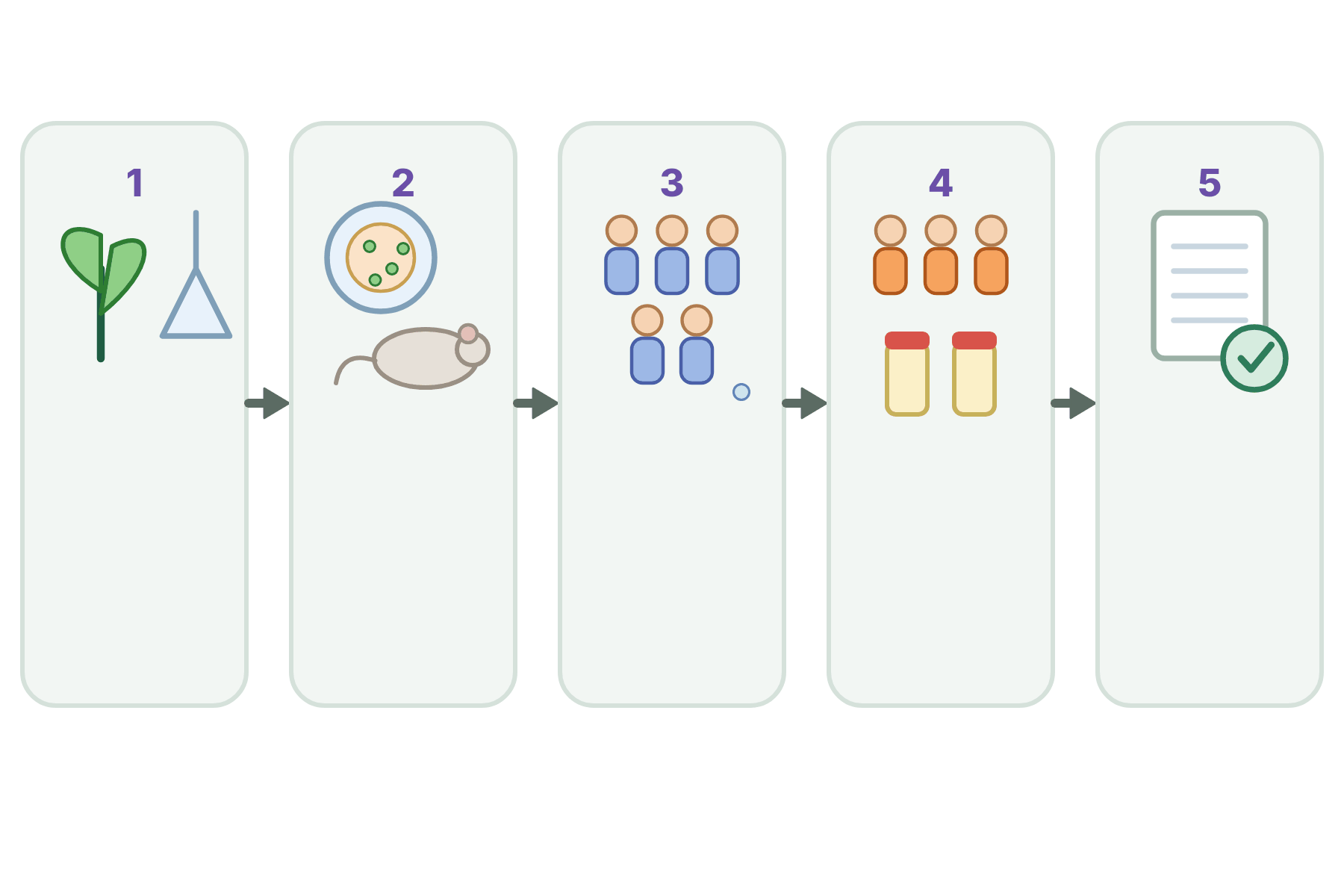 Describe each stage in developing a new drug.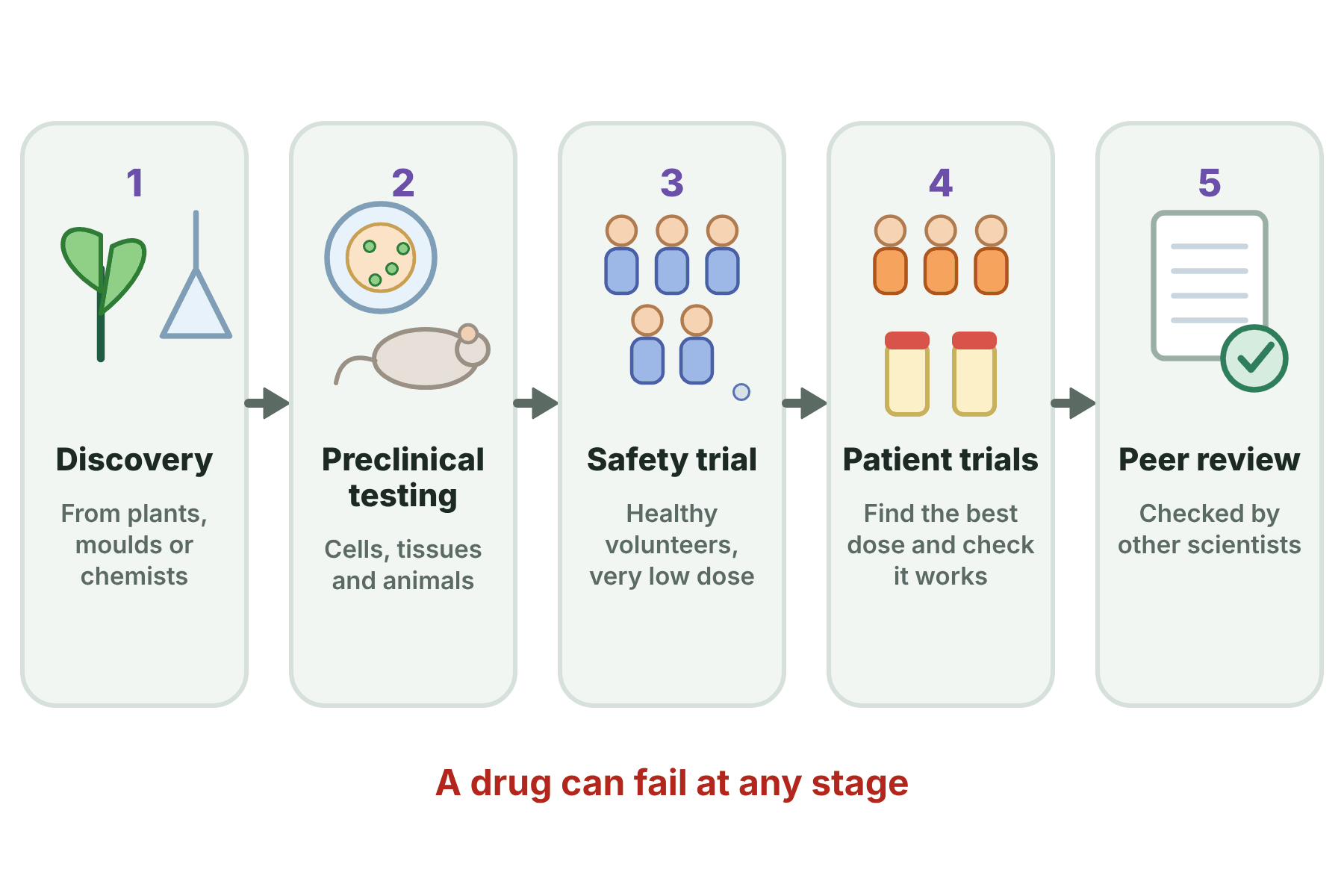
1 Discovery. 2 Preclinical testing on cells, tissues and animals. 3 Safety trial with healthy volunteers at a very low dose. 4 Patient trials to find the best dose and check it works. 5 Peer review and use.