Flashcards · Biology · Plant Tissues and Transport
Plant Tissues and Organs
-
What is the leaf?
A plant organ, made of several tissues working together.
-
Which tissue covers the surface of a leaf?
The epidermis.
-
What is the waxy cuticle for?
It reduces water loss from the leaf.
-
Where is most photosynthesis carried out in a leaf?
In the palisade mesophyll.
-
Why is the palisade mesophyll near the top of the leaf?
That is where most light arrives.
-
Why does the palisade mesophyll contain many chloroplasts?
To absorb as much light as possible for photosynthesis.
-
What is special about the spongy mesophyll?
It has air spaces between the cells, which let gases diffuse and give a large surface area.
-
What do the xylem and phloem do in a leaf?
Xylem brings water and minerals in, and phloem carries sugars away.
-
What is a stoma?
A tiny pore in the lower epidermis that lets gases in and out.
-
What do guard cells do?
They open and close the stomata.
-
When do guard cells close the stomata?
When the plant is short of water.
-
Why does closing the stomata help the plant?
It stops more water being lost by evaporation.
-
What is meristem tissue?
Tissue at the tips of shoots and roots whose cells divide and can become any type of plant cell.
-
Why are there more stomata on the underside of a leaf?
It is cooler and shadier, so less water is lost.
-
Why is the upper epidermis transparent?
So that light can pass through to the palisade cells.
-
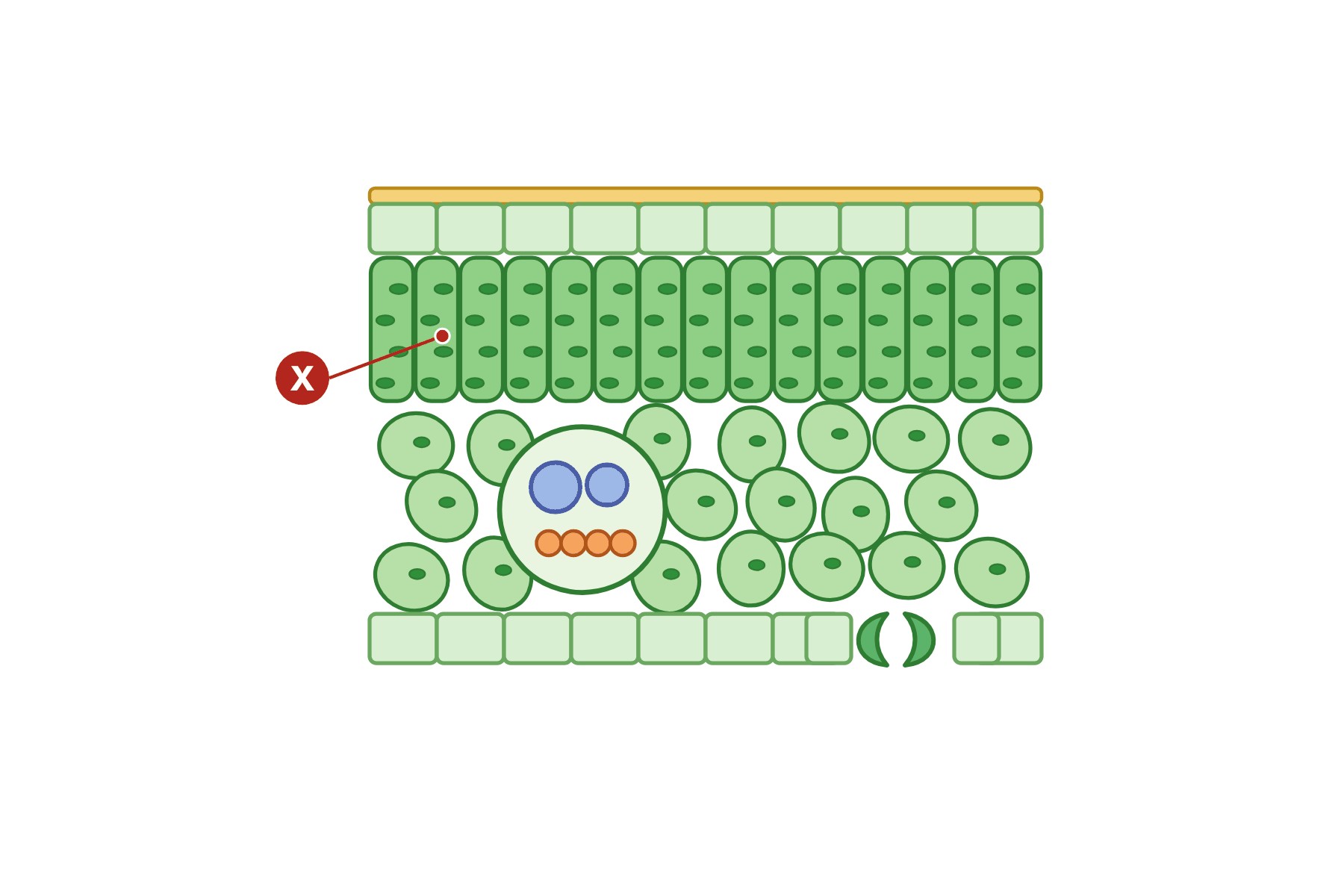 Name the tissue marked X and say what it does.
 The palisade mesophyll. Its tall cells are full of chloroplasts and carry out most of the photosynthesis.
-
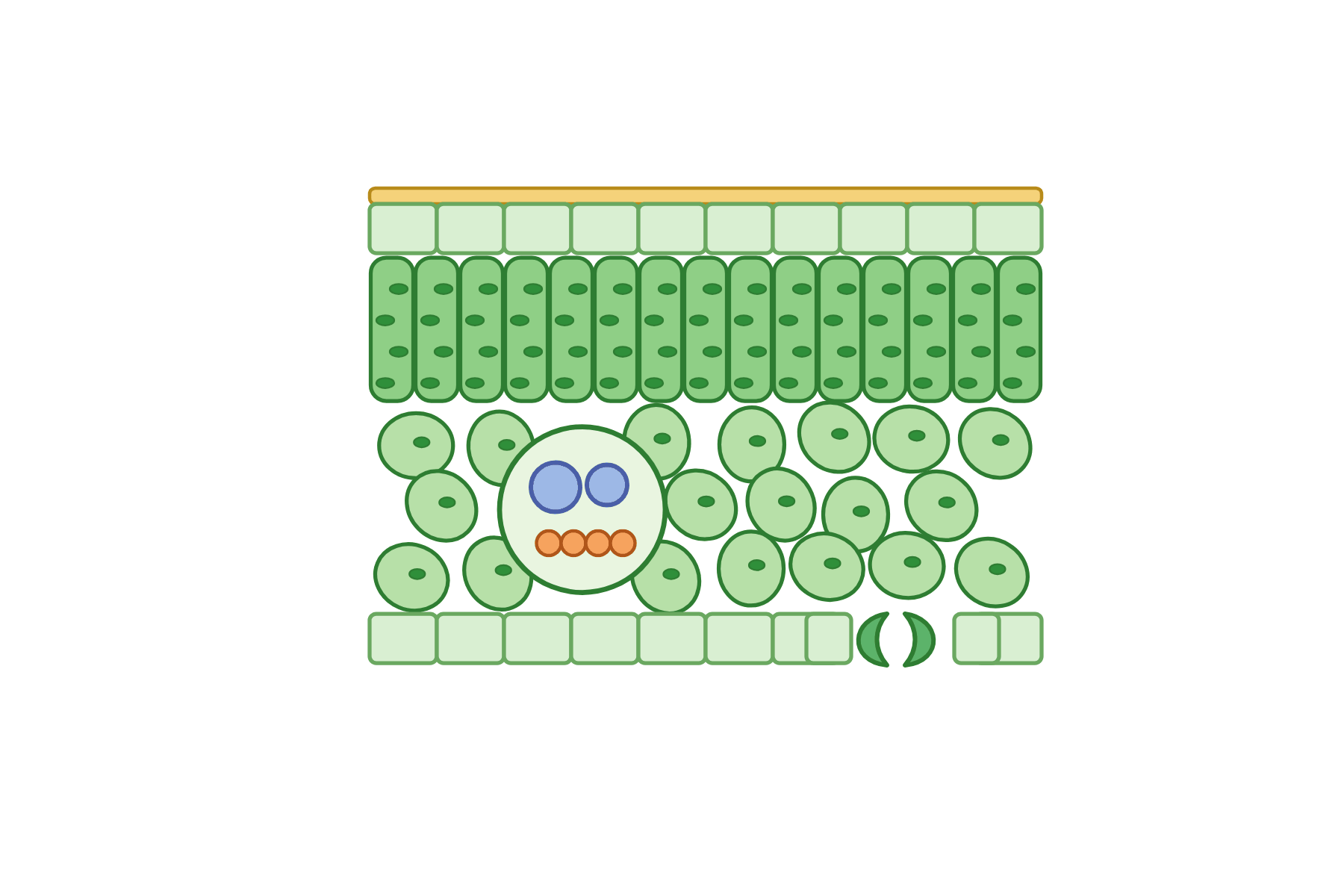 Label every tissue in this leaf.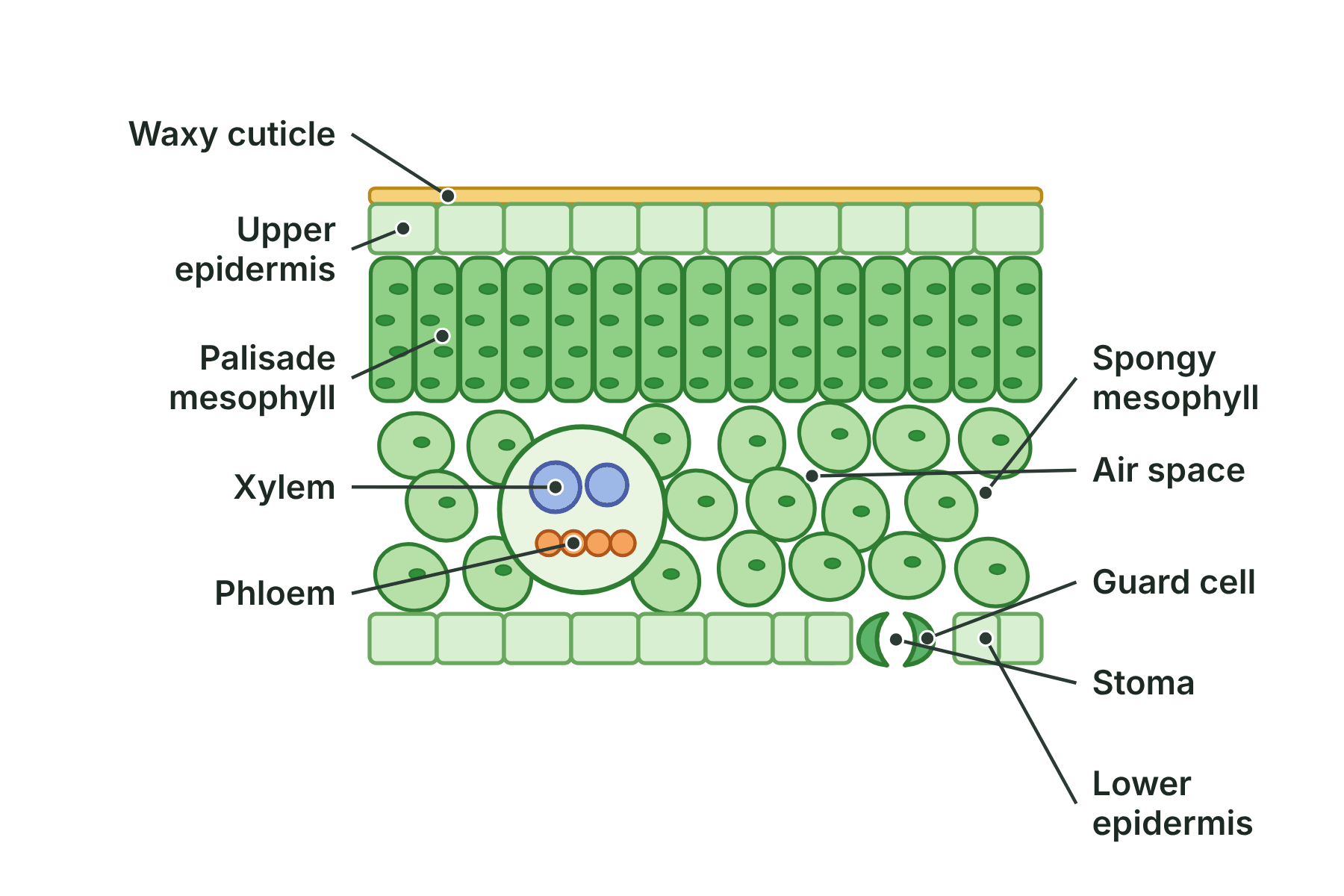
Waxy cuticle, upper epidermis, palisade mesophyll, spongy mesophyll, air space, xylem, phloem, guard cell, stoma and lower epidermis.