Flashcards · Biology
Respiration and Metabolism
-
What is respiration?
An exothermic reaction in living cells that transfers energy from glucose.
-
Is respiration endothermic or exothermic?
Exothermic.
-
How often does respiration happen in living cells?
It is continuously occurring.
-
Name three uses of the energy from respiration.
Building larger molecules, movement and keeping warm.
-
Write the word equation for aerobic respiration.
Glucose + oxygen → carbon dioxide + water.
-
Write the symbol equation for aerobic respiration.
C₆H₁₂O₆ + 6O₂ → 6CO₂ + 6H₂O.
-
Where do most aerobic respiration reactions take place?
In the mitochondria.
-
What is anaerobic respiration?
Respiration without oxygen.
-
Write the equation for anaerobic respiration in muscles.
Glucose → lactic acid.
-
Write the equation for anaerobic respiration in yeast and plant cells.
Glucose → ethanol + carbon dioxide.
-
Why does anaerobic respiration transfer much less energy?
The oxidation of glucose is incomplete.
-
What is fermentation?
Anaerobic respiration in yeast cells.
-
How does yeast make bread rise?
It releases carbon dioxide, which makes bubbles in the dough.
-
Name two industries that use fermentation.
Bread making and making alcoholic drinks.
-
What is the difference between breathing and respiration?
Breathing brings oxygen in. Respiration is the reaction in cells that transfers energy.
-
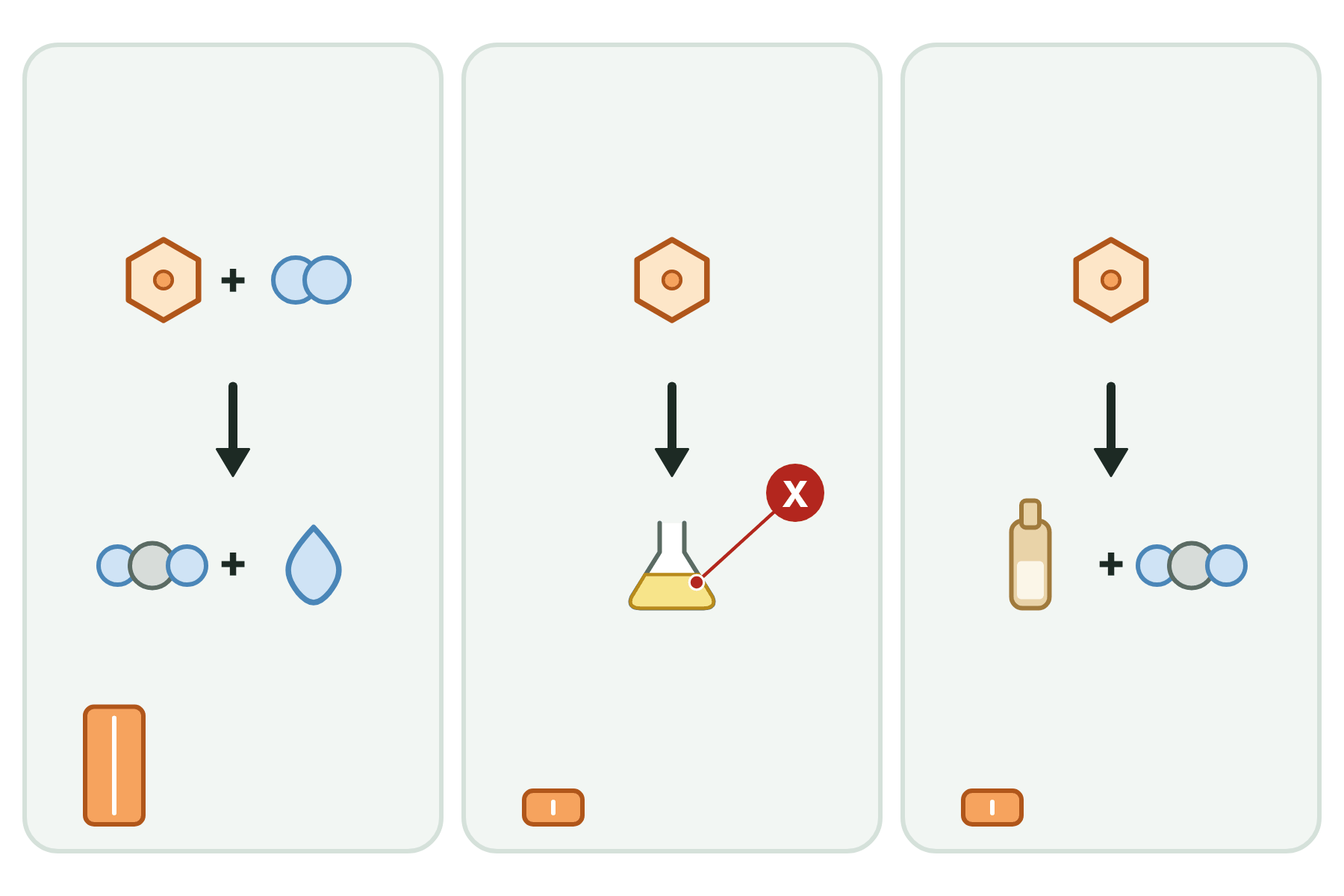 Name the product marked X.
 Lactic acid. It is made when muscles respire anaerobically.
-
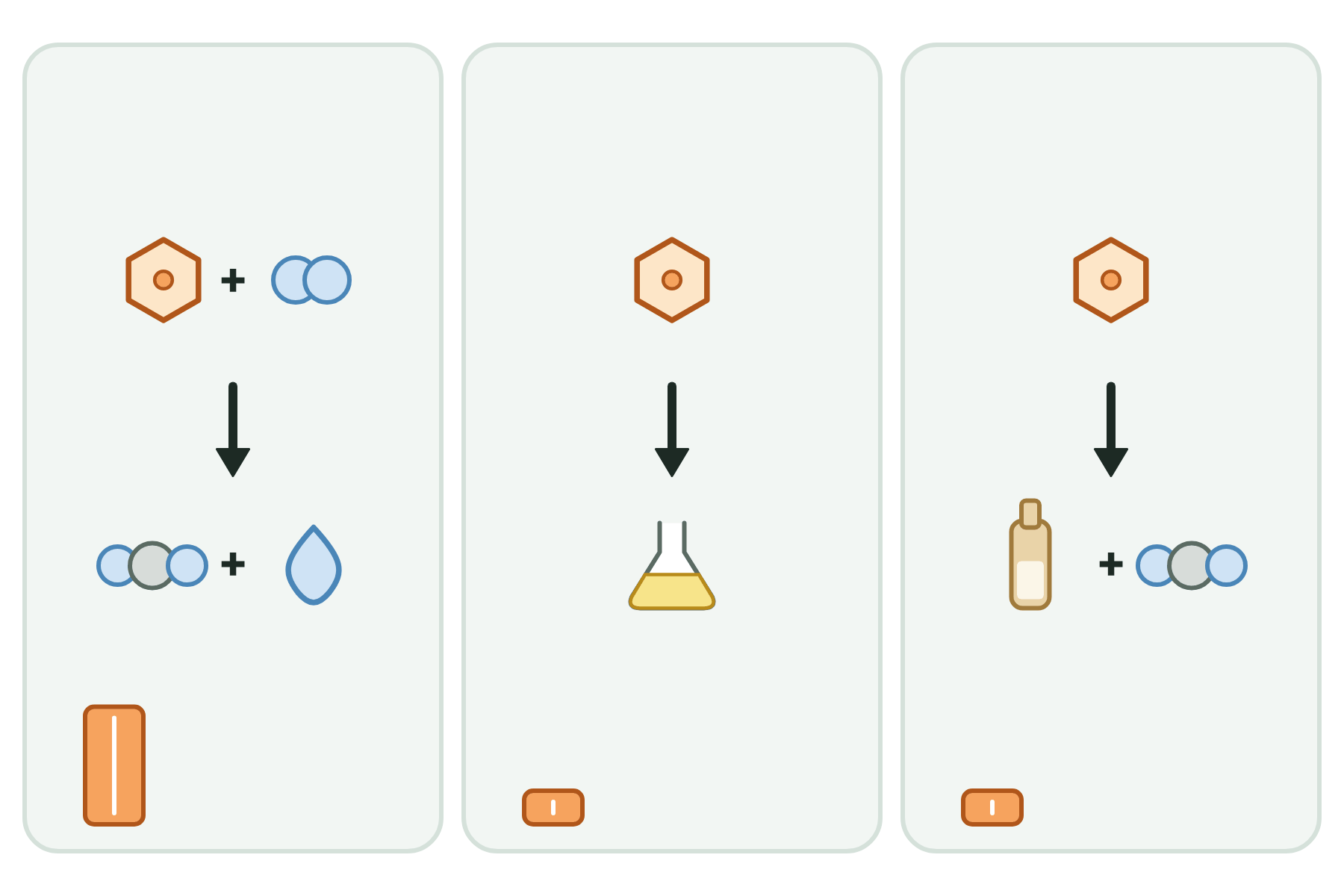 Name each type of respiration and the substances on the diagram.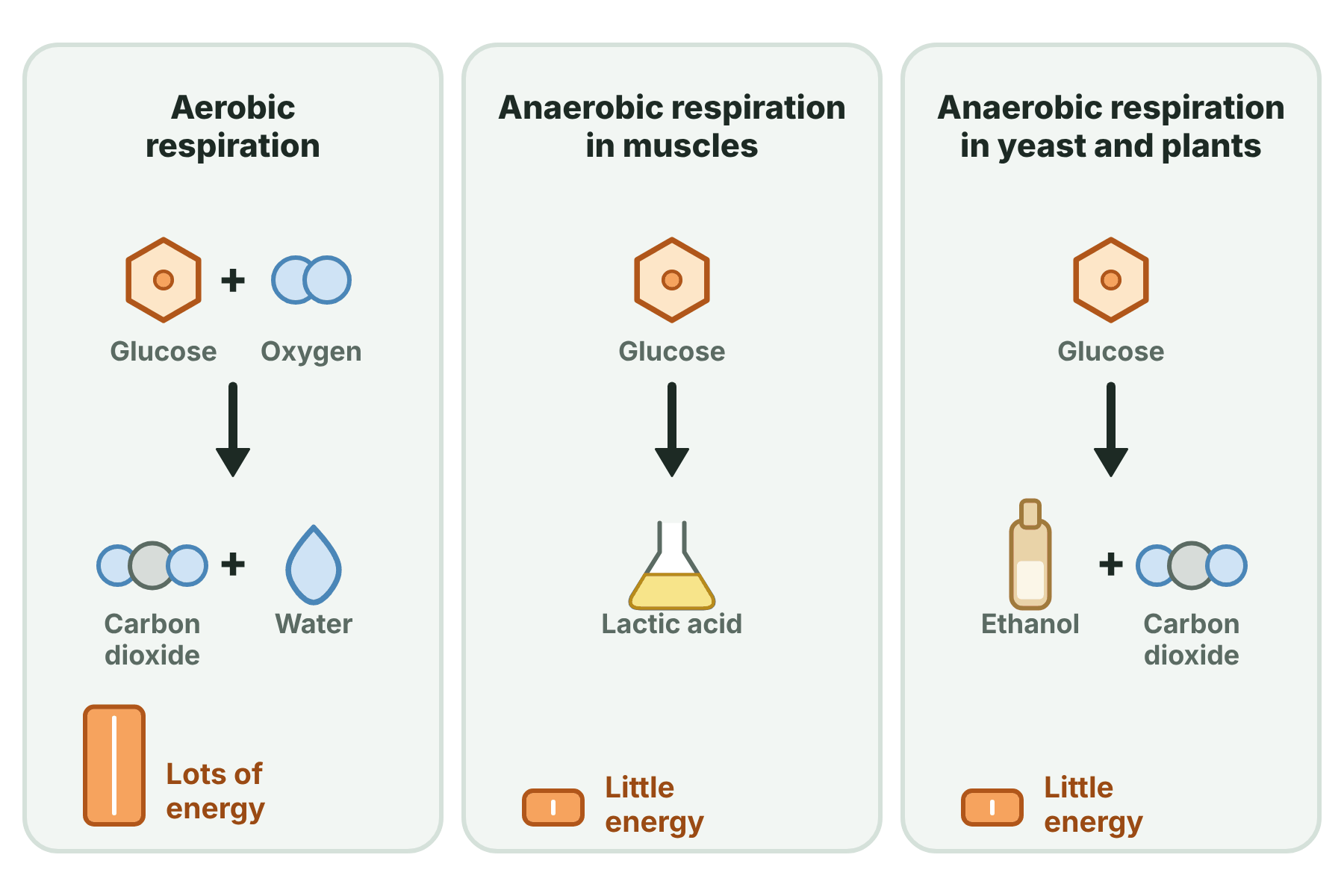
Aerobic respiration: glucose + oxygen → carbon dioxide + water, lots of energy. Anaerobic respiration in muscles: glucose → lactic acid, little energy. Anaerobic respiration in yeast and plants: glucose → ethanol + carbon dioxide, little energy.
-
What happens to the heart rate during exercise?
It increases.
-
What happens to breathing rate during exercise?
It increases.
-
What is breath volume?
The volume of air taken in with each breath.
-
Why do the heart rate, breathing rate and breath volume increase in exercise?
To supply the muscles with more oxygenated blood.
-
Why do muscles need more oxygen during exercise?
They respire faster to transfer more energy.
-
What happens if insufficient oxygen reaches the muscles?
They respire anaerobically.
-
What is made in anaerobic respiration in muscles?
Lactic acid.
-
What does a build up of lactic acid create?
An oxygen debt.
-
What is muscle fatigue?
Muscles stop contracting efficiently after long periods of vigorous activity.
-
How can you measure the effect of exercise on the body?
Count the pulse and breathing rate before, during and after exercise.
-
What is the recovery time?
The time for the heart rate to return to its resting rate.
-
What happens to lactic acid after exercise? (Higher tier)
The blood carries it to the liver, where it is converted back to glucose.
-
What is oxygen debt? (Higher tier)
The extra oxygen the body needs after exercise to remove the accumulated lactic acid.
-
Why does the breathing rate stay high after exercise? (Higher tier)
To take in the extra oxygen needed to repay the oxygen debt.
-
How do you calculate the volume of air breathed each minute?
Breathing rate × breath volume.
-
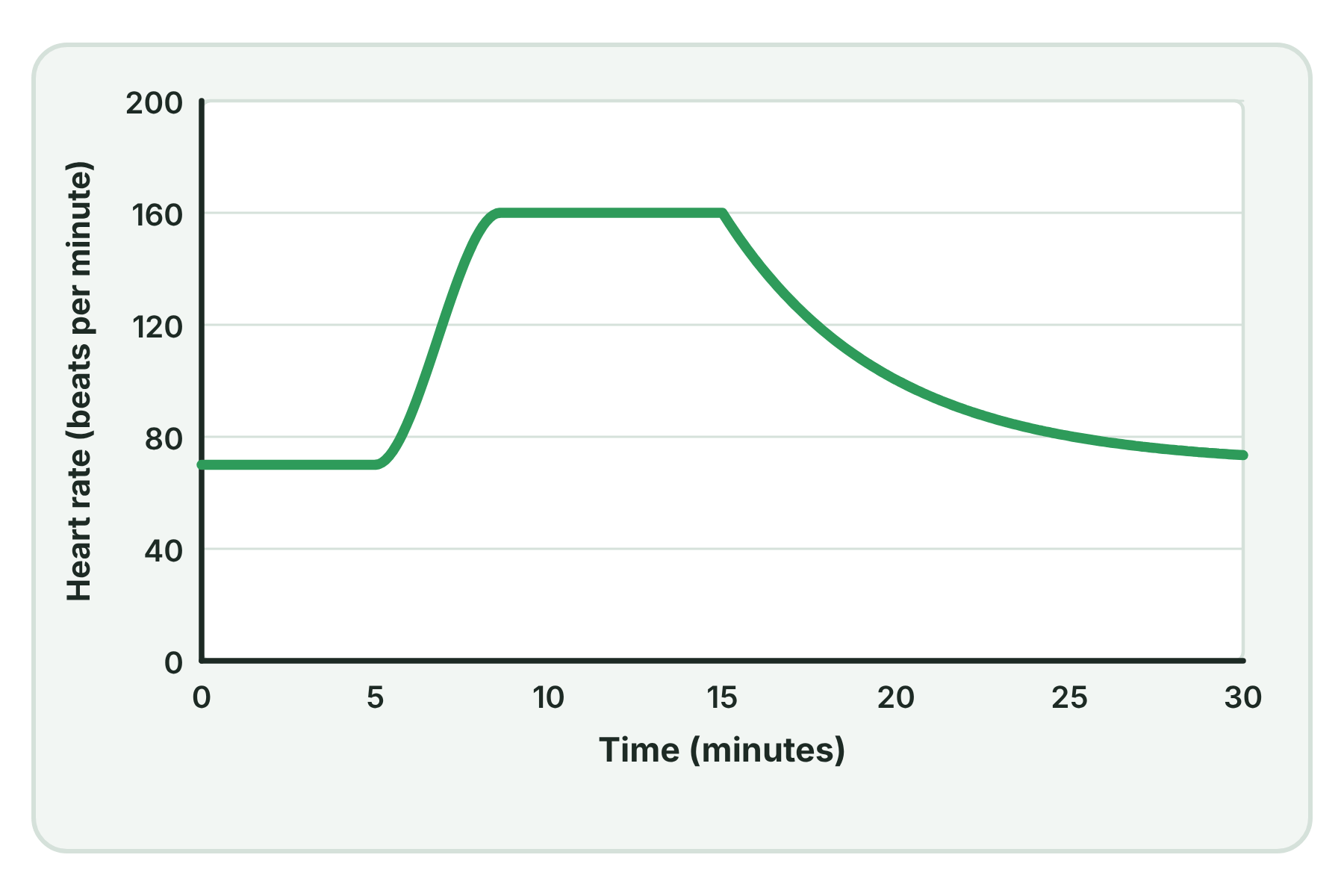 Describe what happens to the heart rate in each stage of the graph.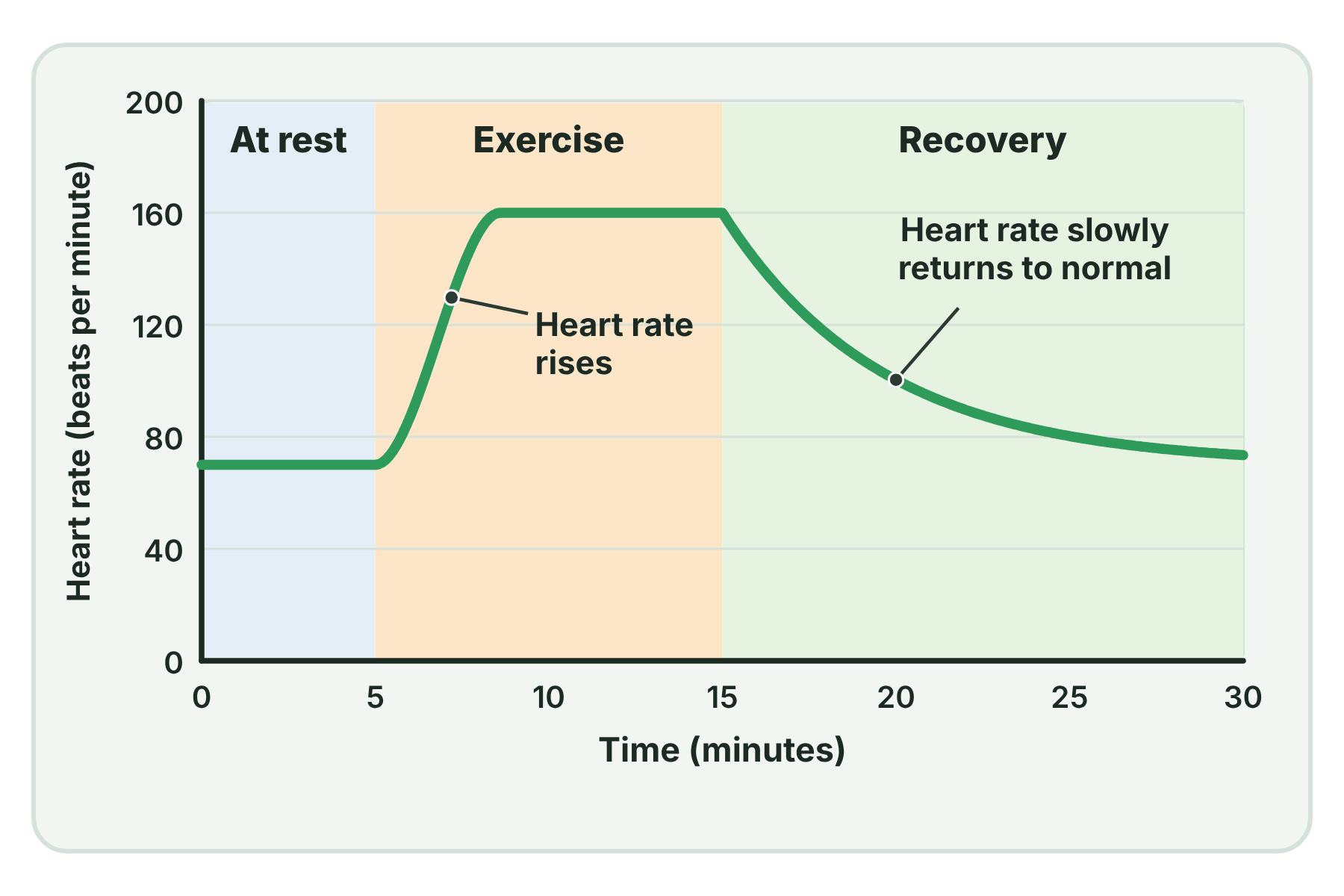
At rest the heart rate is steady. During exercise it rises steeply and stays high. In recovery it falls slowly back to the resting rate.
-
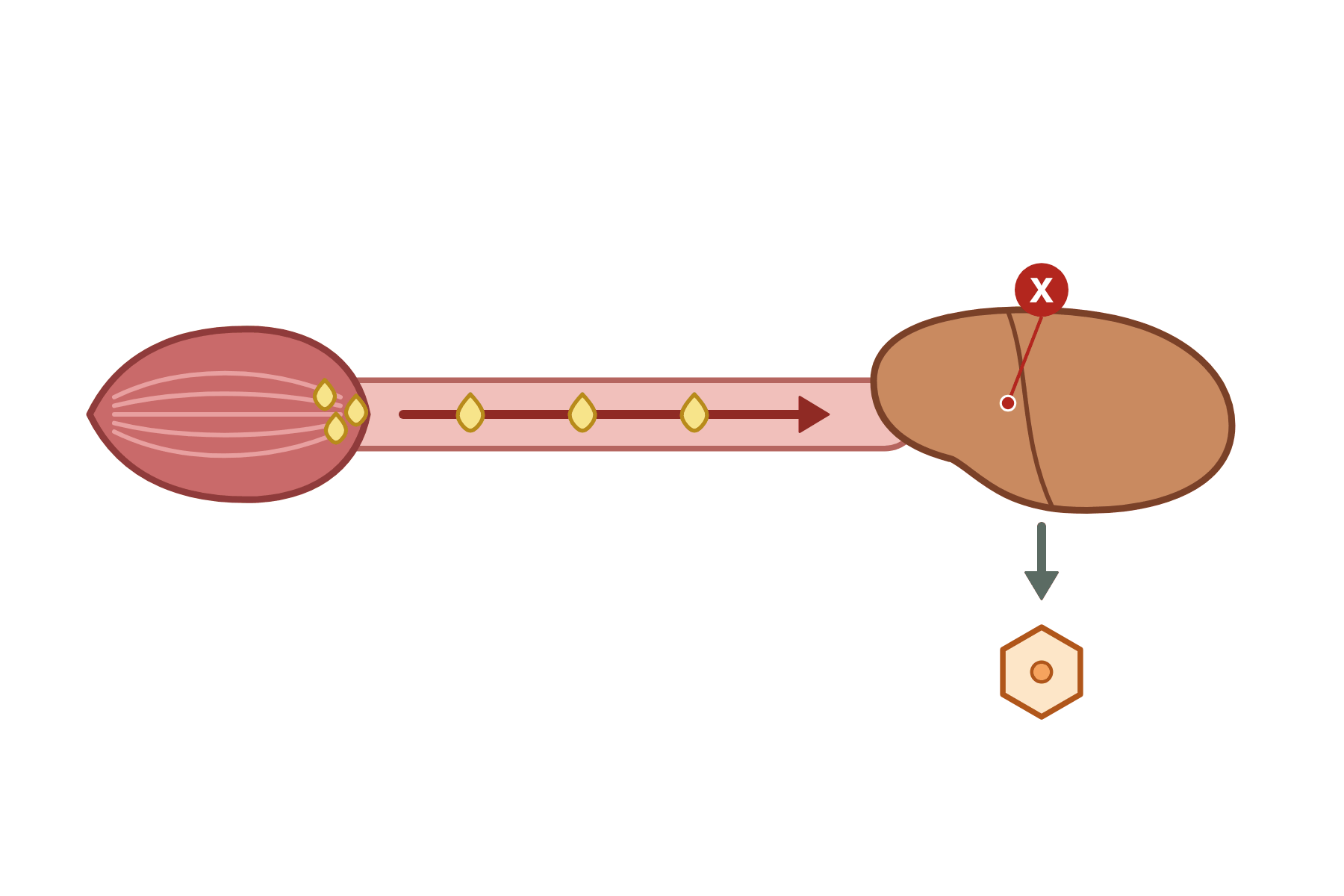 Name organ X and say what it does to lactic acid.
 The liver. It converts lactic acid back into glucose (Higher tier).
-
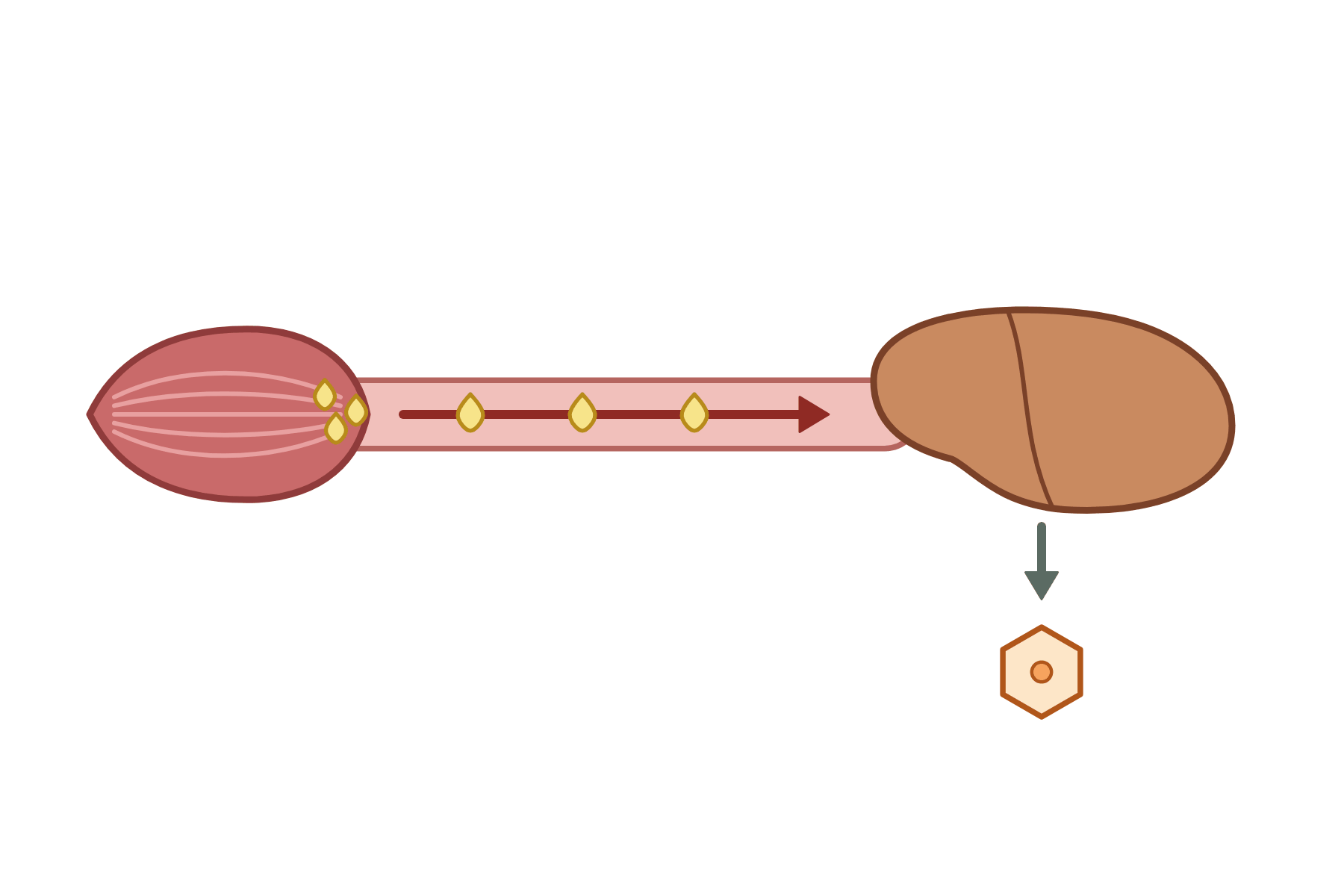 Describe what happens to lactic acid after vigorous exercise.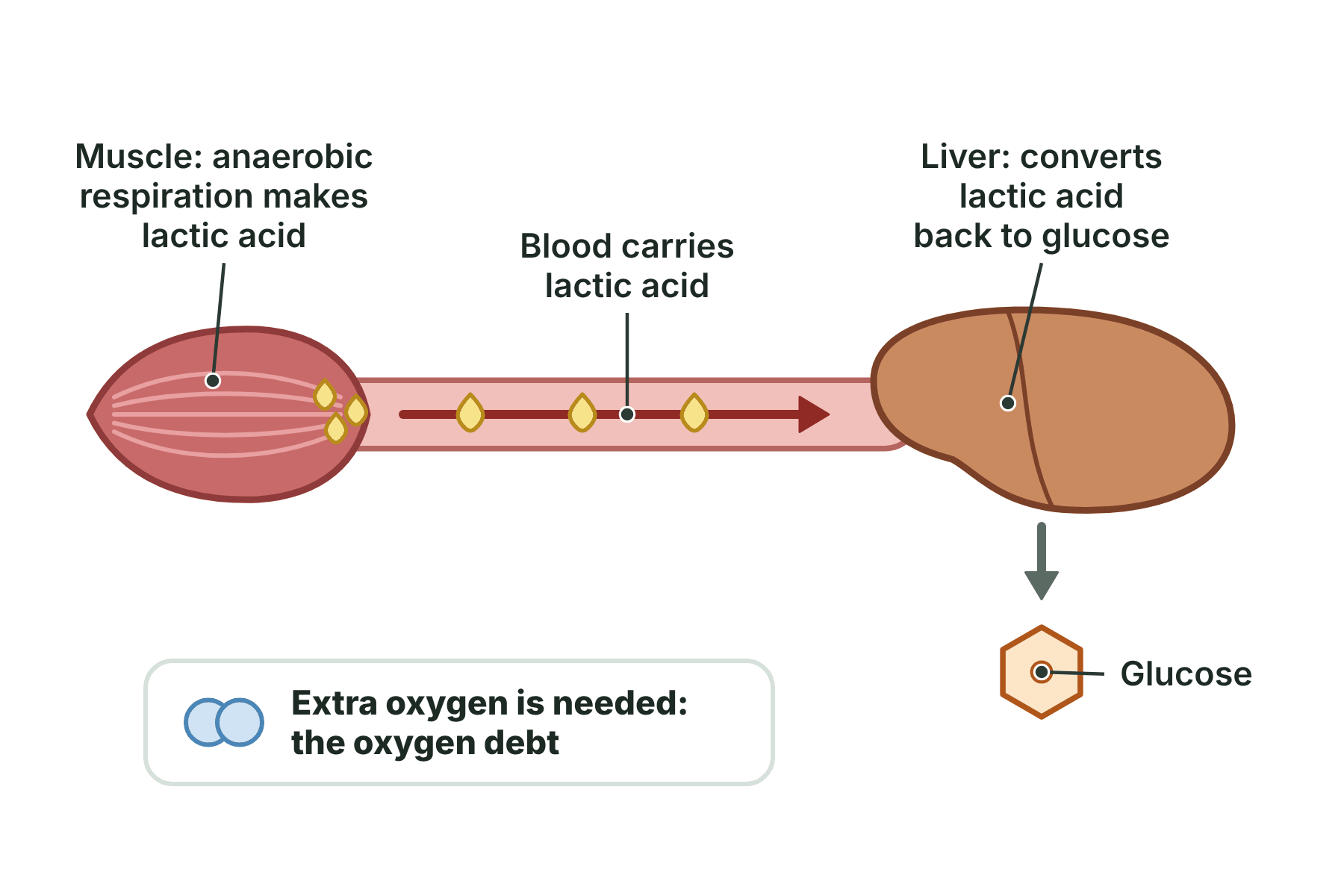
Anaerobic respiration in the muscles makes lactic acid. The blood carries it to the liver, which converts it back to glucose. This needs extra oxygen, so there is an oxygen debt to repay.
-
What is metabolism?
The sum of all the reactions in a cell or the body.
-
What controls the reactions of metabolism?
Enzymes.
-
What is the energy from respiration used for in metabolism?
To synthesise new molecules.
-
What is made from glucose in plants for storage?
Starch.
-
What is made from glucose to strengthen plant cell walls?
Cellulose.
-
What do animals store glucose as?
Glycogen.
-
What molecules join to make a lipid?
One glycerol and three fatty acids.
-
What is a protein made from?
Amino acids.
-
What is used to make amino acids in a plant?
Glucose and nitrate ions.
-
What is made when excess protein is broken down?
Urea.
-
What happens to urea?
It is excreted.
-
What are carbohydrates broken down into?
Sugars.
-
What are proteins broken down into?
Amino acids.
-
What are lipids broken down into?
Fatty acids and glycerol.
-
Name the five examples of metabolism in the specification.
Starch, glycogen and cellulose from glucose; lipids; amino acids and proteins; respiration; breakdown of excess protein to urea.
-
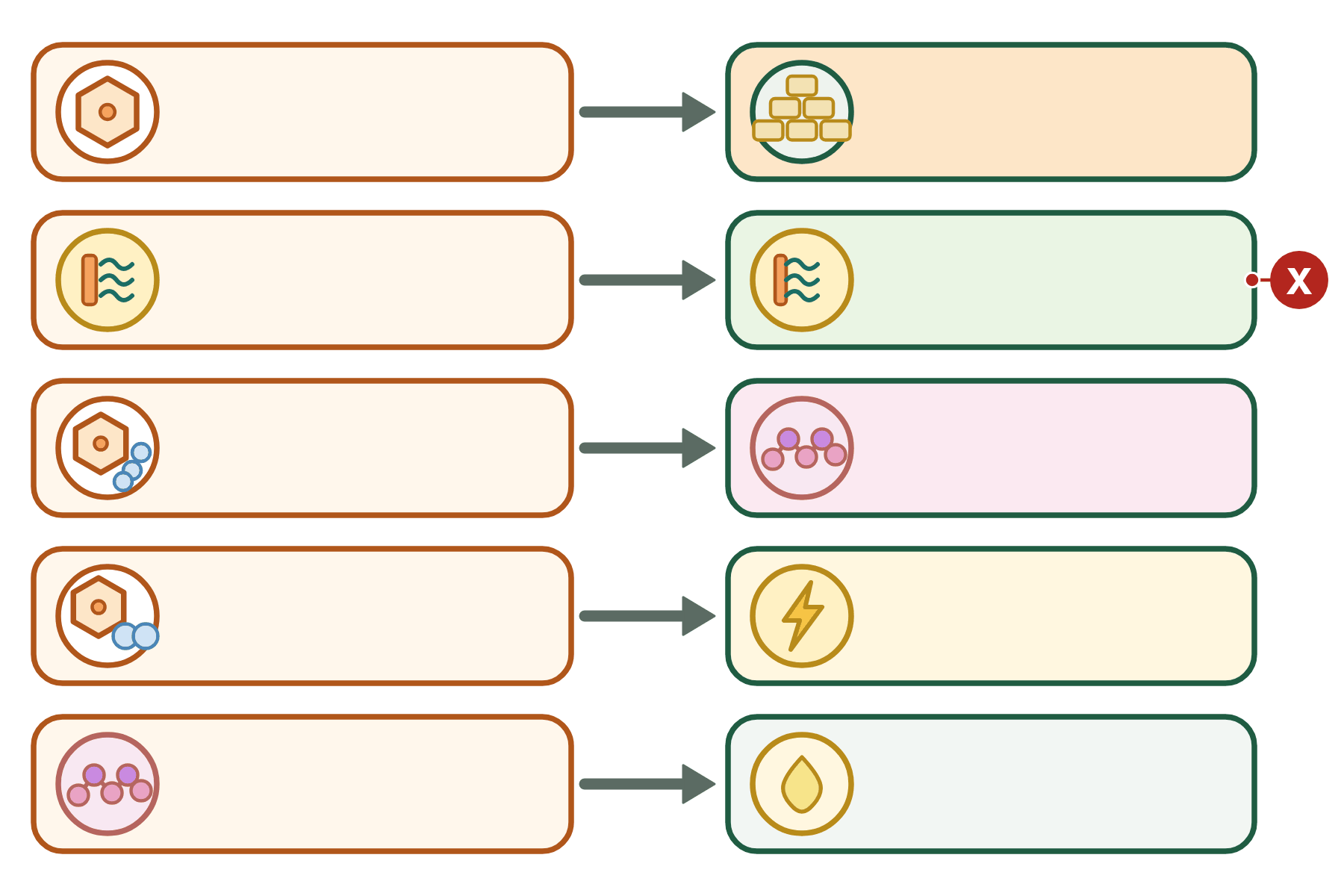 Name the product marked X and say what it is made from.
 A lipid. It is made from one molecule of glycerol and three molecules of fatty acids.
-
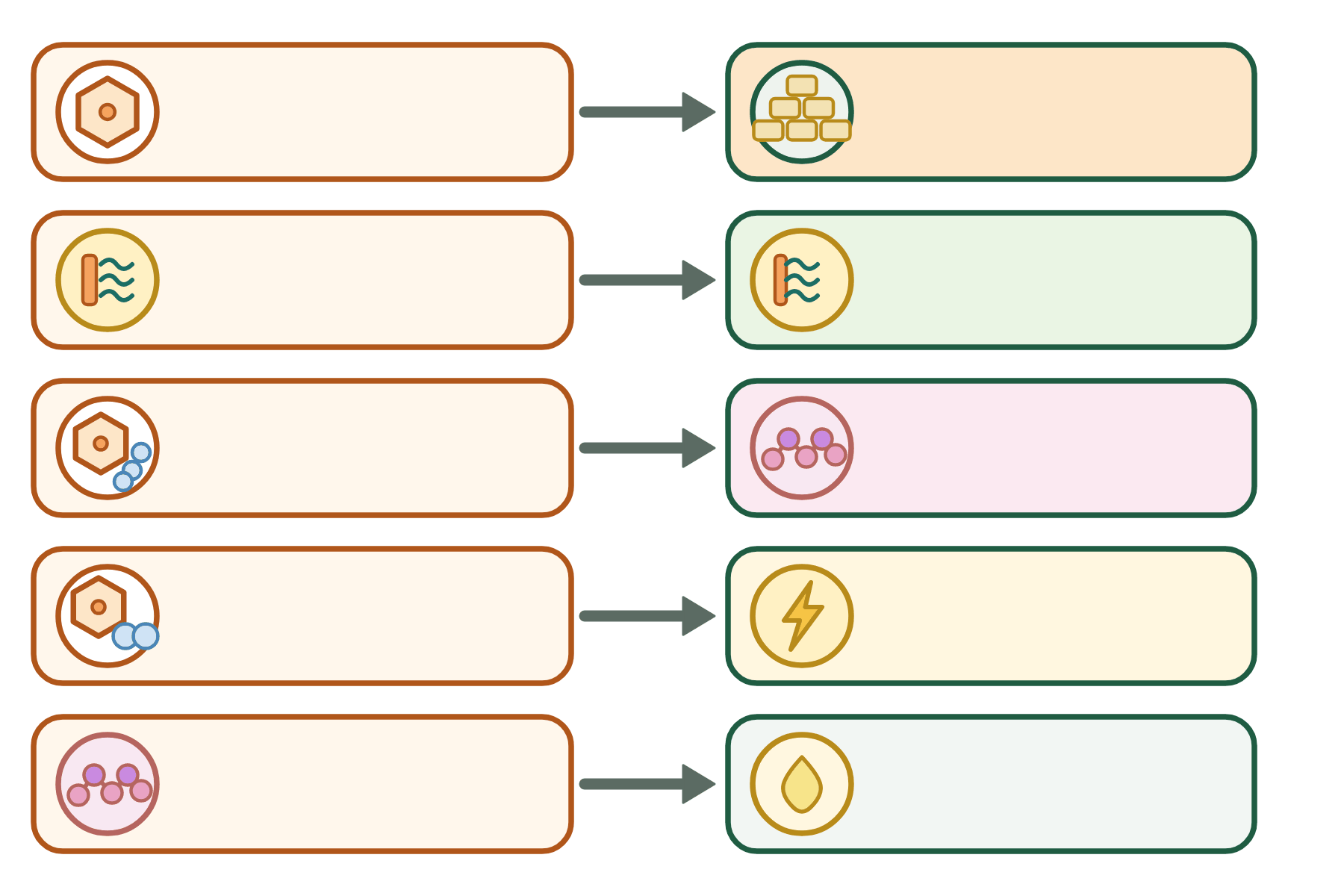 Name what goes in and what is made in each reaction.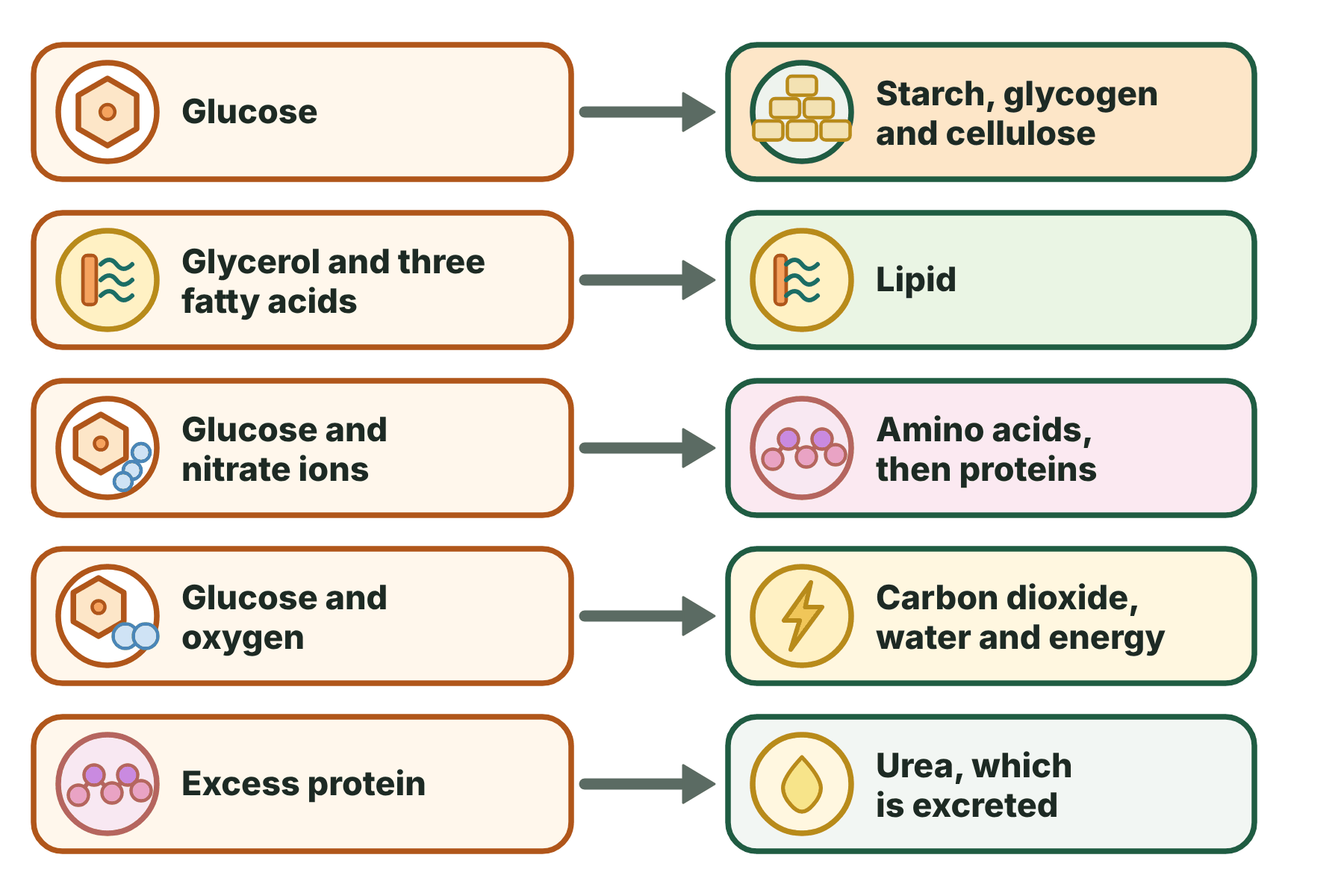
Glucose makes starch, glycogen and cellulose. Glycerol and three fatty acids make a lipid. Glucose and nitrate ions make amino acids, then proteins. Glucose and oxygen make carbon dioxide, water and energy. Excess protein makes urea.
-
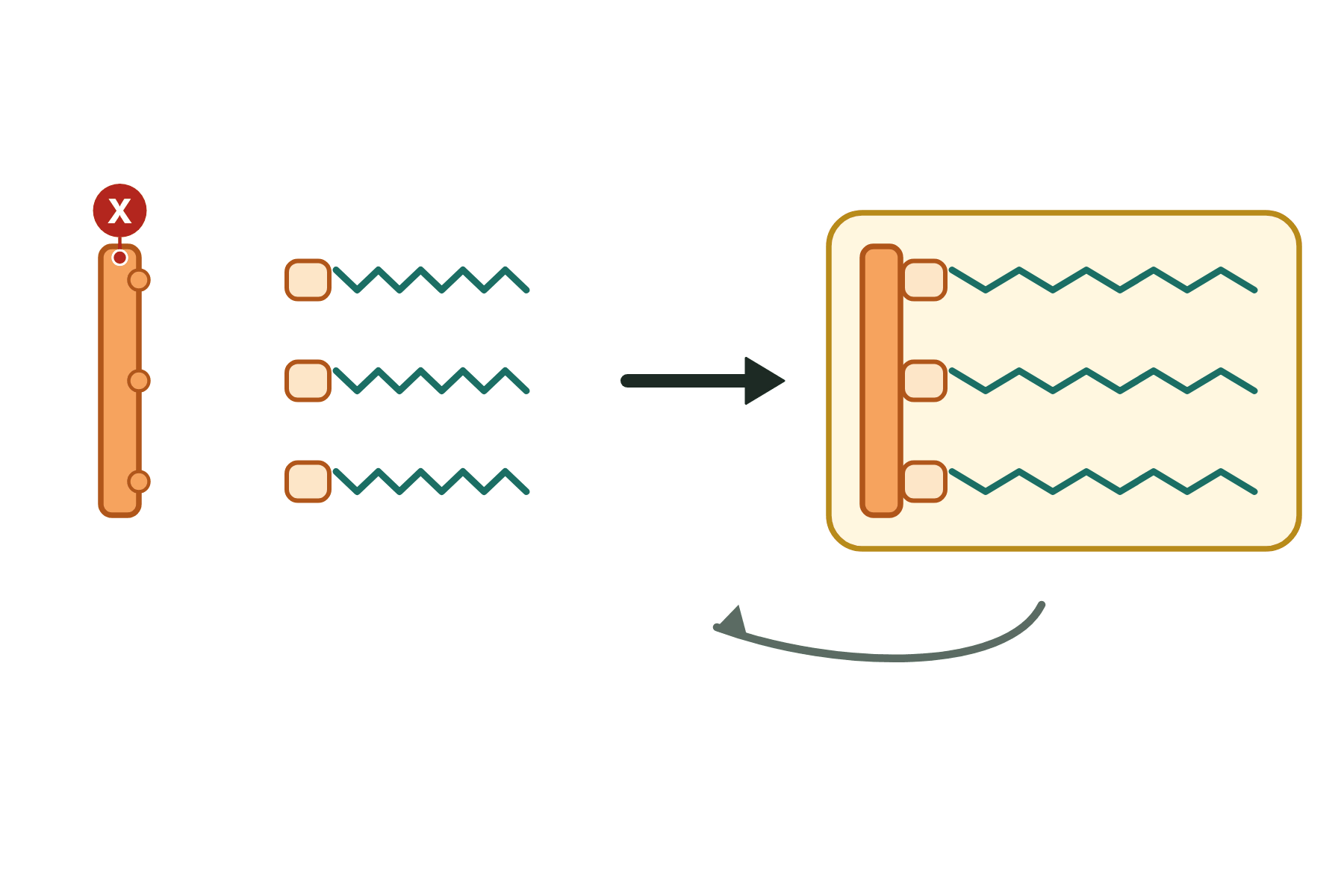 Name the part marked X.
 Glycerol. One molecule of glycerol joins with three molecules of fatty acids to make a lipid.
-
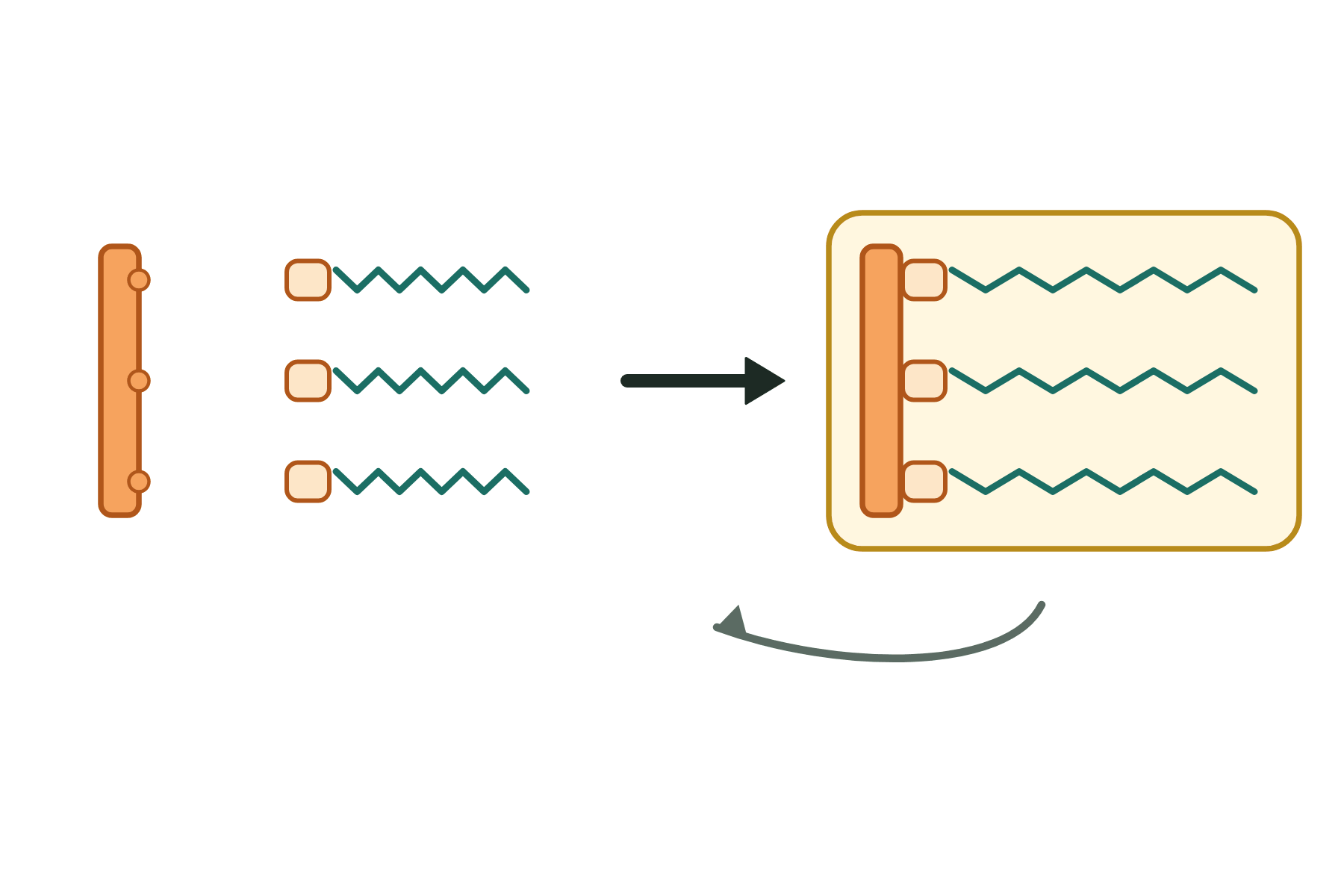 Label the diagram of how a lipid is made.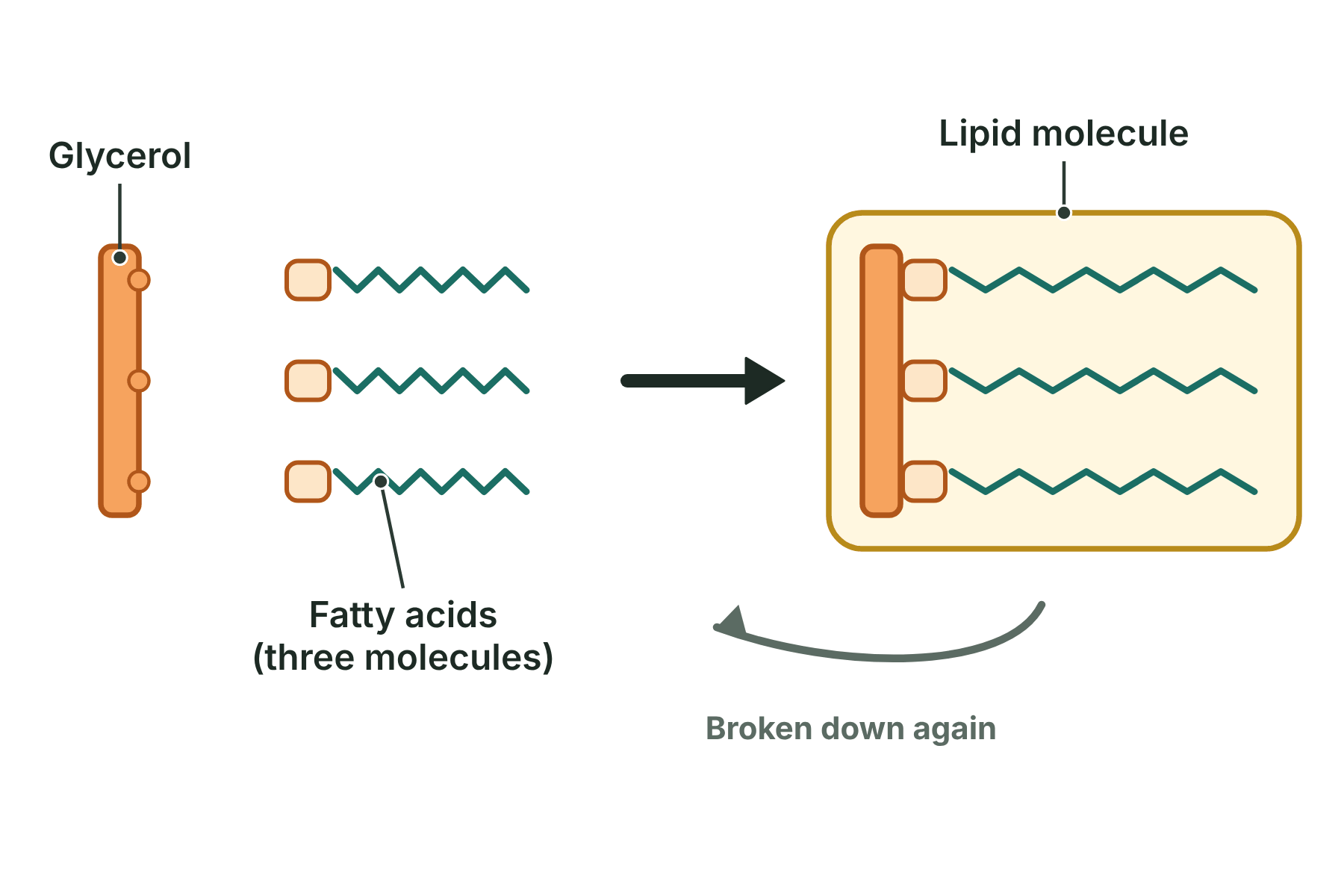
Glycerol and three fatty acids join to make a lipid molecule, and the lipid can be broken down again.