Exam questions · Biology
Respiration and Metabolism
- 23 exam questions
- 63 marks
- 24 quick checks
Aerobic and Anaerobic Respiration
Just this lesson-
1 State [1 mark]
Respiration is described as an exothermic reaction. State what exothermic means.
Show answerHide answer
Model answer
It transfers energy to the surroundings.
Mark scheme
- Transfers energy to the surroundings — 1 mark
-
2 Name [3 marks]
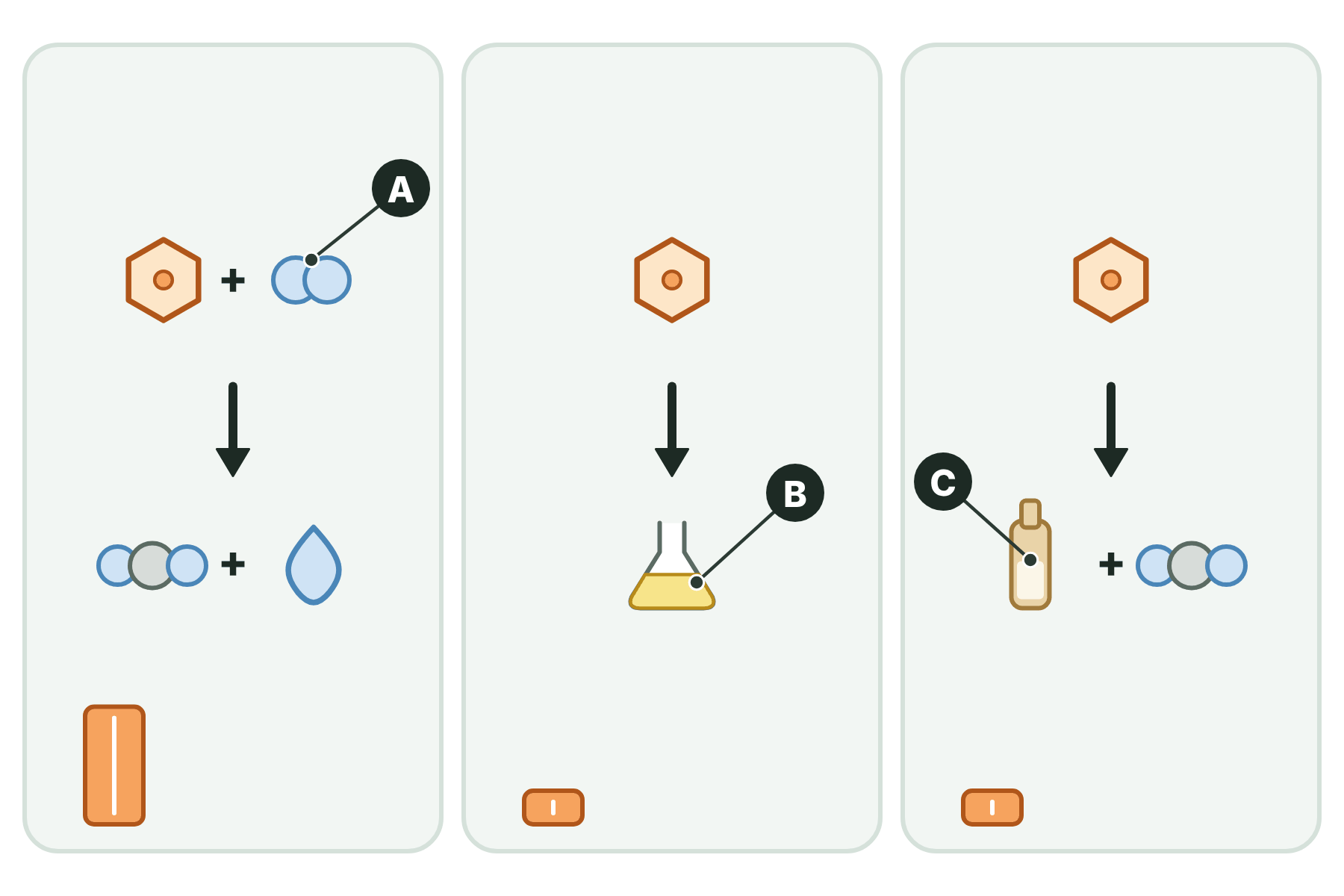
Figure 1 shows three types of respiration. Name the substances shown at A, B and C.
Show answerHide answer
Model answer
A is oxygen. B is lactic acid. C is ethanol.
Mark scheme
- A: oxygen — 1 mark
- B: lactic acid — 1 mark
- C: ethanol — 1 mark
-
3 Write [2 marks]
Write the word equation for aerobic respiration.
Show answerHide answer
Model answer
Glucose + oxygen → carbon dioxide + water.
Mark scheme
- Glucose + oxygen as reactants — 1 mark
- Carbon dioxide + water as products — 1 mark
-
4 State [3 marks]
Give three uses of the energy that organisms transfer by respiration.
Show answerHide answer
Model answer
To build larger molecules from smaller ones, for movement and to keep warm.
Mark scheme
- Building larger molecules — 1 mark
- Movement — 1 mark
- Keeping warm — 1 mark
-
5 Compare [4 marks]
Compare aerobic respiration and anaerobic respiration in muscles.
Show answerHide answer
Model answer
Aerobic respiration uses oxygen, but anaerobic respiration does not. Aerobic respiration makes carbon dioxide and water, but anaerobic respiration in muscles makes lactic acid. Aerobic respiration transfers much more energy than anaerobic respiration.
Mark scheme
- Aerobic needs oxygen, anaerobic does not — 1 mark
- Aerobic makes carbon dioxide and water — 1 mark
- Anaerobic makes lactic acid in muscles — 1 mark
- Aerobic transfers much more energy — 1 mark
-
6 Explain [2 marks]
Explain why anaerobic respiration transfers much less energy than aerobic respiration.
Show answerHide answer
Model answer
In anaerobic respiration the glucose is only partly oxidised. The oxidation of glucose is incomplete, so less energy is transferred.
Mark scheme
- Glucose is only partly oxidised — 1 mark
- So much less energy is transferred — 1 mark
-
7 Explain [3 marks]
Yeast is added to bread dough. Explain why the dough rises.
Show answerHide answer
Model answer
The yeast respires anaerobically, using sugar in the dough. This releases carbon dioxide. The carbon dioxide makes bubbles in the dough, which makes it rise.
Mark scheme
- Yeast respires anaerobically — 1 mark
- Carbon dioxide is released — 1 mark
- Bubbles of gas make the dough rise — 1 mark
Quick check
-
1
What type of reaction is respiration?
Show answerHide answer
C: Exothermic
Respiration transfers energy to the surroundings, so it is exothermic.
-
2
Which of these is the word equation for aerobic respiration?
Show answerHide answer
B: Glucose + oxygen → carbon dioxide + water
Glucose reacts with oxygen to make carbon dioxide and water.
-
3
What is made when muscles respire anaerobically?
Show answerHide answer
D: Lactic acid
Anaerobic respiration in muscles makes lactic acid.
-
4
What is made when yeast respires anaerobically?
Show answerHide answer
A: Ethanol and carbon dioxide
Yeast makes ethanol and carbon dioxide. This is called fermentation.
-
5
Why does anaerobic respiration transfer less energy than aerobic respiration?
Show answerHide answer
B: Glucose is only partly oxidised
The oxidation of glucose is incomplete, so less energy is transferred.
-
6
Where do most of the reactions of aerobic respiration take place?
Show answerHide answer
C: In the mitochondria
Aerobic respiration takes place mainly in the mitochondria.
-
7
Which of these is NOT a use of the energy transferred by respiration?
Show answerHide answer
A: Producing light
Organisms use the energy to build larger molecules, to move and to keep warm. Respiration does not make light.
-
8
Which statement about respiration is correct?
Show answerHide answer
D: It happens in all living cells all the time
Respiration is continuously occurring in all living cells, both plant and animal.
Response to Exercise
Just this lesson-
1 State [2 marks]
State two ways in which breathing changes during exercise.
Show answerHide answer
Model answer
The breathing rate increases and the breath volume (depth of each breath) increases.
Mark scheme
- Breathing rate increases — 1 mark
- Breath volume increases — 1 mark
-
2 Describe [3 marks]
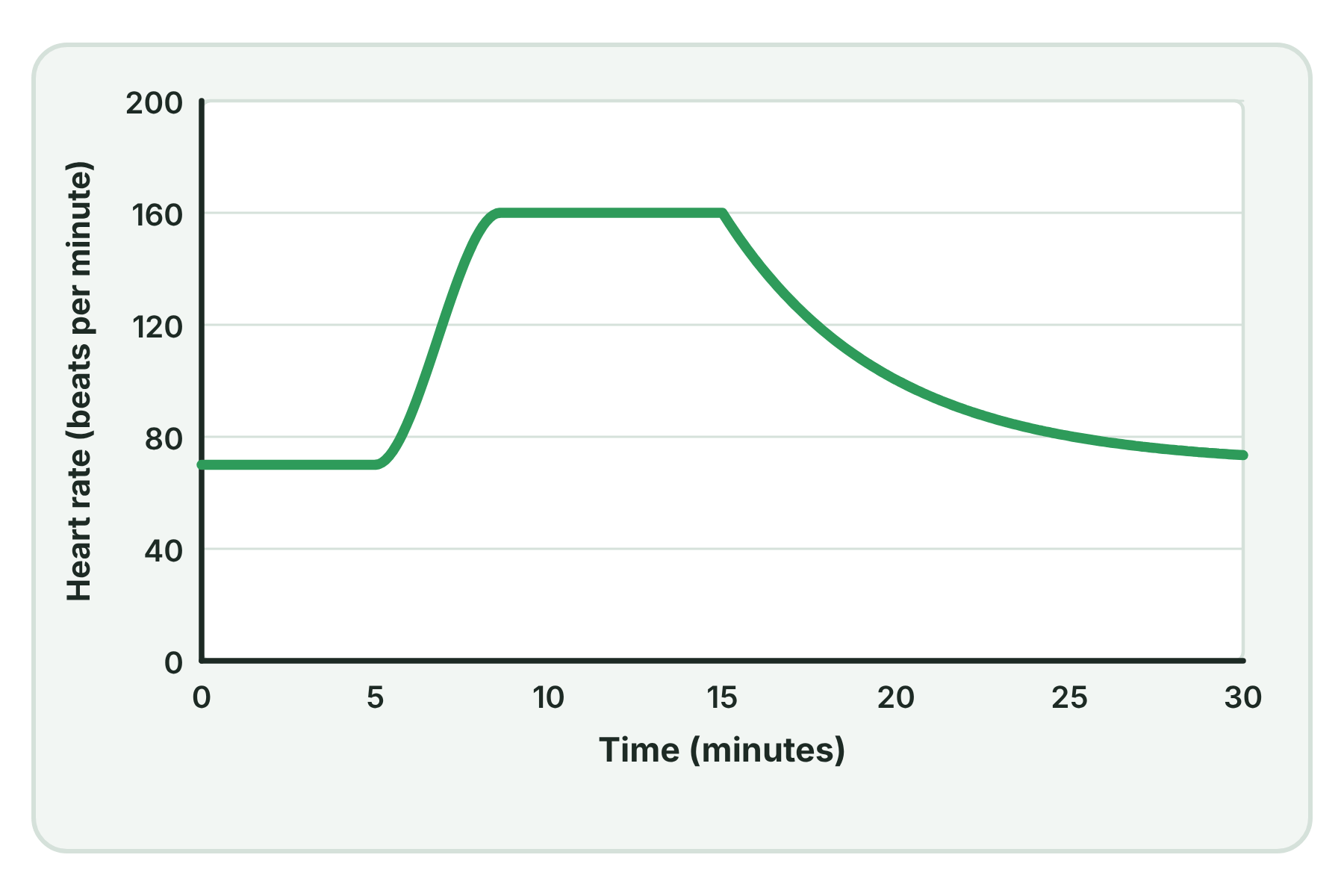
Figure 1 shows a person's heart rate before, during and after exercise. Describe the changes in heart rate shown in Figure 1.
Show answerHide answer
Model answer
The heart rate is steady at about 70 beats per minute at first. It increases when the exercise starts, to about 160 beats per minute. After the exercise it falls slowly, taking about 15 minutes to get back to the resting rate.
Mark scheme
- Steady at about 70 beats per minute at first — 1 mark
- Rises to about 160 beats per minute during exercise — 1 mark
- Falls slowly back to the resting rate after exercise — 1 mark
-
3 Explain [4 marks]
Explain why the heart rate and the breathing rate increase during exercise.
Show answerHide answer
Model answer
The muscles contract more, so they respire faster and need more oxygen and glucose. They also make more carbon dioxide. The heart rate and breathing rate increase so that more oxygenated blood is supplied to the muscles, and carbon dioxide is removed faster.
Mark scheme
- Muscles respire faster during exercise — 1 mark
- More oxygen and glucose are needed — 1 mark
- More oxygenated blood is supplied to the muscles — 1 mark
- Carbon dioxide is removed faster — 1 mark
-
4 Calculate [2 marks]
A person's heart rate is 60 beats per minute at rest and 150 beats per minute during exercise. Calculate the percentage increase in heart rate.
Show answerHide answer
Model answer
150%
Mark scheme
- \(150 - 60 = 90\), then \(90 \div 60 \times 100\) — 1 mark
- 150% — 1 mark
-
5 Explain [3 marks]
Explain why the muscles of a long-distance runner become fatigued.
Show answerHide answer
Model answer
During long periods of vigorous activity not enough oxygen reaches the muscles, so they respire anaerobically. The incomplete oxidation of glucose makes lactic acid, which builds up. The muscles then stop contracting efficiently.
Mark scheme
- Not enough oxygen, so anaerobic respiration — 1 mark
- Lactic acid builds up — 1 mark
- Muscles stop contracting efficiently — 1 mark
-
6 Describe [4 marks]
Describe how you could investigate the effect of exercise on the heart rate of a student.
Show answerHide answer
Model answer
Measure the resting pulse by counting the beats for a minute. Make the student exercise for a set time, for example 2 minutes of step-ups. Measure the pulse straight away and then every minute until it returns to normal. Repeat and calculate a mean, keeping the type and time of exercise the same.
Mark scheme
- Measure the resting pulse — 1 mark
- Exercise for a set time — 1 mark
- Measure the pulse after exercise until it returns to normal — 1 mark
- Repeat and calculate a mean / control variables — 1 mark
-
7 Explain [2 marks]
Explain what is meant by oxygen debt.
Show answerHide answer
Model answer
Oxygen debt is the extra oxygen the body needs after exercise. It reacts with the accumulated lactic acid to remove it from the cells.
Mark scheme
- The extra oxygen needed after exercise — 1 mark
- To react with / remove the lactic acid — 1 mark
-
8 Explain [3 marks]
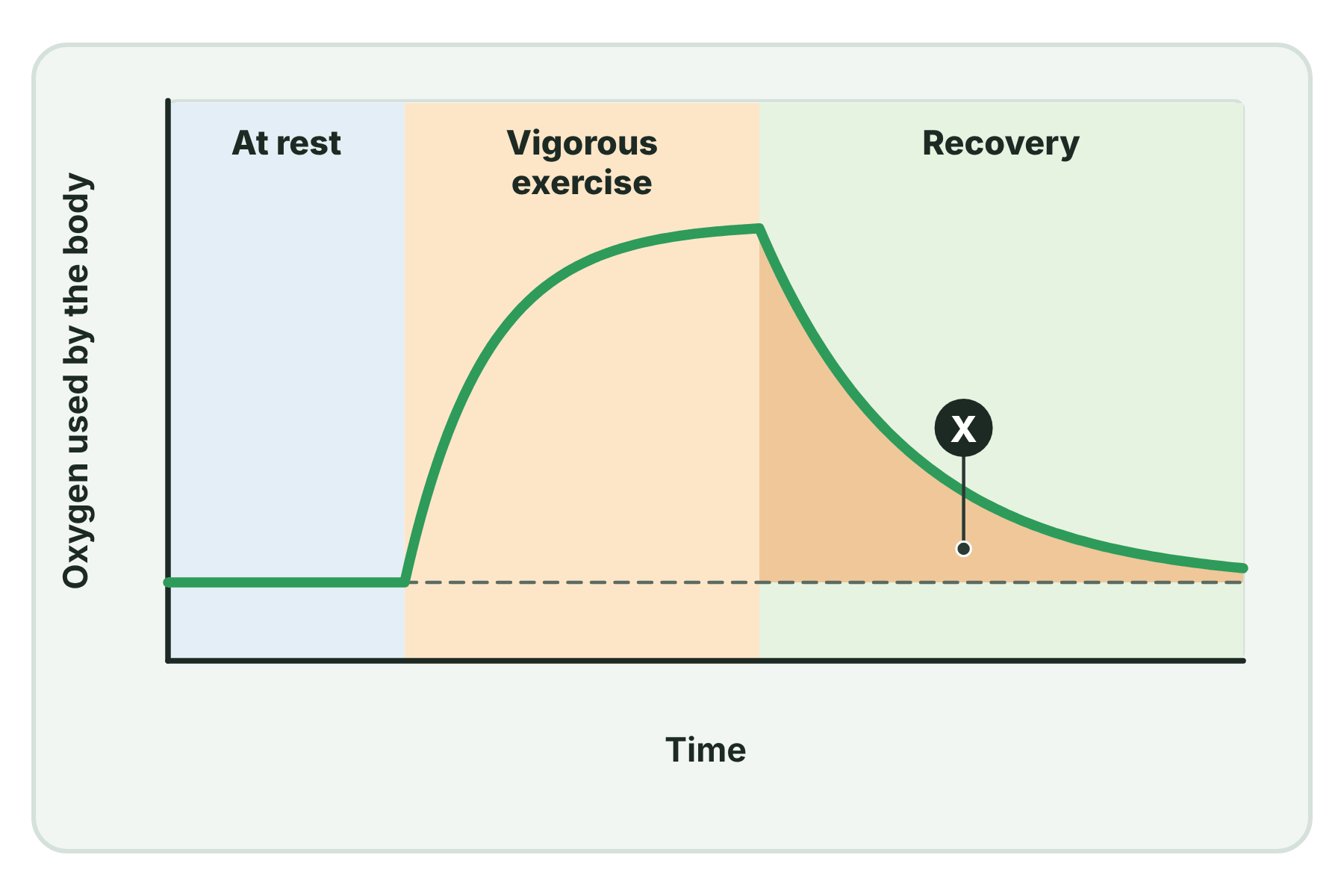
Figure 2 shows how much oxygen a person's body uses before, during and after vigorous exercise. Explain what the shaded area X shows and why it happens.
Show answerHide answer
Model answer
The shaded area shows the extra oxygen used after exercise, which is the oxygen debt being repaid. During the exercise the muscles respired anaerobically and made lactic acid. The extra oxygen is needed to react with the lactic acid and remove it.
Mark scheme
- Area X is the oxygen debt, the extra oxygen used after exercise — 1 mark
- Muscles respired anaerobically and made lactic acid — 1 mark
- The oxygen reacts with the lactic acid to remove it — 1 mark
-
9 Name [3 marks]
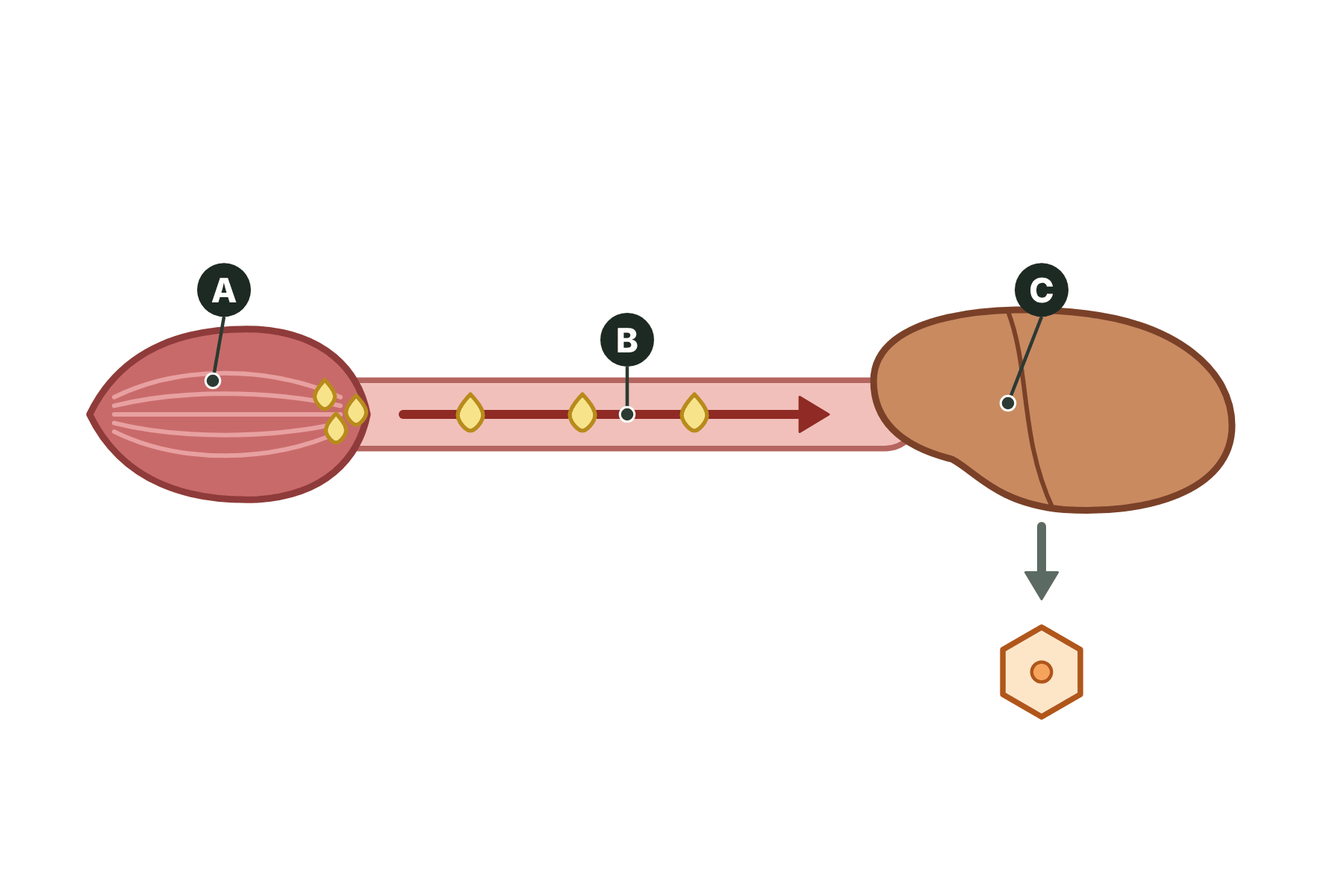
Figure 3 shows what happens to a substance that builds up in muscles during vigorous exercise. Name the part or substance shown at A, B and C.
Show answerHide answer
Model answer
A is the muscle. B is lactic acid, carried in the blood. C is the liver.
Mark scheme
- A: muscle — 1 mark
- B: lactic acid — 1 mark
- C: liver — 1 mark
Quick check
-
1
What happens to the breath volume during exercise?
Show answerHide answer
A: It increases
Each breath is deeper, so the breath volume increases.
-
2
Why does the heart rate increase during exercise?
Show answerHide answer
C: To supply the muscles with more oxygenated blood
A faster heart rate pumps more oxygenated blood to the muscles.
-
3
Which substance builds up in muscles during anaerobic respiration?
Show answerHide answer
B: Lactic acid
Anaerobic respiration in muscles makes lactic acid.
-
4
A student's heart rate is 80 beats per minute at rest and 160 during exercise. What is the percentage increase?
Show answerHide answer
D: 100%
The increase is 80, and 80 ÷ 80 × 100 = 100%.
-
5
Which word describes muscles that stop contracting efficiently after long periods of vigorous activity?
Show answerHide answer
C: Fatigued
Muscle fatigue is when muscles stop contracting efficiently.
-
6
A person takes 20 breaths per minute and each breath is 1.0 dm³. What volume of air do they breathe in each minute?
Show answerHide answer
A: 20 dm³ per minute
Volume per minute = breathing rate × breath volume = 20 × 1.0 = 20 dm³.
-
7
Where is lactic acid converted back to glucose?
Show answerHide answer
D: In the liver
The blood carries lactic acid to the liver, which converts it back into glucose.
-
8
What is oxygen debt?
Show answerHide answer
B: The extra oxygen needed after exercise to remove lactic acid
Oxygen debt is the extra oxygen needed after exercise to react with the lactic acid and remove it.
Metabolism
Just this lesson-
1 State [1 mark]
State what is meant by metabolism.
Show answerHide answer
Model answer
The sum of all the reactions in a cell or the body.
Mark scheme
- Sum of all the reactions in a cell or the body — 1 mark
-
2 Name [3 marks]
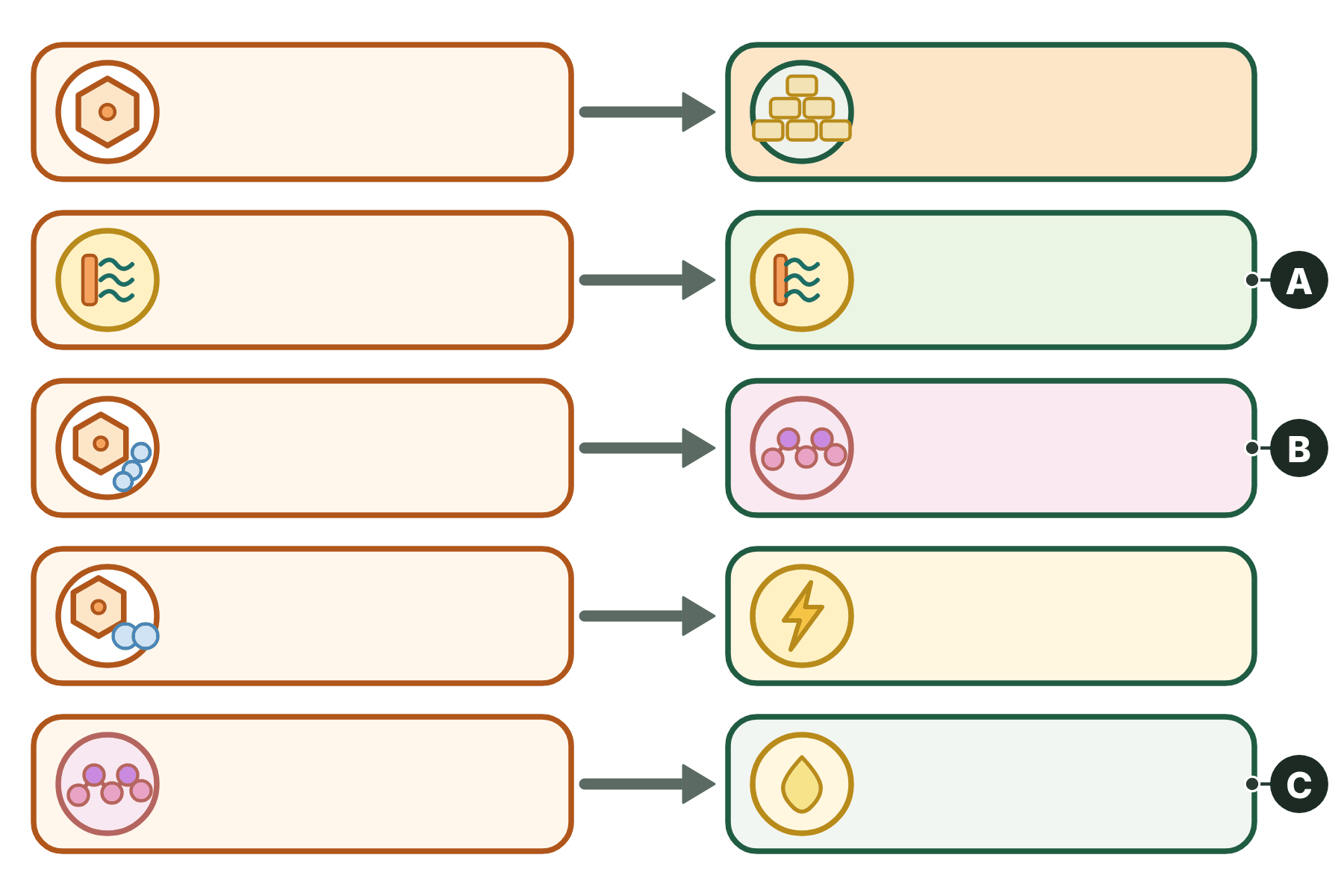
Figure 1 shows some of the reactions of metabolism. Name the substances made at A, B and C.
Show answerHide answer
Model answer
A is a lipid. B is amino acids (that are used to make proteins). C is urea.
Mark scheme
- A: lipid — 1 mark
- B: amino acids — 1 mark
- C: urea — 1 mark
-
3 Name [3 marks]
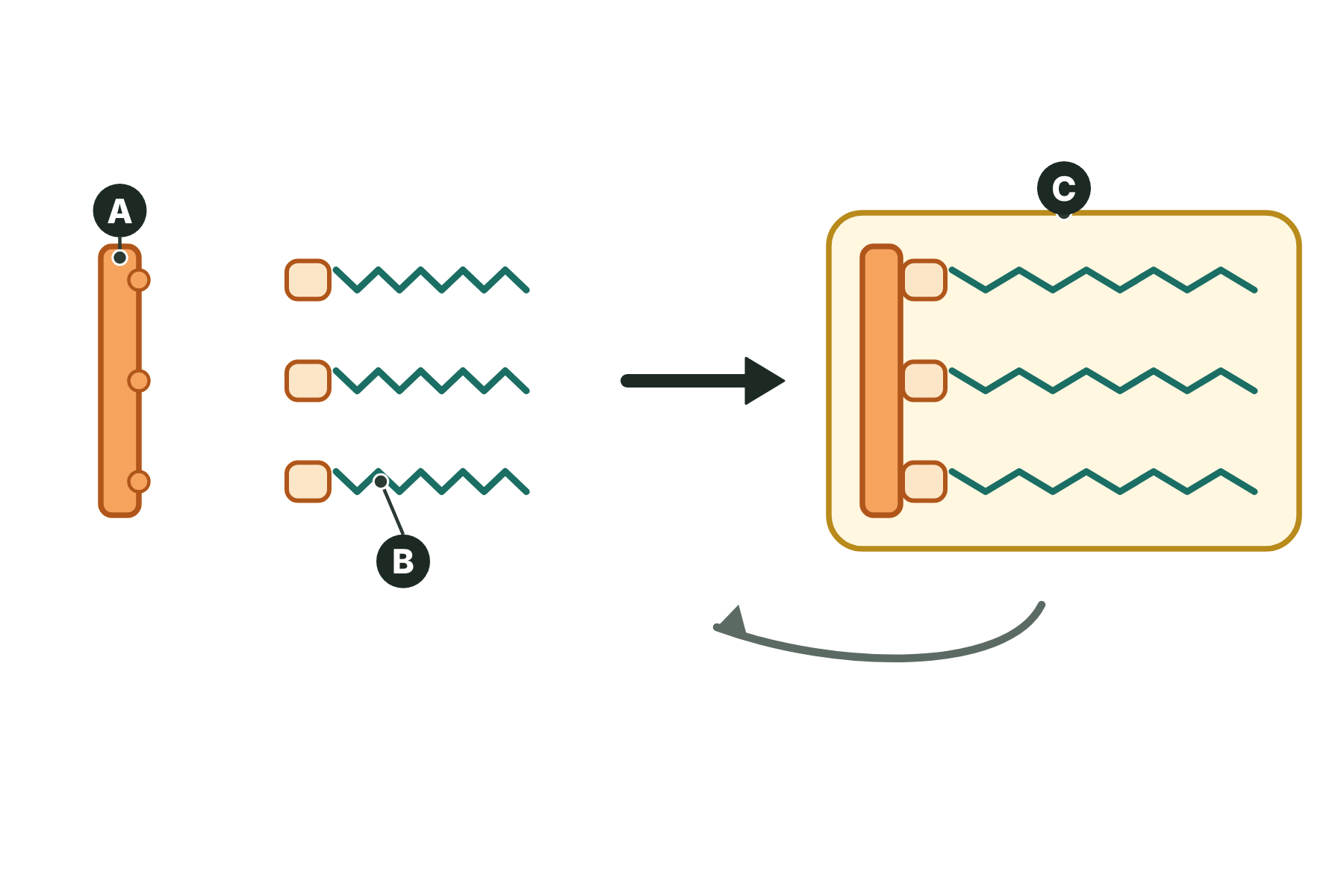
Figure 2 shows how a lipid molecule is made. Name the parts shown at A, B and C.
Show answerHide answer
Model answer
A is glycerol. B is a fatty acid. C is a lipid (molecule).
Mark scheme
- A: glycerol — 1 mark
- B: fatty acid — 1 mark
- C: lipid — 1 mark
-
4 Describe [3 marks]
Describe how a plant makes protein.
Show answerHide answer
Model answer
The plant uses glucose, made in photosynthesis, and nitrate ions from the soil to make amino acids. The amino acids are then joined together to make proteins. Energy from respiration is used.
Mark scheme
- Glucose and nitrate ions make amino acids — 1 mark
- Amino acids are joined to make proteins — 1 mark
- Energy from respiration is used — 1 mark
-
5 Explain [3 marks]
Explain why metabolism needs energy from respiration.
Show answerHide answer
Model answer
Many of the reactions of metabolism build large molecules from smaller ones, which is called synthesis. These reactions need energy. The energy is transferred by respiration.
Mark scheme
- Metabolism includes building (synthesising) new molecules — 1 mark
- These reactions need energy — 1 mark
- The energy is transferred by respiration — 1 mark
-
6 Explain [2 marks]
Explain why urea is made in the body.
Show answerHide answer
Model answer
The body cannot store excess protein, so it is broken down. The nitrogen is made into urea, which is excreted.
Mark scheme
- Excess protein is broken down — 1 mark
- To form urea for excretion — 1 mark
-
7 Explain [4 marks]
Explain the importance of sugars, amino acids, fatty acids and glycerol in the body.
Show answerHide answer
Model answer
Sugars are joined to make carbohydrates such as glycogen. Amino acids are joined to make proteins. Fatty acids and glycerol are joined to make lipids. They are also made when the large molecules are broken down again.
Mark scheme
- Sugars make carbohydrates — 1 mark
- Amino acids make proteins — 1 mark
- Fatty acids and glycerol make lipids — 1 mark
- They are produced when the molecules are broken down — 1 mark
Quick check
-
1
What is metabolism?
Show answerHide answer
B: The sum of all the reactions in a cell or the body
Metabolism is the sum of all the reactions in a cell or the body.
-
2
Which molecules join to make a lipid?
Show answerHide answer
C: One glycerol and three fatty acids
A lipid is made from one molecule of glycerol and three molecules of fatty acids.
-
3
Which substances are used to make amino acids in a plant?
Show answerHide answer
A: Glucose and nitrate ions
Glucose and nitrate ions are used to make amino acids.
-
4
What do animals store glucose as?
Show answerHide answer
D: Glycogen
Animals store glucose as glycogen, mainly in the liver and muscles.
-
5
What is made when excess protein is broken down?
Show answerHide answer
B: Urea
Excess protein is broken down to form urea, which is excreted.
-
6
What is the energy released by respiration used for in metabolism?
Show answerHide answer
C: To synthesise new molecules
Respiration transfers the energy used to synthesise new molecules.
-
7
Which molecule is made from amino acids?
Show answerHide answer
A: Protein
Proteins are made by joining amino acids.
-
8
Which carbohydrate strengthens plant cell walls?
Show answerHide answer
D: Cellulose
Cellulose is made from glucose and strengthens the cell walls of plants.