Flashcards · Biology · The Circulatory System
The Heart and Double Circulation
-
What is the heart?
An organ that pumps blood around the body in a double circulatory system.
-
Which chamber receives blood from the vena cava?
The right atrium.
-
Which chamber pumps blood to the lungs?
The right ventricle.
-
Which chamber pumps blood to the body?
The left ventricle.
-
Why is the wall of the left ventricle thicker than the right?
It has to pump blood around the whole body, so it needs more force.
-
What does the aorta carry?
Oxygenated blood from the left ventricle to the body.
-
What does the pulmonary artery carry?
Deoxygenated blood from the right ventricle to the lungs.
-
What does the pulmonary vein carry?
Oxygenated blood from the lungs to the left atrium.
-
What do the coronary arteries do?
They supply the heart muscle with oxygenated blood.
-
Why is it called a double circulatory system?
Blood goes through the heart twice on each complete trip round the body.
-
Why is blood returned to the heart after the lungs?
It loses pressure in the lung capillaries, so the heart gives it a new push to the body.
-
Where is the natural pacemaker?
In a group of cells in the right atrium.
-
What does an artificial pacemaker do?
It sends electrical pulses to the heart to correct an irregular heartbeat.
-
How do you work out a heart rate from a count in 15 seconds?
Multiply the count by 4 to get beats per minute.
-
Do you need to know the names of the heart valves?
No. They are not required.
-
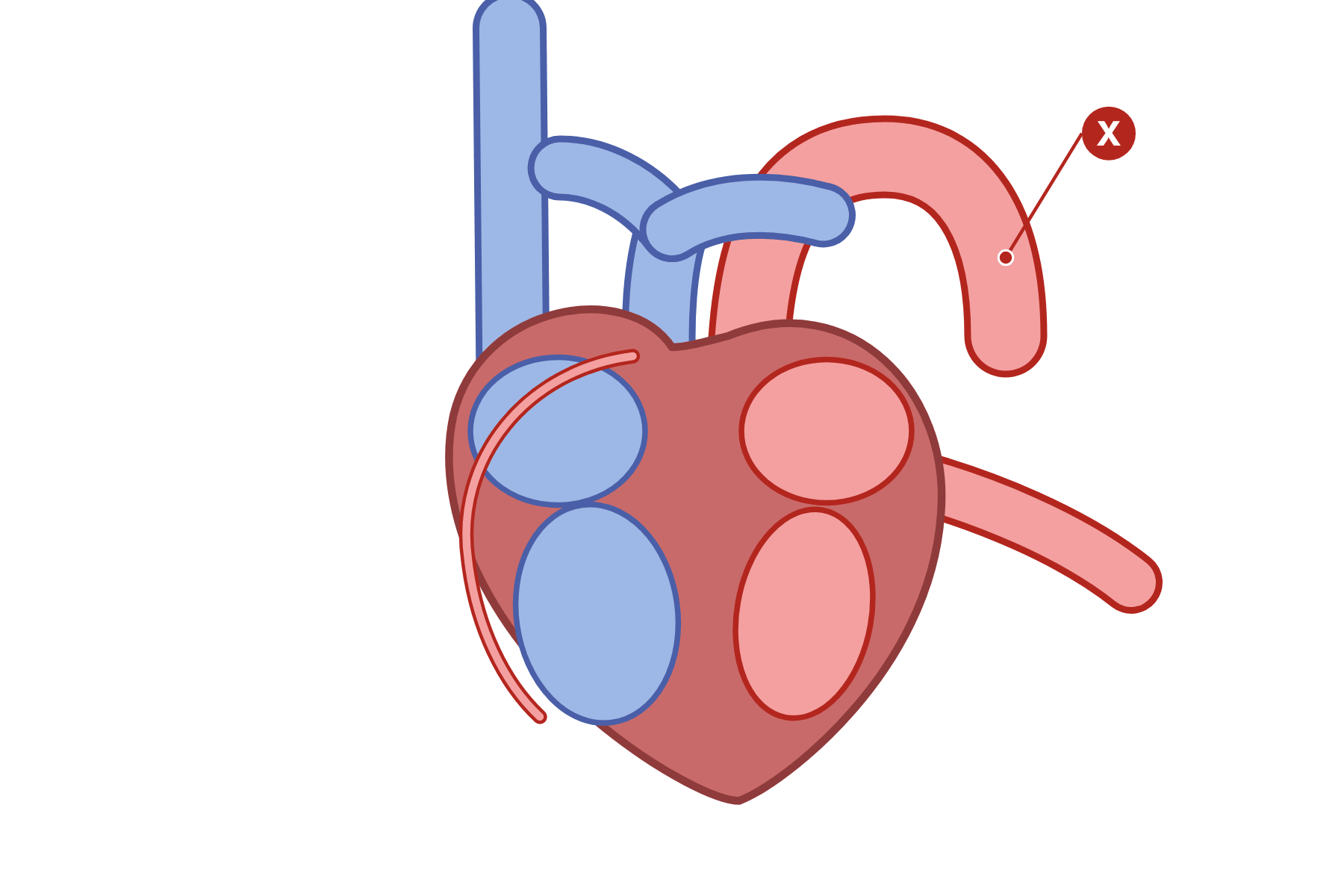 Name the vessel marked X and say what it carries.
 The aorta. It carries oxygenated blood from the left ventricle to the body.
-
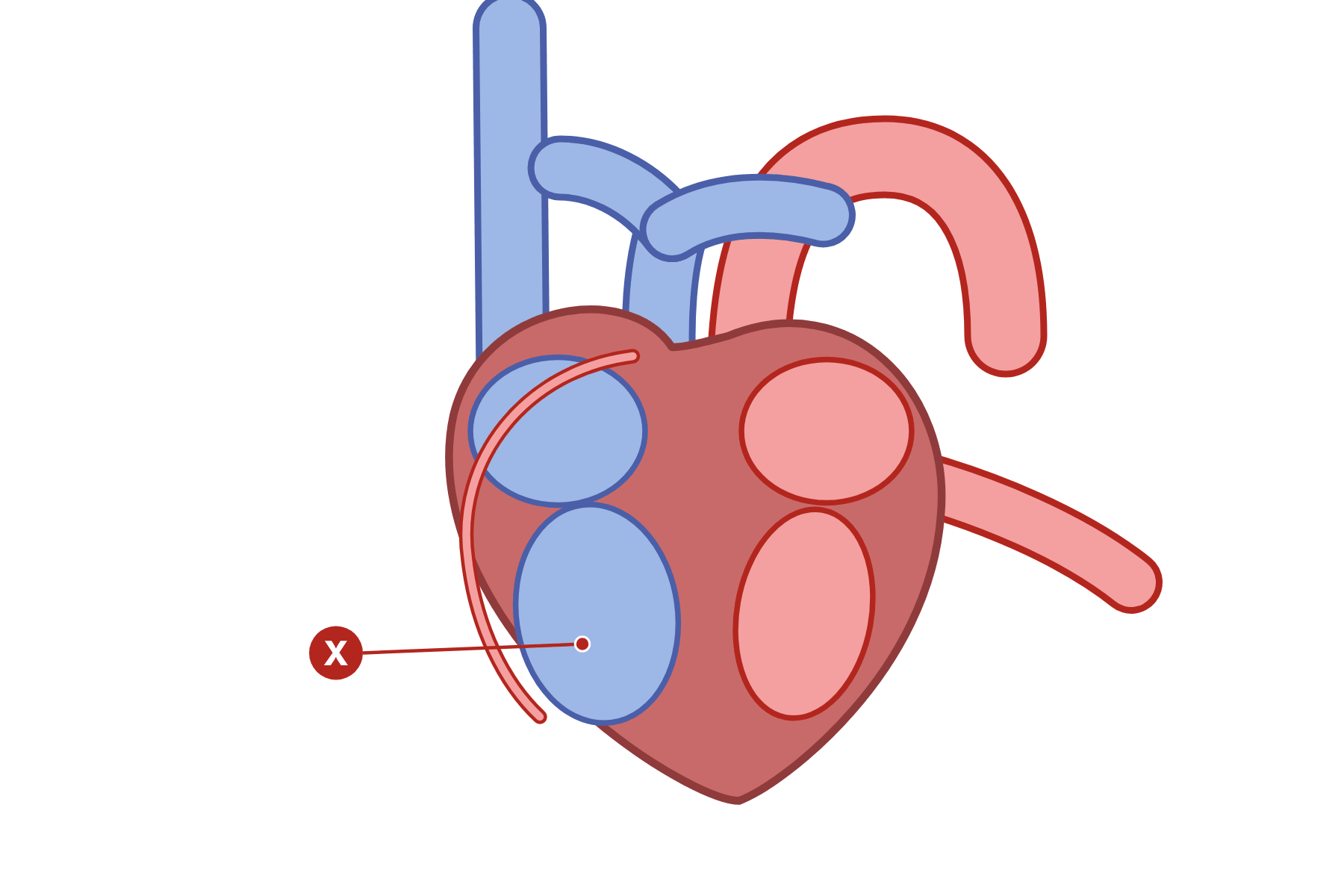 Name the chamber marked X and say where it pumps blood.
 The right ventricle. It pumps deoxygenated blood to the lungs along the pulmonary artery.
-
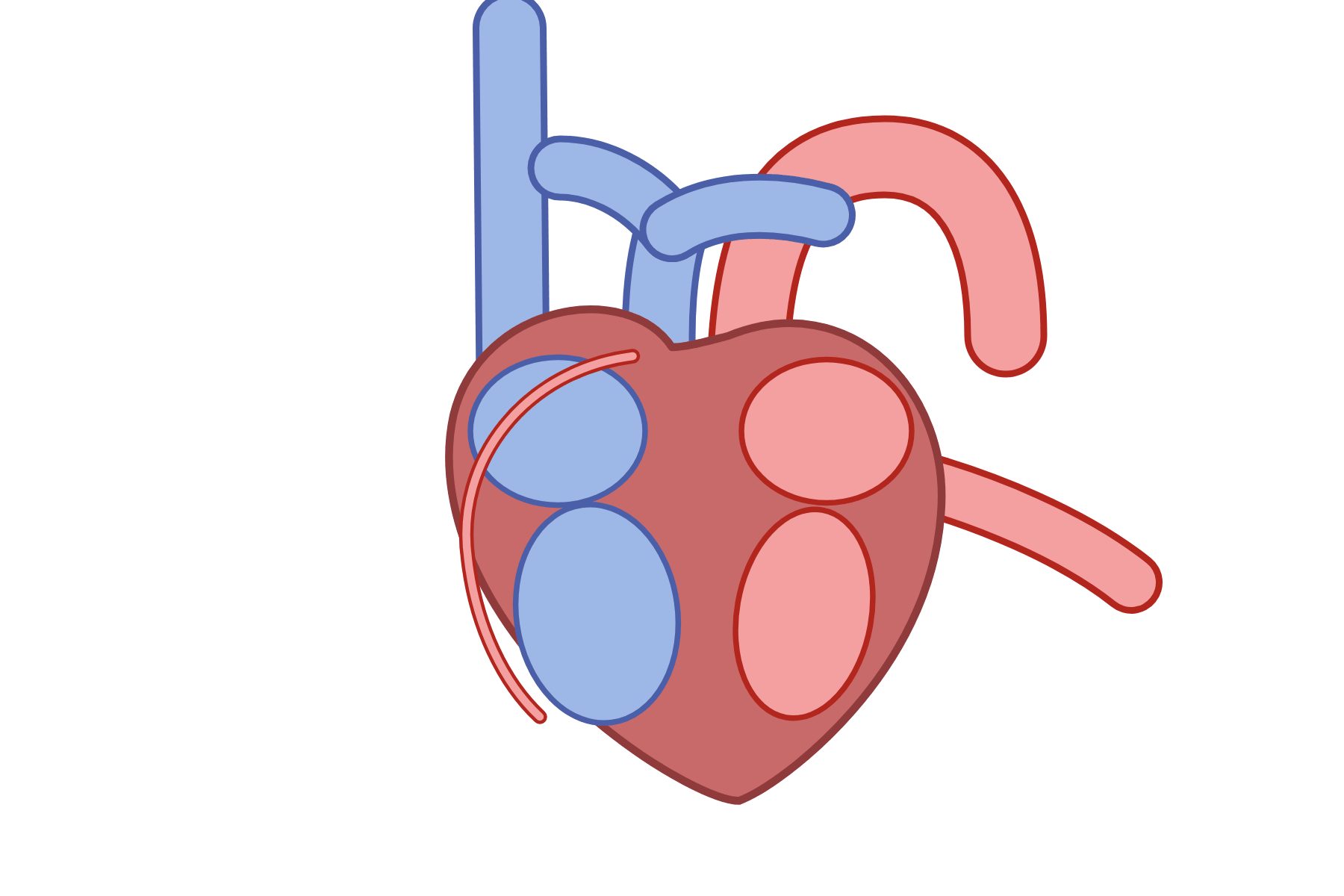 Label every part of the heart.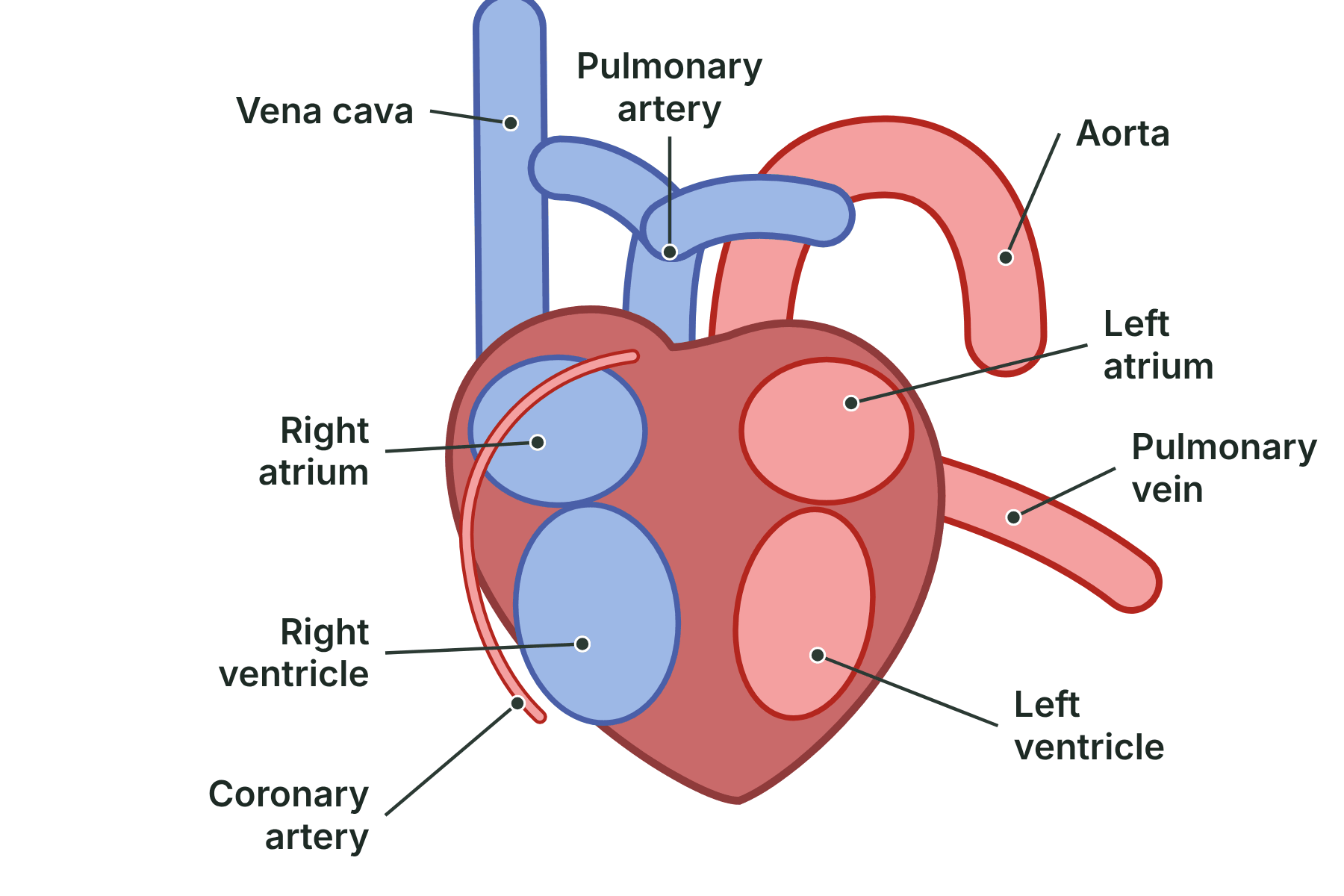
Right atrium, right ventricle, left atrium, left ventricle, vena cava, aorta, pulmonary artery, pulmonary vein and coronary artery.