Flashcards · Biology · Transport In and Out of Cells
Surface Area to Volume Ratio and Exchange Surfaces
-
What is surface area to volume ratio?
The surface area of an object divided by its volume.
-
What happens to the surface area to volume ratio as an object gets bigger?
It gets smaller.
-
A cube has sides of 2 cm. What is its surface area?
6 × (2 × 2) = 24 cm².
-
A cube has sides of 2 cm. What is its volume?
2 × 2 × 2 = 8 cm³.
-
What is the surface area to volume ratio of a 2 cm cube?
24 ÷ 8 = 3, so 3:1.
-
Why can a single-celled organism manage without a transport system?
It has a large surface area to volume ratio, so diffusion across its surface meets all its needs.
-
Why can't diffusion alone supply the cells of a large animal?
The surface area to volume ratio is small and the distances are long, so diffusion is far too slow.
-
Why do multicellular organisms need exchange surfaces?
Their body surface is too small for their volume, so they need specialised surfaces to swap materials quickly.
-
Name the four features of an effective exchange surface.
Large surface area, thin membrane, efficient blood supply (in animals) and ventilation (in animals, for gas exchange).
-
Why does a thin membrane help exchange?
It gives a short diffusion path.
-
Why does a blood supply help exchange?
It carries substances away, keeping the concentration gradient steep.
-
What are villi, and what do they do?
Finger-like folds in the small intestine wall that give a large surface area for absorbing digested food.
-
What is an alveolus?
A tiny air sac in the lungs where oxygen and carbon dioxide are exchanged.
-
How are the lungs ventilated?
By breathing, which moves fresh air in and stale air out.
-
How is a fish's gill adapted for gas exchange?
Many thin gill filaments give a large surface area, with a rich blood supply and water flowing over them.
-
How does a root hair cell help a plant?
Its long thin extension gives a large surface area for taking up water and mineral ions.
-
How are leaves adapted for gas exchange?
They are flat and thin, with air spaces inside giving a large surface area, and stomata to let gases in and out.
-
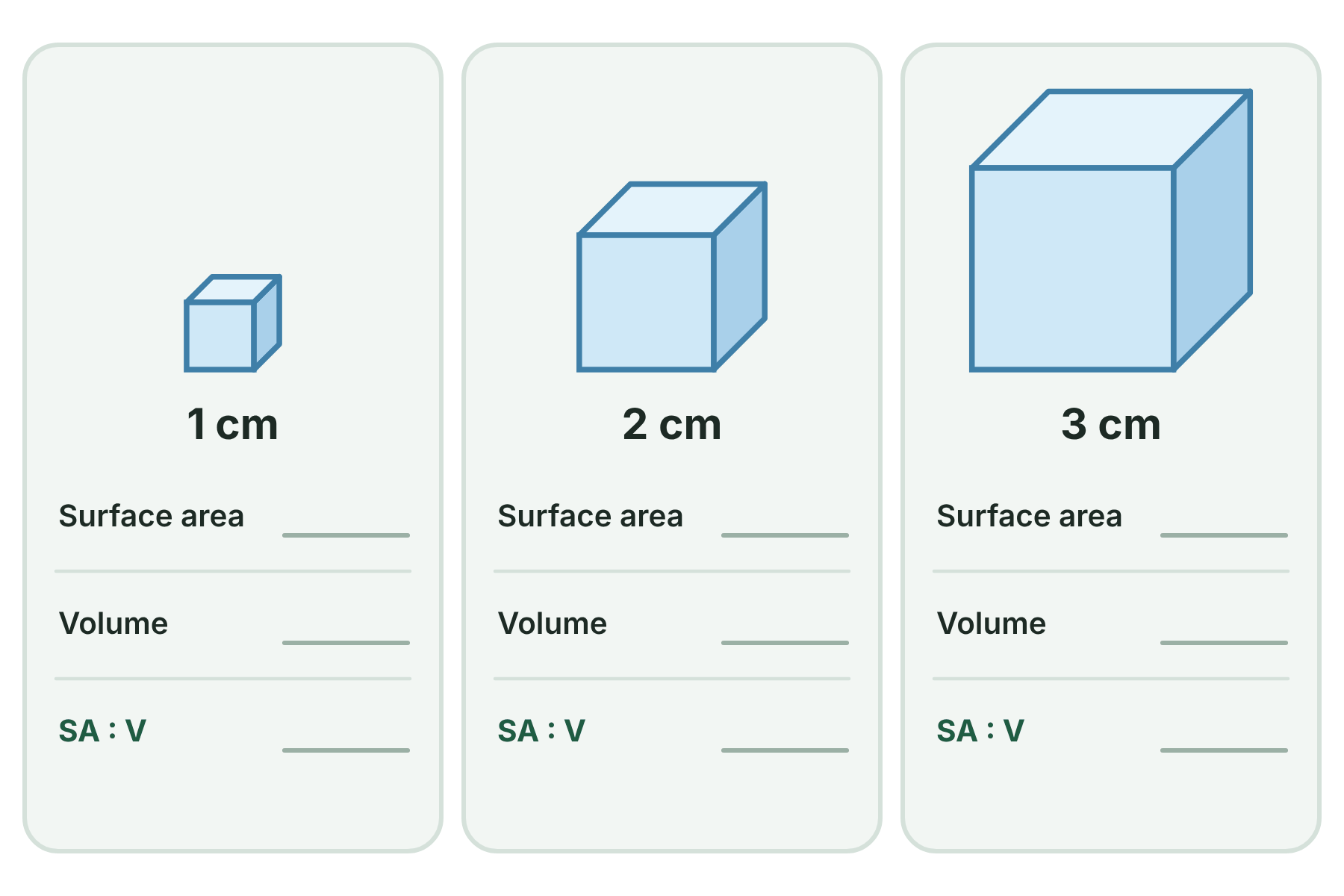 Work out the surface area to volume ratio of each cube.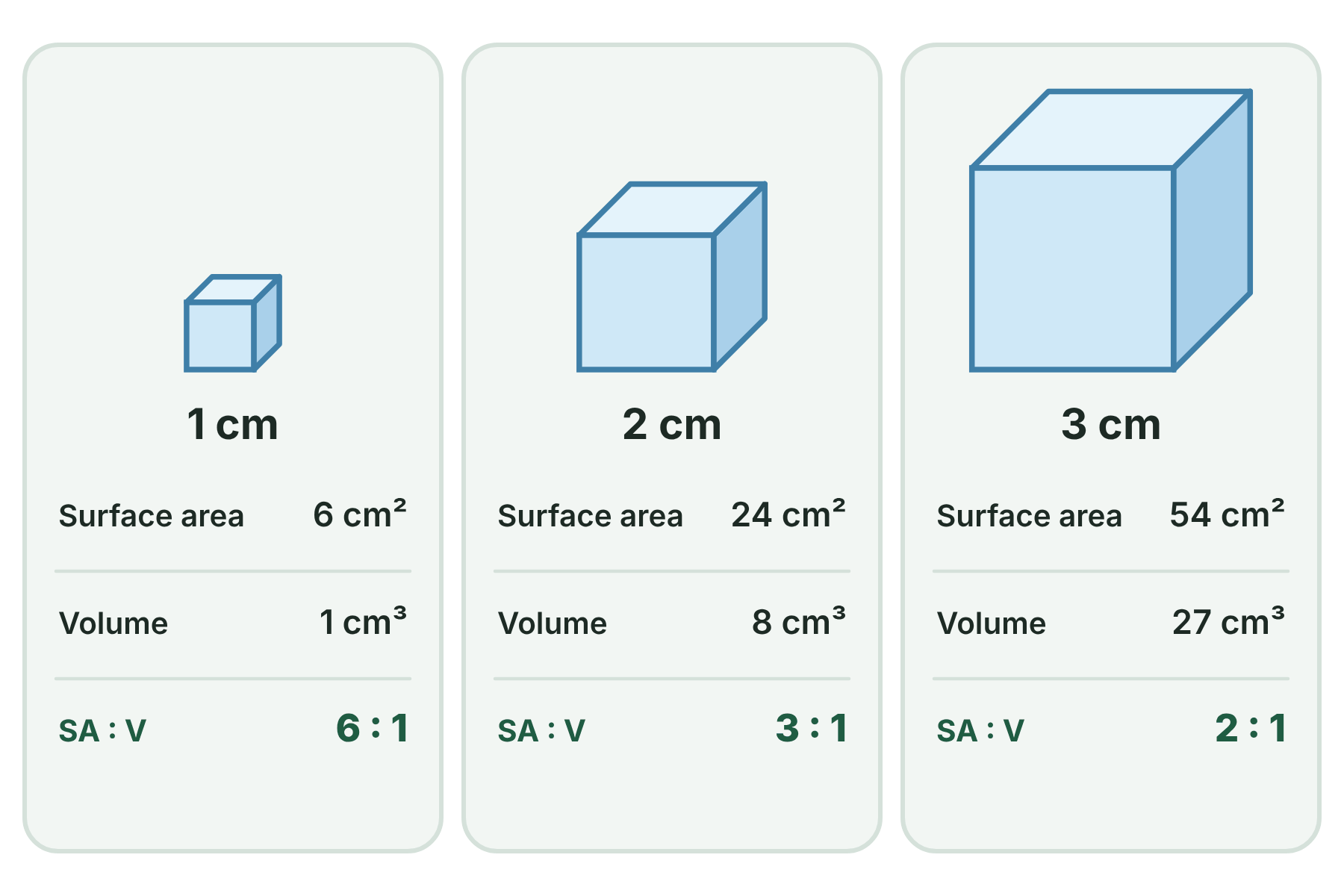
Surface areas 6, 24 and 54 cm². Volumes 1, 8 and 27 cm³. Ratios 6:1, 3:1 and 2:1. The ratio falls as the cube gets bigger.
-
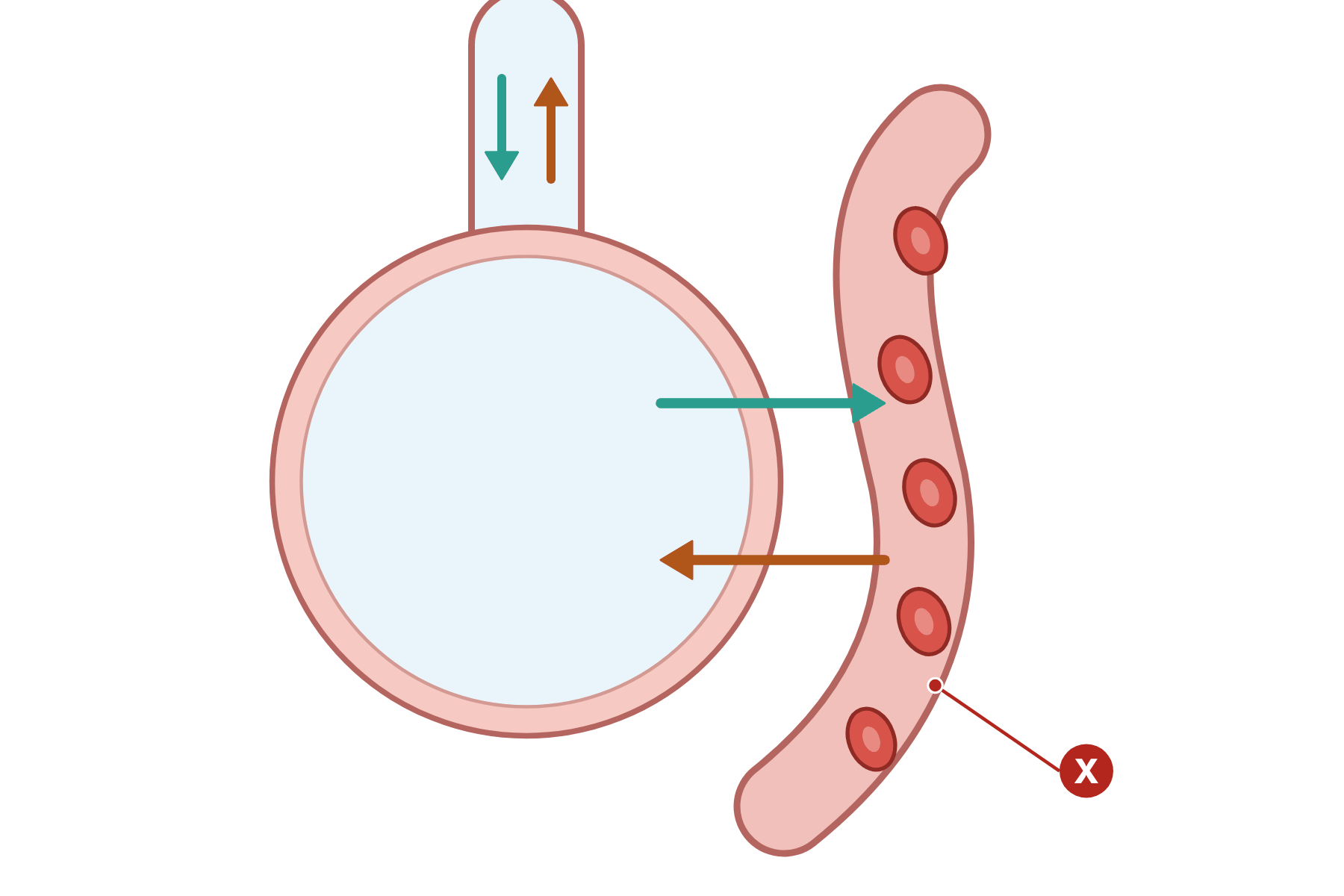 Name the structure marked X in this lung and say how it helps gas exchange.
 A capillary. It carries a rich blood supply that takes oxygen away and brings carbon dioxide, keeping the concentration gradient steep.
-
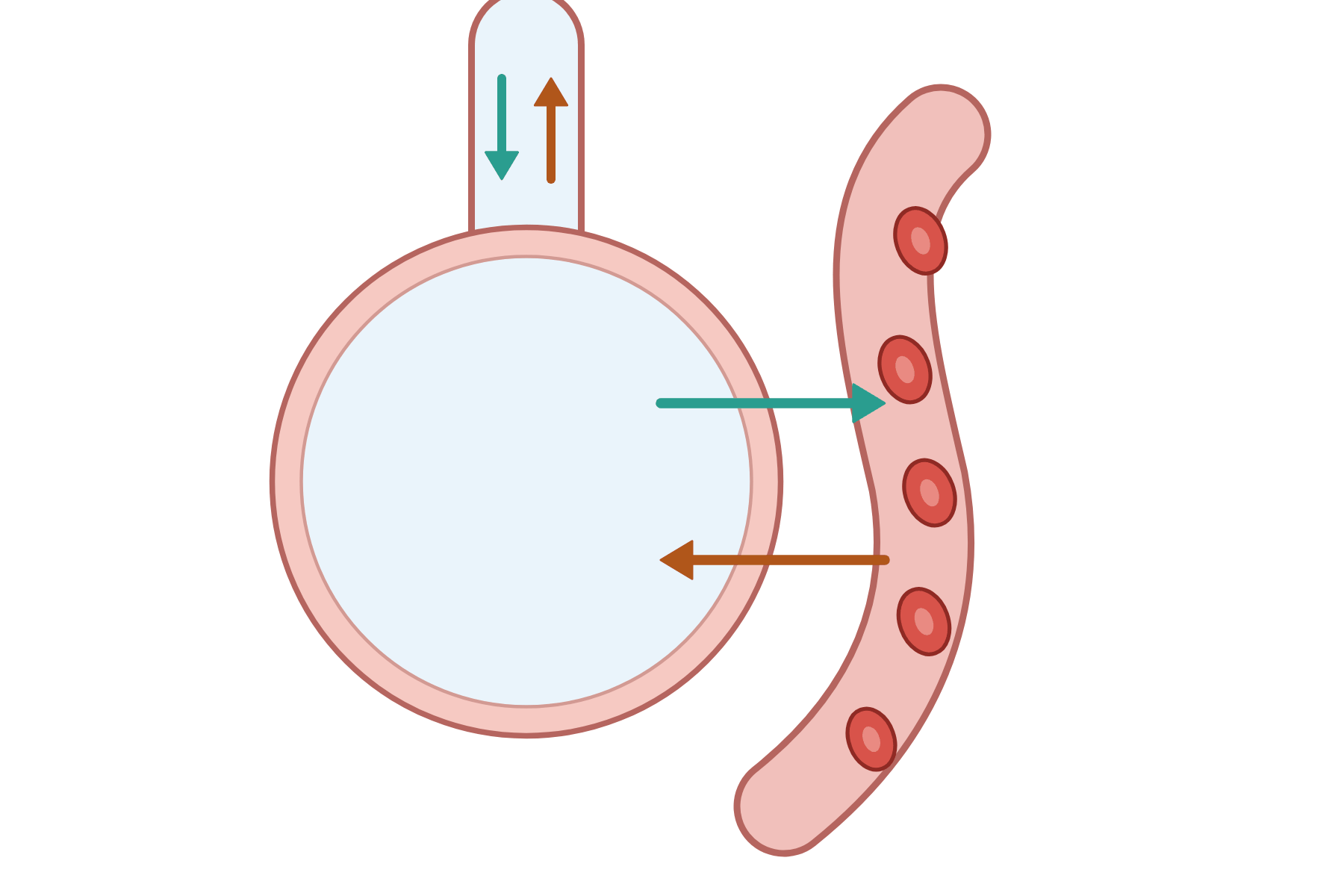 Label every part of this gas exchange surface.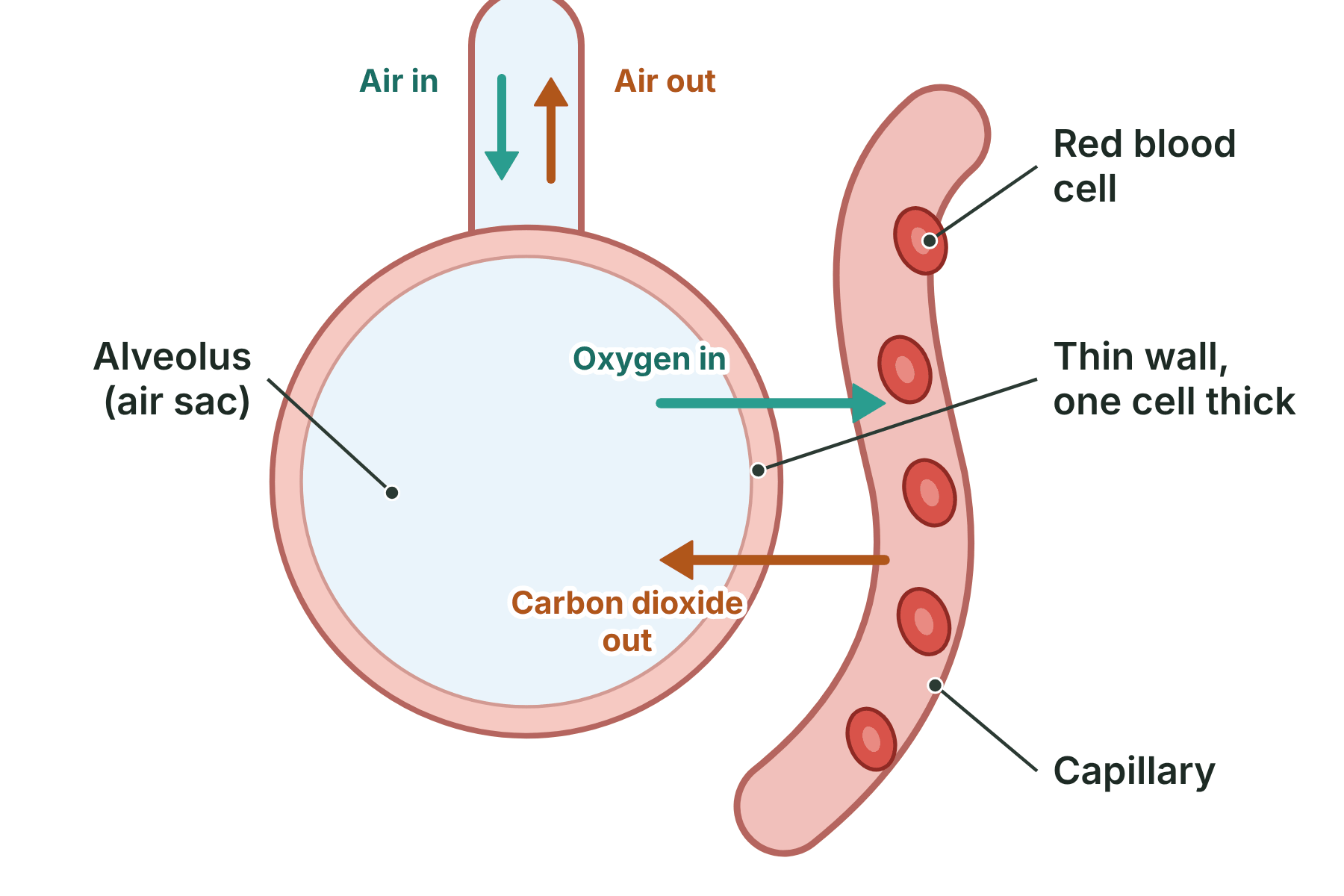
Alveolus, thin wall one cell thick, capillary, red blood cells, oxygen in, carbon dioxide out, air in and air out.