Flashcards · Biology · Homeostasis and the Nervous System
Homeostasis and Control Systems
-
What is homeostasis?
The regulation of the internal conditions of a cell or organism to maintain optimum conditions for function.
-
Name three conditions that the body controls.
Body temperature, blood glucose concentration and water content.
-
At what temperature is the human body kept?
About 37 °C.
-
Why must body temperature stay constant?
Enzymes work best at an optimum temperature.
-
What happens to enzymes if the body gets too hot?
They denature and stop working.
-
What does a receptor do?
Detects a change in a condition.
-
What does a coordination centre do?
Receives the information and decides on the response.
-
What does an effector do?
Carries out the response.
-
Give two examples of coordination centres.
The brain and the pancreas.
-
What is negative feedback? (Higher tier)
A response that reverses a change and brings the condition back to normal.
-
What happens if the condition is too high in negative feedback? (Higher tier)
The response makes it fall.
-
What happens if the condition is too low in negative feedback? (Higher tier)
The response makes it rise.
-
Why is the water content of the blood controlled?
Osmosis would make cells gain or lose water.
-
Why is blood glucose controlled?
Cells need a supply of glucose for respiration.
-
Is homeostasis automatic?
Yes, you do not have to think about it.
-
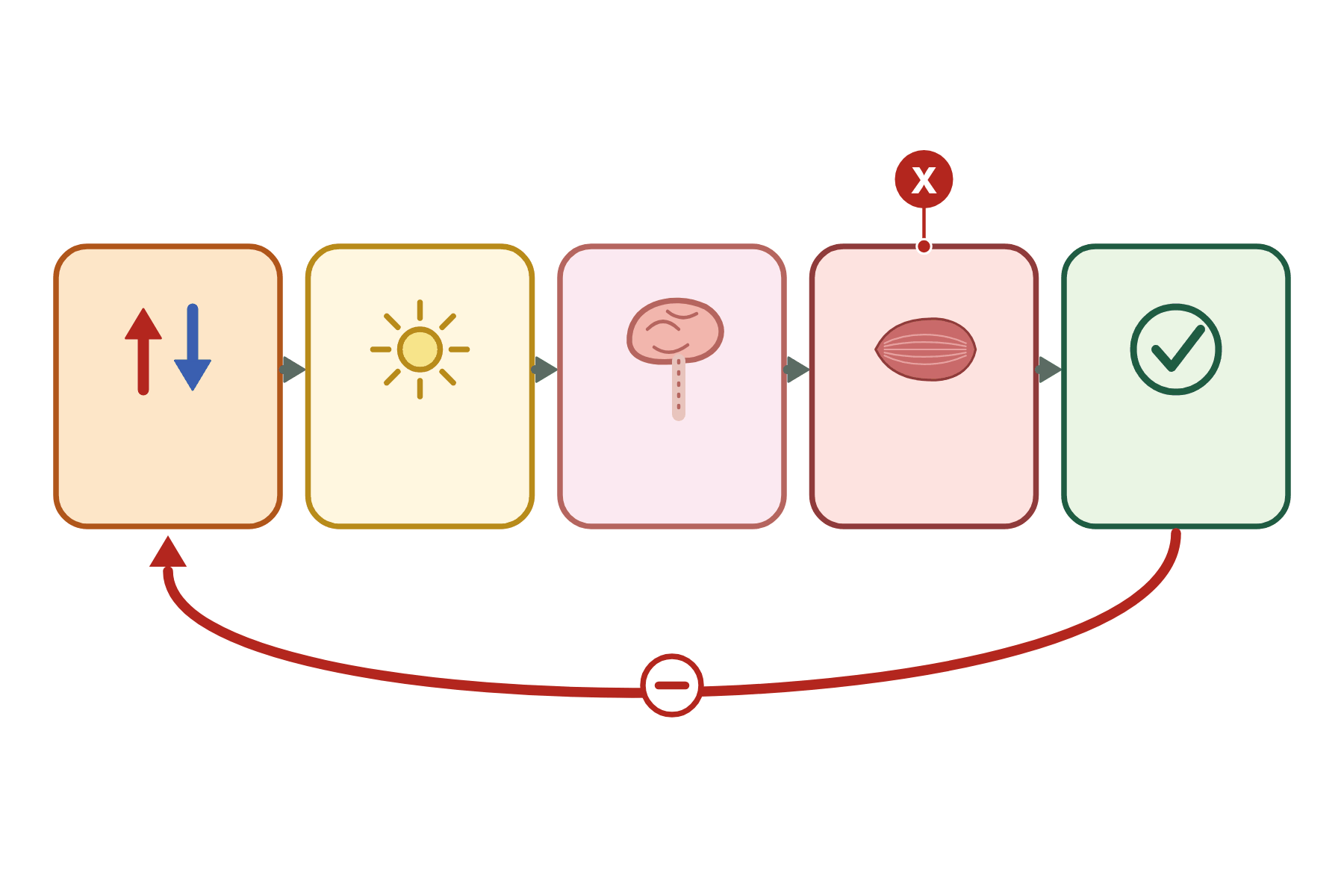 Name the part of the control system marked X.
 The effector. It carries out the response, such as a muscle contracting or a gland releasing a chemical.
-
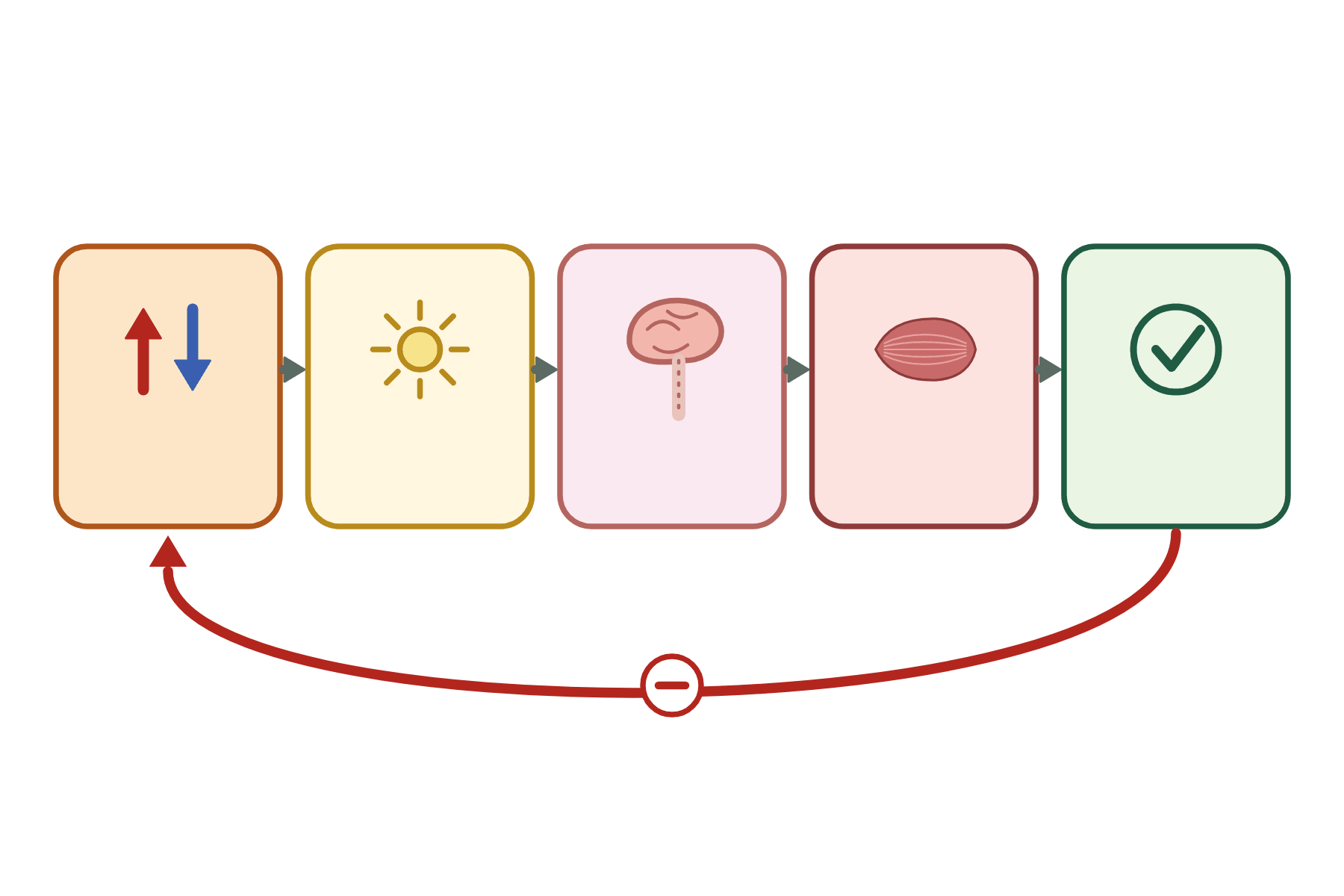 Name each stage of a negative feedback loop.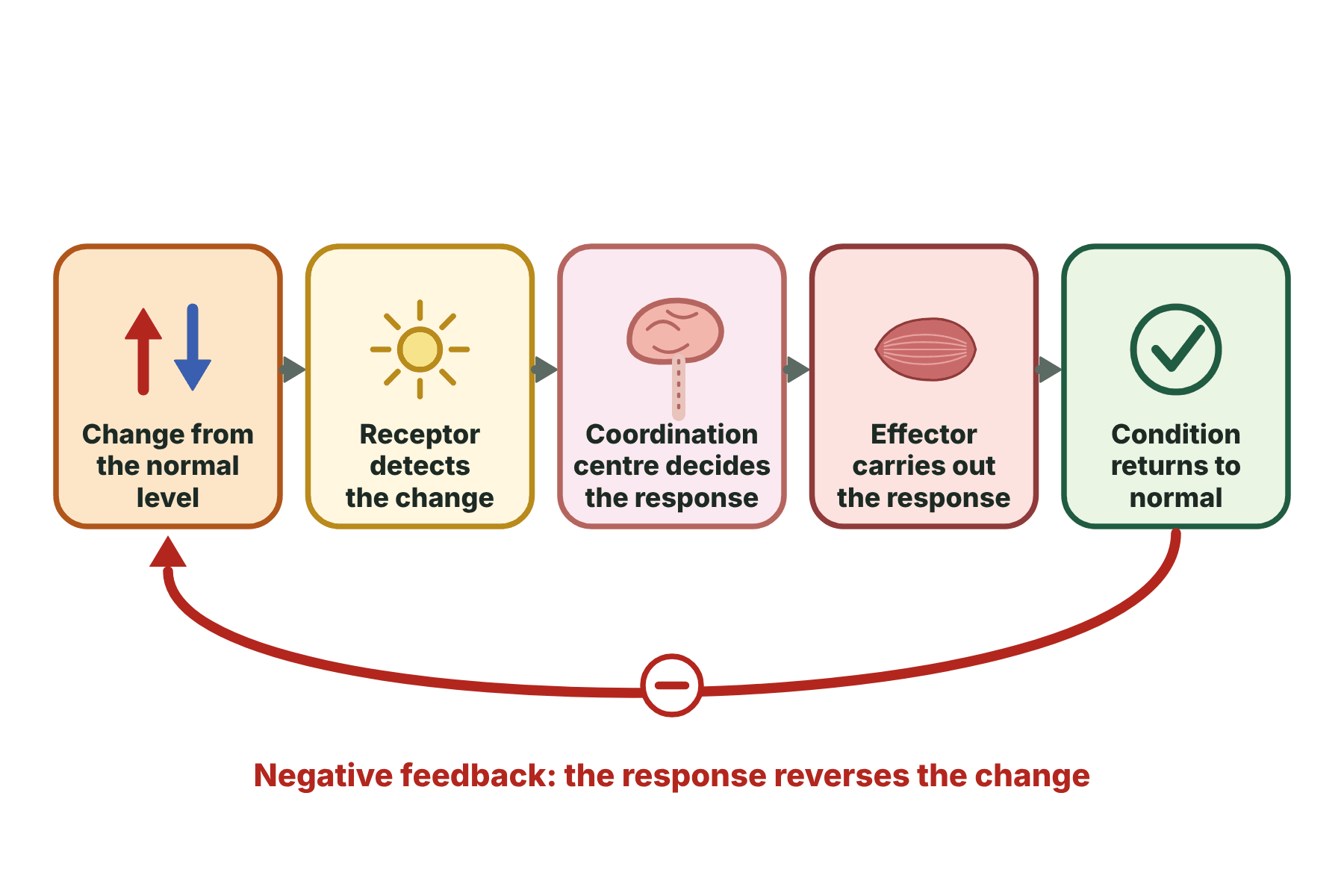
Change from normal, receptor, coordination centre, effector, return to normal. The response reverses the change, which is negative feedback.