Flashcards · Biology · Hormonal Coordination in Humans
Hormones in Human Reproduction
-
What does FSH do?
Makes an egg mature and stimulates the ovary to release oestrogen.
-
What does LH do?
A surge causes ovulation.
-
What is oestrogen?
The main female reproductive hormone, made in the ovary, which is involved in maintaining the lining of the uterus.
-
What does progesterone do?
Maintains the lining of the uterus.
-
What does testosterone do?
It stimulates sperm production and controls the male secondary sex characteristics.
-
Where are FSH and LH released from?
The pituitary gland.
-
Where are oestrogen and progesterone released from?
The ovaries.
-
How long is the menstrual cycle?
About 28 days.
-
What happens on days 1 to 5?
Menstruation: the lining of the uterus breaks down.
-
What happens on day 14?
Ovulation.
-
What is ovulation?
The release of a mature egg from an ovary.
-
What happens to the lining after ovulation?
It is maintained by progesterone.
-
What does oestrogen do to FSH? (Higher tier)
A rising level stops the pituitary releasing FSH.
-
What triggers the LH surge? (Higher tier)
A high level of oestrogen.
-
What makes the lining break down? (Higher tier)
The progesterone level falls.
-
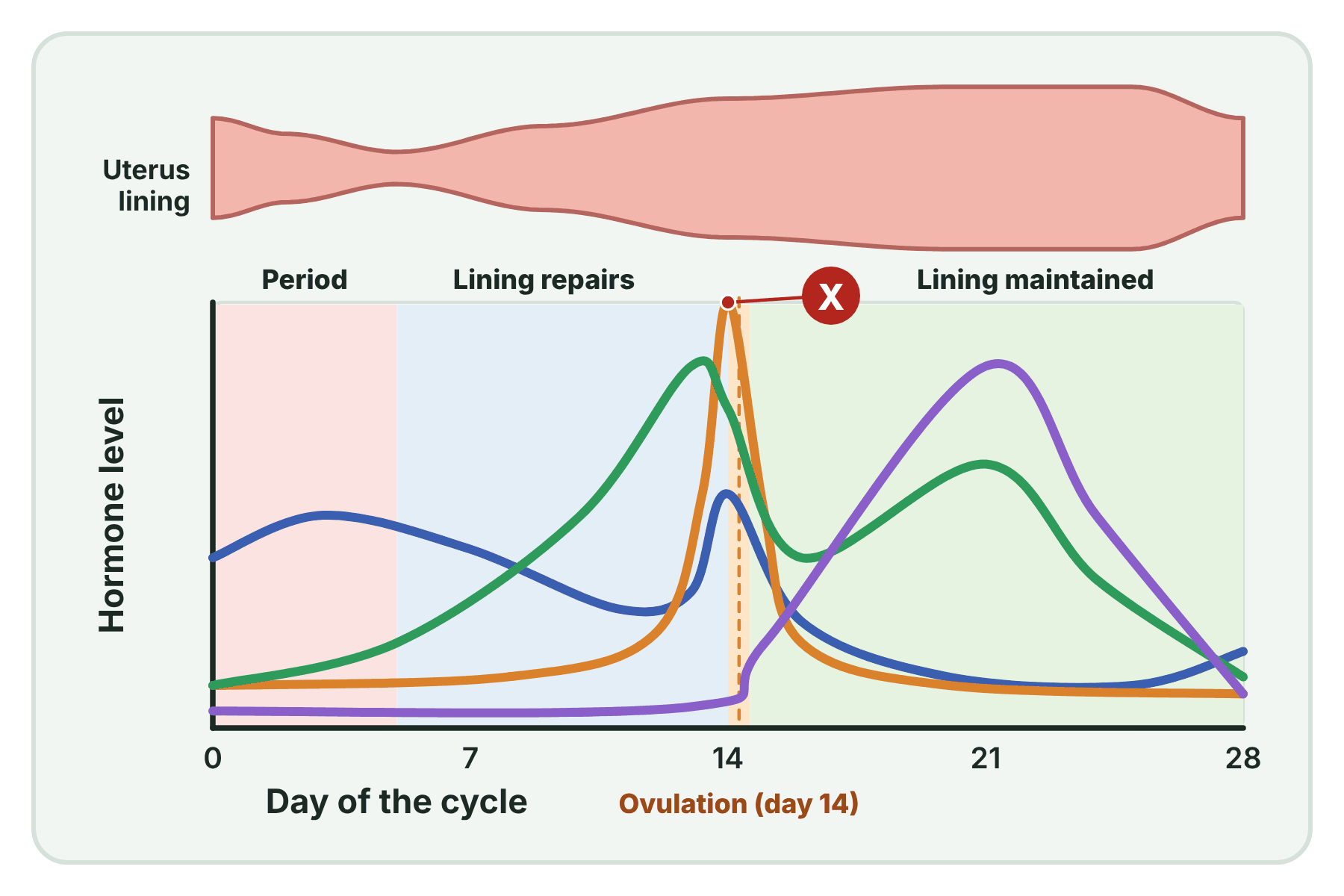 Name the hormone shown by the curve marked X.
 LH. The surge of LH at day 14 causes ovulation.
-
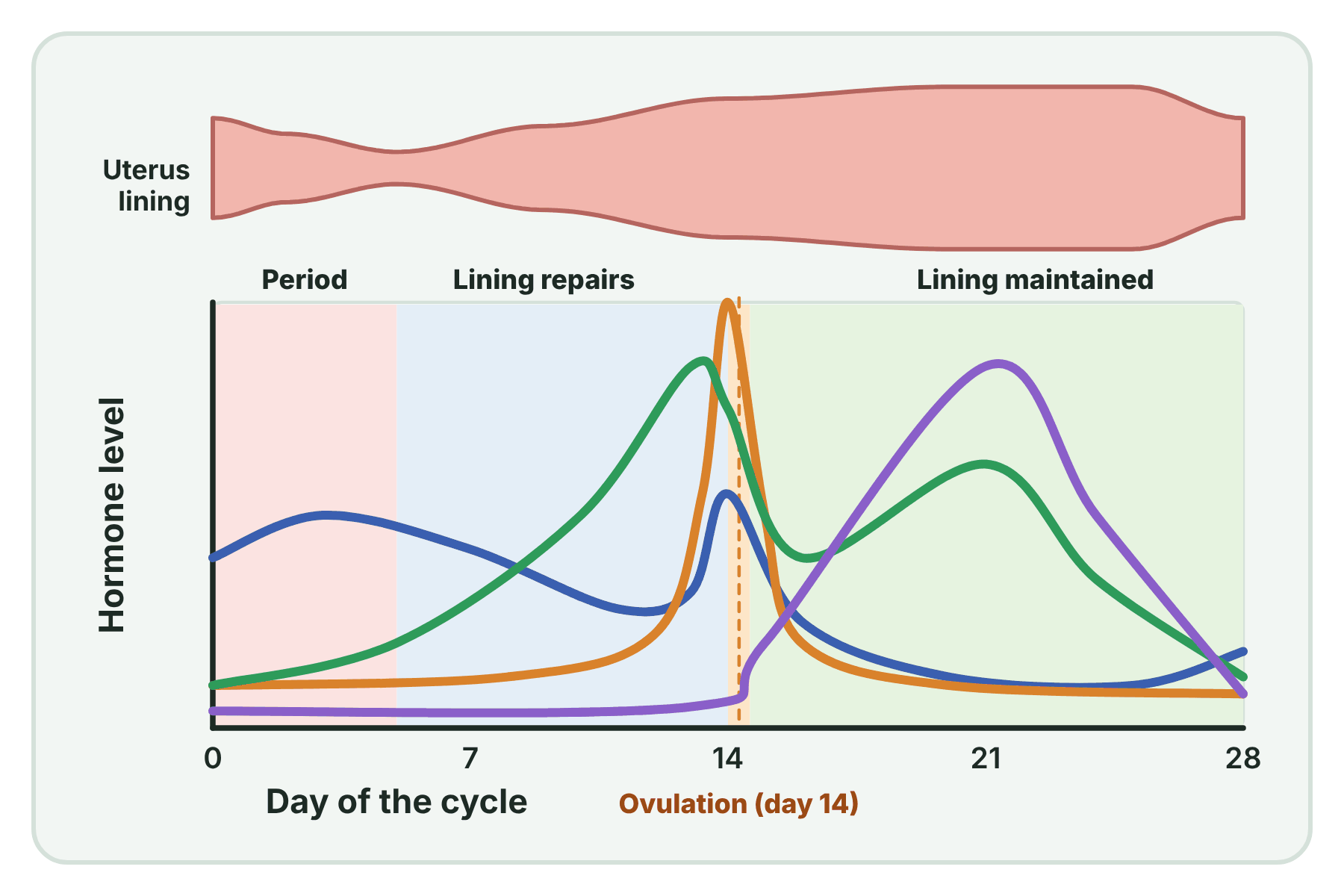 Match each curve to a hormone and say what each does.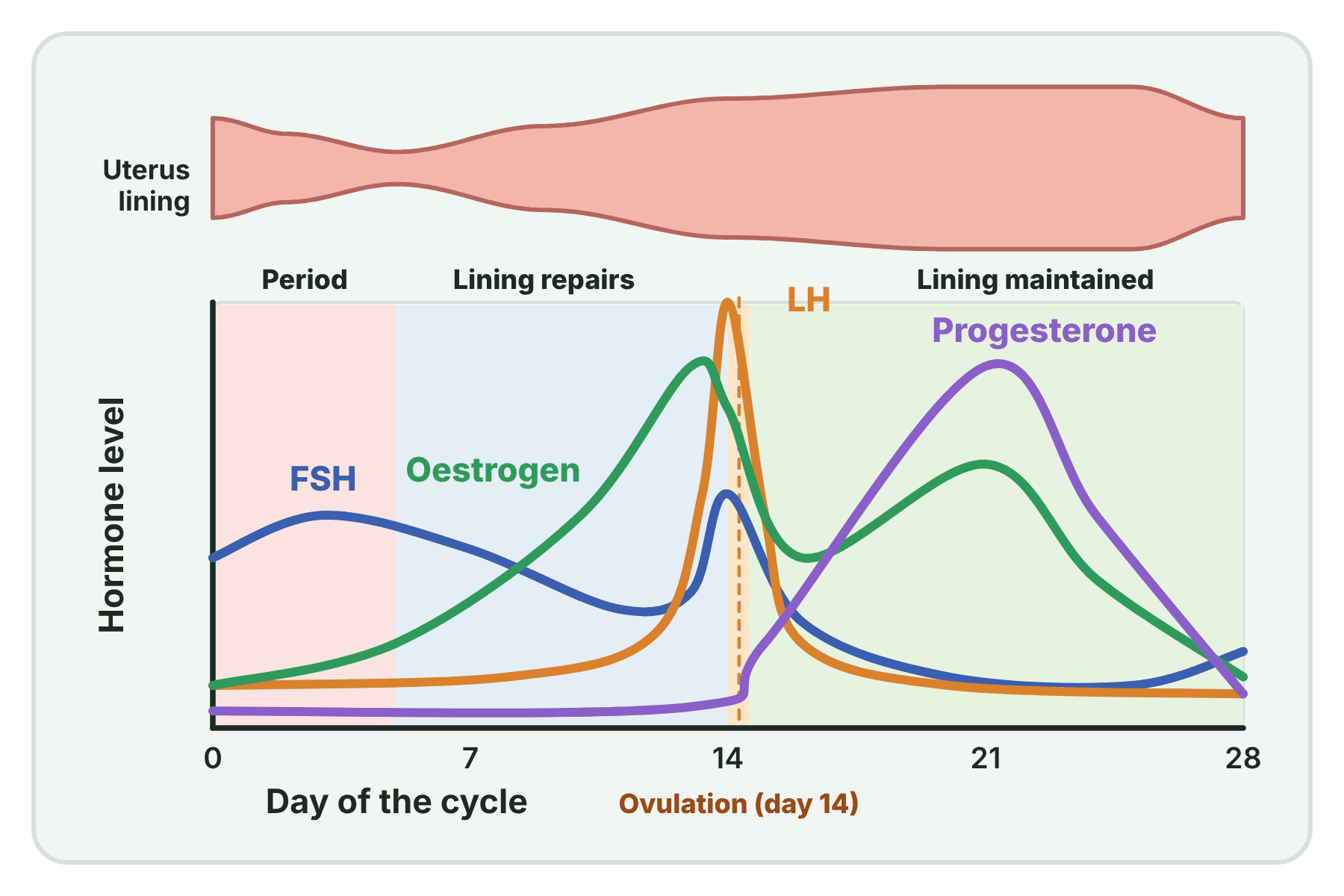
FSH matures an egg. LH has the peak at day 14 and causes ovulation. Oestrogen and progesterone are involved in maintaining the lining; progesterone rises after ovulation.