Flashcards · Biology
Hormonal Coordination in Humans
-
What is a hormone?
A chemical messenger carried in the blood.
-
What is an endocrine gland?
A gland that releases hormones into the blood.
-
How are hormones carried around the body?
In the blood.
-
What is a target organ?
An organ that has receptors for a particular hormone.
-
Which gland is the master gland?
The pituitary gland.
-
Which gland is in the neck?
The thyroid gland.
-
Which gland releases insulin and glucagon?
The pancreas.
-
Which glands are above the kidneys?
The adrenal glands.
-
Which hormones do the ovaries release?
Oestrogen and progesterone.
-
Which hormone do the testes release?
Testosterone.
-
Is hormonal control faster or slower than nervous control?
Slower.
-
Do hormones last for a longer or a shorter time than nerve impulses?
Longer.
-
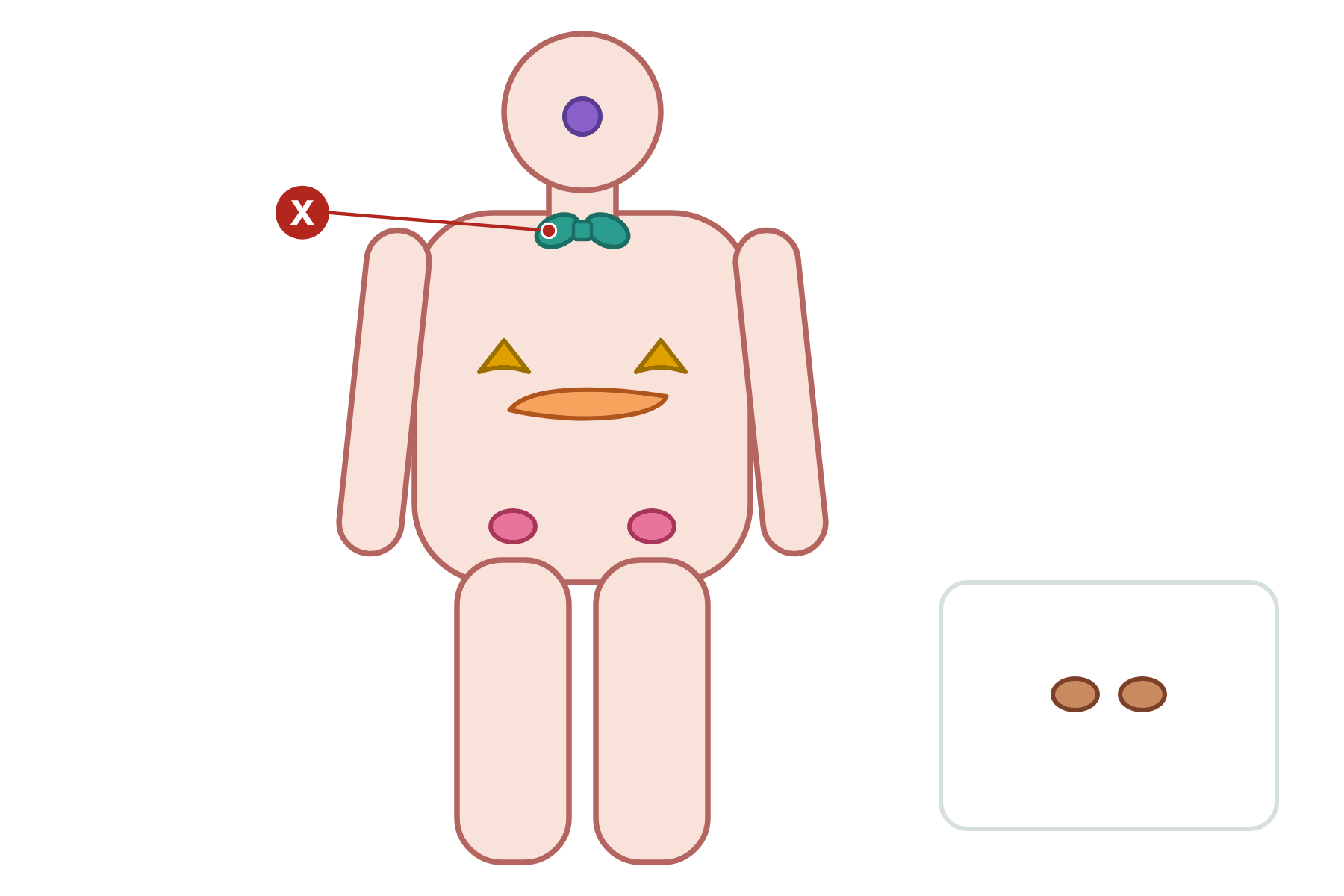 Name the gland marked X.
 The thyroid gland, in the neck.
-
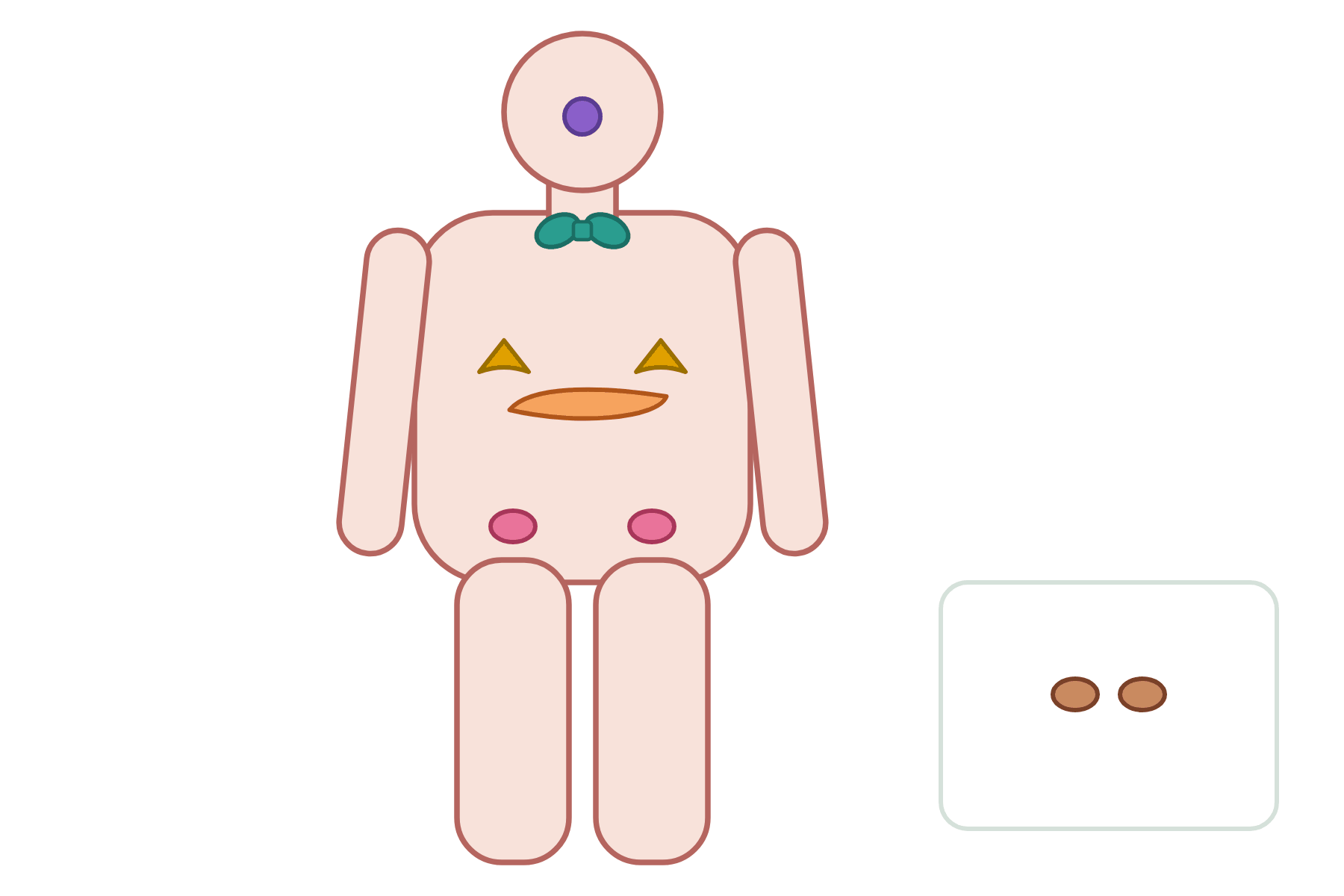 Name the endocrine glands.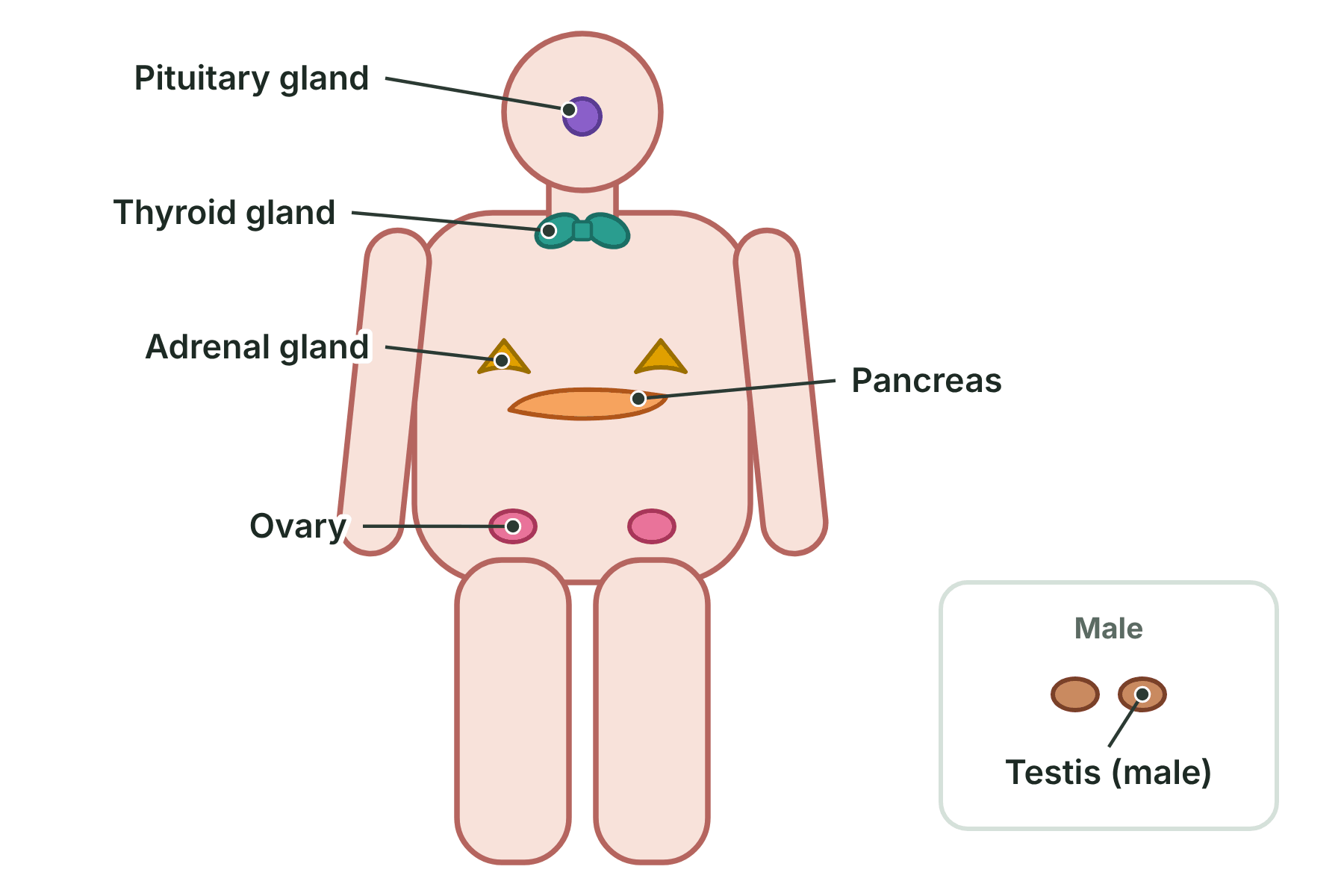
Pituitary gland, thyroid gland, pancreas, adrenal glands, ovaries (female) and testes (male).
-
What does insulin do?
Lowers the blood glucose concentration.
-
Where is insulin made?
In the pancreas.
-
What does insulin make the liver do?
Take up glucose and convert it to glycogen.
-
What is glycogen?
The carbohydrate in which the liver stores glucose.
-
What does glucagon do? (Higher tier)
Raises the blood glucose concentration.
-
What does glucagon make the liver do? (Higher tier)
Convert glycogen to glucose and release it.
-
What is diabetes?
A disease in which the blood glucose concentration is not controlled properly.
-
What causes type 1 diabetes?
The pancreas does not make enough insulin.
-
What causes type 2 diabetes?
The body cells stop responding to insulin.
-
How is type 1 diabetes treated?
With insulin injections and a controlled diet.
-
How is type 2 diabetes treated?
With diet, exercise, weight loss and sometimes medicine.
-
Which type of diabetes is linked to obesity?
Type 2.
-
Which type of diabetes usually starts in childhood?
Type 1.
-
Why is blood glucose controlled by negative feedback?
A rise causes insulin release, which makes it fall.
-
Why do people with type 1 diabetes inject insulin?
Their pancreas does not make enough.
-
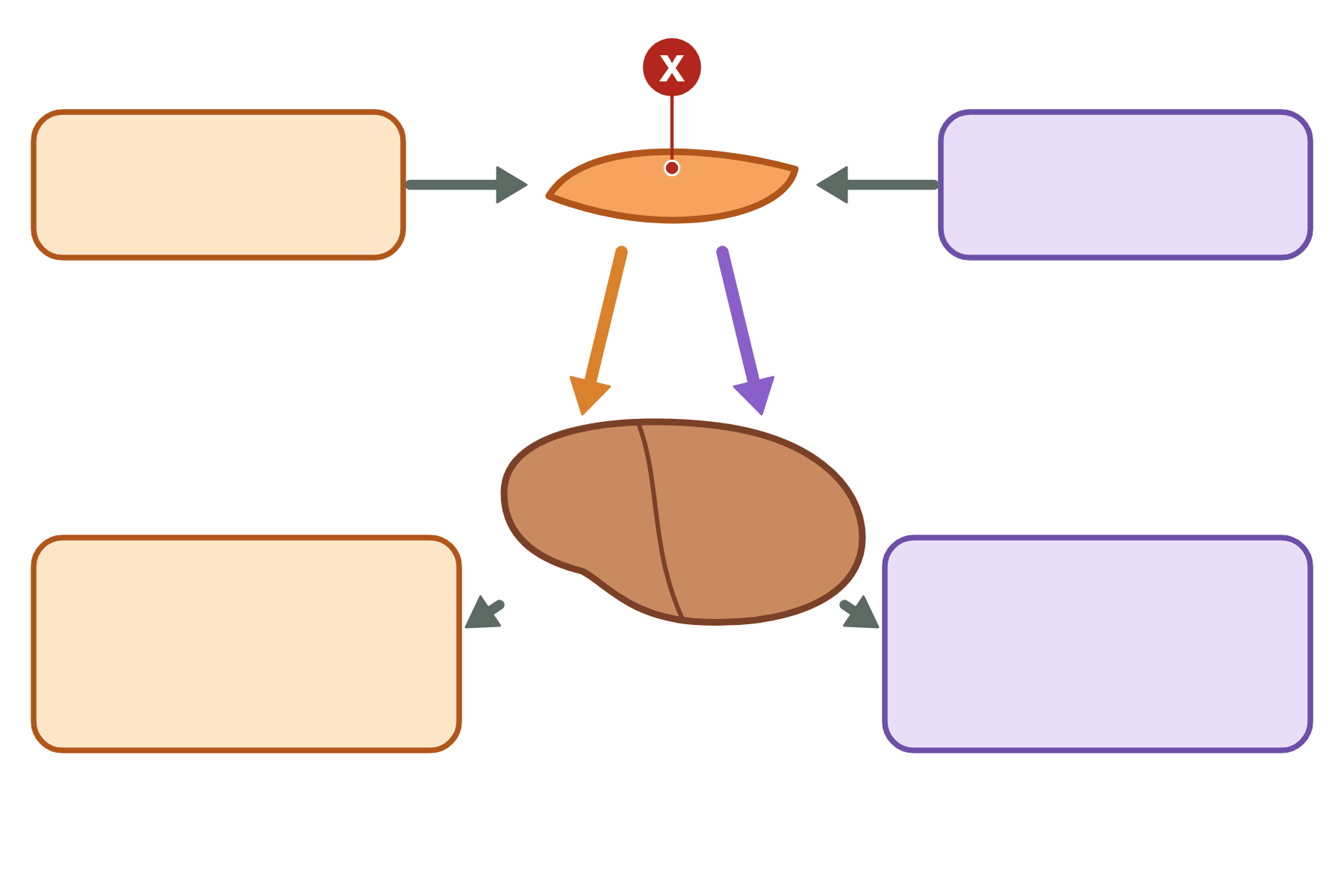 Name the organ marked X and say what it releases.
 The pancreas. It releases insulin, and glucagon (Higher tier).
-
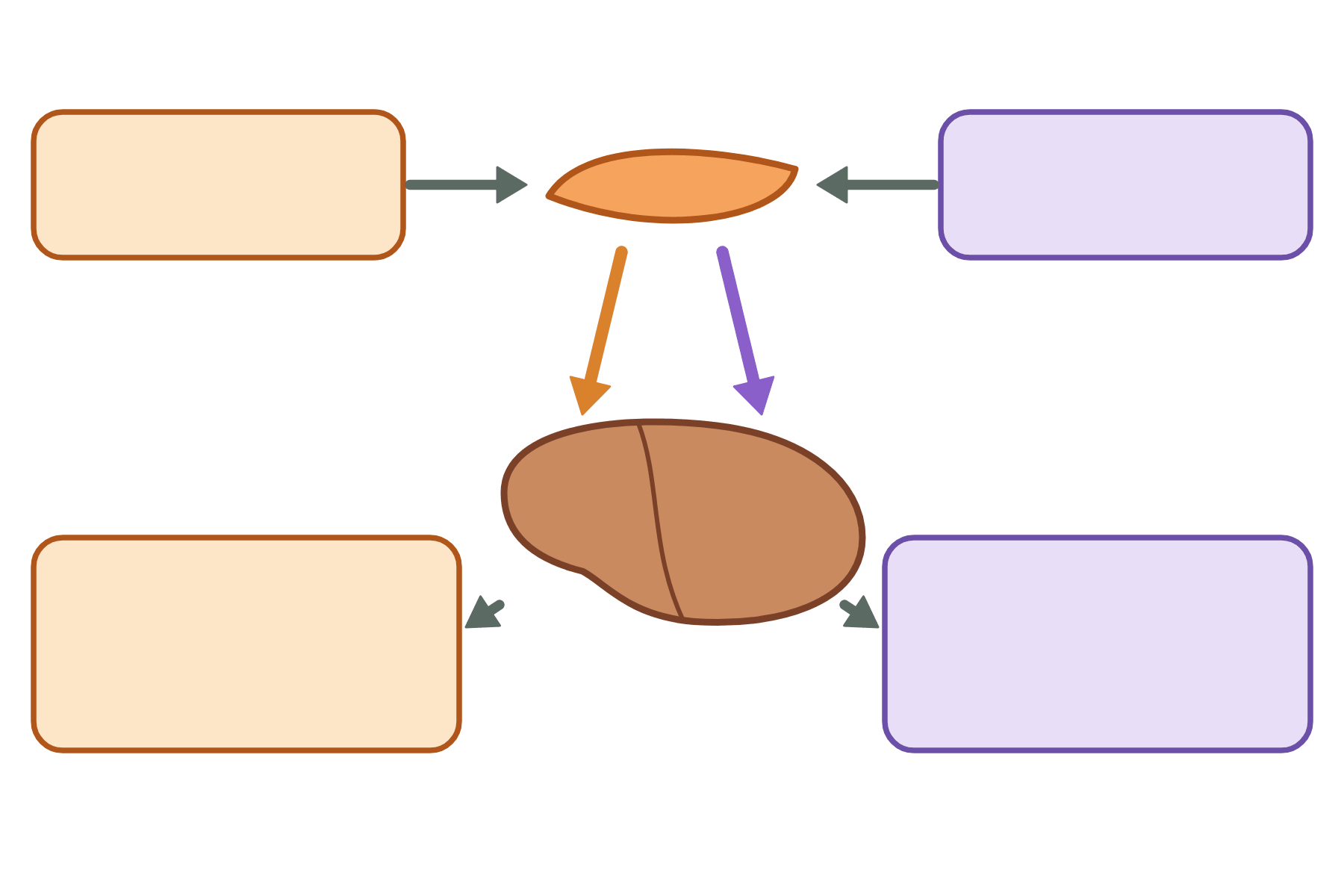 Explain what happens when the blood glucose is too high and too low.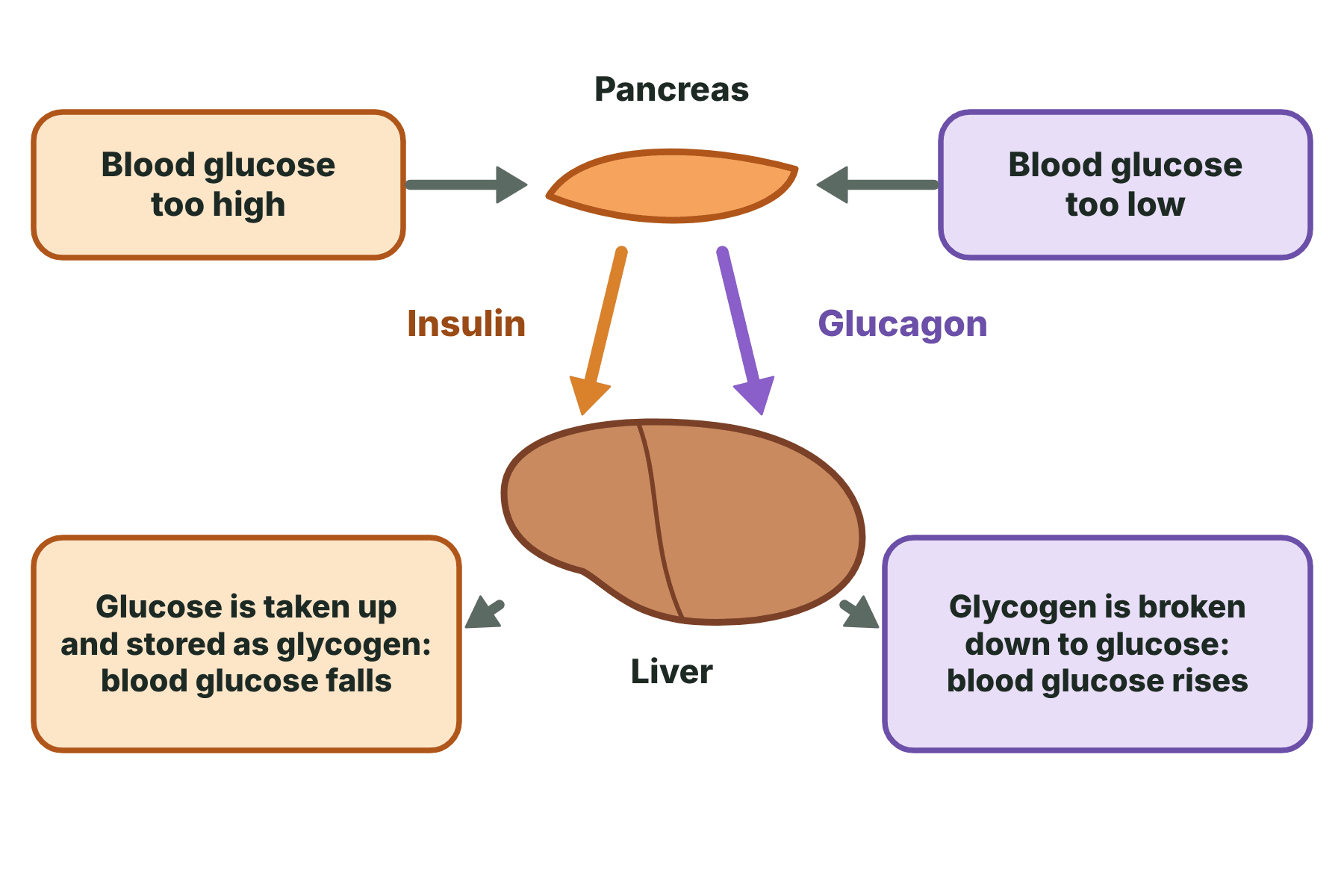
Too high: the pancreas releases insulin, the liver stores glucose as glycogen, and the glucose falls. Too low (Higher tier): the pancreas releases glucagon, the liver releases glucose, and the glucose rises.
-
What happens to an animal cell in a very dilute solution?
Water enters by osmosis and the cell may burst.
-
What happens to an animal cell in a very concentrated solution?
Water leaves by osmosis and the cell shrinks.
-
How does water leave the body through the lungs?
In the air that you breathe out.
-
What is lost from the skin in sweat?
Water, ions and urea.
-
Can the body control the loss of water, ions and urea by the lungs and skin?
No.
-
What do the kidneys remove in the urine?
Excess water, ions and urea.
-
What are the two stages of making urine?
Filtration and selective reabsorption.
-
What is filtered out of the blood in the kidney?
Small molecules such as water, glucose, ions and urea.
-
What stays in the blood during filtration?
Blood cells and proteins.
-
What is reabsorbed?
All the glucose, some ions and some water.
-
Why is there no glucose in the urine?
All of it is reabsorbed into the blood.
-
What happens to amino acids that are in excess? (Higher tier)
They are deaminated in the liver to form ammonia.
-
Why is ammonia changed to urea? (Higher tier)
Ammonia is toxic, and urea can be excreted safely.
-
What does ADH do? (Higher tier)
It makes the kidney tubules more permeable, so more water is reabsorbed.
-
When is ADH released? (Higher tier)
When the blood is too concentrated.
-
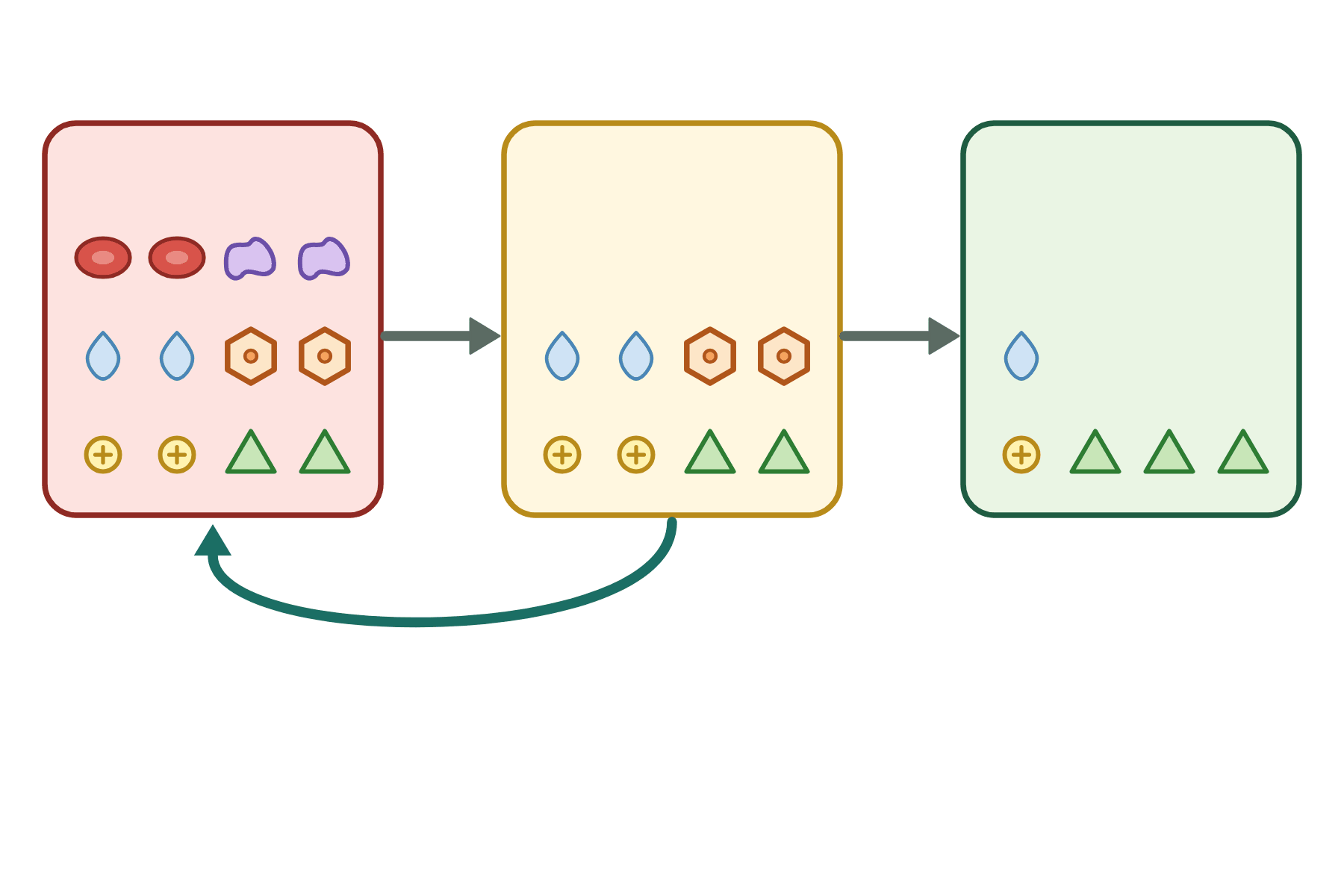 Describe what happens at each stage in the diagram.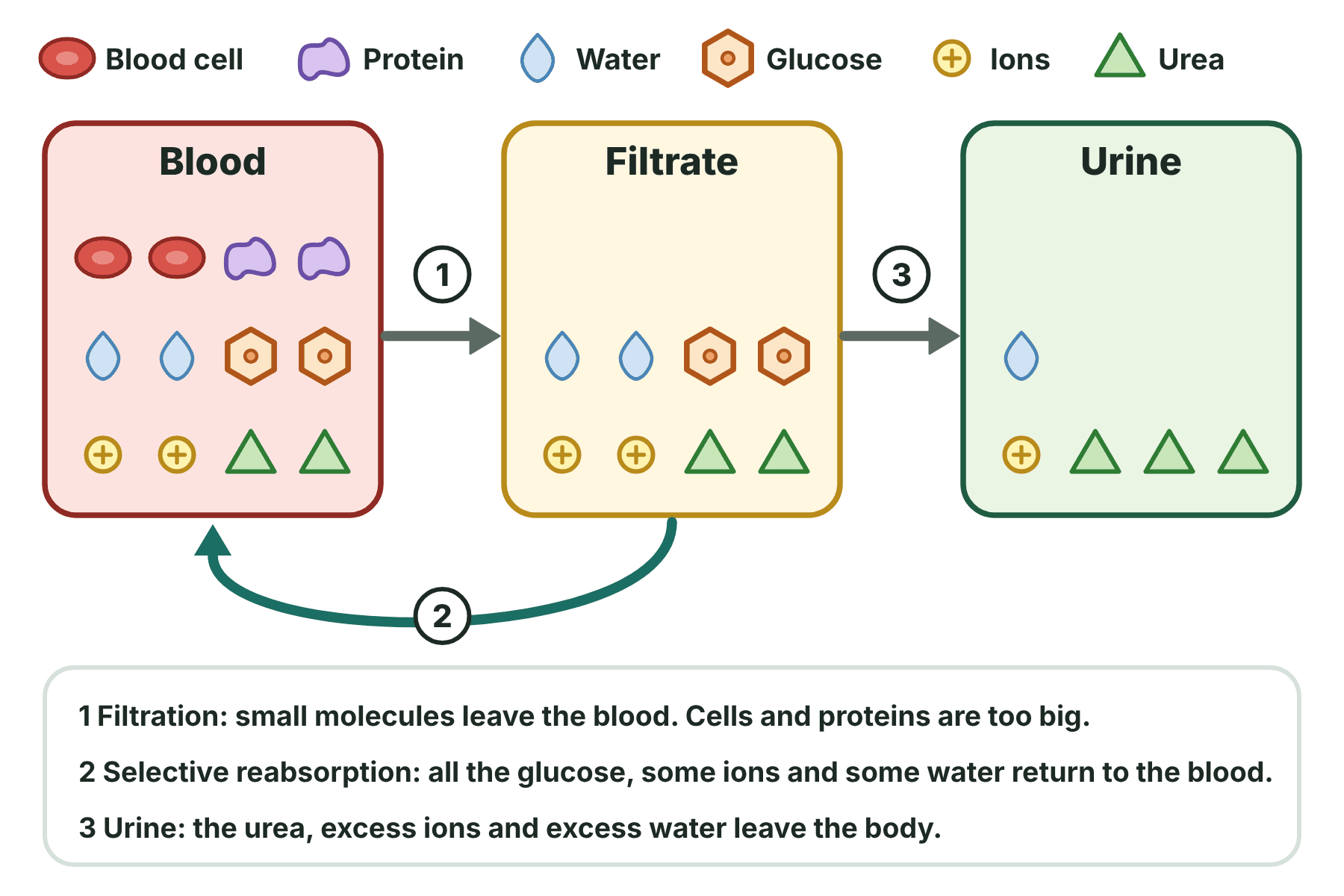
1 Filtration: small molecules leave the blood, and cells and proteins stay. 2 Selective reabsorption: all the glucose, some ions and some water return to the blood. 3 Urine: urea, excess ions and excess water leave the body.
-
 Describe how ADH keeps the water content of the blood constant.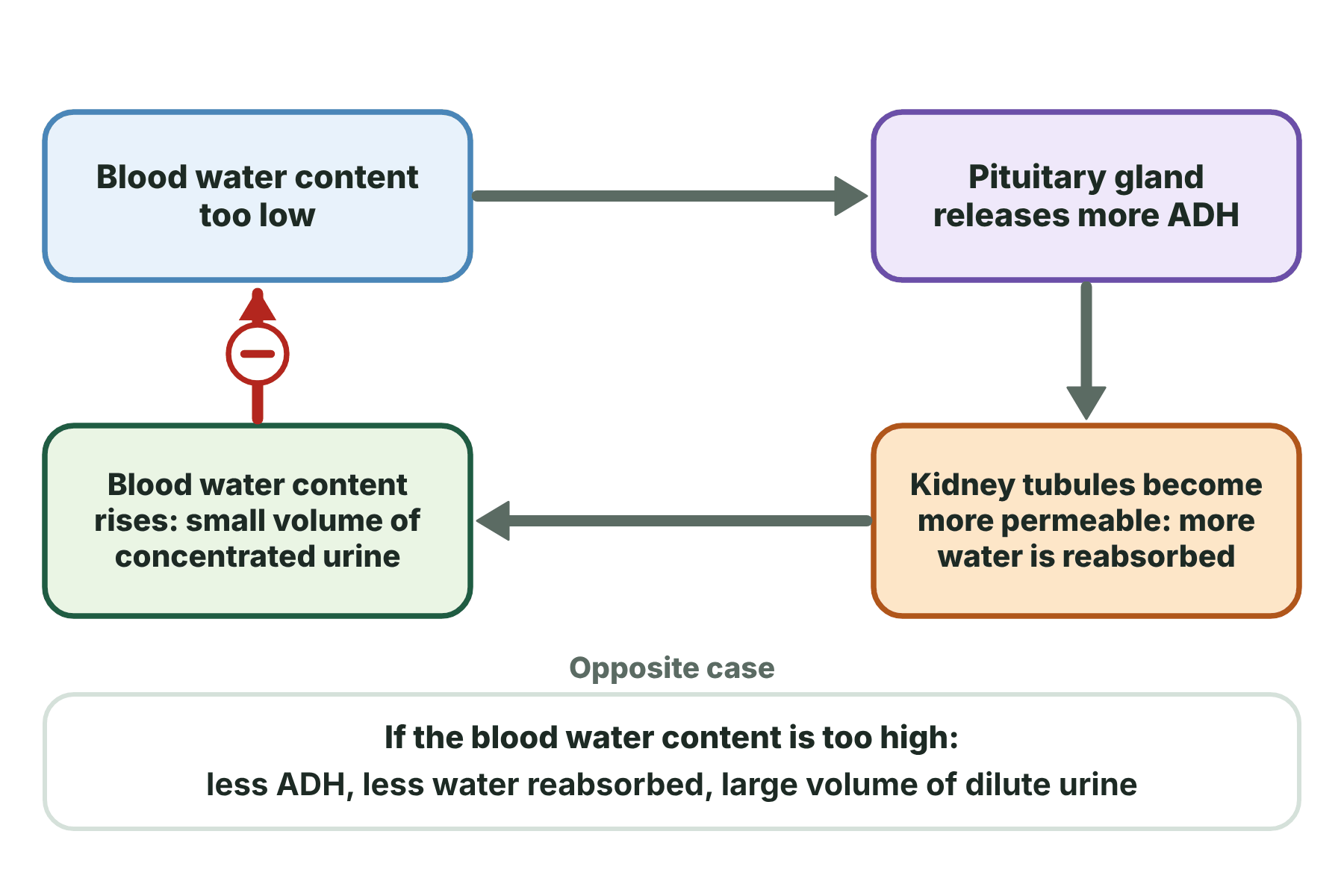
If the blood is too concentrated the pituitary releases more ADH. The kidney tubules are more permeable, so more water is reabsorbed and the blood becomes less concentrated. If the blood is too dilute less ADH is released (Higher tier).
-
What happens if both kidneys fail?
Urea and excess ions build up in the blood, and the water balance is lost.
-
Name two treatments for kidney failure.
Dialysis and a kidney transplant.
-
What does a dialysis machine do?
It removes urea and excess ions from the blood.
-
What separates the blood from the dialysis fluid?
A partially permeable membrane.
-
How does urea leave the blood in dialysis?
It diffuses through the membrane into the dialysis fluid.
-
Why does the dialysis fluid contain glucose?
So that the concentration is the same as in the blood and the patient does not lose glucose.
-
Why do blood cells stay in the blood in dialysis?
They are too big to cross the membrane.
-
Why does the dialysis fluid keep flowing?
It keeps the concentration of urea in the fluid low, so the urea keeps diffusing out.
-
How often is dialysis needed?
Several times a week, for a few hours each time.
-
What is a kidney transplant?
Replacing a failed kidney with a healthy one from a donor.
-
What is rejection?
The immune system attacks the transplanted kidney.
-
Why does a transplant patient take drugs for life?
To reduce the risk of rejection.
-
Give an advantage of dialysis.
It is available straight away, and keeps the patient alive while they wait for a donor.
-
Give a disadvantage of a transplant.
There are few donors, and the patient may reject the kidney.
-
Does dialysis cure kidney failure?
No, it has to be repeated.
-
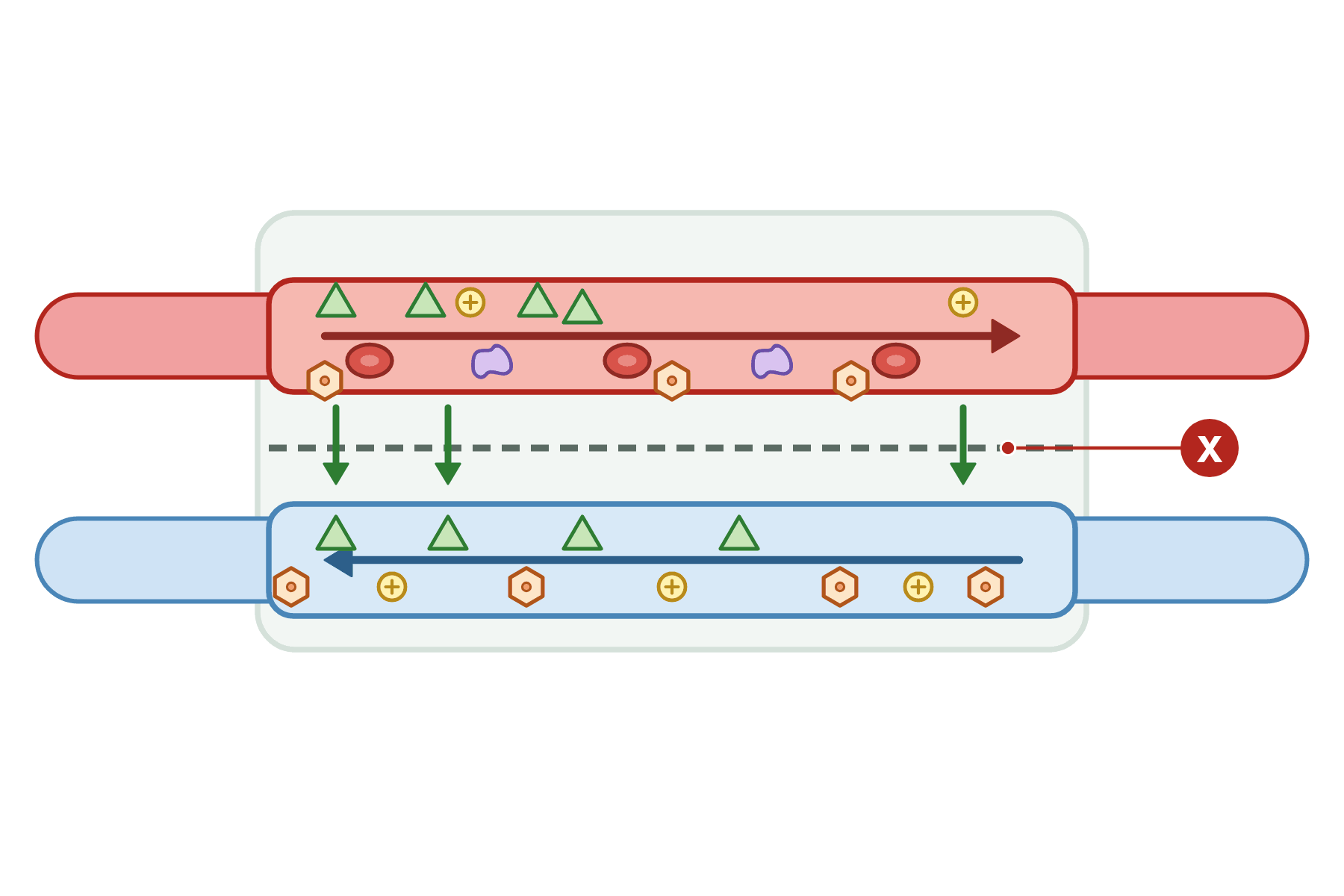 Name the part marked X and say what happens there.
 The partially permeable membrane. Urea and excess ions diffuse through it from the blood into the dialysis fluid, but blood cells and proteins cannot cross.
-
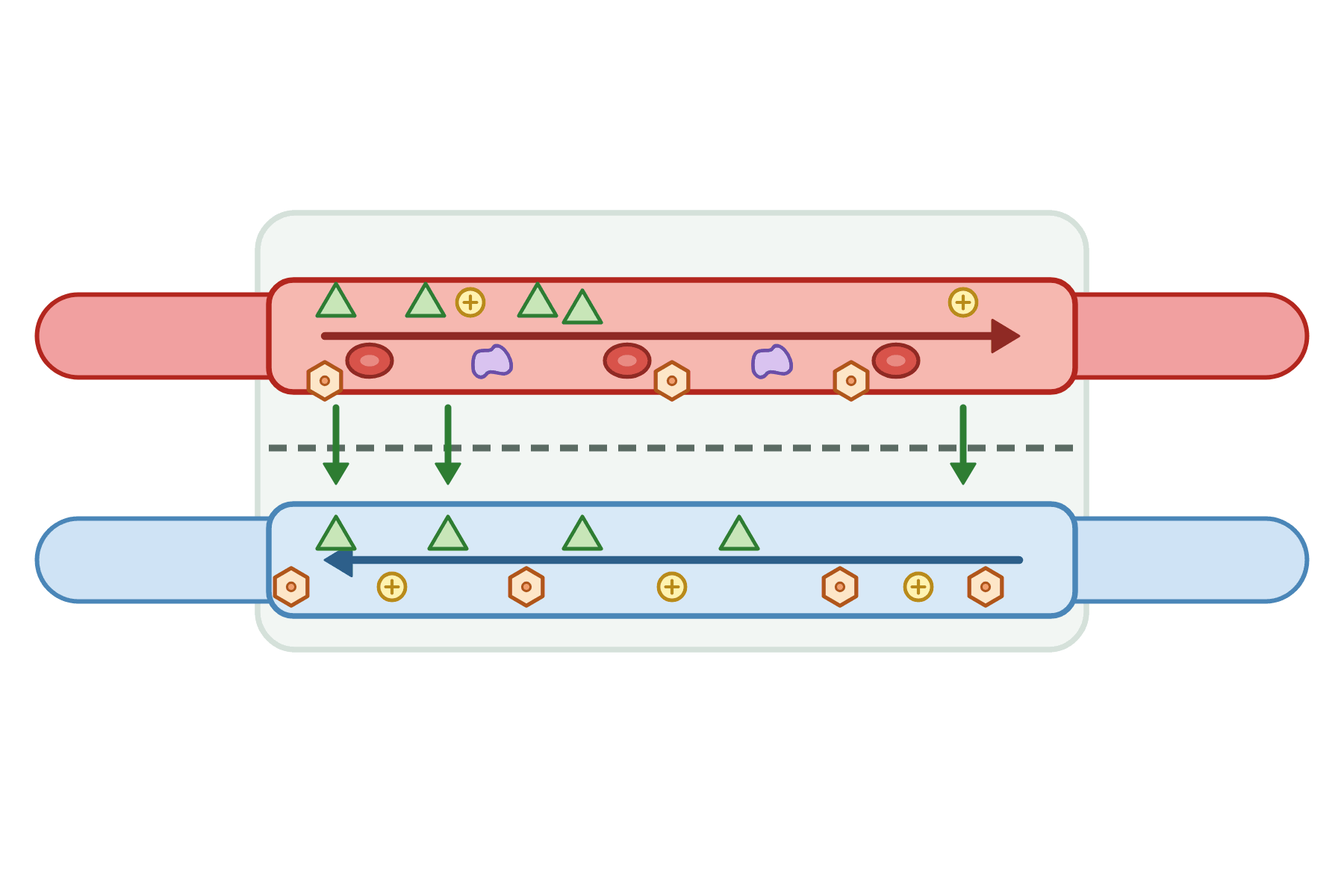 Describe how this machine cleans the blood.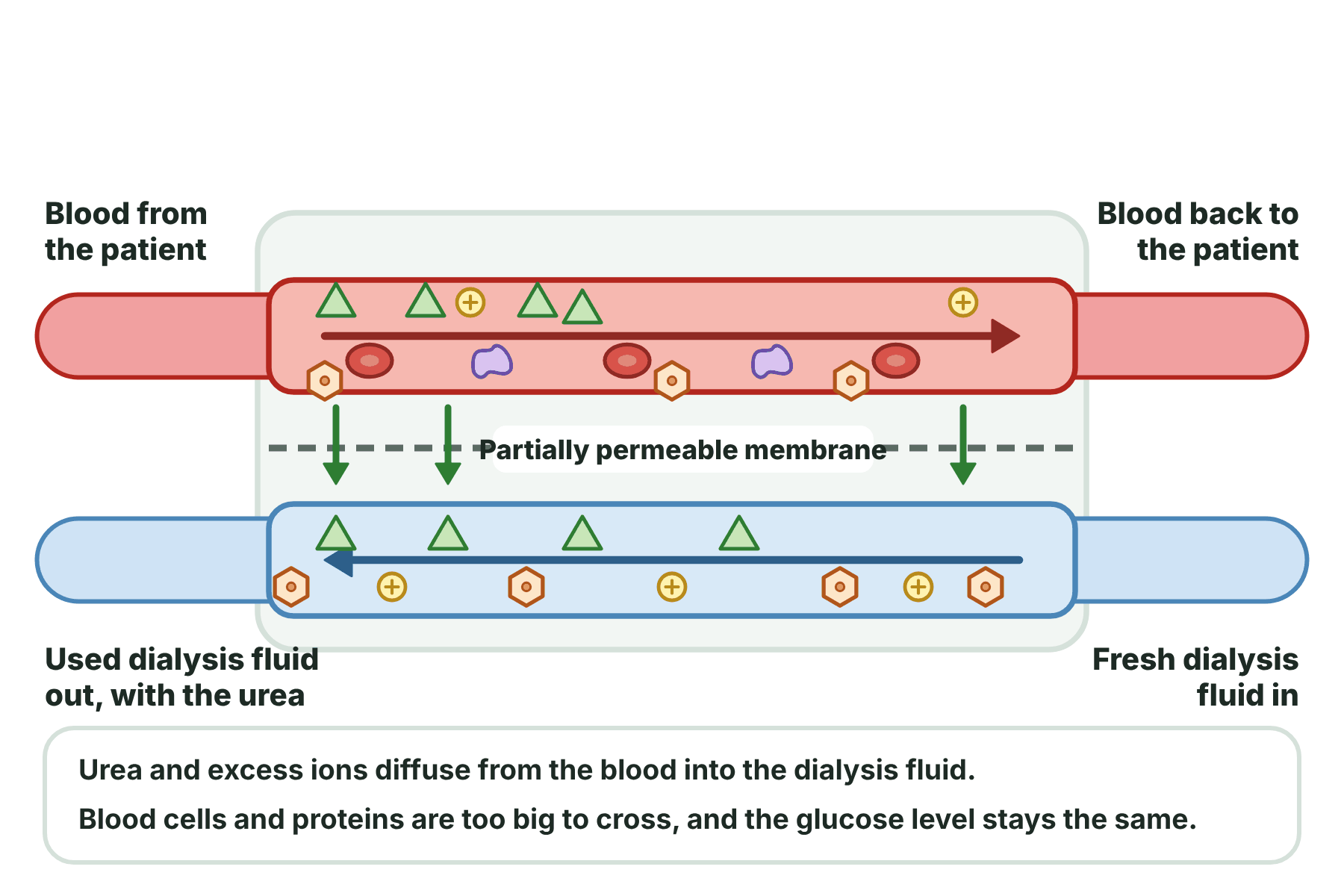
Blood flows on one side of a partially permeable membrane and dialysis fluid on the other. Urea and excess ions diffuse out of the blood into the fluid, while cells, proteins and glucose stay in the blood. The clean blood returns to the patient.
-
What does FSH do?
Makes an egg mature and stimulates the ovary to release oestrogen.
-
What does LH do?
A surge causes ovulation.
-
What is oestrogen?
The main female reproductive hormone, made in the ovary, which is involved in maintaining the lining of the uterus.
-
What does progesterone do?
Maintains the lining of the uterus.
-
What does testosterone do?
It stimulates sperm production and controls the male secondary sex characteristics.
-
Where are FSH and LH released from?
The pituitary gland.
-
Where are oestrogen and progesterone released from?
The ovaries.
-
How long is the menstrual cycle?
About 28 days.
-
What happens on days 1 to 5?
Menstruation: the lining of the uterus breaks down.
-
What happens on day 14?
Ovulation.
-
What is ovulation?
The release of a mature egg from an ovary.
-
What happens to the lining after ovulation?
It is maintained by progesterone.
-
What does oestrogen do to FSH? (Higher tier)
A rising level stops the pituitary releasing FSH.
-
What triggers the LH surge? (Higher tier)
A high level of oestrogen.
-
What makes the lining break down? (Higher tier)
The progesterone level falls.
-
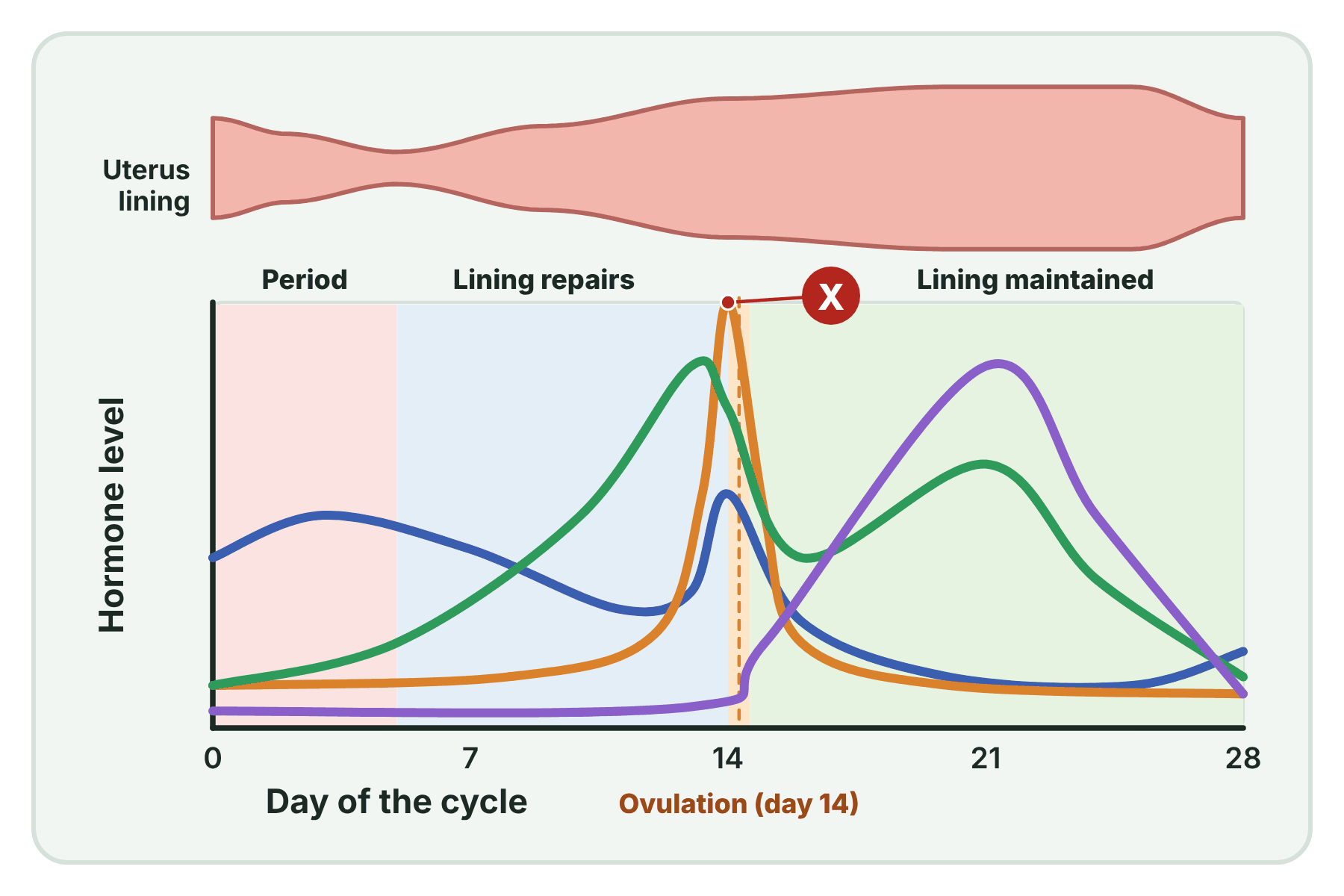 Name the hormone shown by the curve marked X.
 LH. The surge of LH at day 14 causes ovulation.
-
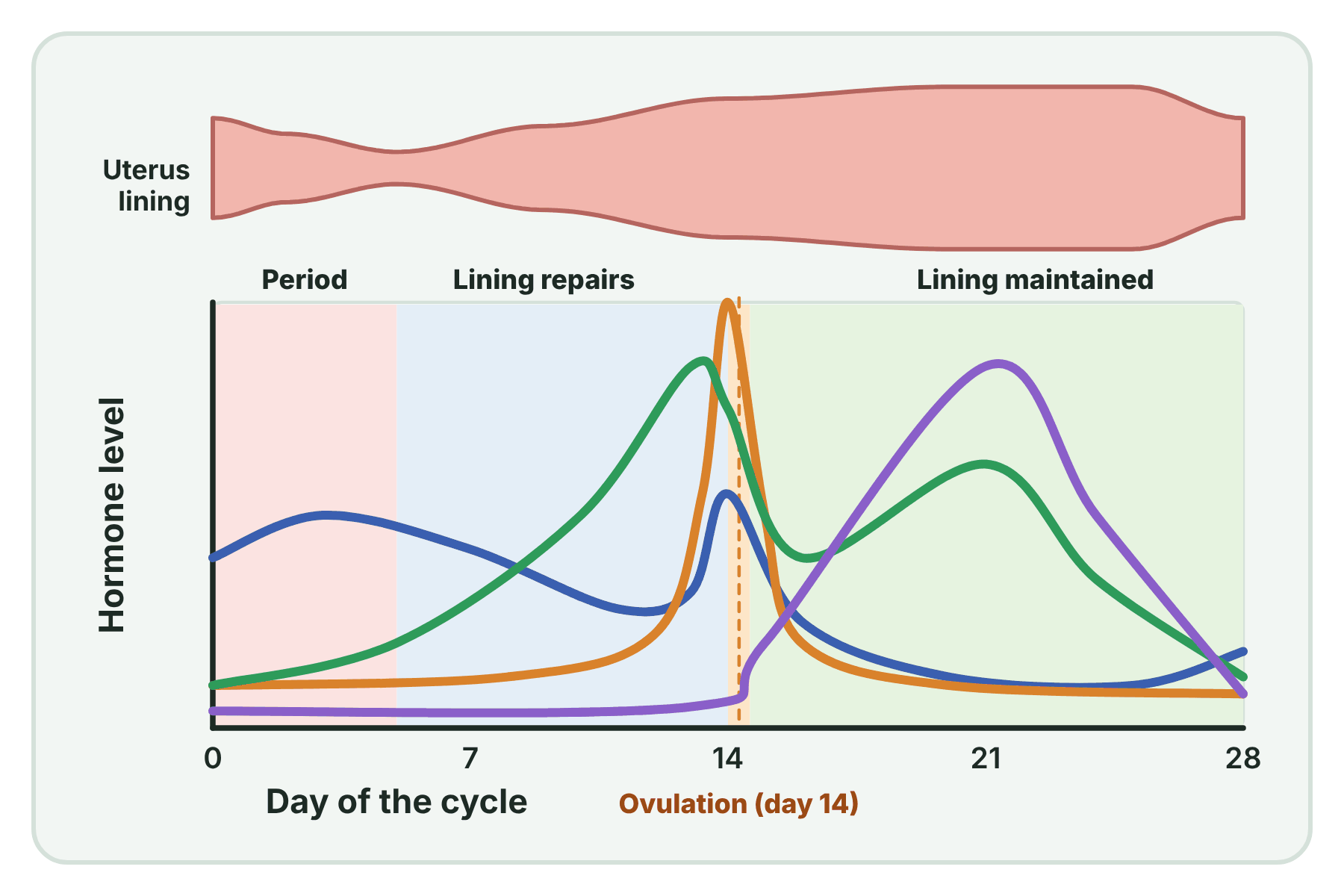 Match each curve to a hormone and say what each does.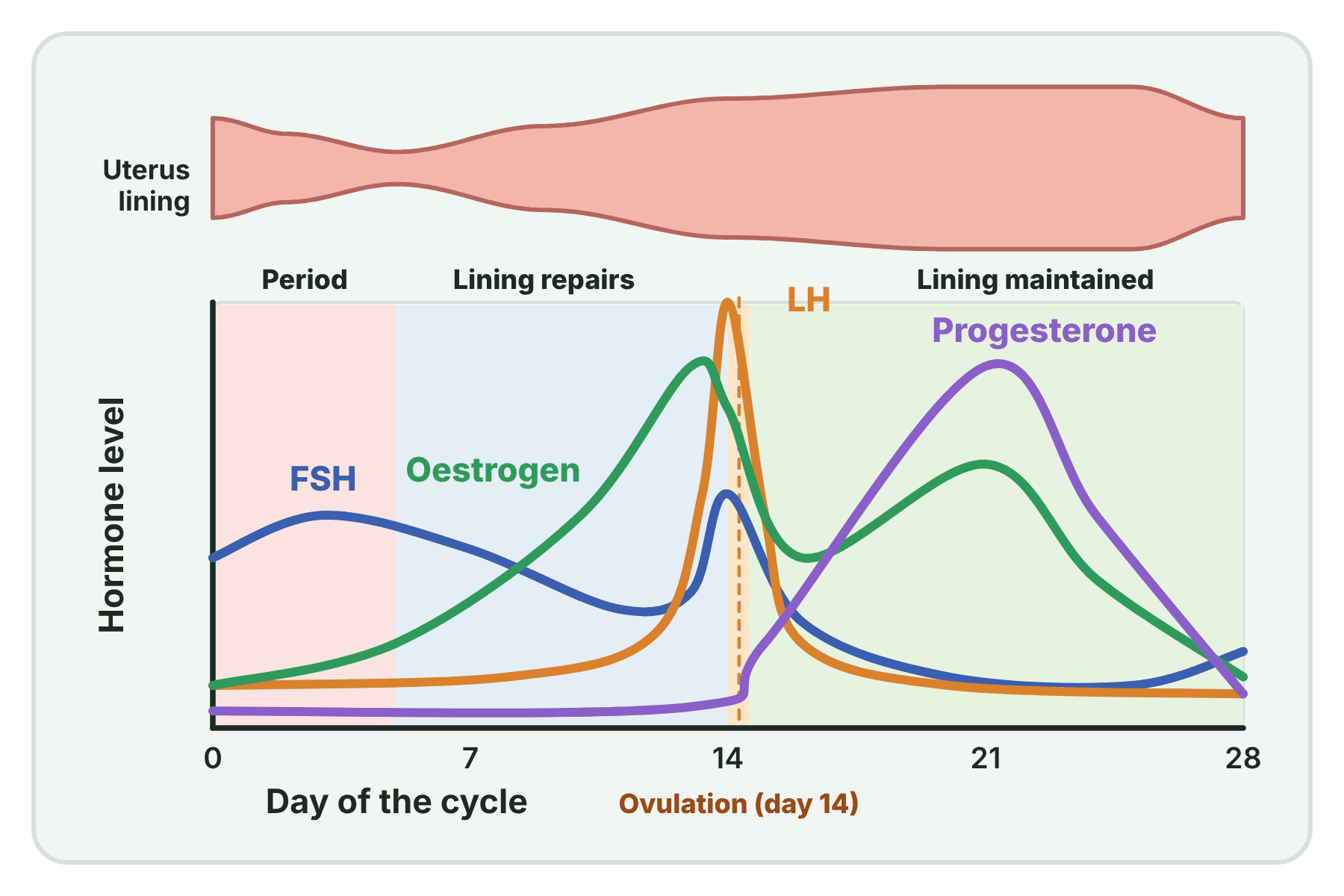
FSH matures an egg. LH has the peak at day 14 and causes ovulation. Oestrogen and progesterone are involved in maintaining the lining; progesterone rises after ovulation.
-
What does the combined pill contain?
Oestrogen and progesterone.
-
How does the combined pill prevent pregnancy?
It stops FSH release, so no egg matures.
-
How does a progesterone injection or implant work?
It thickens the cervical mucus and can stop egg release.
-
How does a condom prevent pregnancy?
It is a barrier that stops sperm entering the vagina.
-
What does a diaphragm do?
It covers the cervix, with spermicide to kill sperm.
-
What does a copper IUD do?
It kills sperm and stops an embryo implanting.
-
Which method protects against sexually transmitted infections?
The condom.
-
What is sterilisation?
A permanent operation to cut or tie the oviducts or the sperm ducts.
-
What does the data on contraception show?
The number of pregnancies per 100 women each year for each method.
-
Why is the implant more effective than the pill in real use?
Nothing has to be remembered each day.
-
What is infertility?
Difficulty in conceiving a child.
-
Which hormones can treat infertility? (Higher tier)
FSH and LH.
-
What does IVF stand for? (Higher tier)
In vitro fertilisation.
-
Describe the stages of IVF. (Higher tier)
Fertility drugs, eggs collected, fertilised in a dish, embryos grow, one or two put in the uterus.
-
Give one disadvantage of IVF. (Higher tier)
Low success rate, health risks, cost or ethical issues.
-
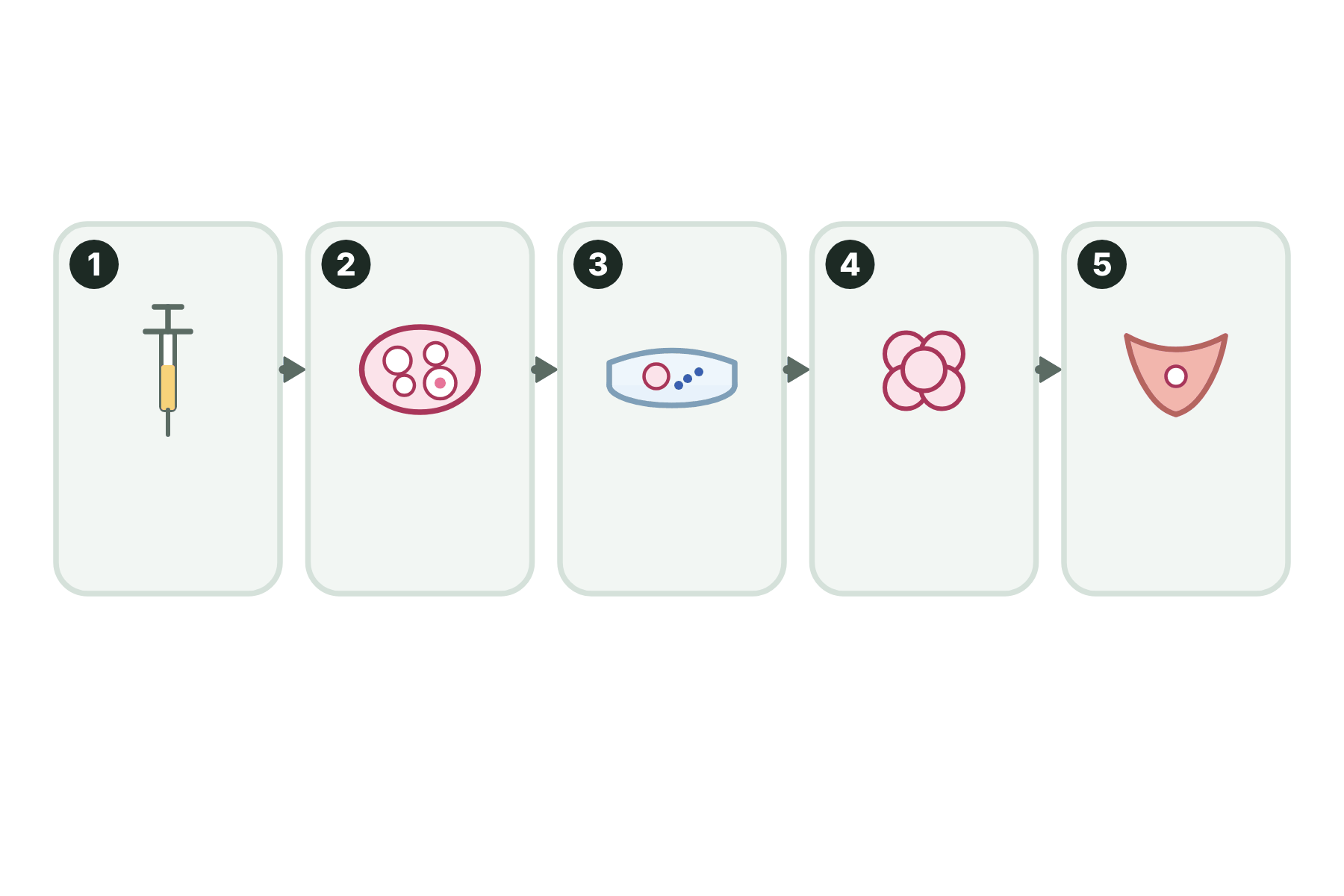 Describe what happens at each of the five stages of IVF.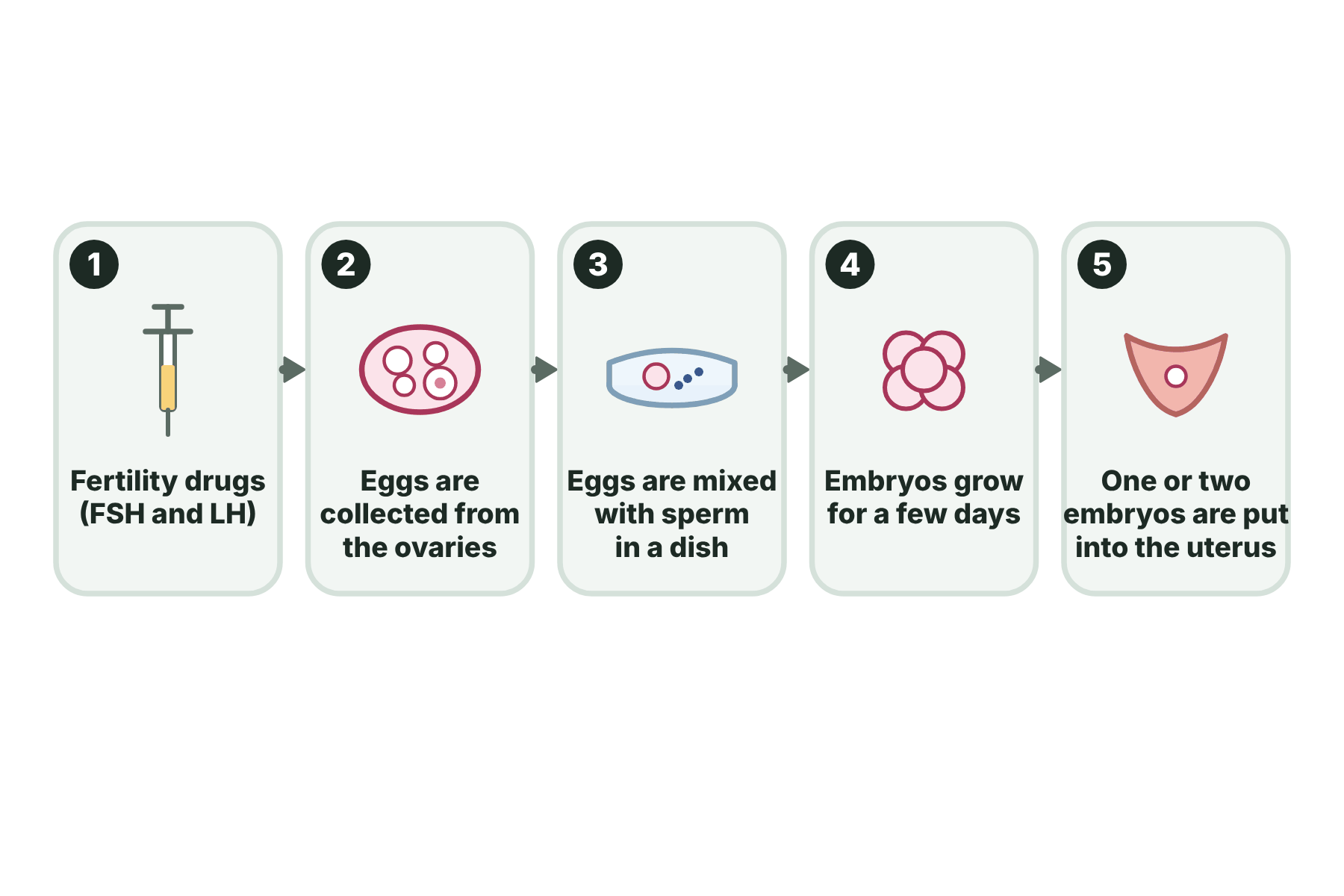
Fertility drugs make eggs mature, the eggs are collected, they are mixed with sperm in a dish, the embryos grow for a few days, and one or two embryos are put into the uterus (Higher tier).